Lithium metal battery
A lithium metal battery is a type of primary (non-rechargeable) battery that uses metallic lithium as its anode, distinguishing it from rechargeable lithium-ion batteries. These batteries are known for their high charge density, long shelf life, and ability to provide higher voltages, typically ranging from 1.5 to about 3.7 volts. They are critical components in many long-life devices, including medical implants like pacemakers, as well as consumer electronics, cameras, and remote sensors. For Canadians, the technology is a key part of the energy storage conversation, with significant domestic lithium resources and major international conferences like IMLB 2026 being held in Montreal to discuss future advancements.
Chemistry and Basic Operation
Lithium metal batteries are defined by their use of pure metallic lithium as the anode material. This is the key feature that separates them from lithium-ion batteries, which use lithiated metal oxides in the cathode and contain no metallic lithium in a pure form. The high reactivity of lithium metal means it instantly reacts with water or moisture in the air, which is a primary safety consideration. The most common chemistry for consumer applications pairs the lithium metal anode with a manganese dioxide cathode and uses a lithium salt dissolved in an organic solvent as the electrolyte. During discharge, lithium ions move from the anode to the cathode, where they fill crystallographic vacancies in the cathode material. This electrochemical process provides a high energy density, meaning these batteries can store a significant amount of energy for their size and weight. The battery requires from 0.15 to 0.3 kilograms of lithium per kilowatt-hour of energy capacity. Research continues to improve these chemistries, with work at institutions like the University of California, San Diego developing electrolytes that allow lithium batteries to operate at temperatures as low as minus 60 degrees Celsius while maintaining high performance at room temperature.
Applications and Advantages
Lithium metal batteries are favoured for applications where long life, reliability, and high energy density are paramount. They are extensively used in critical medical devices such as pacemakers and other implantable electronic medical devices, where specialized lithium-iodide batteries can be designed to last 15 years or more. In consumer electronics, they power devices with high electrical demands like digital cameras, PDAs, watches, and remote car locks, often outlasting the devices themselves. Their ability to maintain a higher voltage for longer periods than standard alkaline cells makes them a superior, though more costly, drop-in replacement for clocks, calculators, and thermometers. In specialized fields like oceanography, the high capacity of lithium battery packs justifies their greater cost, as they can hold up to three times the capacity of alkaline packs and reduce the frequency of expensive servicing missions to remote instrumentation. These batteries are also used in the computer industry, where increasing energy density tests the limits of components like the polyethylene or polypropylene membrane separator, which can be as thin as 20 to 25 micrometres.
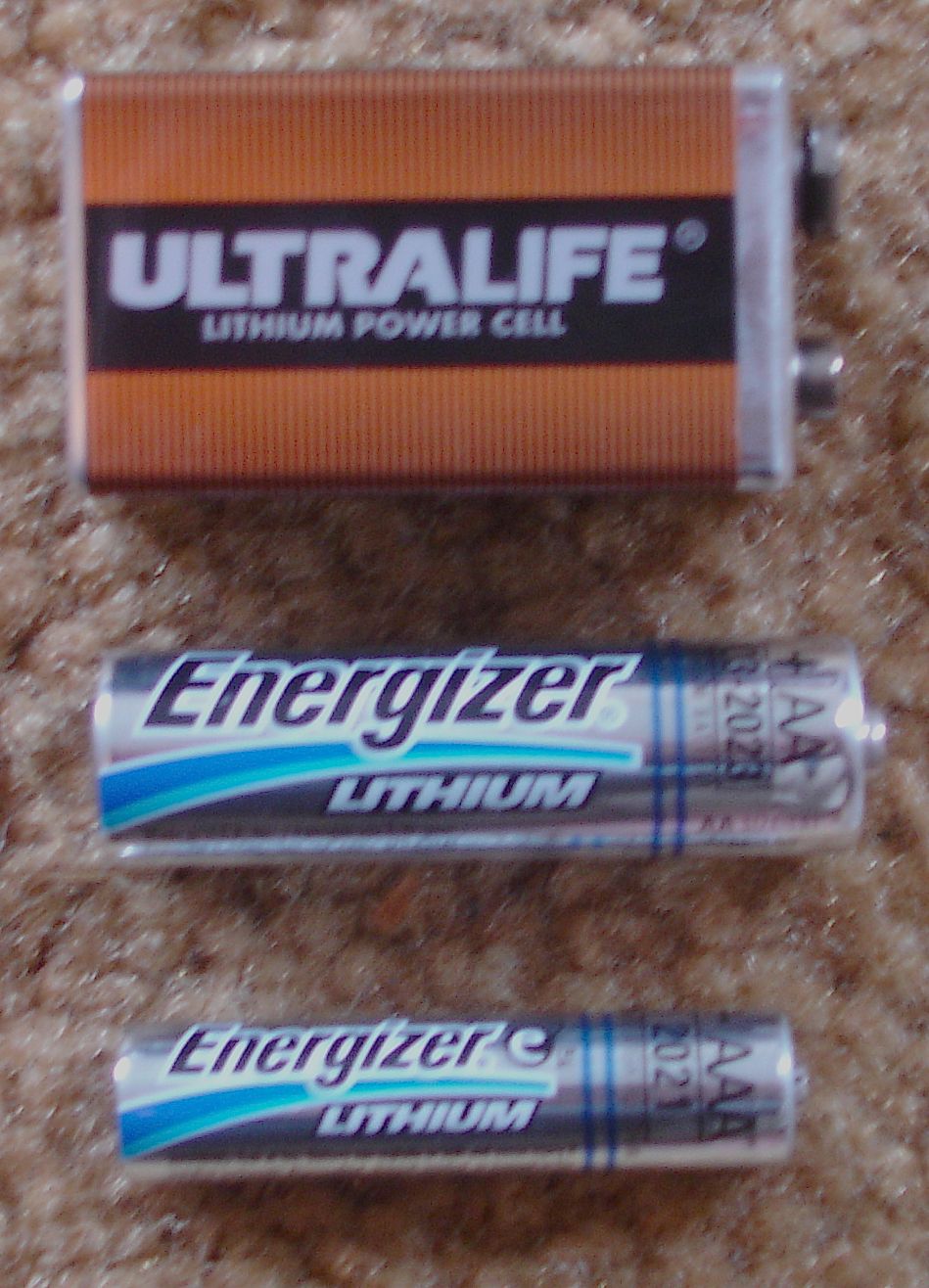
Small lithium batteries are very commonly used in small, portable electronic devices. They are available in many shapes and sizes. A common variety is the 3-volt 'coin' type manganese battery. The number on these batteries indicates their size, with the first two digits being the diameter in millimeters and the last two being the height in tenths of a millimeter.
- A common format is the 3-volt coin-type battery, such as the CR2032.
- The numbering system indicates size: the first two digits are the diameter in millimetres.
- The last two digits indicate the height in tenths of a millimetre.
- For example, a CR2032 is 20 mm in diameter and 3.2 mm thick.
Lithium primary batteries account for 28 percent of all primary battery sales in Japan. In Switzerland, they account for only 1 percent of all battery sales. In the European Union, only 0.5 percent of all battery sales, including secondary types, are lithium primaries. The heavy electrical demands of many portable devices make lithium batteries a particularly attractive option. In particular, lithium batteries can easily support the brief, high-current demands of devices such as digital cameras. They also maintain a higher voltage for longer than alkaline cells.
Safety, Regulation, and Handling
The high energy density of lithium metal batteries introduces specific safety risks that are heavily regulated, particularly for transport. These batteries can provide extremely high currents and discharge very rapidly if short-circuited, which can lead to overheating, rupture, or even explosion, especially in chemistries like lithium-thionyl chloride. Consumer batteries usually incorporate overcurrent or thermal protection or vents to mitigate these risks. Due to these hazards, the transport of lithium batteries, especially by air, is subject to strict international regulations. The International Air Transport Association (IATA) introduced stricter regulations in 2013, and the United Nations differentiates them as UN 3090 under Dangerous Goods Regulations. Many postal services, including those in the United States, Japan, and Hong Kong, restrict or prohibit the airmail shipment of lithium batteries. The United States Transportation Security Administration has restrictions on lithium batteries in checked and carry-on luggage, prohibiting loose batteries in checked baggage. Australia Post prohibited transport in air mail during 2010, and the United Kingdom amended its regulations in 2009. The old lithium battery mark used in transport is set to expire at the end of a transition period on December 31, 2026.
A significant and growing safety concern, particularly in households with small children, is the ingestion of button cell batteries. The 3-volt, 20 mm CR2032 lithium battery has been implicated in many serious incidents involving children under four years old. The primary injury mechanism is not poisoning but severe chemical burns caused by the generation of hydroxide ions at the battery's anode, which can cause tissue damage within two hours. Complications can include esophageal strictures, tracheo-oesophageal fistulas, vocal cord paralysis, aorto-oesophageal fistulas, and death. Research indicates a 6.7-fold increase in the risk of a moderate or major complication from ingestion in the past decade compared to the previous one. Medical guidance now recommends that after a known or suspected ingestion, parents or caregivers can administer honey or sucralfate suspension prior to endoscopic removal to reduce injury severity. Prevention efforts focus on improving battery compartment design and public awareness, though a lack of awareness persists in the general population and medical community.
Disposal recommendations vary. While some manufacturers state that consumer quantities of certain lithium primary cells can be discarded in municipal waste, the United States Environmental Protection Agency recommends recycling all lithium batteries when possible due to fire risks and the value of the materials. In Canada and globally, the push for better recycling technologies is growing alongside the demand for lithium. Some recycling processes can extract commercially useful quantities of lithium metal from used cells, along with manganese dioxide and specialist plastics, and some operations alloy the recovered lithium with magnesium to reduce costs.
Technological Evolution and Rechargeable Lithium Metal
For decades, a fundamental rule in battery technology and regulation was that lithium metal batteries were non-rechargeable primary cells, while rechargeable cells were lithium-ion. This distinction is now being challenged by technological advancement. New-generation rechargeable lithium metal batteries are under active development and beginning to appear in technical specifications and product data sheets. These batteries promise greater energy density, longer lifespan, and faster charging compared to traditional lithium-ion cells, with prototypes like solid-state lithium-metal batteries enabling impressive range demonstrations, such as a Mercedes-Benz EQS driving 1205 km on a single charge in 2025. However, the regulatory framework has not yet caught up with this innovation. Under current dangerous goods regulations, a battery is still classified as a lithium metal battery (UN 3090) based on its lithium content, not its rechargeability. This means even rechargeable lithium metal batteries must be shipped and handled under the stricter rules for primary lithium metal cells, a critical point for compliance professionals in logistics and transportation. This development has prompted updates in industry training, where instructors now clarify that lithium metal batteries are typically non-rechargeable rather than absolutely non-rechargeable.
Lithium and the Canadian Context
Lithium is a critical mineral for the global clean energy transition, with 87 percent of demand in 2024 driven by batteries for electric vehicles and electronics. Canada plays a growing role in this sector, with substantial resources and active production. In 2024, Canada had two operating lithium mines, the TANCO Mine in Manitoba and the North American Lithium mine near Val-d'Or, Quebec, which together produced an estimated 5,983 tonnes. The owner of the Quebec mine, Eleva Lithium, formed from the merger of Sayona and Piedmont Lithium, is planning to build a refinery to produce lithium hydroxide or carbonate. Canada's total lithium resources are significant, estimated at 14.0 million tonnes of lithium oxide, with hard rock deposits containing an estimated 5.4 million tonnes and lithium brines from oil and gas fields adding another 8.6 million tonnes. Major projects are advancing across the country, including the planned restart of the Whabouchi Mine in Quebec by Nemaska Lithium, now owned by Rio Tinto and the Quebec government, which has a long-term supply agreement with the Ford Motor Company. Several companies are exploring both traditional hard rock mining and unconventional sources like oilfield brines and industrial wastewaters in Ontario, Quebec, Alberta, Manitoba, Nova Scotia and Saskatchewan.
The importance of lithium battery technology to Canada is highlighted by its role as a host for major international scientific conferences. The 23rd International Meeting on Lithium Batteries (IMLB 2026) will be held at the Montreal Convention Centre from June 14 to 19, 2026. This premier conference, honouring pioneers like Bruno Scrosati, is expected to draw around 2,000 experts to discuss advances in lithium battery science and next-generation energy storage. The meeting will feature 100 world-renowned speakers and focus on basic and applied research, with a major theme on beyond lithium-ion technologies. Industry events like Battery Minerals Canada 2026 in Toronto will focus on the supply chain, exploration, and alternative chemistries like lithium iron phosphate (LFP). That conference aims to address challenges like geopolitical tensions and underinvestment in exploration disrupting the global battery mineral supply chain, and it will explore how emerging battery recycling technologies are improving the recovery of essential minerals.
Market Dynamics and Future Outlook
The global market for lithium and lithium batteries is dynamic and driven largely by the electric vehicle revolution. Global lithium mine production has surged from 31,500 tonnes in 2015 to a preliminary estimate of 237,060 tonnes in 2024, led by Australia which produced more than a third of the world's output from seven mines. China dominates the processing of lithium into battery-grade materials. Prices have been volatile, with data from early 2026 showing lithium prices more than twice as high as the same period in 2025, though still around 70 percent lower than their 2022 peaks. This price volatility reflects the supply chain challenges and geopolitical tensions discussed at industry forums. The future of battery technology includes research on beyond lithium-ion technologies, including advanced lithium metal batteries and alternative chemistries that could reduce dependence on critical minerals. The industry is also focusing heavily on improving recycling technologies to create a circular economy for battery materials, which will be essential for meeting net-zero emissions goals and ensuring a sustainable supply of lithium for the long term. Events like Battery Minerals Canada 2026 will explore how emerging recycling technologies are improving the recovery and availability of essential minerals, and the conference will also examine non-binding roadmaps that influence investor demands for traceability and responsible sourcing.
| Year | Global Lithium Mine Production (tonnes) |
|---|---|
| 2015 | 31,500 |
| 2016 | 38,000 |
| 2017 | 69,000 |
| 2018 | 95,000 |
| 2019 | 86,000 |
| 2020 | 82,500 |
| 2021 | 106,920 |
| 2022 | 146,350 |
| 2023 | 201,290 |
| 2024 | 237,060 (estimate) |
Regulatory and Social Considerations
Beyond transportation, lithium metal batteries intersect with other regulatory and social issues. Unused lithium batteries have been a source of lithium metal for use as a reducing agent in illegal methamphetamine production, specifically in the Birch reduction method which employs solutions of alkali metals dissolved in anhydrous ammonia. In response, some jurisdictions have passed laws or seen retailers implement voluntary restrictions on sales. In 2004, Wal-Mart stores were reported to limit sales to three packages per customer in Missouri and four in other states. The industry also faces increasing demands for environmental, social, and governance standards. Events like Battery Minerals Canada 2026 highlight the need for companies to uphold these standards to enhance investor confidence, and non-binding roadmaps are influencing demands for traceability and responsible sourcing in critical minerals. The drive for improved safety continues in parallel with performance gains, as the computer industry's push for higher capacity tests the limits of internal components like the thin membrane separator, a point of potential failure if placed under excessive stress. Since their introduction in 1991, the energy density of lithium batteries has more than doubled, which constantly pushes the boundaries of material science and safety engineering.
Questions about Lithium metal battery
What is the difference between a lithium metal battery and a lithium-ion battery?
The fundamental difference lies in the anode material and rechargeability. Lithium metal batteries use pure metallic lithium as the anode and are traditionally non-rechargeable primary cells. Lithium-ion batteries use a lithiated metal oxide as the cathode and contain no metallic lithium. They are rechargeable secondary cells. A key regulatory distinction is that lithium metal batteries are classified under UN 3090 for transport, while lithium-ion batteries are UN 3480.
Are lithium metal batteries rechargeable?
Historically, commercial lithium metal batteries have been non-rechargeable. However, rechargeable lithium metal battery technology is now under active development and beginning to emerge. These next-generation batteries promise higher energy density and faster charging. Importantly, under current dangerous goods regulations, these rechargeable versions are still classified and regulated as lithium metal batteries (UN 3090) based on their lithium content, not their ability to be recharged.
Why are lithium metal batteries considered dangerous goods?
Lithium metal batteries are classified as dangerous goods due to several risks. The metallic lithium is highly reactive with water and can cause fires. The batteries can also deliver extremely high currents, and if short-circuited, they may overheat, rupture, or explode. Because of these hazards, their transport, especially by air, is strictly regulated by international bodies like IATA, with specific packaging, labelling, and quantity restrictions in both passenger and cargo aircraft.
What should I do if a child swallows a button lithium battery?
Button battery ingestion is a medical emergency. The battery can cause severe chemical burns in the esophagus within two hours. You should seek immediate medical help. Current medical guidance from organizations like the National Capital Poison Center recommends that after a known or suspected ingestion, parents can give honey or sucralfate suspension every 10 minutes on the way to the hospital, as this can help reduce the severity of tissue injury prior to the battery's endoscopic removal.
How should I dispose of lithium metal batteries?
You should not throw lithium metal batteries in regular household trash. While some manufacturers state certain primary cells are safe for municipal disposal, the United States Environmental Protection Agency and many local regulations recommend recycling them as hazardous waste. This is due to fire risks in waste streams and the value of recovering materials like lithium and manganese dioxide. Consumers should take used lithium batteries to designated recycling drop-off locations or hazardous waste facilities to ensure safe and environmentally sound disposal.
How is Canada involved in the lithium battery industry?
Canada is involved as a resource holder, research hub, and conference host for the lithium battery industry. Canada will host the 23rd International Meeting on Lithium Batteries, a major international conference, at the Montréal Convention Centre in June 2026. Canadian companies are advancing projects across the nation, and there is investment in the full value chain. This includes planned lithium refineries in Quebec and research into next generation battery technologies, positioning Canada within the global battery minerals sector.
Sources and further reading
- Lithium metal battery (Wikipedia)
- Rethinking Lithium Metal Battery Rules (thecompliancecenter.com)
- Lithium facts, Natural Resources Canada (natural-resources.canada.ca)
- IMLB 2026|IMLB Meeting | International Meeting on Lithium ... (imlb.org)
Checked by the Your Space Hamilton desk. Last updated 2026-10-27.