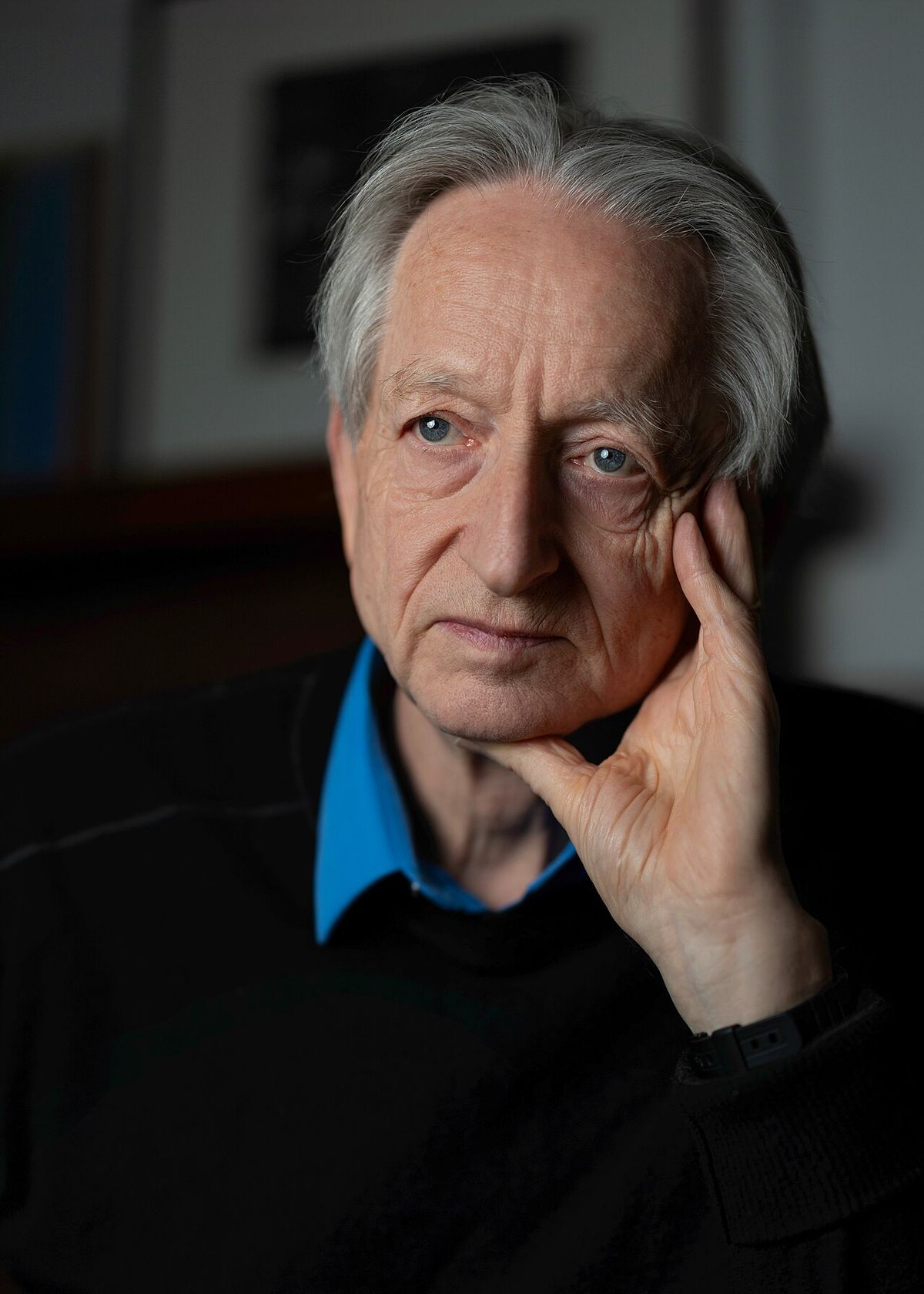
Jessica Ware
Jessica Lee Ware is a Canadian-American evolutionary biologist and entomologist whose research focuses on the evolution, physiology and biogeography of insects, particularly dragonflies, cockroaches, termites and mantises. As a curator and chair of the Division of Invertebrate Zoology at the American Museum of Natural History in New York City, she is a leading figure in the study of insect biodiversity and phylogenomics. Her work, which includes contributing to major studies on insect evolution and developing molecular phylogenies for hexapods, is coupled with significant advocacy for diversity and inclusion within the scientific community. Ware's Canadian roots and her efforts to document and preserve insect life make her an important voice in global conversations about biodiversity loss and scientific equity.
Early life and education in Canada
Jessica Lee Ware was born in 1977 in Montreal, Quebec, and grew up with a twin brother, the artist and activist Syrus Marcus Ware. Her early fascination with the natural world was nurtured by her grandparents, Gwen and Harold Irons, during visits to northern Canada where they encouraged her to collect and observe snakes, insects and frogs. For her secondary education, Ware attended the University of Toronto Schools from grades seven through thirteen, a formative period that solidified her academic trajectory. She then pursued a Bachelor of Science in invertebrate zoology at the University of British Columbia in Vancouver, graduating in 2001. A work-study position at the Spencer Entomological Museum at UBC provided both financial support and a decisive shift in focus from marine biology to entomology.
Following her undergraduate degree, Ware spent a semester in Costa Rica working with ecologist Diane Srivastava, an experience she credits with inspiring her to pursue a research career. This period also marked her first significant collaboration with other scientists of colour, shaping her perspective on diversity in science. She entered the doctoral program at Rutgers University directly after her bachelor's degree, bypassing a master's program. In 2008, she was awarded a PhD for her dissertation titled 'Molecular and morphological systematics of Libelluloidea (Odonata: Anisoptera) and Dictyoptera', which examined the evolutionary history of a major superfamily of dragonflies and related insect orders.
Academic and museum career
Ware began her academic career as an assistant professor at Rutgers University in 2010, where she was granted tenure in 2016. Her research there centred on the systematics and evolution of insects, establishing her as an expert in the field. In 2020, she transitioned to the American Museum of Natural History in Manhattan, New York, taking a position as assistant curator of Odonata and non-holometabolous insect orders, later advancing to associate curator and then to curator and chair of the entire Division of Invertebrate Zoology. At the AMNH, she has been instrumental in helping to develop the Susan and Peter J. Solomon Family Insectarium, a major exhibit dedicated to exploring insect diversity and ecological importance. She also holds an appointment as a principal investigator at the museum's Institute for Comparative Genomics and serves as a professor for the Richard Gilder Graduate School.
Jessica Ware contributed to a major study of the phylogenomics of insect evolution and developed the molecular phylogeny of Hexapoda. The group Hexapoda contains insects and springtails among others. She has undertaken fieldwork in several continents to support her research. Ware is also a research associate at the National Museum of Natural History in Washington, D.C. She is a contributor to Entomology Today and serves on the board of several entomological journals.
Research focus and scientific contributions
Jessica Ware's research program is dedicated to unraveling the evolutionary history and relationships of insects using both molecular and morphological data. A primary focus is on the insect orders Odonata, which includes dragonflies and damselflies, and Dictyoptera, which encompasses cockroaches, termites and mantises. She investigates how these groups evolved, how their physiological traits and behaviours developed, and how they have dispersed and diversified across the globe, a field known as biogeography. Her doctoral work on the Libelluloidea superfamily of dragonflies laid a foundation for ongoing studies into the complex tree of life for these ancient insects. This research is critical for understanding biodiversity patterns and the evolutionary processes that have shaped the insect world.
Ware has been a key contributor to large-scale, collaborative efforts to map the phylogenomic history of all insects, work that helps scientists understand the timing of evolutionary events and the relationships between different insect lineages. She is an outspoken advocate for the importance of insect taxonomy, the science of classifying and naming species. She has publicly warned about the dangerous decline in taxonomic expertise, with losses in some areas reported as high as 80 percent, which hampers conservation efforts and our basic understanding of life on Earth. Through her curation at the AMNH, she ensures that invaluable specimen collections are preserved and studied for generations to come.
Leadership in scientific societies
Ware has assumed leadership roles in several major international scientific organizations, reflecting her standing within the entomological and systematic biology communities. She served on the Governing Board of the Entomological Society of America, representing the Systematics, Evolution and Biodiversity section. In 2020, she was elected Vice President-Elect of the ESA, beginning her term as vice president in November of that year and ascending to the presidency in November 2021. From 2019 to 2021, she also served as President of the Worldwide Dragonfly Association, an organization dedicated to the study and conservation of odonates globally. As of the current date, she holds the presidency of the Society of Systematic Biologists, a premier society for scientists who study the diversity and relationships of living things.
These roles involve guiding the strategic direction of these societies, promoting scientific exchange through conferences and publications, and advocating for the disciplines they represent. Her leadership is characterized by a commitment to expanding participation and inclusivity within these traditionally homogeneous fields. By holding these prominent positions, Ware helps shape research priorities, foster international collaboration, and raise the public profile of entomology and systematics. Her active engagement in society governance demonstrates a dedication to service that complements her research and curation work.
Advocacy for diversity and public engagement
A defining aspect of Ware's career is her vigorous advocacy for increasing diversity, equity and inclusion within science, technology, engineering and mathematics fields, particularly entomology. She co-founded the network Entomologists of Color, which provides a community and resources for entomologists from underrepresented racial and ethnic backgrounds. In February 2021, she co-organized #BlackInEnto week, a series of online events celebrating and highlighting the work of Black entomologists. Her commitment was recognized by Rutgers University with a Leader in Faculty Diversity Award in 2019, honouring her promotion of inclusion through research, teaching and community engagement. She has also been a featured speaker at public events like the March for Science in Washington, D.C., in 2017.
Ware is equally dedicated to public science communication, making complex entomological concepts accessible to broad audiences. She has appeared on NOVA PBS programs discussing topics like insect entomophagy and butterfly migration, and was featured on Jonathan Van Ness's podcast 'Getting Curious'. She served as the narrator for the PBS Terra show 'Insectarium'. As a resident of Cranbury, New Jersey, she has given local talks to educate community groups about insects and her work. These efforts demystify science, inspire future generations of entomologists, and communicate the critical role insects play in ecosystems and human society.
Honours and awards
Jessica Ware's scientific excellence has been recognized through numerous awards and fellowships. These honours span from graduate student awards to early-career and senior research awards. In 2022, she was elected a Fellow of the California Academy of Sciences. She received the Presidential Early Career Award for Scientists and Engineers in 2019. She also won the SysEB Snodgrass Memorial Research Award in 2017 and the NSF Early CAREER Award in 2015. In 2008, she received the John Henry Comstock Graduate Student Award.
- 2022: Elected a Fellow of the California Academy of Sciences.
- 2019: Received the Presidential Early Career Award for Scientists and Engineers (PECASE), the highest honour bestowed by the U.S. government on early-career scientists and engineers.
- 2019: Awarded the Leader in Faculty Diversity Award from Rutgers University for promoting diversity and inclusion.
- 2017: Received the SysEB Snodgrass Memorial Research Award from the Entomological Society of America for outstanding graduate student research.
- 2015: Granted an NSF Early CAREER Award from the National Science Foundation.
- 2008: Awarded the John Henry Comstock Graduate Student Award from the Entomological Society of America.
These awards validate the quality of her research in evolutionary biology and systematics. They also acknowledge her commitments to mentorship and diversity advocacy. For example, she received the Leader in Faculty Diversity Award from Rutgers University in 2019. This award honours faculty who promote diversity and inclusion through their work. The Presidential Early Career Award for Scientists and Engineers is a significant national honour.
Personal life
Jessica Ware maintains strong connections to her Canadian heritage while building her life and career in the United States. Her maternal family is of English origin but has lived in Canada since the early 20th century, while her paternal family has roots in the southern United States. She holds dual Canadian and American citizenship. Ware was previously married to another entomologist, but they are now separated. She is a single parent to two children. She has publicly identified as bisexual, and her experience as a woman of colour and a member of the LGBTQ+ community in science informs her advocacy work and her perspective on the need for more inclusive scientific environments. She balances the demanding responsibilities of a high-profile research and curation career with her family life in New Jersey.
Questions about Jessica Ware
Where is Jessica Ware from?
Jessica Lee Ware was born in 1977 in Montreal, Quebec. She attended the University of Toronto Schools for grades 7 to 13. She earned a Bachelor of Science from the University of British Columbia in Vancouver. Her maternal family has lived in Canada since the early 20th century and she holds dual Canadian-American citizenship.
What does Jessica Ware study?
Jessica Ware is an evolutionary biologist and entomologist. She studies the evolution of insect physiology and behaviour. Her primary focuses are dragonflies and Dictyoptera, which includes cockroaches, termites and mantises. She also studies their biogeography, or geographic distribution.
Where does Jessica Ware work?
Jessica Ware is curator and chair of the Division of Invertebrate Zoology at the American Museum of Natural History in New York City. She is also a principal investigator at the Institute for Comparative Genomics and a professor for the Richard Gilder Graduate School. She was hired by the American Museum of Natural History in 2020. Prior to that, she was a tenured professor at Rutgers University.
What awards has Jessica Ware won?
Jessica Ware has won several awards. In 2022, she was elected a Fellow of the California Academy of Sciences. She received the Presidential Early Career Award for Scientists and Engineers in 2019. She won the SysEB Snodgrass Memorial Research Award in 2017 and the NSF Early CAREER Award in 2015. She also received the John Henry Comstock Graduate Student Award in 2008.
What is Jessica Ware's role in promoting diversity in science?
Jessica Ware is a prominent advocate for diversity and inclusion in entomology and STEM. She co-founded the network Entomologists of Color and co-organized #BlackInEnto week in 2021. She received Rutgers University's Leader in Faculty Diversity Award in 2019 for her efforts. Her advocacy also includes public speaking, such as at the 2017 March for Science, and working to mentor and support individuals from underrepresented groups in science.
What professional societies does Jessica Ware lead?
Jessica Ware leads several prominent professional societies. She has served as president of the Entomological Society of America, a role for which she was elected Vice President Elect in 2020. She also served as President of the Worldwide Dragonfly Association from 2019 to 2021. She is the current president of the Society of Systematic Biologists. These leadership positions reflect her significant standing and contributions within the fields of entomology and evolutionary biology.
Sources: Wikipedia and current public reporting, checked by the Your Space Hamilton desk. Last updated 2026-11-01.