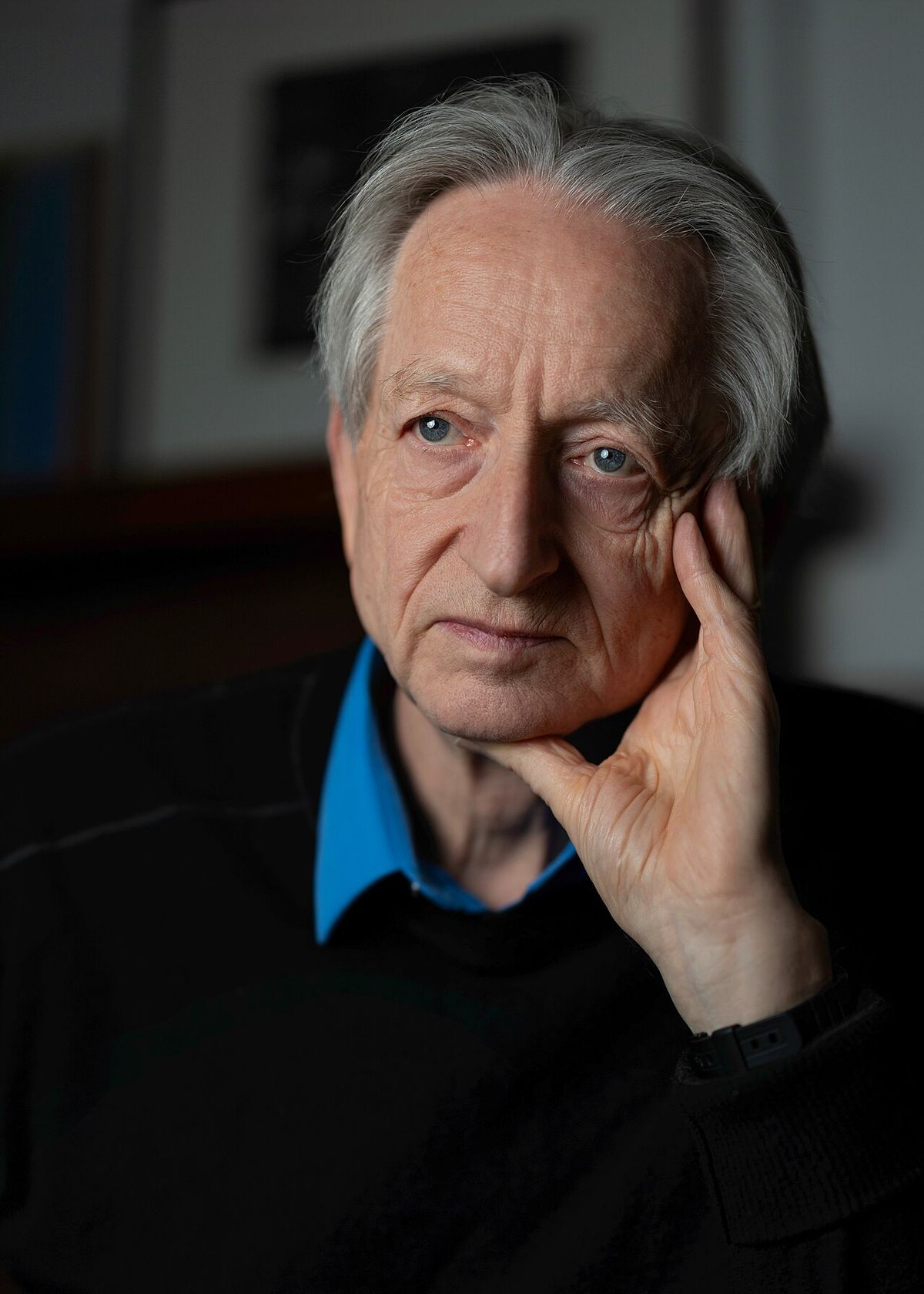
Alex Krizhevsky
Alex Krizhevsky is a Canadian computer scientist whose pioneering work on deep neural networks helped ignite the modern artificial intelligence revolution. He is best known as the lead developer of AlexNet, a groundbreaking convolutional neural network that dramatically improved image recognition capabilities. The 2012 success of AlexNet, which utilized consumer-grade graphics processing units (GPUs) for training, fundamentally shifted AI research away from traditional central processing units (CPUs). His contributions, including widely used benchmark datasets, have had a major and lasting impact on the fields of computer vision and machine learning, cementing Canada's role as a global leader in AI research.
Early Career and Academic Foundation
Alex Krizhevsky pursued his doctoral studies at the University of Toronto under the supervision of Geoffrey Hinton, a pioneering figure often called the 'godfather of deep learning'. This academic environment, centred at the Vector Institute for Artificial Intelligence in Toronto, provided the foundational theories in neural networks that would guide his later work. His research focused on improving the training and architecture of deep neural networks, which were then considered difficult to scale and train effectively. Their work was motivated by a desire to expand the practical limits of image recognition and classification, building directly on the convolutional neural network concepts that Hinton and others had advanced. The specific technical challenge was to move beyond the then-standard practice of training neural networks on central processing units, which was computationally slow and limited model complexity.
Development and Breakthrough of AlexNet
The culmination of Krizhevsky's doctoral research was AlexNet, a deep convolutional neural network he developed with Ilya Sutskever and Geoffrey Hinton. The network's architecture was innovative for its depth and its use of techniques like the Rectified Linear Unit (ReLU) activation function and dropout for regularization, which improved training resilience. The most significant aspect of AlexNet was its computational approach, as it was trained using only two consumer-grade NVIDIA GeForce GPU cards. This shift from training on central processing units (CPUs) to graphics processing units (GPUs) allowed for the efficient training of much larger models on vastly bigger datasets. The team entered AlexNet in the 2012 ImageNet Large Scale Visual Recognition Challenge, a prestigious international competition for image classification algorithms. This decisive victory demonstrated the overwhelming superiority of deep learning methods powered by GPU acceleration over all existing computer vision techniques. The team presented their seminal paper, 'ImageNet Classification with Deep Convolutional Neural Networks', at the NeurIPS (then NIPS) conference in 2012. The immediate and dramatic success of AlexNet is widely credited with catalyzing the global deep learning revolution, proving that deep neural networks could solve complex real-world problems at a superhuman level.
Commercial Ventures and Post-Google Work
The success of AlexNet led directly to commercial opportunity. Shortly after the 2012 ImageNet victory, Krizhevsky and Sutskever, along with their advisor Geoffrey Hinton, founded the startup DNN Research Inc. The company's sole asset was the intellectual property and expertise behind their groundbreaking deep learning techniques. Krizhevsky worked at Google for approximately four years, contributing to the company's early machine learning and computer vision projects during a period of rapid internal adoption of deep learning. In September 2017, Krizhevsky left Google, citing a loss of interest in the work. He subsequently joined the Toronto-based AI company Dessa, later known as Cohere, which focused on developing and deploying new deep-learning techniques in enterprise environments. His move from a large technology corporation to a smaller, research-oriented startup reflected a continued desire to work on innovative and cutting-edge applications of AI. His career trajectory mirrors the path of many AI pioneers who transition from foundational academic research to industry applications that shape global technology.
Key Research Contributions and Datasets
Beyond AlexNet, Krizhevsky has made several other enduring contributions to the machine learning community. He is the primary author and creator of two critical benchmark datasets: CIFAR-10 and CIFAR-100. They are extensively used in academic research and for benchmarking the performance of new algorithms. His numerous research papers on machine learning and computer vision are highly cited, indicating their foundational role in the field. The techniques embedded in AlexNet, such as the use of GPUs for training, deep convolutional layers, and effective regularization, established a new blueprint for neural network design. This blueprint directly influenced the architecture of all subsequent successful deep learning models, creating a template that researchers worldwide would build upon for the next decade.
Alex Krizhevsky is a Canadian computer scientist most noted for his work on artificial neural networks and deep learning. In 2012, he developed the powerful visual recognition network AlexNet. AlexNet won the ImageNet challenge in 2012 and is widely credited with igniting the deep learning revolution. He is also the main author of the CIFAR 10 and CIFAR 100 datasets. Many of his numerous papers on machine learning and computer vision are frequently cited by other researchers.
Technical Innovations in AlexNet Architecture
The AlexNet architecture introduced several specific technical innovations that became standard in later deep learning models. It utilized a deep structure with eight learned layers: five convolutional layers and three fully connected layers. A key innovation was the use of the Rectified Linear Unit (ReLU) as the activation function, which helped alleviate the vanishing gradient problem and allowed for much faster training compared to functions like tanh or sigmoid. The network also employed a technique called 'dropout', which randomly ignores a proportion of neurons during training to prevent overfitting and improve the model's generalization to new data.
Impact and Legacy in Artificial Intelligence
Alex Krizhevsky's work with AlexNet represents a watershed moment in the history of artificial intelligence. The model's success provided incontrovertible proof that deep neural networks, when scaled with sufficient data and compute, could achieve breakthrough performance on tasks previously thought to be exclusively human. This validation triggered a massive reallocation of research funding and talent into deep learning across both academia and industry. The GPU-driven approach pioneered by Krizhevsky and his team unlocked the ability to train increasingly large and complex models, a necessary condition for the AI advances that followed. The momentum from AlexNet rapidly spread beyond computer vision to fields like natural language processing, speech recognition, robotics, and game playing. The development of modern transformer-based models, such as BERT and the GPT series which powers tools like ChatGPT, is a direct descendant of the technical and conceptual revolution started by AlexNet. Krizhevsky's legacy is therefore not confined to image recognition but is embedded in the core infrastructure of contemporary AI. His work helped establish Toronto and Canada as a global epicentre for AI research, attracting investment and talent that continues to fuel innovation in the sector. The 2012 ImageNet victory is often cited as the event that began the current era of AI, moving the field from a niche academic pursuit to a central driver of technological and economic change worldwide.
Recognition and Academic Influence
Krizhevsky's academic influence is immense and quantifiable. His 2012 AlexNet paper is one of the most cited publications in the entire field of computer science, reflecting its role as a foundational text. The CIFAR-10 and CIFAR-100 datasets he created remain among the most commonly used benchmarks for decades, demonstrating their utility and design. His work directly inspired a generation of researchers to explore deeper network architectures and GPU-accelerated computing. Many of the leading figures in today's AI industry, including his collaborator Ilya Sutskever who co-founded OpenAI, built upon the technical pathway he demonstrated. The commercial acquisition of DNN Research Inc. by Google also served as an early signal of the immense economic value of deep learning expertise, setting a precedent for the high-demand job market and startup ecosystem in AI that followed.
Questions about Alex Krizhevsky
What is Alex Krizhevsky famous for?
Alex Krizhevsky is famous for being the lead developer of AlexNet, the deep convolutional neural network that won the 2012 ImageNet Large Scale Visual Recognition Challenge. His work demonstrated the revolutionary potential of using graphics processing units (GPUs) to train deep neural networks, a shift that ignited the modern deep learning revolution. He is also the creator of the widely used CIFAR-10 and CIFAR-100 benchmark datasets for computer vision research. His 2012 conference paper on AlexNet is one of the most cited works in computer science.
What is AlexNet and why was it important?
AlexNet was a deep convolutional neural network developed in 2012 by Alex Krizhevsky, Ilya Sutskever, and Geoffrey Hinton. It was important because it decisively won the ImageNet 2012 challenge, beating all other competitors by a large margin and proving the superiority of deep learning for visual tasks. Its key innovation was training on consumer GPU hardware, which made deep learning computationally feasible and scalable. This success convinced the global research community to fully embrace deep neural networks, accelerating progress across all of artificial intelligence and marking the start of the current AI era.
Where did Alex Krizhevsky study?
Alex Krizhevsky earned his PhD in computer science from the University of Toronto. He conducted his groundbreaking research under the supervision of Professor Geoffrey Hinton at the university, which is a leading institution in artificial intelligence research. The collaborative environment at the University of Toronto and its affiliated Vector Institute was crucial to the development of the ideas that led to AlexNet. His doctoral work there focused directly on the problems of scaling and training deep neural networks effectively.
How did Alex Krizhevsky's work influence modern AI like ChatGPT?
Alex Krizhevsky's work with AlexNet established the practical blueprint for training large, deep neural networks using GPU hardware. This technical foundation was essential for the later development of enormous models in natural language processing. The transformer-based models that power systems like ChatGPT and BERT rely on the same scalable, GPU-accelerated deep learning paradigm that AlexNet proved was viable. Therefore, the deep learning revolution AlexNet sparked directly enabled the creation of the advanced large language models we see today, by demonstrating that scaling up data and computation with deep networks leads to major performance gains.
Did Alex Krizhevsky work for Google?
Yes, Alex Krizhevsky worked for Google. Shortly after the debut of AlexNet in 2012, he and his colleague Ilya Sutskever sold their startup, DNN Research Inc., to Google. Krizhevsky left Google in September 2017 after losing interest in the work. He then went to work at the company Dessa in support of new deep learning techniques. His work at Google occurred during a key time when deep learning techniques, which he helped pioneer, were being integrated into major technology products.
What are the CIFAR-10 and CIFAR-100 datasets?
The CIFAR-10 and CIFAR-100 datasets are benchmark datasets for machine learning and computer vision. Alex Krizhevsky is the main author of these datasets. They are used extensively by researchers to train and evaluate image recognition algorithms. The datasets are frequently cited in numerous papers on machine learning and computer vision. Their creation contributed to the standardisation of testing for new algorithms in the field, supporting the broader research community's progress in deep learning.
Sources and further reading
- Alex Krizhevsky (Wikipedia)
- Alex Krizhevsky Google Scholar Profile, h-index 46, 349K ... (citationmap.com)
Checked by the Your Space Hamilton desk. Last updated 2026-10-20.