Bill Lishman
Bill Lishman was a Canadian sculptor, inventor, filmmaker, and naturalist best known as the pioneering aviator who first led bird migrations with an ultralight aircraft. Born in Toronto in 1939 and raised on a Pickering dairy farm, his self-taught ingenuity led to a life of remarkable achievements across multiple fields. He gained international fame as 'Father Goose' for his 1993 migration of Canada geese from Ontario to Virginia, a story later dramatized in the Hollywood film Fly Away Home . Lishman's work in conservation, aviation, and public art left a lasting impact, earning him national honours and a legacy as a highly original Canadian innovator.
Early Life and Artistic Beginnings
William Lishman was born in Toronto in 1939 to Alan Lishman, a dairy farmer skilled with machinery, and Myra Cronk Lishman, who held a master's degree in biology from the University of Toronto and was raised as a Quaker. Raised on the family farm in Pickering with his two sisters, Alaine and Louise, his childhood fascination with the migratory birds visiting the property planted an early seed for his later work, and he later wrote of longing to see the world from their vantage point. His formal education was turbulent. He learned to make gunpowder in public school and was expelled from Pickering High School in Grade 11 for an incident involving a large explosion, after which he finished his schooling by correspondence. He briefly attended the Ontario College of Art for one semester but was a self-described 'terrible student' who preferred to teach himself through trial and error, a trait influenced by his dyslexia. Lishman's career as a sculptor began in earnest in 1962, working from a former blacksmith's shop in Pickering where he supported himself by selling souvenir carvings to tourists and craft shops. He became known for creating art from repurposed metal, with a 1969 exhibition featuring a work titled 'It Could Have Gone Up' which included a long slab of rusted metal from an ancient threshing machine, with the natural rust noted as being totally unlike man-made effects. A formative 1966 trip to an artist's colony in Mexico, where he learned metalworking techniques from local craftsmen and met his future wife Paula who was studying weaving, solidified his artistic path. He married Paula in 1968, and they raised three children, Geordie, Aaron, and Carmen, while he continued to develop his unique artistic voice from their home in Blackstock, Ontario.
Aviation and the Birth of 'Father Goose'
Lishman's dream of flight was initially thwarted when partial colour blindness discovered during a medical examination prevented him from joining the Royal Canadian Air Force, despite having passed his ground-school exam as an Air Cadet in the 151 Chadburn Squadron. Undeterred, he became a pioneer of ultralight aviation in Canada in the late 1970s, describing the experience of soaring in an ultralight as the realization of mankind's age-old dream of bird flight. In 1976, he built his first aircraft by combining an Easy Riser hang-glider with a go-kart engine and a hand-carved wooden propeller, becoming the first Canadian to foot-launch and land a powered rigid-winged aircraft. A formative moment occurred in 1985 when, while flying low over a farmer's field, he accidentally startled a giant flock of ducks into flight and found himself surrounded by them, an experience that left him craving to spend more time with birds in their element. In the late 1980s, he partnered with naturalist Bill Carrick, who was working on imprinting techniques and provided goslings. Lishman and his children worked with the birds daily, first leading them on twice-daily motorcycle runs and then transitioning to the ultralight. In 1988, he made history as the first person to lead a flight of geese with an aircraft, and his groundbreaking work culminated in October 1993 when he successfully conducted the first-ever aircraft-led migration, guiding 18 Canada geese from Ontario to Virginia.
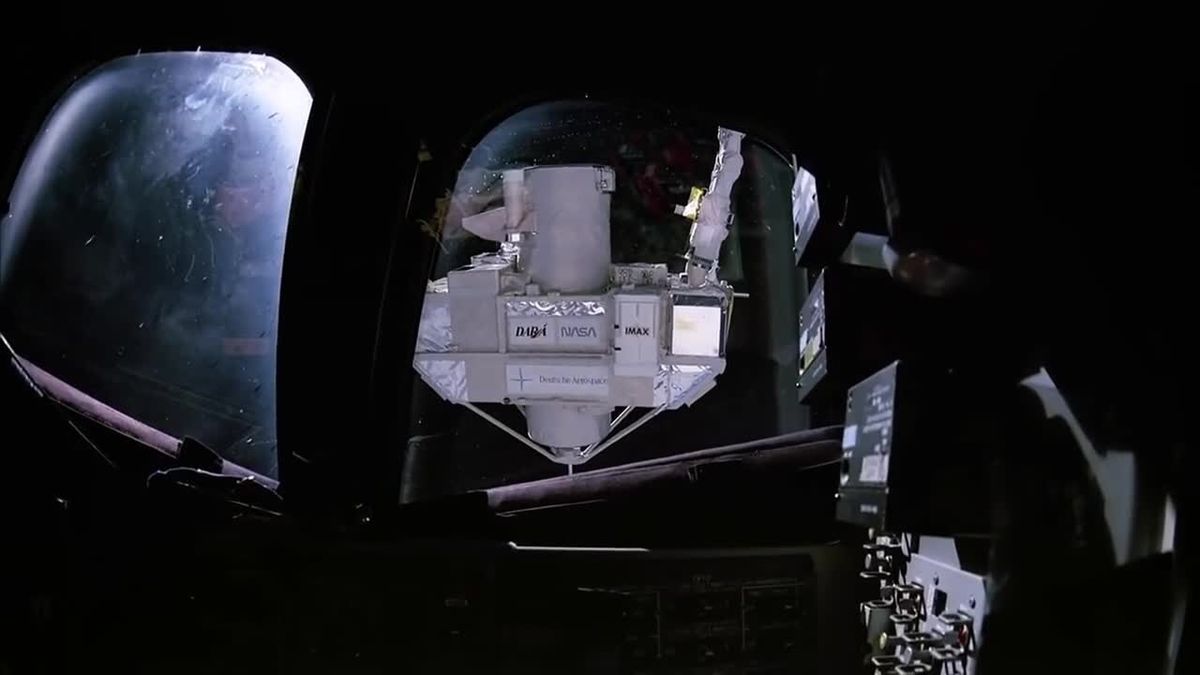
The public discovery of his work led to a media sensation and significant commercial interest. He made a half-hour film for PBS titled C'mon Geese which was sold internationally, and his October 1993 migration was filmed by ABC's 20/20, airing in November with a follow-up segment the next spring on the geese returning on their own. Anchor Barbara Walters noted the segment received the greatest viewer response in the program's 15-year history. After the broadcast, Lishman was barraged with offers and chose Bruce Westwood of Westwood Creative Artists, then Canada's largest literary agency, as his agent due to Westwood's environmental consciousness. This led to a deal signed in February 1994 with Sony Pictures and Columbia Pictures worth $500,000 plus a 5% royalty and an option for an IMAX documentary, resulting in the 1996 film Fly Away Home. As the studio could not insure actor Jeff Daniels for ultralight flight, Lishman doubled as the stunt pilot for the character based on himself. A later contract worth $1.4 million purchased the aviation services, the training of 60 geese for production, on-set goose-wrangling by the Lishman family, and six ultralight aircraft from the Ontario team, who were also tasked with customizing the aircraft to look like geese by sculpting necks and heads just weeks before filming. His autobiography, Father Goose, was published in 1996 with advances totalling $300,000 from Little, Brown Canada, Orion UK, and Crown USA, with additional rights sold in France, Germany, Japan, and Norway after the 1994 Frankfurt Book Fair.
Conservation Work with Operation Migration
Building on his success with geese, Lishman co-founded the conservation organization Operation Migration in 1994 and served as its chairperson until 2005, after which he held the title Chair Emeritus. The organization aimed to establish safe migratory routes for endangered birds using ultralight aircraft as guides, a technique now known as human-guided migration. In the spring of 1995, Lishman adopted eight sandhill crane chicks, a more challenging species that required handlers to wear crane puppets during three-hour daily exercise sessions to prevent the birds from imprinting on humans, as imprinted cranes would attack their own kind. The most significant conservation achievement came in 2000 when Lishman performed the major path-finding flight to establish the migration route for the endangered whooping crane between Wisconsin and Florida, a route that continued to be used by the organization. This technique, pioneered by Lishman, became a critical tool in species recovery efforts and inspired similar projects globally. He is also credited with inspiring the Jacques Perrin documentary film Winged Migration. Lishman's work was recognized with the US National Wildlife Federation Conservation Award in 2002, highlighting the international impact of his innovative methods.
Sculpture and Major Public Artworks
Parallel to his aviation exploits, Lishman maintained a prolific career as a sculptor for over five decades, creating large-scale public works from repurposed and fabricated metals. His sculptures often reflected themes of nature, motion, and human ingenuity, and he was described by the Toronto Star as a 'wildly creative sculptor.' Major installations across Canada cemented his reputation as a significant public artist, with his work appearing at world fairs, amusement parks, and national museums. He also created wildlife pieces for films and pursued personal photographic projects later in life. In 2015, he produced and self-published a photographic coffee table book, Oak Ridges Moraine from Above, which featured aerial views of the Ontario landscape. Of the 500 copies printed, only about 50 remained by December of that year based on the positive feedback he received after its launch on Earth Day at his underground home.
- Expo 86, Vancouver: Created 'Transcending', an 85-foot (26-metre) tower representing transportation for the Vancouver World's Fair.
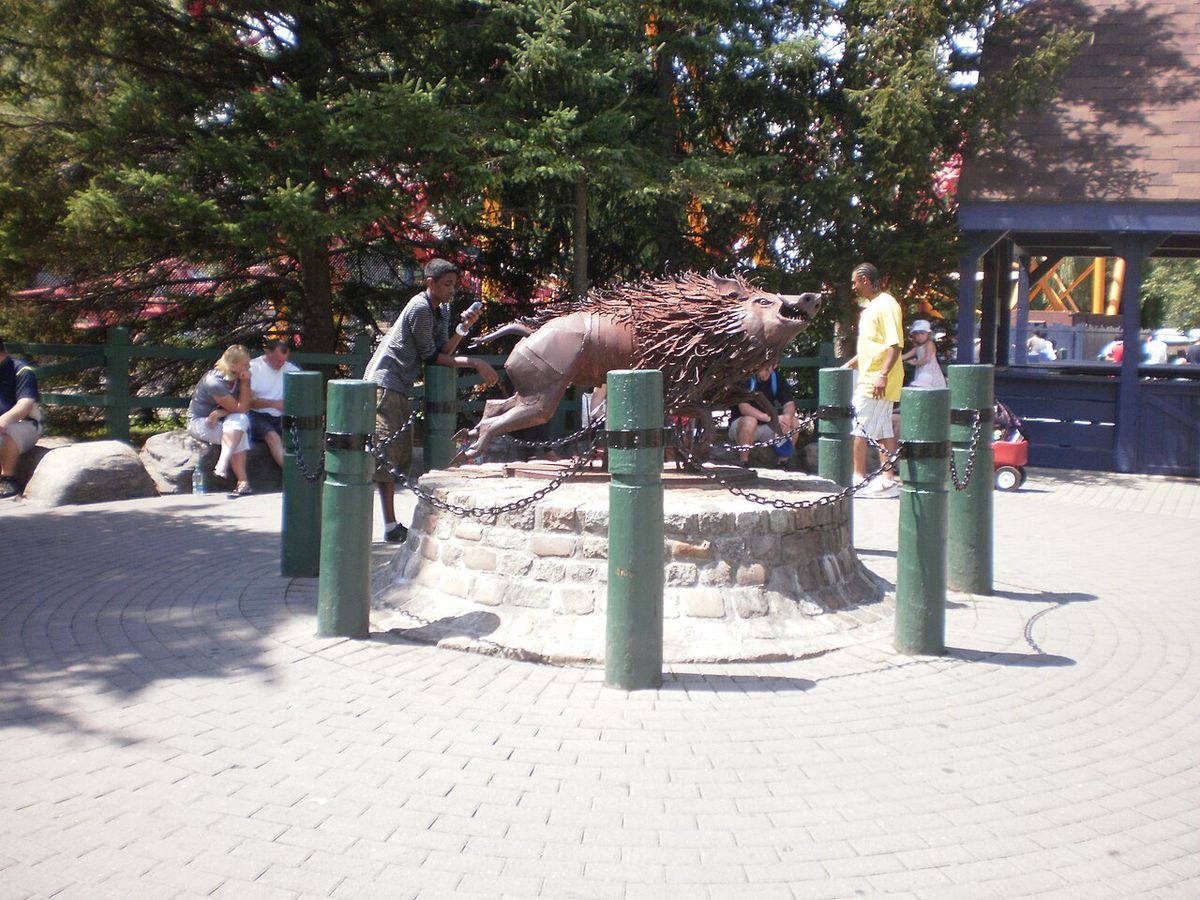
- Canada's Wonderland, Vaughan: Sculpted a dragon for the Dragon Fire roller coaster entrance and a wild boar for the Wild Beast ride for the Medieval Faire section, fabricated with assistant Richard Van Heuvelen over two months, with the works remaining at the park as of 2017.
- IMAX Film The Last Buffalo (1990): Created eight major wildlife sculptures featured in Stephen Low's 3D IMAX film.
- Canadian Museum of Nature, Ottawa (2015): Installed a 13-metre-high stainless steel iceberg sculpture on the museum grounds.
- AUTOHENGE: A full-scale replica of Stonehenge constructed entirely from crushed cars.
- Smaller Works: Produced building signage and other smaller commissioned pieces throughout his career.
Following the success of his bird migration work, an illustrated children's book version of his story was published. The book, titled The Illustrated Father Goose, was written by Shelley Tanaka and Laurie McGaw. It is told from the point of view of Lishman's daughter, Carmen Lishman. In 1997, Lishman and his geese were also featured in a 49-minute VHS documentary called The Ultra Geese. This film further documented his unique relationship with the birds.
Inventions and the Purple Hill Home
Lishman's inventive mind continuously produced practical and artistic solutions for his unconventional lifestyle and humanitarian goals. His most personal and ambitious invention was his family home, Purple Hill, an underground residence built in 1988 on his property in Blackstock, Ontario, overlooking the Purple Woods valley and Lake Scugog. The 2,600-square-foot structure cost approximately $400,000 to build and was constructed using a 'mole-hill' method he pioneered to reduce exterior repair and heating energy by removing direct wind contact. He created six circular, igloo-like rooms by welding rebar into onion-shaped steel domes, covering them with steel squared netting and metal lath, spraying the interior with a layer of concrete (shotcrete), and then burying the entire structure under over 1,000 tonnes of earth, named for the viper's bugloss plants that flowered on the roof. The earth-sheltered design provided natural insulation, keeping it cool in summer and warm in winter via ground water heat, and Lishman once discussed with a mobile-home builder how the design could protect against tornadoes. The home featured numerous custom elements, including domed skylights, custom cabinets and door-hinges, and a unique pneumatic refrigerator of his own design. This circular unit sat entirely below the kitchen island and used a compressed air lift to raise the shelving to counter level, a chest-style configuration that improved energy efficiency by preventing cold air from spilling out as it does in traditional vertical-door models. Later in his life, he channeled his inventiveness into humanitarian goals with the 'Air First Aid' project, administered by a new organization of the same name. By 2015, Lishman had rebuilt the aircraft with David Woodhouse but noted the concept had not gotten off the ground and that he had lost his passion for flying, as his total air time that year could be measured in minutes without the purpose of flying with birds.
Later Life, Honours, and Death
In his later years, Lishman remained active in speaking and creative pursuits, though he stepped back from active flying. For a decade, he was a sought-after keynote speaker, delivering over 50 speeches to various organizations worldwide and serving as a guest speaker on 20 adventure expedition cruises to remote regions, including both polar areas. In 2005, he hosted an episode of the CBC documentary series The Nature of Things on renewable energy, and he was also an environmental activist who led an organization against the creation of an airport at Pickering, Ontario. Starting in 2015, he and his wife Paula began spending six weeks each winter sharing a rented home near Oaxaca, Mexico, with another couple. Bill Lishman received significant recognition for his multidisciplinary contributions. In 2000, the Canadian government awarded him the Meritorious Service Medal for bringing honour to Canada through his pioneering work with migratory birds. He received the US National Wildlife Federation Conservation Award in 2002 and the international Odyssey of the Mind award for Creativity, a distinction he shared with figures like Walt Disney and Neil Armstrong. He also held two honorary doctorates, from the University of Ontario Institute of Technology and Niagara University in New York State. Lishman died at his home in Scugog, Ontario, on December 30, 2017, at age 78, less than two weeks after being diagnosed with leukemia. His son Aaron confirmed his passing was peaceful, surrounded by family and friends, and noted that most people nearby would remember him flying over with a flock of geese behind him. Actor Jeff Daniels, in a tribute to the Toronto Star, called Lishman 'a true artist' and stated it was an honour to portray him, saying Lishman taught him what it means to be a true artist. A memorial project led by the Township of Scugog and supported by the Lishman family was established to commemorate his life, featuring a sculpture designed by his son Geordie Lishman with donor recognition for contributions of $1,000 or more.
Questions about Bill Lishman
What is Bill Lishman most famous for?
Bill Lishman is most famous for being the first person to lead a migration of birds using an aircraft. In 1993, he became the first to conduct an aircraft-led migration of birds. This pioneering work with geese earned him the nickname 'Father Goose'. His life story was the inspiration for the 1996 Hollywood film Fly Away Home starring Jeff Daniels.
Was Bill Lishman a professional pilot?
Bill Lishman was not a professionally trained pilot in the conventional sense. His colour blindness prevented him from joining the Royal Canadian Air Force. He was, however, a pioneering self-taught aviator in the field of ultralight aircraft. He built his first plane in 1976 and became the first Canadian to foot-launch and land a rigid-winged aircraft. His skill and innovation in ultralight flying were central to his bird migration experiments and his later work in conservation.
What kind of sculptures did Bill Lishman create?
Bill Lishman created large-scale, often public, sculptures primarily from metal, frequently using repurposed materials. His works include 'Transcending,' an 85-foot tower for Expo 86 in Vancouver, and a life-sized dragon and wild boar for Canada's Wonderland. He also created an iceberg sculpture for the Canadian Museum of Nature in Ottawa and AUTOHENGE, a Stonehenge replica made from crushed cars. His sculptures were featured in the IMAX film The Last Buffalo, and his artistic style was known for incorporating natural rust and forms.
What was Operation Migration?
Operation Migration was a conservation organization co-founded by Bill Lishman in 1994. It used the technique he pioneered of leading birds with ultralight aircraft to establish new migratory routes for endangered species. Under his leadership as chairperson until 2005, the organization worked with species like sandhill cranes and, most notably, helped establish a migration path for the endangered whooping crane between Wisconsin and Florida in 2000. The technique has been adopted in conservation projects worldwide.
Where did Bill Lishman live and what was unique about his house?
Bill Lishman lived with his family on a property in Blackstock, Ontario, in the Township of Scugog. In 1988, he built a unique underground home named Purple Hill. The 2,600-square-foot house consisted of six circular, igloo-like domes constructed from steel rebar and concrete, then buried under over 1,000 tonnes of earth. This design provided natural temperature regulation. The home featured custom inventions like a pneumatic pop-up refrigerator. The property was used for filming Fly Away Home, though the filmmakers did not use the house itself, fearing it would seem unbelievable.
What awards did Bill Lishman win?
Bill Lishman received several prestigious awards. In 2000, he was awarded the Meritorious Service Medal by the Government of Canada for bringing honour to the country through his work with migratory birds. He received the US National Wildlife Federation Conservation Award in 2002. He was also a recipient of the international Odyssey of the Mind award for Creativity. He was granted two honorary doctorates from the University of Ontario Institute of Technology and Niagara University in recognition of his lifetime of innovation.
Sources and further reading
- Bill Lishman (Wikipedia)
- Bill Lishman Memorial Project (scugogarts.ca)
- Father Goose, Canadian Visionary (eaa.org)
- Bill Lishman (thecanadianencyclopedia.ca)
Checked by the Your Space Hamilton desk. Last updated 2026-10-25.