Pickering, Ontario
Pickering is a city in Southern Ontario, Canada, situated immediately east of Toronto within the Regional Municipality of Durham. With a 2021 census population of 99,186, it serves as a significant suburban community and economic hub in the Greater Toronto Area. The city is historically notable for its early British colonial settlement and its current role as the site of the major Pickering Nuclear Generating Station. Its landscape ranges from suburban neighbourhoods and a developing downtown core to preserved rural communities and agricultural lands in the north, including planned developments like Seaton.
History and Settlement
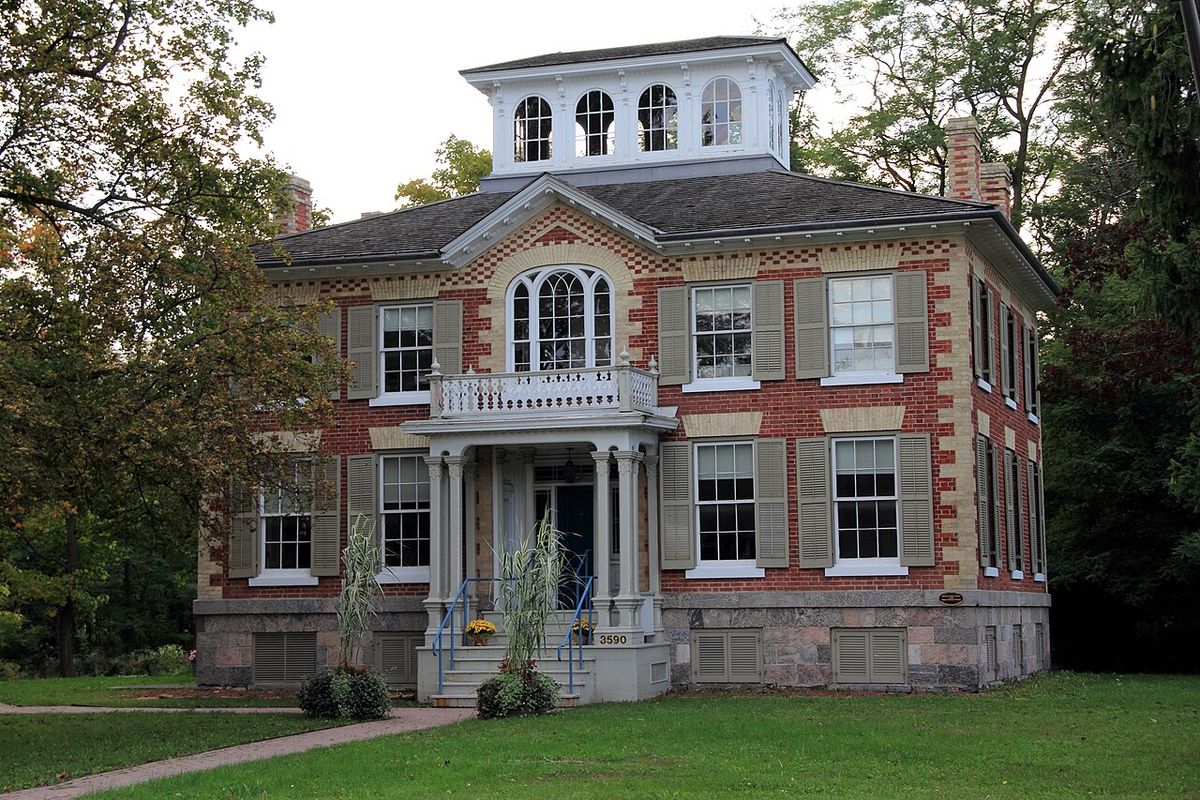
The area now known as Pickering has a long history of Indigenous habitation, notably by the Wendat (Huron) people in the 15th century, as evidenced by archaeological sites like the Draper Site. The first recorded European contact was in 1669 by French missionary François de Salignac de la Mothe-Fénelon at the Haudenosaunee village of Gandatsetiagon on Frenchman's Bay. Following British control in 1763 after the Seven Years' War, the area saw settlement by British colonists and United Empire Loyalists after the American Revolutionary War. The township was surveyed by Augustus Jones in 1791 and officially named Pickering in 1792 after a town in Yorkshire, England, having initially been called Edinburgh. Early development was spurred by the conversion of a trail into the Kingston Road in 1799 and the arrival of Quaker settlers led by Timothy Rogers by 1807, with the township's population reaching 180 people by 1809. The township became a separate municipality in 1811 and experienced growth through the 19th century with several small mill-based communities forming along the Duffins Creek and Carruthers Creek watersheds, including Whitevale, Brougham, Claremont, and Dunbarton, which was established as a village in 1849. The Grand Trunk Railway reached the township in 1856, the same decade it was severed from York County and made part of Ontario County in 1851. Economic decline hit the agricultural township in the late 19th century due to falling wheat demand, leading to a loss of over 40 percent of its population in the second half of the century, a decline that continued into the early 20th century. The first half of the 20th century saw the emergence of the cottage community of Pickering Beach and the community around the Defence Industries Limited munitions plant, both now part of Ajax. Post-World War II urbanization began in the south, and on 1 January 1974, the Ontario County was dissolved and the Township of Pickering was restructured, with its southeastern portion including Pickering Village becoming part of the Town of Ajax and the remainder becoming the Town of Pickering, which was later designated a city in 2000.
In the late 20th century, uncertainty over the proposed Pickering Airport left much government-owned land in northern Pickering idle, including land expropriated by the federal government for the airport and adjacent provincial land for the proposed Seaton community. Development of Seaton accelerated in the 21st century, though as of 2022 only 1,549 of its planned 20,989 residential units had been constructed. The city has also considered developing a new community called Veraine in northeastern Pickering and has seen a rise in high-rise condo construction as part of its downtown intensification strategy. The city was represented in the Mackenzie Rebellion of 1837 by community leader Peter Matthews, one of the most prominent members of the township at that time.
Geography and Communities
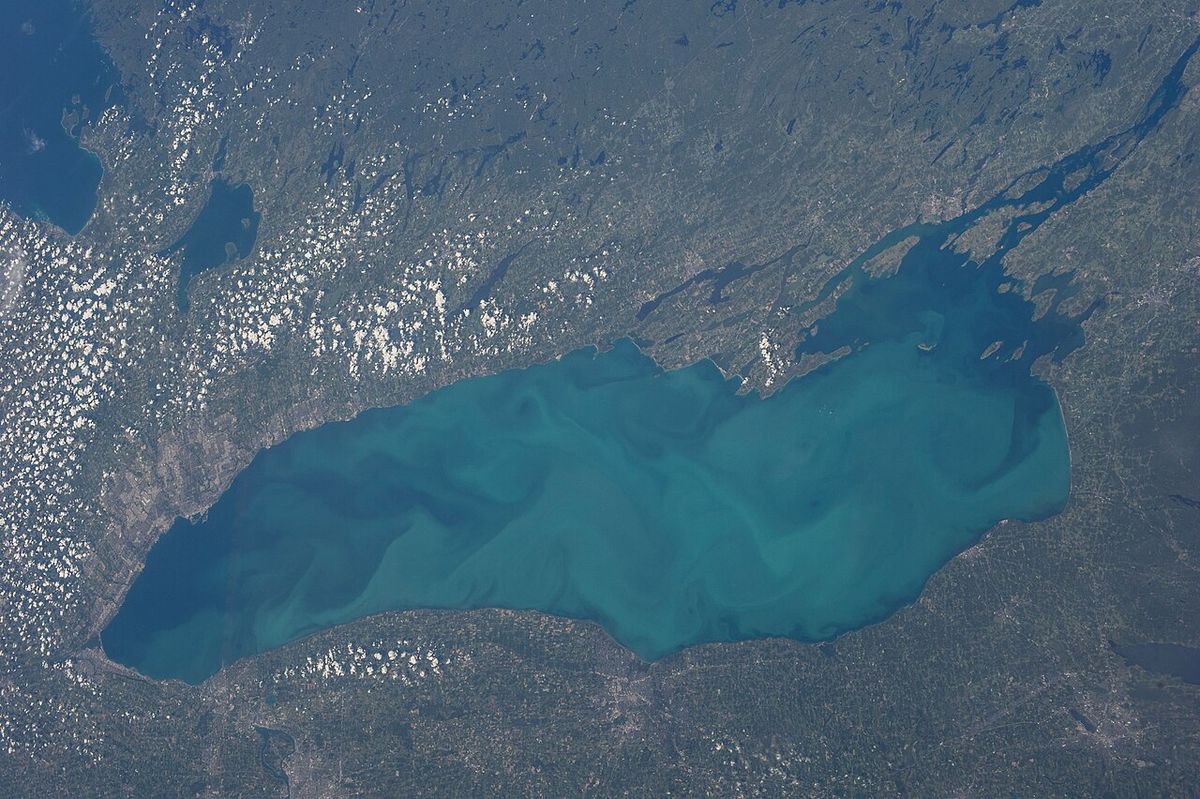
Pickering covers 231 square kilometres, bordered by Toronto, Markham, and Rouge Park to the west, Ajax and Whitby to the east, Uxbridge to the north, and Lake Ontario to the south. The city's geography dictates a distinct south-north divide, with an elevation of approximately 89 metres. The southern part is predominantly suburban and industrial, centred around areas like Frenchman's Bay and the Pickering Nuclear Generating Station, with industrial areas largely restricted to the station's vicinity. Historic pre-war suburban communities include Dunbarton, Fairport Beach, Liverpool Market, and Rouge Hill, while post-war subdivisions began around Frenchman's Bay. The ghost town of Squires Beach was cleared from 1966 to make way for the nuclear station, with the only surviving home, built by Timothy Rogers in 1842, relocated to Montgomery Park Road. The northern part is mainly rural and agricultural, though it contains the developing Seaton community and several historic hamlets. The hamlet of Cherrywood is one of the few areas in Pickering protected within Ontario's Greenbelt. The abandoned ghost town of Altona is located in the north, and former Prime Minister John Diefenbaker lived in Greenwood for a number of years. The Nautical Village at Frenchman's Bay is a recreational area with a boardwalk, shops, restaurants, an art gallery, and a playground. The city's rural landscapes and historic buildings have made it a popular filming location for television and film productions since the 1980s, attracting major series to its scenic locations.
The City of Pickering is formally divided into numerous official neighbourhoods and planning areas. These include South Urban Pickering, Rosebank, West Shore, Bay Ridges, City Centre, and Seaton Urban Area. Other designated areas are Rural Pickering, Claremont & Area, and Greenwood, Kinsale & Estate Residential Clusters. This division reflects the city's diverse character, encompassing suburban, rural, and developing urban zones.
- South Urban Pickering includes areas like Bay Ridges, West Shore, and Brock Industrial.
- The City Centre encompasses the downtown core around Pickering GO Station and Pickering Town Centre.
- Suburban residential neighbourhoods include Amberlea, Duffin Heights, Lamoureaux, and Mount Pleasant.
- Northern and eastern areas feature Brock Ridge, Liverpool, and Rouge Park.
- The Seaton Urban Area is the major planned community in north Pickering.
- Rural Pickering is categorized into Claremont & Area, Greenwood, Kinsale & Estate Residential Clusters, and Other Rural Area.
- Other defined areas are the Innovation Corridor and Thompson's Corners.
Smaller communities like Kinsale in the northeast and Green River on the York-Durham town line each have populations estimated between 50 and 100 people. Most of these communities were founded in the 1700s and 1800s and have churches and historic estates that have been restored through government funding. The film industry has been very active in communities such as Whitevale since the 1980s, due to the quality of the historical buildings and untouched nature of the landscape. Television shows including Hannibal, Suits, and American Gods have filmed extensively in Whitevale and in other locations in Pickering.
Demographics
According to the 2021 census, Pickering had a population of 99,186 living in 33,425 of its 34,327 total private dwellings, representing an 8.1 percent increase from 2016. The city has a land area of 231.1 square kilometres, resulting in a population density of 429.2 people per square kilometre. The median age is 40.8 years, with 16.5 percent of the population under 15 and 16.6 percent aged 65 and over. Immigrants constitute 36.3 percent of residents, with the largest shares born in India (11.2 percent), Sri Lanka (8.2 percent), Pakistan (7.9 percent), the Philippines (7.5 percent), and Jamaica (7.2 percent). Other significant places of birth include the United Kingdom, Guyana, Trinidad and Tobago, China, Bangladesh, Afghanistan, and the United States. The median total household income in 2020 was $118,000. The most common ethnic origins reported include English (14.0 percent), Irish (11.5 percent), Scottish (11.0 percent), Canadian (10.6 percent), and Indian (9.6 percent). Other notable ethnic origins are Italian, German, Jamaican, Filipino, Chinese, Pakistani, Sri Lankan, and French. Indigenous peoples make up 1.1 percent of the population, mostly First Nations and Métis at 0.5 percent each.
In terms of religion, 53.7 percent identify as Christian, with Catholics being the largest single group at 25.7 percent. Other Christian denominations include Anglican (3.9 percent), Orthodox (3.8 percent), and United Church (3.0 percent). A further 23.2 percent report no religious affiliation, while 12.6 percent are Muslim and 8.3 percent are Hindu. Smaller groups identify as Sikh (0.8 percent), Buddhist (0.5 percent), or with other religions. English is the mother tongue for 69.2 percent of the population, with Urdu (3.1 percent), Tamil (3.0 percent), and Tagalog (1.8 percent) being the next most common. Other reported mother tongues include Arabic, Spanish, French, Italian, Gujarati, Dari, Mandarin, and Cantonese. Knowledge of English is nearly universal at 98.6 percent, while 7.3 percent know French, one of Canada's official languages. The city has estimated that by 2031, it will be home to approximately 131,608 residents, indicating continued growth.
Economy and Major Employers
Pickering's economy is anchored by the Pickering Nuclear Generating Station, an eight-reactor facility with a capacity of 4,120 megawatts operated by Ontario Power Generation, which is the city's largest single employer. The first station, Pickering A, opened with four reactors in 1971, and the wind-powered OPG 7 Commemorative Turbine was added to the site in 2001. The nuclear plant is expected to start decommissioning in 2024. The city is also a founding member of the Durham Strategic Energy Alliance, which includes many local energy sector businesses such as Veridian, Siemens/Trench, Tetra Tech WEI, AECL, Intellimeter, Areva, and Eco-Tec Inc. Manufacturing remains significant, with major employers including Yorkville Sound (audio equipment), the Canadian headquarters of Purdue Pharma (pharmaceuticals and health products), Hubbell Canada (electrical equipment), PSB Speakers, Lenbrook (stereo equipment), and Eco-Tec Inc. (industrial water purification systems).
Other notable organizations headquartered in Pickering are the Municipal Property Assessment Corporation, which performs property value assessments for all Ontario municipalities, the International Institute of Business Analysis, and Search Engine People, Canada's largest internet marketing company which moved to Pickering's downtown in 2012. A 2013 Durham Region Business Count indicated Pickering had over 29,000 jobs, the most among Durham Region municipalities, representing a near one-to-three ratio of jobs to residents. Future growth is anticipated through the development of the Seaton community and downtown intensification, which provincial planning suggests could create 40,000 new jobs over the next two decades. Key projects driving this growth include new condominium developments around the Pickering GO Station and Pickering Town Centre mall, a two-storey shopping centre in the city centre.
Major employers and economic drivers in Pickering represent a diverse range of sectors. The city is home to the Pickering Nuclear Generating Station, and its operator Ontario Power Generation is the largest single employer in the city. A number of manufacturers are also located in the city, including Yorkville Sound, the Canadian headquarters of Purdue Pharma, and Hubbell Canada. Other notable organizations with headquarters in Pickering include the Municipal Property Assessment Corporation and the International Institute of Business Analysis.
- Ontario Power Generation operates the Pickering Nuclear Generating Station, the city's largest employer.
- Yorkville Sound manufactures audio equipment in the city.
- Purdue Pharma's Canadian headquarters is located in Pickering.
- Hubbell Canada produces electrical equipment locally.
- PSB Speakers, Lenbrook designs and manufactures stereo equipment.
- Eco-Tec Inc. specializes in industrial water purification and chemical recovery systems.
- The Municipal Property Assessment Corporation (MPAC) has its headquarters in Pickering.
- Search Engine People, a major internet marketing firm, relocated to Pickering's downtown in 2012.
An enclosed pedestrian bridge constructed over the 14 lanes of Highway 401 has connected the Pickering GO station to the downtown core, contributing to densification efforts. The Durham Live project in south Pickering received approval for construction in 2017. The city has also planned a downtown intensification program, which includes new condominium developments around the Pickering GO station and Pickering Town Centre. This program includes the multi-billion-dollar Pickering Casino Resort complex.
Transportation and Infrastructure
Pickering is served by Durham Region Transit, which consolidated local services including the former Ajax-Pickering Transit Authority in 2006. Public transit began in the city with the Bay Shores dial-a-bus service from 1970 to 1973. The Pickering GO Station provides commuter rail service on the Lakeshore East line, with a landmark pedestrian bridge connecting it to the downtown core since 2012. Major roadways include Highway 401 running near the city's southern boundary and Highway 407 ETR traversing the mid-north, both part of the Durham Regional Roads system. The long-proposed Pickering Airport, for which lands were expropriated in north Pickering in 1972, was formally cancelled by the federal government in January 2025. The government is now in the process of transferring the majority of the remaining lands to Rouge National Urban Park, ending decades of uncertainty over the site's use. Emergency services are provided by the Durham Regional Police from a division office in east Pickering, which also patrols the neighbouring town of Ajax. Pickering Fire Services operates from four stations with a force of full-time firefighters, including the Claremont Fire Hall which is now staffed 24 hours a day, seven days a week. Ambulance and emergency medical services are provided by Durham Region. The city's infrastructure supports its mix of suburban, industrial, and rural communities, with ongoing investments in transit connectivity and community facilities.
Education
Public education in Pickering is delivered by the Durham District School Board and the Durham Catholic District School Board. French-language education is provided by Conseil scolaire Viamonde (public) and Conseil scolaire de district catholique Centre-Sud (Catholic). As of early 2007, the public board operated 17 elementary schools and two secondary schools: Dunbarton High School and Pine Ridge Secondary School. Pickering High School was historically located in the city but was transferred to Ajax during municipal restructuring in 1974. The Catholic board runs eight elementary schools and one secondary school, Saint Mary Catholic Secondary School. The French public board operates École Ronald-Marion, a combined elementary and secondary school serving students from kindergarten through grade 12. Private school options include multiple locations of Blaisdale Montessori School, serving children from preschool to grade 8, and the Montessori Learning Centre, a private elementary and junior high school. Durham Secondary Academy and Middle School is an inspected private institution offering grades 5 through 12. Post-secondary education is available at the Durham College and Centennial College Joint Learning Site, which opened in September 2012 at the north terminus of the pedestrian bridge. This facility offers primarily graduate certificate programs along with complementary courses and classes, and was the only public post-secondary site in Pickering at the time of its opening.
Pickering is served by several school boards and numerous educational institutions. These institutions cater to the city's diverse linguistic and religious backgrounds, reflecting its demographic composition. The variety of educational options supports the city's growing and diverse population. Specific boards and institutions are detailed in the full encyclopedia article.
- The Durham District School Board operates 17 elementary schools and 2 secondary schools as of 2007.
- The Durham Catholic District School Board runs 8 elementary schools and 1 secondary school.
- Conseil scolaire Viamonde operates the French public École Ronald-Marion (K-12).
- Conseil scolaire de district catholique Centre-Sud provides French Catholic education.
- Dunbarton High School and Pine Ridge Secondary School are the public English secondary schools.
- Saint Mary Catholic Secondary School is the Catholic English secondary school.
- Blaisdale Montessori School has multiple locations serving preschool to grade 8.
- The Durham College/Centennial College Joint Learning Site opened in September 2012.
The variety of educational options in Pickering reflects the city's growing and diverse population. Institutions range from large public school boards to specialized private schools. This diversity in educational provision aligns with the city's demographic profile, which includes a significant immigrant population. The availability of different types of schools meets the needs of the community's various linguistic and religious groups.
Government and Cityscape
The City of Pickering is governed by a council consisting of a mayor, three regional councillors, and three city councillors. The mayor and regional councillors represent the city on both the local council and the Durham Regional Council, while city councillors sit on the local council only. The city is divided into three wards of roughly equal population, each represented by one city councillor and one regional councillor in single-member districts. Kevin Ashe has served as mayor since 2022. The cityscape is characterized by ongoing development, particularly in the downtown core and the planned Seaton community in the north, which falls within the rural part of the municipality. As of 2022, only 1,549 of the 20,989 residential units planned for Seaton had been built, indicating the scale of future growth. The city has also considered developing a new community called Veraine in northeastern Pickering. The suburban south features post-war subdivisions and industrial areas, while the north retains its rural character with agricultural lands and historic hamlets like Claremont and Brougham. The city's neighbourhoods are officially categorized into areas including South Urban Pickering, City Centre, Rural Pickering, and the Innovation Corridor, reflecting its diverse urban form.
Questions about Pickering, Ontario
What is the population of Pickering, Ontario?
According to the 2021 Canadian census, the population of Pickering is 99,186. This represents an increase of 8.1 percent from its 2016 population of 91,771. The city has a land area of 231.1 square kilometres, resulting in a population density of 429.2 people per square kilometre. The city estimates that by 2031, it will be home to approximately 131,608 residents. The 2021 census also reported a median age of 40.8 years and a median household income of $118,000.
Is Pickering building a new airport?
No, the long-proposed Pickering Airport has been cancelled. Lands in north Pickering were expropriated for the airport in 1972, but the project was stalled for decades. As of January 2025, the federal government formally cancelled all plans for the Pickering Airport. The government is now in the process of transferring the majority of the remaining expropriated lands to Rouge National Urban Park. This decision ends over 50 years of uncertainty regarding the use of these lands in northern Pickering.
What is the Pickering Nuclear Generating Station?
The Pickering Nuclear Generating Station is a major eight-reactor nuclear power facility located on the shore of Lake Ontario in Pickering. It has a total generating capacity of 4,120 megawatts and is operated by Ontario Power Generation, the city's largest single employer. The first station, known as Pickering A with four reactors, began operation in 1971. A wind-powered commemorative turbine was added to the site in 2001. The nuclear power plant is expected to start its decommissioning process in 2024, marking the end of an era for this significant piece of infrastructure.
What are the main communities or neighbourhoods in Pickering?
Pickering is composed of numerous communities, broadly split between suburban south and rural north. The southern part includes neighbourhoods like Bay Ridges, Amberlea, Dunbarton, and the City Centre around Pickering Town Centre. The northern part features historic rural hamlets such as Claremont, Brougham, Whitevale, and Greenwood. A major planned development is the Seaton community in the north, which as of 2022 had only 1,549 of its planned 20,989 units built. Other areas include the Nautical Village at Frenchman's Bay, the industrial Brock area, and protected Greenbelt hamlets like Cherrywood.
Who is the mayor of Pickering?
The current mayor of Pickering is Kevin Ashe. He has held the mayoralty since 2022. The city's council also includes three regional councillors and three city councillors, who represent the city's three wards. The mayor and regional councillors serve on both the Pickering City Council and the Durham Regional Council, while city councillors serve only on the local council. The city uses a single-member district system where each ward elects one city councillor and one regional councillor.
What filming has been done in Pickering?
Pickering's rural landscapes and historic buildings, particularly in communities like Whitevale, have made it a popular filming location since the 1980s. Several major television series have filmed extensively in the city. This includes the thriller series Hannibal from 2013 to 2015, the legal drama Suits from 2011 to 2019, and the fantasy series American Gods in 2017. The quality of historical buildings and relatively untouched natural settings in northern Pickering communities continue to attract film and television productions to the area.
Sources and further reading
- Pickering, Ontario (Wikipedia)
- City of Pickering | Durham Tourism (durham.ca)
Checked by the Your Space Hamilton desk. Last updated 2026-11-02.