Thompson, Manitoba
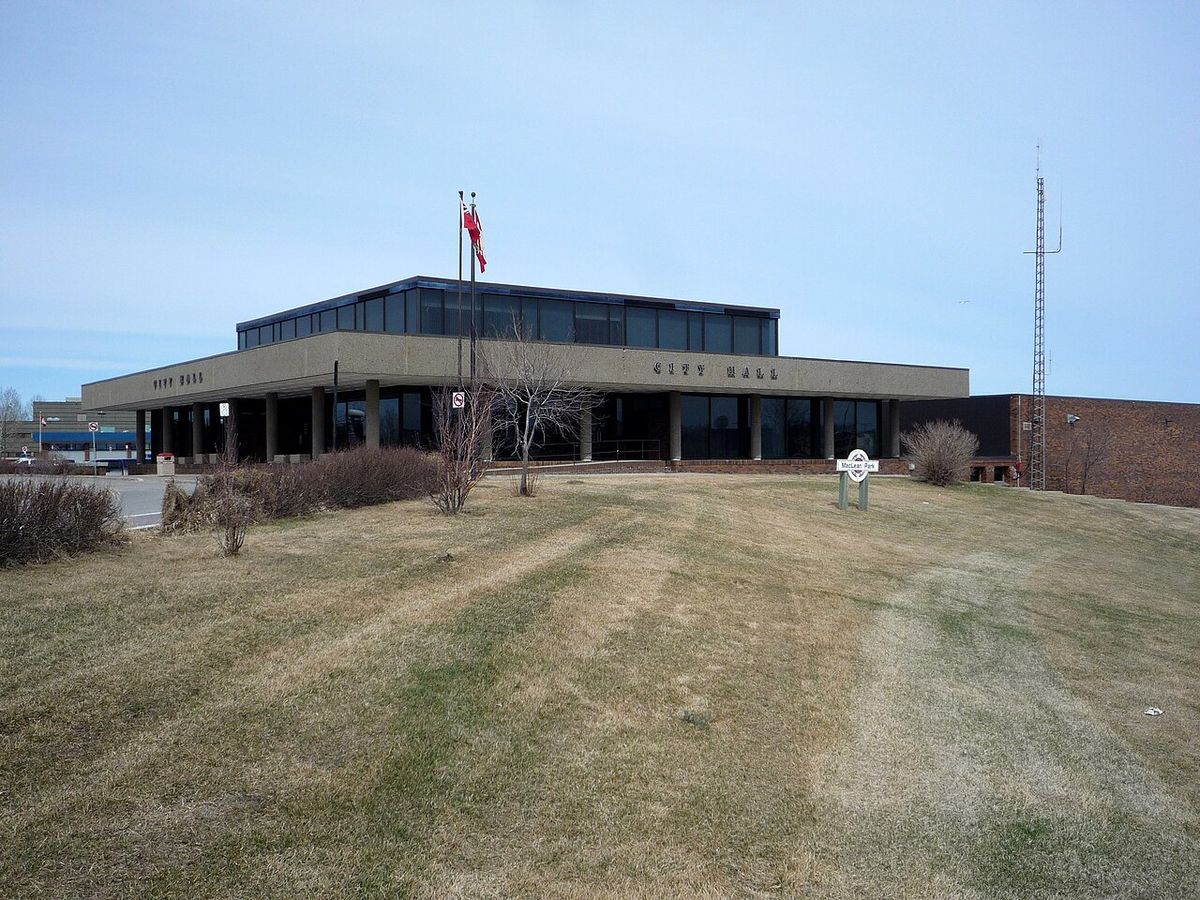
Thompson is a city in north-central Manitoba, Canada, the largest and most populated municipality in Northern Manitoba. Founded in 1956 as a planned mining town by Inco Limited, it is situated along the Burntwood River, 761 kilometres north of Winnipeg. The city's economy, once dominated by nickel mining, has evolved to serve as the primary service and retail hub for the vast, sparsely populated region, earning it the nickname "The Hub of the North. With a population under 15,000, Thompson is a gateway to the boreal forest, offering outdoor recreation and a unique subarctic climate.
History and Development
The area around Thompson has evidence of human activity dating back to nomadic Paleo-Indian hunters around 6000 BC, sometime after the collapse of the Laurentide Ice Sheet. The modern city's origins are tied to the discovery of a major nickel ore body on February 4, 1956, by Inco Limited, found 32 kilometres southwest of Moak Lake. An agreement between Inco and the Manitoba government on December 3, 1956, led to the founding of a fully planned town in 1957, named after Inco's chairman, Dr. John F. Thompson. Construction was completed by a workforce of several thousand, and the mine formally opened on March 25, 1961, quickly becoming the world's second-largest nickel-producing operation after Inco's Sudbury operations. The town was designed for 8,000 to 12,000 people but grew rapidly through the 1960s with the opening of six additional mines, Birchtree, Soab North, Soab South, Pipe Number 1, Pipe Number 2, and Pipe Open Pit, pushing the population past 20,000.
Thompson was incorporated as a town in 1967 during Canada's Centennial and gained city status in 1970 in the presence of Queen Elizabeth II. The boom period ended abruptly due to shifts in the global nickel market. After the Soviet Union gained access to the world nickel market in 1970, oversupply led to the closure of four mines (Soab North, Soab South, Pipe Number 1, and Pipe Number 2) in 1971 and layoffs of 30 percent of Inco's workforce. Further price declines in 1977 led to the Birchtree Mine being placed on care and maintenance and an additional 650 Inco employees being laid off. The population plummeted from an estimated high near 26,000 to 14,288 by the 1981 Census. This transition forced a fundamental economic shift from a single-industry mining town to a regional service centre, a role it solidly maintains today. Inco's workforce dwindled from over 4,000 in the 1970s to around 850 by 2018, cementing the city's new economic identity.
Geography, Ecology and Climate
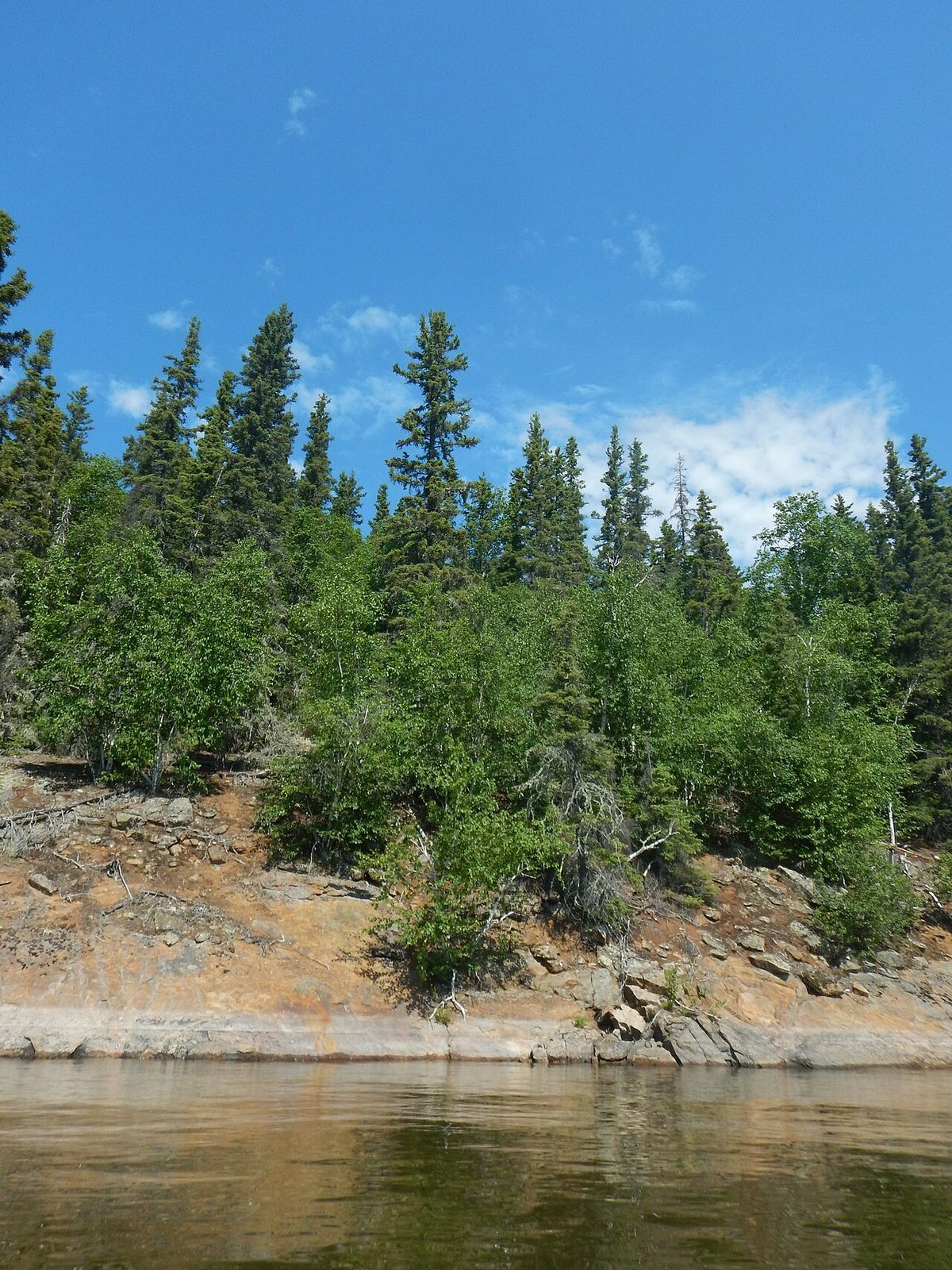
Thompson covers an area of 20.79 square kilometres on the Precambrian Canadian Shield, surrounded by boreal forest and bordered on the west and north by the Burntwood River. It is located 210 kilometres north of Lake Winnipeg and 761 kilometres north of the City of Winnipeg. The city's location places it on the border of plant hardiness zones 1a and 1b, making outdoor commercial agriculture impossible. The dominant forest conifers are white spruce, black spruce, jack pine, tamarack, and balsam fir, with white birch as the most common deciduous tree. Local fauna includes hundreds of ravens, known locally as 'Thompson Turkeys,' which reside year-round, while summer brings breeding herring gulls, bald eagles, golden eagles, sandhill cranes, and common terns. Beavers are ubiquitous around the area, with some within city limits, and red foxes can also be found. Larger mammals like black bears, wolves, moose, and boreal woodland caribou are occasionally spotted on the fringes of town, while predators such as marten, wolverine, and lynx are rarely seen.
Thompson experiences a subarctic climate characterized by long, severely cold winters and short, warm summers. The monthly average temperature ranges from -23.4 °C in January to 16.2 °C in July, with an annual mean of -2.8 °C. A majority of the annual precipitation of 521.5 millimetres falls from June to September. Snowfall is significant, averaging 180.3 centimetres per year, falling mainly from October to May. This climate creates ideal conditions for winter activities and contributes to the area's use as a cold-weather testing site for aerospace companies. The lack of light pollution and northern latitude also allows for occasional viewing of the aurora borealis from within the city.
Economy and Industry
Thompson's economy has historically been centred on nickel mining but now functions primarily as a service hub for Northern Manitoba. It provides retail, health care, and social services to the surrounding Census Divisions 22 and 23, which have a combined population of 51,136, including over 38,000 First Nations people. As a resource-based community, Thompson has experienced above-average employment income but also significant volatility in mining-sector employment throughout its history. The median employment income for full-year full-time workers in 2015 was $65,262, which was 22 percent higher than the Canadian median of $53,431. The unemployment rate in 2016 was 7.6 percent, slightly below the national average of 7.7 percent. According to the 2016 Census, Thompson had 7,065 employed persons.
The five largest employment sectors in Thompson were mining (1,255 employees), health care and social assistance (1,100 employees), accommodation and food services (710 employees), educational services (710 employees), and retail trade (670 employees). Between 2016 and 2018, approximately 400 mining jobs were lost. The retail sector is anchored by several shopping centres including City Centre Mall, which houses a Walmart, Safeway, TD Canada, and Tim Hortons. Burntwood Plaza with Shoppers Drug Mart and RBC. Plaza Shopping Centre with Canadian Tire and Family Foods. And Westwood Mall with a Giant Tiger. Numerous First Nations organizations are based in Thompson, including Manitoba Keewatinowi Okimakanak Inc., Awasis Agency of Northern Manitoba, Keewatin Tribal Council, and the Ma-Mow-We-Tak Friendship Centre. The Thompson Aboriginal Accord, originally signed in 2009, partners 24 governments, businesses, and non-profits for equitable economic development and reconciliation.
- Mining operations are owned by Vale Limited, involving mining, milling, and concentrating nickel slurry for final processing in Sudbury and Long Harbour, Newfoundland.
- Production peaked in 1970-71 at over 60,000 metric tonnes annually but had declined to 23,000 tonnes by 2017. In 1962, Thompson accounted for 11 percent of world finished nickel production.
- Vale has invested over $100 million in its Thompson concentrate load out facility, with company officials stating the area is uniquely positioned for future standalone nickel investment.
- Thompson Airport is the third-busiest in Manitoba and provides several hundred local jobs.
- The Global Aerospace Centre for Icing and Environmental Research (GLACIER), operated by MDS Aerotest as a joint venture between Pratt & Whitney Canada and Rolls-Royce, is a major cold-weather testing facility selected from 150 candidate communities.
Demographics
Thompson's population has experienced significant fluctuation since its founding. It grew rapidly to 19,001 by the 1971 Census, then declined sharply to 14,288 by 1981 following mining layoffs, a decrease of 24.8 percent. Since then, the population has generally remained between 13,000 and 15,000 people. The 2021 Census recorded a population of 13,035 living in 4,676 of its 5,442 total private dwellings, a change of -4.7 percent from its 2016 population of 13,678. With a land area of 16.62 square kilometres, it had a population density of 784.3 persons per square kilometre in 2021.
The city has a notably young population, with a median age of 30.8 years compared to the Canadian median of 41.0. Among residents aged 25 to 34, 17.5 percent have not obtained a high school diploma or equivalent, a rate double the national average of 8.7 percent. The ethnic composition is diverse. According to the 2016 Census, people of European ancestry formed a plurality at 43.9 percent, followed closely by Aboriginal peoples at 43.5 percent, composed of First Nations (32.2 percent) and Metis (10.8 percent). Visible minorities made up the remaining 12.5 percent of the population. The most common mother tongues are English (81.3 percent), Cree (5.2 percent), Punjabi (2.6 percent), and Gujarati (2.0 percent).
| Census Year | Population |
|---|---|
| 1971 | 19,001 |
| 1981 | 14,288 |
| 2016 | 13,678 |
| 2021 | 13,035 |
Community Amenities and Services
As the primary service centre for Northern Manitoba, Thompson provides essential amenities to a vast region. Health care is delivered through the Northern Regional Health Authority's Eastern Campus, serving most of Census Divisions 22 and 23. Thompson-based facilities include the Thompson General Hospital, Northern Spirit Manor personal care home, the Thompson Clinic, and Hope North, a centre for youth in crisis. The Addictions Foundation of Manitoba also operates a facility in the city. Transportation infrastructure is critical, with the city connected to Winnipeg by paved Highway 6, by Via Rail's Winnipeg-Churchill train service at Thompson station, and by Thompson Airport and the Thompson Water Aerodrome. Public transit, formerly provided by Thompson Transit, ended service in 2024.
Education services are comprehensive and serve a diverse linguistic population. The School District of Mystery Lake operates six elementary schools, Deerwood, Burntwood, Westwood, École Riverside, Juniper, and Wapanohk Community School, and one high school, R. D. Parker Collegiate. The district offers a K-12 French immersion program and a K-8 Cree language program at Wapanohk Community School, with basic Cree courses available in grades 9-12. Since September 2009, the Franco-Manitoban School Division operates École Communautaire La Voie du Nord, a K-12 French-language school on Weir Road. The Frontier School Division, the largest in Canada by area, has an area office in Thompson. For post-secondary studies, Thompson hosts a main campus of the University College of the North, a branch of the University of Manitoba's Faculty of Social Work, and the Northern Manitoba Sector Council, which provides essential skills training.
Recreation, Culture, and Attractions
Thompson offers a wide range of recreational and cultural activities that leverage its northern setting. The Thompson Regional Community Centre is a major indoor facility featuring two ice arenas, the CA Nesbitt Arena, home to the U18 and U15 Norman Northstars, and the Gordon Beard Arena, a large six-sheet Burntwood Curling Club, a multi-sport gym, exercise facilities, and an indoor walking track. The city is home to the minor hockey Thompson King Miners, and high school sports are represented by the R. D. Parker Collegiate Trojans. Every April, students from grades 3-8 compete in the Knights of Columbus Track Meet. Annual festivals include Nickel Days in June, a large weekend event with concerts, family games, and a parade, and Winterfest in February, a multi-day celebration of northern culture and winter activities.
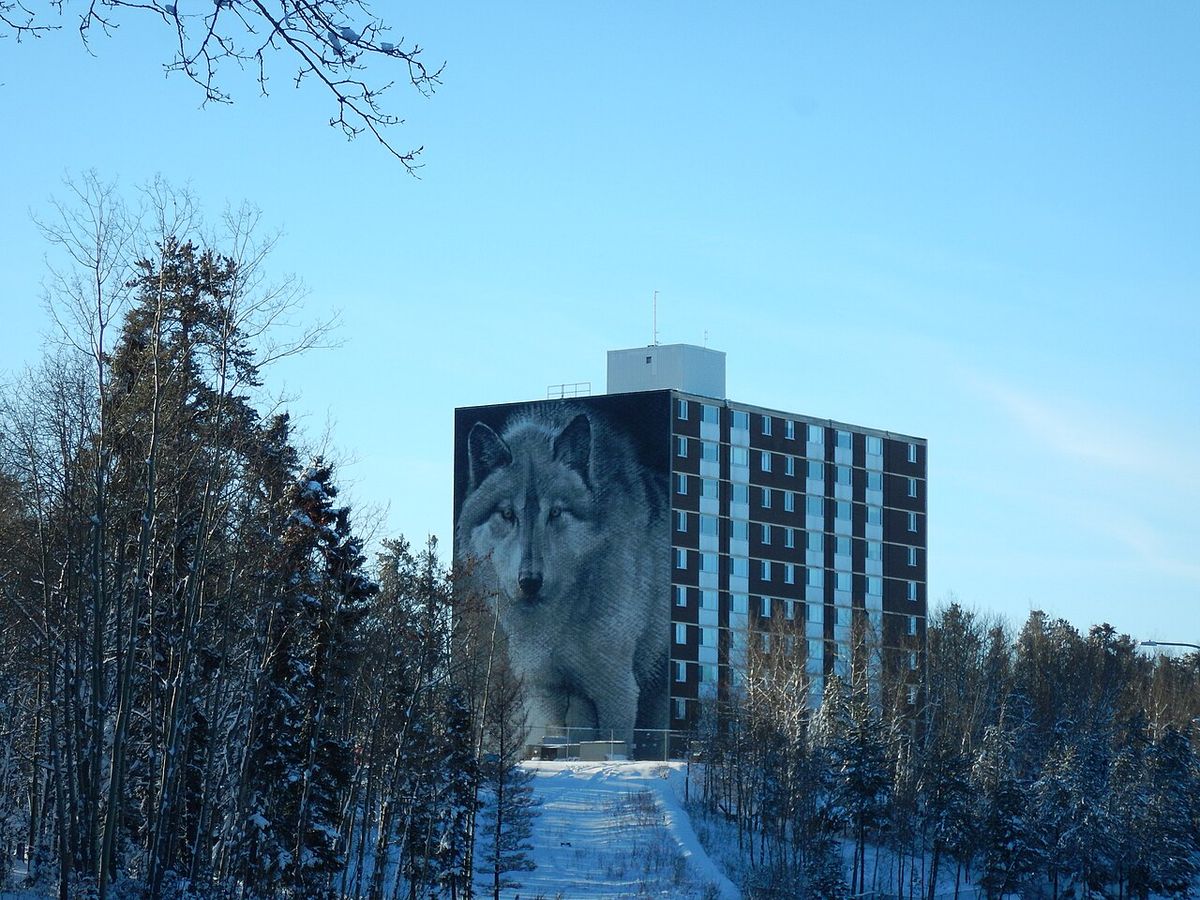
Outdoor attractions and public art are major draws. The Spirit Way is a two-kilometre walking and biking pathway with 16 points of interest highlighting art, heritage, and industry, including the largest photo-real mural in Canada and 56 painted wolf statues. The Millennium Trail is a 15-kilometre crushed rock loop for hiking, biking, and cross-country skiing around the city. The Heritage North Museum consists of two log structures, an open-air blacksmith shop, and archives, displaying local animals, a boreal forest diorama, First Nations and fur trade artifacts, fossils, and mining artifacts. Several significant provincial parks are located within a short drive, offering world-class outdoor recreation.
- Paint Lake Provincial Park, 32 km south on Highway 6, spans over 23,000 hectares and houses the largest marina in Manitoba, with campsites, cabins, beaches, and year-round activities.
- Pisew Falls Provincial Park, 74 km south, offers viewing of Manitoba's second-highest waterfall, a 13-metre year-round cascade accessible via a 0.5 km trail.
- Kwasitchewan Falls, Manitoba's highest waterfall, is viewable after an 11 km difficult back-country hike from Pisew Falls.
- Sasagiu Rapids Provincial Park, 79 km south, is the site of scenic rapids and offers equipment rentals like Ski-Doos and Sea-Doos.
- Mystery Mountain Winter Park, 23 km north on Provincial Road 280, offers downhill skiing, snowboarding, and cross-country skiing trails.
Local Media
Thompson is served by several local media outlets that connect the community and the broader region. The primary print publications are the Thompson Citizen, which covers city news, and the Nickel Belt News, which serves the surrounding area. Radio listeners have a choice of five stations, including adult contemporary formats on AM 610 and FM 102.9 (both CHTM), the Aboriginal-focused NCI station CINC-FM on 96.3, the French-language Première Chaîne repeater CKSB-5 on 99.9, and the CBC Radio One station CBWK on 100.9. For television, Shaw Communications provides cable service and operates the local community channel Shaw TV on cable channel 11, offering locally produced programming. This array of media ensures residents have access to local news, entertainment, and cultural content in multiple languages.
Questions about Thompson, Manitoba
How do you get to Thompson, Manitoba?
Thompson is accessible by road, rail, and air. It is connected to Winnipeg by a paved all-weather highway, Manitoba Highway 6, which is approximately a 761-kilometre drive north. Via Rail's Winnipeg-Churchill train service stops at Thompson station, providing a rail link through The Pas. Thompson Airport offers regular commercial flights and is the third-busiest airport in Manitoba. The city is also served by Manitoba Provincial Roads 280 and 391, and was previously served by a public transit system, Thompson Transit, which ended service in 2024.
What is there to do in Thompson for tourists?
Tourists in Thompson can enjoy outdoor activities, cultural sites, and local festivals. The Spirit Way pathway features public art and heritage points, while the Millennium Trail offers hiking and biking. The Heritage North Museum contains local history, First Nations artifacts, and an authentic caribou hide tipi. Nearby provincial parks like Paint Lake and Pisew Falls offer camping, boating, and waterfall viewing. In winter, Mystery Mountain Winter Park provides skiing and snowboarding. The city hosts major events like Nickel Days in June and Winterfest in February. The northern location also provides opportunities to view the aurora borealis.
What is the population and demographic makeup of Thompson?
According to the 2021 Census, Thompson had a population of 13,035, with a density of 784.3 persons per square kilometre. The city has a very young median age of 30.8 years. Ethnically, the 2016 data shows a near-even split between people of European ancestry (43.9 percent) and Aboriginal peoples (43.5 percent), with the remainder being visible minorities. The most common mother tongues are English (81.3 percent), Cree (5.2 percent), Punjabi (2.6 percent), and Gujarati (2.0 percent).
What educational institutions are located in Thompson?
Thompson is a centre for education in the north. K-12 schooling is provided by the School District of Mystery Lake, which operates six elementary schools and R. D. Parker Collegiate, offering English, French immersion, and Cree language programs. The Franco-Manitoban School Division runs École Communautaire La Voie du Nord for Francophone students. The Frontier School Division maintains an area office in the city. For post-secondary education, Thompson hosts a main campus of the University College of the North, a branch of the University of Manitoba's Faculty of Social Work, and the Northern Manitoba Sector Council for skills training.
Why is Thompson called the Hub of the North?
Thompson is called the Hub of the North because it primarily serves as the central provider of goods and services to the surrounding communities in Northern Manitoba. The city functions as a regional centre for health care, retail trade, and social services, supporting a vast area that includes Census Division No. 22 and Census Division No. 23, which have a combined population of 51,136. This role became increasingly important as the economic driver shifted from mining to services after major workforce reductions at Inco Limited in the 1970s. The city's airport, hospital, and retail malls are key amenities for many smaller, remote communities that are accessible only by air or winter roads. This central service function is the core reason for its nickname.
What is the main industry in Thompson, Manitoba?
The economy of Thompson is centred around nickel mining, which was the reason for the city's founding in 1956. Vale Limited now operates the mining, milling, and concentrating operations there. However, the city's economic base has diversified significantly. According to the 2016 Census, the five largest employment sectors are mining with 1255 employees, health care and social assistance with 1100 employees, accommodation and food services with 710 employees, educational services with 710 employees, and retail trade with 670 employees. The city also serves as a critical service hub for Northern Manitoba, and other notable economic activities include operations at Thompson Airport and the GLACIER cold weather aerospace testing centre operated by MDS Aerotest.
Sources and further reading
- Thompson, Manitoba (Wikipedia)
- City of Thompson, Home (thompson.ca)
- Manitoba Communities: Thompson (City) (mhs.mb.ca)
- Thompson Chamber of Commerce: Home (thompsonchamber.ca)
Checked by the Your Space Hamilton desk. Last updated 2026-11-02.