Burnaby
Burnaby is a city in the Lower Mainland region of British Columbia, Canada, situated on the Burrard Peninsula between Vancouver to the west and Coquitlam to the east. Incorporated in 1892 and achieving city status a century later, it is the third-largest municipality in British Columbia by population, with 249,125 residents as of the 2021 census. As a key member of Metro Vancouver, Burnaby is a major economic and educational hub, home to Simon Fraser University, the British Columbia Institute of Technology, and a significant cluster of high-tech firms. The city is distinguished by its extensive parkland, comprising 25 percent of its area, and its role as a central node in the region's transportation and film production industries.
History and development
The area now known as Burnaby has been home to Coast Salish peoples, including Halkomelem- and Squamish-speaking Nations, for millennia. Key local landmarks like Burnaby Mountain, Deer Lake, and the Brunette River feature prominently in Indigenous oral histories, which tell of villages, cranberry harvesting in marshlands, and travel routes to fishing grounds on the Fraser River. The city's name originates from Burnaby Lake, which was surveyed in 1859 and named for Robert Burnaby, a Freemason, explorer, and private secretary to Colonel Richard Moody, the colony's first land commissioner. The Fraser Canyon Gold Rush of 1858 spurred rapid settlement, and Burnaby was incorporated as a municipality in 1892, the same year construction began on an interurban tram connecting it to Vancouver and New Westminster. For much of its early history, Burnaby served as an agricultural supplier and transportation corridor between Vancouver and the Fraser Valley. The suburbanization wave following the Second World War saw hundreds of Mid-Century Vernacular homes built to accommodate new residents. A significant shift towards an urban character began with the establishment of the British Columbia Institute of Technology in 1960 and Simon Fraser University in 1965. Burnaby officially attained city status in 1992, marking its centennial.
Since the 1970s, Burnaby has seen a decline in resource sectors and a subsequent rise of high value-added services and technology sectors. The presence of BCIT and SFU promoted research and development in the area. For example, manufacturing plants near Still Creek closed in the late 1970s, only to reopen few years later as film production studios. The continued expansion of media production in Burnaby contributed to Hollywood North. Canada's largest film and television production studio and more than 60% of BC's sound stages are in Burnaby.
Geography and urban structure
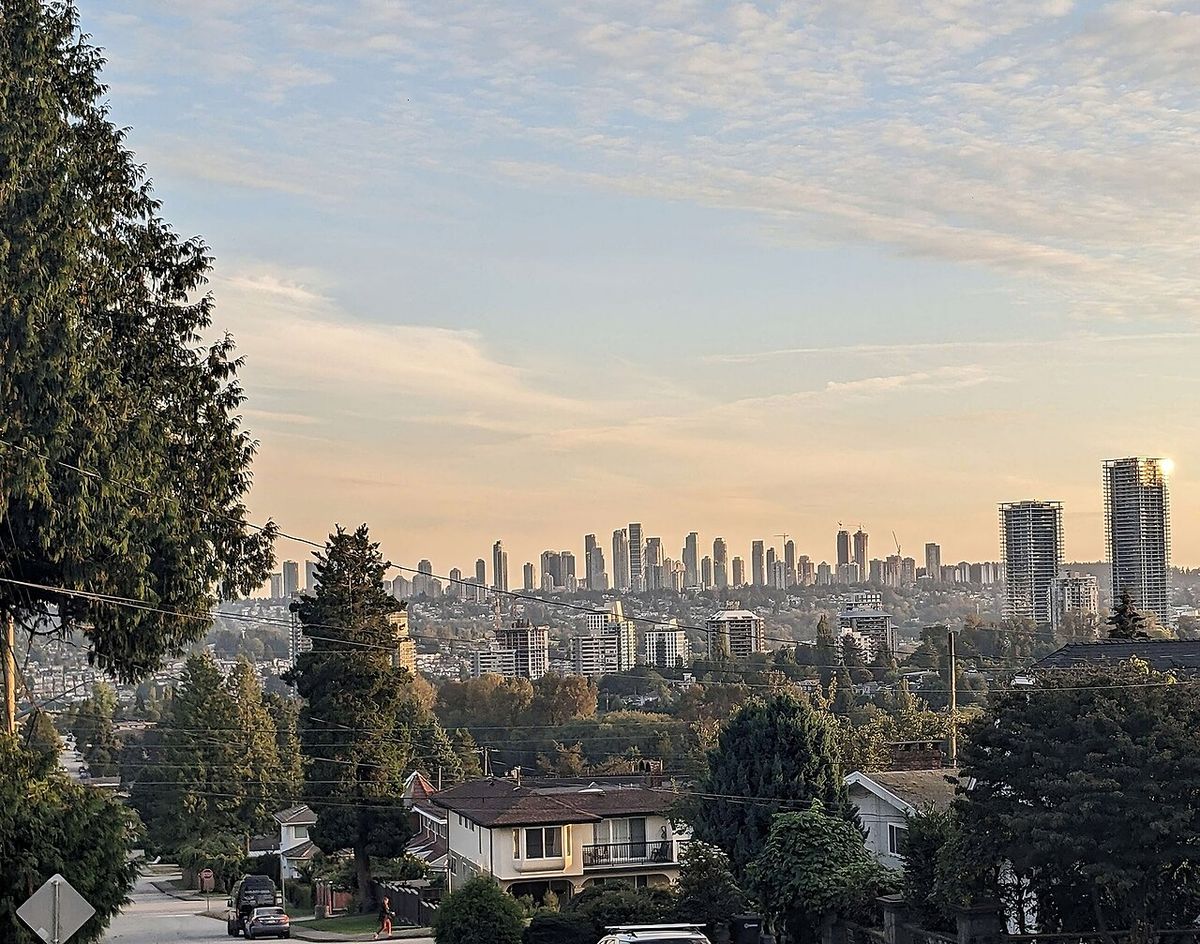
Burnaby occupies 96.6 square kilometres at the geographic centre of the Metro Vancouver Regional District, bounded by Burrard Inlet to the north and the Fraser River to the south. The city's topography is defined by hills, ridges, valleys, and an alluvial plain, with elevations ranging from sea level to 370 metres atop Burnaby Mountain. This higher elevation results in Burnaby typically receiving more snowfall in winter than neighbouring Vancouver or Richmond. The city's urban form is organized around four designated town centres intended to concentrate density and services: Metrotown, Brentwood, Lougheed, and Edmonds. The Deer Lake area is home to the city's governmental and cultural precincts.
Despite its urban density, Burnaby maintains a remarkable amount of green space, with a parkland-to-resident ratio that is among the highest in North America. Approximately 25 percent of the city's land is dedicated to parks and open spaces. Major natural features include Central Park, Robert Burnaby Park, Burnaby Mountain Conservation Area, and waterways such as Still Creek, the Brunette River, Burnaby Lake, and Deer Lake. The city also retains some agricultural land, particularly along the Fraser River foreshore in the Big Bend neighbourhood. Burnaby's climate is classified as oceanic, with mild, dry summers and cool, rainy winters, though conditions on Burnaby Mountain are notably cooler and wetter than in lower-lying areas.
- Central Park: A major urban park located in the south of the city.
- Robert Burnaby Park: A large park named for the city's namesake.
- Burnaby Mountain: The highest point in the city at 370 metres, home to Simon Fraser University.
- Still Creek: A significant waterway running through the city.
- Brunette River: A river forming part of the southern boundary.
- Burnaby Lake: A central lake for which the city is named.
- Deer Lake: A lake surrounded by a park and cultural facilities.
- Barnet Marine Park: A waterfront park on Burrard Inlet.
Demographics and culture
Burnaby's population grew by 7 percent between the 2016 and 2021 censuses, reaching 249,125. The city has a relatively young median age of 40.3 years, below the provincial average. It is one of Canada's most ethnically diverse municipalities, a characteristic reflected in its neighbourhoods and linguistic landscape. North Burnaby, particularly along Hastings Street, has a longstanding Italian Canadian community, while the high-rise condominiums in Metrotown have been significantly shaped by immigration from China, Taiwan, and South Korea since the 1990s. According to the 2021 census, the ethnic Chinese community constitutes the largest single ethnic group at 33.3 percent of the population, followed by Europeans at 30.5 percent.
English is the mother tongue for 44.46 percent of residents. Other widely spoken languages include Mandarin (13.91 percent), Cantonese (12.45 percent), Tagalog (3.63 percent), and Korean (3.34 percent). In terms of religious affiliation, nearly half the population (48.4 percent) reports no religious affiliation. Christianity is the largest reported religion at 35.2 percent, followed by Islam (5.6 percent), Buddhism (3.7 percent), Hinduism (3.1 percent), and Sikhism (2.8 percent). This diversity is supported by numerous cultural institutions and events.
Burnaby's cultural facilities are central to community life. Key institutions include the Burnaby Village Museum, a 10-acre open-air museum recreating a 1920s village, and the Nikkei National Museum & Cultural Centre, which opened in 2000 to promote Japanese Canadian heritage. The Burnaby Art Gallery and the Shadbolt Centre for the Arts are located in the Deer Lake Park cultural precinct. The Burnaby Public Library system, established in 1954, operates four branches and circulates over three million items annually. The city also hosts community events like the annual Hats Off Day festival in the Burnaby Heights neighbourhood, scheduled for June 6, 2026.
- Burnaby Village Museum: A 4.0-hectare open-air museum depicting a 1920s village.
- Nikkei National Museum & Cultural Centre: Opened in 2000, it includes a Japanese garden.
- Burnaby Art Gallery: Located in Deer Lake Park.
- Shadbolt Centre for the Arts: A major arts facility in Deer Lake Park.
- Burnaby Public Library: A system with four branches established in 1954.
- Michael J. Fox Theatre: A 613-seat community theatre within Burnaby South Secondary School.
- Hats Off Day: An annual summer festival in Burnaby Heights, next scheduled for June 6, 2026.
Economy and major employers
Burnaby's economy is driven by a dynamic mix of technology, commerce, education, and creative industries. The city is a major hub for high-tech research and development, hosting the headquarters or significant operations of numerous innovative firms. This cluster includes Ballard Power Systems (fuel cell technology), D-Wave Systems (quantum computing), Clio (legal software), Creo (imaging), and Electronic Arts Canada. Other technology companies with a presence include Astera Labs, Fortinet, and Marvell. The presence of Simon Fraser University and the British Columbia Institute of Technology provides a steady pipeline of talent and fosters industry partnerships.
Retail and commercial activity is anchored by the Metropolis at Metrotown, the largest shopping mall in British Columbia and the fifth largest in Canada. It was the third most visited mall in the country in 2018. Other significant commercial centres are located in the Brentwood and Lougheed town centres. Heavy industry remains along the Burrard Inlet, with petroleum refining operations by companies like Chevron and Petro-Canada. The film and television sector is a major economic contributor, with The Bridge Studios and numerous other production facilities located in the city.
Ritchie Bros. Auctioneers, Pacific Blue Cross and Nokia have significant facilities in Burnaby. Other firms with operations based in Burnaby include Kardium, Telus Communications, Teradici, and TransLink. The city features major commercial town centres, high-density residential areas, and two rapid transit lines. The city also features technology research, business parks, film studios such as The Bridge Studios, and TV stations such as Global TV.
Education and research
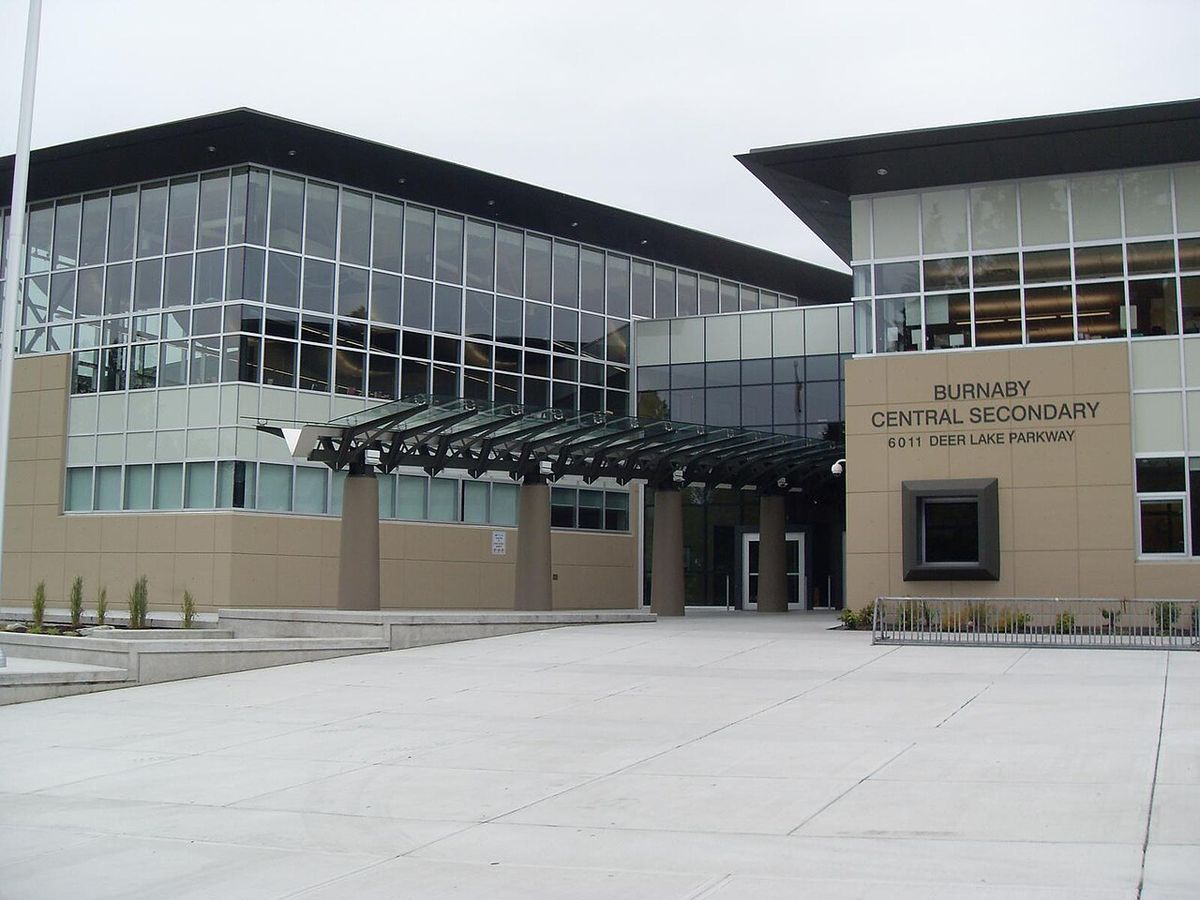
Burnaby's education system encompasses strong public schools and major post-secondary institutions that shape the city's intellectual and economic character. The Burnaby School District (SD 41) manages public education for over 24,000 students across 41 elementary and 8 secondary schools. The district offers French immersion programs, an international students program, and community adult education. The British Columbia School for the Deaf is co-located on the grounds of Burnaby South Secondary School.
Higher education is dominated by two significant institutions. Simon Fraser University's main campus is situated atop Burnaby Mountain, enrolling more than 30,000 students and employing 950 staff. In Maclean's magazine 2020 rankings, SFU placed first in the comprehensive university category. The British Columbia Institute of Technology's main campus in Burnaby serves more than 49,000 full-time and part-time students. BCIT opened a new $78 million net-zero emission Health Science Centre in late 2021, a facility designed to accommodate 7,000 students. These institutions are critical drivers of the local knowledge economy and research activity.
Transportation and infrastructure
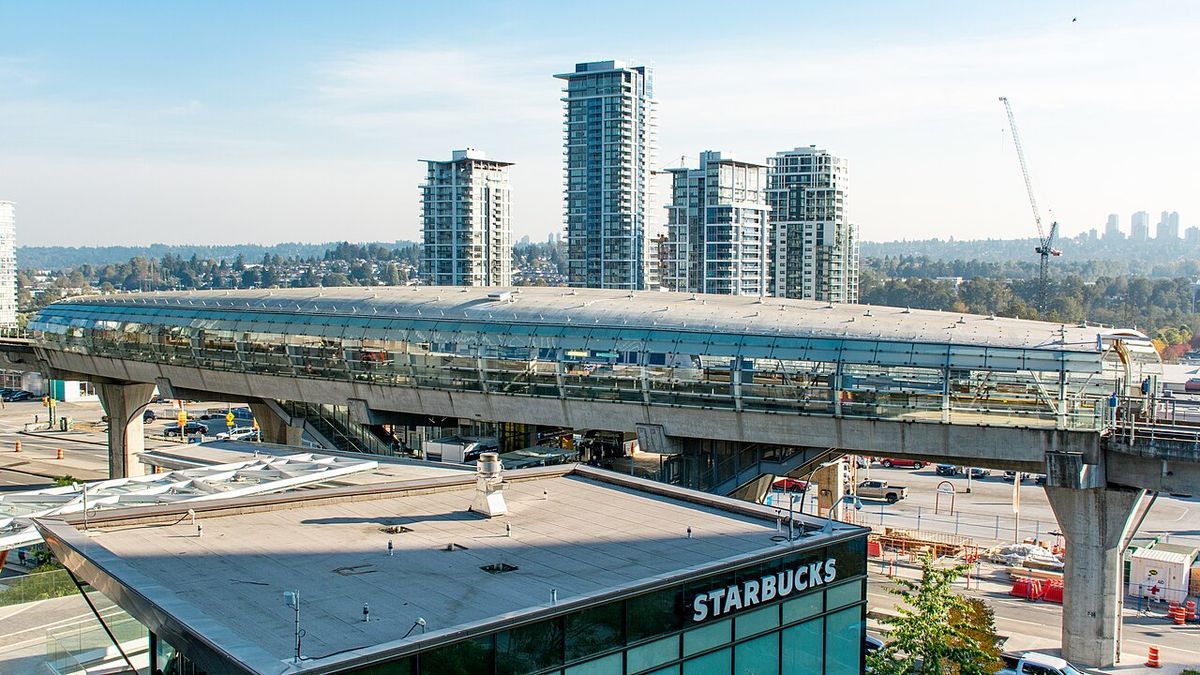
Burnaby is a critical transportation nexus within Metro Vancouver, served by two SkyTrain rapid transit lines. The Expo Line, completed in 1986, runs along the southern part of the city following Kingsway, while the Millennium Line, completed in 2002, follows the Lougheed Highway to the north. These lines have catalyzed dense urban development around station hubs like Metrotown, Brentwood, Lougheed, and Edmonds. Metrotown Station is the busiest SkyTrain station on weekends and the second-busiest on weekdays in the regional system. The SkyTrain Operations Controls Centre, located in Burnaby, manages both lines, and a new $110 million Operations Controls Centre 2 began construction in 2021 to handle growing ridership.
The city's road network includes major arterial routes that connect it to surrounding municipalities. Key north-south corridors include Boundary Road, Willingdon Avenue, and Kensington Avenue. Important east-west routes include Hastings Street, the Lougheed Highway, Kingsway, Canada Way, and Marine Drive. The Trans-Canada Highway also traverses the city. For active transportation, Burnaby has developed over 70 kilometres of bike routes and urban trails since the 1990s. Public bus service is provided by TransLink's Coast Mountain Bus Company, with the 49 UBC/Metrotown route being the second most boarded bus route in the region.
The 2050 Burnaby Transportation Plan, adopted in December 2021, outlines three targets. It aims to reduce traffic fatalities to zero. The plan also aims to increase public transit and active transportation to 75 percent of all trips. A final target is to reduce vehicle emissions by 100 percent. The city is served by SkyTrain's Expo Line and Millennium Line and by Metro Vancouver's bus system run by TransLink.
Politics and governance
Burnaby is governed by a mayor, eight city councillors, and seven school trustees, all elected for four-year terms. The next General Local Election is scheduled for October 17, 2026, with advance voting on October 3, 7, and 10. The 2022 election saw a record 50,326 votes cast, representing over 29 percent of eligible voters. The current mayor is Mike Hurley. Historically, Burnaby's municipal politics have leaned left, with city councils often aligned with the provincial New Democratic Party, while federal and provincial electoral districts within the city have sometimes elected representatives from more conservative parties.
Notable federal politicians from Burnaby include Svend Robinson of the NDP, who served as a Member of Parliament for 25 years and was Canada's first openly gay MP. He resigned in 2004 and was succeeded by his assistant, Bill Siksay. In a 2009 survey, Maclean's magazine ranked Burnaby as Canada's best-run city based on efficiency and effectiveness of services, though it also noted the city had one of the lowest municipal voter turnouts in the country at the time, at 26 percent. The city is currently undertaking its largest-ever capital investment program in civic infrastructure, a point emphasized in the 2026 State of the City address.
Key issues in local politics include housing affordability, public safety, and infrastructure development. Mayor Mike Hurley's platform for the 2026 election includes building 1,000 new affordable rental homes, delivering three new community centres, completing an expansion of the Burnaby RCMP detachment, and creating a Burnaby Innovation District to attract business investment. He has also pledged to pressure the provincial government to return control over residential zoning to the municipality. Other declared candidates have platforms focusing on property tax discounts for seniors and homeowners who grow food, improving healthcare infrastructure, and enhancing traffic management.
Sports and recreation
Burnaby offers a wide range of sports facilities and has hosted several significant sporting events. The city's premier stadium is Swangard Stadium, located in Central Park and completed in 1969. It was the long-time home of the Vancouver Whitecaps FC soccer team (originally the 86ers) from 1986 until 2010 and is currently the home field for Vancouver Rise FC of the Northern Super League. The Burnaby Velodrome hosted the National Junior and U17 Track Championship in 2014. The city also co-hosted the 1973 Canada Games with New Westminster and was the host city for the 2014 IQA Global Games, an international quidditch championship. Recreation is supported by numerous city-run facilities, including community centres, pools, and ice rinks, with the city actively expanding its recreation infrastructure and recruiting staff for new facilities.
Major parklands in Burnaby include Central Park, Robert Burnaby Park, Kensington Park, and Burnaby Mountain. Burnaby's ratio of park land to residents is one of the highest in North America. Twenty five percent of Burnaby's land is designated as parks and open spaces. The city's governmental and cultural precincts are located in Burnaby's Deer Lake area.
- Swangard Stadium: Completed in 1969 in Central Park, former home of the Vancouver Whitecaps FC.
- Vancouver Rise FC: Current tenant of Swangard Stadium in the Northern Super League.
- Burnaby Velodrome: Hosted the National Junior and U17 Track Championship in 2014.
- 1973 Canada Games: Co-hosted with the city of New Westminster.
- 2014 IQA Global Games: Host city for the international quidditch championship.
- Green Legacy: A community initiative to restore and grow Burnaby's green spaces.
Questions about Burnaby
What is the population of Burnaby?
According to the 2021 Canadian census, Burnaby has a population of 249,125 residents. This represents a 7 percent increase from its 2016 population of 232,755. With a land area of 90.57 square kilometres, the city has a population density of approximately 2,750.6 people per square kilometre. Burnaby is the third-most populous city in British Columbia, after Vancouver and Surrey.
Which universities are located in Burnaby?
Burnaby is home to two major post-secondary institutions. Simon Fraser University's main campus is located atop Burnaby Mountain, with over 30,000 students and 950 staff. The British Columbia Institute of Technology's main campus is also in Burnaby, serving more than 49,000 full-time and part-time students. BCIT opened a new $78 million net-zero emission Health Science Centre in late 2021. These institutions are key drivers of the local economy and research community.
What is the largest shopping mall in Burnaby?
The largest shopping mall in Burnaby is Metropolis at Metrotown, located in the Metrotown town centre. It is the largest mall in British Columbia and the fifth largest in Canada. In 2018, it was the third most visited shopping mall in the country. The mall is a major retail anchor and contributes to the high density of the surrounding Metrotown area, which is one of Burnaby's four designated urban centres.
How is Burnaby connected by public transit?
Burnaby is centrally served by Metro Vancouver's SkyTrain rapid transit system, specifically the Expo Line and Millennium Line. These lines connect the city to Vancouver, New Westminster, Surrey, and Coquitlam, with major stations at Metrotown, Brentwood, Lougheed, and Edmonds. The city is also served by an extensive bus network operated by TransLink, including the busy 49 UBC/Metrotown route and RapidBus services. Burnaby is home to the SkyTrain Operations Controls Centre, which manages the entire system.
What are some of Burnaby's major cultural attractions?
Burnaby features several notable cultural attractions. The Burnaby Village Museum is a 10-acre open-air museum depicting a 1920s village. The Nikkei National Museum & Cultural Centre, opened in 2000, celebrates Japanese Canadian history and culture. The Deer Lake Park area is a cultural precinct housing the Burnaby Art Gallery and the Shadbolt Centre for the Arts. The city also has a public library system with four branches and hosts annual community festivals like Hats Off Day in the Burnaby Heights neighbourhood.
When is the next Burnaby municipal election?
The next General Local Election for the City of Burnaby will be held on October 17, 2026. Advance voting opportunities are scheduled for October 3, 7, and 10 of that year. This election will determine the city's mayor, councillors, and school trustees. The previous election in 2022 saw a record 50,326 votes cast, representing over 29 percent of eligible voters. Burnaby's municipal elections are held every four years as part of British Columbia's local government cycle.
Sources and further reading
- Burnaby (Wikipedia)
- City of Burnaby: Home Page (burnaby.ca)
- 2026 Burnaby Election Candidates (bbot.ca)
Checked by the Your Space Hamilton desk. Last updated 2026-10-25.