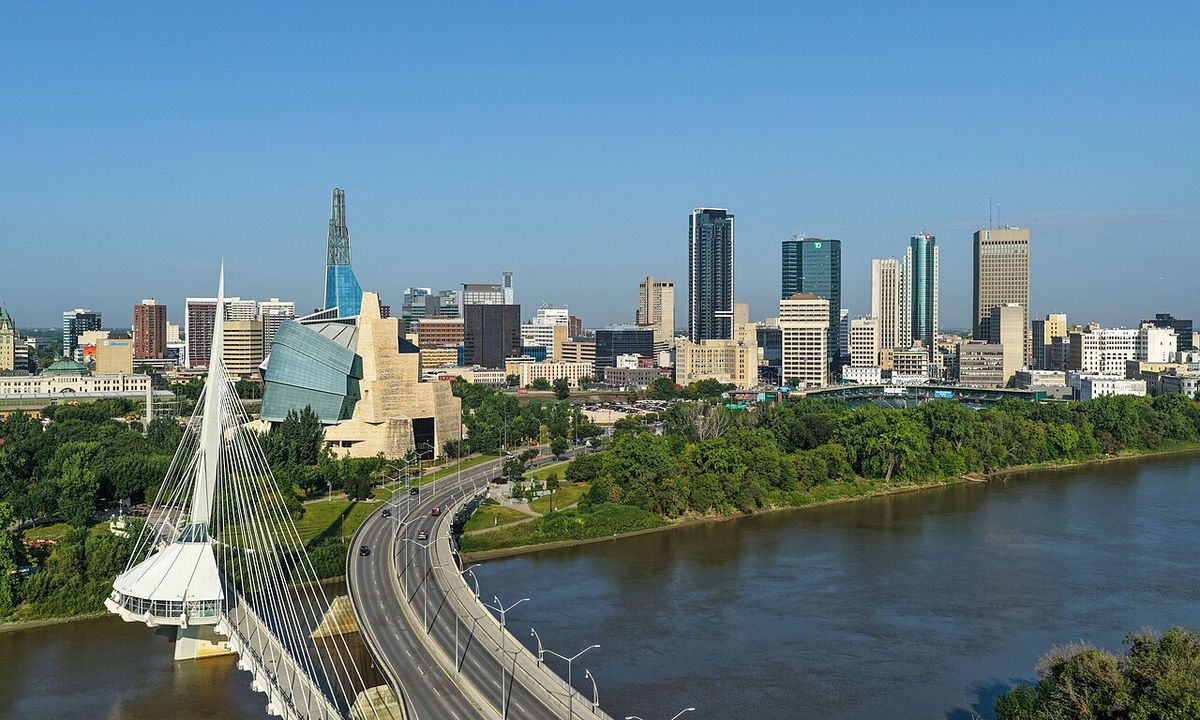
Red Deer, Alberta
Red Deer is a city in central Alberta, Canada, situated on the banks of the Red Deer River approximately midway between Calgary and Edmonton along the Queen Elizabeth II Highway. As Alberta's third-largest city, it serves as a major economic and cultural hub for the surrounding region of Central Alberta. The city's economy is diversified, with key sectors including health care, retail, oil and gas, manufacturing, and education. Red Deer is known for its extensive park system and as a centre for major sporting events and festivals.
History and Indigenous Roots
The area now known as Red Deer has a long history of Indigenous inhabitation, with the Blackfoot, Plains Cree, and Stoney peoples living on the land prior to European contact. A major trail used by First Nations, later known as the Calgary and Edmonton Trail, crossed the Red Deer River at a wide, stony shallows known as the Old Red Deer Crossing, located about seven kilometres upstream from the present city. The Cree name for the river is Waskasoo Seepee, meaning "Elk River." European traders later applied the name "red deer" to the North American elk, leading to the English name for the river and the community. The Plains Cree name for the modern city is mihkwâpisimosos, a calque meaning "red type of deer," while the river itself retains the name wâwâskêsiw-sîpiy or "elk river."
Following the signing of Treaty 6 in 1876 for lands north of the river and Treaty 7 in 1877 for lands south, settlers began arriving to farm and ranch the fertile land. A trading post and stopping house were established at the Crossing in 1882, which later became Fort Normandeau during the 1885 North-West Rebellion. The modern city's location was secured when settler Leonard Gaetz donated a half-share of 500 hectares of his land to the Calgary and Edmonton Railway to build a bridge and townsite, with the first train arriving in 1891. The city grew steadily, benefiting from local public utilities and avoiding the worst of the 1930s drought that affected other parts of the prairies. During the Second World War, a large army training camp was located in the area now occupied by Cormack Armoury, the Memorial Centre, and Lindsay Thurber High School, with additional training airfields built at Penhold and Bowden.
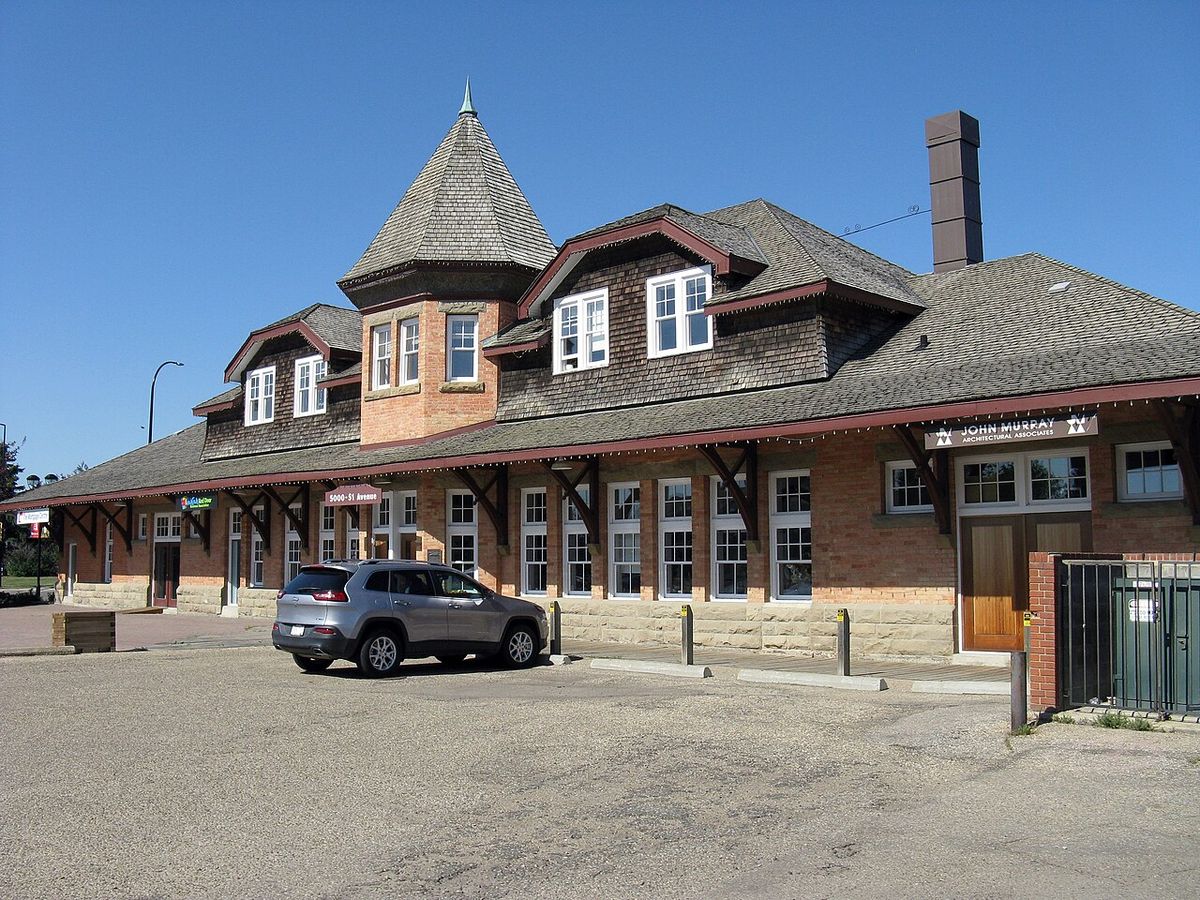
The post-Second World War oil boom triggered rapid expansion, solidifying Red Deer's role as a centre for the oil and gas industry and related sectors. The former hamlet of North Red Deer was amalgamated into the city in 1948. Key infrastructure developed during this period included the Red Deer Regional Hospital, a courthouse, and a provincial government building. The railway line was eventually moved to the city's outskirts, ending passenger service, and the former CPR bridge is now part of the city's walking trail network.
Geography and Climate
Red Deer is located within the aspen parkland region, characterized by rolling hills, and lies in plant hardiness zone 4a. The city has a humid continental climate with a semi-arid influence due to its position within Palliser's Triangle. Summers are typically warm and rainy with cool nights, while winters are long, cold, and very dry. The highest temperature ever recorded in Red Deer was 37.2 °C, observed on July 8, 1906, July 2, 1924, and June 28 and 29, 1937. The record low is -50.6 °C, set on December 17, 1924. The city is surrounded by Red Deer County and also borders Lacombe County, with its corporate limits including the localities of College Park, Forth, Labuma, and North Red Deer. The city's neighbourhoods include Anders, Eastview, Glendale, and Riverside Meadows, among others.
Demographics and Population Trends
According to the 2021 Census of Population, the City of Red Deer had a population of 100,844, a slight increase of 0.4% from 100,418 in 2016. With a land area of 104.34 square kilometres, the population density was 966.5 people per square kilometre. In the 2021 census, the Red Deer census agglomeration was promoted to a census metropolitan area, becoming Alberta's fourth CMA, and its boundaries are coincident with the city. The city's 2019 municipal census recorded a population of 101,002. The 2016 census showed a population growth of 10.9% from the 2011 count of 90,564.
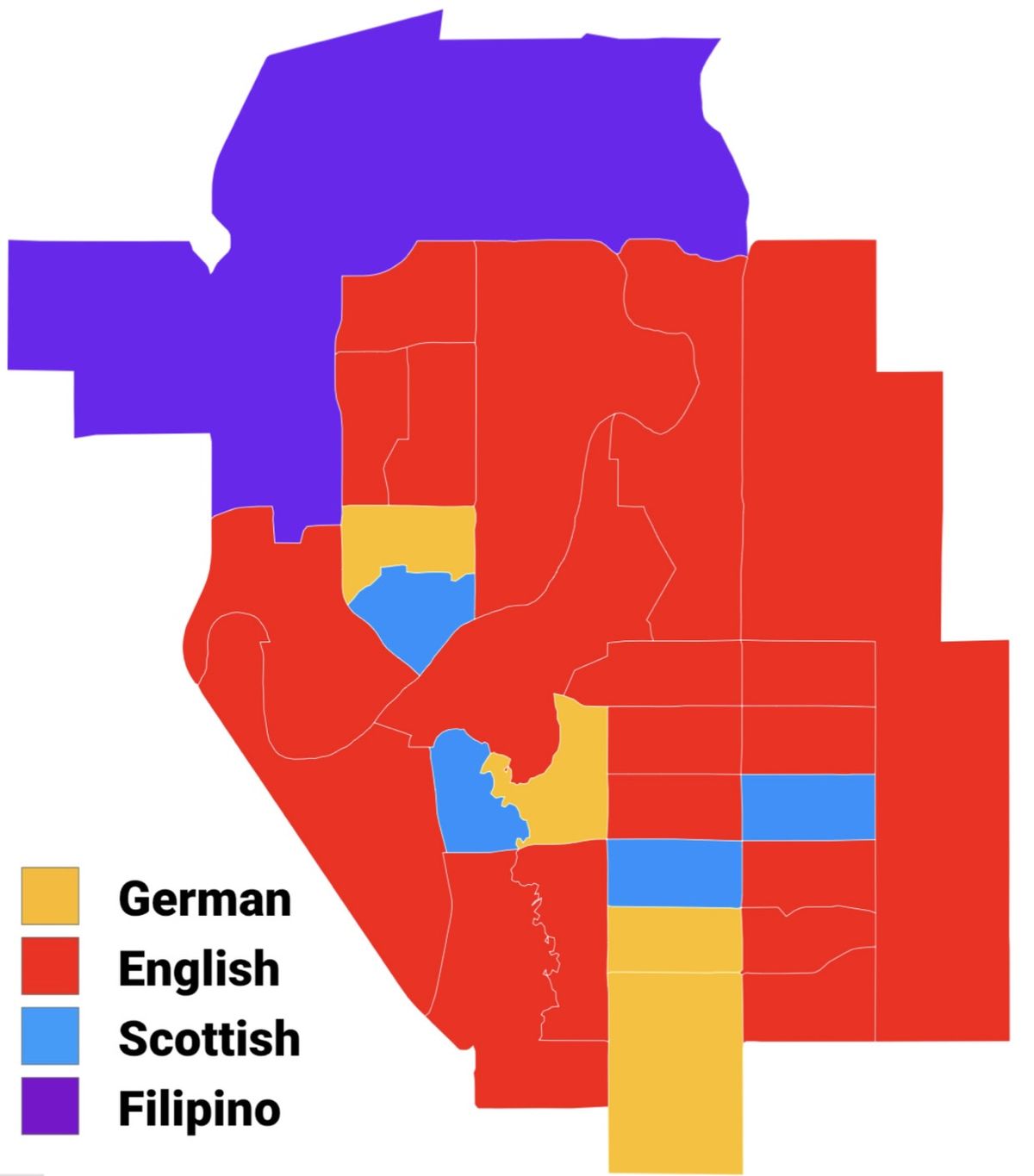
The 2021 census reported the most common ethnic origins in Red Deer, with respondents able to select multiple origins, as English (21.8%), German (18.7%), Scottish (18.1%), Irish (15.9%), and Canadian (13.9%). Other significant origins included French (8.8%), Ukrainian (8%), Filipino (7.6%), Dutch (4.7%), and Norwegian (4.6%). The demographic composition of Red Deer has been evolving. The 2016 census indicated that 15.2% of the population identified as a visible minority, representing a 55.9% increase over the previous five years. A separate 7.1% of the population reported North American Aboriginal origins, comprising 4.2% First Nations and 3.1% Métis. The City of Red Deer formally acknowledges that it is situated on Treaty 6 and Treaty 7 lands and recognizes the area as a historic Métis gathering site, committing to work alongside Indigenous Peoples.
Economy and Key Infrastructure
Red Deer's economy is diverse and serves as the commercial and service centre for Central Alberta. Key industries include health care, retail trade, construction, oil and gas extraction and services, hospitality, manufacturing, and education. Major industrial facilities include the Joffre Cogeneration Plant. The city's infrastructure supports this economic activity and a growing population. The Red Deer Regional Hospital is undergoing a significant expansion to increase health care capacity. The city's drinking water is sourced from the Red Deer River, treated, and distributed via a system that includes the distinctive Horton Water Spheroid. Constructed in 1957, this reservoir was the world's largest spheroid-shaped reservoir at the time. Treated water is also supplied to neighbouring communities like Red Deer County, Lacombe, Blackfalds, and Ponoka through the North Red Deer Regional Water Services Commission.
The city is a major transportation node. The Queen Elizabeth II Highway (Highway 2) forms the backbone of the Calgary-Edmonton Corridor and runs through Red Deer, linking it to Wetaskiwin and Camrose. The David Thompson Highway (Highway 11) connects the city to Rocky Mountain House to the west and Stettler to the east. Local public transit is provided by Red Deer Transit, which operates bus routes throughout the city. The Red Deer Regional Airport, located in the neighbouring town of Penhold, primarily serves general aviation but has plans to expand passenger service. The city provides various online municipal services, including bill payments, business license applications, transit schedules, snow plowing notifications, and recycling information updates.
Arts, Culture, and Community Attractions
Red Deer supports a wide range of arts and culture organizations. These include Central Alberta Theatre, Ignition Theatre, the Red Deer Symphony Orchestra, and the Red Deer Museum + Art Gallery, which features permanent exhibits on regional history and rotating temporary exhibits. The Red Deer Arts Council serves as a member-based multidisciplinary arts service organization and registered charity for local visual, literary, and performing artists. The city is also home to performing groups like the Red Deer Players Society, the Bull Skit Comedy troupe, and the Red Deer Royals marching band. Major annual events include the Central Music Festival and Westerner Days, a large fair held at the Westerner Exposition Grounds in early July featuring a rodeo, pony chuckwagon racing, a fair, and exhibitions.
The city has many attractions and recreational facilities for residents and visitors. Waskasoo Park is a linear park system following the Red Deer River with over 80 kilometres of multi-use trails for cycling, walking, horseback riding, snowshoeing, and cross-country skiing, contributing to the city's nickname of "Park City." The Alberta Sports Hall of Fame is located adjacent to Highway 2 and the Greater Red Deer Visitor Centre. The Collicutt Centre is a 23,000 square metre recreation complex featuring a leisure pool with a water park, climbing and bouldering walls, a field house, an ice arena, gymnastics facilities, and a walking track. The G.H. Dawe Community Centre is a 12,000 square metre shared facility housing G.H. Dawe Community School, a branch of the Red Deer Public Library, a recreation facility, and St. Patrick's School. Other facilities include the downtown Recreation Centre with indoor and outdoor pools, the Marchant Crane Centrium arena, and the YMCA Northside Community Centre which offers fitness classes, childminding, and youth programming.
Sports History and Major Events
Red Deer has a strong sporting culture and has hosted several major national events. The city was the host of the 2019 Canada Winter Games, which left legacy facilities including the Gary W. Harris Canada Games Centre at Red Deer Polytechnic and the Downtown Servus Arena. Red Deer also co-hosted the 2018 Hlinka Gretzky Cup and was the sole host of the tournament in 2022. From 2018 to 2023, the city replaced Edmonton as the host of the Canadian Finals Rodeo. The city's major junior hockey team, the Western Hockey League's Red Deer Rebels, play at the Marchant Crane Centrium and hosted the Memorial Cup tournament in 2016. Red Deer is the hometown of numerous Olympic and professional athletes, and broadcaster Ron MacLean is a notable resident. In a wider policy context, the Red Deer Declaration for the Prevention of Harassment, Abuse and Discrimination in Sport was signed in the city by federal, provincial, and territorial ministers responsible for sport.
Education Systems and Institutions
Red Deer is served by multiple school authorities providing education from early childhood through secondary school. Red Deer Public School District, founded in 1887, operates approximately thirty schools serving about 10,000 students, including Lindsay Thurber Comprehensive High School and Hunting Hills High School, and offers French Immersion from kindergarten through grade 12. Red Deer Catholic Regional Schools, established in 1909 by the Daughters of Wisdom religious order, serves over 10,000 students across six Central Alberta communities, operating École Secondaire Notre Dame High School and St. Joseph's High School in the city. For Francophone students, École La Prairie, operated by the Greater North Central Francophone Education Region No. 2, offers pre-kindergarten through grade 9 education in French to approximately 119 students. Several private schools also operate in the city, including Destiny Christian School, Koinonia Christian School, Parkland School for special education, and South Side Christian School.
The primary post-secondary institution is Red Deer Polytechnic. Founded in 1964 as Red Deer Junior College, it offers certificates, diplomas, advanced certificates, applied degrees, and bachelor's degrees in over 75 career and academic programs, including trades, engineering, health, creative arts, and liberal arts. The institution's campus and facilities were significantly enhanced by the 2019 Canada Winter Games, which constructed the Gary W. Harris Canada Games Centre on the RDP campus. The polytechnic also provides academic upgrading and apprenticeship training, serving as a key educational hub for Central Alberta.
Media, Governance, and City Services
The primary local news sources in Red Deer are the Red Deer Advocate newspaper and the online news outlet rdnewsNOW. The City of Red Deer also provides regular public updates and information through its official website and communications channels. Municipal government services are accessible online via the MyCity portal, including bill payments, business license applications, transit schedules, and reporting tools for infrastructure issues. The city also provides digital notifications for snow zone plowing, street sweeping, and cart collection, and streams council meetings online with archived agendas and minutes. In the wider sporting context, Red Deer was the location for the signing of the Red Deer Declaration for the Prevention of Harassment, Abuse and Discrimination in Sport, a commitment by federal, provincial, and territorial ministers, although Quebec participates by exchanging information rather than formally adopting the framework.
Historical and Cultural Timeline
Red Deer's development can be traced through several key dates and events that shaped the community from a river crossing to a modern city. The area was inhabited by First Nations for centuries before the arrival of European fur traders in the late eighteenth century. Following the treaties, the establishment of Fort Normandeau and the donation of land by Leonard Gaetz were key early events. The post-war oil boom and subsequent infrastructure projects like the Horton Spheroid defined its modern expansion.
- Pre-Contact: The area is inhabited by Blackfoot, Plains Cree, and Stoney peoples, with a major trail crossing the river at the Old Red Deer Crossing.
- 1876 to 1877: Treaty 6 and Treaty 7 are signed, opening the land for settlement.
- 1882: A trading post and stopping house are built at the Crossing, later becoming Fort Normandeau in 1885.
- 1891: The first Calgary and Edmonton Railway train arrives after Leonard Gaetz donates land for a bridge and townsite.
- 1957: The Horton Water Spheroid, the world's largest spheroid-shaped reservoir, is completed.
- 1964: Red Deer Junior College is founded, later becoming Red Deer Polytechnic.
- 2016: The Red Deer Rebels host the Memorial Cup tournament.
- 2019: Red Deer hosts the Canada Winter Games.
- 2021: The Red Deer census agglomeration is officially designated a census metropolitan area.
The area that is now Red Deer was inhabited by First Nations including the Blackfoot, Plains Cree and Stoney before European fur traders arrived in the late eighteenth century. A First Nations trail that later became the Calgary and Edmonton Trail crossed the Red Deer River at a wide, stony shallows known as the Old Red Deer Crossing. Leonard Gaetz later gave land to the Calgary and Edmonton Railway to develop a bridge and townsite, with the first trains arriving in 1891. Following the discovery of major oil reserves in Alberta in the late 1940s, Red Deer expanded rapidly to become a diversified urban centre for oil, gas and related industries in Central Alberta.
City Parks and Environmental Features
Red Deer's identity is closely tied to its natural environment and extensive park system. The city's location along the Red Deer River within the aspen parkland biome provides a foundation for its green spaces. Waskasoo Park is the centrepiece, meandering from the city's southwestern outskirts through its heart to the northeast, following the river's course. This park contains the Gaetz Lakes bird sanctuary, which was established with the help of local bird watcher Elsie Cassels. The sanctuary and the broader park network offer habitat for local wildlife and over 80 kilometres of maintained trails for public use year-round. The city's commitment to its parkland is a defining characteristic, earning it the moniker "Park City" and providing a significant recreational asset for residents and a draw for visitors.
Questions about Red Deer, Alberta
What is the population of Red Deer, Alberta?
According to the 2021 Census conducted by Statistics Canada, the population of the City of Red Deer was 100,844. The city's land area is 104.34 square kilometres, resulting in a population density of approximately 966.5 people per square kilometre. The Red Deer census metropolitan area, which is coincident with the city limits, had the same population. A municipal census in 2019 recorded a population of 101,002, and the 2016 census showed a population of 100,418, marking a 10.9% increase from 2011.
Why is it called Red Deer?
The city is named after the Red Deer River. European fur traders and settlers used the term "red deer" to refer to the North American elk found in the region. The Cree name for the river is Waskasoo Seepee, meaning "Elk River. The English name was subsequently applied to the river and the community that grew beside it. In Plains Cree, the modern city is called mihkwâpisimosos, which translates literally to "red type of deer," while the river itself is still called wâwâskêsiw-sîpiy.
What is there to do in Red Deer?
Red Deer offers numerous attractions and activities. Outdoor enthusiasts can explore over 80 kilometres of trails in Waskasoo Park along the river for biking, walking, and cross-country skiing. The city has major recreation centres like the Collicutt Centre with a water park and climbing walls, and the G.H. Dawe Community Centre. Cultural attractions include the Red Deer Museum + Art Gallery and performances by the Red Deer Symphony Orchestra and local theatre groups. Sports fans can watch the WHL's Red Deer Rebels at the Marchant Crane Centrium. Annual events include Westerner Days in July, featuring a rodeo and fair, and the city is close to the Canyon Ski Area for winter sports.
What major industries are in Red Deer?
Red Deer's economy is diversified with several key industries. It serves as a major service centre for Central Alberta's oil and gas sector, with related industrial operations like the Joffre Cogeneration Plant. Other significant industries include health care, with the expanding Red Deer Regional Hospital, retail trade, construction, hospitality, manufacturing, and education. The city's central location on the Calgary-Edmonton Corridor also supports transportation, logistics, and commercial services for the surrounding agricultural region. The city's corporate ownership of local public utilities has also historically contributed to its economic stability.
What sports teams are based in Red Deer?
The premier sports team in Red Deer is the Red Deer Rebels, who play in the major junior Western Hockey League (WHL). Their home arena is the Marchant Crane Centrium, which also hosts concerts and trade shows. The city does not have a professional major league team but has hosted significant sporting events like the 2019 Canada Winter Games, the 2016 Memorial Cup, the Hlinka Gretzky Cup in 2018 and 2022, and the Canadian Finals Rodeo from 2018 to 2023. The city is also home to many amateur and community sports organizations and is the hometown of several NHL and Olympic athletes.
Where is Red Deer Polytechnic located?
Red Deer Polytechnic is located in the city of Red Deer, Alberta. It was founded in 1964 as Red Deer Junior College. The campus includes the Gary W. Harris Canada Games Centre, a legacy facility from the 2019 Canada Winter Games. RDP offers a wide range of programs including certificates, diplomas, applied degrees, and bachelor's degrees in fields such as trades, technology, health, business, arts, and sciences, serving students from Central Alberta and beyond. The institution also provides academic upgrading and apprenticeship training in over 75 different career and academic programs.
Sources and further reading
- Red Deer, Alberta (Wikipedia)
- The City of Red Deer: Home Page (reddeer.ca)
- RED DEER DECLARATION, For the Prevention of ... (scics.ca)
Checked by the Your Space Hamilton desk. Last updated 2026-10-27.