Jack family disappearance
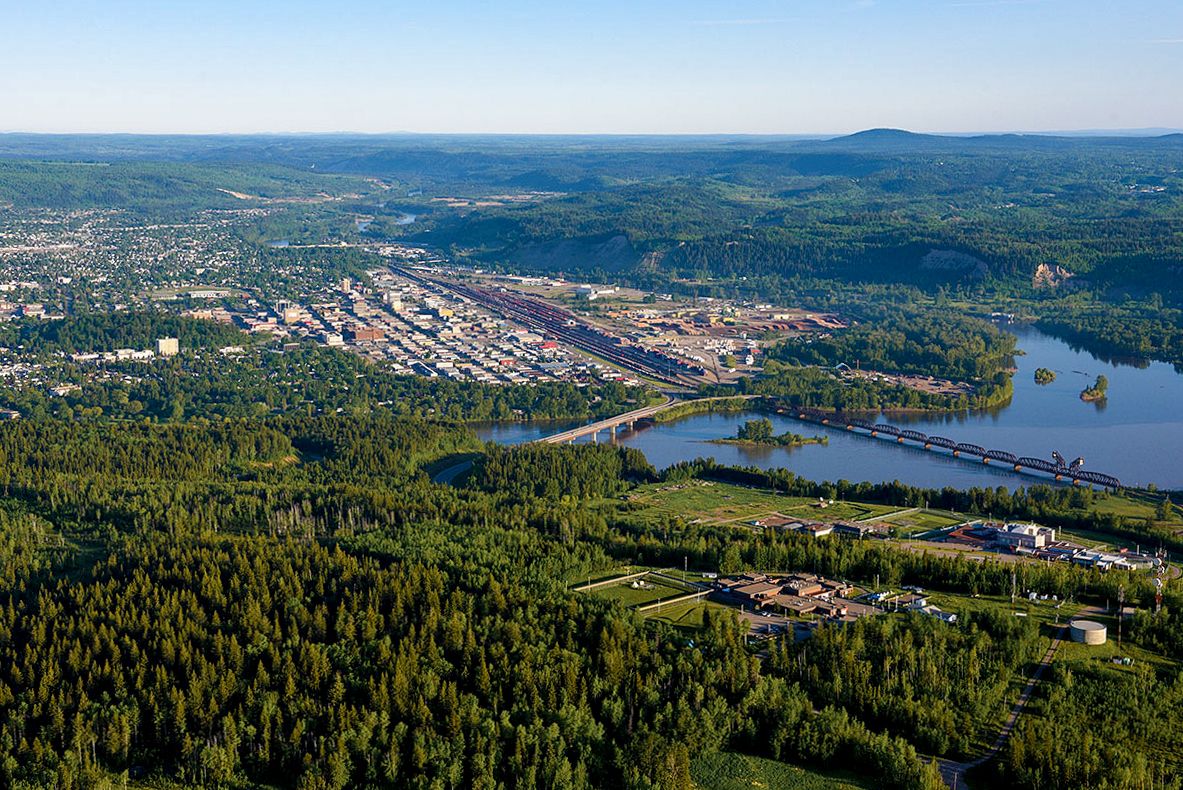
The Jack family disappearance is an unsolved missing persons case involving an Indigenous Canadian family from Prince George, British Columbia. On August 2, 1989, Ronald 'Ronnie' Jack, his wife Doreen, and their sons Russell, 9, and Ryan, 4, vanished after accepting a purported job offer from an unidentified man at a local pub. Despite extensive investigations, searches, and public appeals over decades, the family's fate remains unknown, and the case is treated as a homicide by the Royal Canadian Mounted Police. The disappearance is often cited among the tragedies associated with the Highway of Tears, highlighting broader issues of violence against Indigenous peoples in Canada.
Background and family life
Ronald Jack, born March 29, 1963, and Doreen Jack, born April 24, 1963, were both members of the Cheslatta Carrier Nation from the Burns Lake area. Their early lives were marked by significant hardship within the local Indigenous community, as Doreen and her sisters experienced parental abandonment, physical abuse, and sexual abuse before being sent to the Lejac Residential School near Fraser Lake. Following the school's closure in 1976, Doreen attended a Catholic high school where she began a relationship with Ronald, and she gave birth to their first son, Russell, on February 28, 1980, when she was 16 years old. The couple rekindled their relationship two years later and moved in with Ronald's parents in Southbank, where their second son, Ryan, was born on July 26, 1985, and Ronald's mother noted they seemed happy and he treated Russell as his own son.
By the late 1980s, the Jack family's living situation had significantly deteriorated. Ronald had lost his job at a sawmill after injuring his back, forcing the family to go on welfare and relocate to Prince George to find better employment opportunities. Ronald's mother later described her son at this time as desperate to work. Maria witnessed Ronald striking Doreen more than once, while Doreen had begun to drink heavily. At the time of their disappearance, the family's financial status had become dire. Doreen reportedly resorted to stealing cough medicine for her children, while Ronald told Mabel that he was in debt to someone for an undisclosed amount of money.
Events of the disappearance
On the night of August 1, 1989, Ronald visited the First Litre pub, located four blocks from the family's rented home on Strathcona Avenue, where he was approached by an unidentified white man in his late 30s who offered temporary jobs at a logging camp near Cluculz Lake. The man claimed the jobs would last ten days to two weeks, with Ronald bucking logs and Doreen working as a cook's helper, and that childcare would be provided for their sons, and since the Jacks did not own a vehicle, the man offered to drive them to the camp that night in his four-wheel-drive pickup truck. Ronald and the man left the pub around 11:16 p.m. and returned to the Strathcona Avenue residence, where in the early hours of August 2, Ronald made two phone calls to family in Burns Lake, first to his brother to arrange care for the boys and then to his mother, Mabel, ending the conversation by telling her to look for him if he did not return. Two of Doreen's relatives, including her sister Lorene, visited the home and witnessed the family packing belongings into the man's dark-coloured pickup truck before the family was last seen entering it at 1:21 a.m. on August 2, 1989.
The man Ronald spoke to has been described as a white man in his late 30s. He was between 183 cm to 198 cm tall and weighed between 91 and 125 kg. The male had reddish-brown hair and a full beard. He was wearing a ball cap, red checkered work shirt, faded blue jeans, blue nylon jacket and work boots with leather fringes over the toes.
- Height: Between 183 and 198 centimetres (6' to 6'6").
- Weight: Between 91 and 125 kilograms (200 to 275 lbs).
- Age in 1989: 35 to 40 years old.
- Hair: Reddish-brown, parted on one side, reaching the bottom of his ears.
- Facial hair: A short, full beard and moustache.
- Clothing: A baseball cap, red checkered work shirt, faded blue jeans, a waist-length blue nylon jacket, and work boots with leather fringes over the toes.
- Vehicle: A dark-coloured, four-wheel-drive pickup truck.
Police investigation and early leads
After Ronald had failed to contact her for several weeks, his mother reported the family missing in late August 1989. Police examined the Strathcona Avenue residence, where most of their furniture and clothes, as well as Russell and Ryan's school records, had remained since their departure. Various members of the Jack family have stated that there was no adequate support from any external organisations during the initial search on account of their Indigenous background. On September 7, 1989, the Prince George detachment of the Royal Canadian Mounted Police incorrectly reported that the family had been found, leading to the investigation briefly being closed. The following year, a televised reenactment of the disappearance produced by CrimeStoppers was broadcast on Prince George station CKPG-TV, despite the station not reaching the region where the family was believed to have disappeared. In 1992, it was reported that Prince George Native Friendship Centre and Mabel Jack were both fundraising in an effort to increase reward money and get more publicity for the case.
The early investigation included the family being reported missing in late August 1989. The Prince George RCMP incorrectly reported the family found on September 7, 1989, which briefly closed the case. By 1992, fundraising efforts were underway by the Prince George Native Friendship Centre and Mabel Jack to increase the reward and publicity. These events occurred before the anonymous tip was received in January 1996.
- Late August 1989: Mabel Jack reports the family missing to RCMP.
- September 7, 1989: RCMP incorrectly close the case after falsely reporting the family was found.
- 1992: Fundraising efforts begin by the Prince George Native Friendship Centre and Mabel Jack.
- 1992: CrimeStoppers reward stands at $2,000 for information.
- 1996: The key anonymous tip is received on January 28.
The 1996 anonymous tip and subsequent searches
The most significant tip in the case came on the morning of January 28, 1996, when an anonymous male caller contacted the Vanderhoof RCMP and stated, 'The Jack family are buried at the south end' of an unspecified ranch before hanging up. The call was traced to a residence in nearby Stoney Creek where a party with six to nine attendees was occurring at the time, but police could not identify the caller from among the partygoers and made repeated public appeals for the caller to come forward again, including in 2018, though the caller never did. In August 2019, the RCMP conducted a three-day search on a section of the Saik'uz First Nation's territory south of Vanderhoof, employing ground-penetrating radar and heavy equipment while being witnessed by community leadership, elders, and family member Marlene Jack, but no evidence related to the Jack family was found. Police stated they were treating the disappearance as a homicide until proven otherwise, though they had no specific evidence of foul play, and noted that several sites had been searched over the decades as possible burial locations without yielding results.
Theories and family advocacy
Several theories have circulated regarding the family's fate, with police initially considering a vehicle accident in a remote area before ruling it out after thorough searches found nothing and no missing person report was filed for the unidentified driver. Another theory posited the job offer was real but illegal and that something went wrong leading to the family's deaths, while a darker theory suggested the children were the target for sex trafficking with the parents killed to facilitate their abduction, and the RCMP has stated they believe someone has information that could solve the case. Family advocacy has been a persistent feature, as Doreen's sister, Marlene Jack, has been a vocal advocate who created a Facebook group called Missing Jack Family out of Prince George, which had 3,500 followers, and she has publicly criticized the RCMP's communication, stating she was initially told not to go to the media. In 2020, the advocacy group Unidentified Human Remains Canada, led by Jan Guppy, released new age-progression photos of the family created by a forensic artist from the Miami-Dade Police Department, which were shared widely online to generate new leads and brought renewed hope to the family, though the RCMP's own attempts at such photos were reportedly unsatisfactory to investigators.
Key advocacy efforts have been led by family members like Doreen's sister Marlene Jack and Ronald's mother Mabel Jack. Mabel Jack helped with fundraising efforts in 1992 to increase reward money. Marlene Jack has taken the story to the media and started a Facebook group called Missing Jack Family out of Prince George. The Saik'uz First Nation leadership and Elders supported a police search on their territory in 2019. These actions have worked to maintain public attention on the case over the decades.
- Over years: Marlene Jack creates public pressure by speaking to media and hassling police.
- Date unknown: Creation of the Facebook group 'Missing Jack Family out of Prince George' (3,500 followers).
- 2020: Advocacy group Unidentified Human Remains Canada releases new age-progression photos.
- 2020: Forensic artist Samantha Steinberg of Miami-Dade Police creates the photos.
- 2020: Jan Guppy facilitates the photo project and distributes flyers.
- 2020: Marlene Jack states her primary goal is to bring the family home, not justice.
Connection to the Highway of Tears
The Jack family disappearance is frequently linked to the unsolved crimes along the Highway of Tears, a stretch of Highway 16 between Prince George and Prince Rupert known for the high number of missing and murdered Indigenous women and girls. The case exemplifies the vulnerabilities faced by Indigenous families, particularly those in economic distress, and the historical challenges in mobilizing adequate police and media resources for such cases, as the disappearance occurred along the same corridor and involved an Indigenous family lured by a promise of work, a pattern seen in other cases. The broader context of the Highway of Tears has brought increased scrutiny to the Jack case over the years, and it shows systemic issues in how missing persons cases involving Indigenous people were historically investigated and reported. The family's story is often cited in discussions about the national crisis of Missing and Murdered Indigenous Women and Girls, contributing to ongoing calls for justice and improved investigative protocols for cases involving Indigenous victims.
Case status and public appeals
As of 2026, the case remains an open and active investigation with the Prince George RCMP, and the police continue to treat it as a homicide investigation despite having no specific evidence of foul play. The most recent public search occurred in August 2019, and while it yielded no evidence, investigators stated the decision to pursue further leads rests with the assigned investigators, and the RCMP maintains that someone in the public possesses information crucial to solving the disappearance. Public appeals for information are ongoing, as authorities ask anyone with information to contact the Prince George RCMP at 250-561-3300 or to remain anonymous by calling Crime Stoppers at 1-800-222-8477, with a cash reward available for information leading to an arrest. The family, particularly Marlene Jack, continues to plead for anyone with knowledge to come forward, emphasizing the primary goal is to bring the family home for a proper burial, with justice being a secondary concern for the family at this stage.
Questions about Jack family disappearance
What were the circumstances of their disappearance?
On the night of August 1, 1989, Ronald Jack was at the First Litre pub in Prince George when an unidentified man offered him and his wife jobs at a logging camp near Cluculz Lake. The man promised Ronald work bucking logs and Doreen a job as a cook's helper, with childcare for their sons. Since the family had no car, the man offered to drive them that night. After packing some belongings at their home on Strathcona Avenue, the entire family was seen getting into the man's dark-coloured, four-wheel-drive pickup truck at 1:21 a.m. on August 2. They were never seen again.
What description was given of the unidentified man?
The unidentified man was described as a white man in his late 30s. He was between 183 cm to 198 cm tall and weighed between 91 and 125 kg. He had reddish-brown hair and a full beard. On the night of August 1, 1989, he was wearing a ball cap, a red checkered work shirt, faded blue jeans, a blue nylon jacket, and work boots with leather fringes over the toes.
What was the 1996 anonymous tip about?
On January 28, 1996, an anonymous male caller contacted the Vanderhoof RCMP and stated, 'The Jack family are buried at the south end' of an unspecified ranch before hanging up. The call was traced to a house in Stoney Creek where a party was happening. Police could not identify the caller from among the six to nine partygoers and made repeated public appeals for the caller to come forward again, including in 2018. This remains the most specific tip in the case, though subsequent searches have not corroborated it.
Have there been any recent searches for the Jack family?
Yes, the most recent search occurred from August 28 to 30, 2019, on a section of the Saik'uz First Nation's territory south of Vanderhoof, British Columbia. The RCMP, aided by external experts, used ground-penetrating radar and heavy equipment to search the area. Elected leadership and elders from the Saik'uz Nation were present to witness and support the search. No evidence related to the Jack family was discovered during this three-day operation.
Who were the members of the missing Jack family?
The missing Jack family consisted of Ronald 'Ronnie' Jack, aged 26, his wife Doreen Jack, also aged 26, and their two sons, Russell, aged 9, and Ryan, aged 4. Both Ronald and Doreen were members of the Cheslatta Carrier Nation, an Indigenous First Nation located outside Burns Lake, British Columbia. The family had relocated to Prince George, British Columbia, seeking better employment opportunities after Ronald lost his sawmill job due to a back injury. They were last seen at their rented house at 2116 Strathcona Avenue in Prince George on August 2, 1989, and their disappearance remains unsolved.
How is the Jack family case connected to the Highway of Tears?
The Jack family disappearance is often linked to other unsolved crimes against Indigenous Canadians along the Highway of Tears. This refers to a stretch of British Columbia Highway 16 between Prince George and Prince Rupert where numerous women and girls, predominantly Indigenous, have vanished or been murdered. The family was last seen entering a pickup truck in Prince George, a city located on this highway, after being offered jobs at a logging camp near Cluculz Lake, which is also along Highway 16 west of the city. The case is frequently cited as part of the broader national crisis of missing and murdered Indigenous women and girls in Canada.
Sources and further reading
- Jack family disappearance (Wikipedia)
- No evidence uncovered in recent search for family missing ... (cbc.ca)
- S3 E32 The Missing Jack Family from Prince George (evelazarus.com)
- New photos of missing Jack family bring 'renewed hope' for ... (aptnnews.ca)
- The Jack Family, ColdCase PG (coldcasepg.ca)
Checked by the Your Space Hamilton desk. Last updated 2026-10-27.