Fredericton
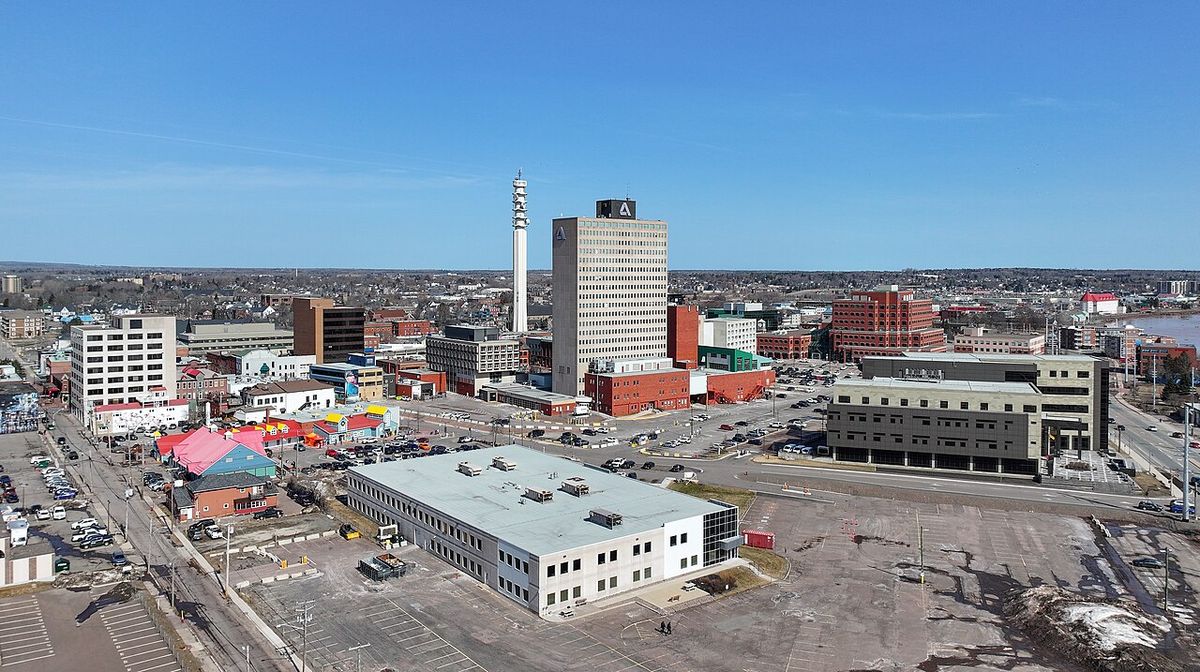
Fredericton is the capital city of the Canadian province of New Brunswick and one of its principal urban centres. Situated on the Saint John River in the west-central part of the province, the city functions as a major cultural, artistic, and educational hub, hosting two universities and several prominent cultural institutions. Its economy is anchored by the provincial public sector but features a growing information technology and commercial base. With a city population of approximately 79,000 as of 2026 and a metropolitan area estimated at 125,303 in 2025, Fredericton is the third-largest city in New Brunswick.
History
The area of modern Fredericton shows evidence of human activity dating back 12,000 years, with Wolastoqiyik communities later farming upriver. French colonists established Fort Nashwaak as the capital of Acadia in the late 1600s, which withstood a British attack in 1696, but the capital was later moved to Port Royal. Acadians escaping the British takeover of Nova Scotia settled the site as Pointe Ste-Anne in 1713, but the community was destroyed in 1758 when its population of about 83 were exiled during the expulsion of the Acadians. The modern city was founded in 1783 with the arrival of United Empire Loyalists from New England, and the settlement was renamed Fredericstown after Prince Frederick, son of King George III. It was chosen as the capital of the newly created colony of New Brunswick in 1784 due to its perceived defensive advantages over the larger port of Saint John.
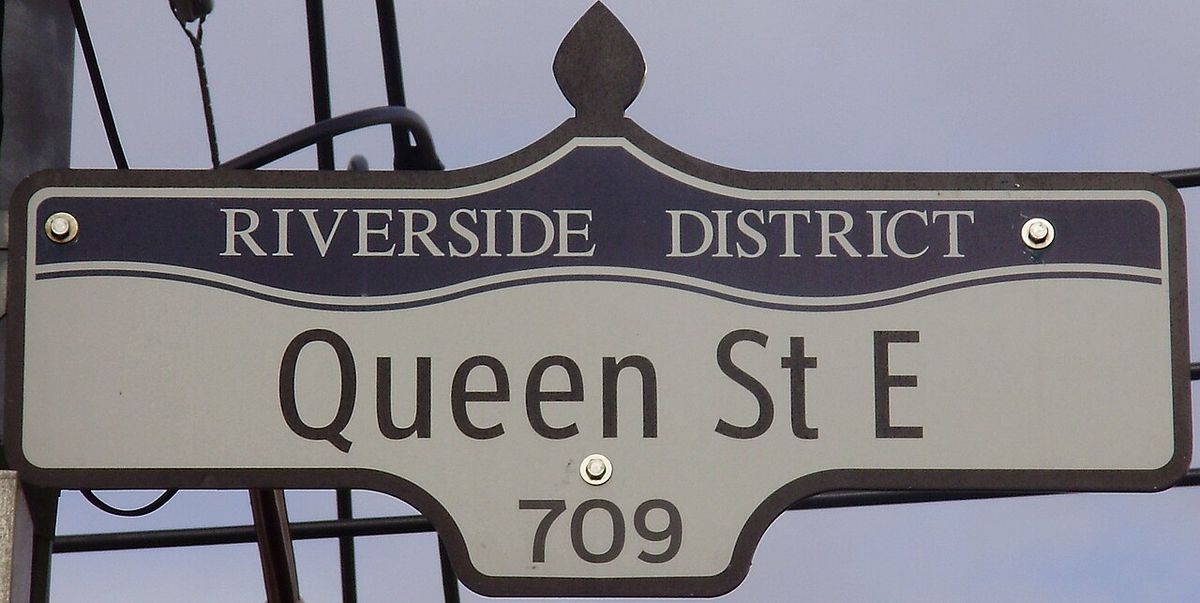
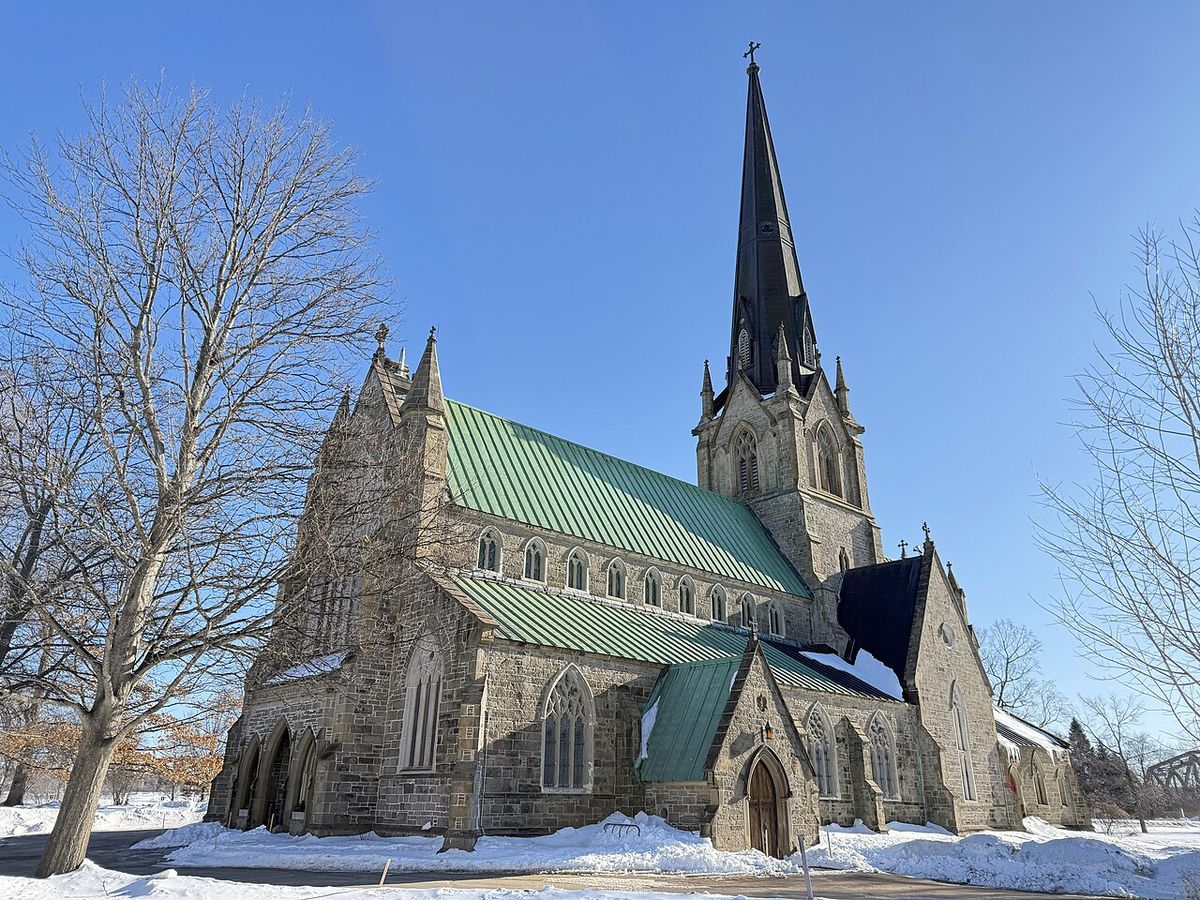
The city's early street grid was laid out in a typical pattern of the time with names reflecting loyalist tendencies like Charlotte, Brunswick, George, King, and Queen. Its status as a capital attracted key institutions, including King's College, which became the University of New Brunswick and the first English-language university in Canada, and Christ Church Cathedral, completed in 1853 as the seat of the Anglican Diocese of Fredericton. Fredericton served as a British garrison town from 1784 to 1869, a site preserved as a National Historic Site of Canada. Major centralization of provincial government services in the 1960s under the New Brunswick Equal Opportunity program, which abolished county councils, spurred significant population and job growth, and the city expanded its boundaries on 1 January 2023 by annexing parts of five local service districts.
Geography and Climate
Fredericton is located within the Pennsylvanian Basin at an elevation of about 17 metres above sea level, a geological area distinct from older parts of the province. The Saint John River bisects the city from west to east, forming the dominant natural feature, with the downtown core situated on flat lowlands on either bank and most post-war suburban development occurring on the gently sloping hills of the river valley. The region is rich in water resources and features highly arable soil, making it ideal for agriculture, and the Nashwaak River meets the Saint John within the city while uninhabited parts are heavily forested. The city experiences a warm-summer humid continental climate characterized by short, warm summers and long, cold winters, with high humidity and precipitation levels year-round. Fredericton receives an average of approximately 1,100 millimetres of precipitation annually, which supports the area's extensive forest cover and agricultural potential.
Demographics
According to the 2021 Canadian census, the city of Fredericton had a population of 63,116 living in 28,478 private dwellings, a change of 7.5 percent from its 2016 population of 58,721. The census metropolitan area had a population of 108,610, and the city has the highest percentage of residents with post-secondary education and the highest per capita income in New Brunswick. Immigrants comprise 12.6 percent of the total population, with the top countries of origin being the United Kingdom, China, the United States, Syria, and the Philippines. Fredericton accepted the highest number of refugees from the Syrian Civil War per capita of any Canadian city, a significant fact in its recent demographic history.
According to the 2021 census, Fredericton's population was 82.5 percent white or European, 3.5 percent Indigenous, and 14.0 percent visible minorities. The largest visible minority groups were Black and South Asian, each at 2.9 percent, followed by Arab at 2.5 percent and Chinese at 1.8 percent. English is the mother tongue for 80.2 percent of residents, with French at 6.1 percent and Arabic at 2.1 percent, while 1.4 percent list both English and French as mother tongues. In terms of religion, 52.2 percent identify as Christian, 40.7 percent as irreligious, and 3.7 percent as Muslim, and the city hosts a synagogue, a mosque, a Hindu temple, a Unitarian fellowship, and a Shambhala Buddhist meditation centre.
Economy
The economy of Fredericton is strongly tied to the public sector, with the Government of New Brunswick and the city's universities being the primary employers, a situation amplified by the centralization of provincial government functions during the 1960s. The city has actively invested in information technology infrastructure, notably through its municipal telecommunications utility, e-Novations, and the free municipality-wide Wi-Fi initiative, Fred-eZone. This project won the Judges Innovation Award at the 2004 Canadian Information Productivity Awards and contributed to Fredericton being selected as a Top 7 Intelligent Community by the Intelligent Community Forum in 2008 and 2009. The Fred-eZone network spans much of the downtown, parts of residential areas, and peripheral commercial zones like the Regent Mall.
Downtown Fredericton is generally considered to be the area bordered by the St. John River to the north, Smythe Street to the west, Church Street to the east and Brunswick Street to the south. The downtown contains Kings Place Mall, a mixed-use office and retail complex that also serves as a major transfer point for Fredericton Transit. Downtown Fredericton Inc. is a non-profit Business Improvement Area organization representing the central business district. In 2016, Downtown Fredericton Inc. received the Downtown Achievement Award of Excellence from the International Downtown Association for a local awareness marketing campaign.
Arts and Culture
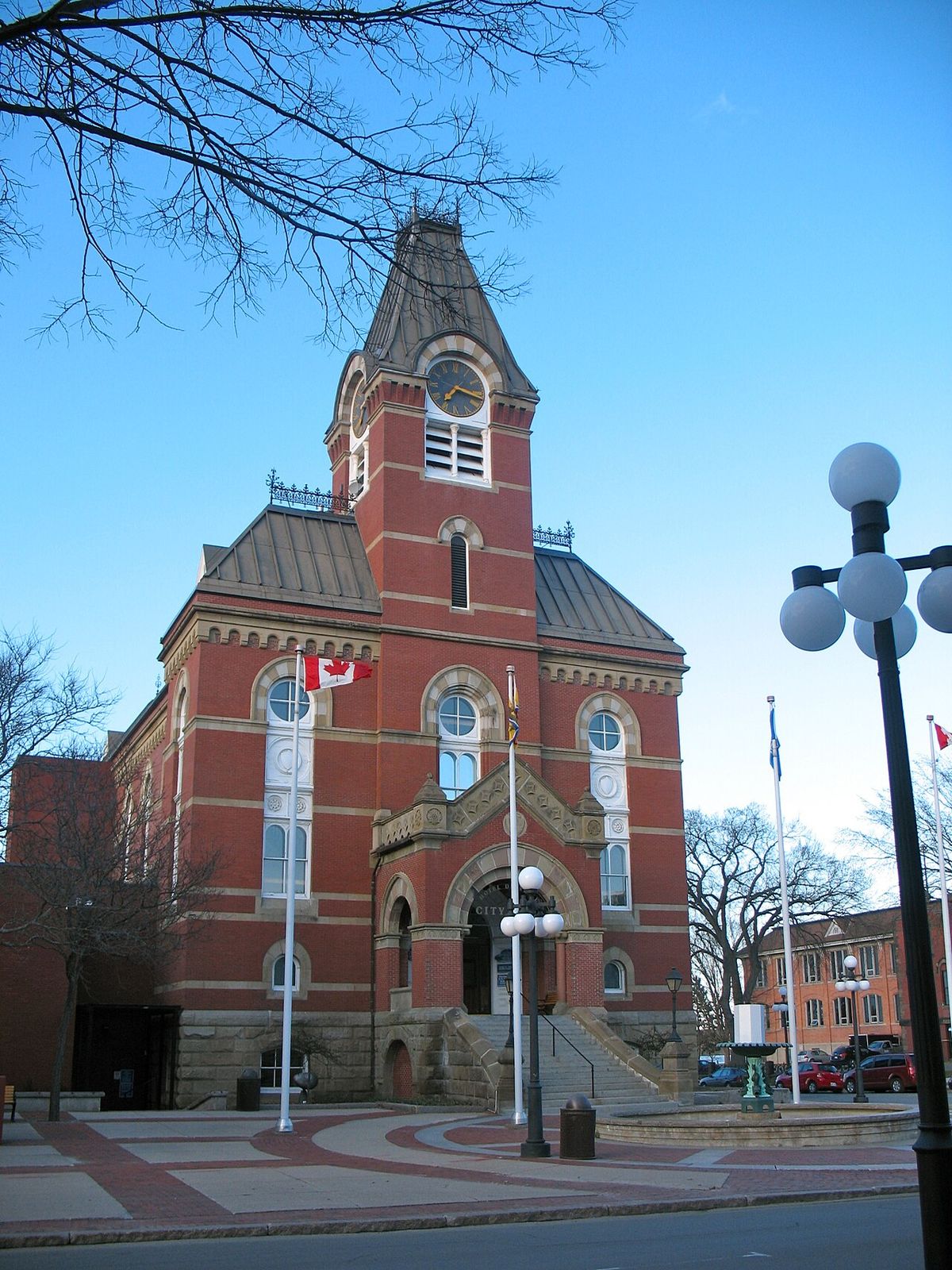
Fredericton is a significant cultural centre for the province, home to institutions like the Beaverbrook Art Gallery, the Fredericton Region Museum, and The Playhouse, the main venue for Theatre New Brunswick and the province's largest professional theatre company. The city hosts several major annual festivals, including the Harvest Jazz & Blues Festival, the New Brunswick Summer Music Festival, the Silver Wave Film Festival, and Symphony New Brunswick performances. Fredericton has a long literary tradition, having been home to poets Charles G. D. Roberts and Bliss Carman, and contemporary writers like David Adams Richards, and it is also an important centre for visual artists with figures such as Goodridge Roberts and Molly and Bruno Bobak having lived and worked here. The city's architecture ranges from Victorian to modern, and it contains 12 National Historic Sites beyond the dozen National Historic People and two National Historic Events honoured there. A beloved public art piece is the fountain "Putto with Fish," colloquially known as "Freddy the Nude Dude," located outside City Hall at 397 Queen Street. Donated by Mayor George Edward Fenety in 1885, the statue of a nude cherub was replicated in Alabama in January 2013 after significant weather damage, with the original now kept safely inside City Hall, and the city also hosts the Garrison Night Market during the summer months which features many local vendors, artists, and musicians.
- Major Festivals: Harvest Jazz & Blues Festival, New Brunswick Summer Music Festival, Silver Wave Film Festival, Flourish Arts & Music Festival.
- Cultural Institutions: The Playhouse, Beaverbrook Art Gallery, Fredericton Region Museum.
- Notable Past Literary Residents: Charles G. D. Roberts, Bliss Carman, Francis Sherman.
- Public Art: "Freddy the Nude Dude" (Putto with Fish) fountain at City Hall.
Education and Research
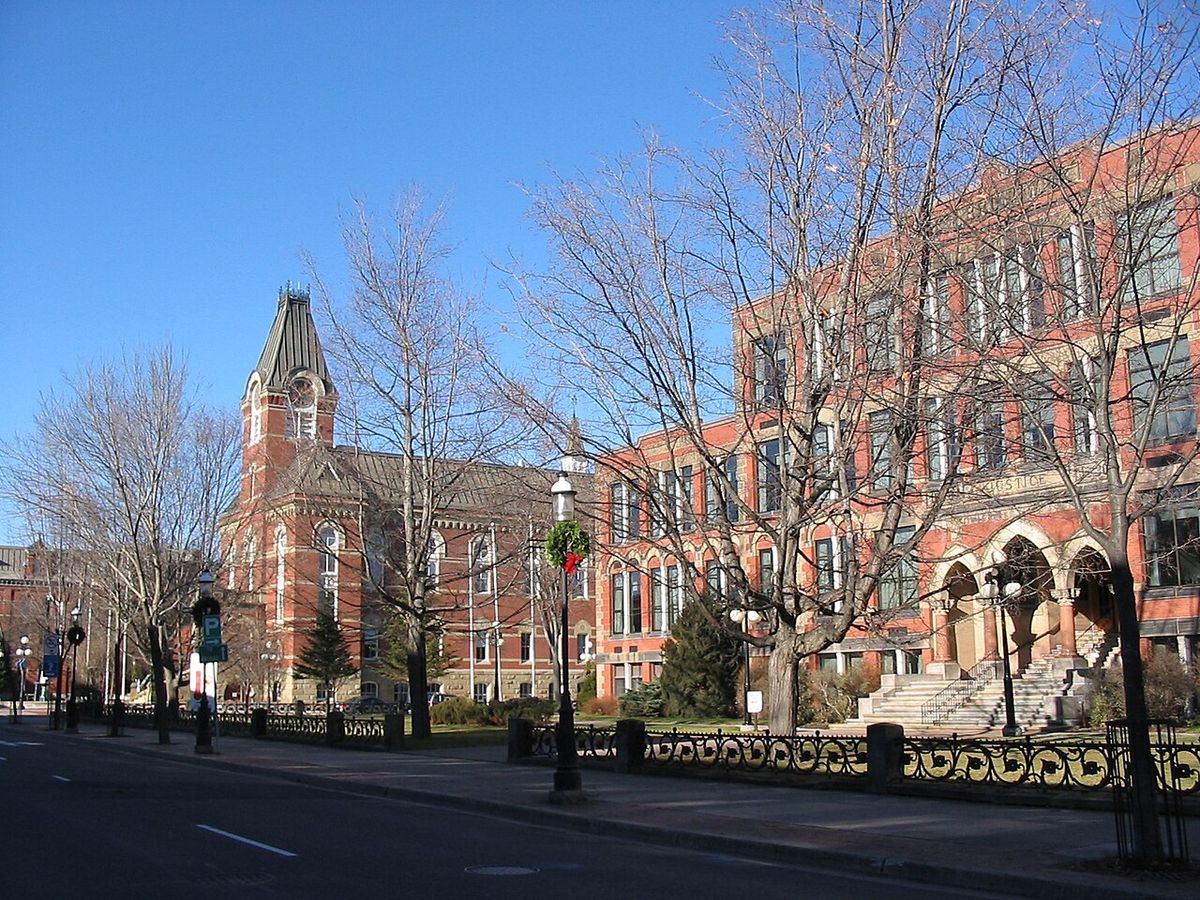
Fredericton is a major educational hub, hosting two universities: the University of New Brunswick, Canada's first English-language university, and St. Thomas University, the province's only Catholic university. Post-secondary institutions also include the New Brunswick College of Craft and Design, the New Brunswick Community College, and the Maritime College of Forest Technology, while for-profit universities such as the University of Fredericton and Yorkville University also operate in the city. Primary and secondary education is provided by the Anglophone West School District and the District Scolaire Francophone Sud, which operate schools including Fredericton High School, École des Bâtisseurs, École Sainte-Anne, and the public-private partnership Leo Hayes High School. The 1960s saw an expansion of the University of New Brunswick due to increased post-war enrolment and the construction of Saint Thomas University, while the University of New Brunswick Faculty of Law also moved from Saint John to the Fredericton area during this period.
Significant research is conducted in Fredericton, particularly in forestry management at the Hugh John Flemming Forestry Centre. The city's Provincial Research Organization specializes in applied research for sectors including aquaculture, mining, manufacturing, energy and the environment. The city has the highest percentage of residents with post-secondary education in the province. This research activity contributes to Fredericton's role as a centre for skilled professionals.
- Universities: University of New Brunswick (UNB), St. Thomas University.
- Colleges: New Brunswick College of Craft and Design (NBCCD), New Brunswick Community College (NBCC), Maritime College of Forest Technology.
- Major Research Centres: Hugh John Flemming Forestry Centre, Provincial Research Organization.
- Public High Schools: Fredericton High School, Leo Hayes High School, École Sainte-Anne.
Parks, Recreation and Sports
Fredericton offers extensive parkland and a multi-use trail system for recreation, with major parks including Odell Park, which features preserved forested areas, trails, spaces for picnics and gatherings, and the Fredericton Botanic Garden. Killarney Lake Park is a lakeside park with a beach and picnic spots as well as an extensive network of cross-country skiing trails, while Officers' Square serves as a venue for outdoor concerts and has an outdoor skating rink in the winter. The Green is a walking and biking trail along the north and south banks of the Saint John River, and Carleton Park, part of the Northside Riverfront Trail, includes a boat launching area on the site of a historic rail yard. The city maintains a network of 25 trails totaling more than 85 kilometres on both sides of the Saint John and Nashwaak Rivers, many following old railway lines like the Fredericton Railway Bridge and forming part of the larger Trans-Canada Trail and Sentier NB Trail systems.
There are no professional sports teams in Fredericton, although both universities have extensive athletic programs. The UNB Reds play in the Atlantic University Sport conference of U Sports and their men's hockey team are ten-time National Champions and the highest attended sporting events in the city. The St. Thomas Tommies play in the Atlantic Collegiate Athletic Association conference of the Canadian Collegiate Athletic Association for most sports. The Junior A hockey team is the Fredericton Red Wings, and each summer the Fredericton Loyalists host the New Brunswick Timber team which competes in the Rugby Canada Super League. Fredericton often holds high class curling competitions, and the former Fredericton Express and Fredericton Canadiens were American Hockey League teams.
| Park Name | Key Features |
|---|---|
| Odell Park | Preserved forest, Fredericton Botanic Garden, trails, picnic areas |
| Killarney Lake Park | Beach, picnic areas, cross-country ski trails |
| Officers' Square | Outdoor concert venue, winter skating rink |
| The Green | Riverfront walking and biking trail |
| Carleton Park | Boat launch, part of Northside Riverfront Trail |
Government and Infrastructure
Fredericton has a non-partisan Mayor-council government where the mayor and council serve four-year terms with elections in May. The city is divided into 12 wards, six on each side of the river, with one councillor per ward. The city includes the provincial ridings of Fredericton North, Fredericton-Grand Lake, Fredericton West-Hanwell, Oromocto-Lincoln-Fredericton, New Maryland-Sunbury and Fredericton South, which in 2014 elected the first-ever MLA for the Green Party of New Brunswick, party leader David Coon. Federally, the city forms most of the riding of Fredericton. Emergency services are provided by the Fredericton Police, which has 115 sworn members and was founded in 1851, the Fredericton Fire Department with four stations, and Ambulance New Brunswick.
Air service is provided out of the Fredericton International Airport, and Fredericton Transit provides bus service seven days a week. Passenger rail service ended in the 1960s, and freight service ended in 1996, with all railway tracks having been abandoned and removed, largely becoming multi-use trails. Fredericton started installing bicycle lanes in July 2008. Fredericton is also served by the Maritime Bus fleet which provides connections to points throughout the Maritimes.
Questions about Fredericton
What is the population of Fredericton?
As of 2026, according to the city's update on building development, Fredericton has a population of approximately 79,000. The metropolitan population in 2025 was estimated at 125,303. These figures reflect recent growth, as the 2021 Canadian census recorded a city population of 63,116, which was a 7.5 percent increase from 58,721 in 2016. The city's land area is 133.93 square kilometres, resulting in a population density of 471.3 people per square kilometre. Fredericton is the third largest city in New Brunswick, after Moncton and Saint John.
Why is Fredericton the capital of New Brunswick?
Fredericton became the capital of the new colony of New Brunswick in 1784, after the province was partitioned from Nova Scotia. The site, originally a French Acadian settlement called Pointe Ste Anne, was renamed Fredericstown after Prince Frederick, the second son of King George III. This renaming occurred when United Empire Loyalists arrived and established the modern community. The location was selected over the larger port city of Saint John because it was considered to have a better defensive position. This decision established Fredericton's enduring role as the province's centre of government.
What universities are located in Fredericton?
Fredericton is home to two universities, The University of New Brunswick and St Thomas University. The University of New Brunswick, originally King's College, was the first English language university in Canada. The city also hosts several other post secondary institutions, including the New Brunswick College of Craft and Design, New Brunswick Community College, and the Maritime College of Forest Technology. For profit universities such as the University of Fredericton and Yorkville University are located in the city. This concentration makes Fredericton a major educational centre for the province.
What is Fredericton known for?
Fredericton is known as an important cultural, artistic, and educational centre for New Brunswick and as the provincial capital. It is home to two universities and cultural institutions like the Beaverbrook Art Gallery, the Fredericton Region Museum, and The Playhouse performing arts venue. The city hosts major annual events including the Harvest Jazz and Blues Festival. Fredericton has the highest percentage of residents with a post secondary education in the province and the highest per capita income of any New Brunswick city, showing its economic and social significance.
What are the major employers in Fredericton?
The major employers in Fredericton are the Government of New Brunswick and the city's universities. As the provincial capital, the public sector forms a base of the local economy. This was reinforced in the 1960s when government services were centralized provincially in Fredericton, increasing jobs and population. Beyond the public sector, the city has a growing information technology and commercial sector. Fredericton's investments in IT infrastructure, such as its city wide Wi Fi initiative, have earned it recognition as an intelligent community.
What is there to do outdoors in Fredericton?
Outdoor activities in Fredericton centre on its extensive trail network and riverfront parks. The city has over 85 kilometres of trails on both sides of the Saint John and Nashwaak Rivers, many following old railway lines as part of the Trans Canada Trail network. Popular parks include Odell Park with its preserved forest and botanic garden, Killarney Lake Park with a beach and cross country skiing trails, and Officers' Square for outdoor skating and concerts. Carleton Park on the Saint John River provides a boat launch, while The Green offers a scenic walking and biking trail along the riverbanks.
Sources and further reading
- Fredericton (Wikipedia)
- Fredericton Capital Region (frederictoncapitalregion.ca)
Checked by the Your Space Hamilton desk. Last updated 2026-10-23.