Flin Flon
Flin Flon is a unique mining city straddling the provincial border of Manitoba and Saskatchewan, with the majority of its population and land area situated in Manitoba. Founded in 1927 by the Hudson Bay Mining and Smelting Company to exploit rich local deposits of copper and zinc, the city's economy and identity have been intrinsically linked to resource extraction for nearly a century. It is famously named after Josiah Flintabbatey Flonatin, the fictional explorer from a 1905 adventure novel, a distinction that contributes to its colourful local character. While the closure of its last major mine in 2022 marked the end of an era, Flin Flon remains a significant community in northern Manitoba, known for its rugged Canadian Shield landscape, active arts scene, and as the birthplace of hockey legend Bobby Clarke.
Etymology and founding
The city's unusual name originates from Josiah Flintabbatey Flonatin, the protagonist of J.E. Preston Muddock's 1905 novel The Sunless City. Prospector Tom Creighton, upon discovering a high-grade copper exposure in the area, recalled the story of Flonatin's journey through a gold-lined hole into an underground world and dubbed the site Flin Flon's hole. The settlement that grew around the mine, founded by the Hudson Bay Mining and Smelting Company in 1927, formally adopted the name. This literary connection is central to local identity, celebrated with a statue of the character Flinty designed by cartoonist Al Capp. In 2003, the local Chamber of Commerce commissioned a $3.00 coin considered legal tender among participating retailers until September 2004, followed by a $5.00 coin that circulated until the end of 2008. The National Film Board of Canada further documented this unique origin story in its 1978 short film Canada Vignettes: Flin Flon. Flin Flon shares the rare distinction of being named after a fictional character with Tarzana, California, and Le Plessis-Robinson, France.
Geography and climate
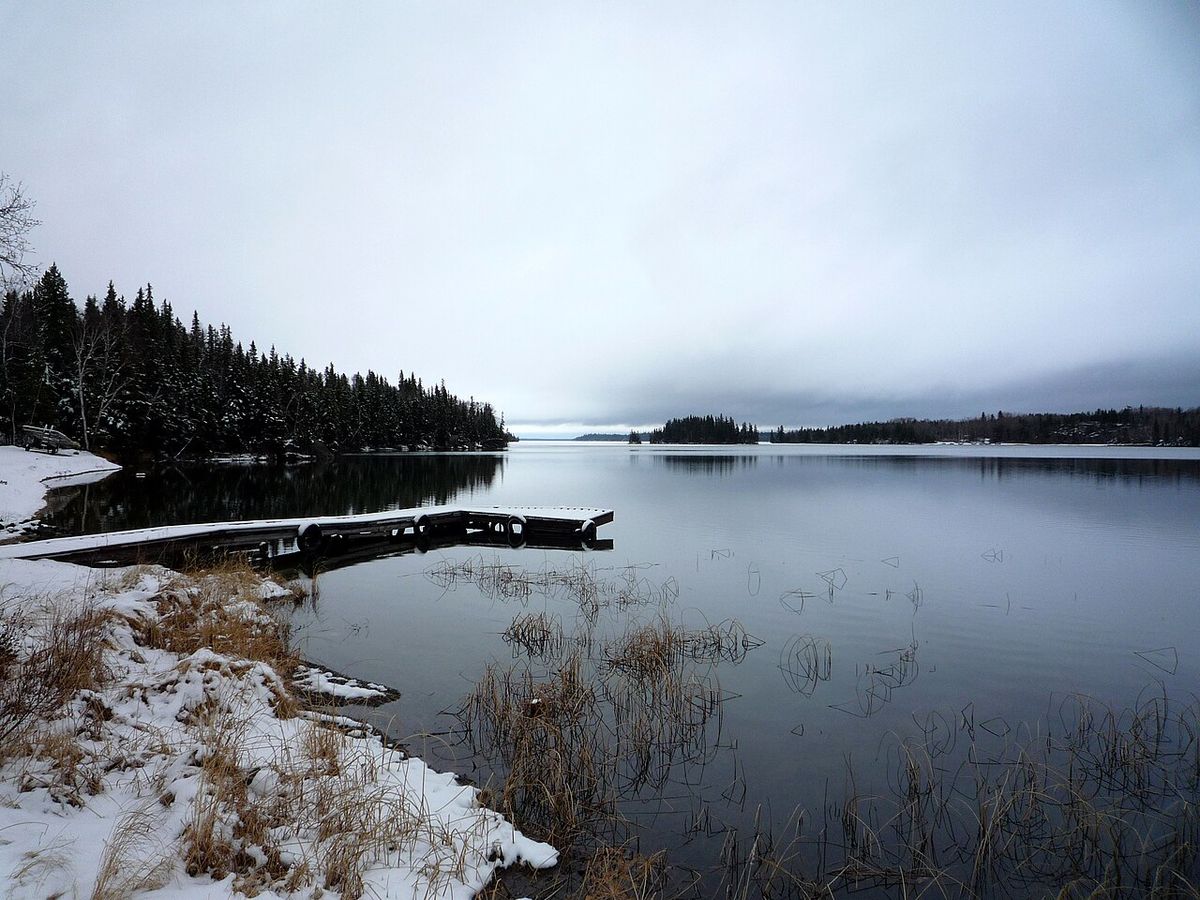
Flin Flon is situated directly on the Manitoba-Saskatchewan border, a placement complicated by correction lines that result in the Saskatchewan section lying south, not west, of the Manitoba portion. The 2021 census recorded 4,940 residents in the Manitoba section and 159 in the Saskatchewan section, with the city's total land area split between 13.14 square kilometres in Manitoba and 2.01 square kilometres in Saskatchewan. The terrain is dominated by exposed bedrock of the Canadian Shield, earning Flin Flon the nickname the city built on rock. This geology has led to unique municipal adaptations, such as above-ground sewer boxes that double as sidewalks in areas with insufficient soil cover. For postal purposes, the entire city uses the Manitoba R8A code, but telephone service in the Saskatchewan portion falls under area code 306 as part of the Creighton exchange, and electrical service for all residents is provided by Manitoba Hydro. Due to the extensive bedrock and climate, agriculture is not feasible locally, with the nearest grain farming found approximately 130 kilometres southeast in The Pas, Manitoba.
Flin Flon experiences a humid continental climate characterized by extreme seasonal temperature variations, though recent years have seen noticeably hotter conditions. Winters are bitterly cold, with January average lows near -22.9 degrees Celsius and average highs of -14.7 degrees Celsius. Summers are warm with July average highs of 24.1 degrees Celsius and average lows of 13.6 degrees Celsius. The highest reliable temperature ever recorded was 38.3 degrees Celsius on July 19, 1941, and the coldest was -46.1 degrees Celsius on January 15, 1930. Main Street and Hudson Street are two primary roads that cross the provincial boundary, with Hudson Street changing its name to South Hudson Street upon entering Saskatchewan. An undeveloped stretch of Channing Drive also briefly crosses into Saskatchewan before reentering Manitoba near the rural Channing neighbourhood.
Economic history and major employers
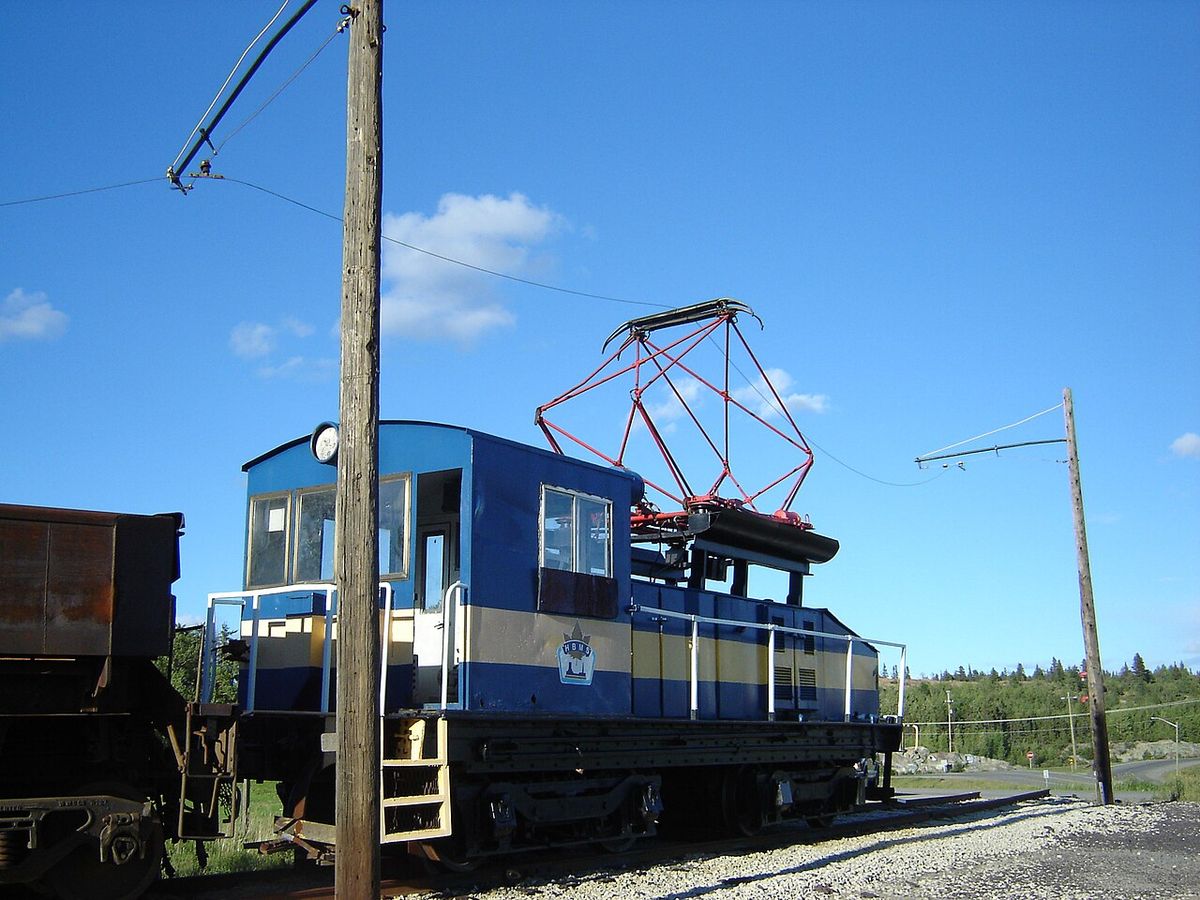
For nearly a century, Flin Flon's economy was defined by base metal mining, primarily copper and zinc with lesser amounts of gold and silver. Since the late 1910s, approximately 17 mines operated in the vicinity, with the last, the 777 Mine, closing in June 2022 and decommissioning completed shortly thereafter. The original Hudson Bay Mining and Smelting Company, now Hudbay, invested heavily in infrastructure including a railway, smelter, and the Island Falls hydroelectric plant in Saskatchewan, with the rail line reaching the mine by 1928. Zinc concentrate from sphalerite was processed on-site into refined metal, while copper concentrate from chalcopyrite was produced and, prior to the smelter's closure in 2010, also refined locally. The plant utilized a zinc pressure leaching process that significantly reduced sulfur dioxide emissions compared to traditional sulphide processing methods. The town grew considerably during the 1930s Great Depression as people came to work at the mines, and it was incorporated as a municipality on January 1, 1933, reaching city status in 1970.
Following the 777 Mine closure, many workers transitioned to Hudbay's Lalor Mine in Snow Lake, Manitoba. In a notable diversification effort, Flin Flon gained international attention in 2002 when Saskatoon-based Prairie Plant Systems was awarded a four-year federal contract to produce medicinal marijuana. The operation was set up approximately 120 metres underground in a mined-out section of the active Trout Lake Mine, located just over five kilometres northeast of the city, for security and climate control, producing about 400 kilograms annually. Prairie Plant Systems discontinued the operation in 2009 due to lease expiry and uncertainty around the mine's pending closure, which occurred in 2011. The city's other employers include transportation, retail, public services, and a tourism sector centred on its scenic setting and numerous nearby lakes.
Culture, arts, and sports
Flin Flon maintains an active cultural scene for a community of its size. The Flin Flon Arts Council has been instrumental in fostering local talent and bringing major performances to the community, such as the Royal Winnipeg Ballet. The R.H. Channing Auditorium in the Flin Flon Community Hall is a key venue for concerts and theatre, including productions by the local troupe Ham Sandwich. Established in 2010, the Northern Visual Arts Centre (NorVA) provides studio and gallery space for visual artists and hosts frequent workshops, concerts and community events. The biennial musical productions by the Flin Flon Community Choir, such as Chicago: The Musical in 2013, Les Miserables in 2015, Grease in 2017 and Mamma Mia in 2019, are major community highlights. During the national Culture Days festival in September 2018, Flin Flon ranked second in the country, behind only Winnipeg, for the number of free events offered, which included concerts, workshops, artist talks and kids' activities.
The city is famously the home of the Flin Flon Bombers of the Saskatchewan Junior Hockey League and the birthplace of NHL Hall of Famer Bobby Clarke. Clarke, who captained the Philadelphia Flyers to two Stanley Cup championships in the 1970s and was a star on the 1972 Team Canada Summit Series roster, is the most prominent of many professional hockey players from the area. Other NHLers from Flin Flon include Ken Baird, Ken Baumgartner, Dean Evason, Ted Hampson, who captained the Bombers' Memorial Cup team in 1957 and won the Bill Masterton Memorial Trophy, and Eric Nesterenko. The team plays its games at the Whitney Forum. For family recreation, the city operates the seasonal Joe Brain Petting Zoo from June through August, which features a picnic area, playground, basketball hoops, and a wading pool. Flin Flon is also the fictional home of the comic book superhero Captain Canuck.
- Flin Flon Arts Council: Organizes local arts development and brings in performers like the Royal Winnipeg Ballet.
- Northern Visual Arts Centre (NorVA): Studio and gallery space established in 2010 for local visual artists.
- Flin Flon Community Choir: Presents major musicals every two years, with past shows including Beauty and the Beast and Fiddler on the Roof.
- Flin Flon Bombers: SJHL hockey team based at the Whitney Forum, with a history dating to the 1930s.
- Joe Brain Petting Zoo: Seasonal city-operated attraction open from June to August, weather permitting.
- Culture Days: National festival held the last weekend of September. Flin Flon had the second-most free events in Canada in 2018.
Transportation and infrastructure
Flin Flon is accessed by road via Manitoba Provincial Trunk Highway 10, which connects to Saskatchewan Highway 106 and Saskatchewan Highway 167. The city runs a small public bus system for local transit. The Flin Flon Airport, located southeast of the city immediately west of Bakers Narrows Provincial Park, features a single asphalt runway and is serviced by Calm Air with regular flights to Winnipeg. A smaller gravel airstrip and adjacent water aerodrome are located in the nearby Channing area for general aviation use. Freight rail service is provided by the Hudson Bay Railway on its line between The Pas and Flin Flon. This critical line was part of the larger network to Churchill that was washed out in June 2017 and remained out of service for over a year. The City of Flin Flon purchased shares in One North, part of the purchasing consortium Arctic Gateway Group Limited Partnership, which facilitated repairs to the line by Cando Rail Services and Paradox Access Solutions.

Government and representation
Flin Flon is jointly administered by the provinces of Manitoba and Saskatchewan. Municipal operations are governed by a city council consisting of a mayor and six councillors elected for four-year terms, with the current council elected on October 24, 2018. Provincially, the Manitoba portion lies within the Flin Flon electoral district, represented since 2016 by New Democratic Party MLA Tom Lindsey. The Saskatchewan portion is part of the Cumberland constituency, represented since 2024 by NDP MLA Jordan McPhail. Federally, the city is split between two ridings. The Manitoba section is in Churchill, Keewatinook Aski, represented by Liberal MP Rebecca Chartrand since 2025. The Saskatchewan section is in Desnethé, Missinippi, Churchill River, represented by Liberal MP Buckley Belanger, also since 2025. Flin Flon is the only urban centre within its Manitoba provincial electoral district.
Media
Flin Flon's primary print news source is The Reminder, a weekly newspaper published every Wednesday. The bi-monthly glossy magazine Northroots Magazine serves as a regional publication and is available as in-flight reading on Calm Air, published in February, April, June, August, October and December. A former local interest magazine, Cottage North Magazine, ceased publication in September 2015. Local radio stations include CFAR 590 AM and 102.9 FM, CBC Radio One on CBWF-FM 90.9, Ici Radio-Canada Première on CKSB-4-FM 99.9, and the Indigenous-focused NCI station CIFF-FM 101.1. Television service is provided by CKYF-TV channel 13, an analogue repeater of Winnipeg's CTV affiliate CKY-DT, and Shaw Communications operates a community programming channel on CATV Channel 11 called Shaw TV. Television broadcasting in Flin Flon began in June 1962 with the CBC station CBWBT channel 10, which initially broadcast kine recordings sent from CBWT Winnipeg before switching to a live provincial microwave feed on March 1, 1969. The CBC and Radio-Canada repeaters were closed on July 31, 2012, as part of a national rebroadcaster shutdown.
Demographic trends and population history
According to the 2016 census, the population of Flin Flon was 5,194, with 4,991 residents in the Manitoba portion and 203 in the Saskatchewan portion. In the 2021 census, the Manitoba portion had a population of 4,940, which was a change of negative one percent from its 2016 population. The Saskatchewan portion had a population of 159 in 2021, which was a change of negative 21.7 percent from its 2016 population. The Manitoba portion had a land area of 13.14 square kilometres in 2021, while the Saskatchewan portion had a land area of 2.01 square kilometres.
Flin Flon's population has been in a period of gradual decline since the 1960s, a trend linked to the mining industry's evolution. The 2021 census recorded a population of 4,940 in the Manitoba portion, a decrease of one percent from the 4,991 counted in 2016, with those residents living in 2,280 of the 2,533 total private dwellings. The Saskatchewan portion saw a more significant decline of 21.7 percent, falling from 203 residents in 2016 to 159 in 2021, living in 73 of 100 private dwellings. The population density in the Manitoba portion was 376.0 persons per square kilometre in 2021, while the Saskatchewan portion had a much lower density of 79.1 persons per square kilometre. The closure of the 777 Mine in 2022 and the subsequent relocation of many workers to Snow Lake suggests this declining trend may continue in future census periods.
Notable people
Flin Flon has produced a number of notable individuals, particularly in professional hockey. The most famous is Bobby Clarke, born in 1949, the Hall of Fame centre who captained the Philadelphia Flyers to two Stanley Cup championships. Other NHL players from Flin Flon include Ken Baumgartner (born 1966), Dean Evason (born 1964), goaltender Ernie Wakely, and Ted Hampson (born 1936), who was the second player ever to receive the Bill Masterton Memorial Trophy. Beyond sports, notable people include actress and singer Andrea Menard (born 1971), film director and screenwriter Roger Avary, blues musician and psychologist Marshall Lawrence (born 1956), and Caroline Cochrane, the 13th Premier of the Northwest Territories. The city was also home to Frank Gunston (1933 to 2016), who created the first modern knee replacement, and poet and novelist Birk Sproxton (1943 to 2007). Additional NHL players with Flin Flon origins include Matt Davidson, Kim Davis, Al Hamilton, Ron Hutchinson, George Konik, Ray Maluta, Tom Gilmore, Dunc McCallum, Mel Pearson, Reid Simpson, and David Struch.
Questions about Flin Flon
Why is Flin Flon in two provinces?
Flin Flon is uniquely situated directly on the provincial border between Manitoba and Saskatchewan, a result of its founding around a mineral deposit that straddled the boundary. The majority of the city's land area and population is located in Manitoba, with a smaller section to the south in Saskatchewan. This arrangement requires joint administration by both provinces, though for postal purposes the entire city uses a Manitoba postal code. The Saskatchewan portion uses area code 306 for telephone service but receives electrical power from Manitoba Hydro.
How did Flin Flon get its name?
The city is named after Josiah Flintabbatey Flonatin, the fictional explorer from the 1905 adventure novel The Sunless City by J.E. Preston Muddock. A prospector named Tom Creighton discovered a rich copper exposure and, recalling the story of Flonatin's journey into an underground world through a gold-lined hole, called the site Flin Flon's hole. The mining settlement that followed adopted the shortened name. The character, locally known as Flinty, is commemorated with a statue designed by cartoonist Al Capp.
Is Flin Flon still a mining town?
While mining defined Flin Flon's economy for nearly a century, the last operating mine in the area, the 777 Mine, closed in June 2022 with decommissioning completed shortly after. This marked the end of large-scale, active mining operations within the city, with many workers transitioning to Hudbay's Lalor Mine in Snow Lake, Manitoba. The city's economy is now more diversified, though its history and identity remain deeply connected to its mining heritage. Approximately 17 mines have operated in the Flin Flon vicinity since the late 1910s.
Who is the most famous person from Flin Flon?
The most famous person from Flin Flon is Bobby Clarke, a member of the Hockey Hall of Fame. Clarke, who captained the Philadelphia Flyers to two Stanley Cup championships in the 1970s and was a star on the 1972 Team Canada Summit Series roster, was born and raised in Flin Flon. The city is also home to the junior hockey team he played for, the Flin Flon Bombers. Other notable NHL players from Flin Flon include Ken Baumgartner, Dean Evason, and Ted Hampson.
What is there to do in Flin Flon for tourists?
Tourists to Flin Flon can explore its unique geology and mining history, enjoy outdoor activities on the many nearby lakes, and experience its active arts scene. Attractions include the statue of Flinty, the Joe Brain Petting Zoo in summer, and performances at the R.H. Channing Auditorium or the Northern Visual Arts Centre. Sports fans can catch a Flin Flon Bombers junior hockey game at the Whitney Forum. The city also participates heavily in the national Culture Days festival each September, offering numerous free events.
Was Flin Flon evacuated in 2025?
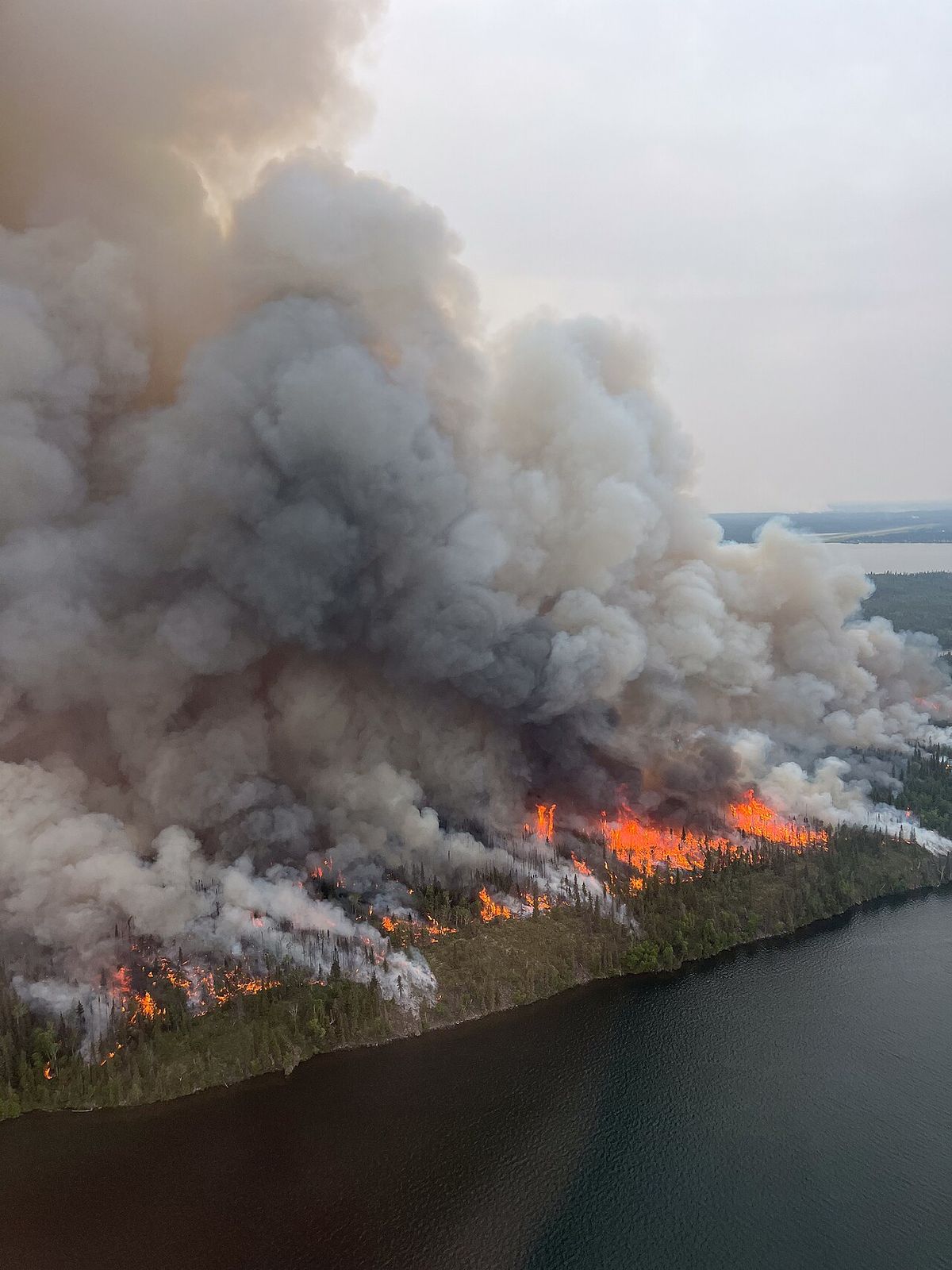
Yes, Flin Flon was evacuated in May 2025. This was a precautionary measure taken due to the threat posed by the 2025 Canadian wildfires. The evacuation was a significant event for the mining city located on the Manitoba and Saskatchewan border. This action was necessary to ensure the safety of its residents during the wildfire season. The evacuation is part of the city's recent history, which also includes the closure of its last mine in 2022.
Sources and further reading
- Flin Flon (Wikipedia)
- Flin Flon (nwris.ca)
- A tale of 2 Flin Flons: How the Manitoba-Sask. border ... (cbc.ca)
Checked by the Your Space Hamilton desk. Last updated 2026-10-31.