Drumheller
Drumheller is a town in east-central Alberta, situated on the Red Deer River within the distinctive terrain of the Canadian Badlands. It is located approximately 110 kilometres northeast of Calgary, or about 97 kilometres south of Stettler. The Drumheller portion of the Red Deer River valley, often called Dinosaur Valley, is roughly 2 kilometres wide and 28 kilometres long. Today, Drumheller is a major tourism destination, known for its dramatic hoodoos, historic sites like the Atlas Coal Mine, and its identity as the 'Dinosaur Capital of the World,' anchored by the world-renowned Royal Tyrrell Museum of Palaeontology.
History and Development
The town's origins are tied to Samuel Drumheller, who purchased Thomas Patrick Greentree's homestead and surveyed the original townsite in 1911, placing lots on the market that same year. Concurrently, Drumheller initiated coal mining operations near the new community, setting the stage for rapid industrial growth. The arrival of the railway in 1912 accelerated development, leading to incorporation as a village in 1913, a town in 1916, and finally a city in 1930. During this boom period, the population exploded by 857 percent, rising from 312 in 1916 to 2,987 in 1931, cementing Drumheller's status as a major coal-producing centre in Western Canada. Coal remained the primary economic driver until the end of the Second World War, when its value declined significantly, prompting a long-term shift in the town's economic focus.
A major administrative shift occurred on 1 January 1998, when the City of Drumheller amalgamated with the surrounding Municipal District of Badlands No. 7 to form the present Town of Drumheller. The merger was driven by shared planning challenges within the river valley and greater common interests between the two jurisdictions. The new municipality chose to adopt town status rather than retain city status to ensure provincial responsibility for highway maintenance within its boundaries. This amalgamation dramatically increased Drumheller's land area to 107.93 square kilometres, making it Alberta's largest town by area. The consolidation also led to the absorption of numerous smaller communities that now form neighbourhoods and districts within the town, including Cambria, East Coulee, Lehigh, Nacmine, Rosedale, and Wayne from the 1998 merger.
Earlier annexations as a city brought in Bankview in 1964, Midlandvale in 1972, and both Newcastle and North Drumheller in 1967. Other localities absorbed through past annexations or the 1998 amalgamation include Aerial, Eladesor, Kneehill, Rosedale Station, Western Monarch (Atlas), and Willow Creek. In total, Drumheller has integrated at least 13 other communities throughout its history. The town's physical expansion mirrors its economic evolution from a resource extraction hub to a diversified centre focused on tourism, energy, and public services. The legacy of its coal mining past remains visible in preserved sites like the Atlas Coal Mine, while its modern identity is firmly established in palaeontology and badlands tourism, drawing visitors from around the globe to its unique setting.
Geography and Climate
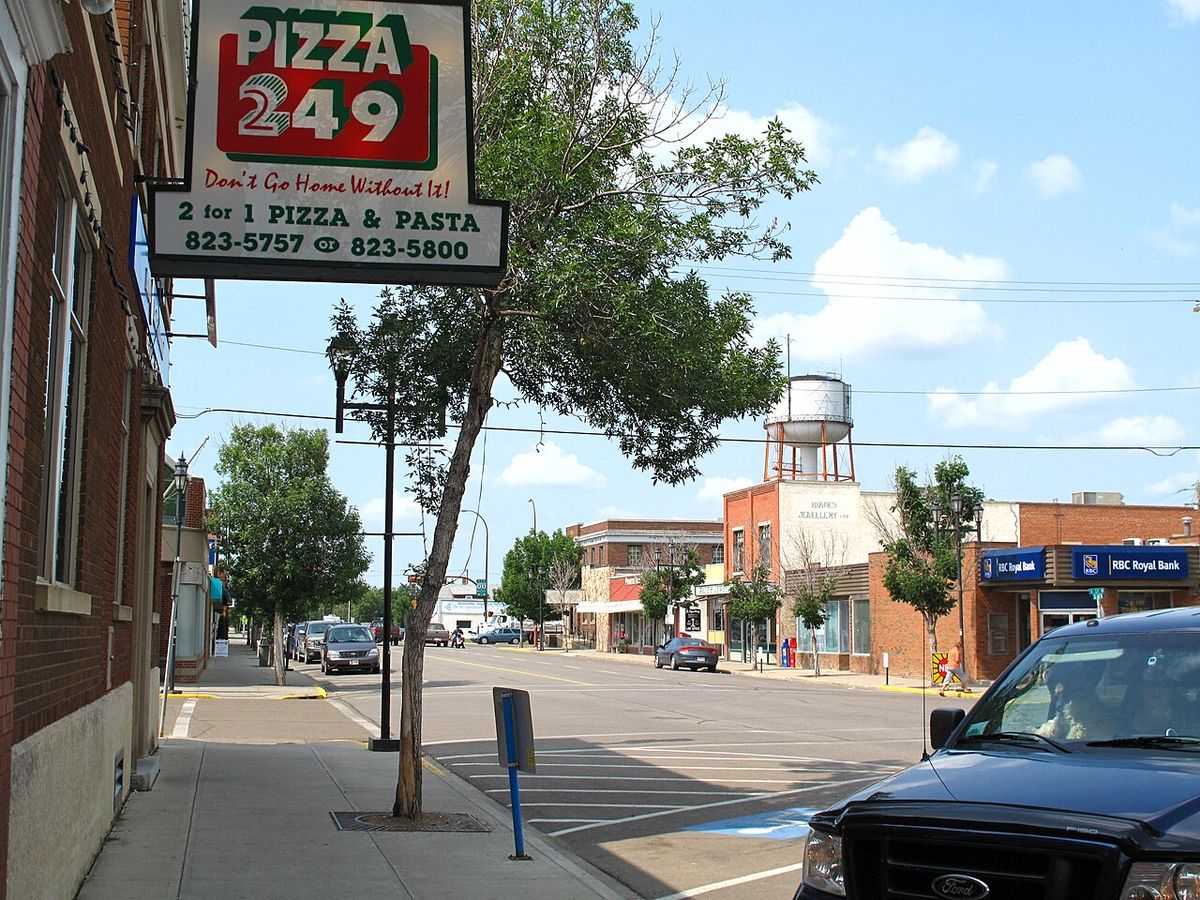
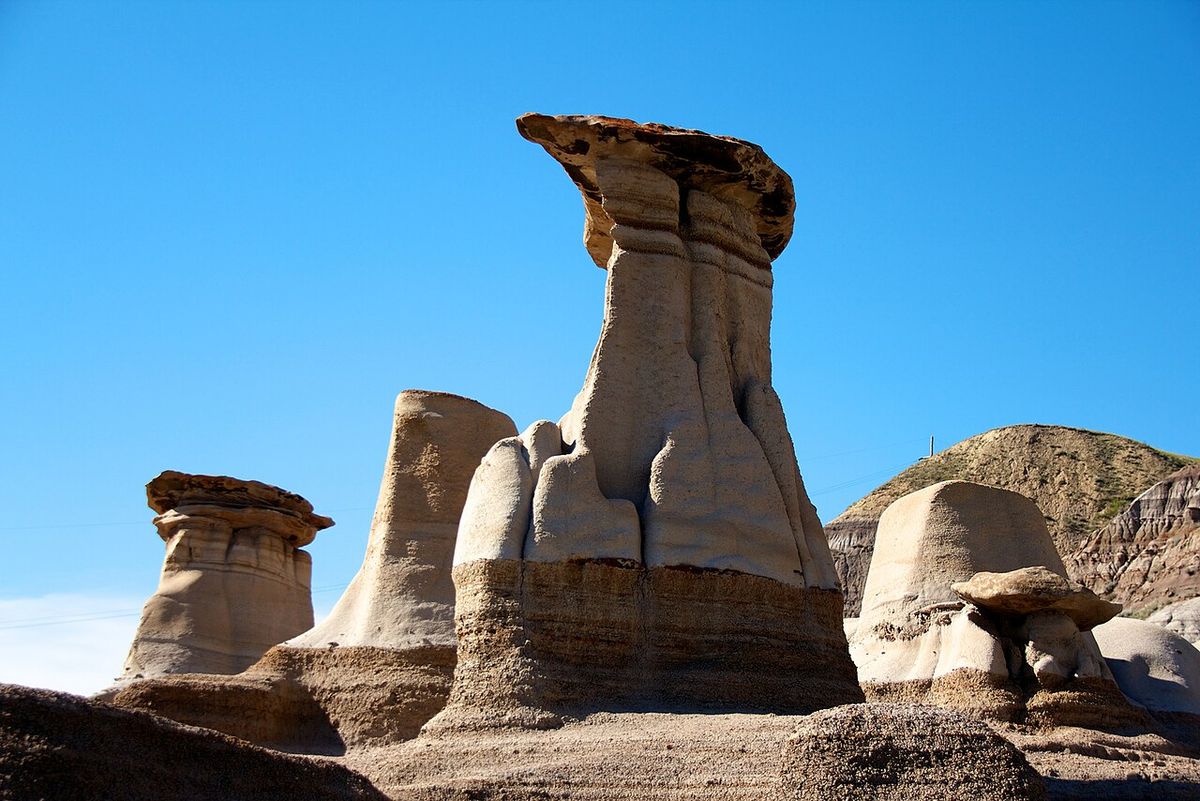
Drumheller is located in the Red Deer River valley, a stretch often called Dinosaur Valley, which runs approximately 28 kilometres long and 2 kilometres wide through the Alberta badlands. This unique topography features eroded sedimentary rock formations, deep coulees, and hoodoos, creating a stark and visually striking setting. The town sits 110 kilometres northeast of Calgary and 97 kilometres south of Stettler, positioned within a region defined by its semi-arid climate. Drumheller experiences a Köppen climate classification of BSk, characterized by very cold, dry winters and hot, moderately dry summers, with significant temperature extremes recorded throughout its history.
The highest temperature ever recorded in Drumheller was 40.6 degrees Celsius on 18 July 1941, while the coldest temperature ever recorded was -43.9 degrees Celsius on 29 January 1996. These climatic conditions are typical of the continental climate found in the region, which receives relatively low annual precipitation. The arid conditions and lack of dense vegetation contribute to the excellent preservation and exposure of fossil beds in the surrounding badlands. This combination of accessible geology and dramatic scenery forms the fundamental natural attraction that drives Drumheller's tourism industry and scientific significance, making it a premier destination for both education and outdoor recreation in the province of Alberta.
Demographics
According to the 2021 Census of Population conducted by Statistics Canada, the Town of Drumheller had a population of 7,909 people living in 3,198 of its 3,557 total private dwellings. This represented a slight decrease of 0.9 percent from its 2016 population of 7,982, continuing a minor downward trend from the 8,029 residents counted in 2011. The town's land area was recorded as 107.56 square kilometres, resulting in a population density of 73.5 persons per square kilometre. The demographic profile reflects an economy in transition, with employment in tourism, healthcare, corrections, and energy sectors, and the expansive land area is a direct result of the 1998 amalgamation which incorporated large tracts of rural land.
| Census Year | Population |
|---|---|
| 2021 | 7,909 |
| 2016 | 7,982 |
| 2011 | 8,029 |
Drumheller's economy is supported by a federal prison and a regional medical complex, which are significant employers. The town's population was 7,909 in the 2021 Census of Population. The community is located in the badlands of east-central Alberta, within the Red Deer River valley. This dramatic setting provides a unique landscape for residents and visitors alike.
Economy
Drumheller's economy has undergone a major transformation since its founding. It was once the largest coal-producing city in Western Canada, with operations like the historic Atlas Coal Mine driving its growth. The decline of coal after the Second World War necessitated a shift to other industries. Today, the town's economy is diversified, with tourism as the main industry, supported by energy, public sector institutions, and agriculture. The West Drumheller Field represents Alberta's second-largest natural gas field, and oil extraction also contributes to the local economy, though there are plans to transition toward renewable energy sources like wind power in future planning.
The tourism sector is anchored by the Royal Tyrrell Museum and the dramatic badlands scenery, drawing hundreds of thousands of visitors annually. Other significant economic pillars include the Drumheller Institution, a federal correctional facility, and the East Central Health centre, a regional medical complex. Agriculture remains an important, though less dominant, part of the economic base, utilizing the surrounding prairie land. The town's strategic planning acknowledges the need to move away from fossil fuel dependency, aiming to leverage its open spaces for wind energy development while continuing to grow its sustainable tourism offerings, which provides stability and employment for the community.
Attractions and Culture
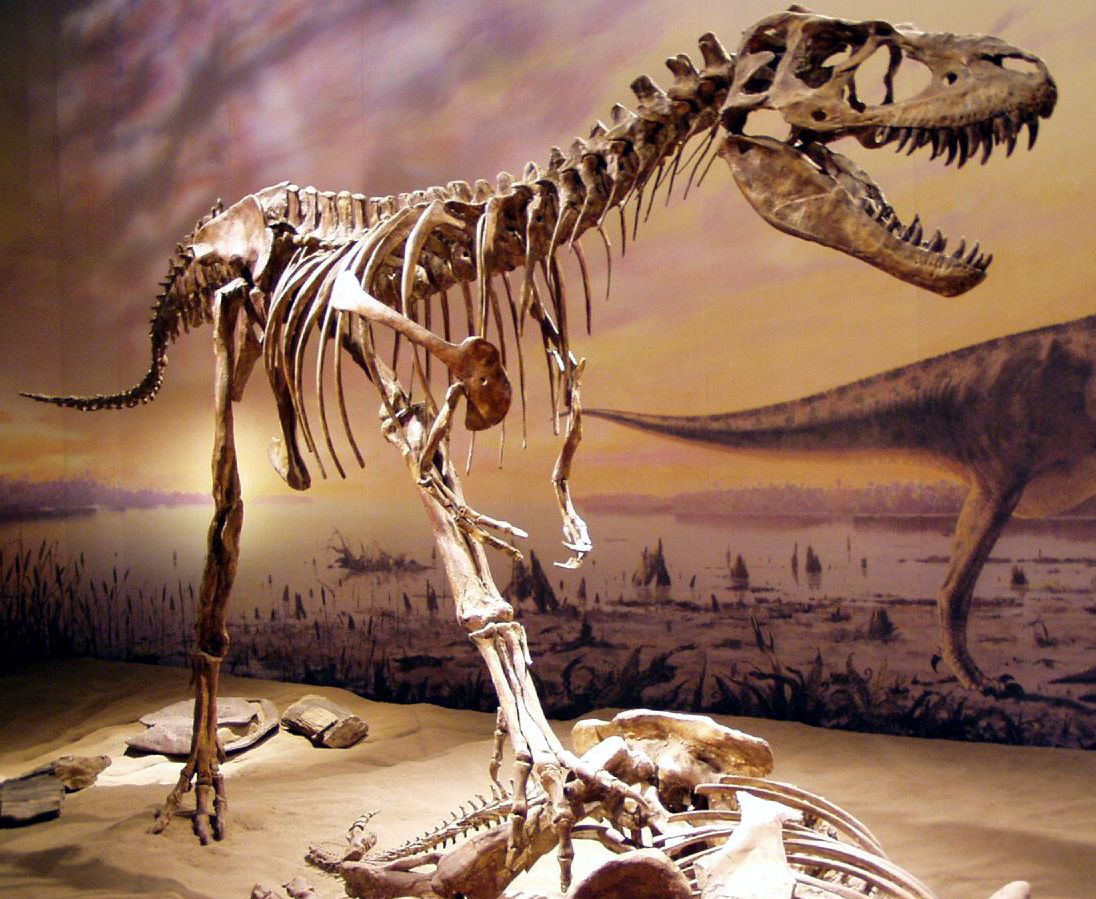
Drumheller is a premier tourist destination in Alberta, offering a wide array of attractions centred on palaeontology, history, and natural wonders. The most prominent site is the Royal Tyrrell Museum of Palaeontology, which opened on 25 September 1985 and hosts Canada's largest collection of dinosaur fossils. Located within Midland Provincial Park, the museum is operated by the Government of Alberta and attracts approximately 500,000 visitors each year, making it the most visited provincial museum in Alberta. Another well-known landmark is the World's Largest Dinosaur, a 26.2-metre-tall fibreglass Tyrannosaurus rex that visitors can enter for a panoramic view of the badlands. It was announced in March 2025 that this attraction will close in December 2029 at the end of its current lease.
The town's cultural offerings extend beyond dinosaurs. The Canadian Badlands Passion Play has been performed at the Badlands Amphitheatre since 1991, featuring a cast from across Alberta during a two-week run each July. Historical sites provide insight into the region's coal mining and pioneer past, while natural features offer recreational opportunities. The network of attractions is diverse and caters to a broad range of interests, from education and history to outdoor adventure and family entertainment, including the Atlas Coal Mine National Historic Site, Horseshoe Canyon, and the Hoodoos.
- Natural & Historic Sites: Atlas Coal Mine National Historic Site, Horseshoe Canyon, Horse Thief Canyon, the Hoodoos, Midland Provincial Park, Bleriot Ferry, and the Star Mine Suspension Bridge.
- Museums & Cultural Sites: East Coulee School Museum, Homestead Museum, Little Church (seats six), and the former Valley Doll Museum and Gifts.
- Recreation & Entertainment: Rotary Spray Park, the Aquaplex indoor/outdoor pool complex, Barney's Adventure Park, 27 kilometres of pathways, and the Rails To Trails project on the former railway line.
Next to the now-closed Drumheller ski hill is the Canadian Badlands Passion Play site where performances are held for two weeks each July. The site also offers small plays throughout the summer and an interpretive centre, adding to the cultural calendar. This concentration of attractions within the compact Dinosaur Valley ensures visitors have a rich and varied experience. The town successfully blends its prehistoric significance with its industrial heritage and the stark beauty of the badlands, creating a unique cultural destination that is integral to Alberta's tourism identity and draws visitors from across Canada and internationally.
Media and Transportation
Drumheller is served by a range of local media outlets that cater to both residents and visitors. The primary news source is the weekly Drumheller Mail, published every Wednesday since 1911 and owned by the Sheddy family since 1954. For digital news, DrumhellerOnline.com functions as the local news portal. Radio service includes several FM stations: Boom 99.5 (CHOO-FM) playing classic hits, FM 94.5 (CHTR-FM) providing tourist information, New Country 92.5 (CKDQ-FM), and a public broadcasting relay on FM 91.3 (CKUA-FM-13). Television service consists of analogue relay stations from Calgary, including Global on channel 8 and CTV on channels 10 and 12, ensuring access to major network programming for the community.
Transportation infrastructure has evolved significantly from the town's early reliance on rail. Passenger rail service began in 1912 and continued until 1981, with freight operations persisting on through lines until 2014. The railway was fully decommissioned and demolished in 2014, and the right-of-way has been repurposed into the Rails To Trails project for pedestrian and cyclist use throughout the valley. For air access, Drumheller is served by the Drumheller/Ostergard's Airport and the Drumheller Municipal Airport, though neither facility offers scheduled passenger flights. Road travel is the primary mode of access, with highways connecting the town to Calgary and other regional centres, maintained by the province as a condition of the town's status following the 1998 amalgamation.
Notable People
Notable people from Drumheller include palaeontologists Philip J. Currie and Darren Tanke, whose work aligns with the town's reputation. The list also includes ice hockey players like Tommy Anderson, Jack Evans, and Bob Comfort. Other distinguished individuals are country musician Jaydee Bixby and politician Tom Siddon. These people have contributed to various fields including sports, politics, science, and the arts.
- Palaeontology: Philip J. Currie (born 1949), palaeontologist and museum curator. Darren Tanke (born 1960), palaeontologist and museum curator.
- Sports: Tommy Anderson (1910 to 1971), Glen Gorbous (1930 to 1990), and Jack Evans (1928 to 1996) in ice hockey. Glenn Gray (1924 to 2011) in curling. Bruno De Costa (born 1938) in skeet shooting.
- Politics: John Murray Campbell (1931 to 2021), Glenn Hagel (born 1949), Jackie Pement (born 1946), Stanley Schumacher (1933 to 2020), and Tom Siddon (born 1941).
- Arts and Entertainment: Jaydee Bixby (born 1990), country musician. Karen Robinson (born 1968), actress. Bob Comfort (1940 to 2010), screenwriter and producer.
- Business and Community: Howard E. Ross (1921 to 2010), land developer. Frank Sandercock (1887 to 1942), ice hockey administrator.
The contributions of these individuals extend the name of Drumheller into many areas of Canadian life. Their achievements range from scientific work supporting the Royal Tyrrell Museum of Palaeontology to athletic success in national ice hockey leagues. Other contributions include public service in the halls of Parliament and cultural work in music and television. These endeavours demonstrate the diverse talent fostered within the community.
Questions about Drumheller
Why is Drumheller famous?
Drumheller is world-famous as the 'Dinosaur Capital of the World' due to the rich fossil beds in the surrounding Canadian Badlands. It is home to the Royal Tyrrell Museum of Palaeontology, which houses Canada's largest collection of dinosaur fossils and attracts about 500,000 visitors annually. The town's dramatic terrain of hoodoos, canyons, and the Red Deer River valley also makes it a major tourist destination. Its history as a significant coal mining centre in Western Canada adds to its cultural heritage.
When did Drumheller become a town?
Drumheller was first incorporated as a village on 15 May 1913, following the arrival of the railway in 1912. It then incorporated as a town on 2 March 1916 during a period of rapid population growth driven by the coal industry. The community later became a city on 3 April 1930. Its status changed again on 1 January 1998 when it amalgamated with the Municipal District of Badlands No. 7 to form the current Town of Drumheller, which is Alberta's largest town by land area.
What is there to do in Drumheller?
Tourist attractions in Drumheller include the World's Largest Dinosaur, the Star Mine Suspension Bridge, and the Atlas Coal Mine. Other attractions are the Canadian Badlands Passion Play, Horseshoe Canyon, Horse Thief Canyon, and the hoodoos. The Royal Tyrrell Museum of Palaeontology, which hosts Canada's largest collection of dinosaur fossils, is a major attraction. Visitors can also explore the East Coulee School Museum, the Homestead Museum, and the Little Church.
What is the weather like in Drumheller?
Drumheller experiences a semi-arid climate with very cold winters and hot summers. The highest temperature ever recorded was 40.6 °C on 18 July 1941. The coldest temperature ever recorded was -43.9 °C on 29 January 1996. This climate contributes to the arid, eroded terrain of the badlands.
What is the population of Drumheller?
According to the 2021 Census of Population conducted by Statistics Canada, the Town of Drumheller had a population of 7,909. This figure represents a slight decrease of 0.9 percent from its 2016 population of 7,982. The town's population resides within a land area of 107.56 square kilometres, resulting in a population density of 73.5 people per square kilometre as of 2021. The town's population history includes periods of significant growth, such as an 857 percent increase between 1916 and 1931. This growth occurred after its incorporation and was followed by more recent, modest population changes.
How did Drumheller get its name?
In 1911, he purchased the homestead of Thomas Patrick Greentree and had the land surveyed to create the original Drumheller townsite, placing lots on the market that same year. Also in 1911, Samuel Drumheller initiated coal mining operations near the new townsite, establishing the foundation for the local economy. The subsequent arrival of a railway station in 1912 and the community's incorporation as a village in 1913 solidified its growth under the name he provided. His foundational actions in land development and industry led the community to be named in his honour.
Sources and further reading
- Drumheller (Wikipedia)
- Town of Drumheller: Official Municipal Website (drumheller.ca)
- Drumheller | Canada's Alberta (travelalberta.com)
Checked by the Your Space Hamilton desk. Last updated 2026-11-01.