Cold Lake, Alberta
Cold Lake is a city in northeastern Alberta, Canada, situated approximately 300 kilometres northeast of Edmonton near the provincial border with Saskatchewan. It is named after the large lake to its north and is a significant regional centre due to the presence of Canadian Forces Base Cold Lake (CFB Cold Lake) within its boundaries. The city's economy is heavily influenced by military operations, oil and gas exploration, and the nearby Athabasca oil sands. Formed in 1996 through the amalgamation of three distinct communities, Cold Lake is also known as the Tri-Town and serves as a hub for recreation, education, and cultural activities in Alberta's Lakeland region.
History and formation
The area now known as Cold Lake has a long history of human habitation and trade. The lake itself was first recorded on a map in 1790 under the name Coldwater Lake. The Hudson's Bay Company established a fur trade post at Cold Lake around 1877 to trade with the Chipewyan people of the Cold Lake First Nation. Initially an outpost of the Onion Lake post, it became a full post in 1915 and later established its own outpost at Le Goff on the Cold Lake 149 reserve in November 1930 before closing in 1937. The modern city was created on October 1, 1996, through the amalgamation of three communities: the Town of Grand Centre, the Town of Cold Lake, and the area of Medley, which encompasses CFB Cold Lake. Following the merger, Grand Centre was renamed Cold Lake South, while the original Town of Cold Lake became known as Cold Lake North, leading to the area's common nickname, the Tri-Town. The region also preserves an extensive fossil and subfossil record from the Pleistocene to the Late Holocene periods.
The fossil and subfossil record in the Cold Lake area provides a detailed account of life from the period after the Last Glacial Maximum through the Late Holocene. By the Middle Holocene, the mammalian biota in the region had become essentially modern. This paleontological record is an important scientific resource for understanding the post-glacial ecological history of northeastern Alberta. The city's more recent historical development is directly tied to the establishment of military infrastructure, with the area known as Medley becoming the site for CFB Cold Lake, which was a key factor in the 1996 municipal amalgamation that defined the modern city's boundaries and character.
Geography and climate
Cold Lake is located in Alberta's Lakeland district, almost entirely surrounded by but not part of the Municipal District of Bonnyville No. 87. The city is near the Cold Lake 149, 149A, and 149B First Nation reserves. The surrounding landscape is sparsely populated and consists primarily of farmland. The city experiences a humid continental climate characterized by warm summers with cool nights and very cold winters with moderate snowfall. Record temperatures include a high of 36.3°C recorded on June 27, 2002, and significant humidity records such as a dew point of 23.9°C on July 18, 1955. July 2007 was the warmest month on record with an average mean temperature of 20.9°C, while August 1991 had the highest average monthly daily maximum at 27.0°C. The average yearly maximum dew point is 18.6°C.
The climate data reveals several specific records for heat and humidity. The record high daily minimum temperature was 23.1°C, recorded on July 2, 2021. The most humid month was July 2024, with an average dew point of 13.7°C. July 2014 set a record for having no daily maximum temperature below 20.7°C for the entire month, while July 2006 had no temperature fall below 9.6°C. On the lower end of the scale, the lowest yearly maximum temperature recorded was 28.5°C in 2010, the lowest yearly maximum daily minimum was 14.1°C in 1992, and the lowest yearly maximum dew point was 16.3°C in 1980. The average yearly maximum daily minimum temperature is 17.2°C. This climate supports a variety of seasonal recreational activities, from beach use in summer to winter sports.
Demographics
According to the city's 2022 municipal census, Cold Lake had a population of 16,302, reflecting steady growth from previous counts. The 2021 federal census recorded a population of 15,661 living in 6,114 private dwellings, with a population density of 235.1 persons per square kilometre. Linguistic data from the census indicates that nearly 89 percent of residents identified English as their first language, while over 7 percent identified French. Other reported first languages included German, Chinese, Dutch, Ukrainian, Cree, and Arabic. In terms of religion, data from the 2001 census showed about 82 percent of residents identified as Christian, with Roman Catholics comprising 40 percent of the population. Other significant denominations included the United Church of Canada, Anglican, Baptist, Lutheran, and Pentecostal churches, while over 17 percent indicated no religious affiliation.
The demographic history shows consistent population increases over recent decades. In the 2016 federal census, the City of Cold Lake had a population of 14,961, which was an 8.1 percent increase from its 2011 population of 13,839. The land area was recorded as 59.92 square kilometres in 2016, giving a density of 249.7 persons per square kilometre at that time. The growth to a 2022 municipal census figure of 16,302 represents a 3.6 percent increase from the city's 2014 municipal census population of 15,736. This growth is connected to the stability of the local military and energy sector economies. The linguistic diversity, while predominantly English and French, includes small but notable communities of German, Chinese, Dutch, Ukrainian, Cree, and Arabic speakers, each representing between 0.3 and 1 percent of the population.
Economy and major employers
The economy of Cold Lake is dominated by two major sectors: national defence and the energy industry. Canadian Forces Base Cold Lake is a major employer, with its annual Exercise Maple Flag having a significant local economic impact. This multinational NATO training exercise, which runs for four to six weeks starting each May, brings military personnel from around the world to the region, filling commercial accommodations and providing revenue for hospitality and service businesses. Concurrently, the oil and gas sector is a major employer and driver of economic activity. A job market analysis from December 2024 to January 2025 showed that the Oil & Gas sector accounted for 33 percent of regional job postings. The nearby Athabasca Oil Sands project and the potential development of the Cold Lake oil sands further connect the region's economy to energy resource extraction. Administrative roles and skilled trades are also consistently in high demand within the local job market.
The structure of the local economy means commercial accommodations in the entire region experience little to no vacancy during the annual Exercise Maple Flag. This event contributes a substantial amount of capital to the hospitality industry and related service businesses. Beyond CFB Cold Lake, the region supports ongoing oil and gas exploration and production activities. The Cold Lake oil sands are identified as a potential future significant contributor to the local economy. The job market analysis highlighting the 33 percent share for Oil & Gas postings confirms the sector's current dominance alongside defence. This economic mix creates a job market with specific demands for administrative support and skilled tradespeople, shaping the vocational and post-secondary educational offerings in the city.
Local government and representation
Cold Lake operates under a mayor-council system. The most recent municipal election was held in October 2025. As of that year, the mayor is Bob Mathis, who succeeded Craig Copeland after his tenure from 2007 to 2025. Previous mayors include Allan Buck (2004 to 2007), Hansa Thaleshvar (1998 to 2004), and Raymond Coates (1996 to 1998). The current city councillors are Chris Vining, Vicky Lefebvre, Dawn Weber, Ryan Bailey, Raymond Cowell, and Bill Parker. At the provincial level, the city lies within the electoral district of Bonnyville-Cold Lake-St. Paul, represented by Scott Cyr of the United Conservative Party. Federally, Cold Lake is part of the Fort McMurray, Cold Lake riding, represented by Conservative Party of Canada member Laila Goodridge.
The history of the mayor's office reflects the city's development since amalgamation. Raymond Coates served as the first mayor of the newly formed city from 1996 to 1998. Hansa Thaleshvar then held the office for six years, followed by Allan Buck's three-year term. Craig Copeland's eighteen-year tenure from 2007 to 2025 was a period of significant stability in municipal leadership. The change in leadership following the 2025 election brought Bob Mathis into the mayor's office. The six-member council works with the mayor to govern a municipality whose operations and planning are deeply influenced by the presence of a federal military base and a resource-based economy. The provincial and federal electoral alignments place Cold Lake within ridings that also encompass other major resource and rural communities in northeastern Alberta.
Education and cultural institutions
Cold Lake offers a range of educational options from primary school to post-secondary studies. Public education is provided by two main school divisions. The Lakeland Catholic School District No. 150 operates Holy Cross Elementary School, École St. Dominic School, and Assumption Junior/Senior High School. The Northern Lights School Division No. 69 operates Cold Lake Elementary School, Ecole North Star Elementary School, Nelson Heights School, Cold Lake Junior High, Cold Lake High School, and outreach schools. The city also hosts École Voyageur, a Francophone school offering kindergarten through grade 12 programming in French. For post-secondary education, Portage College operates a campus in Cold Lake offering programs in academic upgrading, accounting, community social work, nursing, power engineering, and university studies. The city is also home to several museums that preserve local history.
- The Air Force Museum focuses on the history of CFB Cold Lake and 42 Radar Squadron, featuring Cold War-era technology and displays on current and historic air force squadrons, with several aircraft on outdoor display.
- The Oil and Gas Museum, created by Grand Centre High School students, details the history of the energy industry in the region from prehistoric times to the present.
- The Heritage Museum exhibits a timeline of domestic and commercial life in Cold Lake, including notable murals.
- The Aboriginal Museum displays the history and culture of the Dene, Cree, and Métis peoples through timelines, maps, crafts, and cultural artifacts.
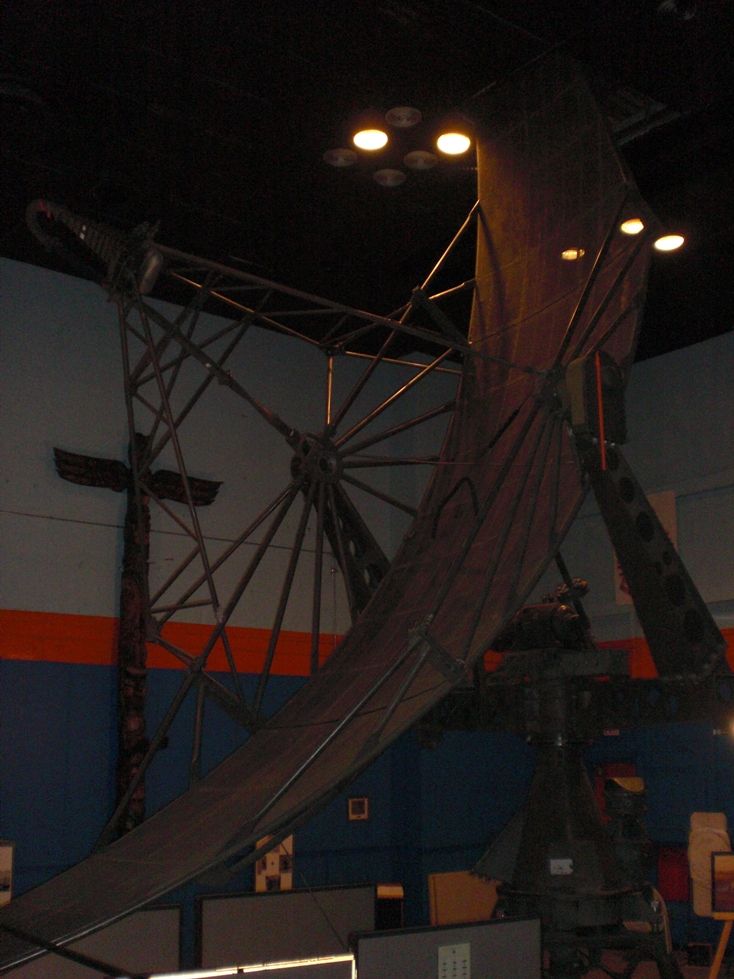
The Air Force Museum specifically preserves and exhibits the history of 42 Radar Squadron, which was on site from 1954 to 1992, resulting in a display focused on Cold War era technology like the General Electric Height Finder Radar. The museum includes exhibits on current 4 Wing squadrons such as 409, 410, and 419 Squadrons, as well as 1 Air Maintenance Squadron and the Aerospace Engineering Test Establishment. It also has historic displays on squadrons like 441 and 416, which were amalgamated into 409 Squadron in 2006. The museum's outdoor air park displays four aircraft: a CF-5 Freedom Fighter, a CT-133 Silver Star, a CT-114 Tutor, and a CT-134 Musketeer, with a CF-188 Decoy as its newest addition. These institutions collectively document the military, industrial, Indigenous, and settler histories that define the community.
Recreation and sports
Recreation in Cold Lake is heavily influenced by its namesake lake and surrounding natural areas. Popular destinations include Kinosoo Beach, Cold Lake Provincial Park, and the M.D. campground, which offer swimming, boating, camping, and trail access. The Iron Horse Trail, a recreational rail trail, has its eastern terminus in the city. The Kinosoo Ridge Snow Resort provides downhill skiing and winter sports. The city supports a wide variety of organized sports teams and clubs for all ages. Hockey is represented by the Junior B Cold Lake Ice and minor hockey teams called the Cold Lake Freeze. Other organizations include the Cold Lake Heat lacrosse teams, the Cold Lake Marlins Swim Club, the Lakeland Ladykillers Roller Derby League, and teams for soccer, rugby, football, basketball, and volleyball.
The recreational infrastructure includes specific facilities with distinct features. The M.D. campground offers powered sites, shower facilities with flush toilets, and a covered camp picnic area. Cold Lake Provincial Park provides more secluded sites, a wilderness trail system, a beach, a boat launch, and a powered section. Nearby Meadow Lake Provincial Park in Saskatchewan offers similar facilities. The city's sports offerings are extensive and organized. Beyond the major team sports, activities include Hapkido, Tae Kwon Do (through Hetlinger taekwondo and occasionally the International Taekwon-Do Federation or World Taekwondo Federation), figure skating (Cold Lake Figure Skating Club and Norlight Skating Club), dancing (Pirouette School of Dance and Fame Dance), mixed martial arts (Team Sparta), powerlifting (Cold Lake Bar Benders), gymnastics (Lakeland Gymnastics Club), disc golf, pickleball, and bowling at the Marina Bowling Centre. This breadth of activity supports a highly active community year-round.
Notable people and popular culture
Cold Lake has produced several notable individuals across various fields. These include NHL athletes Alex Auld and Garry Howatt, renowned Indigenous artist Alex Janvier, comedian Bonnie McFarlane, painter René Richard, and charity runner Curtis Hargrove. The city is also famously cited as the fictional home of Marvel Comics character Wolverine, linking it to global popular culture. The presence of these individuals from sports, arts, and philanthropy reflects the diverse talents emerging from this northeastern Alberta community. Their achievements bring recognition to Cold Lake beyond its regional economic and military roles.
The connection to Wolverine is a unique element of the city's place in popular culture. While not a filming location, the canonical designation of Cold Lake as the character's hometown in Marvel Comics lore has created a distinctive cultural reference point. The real-life notable residents have made tangible contributions in their respective fields. Alex Auld played as a goaltender for several NHL teams over a professional career spanning more than a decade. Garry Howatt had a long career as an NHL forward, primarily with the New York Islanders. Artist Alex Janvier is a celebrated member of the Indian Group of Seven, known for his modernist paintings reflecting his Dene heritage. Comedian and writer Bonnie McFarlane has worked in television and stand-up comedy. Painter René Richard was known for his landscapes of northern Canada. Charity runner Curtis Hargrove has undertaken cross-country runs to raise funds and awareness for various causes.
Questions about Cold Lake, Alberta
Where is Cold Lake, Alberta located?
Cold Lake is situated in northeastern Alberta, approximately 300 kilometres northeast of Edmonton, near the provincial border with Saskatchewan. It lies within Alberta's Lakeland district and is almost entirely surrounded by the Municipal District of Bonnyville No. 87, though it is a separate municipal entity. The city is named for the large lake to its north, which is a central feature of the region's geography and recreation.
What is the population of Cold Lake?
According to the city's own 2022 municipal census, the population of Cold Lake was 16,302. The most recent federal census from Statistics Canada in 2021 recorded a population of 15,661. The city has experienced consistent growth, with its population increasing by 4.6 percent between the 2016 and 2021 federal censuses. The population density in 2021 was 235.1 persons per square kilometre.
What is Cold Lake known for?
Cold Lake is primarily known for being the home of Canadian Forces Base Cold Lake (CFB Cold Lake), a major Royal Canadian Air Force base. The base hosts the annual international training exercise Maple Flag, which draws NATO allies to the region. The city is also a service centre for the surrounding oil and gas industry, including the Athabasca and Cold Lake oil sands. Its location on the shores of a large lake makes it a popular destination for summer recreation and water sports.
Who is the current mayor of Cold Lake?
As of the October 2025 municipal election, the mayor of Cold Lake is Bob Mathis. He succeeded Craig Copeland, who served as mayor from 2007 until 2025. The current city councillors are Chris Vining, Vicky Lefebvre, Dawn Weber, Ryan Bailey, Raymond Cowell, and Bill Parker. At the provincial level, the city is represented by Scott Cyr, and federally by Laila Goodridge.
What educational facilities are available in Cold Lake?
Cold Lake is served by two public school divisions: Lakeland Catholic School District No. 150 and Northern Lights School Division No. 69, which together operate multiple elementary, junior high, and high schools. The city also has École Voyageur, a Francophone school offering full French programming from kindergarten to grade 12. For post-secondary education, Portage College operates a campus in Cold Lake offering programs such as nursing, power engineering, community social work, and academic upgrading.
When was the City of Cold Lake formed?
The City of Cold Lake was formed on October 1, 1996. This occurred through the amalgamation of three distinct communities: the Town of Grand Centre, the Town of Cold Lake, and the area of Medley, which is the site of Canadian Forces Base Cold Lake. Following this merger, Grand Centre was renamed Cold Lake South, while the original Town of Cold Lake is now known as Cold Lake North. Because of this three part origin, the area is also commonly known as the Tri Town.
Sources and further reading
- Cold Lake, Alberta (Wikipedia)
- City of Cold Lake: Home (coldlake.com)
- City of Cold Lake | MD of Bonnyville, AB, Official Website (md.bonnyville.ab.ca)
- The Visitor Centre, Cold Lake Chamber of Commerce (coldlakechamber.ca)
- Cold Lake, AB, Overview (townfolio.co)
Checked by the Your Space Hamilton desk. Last updated 2026-11-01.