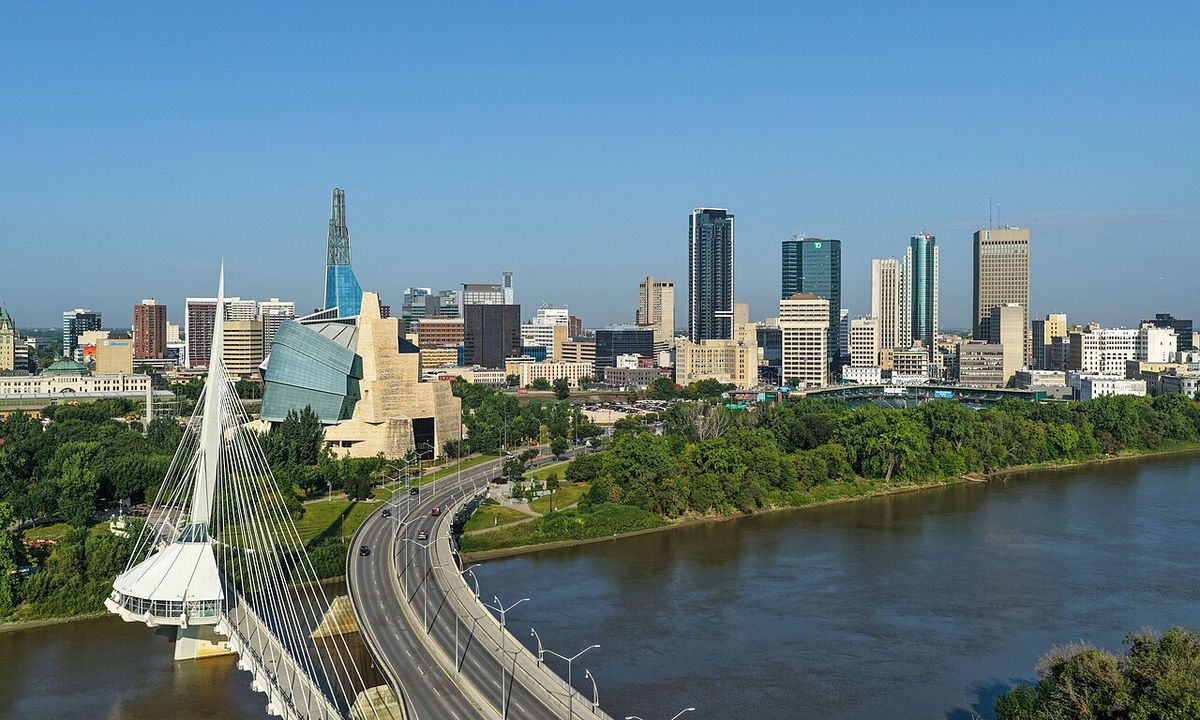
Bella Coola, British Columbia
Bella Coola is an unincorporated community and river valley located on the central coast of British Columbia, Canada. Situated at the head of the North Bentinck Arm fjord, it encompasses several settlements, including Bella Coola proper, Hagensborg, and Stuie, and serves as the administrative centre for the Central Coast Regional District. The valley is the heart of the Nuxalk Nation's traditional territory and has a diverse history shaped by Indigenous presence, European exploration, and Norwegian settlement. With a population of 2,163 as of the 2021 census, its economy is sustained by a mix of public service, tourism, forestry, and fishing.
Geography and Climate
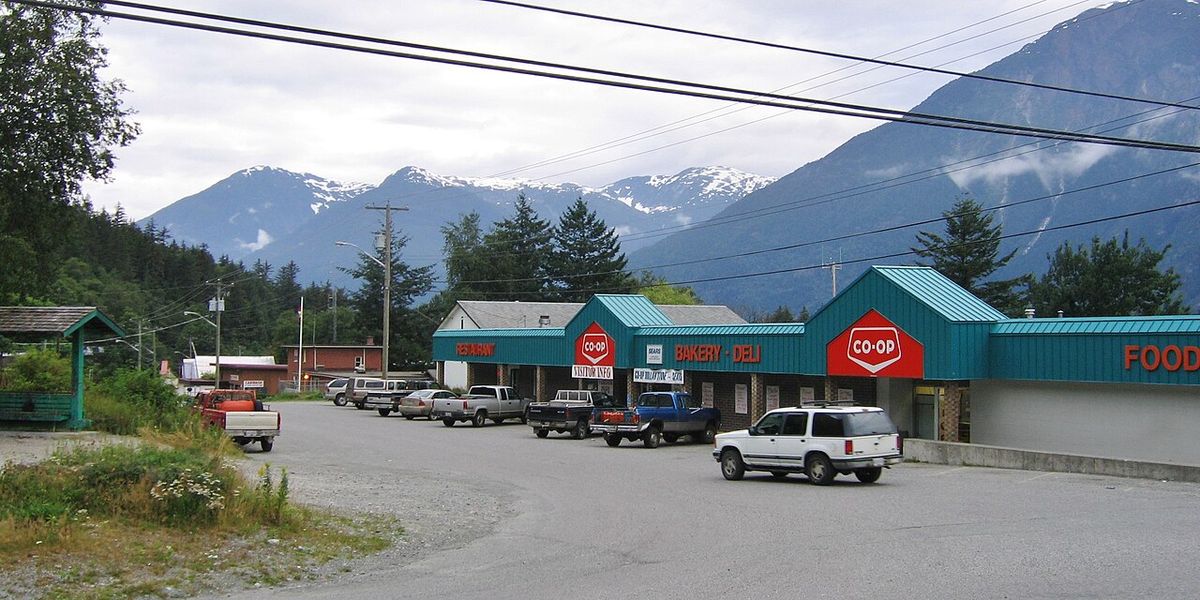
The community is defined by the long, narrow Bella Coola River valley, which stretches inland from the Pacific Ocean. The Bella Coola River meanders along the eastern and northern edges of the main townsite before discharging into the head of North Bentinck Arm, a deep coastal fjord. Highway 20, known as the Chilcotin Highway for much of its length, runs from the government wharf through the entire populated length of the valley before climbing steeply to the Chilcotin Plateau. Virtually the entire population lives on or very near this single arterial road. The nearby Clayton Falls Creek provides public water access to North Bentinck Arm for local residents. The mountainous terrain surrounding the valley has gained international recognition for heliskiing, with the Bella Coola operation being ranked as the world's best every year since 2017, a fact that has attracted several major skiing films to be shot in the area.
Bella Coola experiences a moderate oceanic climate that belies its northerly latitude, heavily influenced by its proximity to the Pacific Ocean. It sits on the borderline with a warm-summer humid continental climate and is close to Mediterranean climate classifications, specifically the warm-summer Mediterranean and the warm-summer continental Mediterranean types. Summers are notably warmer than many coastal locations farther south due to a semi-inland position that warms the maritime air as it passes the outer islands. Winters are strongly moderated by the ocean, though cold snaps can occur. The climate exhibits a strong drying tendency in summer, though it does not meet the strict criteria for a dry-summer Mediterranean pattern and remains above those classifications. The highest temperature ever recorded was 41.2 °C on 30 July 2009, while the coldest was -28.9 °C on 15 January 1950. The Köppen climate classification for the area is Cfb, which denotes a temperate oceanic climate, but it falls exactly on the borderline with the Dfb classification for warm-summer humid continental climates.
History and Settlement
The Nuxalk people have inhabited the Bella Coola Valley since time immemorial, a fact confirmed by continuous oral history that continues unbroken to the present day and by the written records of some of the first European explorers of the area. The first recorded European contact was in 1793 when Sir Alexander Mackenzie arrived from the east, completing the first transcontinental crossing north of Mexico. He referred to the area as 'Rascal's Village'. For the next century, non-Nuxalk immigration was sporadic and often temporary, beginning with a Hudson's Bay Company fur trading post established at the river's mouth. The land granted for that post forms the off-reserve portion of the present-day Bella Coola townsite, and a handful of farmers were granted land farther up the valley. The trails used by the Nuxalk and neighbouring nations became a popular route from the Pacific Ocean to central British Columbia, especially during the Cariboo Gold Rush of the 1860s. In the 1870s, the valley was surveyed as a potential Pacific terminus for the Canadian Pacific Railway, though Burrard Inlet was ultimately chosen, its selection giving birth to the city of Vancouver.
A major demographic shift occurred in 1894 when a group of Norwegian Lutheran settlers, after their previously existing community in Minnesota suffered an internal conflict, were given land grants in the valley conditional upon land clearing and the construction of residences. This settlement was named Hagensborg and remains one of the main communities of the Bella Coola Valley. The land granted was often territory that had been occupied by Nuxalk communities only a few decades or fewer earlier, but the devastating 1862 Pacific Northwest smallpox epidemic had decimated the Nuxalk population, and the survivors had, for the most part, gathered on land close to the mouth of the river near the Hudson's Bay post. While much of the Norwegian colony's population did migrate away, others stayed to work in forestry and in the development of the fishing industry. A Norwegian settler who had given up on farming in the area founded the cannery at Tallheo, across the arm from Bella Coola. These two populations, in varying proportions, continued to make up the vast majority of the community's population for most of the next century.
The connection to a Norwegian identity has declined in recent years, as shown by census data. In 2001, 43% of the population reported 'Aboriginal identity', of which the vast majority is Nuxalk, while only 10% reported Norwegian or Norwegian-Canadian to be their 'Ethnic Origin'. Bella Coola then became the administrative centre for British Columbia's central coast, leading to the relocation of the Central Coast Regional District offices, which up until that time had been called the Ocean Falls Regional District, to Bella Coola. This also spurred a general centralization of government services such as provincial government regional centres, including the Ministry of Forests, in Bella Coola.
Transportation and Access
Bella Coola is connected to the rest of British Columbia by a 454-kilometre mostly paved road connection via Highway 20 to Williams Lake. The most notable and historically significant section is the 137-kilometre stretch from Bella Coola to Anahim Lake, built in 1953 by local residents. This road features a dramatic 15-kilometre ascent from the valley floor to the Chilcotin Plateau, gaining 1,600 metres in elevation to the summit at Heckman Pass via a number of steep grades and switchbacks. The construction of this vital link, which was described in the books 'Bella Coola' and 'A Road Runs West', represents a major feat of community effort and defines the challenging land access to the region.
Economy and Local Services
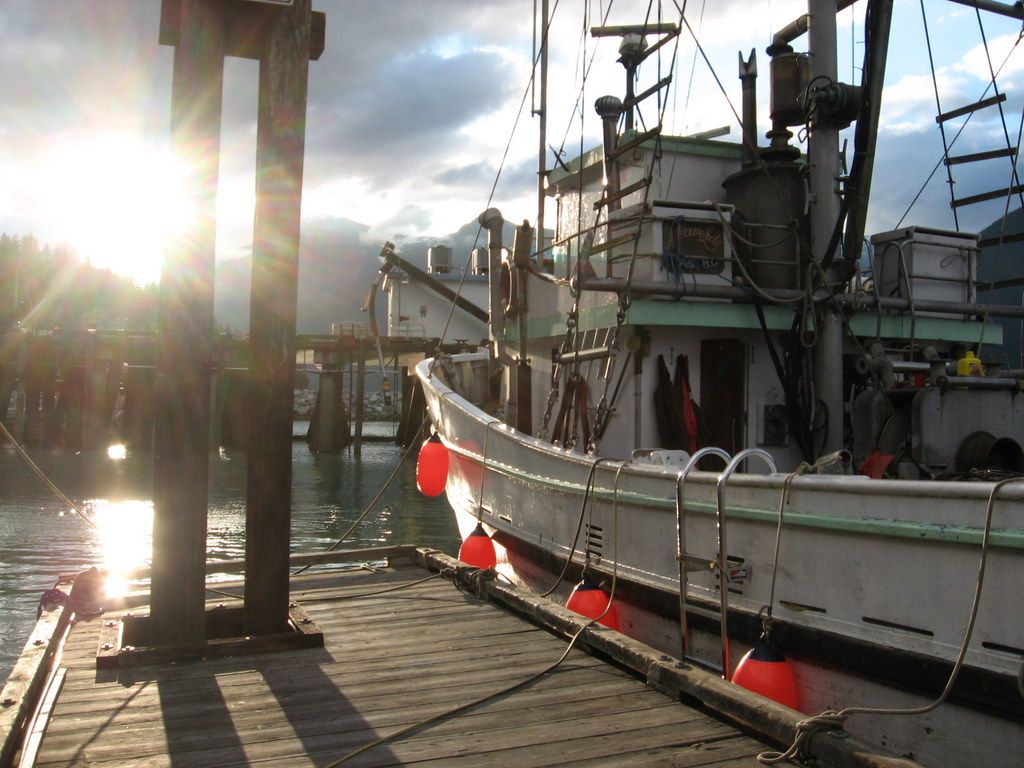
The local economy is diversified, with fishing, forestry, public service, retail and tourism all contributing significantly. Government and education services form a substantial employment base due to Bella Coola's role as the Central Coast Regional District administrative centre. Tourism is bolstered by world-class heliskiing, fishing, and outdoor recreation, with the heliskiing operation consistently ranked as the world's best since 2017. There is some limited agriculture, including an active farmers' market, processing of locally-caught seafood, and a number of craftmakers and artists, including several celebrated Nuxalk artisans. A fish hatchery also operates in the area, supporting both conservation and local fishing interests.
For financial services, the only institution in Bella Coola is a branch of the Williams Lake & District Credit Union, heir to a sixty-plus-year tradition of the Bella Coola Valley Credit Union. This represents a longstanding tradition of local financial co-operation in the valley. The economic base has evolved from its early reliance on the fur trade, subsistence farming, and the fishing industry supported by canneries like the one at Tallheo. Forestry has been a consistent employer alongside modern commercial and sport fishing. The growth of government services since the 1980s has provided stable employment, while tourism continues to expand, capitalizing on the area's natural beauty and unique recreational opportunities.
Governance and Representation
The Bella Coola Valley is not incorporated as a municipality, and its local government representation is provided through the Central Coast Regional District. The CCRD divides the valley into three electoral areas: the eastern portion is part of Electoral Area 'C', the center portion is part of Electoral Area 'D', and the western portion is Electoral Area 'E'. As of the latest information, the Electoral Area C director is Rita Svisdahl, the Electoral Area D director is Garrett Newkirk, and the Electoral Area E director is Kelly Nestegard. These directors represent their constituents on the regional district board, which is responsible for local land-use planning, building inspection, and some community services for the unincorporated settlements.
Provincially, the Bella Coola Valley is located within the North Coast-Haida Gwaii electoral district of the British Columbia Legislative Assembly. The riding is represented by New Democratic MLA Tamara Davidson, who has held the seat since 2024. Federally, the valley lies within the Canadian Parliamentary riding of Skeena-Bulkley Valley, which is currently represented by Conservative MP Ellis Ross since the 2025 election. This representation at multiple levels of government connects the remote valley to provincial and federal decision-making processes and resource allocation.
Culture, Naming, and Notable Residents
The name 'Bella Coola' is an exonym and corruption of the Heiltsuk word 'bḷ́xʷlá,' meaning 'somebody from Bella Coola' or 'stranger.' The Nuxalk endonym for the local region is 'Nuxalk,' and the endonym for the specific village site of Bella Coola is 'Q'umk'uts'. The name Bella Coola has been used to refer to the entire Bella Coola valley, and at times to the entire ethnic region, not to any village in particular. Increasingly the term 'Nuxalk Territory' is used for the entire region, and Bella Coola refers specifically to the river valley. The community entered popular culture through the 2008 film 'The Incredible Hulk,' where the main character, Bruce Banner, concludes the plot by escaping to Bella Coola to control his transformations. Significant footage for the film was shot in and near Bella Coola, though only very limited amounts were retained in the finished product. The valley is also home to the Bella Coola Music Festival, an annual cultural event that draws visitors.
The Bella Coola Valley is the home of several notable people. These individuals include author Inez Cook, filmmaker Banchi Hanuse, composer Anna Höstman, and Lynda Price, who is chief of the Ulkatcho First Nation. Their work contributes to broader Canadian culture. The region also has a number of craftmakers and artists, including several celebrated Nuxalk artisans.
- Inez Cook: A published author whose work contributes to Canadian literature.
- Banchi Hanuse: An accomplished filmmaker known for her storytelling.
- Anna Höstman: A recognized composer of contemporary classical music.
- Lynda Price: Chief of the Ulkatcho First Nation, demonstrating leadership in Indigenous governance.
Demographic Profile and Population Trends
The entire Bella Coola Valley, encompassing the settlements of Bella Coola proper, Lower Bella Coola, Hagensborg, Salloompt, Nusatsum, Firvale, and Stuie, had a population of 2,163 as of the 2021 Canadian census. This represented an increase of 8% from the 2016 census, when the population was 2,007, indicating a period of stable growth for the remote region. The population is distributed along the length of Highway 20 through the valley, with everyone living either on this road or very near to it. The demographic composition reflects the area's complex history, with a significant portion of residents identifying with Nuxalk or other First Nations heritage. The 2001 census provided a detailed snapshot, showing that 43 percent of the population reported an 'Aboriginal identity,' the vast majority of whom are Nuxalk. In contrast, only 10 percent reported Norwegian or Norwegian-Canadian as their ethnic origin, indicating the demographic shift away from the early settler community that founded Hagensborg.
The entire Bella Coola Valley had a population of 2,163 as of the 2021 census. This was an increase of 8 percent from the 2016 census, when the population was 2,007. The valley encompasses several settlements, including Bella Coola proper, Lower Bella Coola, Hagensborg, Salloompt, Nusatsum, Firvale, and Stuie. Hagensborg is a historic Norwegian Lutheran settlement. The entire population lives on or very near Highway 20.
Questions about Bella Coola, British Columbia
Where is Bella Coola located?
Bella Coola is located on the central coast of British Columbia, Canada, at the head of the North Bentinck Arm fjord. It is an unincorporated community spread throughout the Bella Coola River Valley, approximately 454 kilometres west of Williams Lake via Highway 20. The valley includes several settlements such as Bella Coola proper, Hagensborg, and Stuie. The entire area serves as the administrative centre and location of the head offices for the Central Coast Regional District.
What is the population of Bella Coola?
The entire Bella Coola Valley had a population of 2,163 people as of the 2021 Canadian census. This marks an increase from the 2016 census, which recorded a population of 2,007, representing growth of 8 percent over the five-year period. The population is distributed along Highway 20 through the various settlements that make up the valley. Historical data from 2001 indicated 43 percent of residents reported an Aboriginal identity, predominantly Nuxalk, while only 10 percent reported Norwegian ethnic origin.
How do you get to Bella Coola?
Bella Coola is accessible by road, air, and ferry. Highway 20 provides a 454-kilometre mostly paved road connection to Williams Lake, featuring a steep, switchback-filled ascent built by locals in 1953. The Bella Coola Airport in Hagensborg offers scheduled flights to Vancouver and Anahim Lake via Pacific Coastal Airlines, plus charter services. BC Ferries provides marine service from Bella Coola to Port Hardy on Vancouver Island and to Bella Bella, with the Northern Sea Wolf vessel operating regular voyages, especially in summer.
What is the history of the Norwegian settlement in Bella Coola?
In 1894, a group of Norwegian Lutheran settlers from Minnesota were granted land in the Bella Coola Valley conditional on clearing it and building homes, establishing Hagensborg. The land was often previously occupied by Nuxalk communities recently decimated by the 1862 smallpox epidemic. While many settlers later left, others stayed and contributed to forestry and fishing, with one founding the Tallheo cannery. By 2001, only 10% of the population reported Norwegian ethnic origin, showing a demographic shift over the 20th century.
What is Bella Coola known for?
Bella Coola is known for its stunning geography within a deep coastal valley, its significance as the heart of Nuxalk Territory, and its history of Norwegian settlement. It is the administrative centre for the Central Coast Regional District. It has gained international fame for heliskiing, ranked as the world's best operation annually since 2017. It also featured as a filming location in the 2008 movie 'The Incredible Hulk' and hosts the Bella Coola Music Festival.
Who are the Nuxalk people?
The Nuxalk people are the Indigenous inhabitants of the Bella Coola Valley. They were present in the valley prior to any formal written history, which is confirmed by their continuous oral history and early European explorers. Their endonym for the local region is 'Nuxalk,' and for the specific village site of Bella Coola is 'Q'umk'uts.' The name 'Bella Coola' is an exonym from the Heiltsuk word bḷ́xʷlá. In 2001, 43 percent of the valley's population reported an Aboriginal identity, the vast majority of which is Nuxalk. They are also known for celebrated artisans.
Sources and further reading
- Bella Coola, British Columbia (Wikipedia)
- Tourism Bella Coola, Bella Coola, BC (bellacoola.ca)
Checked by the Your Space Hamilton desk. Last updated 2026-11-02.