Battle of Queenston Heights
The Battle of Queenston Heights, fought on 13 October 1812, was the first major land engagement of the War of 1812. The conflict took place at Queenston in Upper Canada, now Ontario, where American forces attempted to establish a foothold on the Canadian side of the Niagara River. The battle resulted in a decisive British and Canadian victory, stemming from a poorly managed American offensive and the successful defence by British regulars, Canadian militia, and Mohawk warriors. Its historical significance is largely attributed to the death of the charismatic British commander, Major General Sir Isaac Brock, who became a lasting symbol of Canadian resistance.
Strategic Context and Prelude
The Battle of Queenston Heights was part of a broader but faltering American strategy to invade Upper and Lower Canada in 1812. The United States planned a four-pronged attack, with forces moving from Detroit, across the Niagara River, against Kingston on Lake Ontario, and towards Montreal via Lake Champlain. By October, this strategy had already unravelled, as Brigadier General William Hull had surrendered Detroit in August and Major General Henry Dearborn's forces remained inactive at Albany. This left Major General Stephen Van Rensselaer's force on the Niagara frontier as the only American army poised for offensive action. Van Rensselaer, a New York politician and militia officer with no combat experience, was under political pressure to achieve a victory before winter halted campaigning.
His plan involved crossing the Niagara River from Lewiston to seize Queenston Heights, while a second force under Brigadier General Alexander Smyth was to attack Fort George near Niagara, but Smyth refused to cooperate, leaving Van Rensselaer to proceed alone. On the British side, Major General Isaac Brock, the civil administrator and military commander of Upper Canada, had returned from his celebrated capture of Detroit. Brock favoured an aggressive defence but was constrained by his superior, Lieutenant General Sir George Prevost in Quebec, who sought to avoid provocative actions while peace negotiations were possible. An informal armistice negotiated in August allowed American reinforcements to flow into Lewiston unmolested. When hostilities resumed in early September, Van Rensselaer's forces were significantly strengthened.
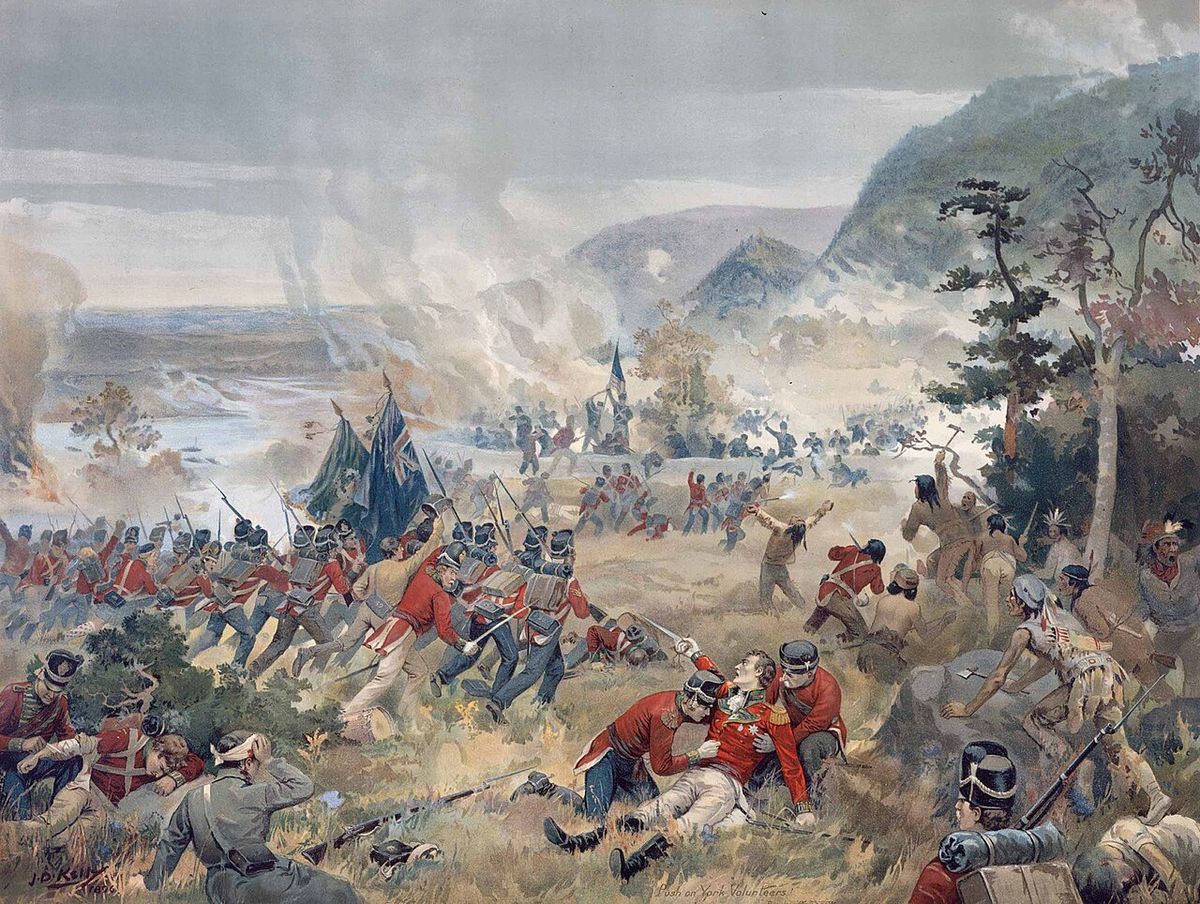
The sequence of events immediately before the battle revealed significant disorganization on the American side. Major General Stephen Van Rensselaer decided to launch his attack on 11 October, but it was postponed due to foul weather, a shortage of oars caused by a desertion, and the late arrival of Brigadier General Alexander Smyth's brigade. On 12 October, British Major Thomas Evans crossed the river under a flag of truce and deduced from conversations and hidden boats that an American attack was imminent for 13 October. Major General Isaac Brock took Evans's warning seriously and instructed his officers to be ready for immediate action, demonstrating the alertness of the British command.
- On 9 October 1812, American sailors under Lieutenant Jesse Elliot captured the British brigs Caledonia and Detroit near Fort Erie.
- A first American crossing attempt on 11 October failed due to foul weather, desertion of a boatman, and lost oars.
- Brigadier General Alexander Smyth withdrew his brigade to Black Rock after the delay, stating it would not be ready until 14 October.
- On 12 October, British Major Thomas Evans, under a flag of truce, deduced an American attack was planned for 13 October after spotting hidden boats.
- Major General Isaac Brock, convinced by Evans's report, ordered his officers to be ready and sent warnings to militia commanders.
- Van Rensselaer decided to proceed with a second attack attempt on the morning of 13 October 1812.
Forces and Dispositions
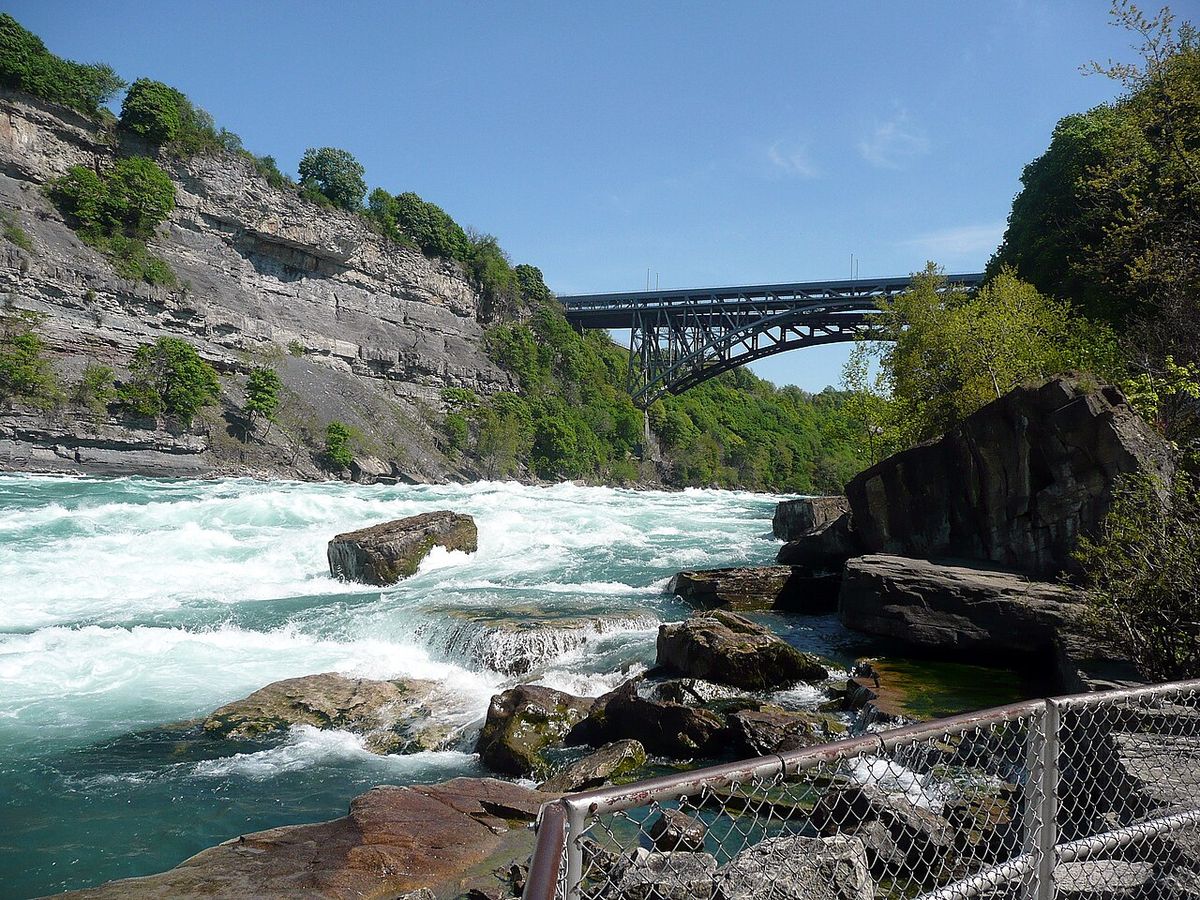
The village of Queenston in 1812 was a small settlement of about 300 people, situated at the base of the Niagara Escarpment where the river emerges from the Niagara Gorge. The steep, wooded slope rising 300 feet to Queenston Heights presented a formidable but climbable obstacle. The British defence was commanded by Captain James Dennis and consisted of approximately 450 regulars and militia. A key position was a redan battery two-thirds of the way up the heights, armed with an 18-pounder gun and an 8-inch mortar, protected by the light company of the 49th Regiment of Foot. Another 9-pounder was near the village wharf. Additional artillery positions were established at Vrooman's Point and Brown's Point to the north, guarded by militia.
The main British force of 260 regulars and 300 militia was stationed ten miles north at Fort George under Major General Roger Hale Sheaffe, with Mohawk warriors from the Six Nations of the Grand River encamped nearby. His plan called for an initial crossing of 900 regulars and 2,650 militia using a fleet of batteaux. The first wave was to be led by his experienced but ill cousin, Lieutenant Colonel Solomon Van Rensselaer, commanding militia, and Lieutenant Colonel John Chrystie of the 13th U.S. Infantry, commanding regulars. American artillery support was provided by guns positioned on Lewiston Heights, including two 18-pounders in an earthwork named Fort Gray, and field guns under Lieutenant Colonel Winfield Scott closer to the river.
The American Assault and Initial Combat
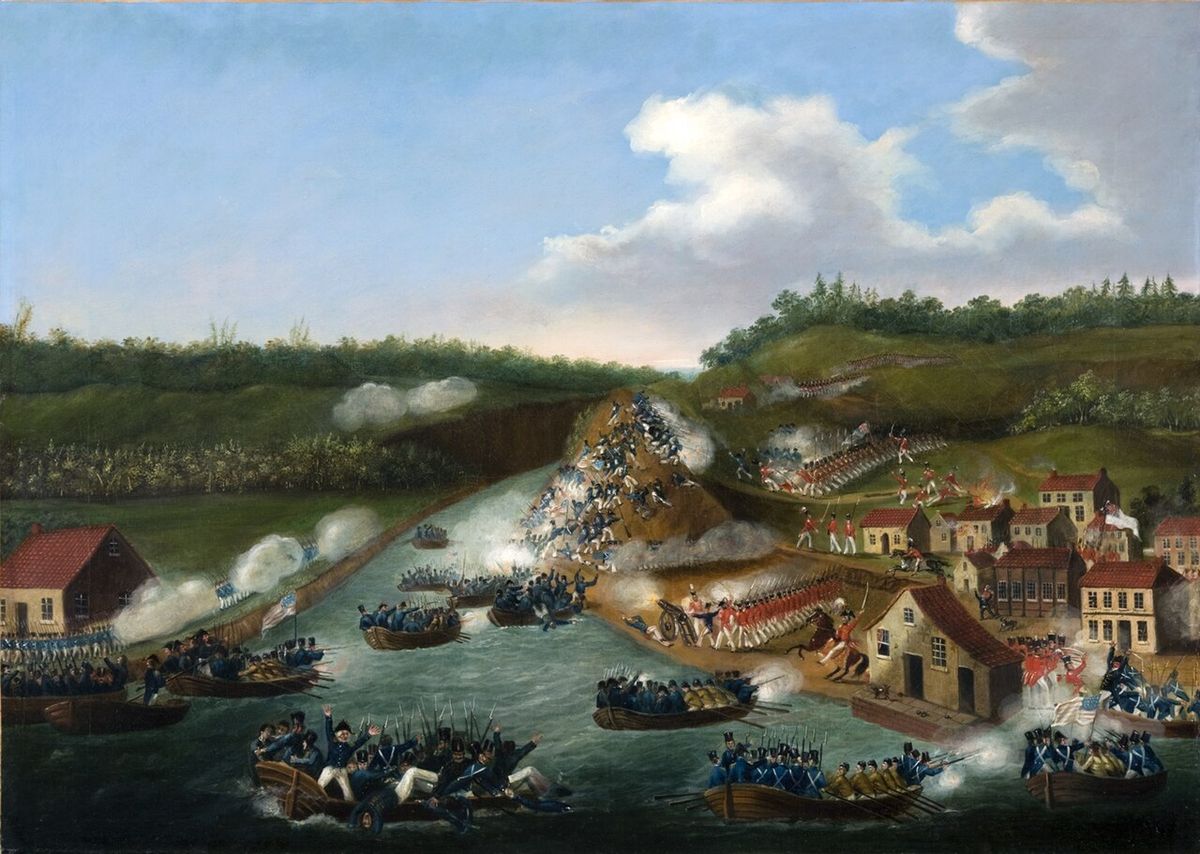
The American crossing began in the early hours of 13 October, but immediately encountered difficulties. Three boats, including the one carrying Lieutenant Colonel Chrystie, were forced back by the strong current. The remaining ten boats under Lieutenant Colonel Solomon Van Rensselaer landed on a gravel beach south of Queenston village. They were quickly spotted by British sentries, who opened fire and raised the alarm. After forming up, the American advance was met by a determined counterattack from Captain Dennis's grenadiers of the 49th Regiment and local militia. In the ensuing firefight, Lieutenant Colonel Van Rensselaer was severely wounded, hit six times, and command devolved to the also-wounded Captain John E. Wool of the 13th Infantry.
Wool pulled the American troops back to the landing area while Dennis withdrew to consolidate his forces in the village. As a second wave of boats attempted to cross, British artillery from the village and the redan opened a devastating fire. One boat was sunk, and others turned back in panic. However, American counter-battery fire from Lewiston Heights eventually disabled the British 9-pounder in the village. A separate detachment under Lieutenant Colonel John Fenwick landed at Hamilton Cove north of the village but was immediately surrounded by British troops rushed from the village and the redan. Fenwick was grievously wounded, and his men, their boats riddled with holes, were forced to surrender.
Despite these setbacks, reinforcements including Captain Peter Ogilvie with the rest of the 13th U.S. Infantry successfully crossed the river. Before the wounded Lieutenant Colonel Solomon Van Rensselaer was evacuated, he ordered Captain John E. Wool and Captain Ogilvie to bypass the village, scale the heights, and attack the redan battery from the rear. The initial American landing involved the 6th, 13th, and 23rd U.S. Infantry Regiments and several New York militia regiments. Key officers like Lieutenant Colonel John Chrystie and Lieutenant Colonel Solomon Van Rensselaer led the first wave, but Chrystie's boat turned back and Van Rensselaer was severely wounded, shaping the early phase of the battle.
- The first wave included the 6th, 13th, and 23rd U.S. Infantry Regiments.
- New York militia regiments in the attack were the 16th, 17th, 18th, 19th, and 20th.
- Lieutenant Colonel Solomon Van Rensselaer was wounded six times in the thigh, heel, and calf.
- Captain John E. Wool of the 13th U.S. Infantry took command after Van Rensselaer fell.
- Lieutenant Colonel John Fenwick was wounded at least three times, including in the eye, at Hamilton Cove.
- Lieutenant John Gansevoort guided Wool's flanking manoeuvre up the heights.
The Death of Major General Brock
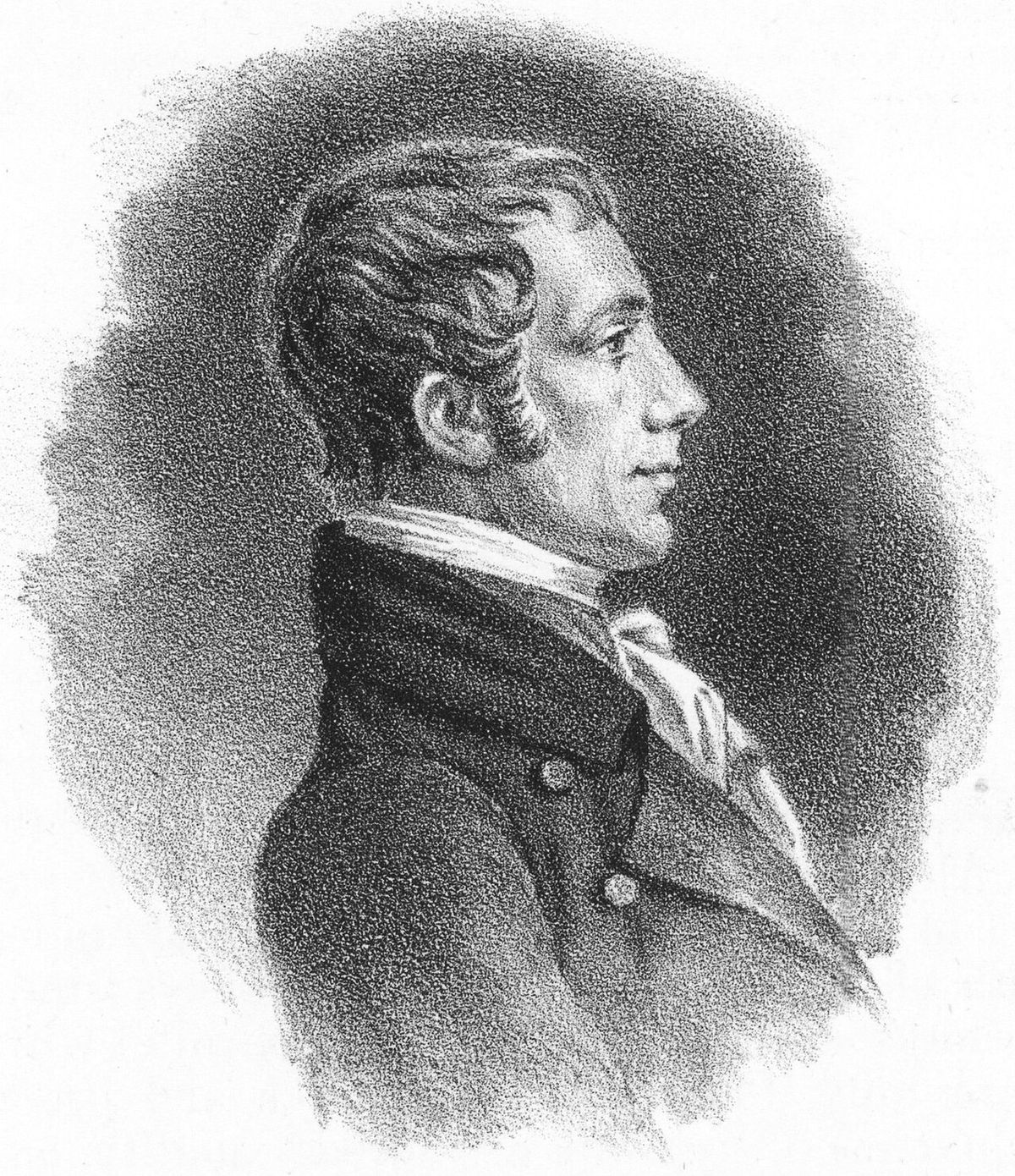
Awakened by the sound of cannon fire at his headquarters in Niagara, Major General Isaac Brock rode immediately towards Queenston, gathering militia from posts along the way. He arrived at the village shortly after dawn to find the situation critical. Captain Wool's force had successfully ascended the heights undetected, outflanked the redan, and caused its artillerymen to flee. Brock, resolved to retake the position before American reinforcements could solidify their hold, organized a swift counterattack. He assembled a force from the light company of the 49th Regiment and local militia flank companies and, placing himself conspicuously at the head of the 49th, led a frontal charge up the steep slope towards the captured redan.
Brock's tall stature, uniform, and energetic leadership made him a prime target. During the assault, he was first hit in the wrist but pressed on. At a range of about 50 yards, an American soldier fired a shot that struck Brock in the chest, killing him almost instantly. His body was recovered from the field by his aides, including Captain John Glegg, and hidden in a nearby house. The death of their commander briefly stalled the British counterattack, but the battle was far from over. Brock's actions and final moments involved several specific individuals and locations.
- Brock was accompanied by his aides, Lieutenant Colonel John Macdonnell and Captain John Glegg.
- He rallied troops from the light company of the 49th Regiment and the flank companies of the 2nd York and 5th Lincoln Militia.
- He was first wounded by a musket ball to the wrist during the charge.
- The fatal shot was fired from a range of approximately 50 yards (46 metres).
- His body was hidden in a house diagonally opposite the home of Laura Secord.
- Brock had been knighted for his victory at Detroit, but the news arrived after his death.
British Reinforcement and American Collapse
Following Brock's death, command of the British forces at Queenston devolved briefly to Lieutenant Colonel John Macdonnell, Brock's provincial aide-de-camp. Macdonnell led a second attempt to retake the heights, but this attack also failed, and Macdonnell was mortally wounded. The situation for the Americans on the heights, however, was growing increasingly precarious. Major General Van Rensselaer remained on the New York side, unable to persuade the bulk of his militia to cross the river under continued artillery fire. This left the forces under Captains Wool and Ogilvie, now commanded by Lieutenant Colonel Winfield Scott who had crossed over, isolated and unsupported on the Canadian shore.
Meanwhile, Major General Roger Hale Sheaffe had marched from Fort George with the main British force, collecting reinforcements from Chippawa and the Grand River along the way. Sheaffe's column, which included Mohawk warriors led by John Norton, took a circuitous inland route to approach Queenston Heights from the west. In a disciplined manoeuvre, he formed his regulars, militia, and warriors into a line and advanced. The American troops, exhausted, low on ammunition, and seeing no hope of reinforcement, were driven back towards the cliff edge overlooking the river. With their escape route cut off and under pressure from all sides, the American commanders on the heights had no choice but to surrender. The defeat was total for the American invasion force. Major General Stephen Van Rensselaer, witnessing the surrender from the American side of the river at Lewiston, resigned his command shortly afterwards.
Aftermath and Consequences
The Battle of Queenston Heights was a stinging defeat for the United States and a major boost for British and Canadian morale. The most significant loss for the British was the death of Major General Sir Isaac Brock, who was hailed as a hero and became a legendary figure in Canadian history. The victory demonstrated the effectiveness of the British regulars, the reliability of the Canadian militia, and the valuable contribution of Indigenous allies. For the Americans, the battle exposed critical weaknesses in command, logistics, and the unreliability of untrained militia when ordered to invade foreign soil. The defeat led to the dismissal of Van Rensselaer and his replacement by the equally ineffective Alexander Smyth, prolonging American failures on the Niagara front throughout the rest of 1812. The battle had several immediate strategic effects. It ended the American threat on the Niagara frontier for the remainder of 1812, securing Upper Canada from immediate invasion. The death of Brock, however, was a severe blow to British leadership, as his aggressive energy was unmatched. His successor, Major General Sheaffe, was a competent officer but more cautious in his approach.
Commemoration and Historical Sites
The Battle of Queenston Heights is commemorated by several significant monuments and is part of Canada's national historic consciousness. The surrounding Queenston Heights Park is a National Historic Site of Canada, managed by Parks Canada, and preserves the core of the battlefield. Key features within the park include the restored redan battery position, commemorative plaques, and walking trails that interpret the events of the battle. The site offers visitors a direct connection to the landscape that shaped this important early encounter in the War of 1812. Other related sites in the area contribute to the understanding of the battle and the war. These include the nearby Laura Secord Homestead, which commemorates another War of 1812 hero, and Fort George in Niagara-on-the-Lake, which served as the British headquarters. Across the river in Lewiston, New York, historical markers denote the American embarkation points and artillery positions. Annual re-enactments and ceremonies, particularly around the anniversary in October, help keep the memory of the battle alive. The engagement is studied not only for its military details but also for its role in fostering a sense of Canadian identity in the early 19th century, born from a successful defence against invasion.
Several physical landmarks and designations preserve the memory of the Battle of Queenston Heights and its key figures. The site of the battle at Queenston in Upper Canada is now within the town of Niagara on the Lake, Ontario. It is preserved as Queenston Heights Park, which is a National Historic Site. The battle is historically significant mainly due to the loss of the British commander, Major General Isaac Brock, who is memorialized at the site.
- Queenston Heights Park: Designated a National Historic Site of Canada.
- The Redan Battery: A restored artillery position on the heights.
- Fort George National Historic Site: The British headquarters ten miles north.
- Laura Secord Homestead: A historic site near the battlefield.
- Fort Gray: The American earthwork battery position on Lewiston Heights.
Questions about Battle of Queenston Heights
Why is General Isaac Brock important to the battle?
Major General Sir Isaac Brock was the charismatic British commander and civil leader of Upper Canada. His aggressive leadership and earlier victory at Detroit had made him a key figure in the colony's defence. His death during a counterattack at Queenston Heights transformed him into a lasting martyr and symbol of Canadian resistance. His loss was a major emotional blow, but his actions that day helped rally the forces that ultimately won the battle.
Who won the Battle of Queenston Heights?
The Battle of Queenston Heights was a decisive British victory. British regulars and Canadian militia led by Major General Isaac Brock and later Major General Roger Hale Sheaffe defeated United States regulars and New York militia. The American attempt to establish a foothold on the Canadian side of the Niagara River failed. The poorly managed American offensive could not get most of its invasion force across the river due to British artillery and militia reluctance. British reinforcements then arrived and forced the surrender of the unsupported American forces.
What role did Indigenous warriors play in the battle?
Mohawk warriors led by John Norton supported the British during the battle. They were part of the Six Nations of the Grand River who could field warriors. An encampment of the Six Nations was located near Fort George. These Indigenous forces were among the reinforcements that marched to Queenston after Major General Isaac Brock sent for aid. They participated in the final British advance that compelled the American surrender.
Where did the Battle of Queenston Heights take place?
The battle took place on 13 October 1812 at Queenston in Upper Canada, now Ontario. Queenston is a village on the west side of the Niagara River at the north end of the Niagara Gorge. The primary fighting occurred in the village itself and on the steep slopes rising to the promontory known as Queenston Heights. The river at this point was roughly 200 yards wide and fast flowing.
What were the main reasons for the American defeat?
The American defeat was mainly due to the poorly managed offensive. They could not ferry the bulk of their invasion force across the Niagara River. British artillery fire disrupted the crossing and inexperienced American militia were reluctant to cross. This left the initial assault force unsupported on the Canadian shore. Consequently, British reinforcements under Major General Roger Hale Sheaffe arrived from Fort George and defeated the isolated Americans, forcing their surrender.
How is the Battle of Queenston Heights commemorated today?
The battle is considered historically significant mainly due to the loss of the British commander, Major General Isaac Brock. His death during the battle is a central point of remembrance. The engagement itself was the first major battle of the War of 1812. It was a decisive British victory that thwarted an American invasion attempt across the Niagara River. The battle demonstrated the challenges of coordinating multi pronged American attacks early in the war.
Sources and further reading
- Battle of Queenston Heights (Wikipedia)
- Battle of Queenston Heights (thecanadianencyclopedia.ca)
- Battle of Queenston Heights (friendsoffortgeorge.ca)
- Queenston Heights National Historic Site, Parks Canada (parks.canada.ca)
- Queenston Heights Battle Facts and Summary (battlefields.org)
Checked by the Your Space Hamilton desk. Last updated 2026-10-22.