Eastern gray squirrel
The Eastern Gray Squirrel (Sciurus carolinensis) is a medium-sized tree squirrel native to eastern North America, including significant portions of southern Canada. It is a highly adaptable and prolific species, recognized for its role in forest regeneration through seed dispersal and caching. In Canada, it is a common sight in urban parks, suburban yards, and deciduous forests from New Brunswick to southern Manitoba. While a familiar part of the Canadian landscape, the species is also considered a problematic invasive in regions like British Columbia's Vancouver Island and throughout Europe, where it outcompetes native squirrels.
Description and Physical Characteristics
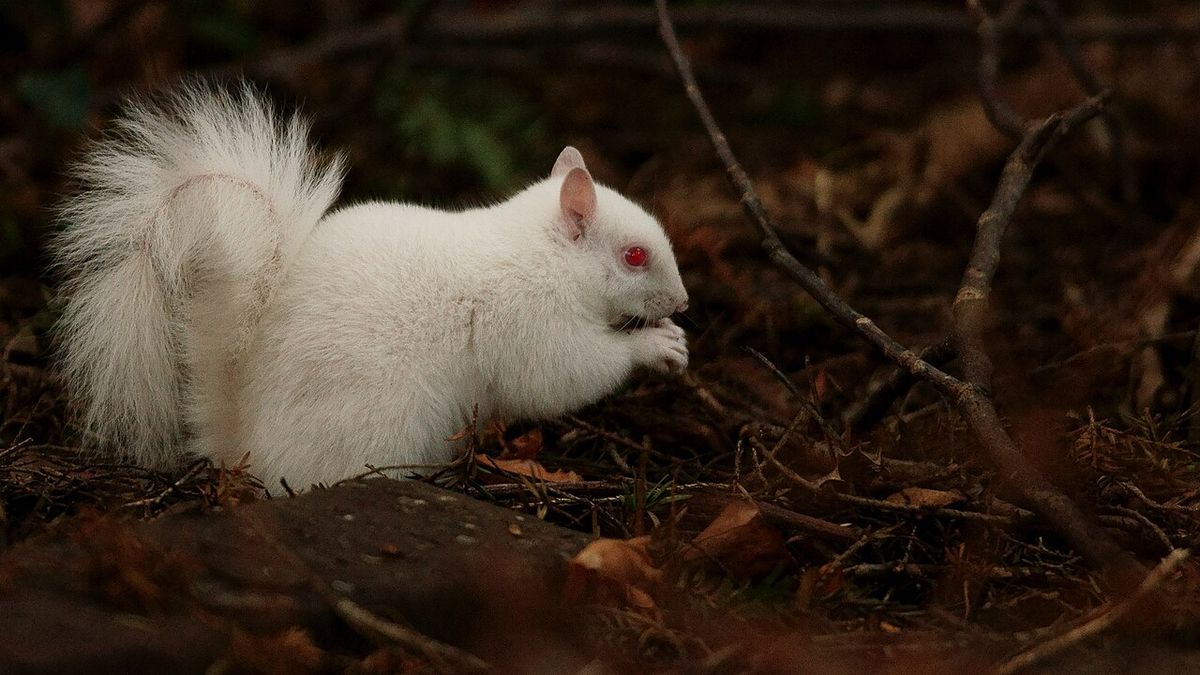
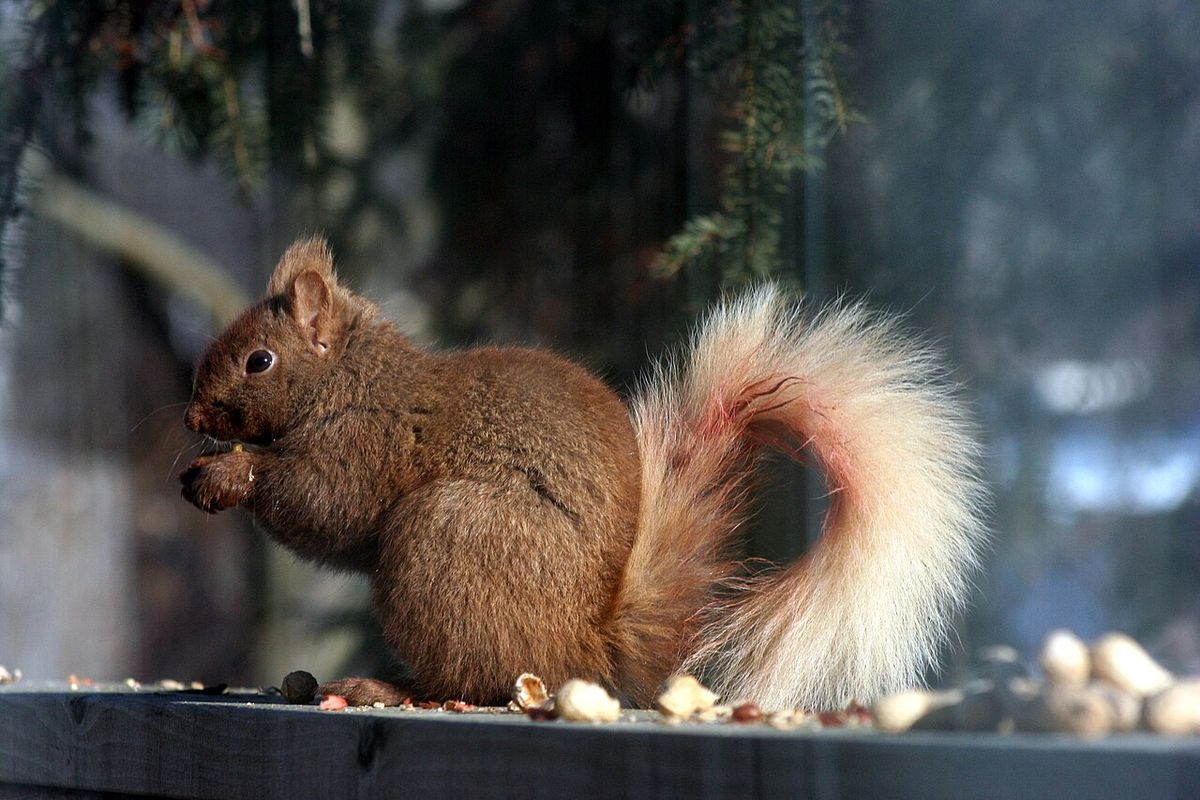
The Eastern Gray Squirrel typically has predominantly gray fur with brown spots and streaks, a white underside, and a large, bushy tail. Colour morphs are common, particularly in urban areas. The melanistic, or black, form is predominant in large parts of southeastern Canada and provides a thermal advantage. Black squirrels exhibit an 18 percent reduction in heat loss and a 20 percent reduction in basal metabolic rate when exposed to cold temperatures compared to the common gray morph. This black coloration is caused by an incomplete dominant mutation of the MC1R gene. The species shows no sexual dimorphism, meaning males and females are identical in size and colour. Their dental formula is 1.0.2.3/1.0.1.3, for a total of 22 teeth, with continuously growing incisors characteristic of all rodents.
Distribution and Habitat
The native range of the Eastern Gray Squirrel in Canada extends from New Brunswick through southwestern Quebec, throughout southern Ontario, and into southern Manitoba. Its range overlaps with the fox squirrel in some areas, though the core of the fox squirrel's range is further west. The species thrives in mature, dense hardwood forests, particularly oak-hickory ecosystems, which provide abundant mast forage like acorns and nuts. These squirrels generally require about 100 acres of woodland but adapt readily to human-altered landscapes. In Canada, they are absent from the boreal forest region. They have been introduced to other areas, most notably onto Vancouver Island, British Columbia, in 1966 near Metchosin, where they are considered a highly invasive threat to local ecosystems and the native American Red Squirrel. Overseas introductions have occurred in Europe, Italy, South Africa, and Australia.
Eastern Gray Squirrels construct nests called dreys in the forks of trees, made of dry leaves and twigs and insulated with moss, grass, and feathers. They also use permanent tree dens hollowed out in trunks or large branches, which offer better protection for young. Squirrels typically claim two to three dens simultaneously. Their home range varies from 1.5 to 8 acres, tending to be smaller in areas with higher squirrel density. They are diurnal or crepuscular, avoiding the midday heat in summer, and do not hibernate. They also commonly nest in human structures like attics and exterior walls, where they can become pests and fire hazards due to gnawing on electrical cables.
Diet and Foraging Behaviour
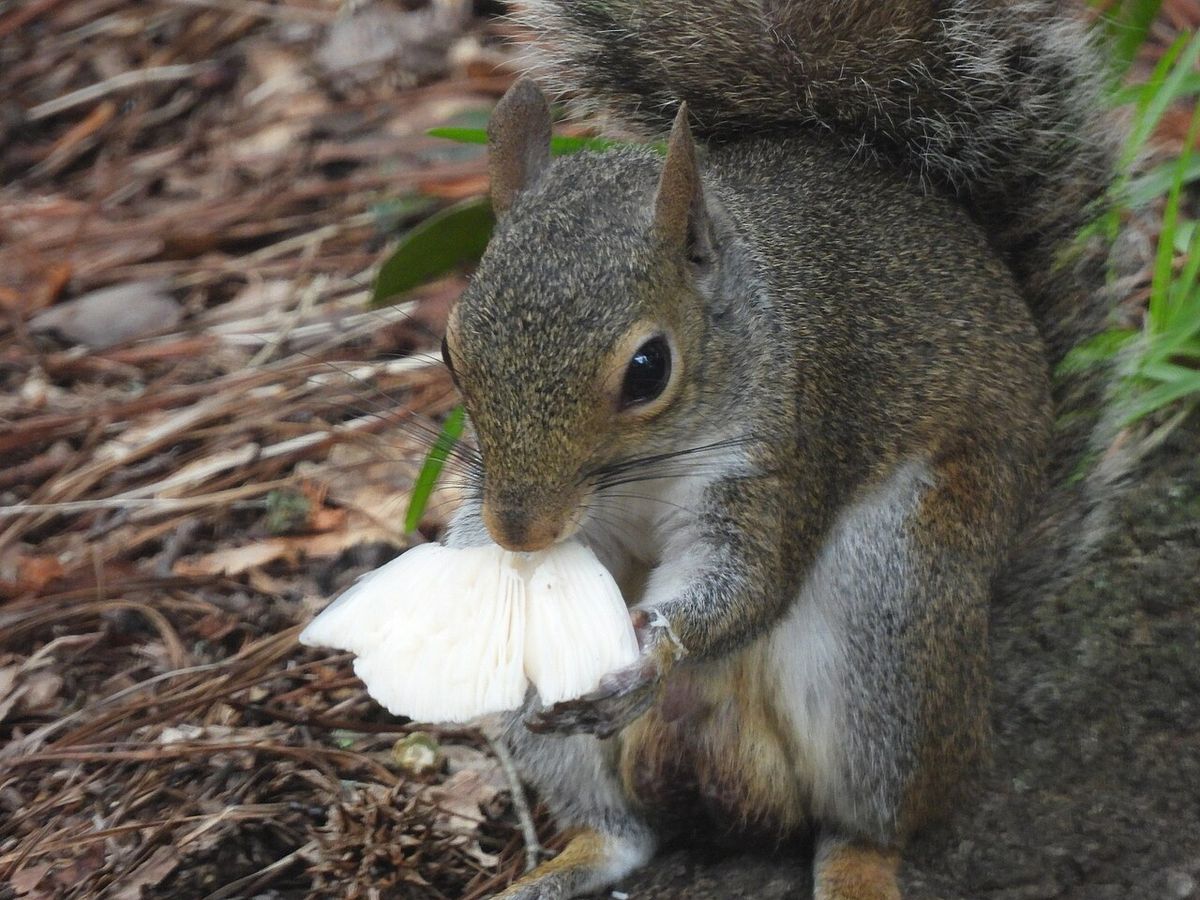
Eastern Gray Squirrels are omnivores with a highly varied diet that shifts with the seasons. Their primary foods are the seeds and nuts of mast-producing trees such as oak, hickory, beech, and walnut. They also consume tree buds, flowers, berries, other fruits, bark, and fungi including truffles and even fly agaric mushrooms. This species is also carnivorous, eating insects, bird eggs, frogs, small birds, lizards, and small rodents including other squirrels. They gnaw on bones, antlers, and turtle shells, likely to obtain minerals scarce in their normal plant-based diet. In gardens and agricultural areas, they raid crops like corn, strawberries, tomatoes, and wheat. In urban settings, they are notorious for raiding bird feeders for seeds like millet, corn, and sunflower, and scavenging in trash bins, though processed human foods are not healthy for them. Their foraging and seed-caching behaviour makes them ecologically important as forest regenerators.
- Primary Foods: Acorns, walnuts, hazelnuts, other tree seeds and nuts.
- Plant Matter: Tree buds, flowers, berries, fruits, bark, bulbs.
- Fungi: Truffles and other forest mushrooms.
- Animal Matter: Insects, bird eggs and nestlings, frogs, small rodents.
- Supplementary Sources: Garden crops, bird feeder seeds, scavenged human food waste.
Eastern gray squirrels can cause damage to trees by stripping bark to eat the underlying cambium. In Europe, sycamore and beech trees are particularly affected by this behaviour. Their attraction to bird feeders can significantly reduce food access for wild birds. This foraging near bird nests may also increase local nest predation rates. These tree squirrels vary the species they forage upon seasonally. They rely on gymnosperms like cedar and pine as well as various angiosperms throughout the year.
Reproduction and Life Cycle
Eastern Gray Squirrels can breed twice a year, though younger females often have only one litter per spring. Breeding seasons are December to February and May to June, slightly delayed in northern latitudes. In abundant food years, about 36 percent of females bear two litters, but none will do so in poor food years. An average of 61 to 66 percent of females bear young in any given breeding season. Five days before entering estrus, a female may attract up to 34 males from up to 500 metres away. Males form a dominance hierarchy, and the female practices polyandry, mating with multiple males. The gestation period is about 44 days, after which a litter of one to four young is born, though litters as large as eight are possible. Newborns, called kits, are blind, hairless, and weigh only 13 to 18 grams.
| Developmental Stage | Timeline |
|---|---|
| Lower incisors erupt | 19-21 days postpartum |
| Upper incisors erupt | After 4 weeks |
| Eyes open | 21-42 days postpartum |
| Ears open | 3-4 weeks postpartum |
| Weaning initiated | Around 7 weeks postpartum |
| Weaning completed | By week 10 |
| Full adult body mass | Achieved by 8-9 months |
Young begin to leave the nest after 12 weeks, with autumn-born young often wintering with their mother. Mortality is high, with only about one in four kits surviving to one year of age. Females can enter estrus as early as five and a half months but are not normally fertile until at least one year, with a mean first estrus at 1.25 years. Males are sexually mature between one and two years. Reproductive longevity for females can exceed eight years, with one documented case of 12.5 years in North Carolina. While they can live up to 20 years in captivity, wild squirrels typically live about six years due to predation and habitat challenges.
Behaviour and Communication
Eastern Gray Squirrels are known for their agility, being one of the few mammals that can descend a tree head-first by rotating their hind feet to grip the bark with backward-pointing claws. Communication involves a varied repertoire of vocalizations and visual signals. Their calls include a mouse-like squeak, a low-pitched noise, a chatter, a raspy 'mehr mehr mehr', and the 'kuk' or 'quaa' alarm call used to warn of predators. An affectionate 'muk-muk' sound is used between mother and kits and by males during courtship. Tail-flicking is a common visual signal. The balance between vocal and visual communication varies by environment. Urban populations in louder, more open areas rely more on visual signals, while squirrels in quieter, dense woodlands use vocalizations more often due to lower noise and restricted visual range. They are also scatter-hoarders, caching thousands of nuts and seeds each autumn, which they relocate using spatial memory and smell, playing a crucial role in seed dispersal and forest ecology.
Predators, Parasites, and Diseases
Eastern Gray Squirrels face predation from a wide array of animals. Their primary predators are hawks, owls, and snakes. Other predators include bobcats, foxes, raccoons, weasels, and domestic or feral cats and dogs. In its introduced range in South Africa, it is preyed upon by African harrier-hawks. Squirrels use alarm calls to warn others of approaching predators, and their speed and agility make them difficult to capture. The species can host and spread various parasites and diseases. They may carry parasites like fleas, lice, mites, and ticks, which can transmit illnesses such as Lyme disease and Rocky Mountain spotted fever to humans through bites or exposure to bodily fluids. Mite infestations can cause rough, blotchy skin and hair loss in squirrels during winter. If not properly treated, diseases like typhus, plague, and tularemia can kill squirrels and also pose a risk to humans.
- Bacterial Diseases: Can spread typhus, plague, and tularemia.
- Viral Diseases: Susceptible to fibromatosis (causing skin tumors) and squirrelpox.
- Parasites: Host to ringworm, fleas, lice, mites, and ticks.
- Tick-borne Risks: Lyme disease and Rocky Mountain spotted fever.
Fibromatosis can cause massive skin tumors, and a tumor near the eye may lead to blindness. While squirrels in attics can be a nuisance, the parasites they carry are not typically transferred to people in that context. Proper handling and avoidance of bites or contact with bodily fluids are important for human safety. Rocky Mountain spotted fever can cause damage to internal organs like the heart and kidneys if not treated.
Ecological Role and Invasive Status
In its native North American range, the Eastern Gray Squirrel plays an essential ecological role as a prodigious forest regenerator. Its habit of caching tree seeds, often forgetting some, facilitates the growth of new trees. By eating truffles, it also contributes to the distribution of fungal spores. It serves as an important prey species for many predators and a host for various parasites. However, outside its native range, it is often a destructive invasive species. In Europe, it has largely displaced the native Red Squirrel in Britain and competes with it in Ireland, leading to its inclusion on the European Union's list of Invasive Alien Species of Union concern since 2016. This listing prohibits its import, breeding, transport, sale, or intentional release within the EU. In Canada, its introduction to Vancouver Island poses a significant threat to the native American Red Squirrel and the local ecosystem, classifying it as highly invasive in that region. Its adaptability and high reproductive potential allow it to thrive in new environments at the expense of native wildlife. In the United Kingdom, their consumption of supplementary bird feeder food can prevent access for wild birds and increase local nest predation.
Questions about Eastern gray squirrel
Are Eastern Gray Squirrels native to Canada?
Yes, Eastern Gray Squirrels are native to parts of eastern Canada, specifically southern regions. Their native Canadian range includes New Brunswick, southwestern Quebec, throughout southern Ontario, and southern Manitoba. They are not native to the boreal forest regions or to western Canada. They were introduced to Vancouver Island, British Columbia, in 1966, where they are now considered an invasive species.
Why are some squirrels black?
The black colouration is a melanistic morph caused by an incomplete dominant mutation of the MC1R gene. This morph is particularly common in southeastern Canada. Black squirrels have a thermal advantage in cold climates, showing an 18 percent reduction in heat loss and a 20 percent reduction in basal metabolic rate compared to gray morphs when exposed to freezing temperatures. It is the same species as the gray squirrel, just a different colour variant.
What do Eastern Gray Squirrels eat?
Eastern Gray Squirrels are omnivores. Their diet primarily consists of tree seeds and nuts like acorns, walnuts, and hazelnuts. They also eat tree buds, flowers, berries, fruits, bark, bulbs, and fungi. They are carnivorous as well, consuming insects, bird eggs and nestlings, frogs, and small rodents. In urban areas, they raid bird feeders for seeds and scavenge in garbage, though processed human foods are unhealthy for them.
Are Eastern Gray Squirrels a problem in Canada?
In their native eastern range, they are a natural part of the ecosystem. However, where introduced, they become a serious problem. On Vancouver Island, they are considered highly invasive, outcompeting the native American Red Squirrel and threatening the local ecosystem. In Europe, where they are also introduced, they have displaced native red squirrels and are listed as an invasive species of Union concern.
How long do Eastern Gray Squirrels live?
Lifespan varies greatly between captivity and the wild. In captivity, they can live up to 20 years. In the wild, life expectancy at birth is only 1 to 2 years due to high juvenile mortality. An adult that survives its first year typically lives to about six years old, with exceptional individuals reaching 12 years. Predation, disease, and habitat challenges significantly shorten their wild lifespan.
Do Eastern Gray Squirrels hibernate?
No, Eastern Gray Squirrels do not hibernate. They are active year-round. During cold winter spells, they may share a nest (drey) with other squirrels to conserve heat and rely on food caches they buried in the autumn. They exhibit diurnal or crepuscular activity patterns, meaning they are active during the day or at dawn and dusk, and tend to avoid the midday heat in summer.
Sources and further reading
- Eastern gray squirrel (Wikipedia)
- Sciurus carolinensis (eastern gray squirrel) | INFORMATION (animaldiversity.org)
- Eastern Gray Squirrel (kids.nationalgeographic.com)
- Eastern grey squirrel (bcinvasives.ca)
- Eastern Grey Squirrel (hww.ca)
Checked by the Your Space Hamilton desk. Last updated 2026-10-21.





