White Juan
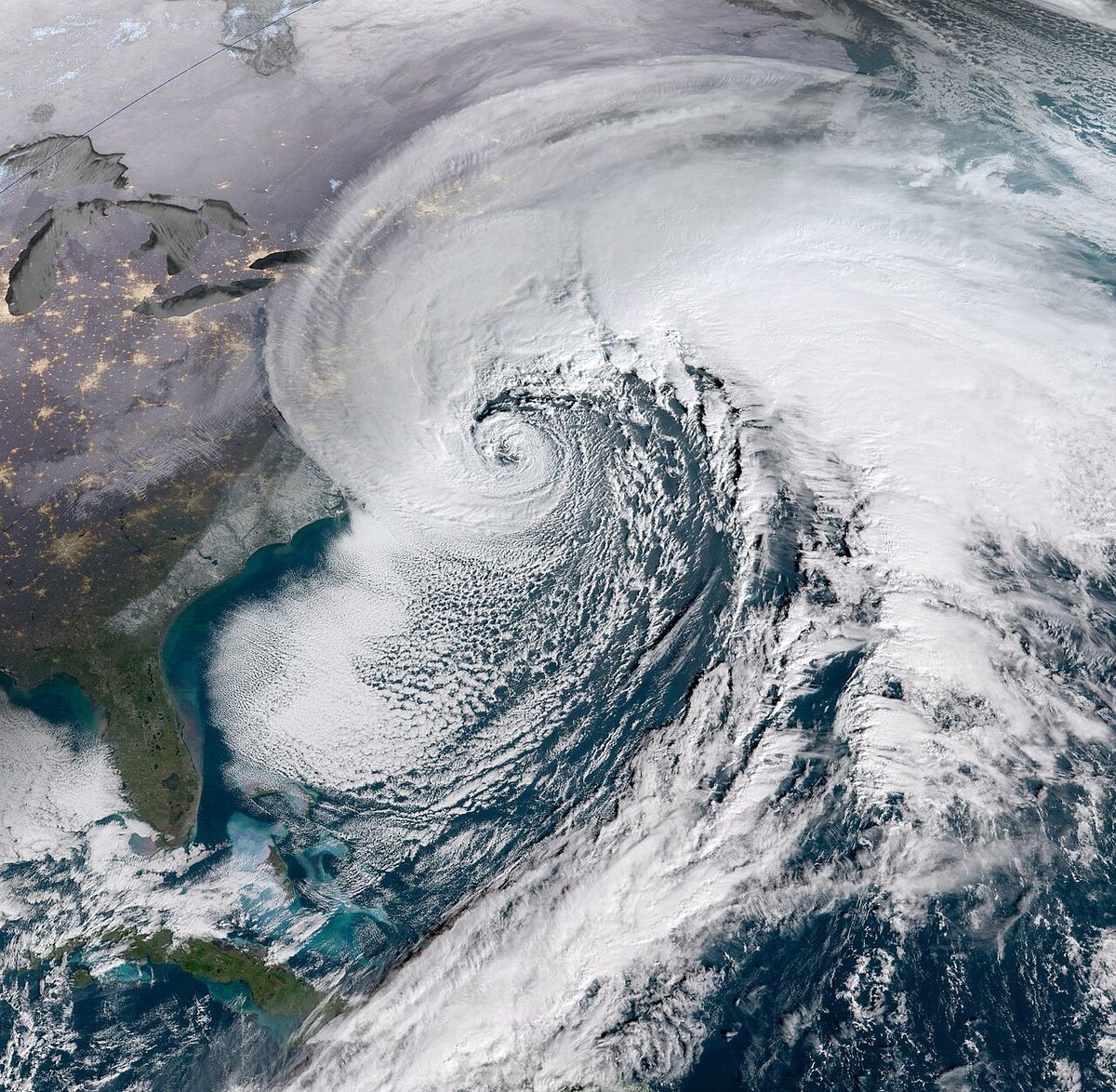
White Juan is the unofficial name for a historic hurricane-strength nor'easter blizzard that struck Atlantic Canada and the Eastern United States between February 17 and 20, 2004. The storm, named for its ferocity and its occurrence just five months after the devastating Hurricane Juan, paralysed the region with record-breaking snowfall and hurricane-force winds. It prompted province-wide states of emergency in Nova Scotia and Prince Edward Island, shutting down cities for days and requiring a massive, weeks-long cleanup operation. The blizzard remains a defining weather event for a generation of Maritimers, notable for its crippling impacts and the long-delayed federal financial assistance that followed.
Meteorological development and track
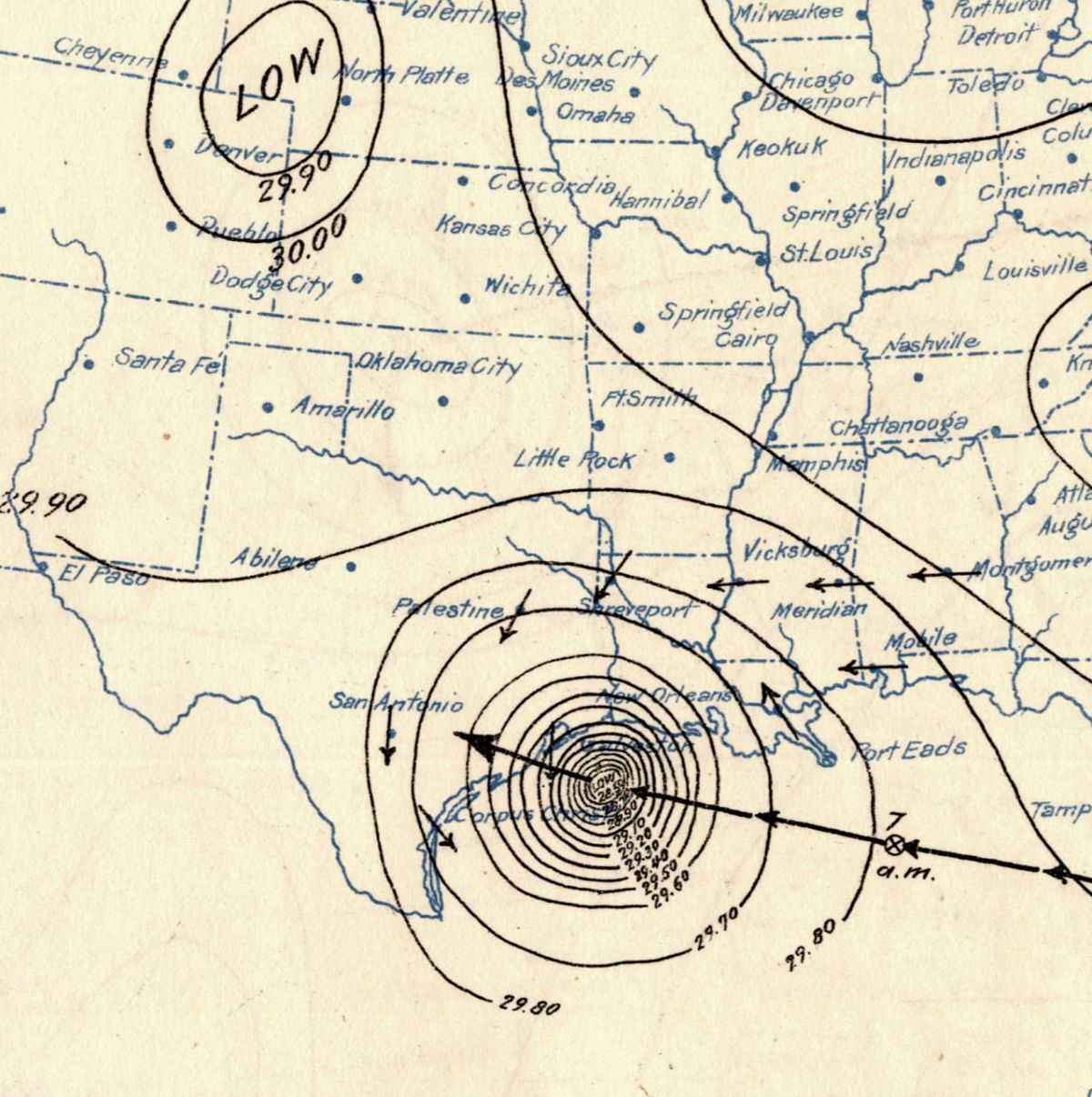
The storm that would become known as White Juan began forming approximately 200 kilometres southeast of Cape Hatteras, North Carolina, on February 17, 2004. It rapidly intensified over the warm waters of the Gulf Stream, gaining strength as it tracked northeastward toward Atlantic Canada at speeds between 35 and 40 kilometres per hour. The system developed into a powerful nor'easter, reaching a remarkably deep barometric pressure of 959 hectopascals as it moved east of Nova Scotia. This intense low-pressure system continued its track, eventually crossing over the province of Newfoundland on February 21, 2004. The storm's rapid development and hurricane-strength characteristics, combined with its path directly into the Maritimes, set the stage for an extreme weather event.
Record-breaking snowfall and blizzard conditions
White Juan delivered unprecedented snowfall across a wide swath of Atlantic Canada, with the hardest-hit areas of the Nova Scotia peninsula and Prince Edward Island receiving between 50 and 100 centimetres. Snow fell at a phenomenal rate of 5 centimetres per hour for 12 consecutive hours in many locations, with embedded bands of thundersnow producing localized accumulation rates exceeding 20 centimetres per hour. The storm shattered longstanding single-day snowfall records at multiple official weather stations, establishing new benchmarks that still stand decades later. The Shearwater heliport in the Halifax Regional Municipality recorded 95.5 centimetres, obliterating the previous record of 73.2 centimetres set in 1960. Yarmouth, Nova Scotia, measured 82.0 centimetres, surpassing its 1977 record, while Charlottetown Airport set its all-time daily record with 74.4 centimetres. Halifax International Airport's total of 66.8 centimetres remains its greatest one-day snowfall in recorded history. Numerous unofficial reports from across Nova Scotia suggested localized accumulations approached 150 centimetres, particularly where intense drifting occurred.
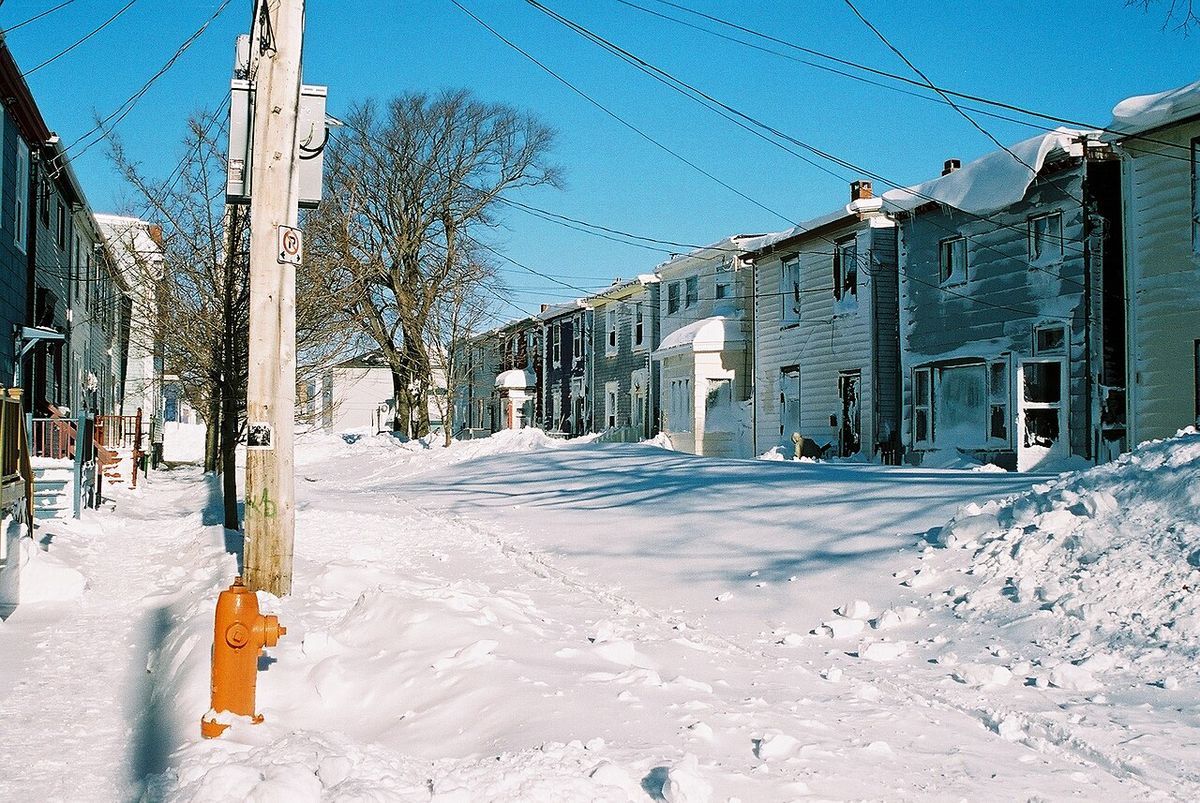
Sustained winds of 60 to 80 kilometres per hour, with gusts reaching 120 km/h, combined with the intense snowfall rates to create prolonged blizzard conditions. Halifax experienced official blizzard criteria for 16 consecutive hours, from 4:00 a.m. to 7:00 p.m. on February 19. The wind whipped the snow into massive drifts that in some cases completely covered two and three-storey buildings. Visibility was reduced to one metre or less for brief periods across most areas, and these near-zero conditions persisted for at least eight hours throughout much of Nova Scotia. The storm also produced hurricane-force winds and swells of 10 to 15 metres at sea, prompting special marine warnings. A storm surge equivalent to a Category 1 hurricane affected parts of the Northumberland Strait in southeast New Brunswick and Prince Edward Island.
Immediate impacts and emergency response
The blizzard's impact on the Halifax Urban Area was particularly crippling due to the region's humid continental climate, which does not typically experience extreme snowfalls compared to more northern areas. The sheer volume of snow, combined with the powerful winds that created enormous drifts, made most roads impassable to regular vehicles and even challenged snow removal equipment. For several days following the storm, public works personnel struggled to clear streets, with the operation hampered by a severe lack of space to displace the colossal amounts of snow. The Halifax Regional Municipality was forced to obtain permission from the federal government to dump snow into Halifax Harbour from federally owned docks, in addition to the usual privately owned facilities. To facilitate around-the-clock clearing operations, a 10:00 p.m. curfew was implemented for residents in the municipality for several nights after the storm. The provincial governments of Nova Scotia and Prince Edward Island declared province-wide states of emergency in response to the storm, which led to the closure of all schools in both provinces, disrupting education and daily life for hundreds of thousands of residents.
The storm also significantly affected the 2004 Special Olympic National Winter Games, which were being held in Charlottetown at the time. The paralysis of transportation and services stranded people in their homes and workplaces, while emergency services were stretched to their limits responding to calls for assistance. The event highlighted the region's vulnerability to extreme winter storms and tested the limits of municipal and provincial emergency preparedness plans, especially so soon after the trauma of Hurricane Juan. The cleanup and recovery efforts required coordination across multiple levels of government and became a defining civic challenge for Halifax and other communities.
Notable records and statistics
White Juan set numerous meteorological records, many of which remain unbroken. The storm dropped a record-breaking 95.5 centimetres of snow at Shearwater heliport, beating the previous record from 1960. It also broke the all time daily snowfall record in Yarmouth with 82.0 centimetres and in Charlottetown with 74.4 centimetres. Halifax International Airport recorded 66.8 centimetres, which remains its greatest one-day snowfall total. The storm also produced sustained hurricane-force winds with gusts up to 124 kilometres per hour.
- Highest single-day snowfall at Shearwater, NS: 95.5 cm on February 19, 2004.
- Highest single-day snowfall at Yarmouth, NS: 82.0 cm, breaking the 1977 record.
- Highest single-day snowfall at Charlottetown Airport: 74.4 cm.
- Highest single-day snowfall at Halifax International Airport: 66.8 cm.
- Longest consecutive blizzard conditions in Halifax: 16 hours (4:00 a.m. to 7:00 p.m., Feb 19).
- Deepest measured barometric pressure: 959 hPa east of Nova Scotia.
- Highest unofficial wind gust in HRM: 147 km/h.
- Maximum reported snowfall rate: over 20 cm per hour in thundersnow bands.
These figures illustrate the exceptional nature of the storm. The snowfall records in Halifax and Charlottetown placed those cities' one-day totals among the greatest for any major Canadian city. The storm's intensity was exceptional for the humid continental climate of coastal Nova Scotia, which does not typically experience such extreme snowfalls. The blizzard had a crippling effect on the Halifax Urban Area for several days following the storm.
Regional snowfall totals
The snowfall from White Juan was highly variable across the Maritimes, with a sharp gradient from extreme amounts in southwestern Nova Scotia to very little in northern New Brunswick. The hardest-hit areas saw accumulations ranging from 50 to 100 centimetres. Halifax and Dartmouth received 95.5 centimetres, while Yarmouth received 101 centimetres. In contrast, Fredericton received only 1.5 centimetres and Bathurst received 0.5 centimetres.
| Location | Snowfall (cm) |
|---|---|
| Halifax/Dartmouth (Shearwater), NS | 95.5 |
| Charlottetown, PE | 74.4 |
| Halifax International Airport, NS | 66.8 |
| Enfield, NS | 66.6 |
| Moncton, NB | 61.2 |
| Sydney, NS | 40.8 |
| Miramichi, NB | 3.5 |
| Fredericton, NB | 1.5 |
| Bathurst, NB | 0.5 |
The totals illustrate the storm's focused fury on Nova Scotia and Prince Edward Island, with Yarmouth and the Halifax region bearing the brunt. Much of central, northern and western New Brunswick received little to no snow as the storm tracked toward the east. The record-setting nature of the snowfall in Halifax and Charlottetown placed those cities' one-day totals among the greatest for any major Canadian city. This was a clear indicator of the storm's exceptional intensity for a coastal region.
Financial costs and delayed federal assistance
The financial toll of White Juan, compounded by the costs from Hurricane Juan just months earlier, was significant for municipal and provincial governments. In the storm's aftermath, the Halifax Regional Municipality submitted bills to the federal government totalling $19.9 million for recovery costs related to both Hurricane Juan and White Juan. For years, the municipality reported it was still waiting for nearly $6 million in reimbursements. Nova Scotia MP and federal Justice Minister Peter MacKay stated the province would receive $3.6 million under the Disaster Financial Assistance Arrangements program. This DFAA program is designed to assist provinces and territories when recovery costs for natural disasters exceed what they can reasonably be expected to bear on their own, with federal assistance only flowing after a provincial request for reimbursement. The funds are cost-shared according to a federal formula and are intended to help cover expenses for evacuations, emergency shelters, infrastructure repair, and, through provincial administration, some costs for individuals.
Key actions and measures taken
In response to the unprecedented conditions, authorities implemented a series of drastic measures to manage public safety and begin recovery. Province-wide states of emergency were declared in Nova Scotia and Prince Edward Island. All schools were closed in both provinces. In the Halifax Regional Municipality, a 10 p.m. curfew was implemented for several nights to permit snow removal. The municipality also received federal permission to dump excess snow into Halifax Harbour.
- Declaration of province-wide states of emergency in Nova Scotia and Prince Edward Island.
- Closure of all schools in Nova Scotia and Prince Edward Island.
- Implementation of a 10:00 p.m. curfew in the Halifax Regional Municipality for several nights.
- Federal permission granted to dump snow into Halifax Harbour from federal docks.
- Disruption of the 2004 Special Olympic National Winter Games in Charlottetown.
- Deployment of all available public works and emergency service personnel for snow clearing and response.
These measures show the extent to which normal civic functions were suspended. The curfew and the unusual step of dumping snow in the harbour became particularly memorable aspects of the storm's story. This demonstrated the extreme logistical hurdles faced by the city of Halifax due to a lack of space to displace the snow. The widespread school closures affected every student in the two provinces. The state of emergency declarations gave authorities broader powers to coordinate the response to the paralyzing storm.
Cultural and historical legacy
White Juan left a deep and enduring mark on the collective memory of Atlantic Canada, becoming the defining snowstorm for a generation of residents. The event is frequently referenced as a benchmark for severe winter weather, with subsequent major storms often measured against its intensity. The nickname itself, a direct reference to the destructive Hurricane Juan of September 2003, shows how the two consecutive disasters became linked in the regional experience. Some observers have argued that the one-two punch of Juan and White Juan changed public and official attitudes toward weather warnings and emergency preparedness in the Maritimes. The trauma and surprise of Hurricane Juan, followed so quickly by the unprecedented blizzard, is seen by some as fostering a more cautious approach to forecasted severe weather events. This shift may have contributed to changes in how school closures and other public safety decisions are made during winter storms.
The storm also demonstrated the social and logistical challenges of dealing with extreme snowfall in a major urban centre like Halifax. The images of streets buried under drifts, the implementation of a nightly curfew, and the extraordinary measure of dumping snow into the harbour became key parts of the event's story. For many, the shared experience of being snowbound and the community effort required to dig out created a strong sense of shared experience. The storm's legacy is a mix of respect for nature's power, pride in community resilience, and a lasting awareness of vulnerability. It serves as a clear reminder of the region's exposure to powerful coastal storms and the need for effective emergency management planning, a lesson reinforced by the long wait for federal disaster assistance.
Comparison to other historic storms
White Juan holds a distinct place in Canadian meteorological history due to its specific characteristics and impacts. Its snowfall records in Halifax and Charlottetown are notable when compared to other major Canadian cities. The storm's intensity was driven by its rapid deepening over the Gulf Stream and its hurricane-strength wind fields, which distinguished it from more typical nor'easters. That predicted system was forecast to have a barometric pressure around 982 hPa, which is 25 hPa weaker than White Juan's 959 hPa, resulting in predicted wind speeds significantly lower than the 60 to 100 km/h winds experienced in 2004. However, the comparative analysis also notes that slower-moving or stalled systems can produce different, yet still extreme, impacts through prolonged precipitation rather than peak intensity. The key meteorological features of White Juan included its deep central pressure, its track, the embedded thundersnow, and the prolonged duration of blizzard conditions. These factors combined to create an event that was both climatologically extraordinary and logistically catastrophic for the regions in its path, securing its status as one of the East Coast's worst blizzards. The storm's place in history is further cemented by its timing, arriving when the region was still in recovery mode, which amplified its psychological and economic impact.
Questions about White Juan
Why was the storm called White Juan?
The storm was nicknamed White Juan because it struck the Maritimes in February 2004, just five months after the devastating Hurricane Juan hit the region in September 2003. The name reflected the blizzard's hurricane-strength winds and its massive impact on a population still recovering from the earlier disaster. The unofficial nickname was coined by residents and media, drawing a direct parallel between the two consecutive extreme weather events. It stuck as a memorable label for one of the region's most historic snowstorms.
How much snow fell during White Juan?
Snowfall totals varied widely, with the hardest-hit areas of Nova Scotia and Prince Edward Island receiving between 50 and 100 centimetres. The highest official total was 101 centimetres in Yarmouth, Nova Scotia. The Shearwater heliport in Halifax recorded 95.5 centimetres, setting a new record for that station. Charlottetown Airport received 74.4 centimetres, also an all-time daily record. Unofficial reports from across Nova Scotia suggested some localized accumulations were as high as 150 centimetres due to extreme drifting.
What were the wind speeds during the blizzard?
The storm produced sustained winds ranging from 60 to 80 kilometres per hour across much of New Brunswick, Nova Scotia, Prince Edward Island, and Newfoundland and Labrador. Maximum one-minute gusts of 120 kilometres per hour were reported at many weather stations. There were unofficial reports from two stations in the Halifax Regional Municipality of 10-second gusts nearing 147 kilometres per hour, though Environment Canada never confirmed these readings. These winds, combined with the intense snow, produced visibilities of one metre or less for at least eight hours in much of Nova Scotia.
How long did it take to clean up after the storm?
The cleanup operation took weeks, particularly in the Halifax Urban Area. The volume of snow was so great that municipal crews struggled to clear streets, hampered by massive drifts and a lack of space to put the snow. The Halifax Regional Municipality had to get federal permission to dump snow into Halifax Harbour. A nightly 10:00 p.m. curfew was imposed for several nights to allow snow removal equipment to operate unimpeded. The recovery was a prolonged logistical challenge that tested the limits of local resources.
Did the federal government provide disaster funding for White Juan?
Yes, the federal government eventually provided disaster funding for White Juan, but it was delayed by a decade. The Halifax Regional Municipality had submitted bills totalling $19.9 million for costs from both Hurricane Juan and White Juan. Federal Justice Minister and Nova Scotia MP Peter MacKay stated the funding was to help recoup costs from the significant weather event. The DFAA program is designed to assist provinces when disaster recovery costs exceed what they can reasonably afford, covering expenses for evacuations, emergency shelters, and infrastructure.
How does White Juan compare to other major Canadian snowstorms?
White Juan set all time single day snowfall records for several major Maritime cities, making it one of the most severe blizzards in Canadian history. Halifax Airport recorded 66.8 centimetres, its greatest one day total, while Charlottetown recorded 74.4 centimetres and Halifax proper saw 95.5 centimetres at Shearwater. The storm produced extreme conditions with snowfall rates of 5 centimetres per hour for 12 hours, hurricane force wind gusts up to 124 kilometres per hour, and blizzard conditions lasting 16 consecutive hours in Halifax. Its intensity, combined with its impact on a region still recovering from Hurricane Juan just five months prior, cemented its notoriety. Meteorologists note its deep central pressure of 959 hPa and its fast movement toward Newfoundland distinguish it from other systems.
Sources and further reading
- White Juan (Wikipedia)
- White Juan damage funding comes 10 years later (cbc.ca)
- This Atlantic blizzard is giving shades of White Juan, here's ... (theweathernetwork.com)
- White Juan was one of the East Coast's worst blizzards (ca.news.yahoo.com)
- Snow days stem from fear of missing another Hurricane ... (pickleplanetmoncton.com)
Checked by the Your Space Hamilton desk. Last updated 2026-10-25.