Hurricane Juan
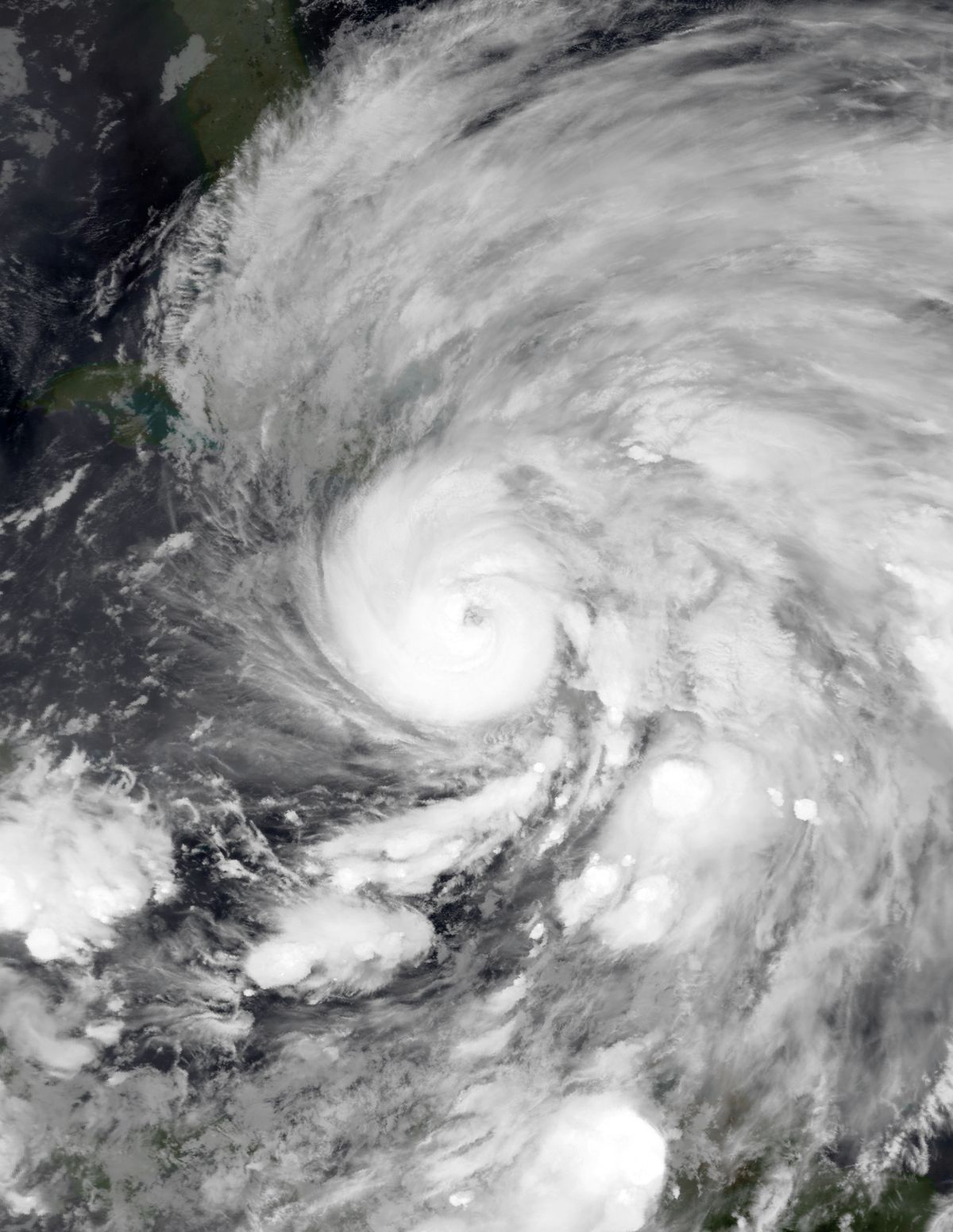
Hurricane Juan was a powerful and destructive Category 2 hurricane that struck Atlantic Canada in September 2003. It was the tenth named storm and sixth hurricane of the 2003 Atlantic hurricane season. The hurricane made landfall near Halifax, Nova Scotia, on September 29, causing widespread devastation across central Nova Scotia and Prince Edward Island. Juan resulted in eight fatalities and over CA $300 million in damage, leading to its name being retired from future use.
Meteorological history
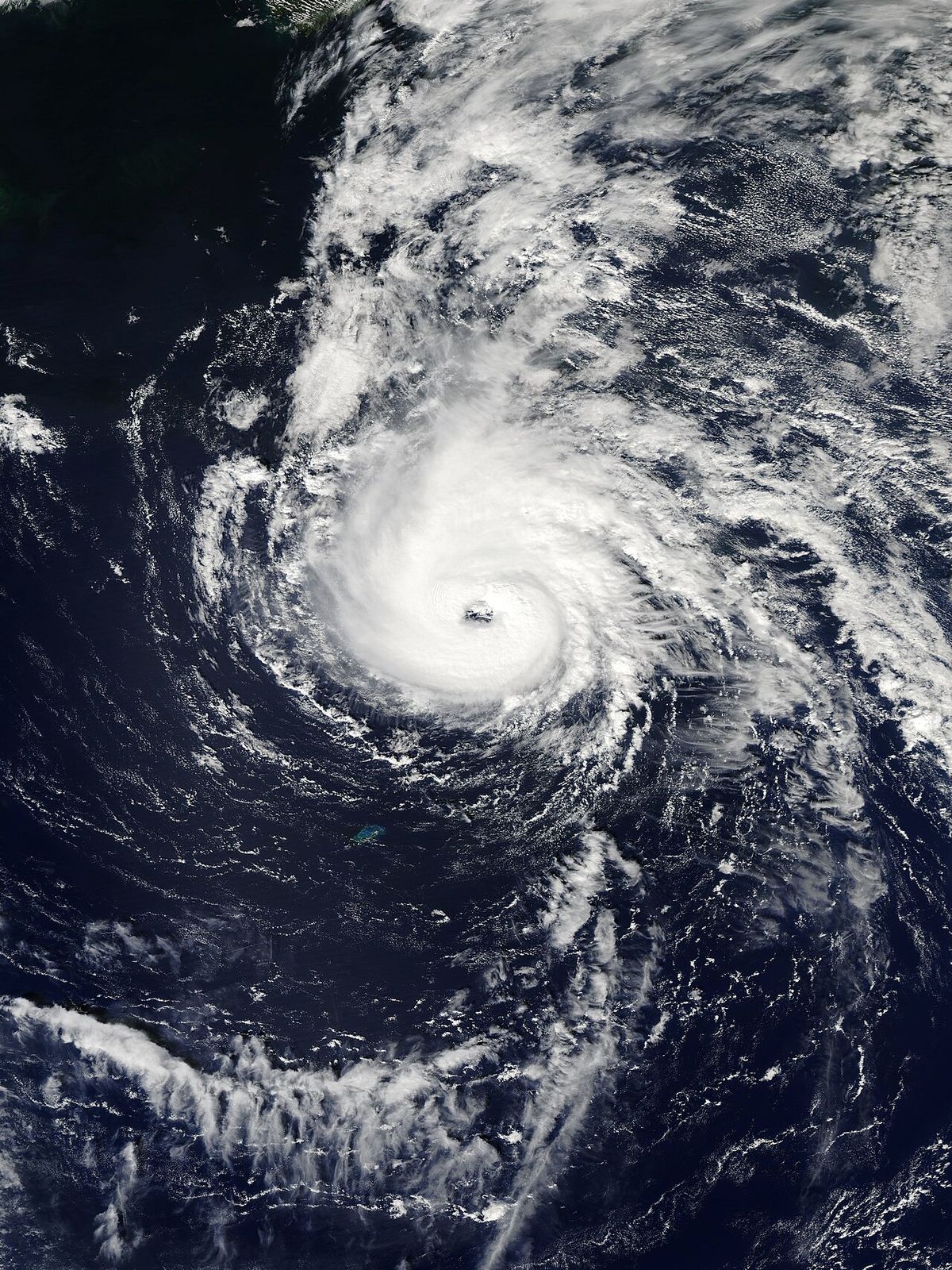
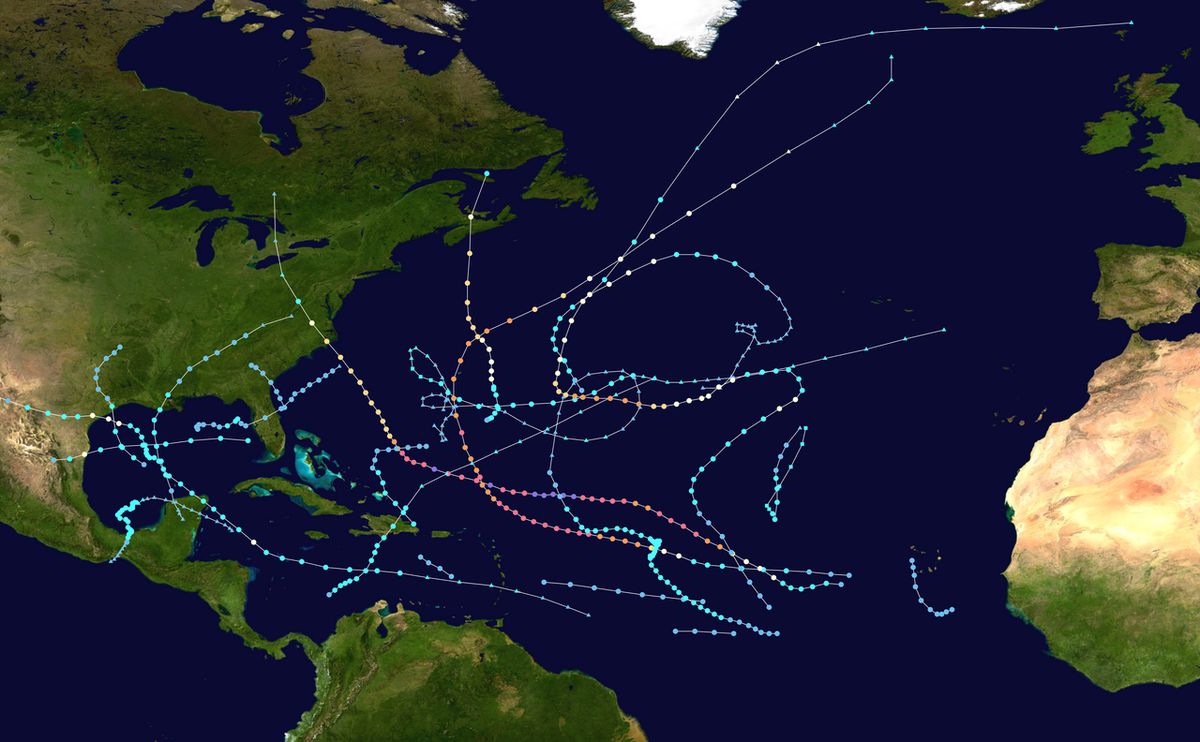
Hurricane Juan originated from a large tropical wave that moved off the coast of Africa on September 14, 2003. The system tracked westward and remained disorganized until September 23, when it began to organize about 450 miles south of Bermuda. The National Hurricane Center classified it as Tropical Depression Fifteen on September 24 while it was located approximately 345 miles southeast of Bermuda. The depression initially exhibited both tropical and subtropical characteristics but quickly organized, strengthening into Tropical Storm Juan by early September 25. Juan moved northwestward in response to a subtropical ridge to its east and continued to intensify. An eye feature developed on September 26, and later that day, while located 165 miles southeast of Bermuda, Juan attained hurricane status. The hurricane moved into an area of warm waters and light wind shear, allowing it to reach its peak intensity of 105 mph sustained winds on September 27. Juan remained at peak strength for over 24 hours as it turned and accelerated northward. The hurricane's eye became less distinct on September 28 as it weakened slightly, but its fast forward motion limited weakening over cooler waters before landfall. Hurricane Juan made landfall between Shad Bay and Prospect, near Halifax, Nova Scotia, early on September 29 with sustained winds of 100 mph. It rapidly crossed the Nova Scotia peninsula as a hurricane, weakened to a tropical storm over Prince Edward Island, and was absorbed by a large extratropical low over the northwestern Gulf of Saint Lawrence later that same day.
Preparations and warnings
Initial preparations began in Bermuda, where a tropical storm warning was issued on September 25, leading to the closure of The Causeway and cancellation of ferry services. The Canadian Hurricane Centre issued its first advisories for Atlantic Canada on September 26, broadly indicating the potential for wind and rain. As Juan approached, warnings on local media were updated on September 27, urging the public and emergency officials to prepare for significant wind damage, flooding, storm surges, and power outages. Early reports on September 28 suggested Juan might make landfall as a tropical storm or marginal Category 1 hurricane, leading to forecasts of weakening. By 6 p.m. ADT on September 28, however, additional warnings were issued as Juan was expected to hit as a strong Category 1 or weak Category 2 hurricane. No large-scale evacuations were ordered, but local evacuations for low-lying areas affected several hundred people. Utility workers from Nova Scotia Power and other regional companies were placed on standby in anticipation of widespread power outages, while most businesses in the affected areas were already closed due to it being a Sunday.
Impact on Nova Scotia
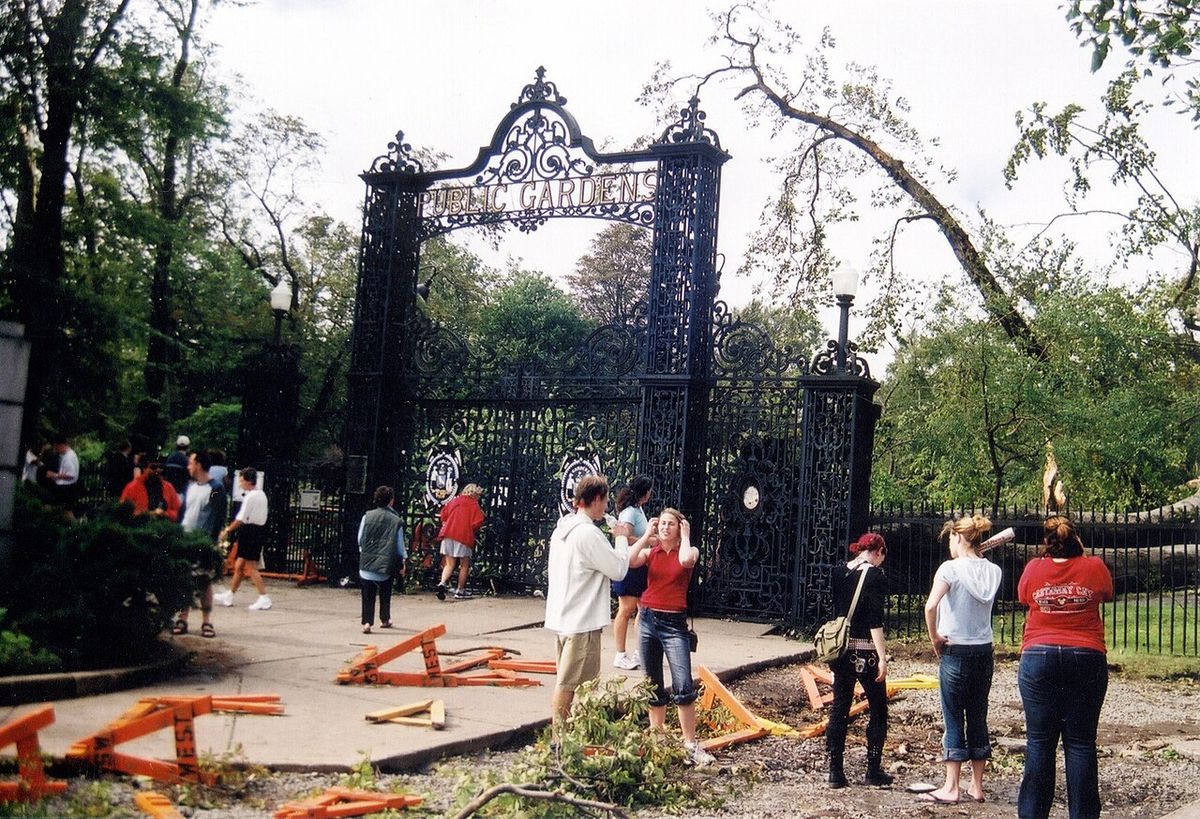
Hurricane Juan made landfall in Nova Scotia with maximum sustained winds of 100 mph, with the Halifax Harbour area bearing the brunt of the strongest winds and gusts. Unofficial estimates placed wind gusts as high as 145 mph, and wave-rider buoys off Halifax Harbour recorded waves exceeding 65 feet before snapping their moorings. The storm surge in Halifax Harbour reached 5 to 7 feet, the highest ever recorded there, causing significant coastal erosion, particularly around the Bedford Basin where residential properties and railway tracks were damaged. Rainfall was relatively light, with no reports greater than 51 millimetres, limiting inland flooding. The hurricane caused extensive structural and vegetation damage across the Halifax Regional Municipality, with an estimated 31% of residential homes suffering some damage and 27% having damage warranting an insurance claim. Downtown Halifax saw erosion-control boulders hurled from the harbour onto boardwalks and piers, while the Victoria General Hospital experienced roof and water damage, leading to evacuation. The storm set an all-time maximum wind gust record of 143 km/h at Halifax Stanfield International Airport, a record that still stands. Other notable wind measurements included a 2-minute sustained wind of 151 km/h at McNabs Island. The hurricane caused severe damage to shipping in Halifax Harbour, sinking the schooner Larinda and driving the ketch Mar ashore. Dozens of yachts were driven ashore, and wharves along the Halifax and Dartmouth waterfronts were heavily damaged. The storm's path also caused property damage and power outages in Truro, Colchester County, and western Pictou County, with millions of trees damaged across central Nova Scotia. Juan was responsible for six deaths in Nova Scotia, two directly from fallen trees and four indirectly, including three from a candle-induced house fire during a power outage.
Notable damage and records in Nova Scotia included the Halifax Stanfield International Airport recording an all-time maximum wind gust speed of 143 km/h during the storm, a record which still stands. The McNabs Island autostation recorded a 2-minute sustained wind of 151 km/h with gusts to 176 km/h. Wave-rider buoys off Halifax Harbour recorded waves in excess of 65 feet before snapping their moorings. Halifax Harbour experienced its highest ever recorded storm surge of 5 to 7 feet, causing significant erosion and damage to waterfront properties and infrastructure.
- An all-time record wind gust of 143 km/h at Halifax Stanfield International Airport.
- Storm surge of 5-7 ft, the highest ever recorded in Halifax Harbour.
- Sinking of the recreational schooner Larinda at the Maritime Museum of the Atlantic wharf.
- Extensive tree loss in Point Pleasant Park and the Public Gardens, leading to months-long closures.
- Widespread roof damage and destruction of weaker structures, particularly in the Halifax urban core.
- Damage to railway tracks along the Bedford Basin near Millview.
Impact on Prince Edward Island and other regions
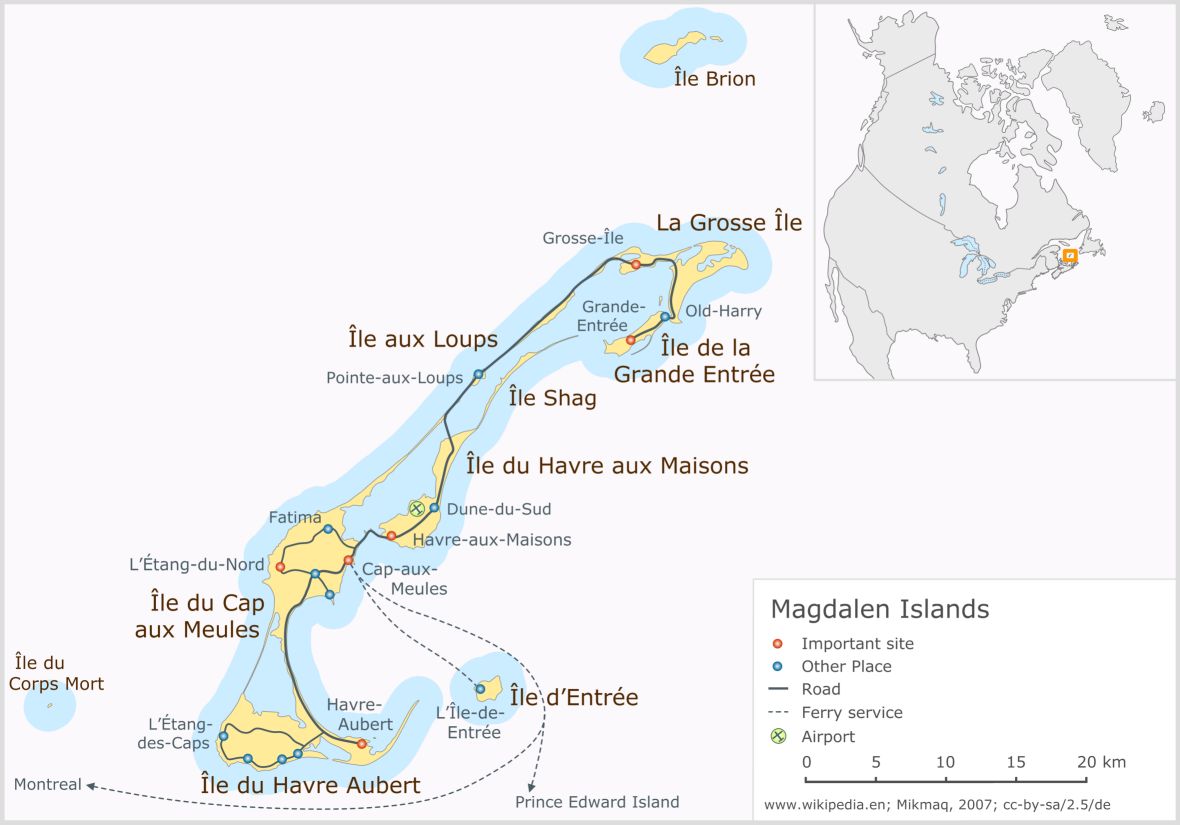
Hurricane Juan maintained Category 1 strength as it tracked across Nova Scotia and into the Northumberland Strait, weakening to a tropical storm as it moved over Prince Edward Island. Wind gusts of 86 mph were reported in Charlottetown and 67 mph in the Magdalen Islands in the Gulf of Saint Lawrence. Damage in Prince Edward Island was concentrated around Charlottetown, where the waterfront sustained heavy wave damage to pleasure craft and sea walls. Significant damage occurred to the older urban forest in Charlottetown's downtown core, and extensive tree damage was reported across the island. Structural damage affected weaker buildings such as barns and silos, and the hurricane left portions of the island without power. The storm's narrow path meant damage was quite localized, with little reported in New Brunswick or western Prince Edward Island. The provincial general election on September 29 was disrupted, though over 80% of voters still made it to polling stations. Two additional fatalities occurred in the Gulf of Saint Lawrence off Anticosti Island, Quebec, where fishermen from New Brunswick lost their lives.
Immediate aftermath and recovery
In the hours following the storm, a state of emergency was declared in Halifax Regional Municipality and parts of East Hants and Colchester County. The Government of Nova Scotia requested the deployment of 600 Canadian Forces personnel to assist with clean-up in the urban area and to help utility crews restore power. Utility workers from Nova Scotia Power, Maritime Electric, and NB Power worked intensively for almost three weeks, with Nova Scotia Power reporting the last affected customers had power restored by October 12. The devastated Point Pleasant Park remained closed for clean-up until reopening in June 2004, nine months after the storm, with almost 85% of its trees removed and a damaged shoreline. A revitalization and reforestation program for the park began in 2005. The Government of Nova Scotia pledged $10 million in relief money, and Prince Edward Island pledged $200,000 immediately after the hurricane. The federal government announced its own relief package, and Toronto Mayor Mel Lastman contributed $50,000 to replace damaged trees in Prince Edward Island.
Long-term effects and changes
Hurricane Juan served as a stark alert for residents, governments, utilities, and emergency management agencies throughout Atlantic Canada to improve preparations for devastating storms. This was especially pertinent given climatological data pointing to a possible increased frequency of major ocean storms. The 2003 season was particularly active for Canadian impacts, with hurricanes Fabian, Isabel, and Kate also affecting land or offshore areas. Preparations and planning initiated after Juan were first tested when Hurricane Ophelia brushed near Nova Scotia in early September 2005. The hurricane also prompted significant changes at the Canadian Hurricane Centre, which relocated from a vulnerable office building in Dartmouth, Nova Scotia, to a more secure location capable of withstanding hurricane damage. Beginning with the 2004 Atlantic hurricane season, the CHC improved its warning system by adopting standard hurricane and tropical storm watches and warnings instead of just high wind and heavy rainfall advisories, which had often been ignored by residents. The storm's legacy also influenced popular culture when a severe blizzard struck Nova Scotia and Prince Edward Island in February 2004. It was quickly nicknamed White Juan due to its paralyzing effects evoking memories of the recent hurricane.
Retirement of the name
Due to the extensive damage and loss of life caused by the hurricane, Environment Canada requested the retirement of the name Juan. In the spring of 2004, the World Meteorological Organization officially retired the name from the list of North Atlantic tropical cyclone names. This ensured the name Juan would never be used again for a hurricane in the North Atlantic basin. The name was replaced with Joaquin for the 2009 Atlantic hurricane season. The retirement was on account of the storm's significant destructiveness.
Notable Canadian tropical cyclones
Several other significant hurricanes have impacted Canada, providing points of comparison for Hurricane Juan's intensity and effects. In addition to Juan, three other storms from the 2003 Atlantic hurricane season, Fabian, Isabel and Kate, had a significant effect on land or offshore in Canada. Hurricane Juan has been described as the worst storm to hit Halifax since the 1893 San Roque hurricane. The following table lists some notable storms, their peak category at landfall or closest approach, their year, and primary Canadian impact area.
| Storm | Year | Peak Category | Primary Impact Area in Canada |
|---|---|---|---|
| Hurricane Juan | 2003 | Category 2 | Nova Scotia, Prince Edward Island |
| Hurricane Noel | 2007 | Category 1 | Nova Scotia, Newfoundland (similar approach to Juan) |
| Hurricane Igor | 2010 | Category 4 | Newfoundland |
| Hurricane Fiona | 2022 | Category 4 | Nova Scotia, Prince Edward Island, Newfoundland |
Questions about Hurricane Juan
When did Hurricane Juan hit Halifax?
Hurricane Juan made landfall near Halifax, Nova Scotia, in the early morning hours of Monday, September 29, 2003. The hurricane struck between the communities of Shad Bay and Prospect within the Halifax Regional Municipality. It arrived as a Category 2 hurricane with sustained winds of 100 mph, causing immediate and widespread damage across the region. The storm rapidly moved across the province, weakening as it travelled.
How much damage did Hurricane Juan cause?
Hurricane Juan caused over CA $300 million in damage across Atlantic Canada. The most severe damage was concentrated in central Nova Scotia, particularly in the Halifax Regional Municipality, and in parts of Prince Edward Island. Damage included widespread structural harm to homes and businesses, destruction of millions of trees, severe coastal erosion, and devastation to shipping and waterfront infrastructure. The cost encompassed both insured losses and public infrastructure repairs.
Why was the name Juan retired?
The name Juan was retired due to the hurricane's significant destructiveness and loss of life in Canada. Following a request from Environment Canada, the World Meteorological Organization officially retired the name in the spring of 2004. Retirement means the name will never again be used for a North Atlantic tropical cyclone. It was replaced with the name Joaquin, which first appeared on the list for the 2009 Atlantic hurricane season.
How did Hurricane Juan change emergency preparedness in Canada?
Hurricane Juan led to major improvements in emergency preparedness and meteorological services in Atlantic Canada. It highlighted the need for better planning for severe storms, prompting utilities and governments to enhance response protocols. The Canadian Hurricane Centre relocated to a more secure facility and, beginning in 2004, adopted standard hurricane and tropical storm watches and warnings to improve public heeding of advisories. The storm also demonstrated the importance of mutual aid agreements between utility companies for faster power restoration.
What was White Juan?
White Juan was the nickname for a hurricane strength nor'easter blizzard that struck Atlantic Canada in February 2004. It earned this nickname due to its similar location and power to Hurricane Juan, which had caused extensive damage a few months earlier in September 2003. The blizzard's paralyzing effects from massive snowfall evoked the recent hurricane's devastation. This naming illustrates the significant impact both storms had on the region. The blizzard served as a further test for the improved emergency preparations initiated after Hurricane Juan.
How many people died because of Hurricane Juan?
Hurricane Juan caused eight fatalities in total. In Nova Scotia, there were six deaths with two direct fatalities from fallen trees and four indirect deaths. The indirect deaths included three from a house fire started by candles during a power outage and one during relief work after the storm. The other two deaths occurred in the Gulf of Saint Lawrence off Anticosti Island, Quebec, where two fishermen from New Brunswick lost their lives. These casualties contributed to the storm's designation as a significant and destructive event in Canadian history.
Sources and further reading
- Hurricane Juan (Wikipedia)
- Hurricane Juan was one of the East Coast's most ... (theweathernetwork.com)
- Impact of Hurricane Juan on woodlands and parks ... (novascotia.ca)
- Looking back at Hurricane Juan, 20 years after deadly ... (cbc.ca)
- Hurricane Juan (prospectvillage.ca)
Checked by the Your Space Hamilton desk. Last updated 2026-10-23.