Mountain pine beetle
The mountain pine beetle (Dendroctonus ponderosae) is a native bark beetle species that has caused one of the most extensive forest insect epidemics in North American history. Outbreaks, supercharged by climate change and forest management practices, have killed billions of pine trees across western Canada and the United States, transforming vast landscapes. The beetle's impact extends beyond forestry, influencing wildfire risk, water cycles, and carbon storage in Canada's boreal and montane ecosystems. Managing this pest remains a critical and complex challenge for Canadian forest health and resource industries.
Biology and life cycle
The mountain pine beetle is a small insect, roughly the size of a grain of rice, with a hard black exoskeleton. It develops through four life stages: egg, larva, pupa, and adult, with nearly its entire life spent beneath the bark of host pine trees. In warm conditions at lower elevations, the beetle can complete its life cycle in a single year, while cooler, high-elevation climates may necessitate a two-year cycle. The infestation process begins when female beetles initiate an attack on a tree, chewing into the inner bark and phloem and releasing pheromones that attract more beetles to mass-attack the same tree. This coordinated assault, combined with the introduction of blue stain fungus, overwhelms the tree's natural defenses. Natural predators include certain bird species, particularly woodpeckers, and various other insects. Except for a few days in summer when adults emerge to fly to new host trees, all life stages are spent under the bark, making direct observation difficult without peeling back tree bark.
The epidemic outbreak and causes
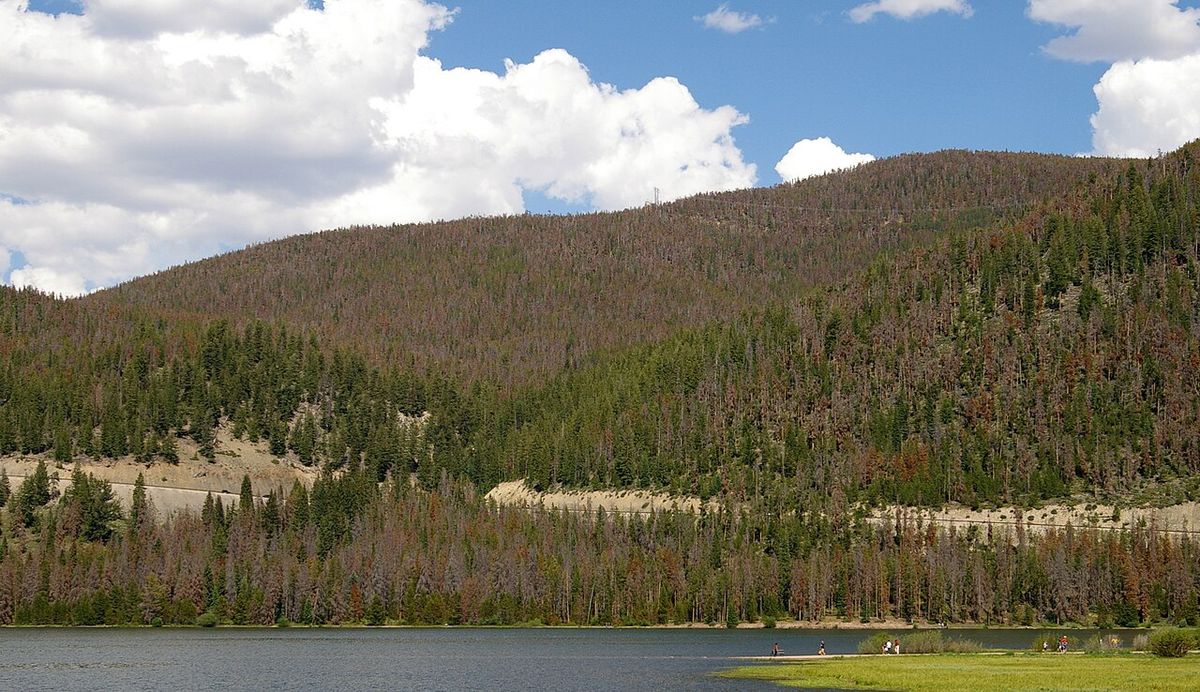
The outbreak in British Columbia alone affected more than 160,000 square kilometres of forest, with a peak in 2009 impacting over 16,000 square kilometres in that single year. This unprecedented scale was driven by a confluence of factors, including vast areas of mature lodgepole pine, a century of fire suppression, and monocultural replanting which created dense, uniform forests. Crucially, a series of unusually hot, dry summers and mild winters from 2004 to 2007 created ideal conditions for beetle survival and population explosion. The epidemic crossed the Continental Divide into Alberta in 2007, carried by unusually strong winds, and threatened to spread into the boreal forest. By November 2008, the infestation had killed about half of British Columbia's lodgepole pines, an area of 135,000 square kilometres, which was an order of magnitude larger than any previously recorded outbreak.
Outbreak dynamics are characterized by a sudden switch from an endemic to an epidemic state when beetle populations cross a critical eruption threshold. This threshold is estimated at roughly 650 female adults per tree, or about one to two successfully mass-attacked trees per hectare, a level difficult to detect operationally before exponential growth begins. The rapid, widespread change has been described as the "ecology of surprise," making outbreaks exceptionally challenging to predict and control in their early stages. This sudden switch from patterned spotting on stressed trees to patternless region-wide outbreak is considered characteristic of "cross-scale" eruption dynamics, an ecological concept first championed by C.S. Holling in 1973. The crossing of this unstable threshold can occur either from local congregation of endemic populations or from large-scale immigration of beetles from other areas, and the suddenness of this large-scale change is what makes mountain pine beetle outbreaks so difficult to control.
Impact of climate change
Climate change is a primary driver exacerbating mountain pine beetle outbreaks. Warmer temperatures have expanded the beetle's viable habitat into higher elevations and northern latitudes that were historically too cold for its survival, such as the higher elevation Rocky Mountains and Cascades. Milder winters fail to kill off beetle populations through extreme cold, with winter lows of -40 degrees Celsius needed to significantly reduce populations, while warmer summers accelerate their life cycle, enabling a generation to develop in one year instead of two. Drought conditions associated with a warming climate also weaken pine trees by reducing their ability to produce sap, which is their main defense mechanism against beetles as it can drown beetles and their eggs. The blue stain fungus carried by the beetles further blocks water and nutrient transport within the tree. This combination has allowed the beetle to devastate whitebark pine forests in the Rockies and invade the fragile boreal forests of Alberta. Notably, while warming worsens outbreaks in northern British Columbia, it is slowly making climates in Washington and Oregon too warm for the beetle, demonstrating regional variability in climate effects.
The relationship between the host forest, the beetle agent, and the weather environment has been fundamentally altered. In British Columbia, the lack of severe winters since 1998 has been cited as a key reason the infestation expanded unhindered. The United States Forest Service predicted that between 2011 and 2013, virtually all five million acres of Colorado's lodgepole pine trees over five inches in diameter would be lost. Researchers note that mountain pine beetles have higher reproductive success in lodgepole pine trees growing in areas where the trees have not experienced frequent beetle epidemics, which includes much of the current outbreak area, meaning these trees lack evolved defensive adaptations. Temperature is a key factor determining insect development and population success, and the changing weather patterns worldwide have a direct effect on the biology and population ecology of eruptive insects like the mountain pine beetle.
Effects on trees and forest ecosystems
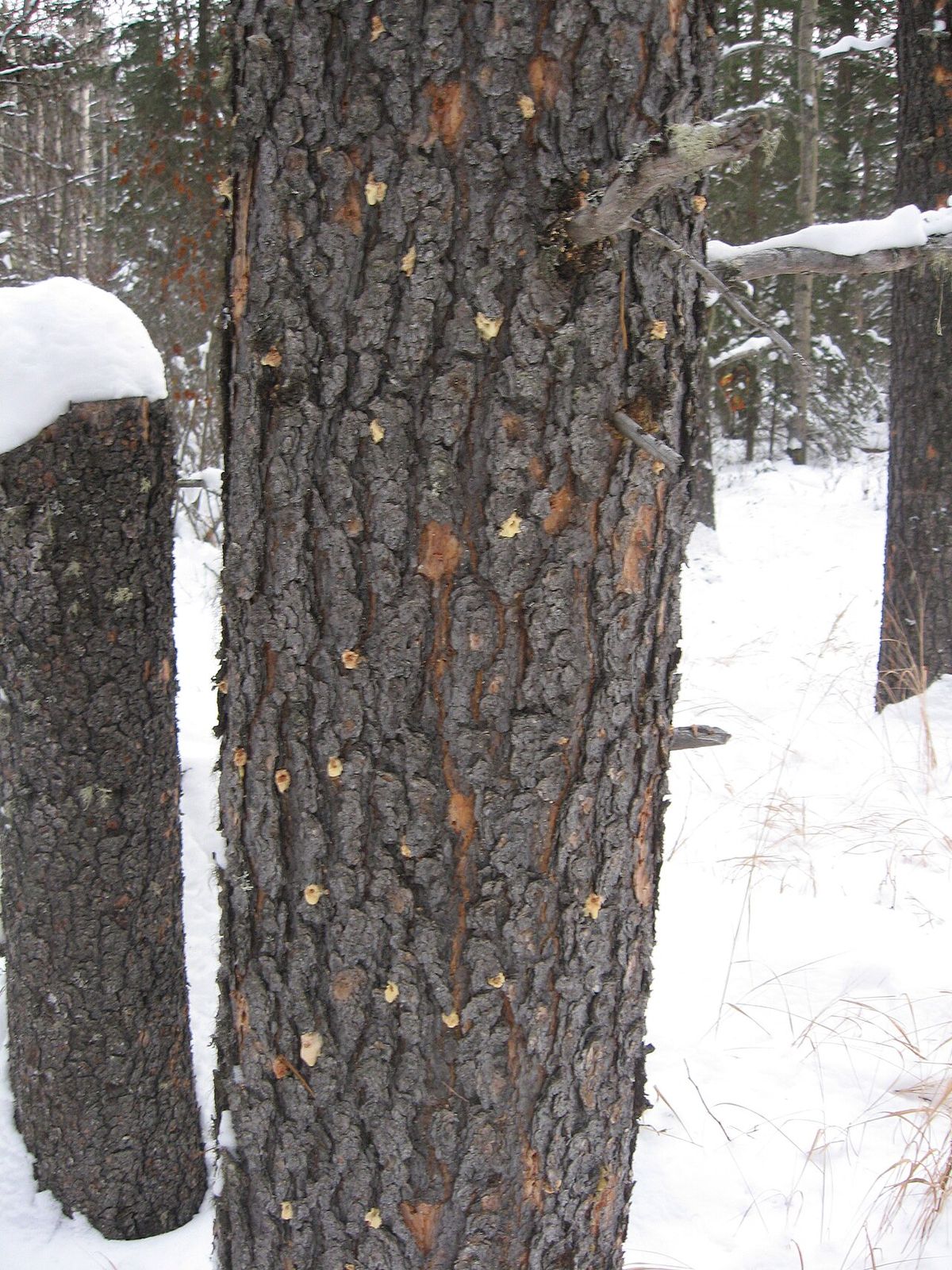
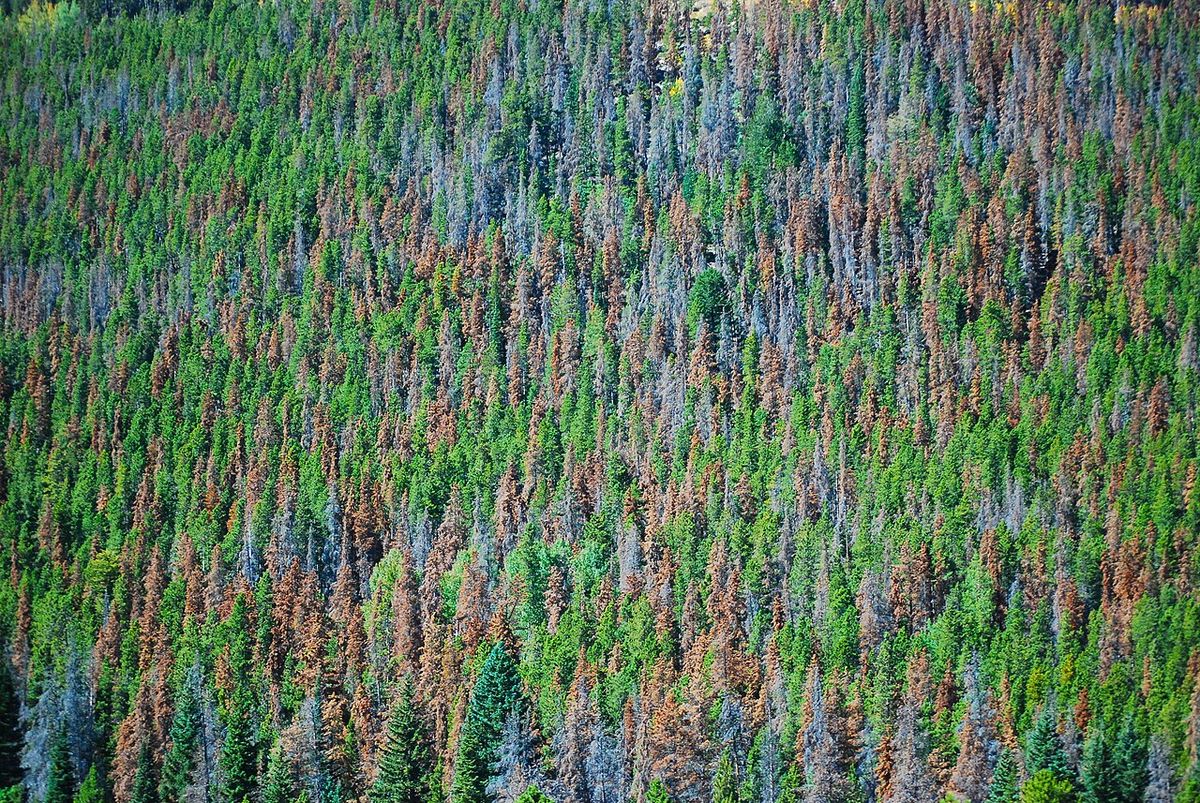
Successful beetle attacks kill host trees within weeks through the combined effects of larval feeding and fungal colonization, which girdles the tree and cuts off water and nutrient flow. The first visible sign is often "pitch tubes," popcorn-shaped masses of resin where beetles entered. Within a year, the tree's needles turn red, indicating it is dead or dying, and within three to four years the grey, defoliated snags remain. The beetle affects a range of pine species including ponderosa, whitebark, lodgepole, Scots, jack, limber, Rocky Mountain bristlecone, and Great Basin bristlecone pine trees. The epidemic has had cascading effects on forest ecosystems. The massive die-off of mature pines, ten times larger than previous outbreaks, has significantly altered fuel loads, increasing the potential for high-severity wildfires, as noted in British Columbia's 2003 Firestorm Provincial Review which prompted fuel management activities in beetle areas.
Researchers from the Canadian Forest Service have studied the relationship between the carbon cycle and the outbreak, concluding that by 2020, the pine beetle outbreak would have released 270 megatonnes of carbon dioxide into the atmosphere from Canadian forests. Some scientists believe this represents a "tipping point" where Western Forests become a net source of carbon rather than a carbon sink, though others argue new growth will eventually remove more carbon dioxide. A 2016 study from the Pacific Institute for Climate Solutions suggested rising carbon dioxide levels might cancel out the pine beetle impact in British Columbia by 2020 through a fertilization effect, and Werner Kurz of the Canadian Forest Service confirmed BC forests had returned to being a carbon sink by 2016. Hydrologists from the University of Colorado concluded that dead forests accumulate more snowpack due to thinner canopies and decreased sublimation, but experience faster snowmelt from more sunlight and lower albedo from needle litter, likely leading to more available water in affected watersheds.
Management and control techniques
Managing mountain pine beetle infestations involves a range of techniques applied at different scales, with the best method being searching out, removing, and destroying the brood in infested trees to slow the spread. For landscape-level control, harvesting at the leading edges of "green attack" (newly infested trees where needles are still green) is common. Smaller-scale or targeted methods include sanitation harvesting (removing single infested trees), snip and skid (removing scattered groups over a large area), and controlled mosaic burning to reduce local beetle populations and fire hazard. The fall and burn technique, involving cutting and burning infested trees in winter to reduce fire risk, was a primary method used in Alberta in 2015 in an effort to contain the outbreak's eastward spread toward jack pine forests in Saskatchewan and eastern Canada. For protecting individual high-value trees, preventive spraying with pesticides like carbaryl, permethrin, or bifenthrin is the most effective method, though these chemicals carry various environmental and health risks. Carbaryl is considered by the EPA to likely be carcinogenic to humans and is toxic to birds and aquatic life.
Research into biopesticides has shown promise, with tests on chitosan eliciting a 40 percent increase in pine resin production in loblolly pines to help trees defend themselves. The US Forest Service applied one milliliter of chitosan per 10 gallons of water within the drip ring of trees three times from May through September in 2008, finding it could destroy 37 percent of pine beetle eggs. Dr. Jim Linden, a microbiologist at Colorado State University, stated chitosan increased resin pitch-outs to push beetles out of trees. Pheromone baiting, which lures beetles into trees baited with synthetic hormone, is another technique to concentrate beetles for easier destruction. By 2022, aggressive management and natural factors contributed to a 94 percent drop in Alberta's beetle population from its 2019 peak according to Alberta Forestry.
Key management techniques employed include harvesting at the leading edges of green attack. Pheromone baiting lures beetles into trees baited with a synthetic hormone that mimics the scent of a female beetle. Sanitation harvesting involves removing single infested trees to control the spread of beetle populations to other areas. Snip and skid is the removal of groups of infested trees scattered over a large area. Controlled, or mosaic, burning is used to reduce high beetle infestations in an area or to help reduce the fire hazard.
- Pheromone baiting to concentrate beetles for destruction.
- Sanitation harvesting of single infested trees.
- Snip and skid for scattered infestations over large areas.
- Controlled, or mosaic, burning to reduce infestations and fire hazard.
- Fall and burn, primarily used in winter to prevent fire risk.
- Preventive pesticide application (carbaryl, permethrin, bifenthrin) for high-value trees.
- Biopesticide research and application (e.g., chitosan).
- Harvesting at leading edges of green attack.
Geographic spread and forest industry impact
The mountain pine beetle epidemic has caused extensive economic and ecological impacts across western North America, devastating timber supplies and forcing changes in forest management. In British Columbia, the outbreak affected an area greater than 40 million acres, devastating lodgepole pine stands critical to the forestry sector and prompting large-scale salvage logging operations. The infestation spread from British Columbia into Alberta in 2007, marking a significant eastward expansion into the boreal forest where jack pine, a close relative of lodgepole pine, showed vulnerability. In the United States, a major epidemic began in Colorado's Rocky Mountain National Park in 1996 and later affected Wyoming and Montana starting in 1999, with the U.S. Forest Service predicting near-total loss of large lodgepole pines in Colorado by 2013. The table below outlines the scale and timing of the outbreak in key affected regions.
| Region | Outbreak Start | Key Impact and Scale |
|---|---|---|
| Colorado (Rocky Mountain National Park) | 1996 | Millions of acres of ponderosa and lodgepole pine destroyed. Prediction of loss of all large lodgepole pines by 2013. |
| Alberta | Infestation arrived 2007 | Spread to boreal forest. Population dropped 94% from 2019 peak by 2022. Fall and burn used in 2015 to limit eastward spread. |
| Wyoming & Montana | 1999 | Epidemic at lower rates than in Colorado. Contributed to increased severity of forest fires in Montana. |
The scale of tree mortality has forced a massive salvage logging operation, reshaped forestry economies, and prompted significant government expenditure on management and research. A study for the U.S. Environmental Protection Agency by the Harvard School of Engineering and Applied Science projected that portions of Montana would experience a 200 percent increase in area burned by wildland fires and an 80 percent increase in air pollution from those fires due in part to beetle-killed forests. The beetle's movement into Alberta raised concerns about its potential spread through jack pine forests across the boreal shield, possibly as far east as Nova Scotia, which would represent a major biogeographic shift. The combination of warmer weather, beetle attack, and past management practices has led to a substantial increase in the severity of forest fires in states like Montana according to research.
Cultural response and ongoing research
The mountain pine beetle's dramatic environmental impact has inspired cultural responses, most notably the annual Burning Beetle celebration in Custer, South Dakota, where a giant beetle effigy is set alight each January as an artistic response to environmental change in the Black Hills. Scientifically, the beetle's transcriptome and genome were sequenced, making it the second beetle to have its genetic code fully mapped, aiding in deeper biological understanding and potential control strategies. Ongoing research continues to investigate the complex interactions between climate, forest management, and beetle population dynamics, including the concept of "slow-fast" eruption dynamics consistent with catastrophe theory. Studies focus on the long-term carbon cycle implications of widespread tree death, the altered hydrology of beetle-killed watersheds, and the development of more effective and environmentally sensitive management tools. The epidemic serves as a stark case study of how climate change can disrupt natural balances and amplify biological threats to ecosystems, with scientists monitoring whether forests will pass a permanent tipping point or recover as new growth establishes.
Questions about Mountain pine beetle
What is the mountain pine beetle and where is it found?
The mountain pine beetle (Dendroctonus ponderosae) is a small bark beetle native to the forests of western North America, from Mexico to central British Columbia. It is about 5 millimetres long, with a hard black exoskeleton. In Canada, its primary hosts are lodgepole, ponderosa, whitebark, jack, and Scots pine trees. Historically part of a natural forest cycle by attacking old or weakened trees, its populations have exploded into a continent-wide epidemic due to climate change and forest conditions.
How does the mountain pine beetle kill a tree?
Female beetles initiate an attack by boring through the bark and releasing pheromones to attract more beetles for a mass attack. They introduce blue stain fungus into the tree's sapwood, which blocks the flow of water and nutrients and prevents the tree from repelling beetles with pitch flow. The combined action of larval feeding and fungal growth girdles the tree, killing it within weeks. Visible signs include "pitch tubes" of resin at entry points and, within a year, the tree's needles turning red, with trees appearing grey within three to four years.
Why has the mountain pine beetle outbreak been so severe?
The severity stems from several linked conditions: vast areas of mature, susceptible pine trees from monocultural replanting. A century of fire suppression increasing forest density. And climate change. Warmer summers accelerate the beetle's life cycle by 100 percent, while milder winters since 1998 have failed to provide the -40 degree cold spells that kill beetles. Droughts weaken trees' sap defenses. These factors allowed the beetle to expand into new areas like high-elevation whitebark pine forests and reach populations crossing the unstable eruption threshold of about 650 females per tree.
How is the mountain pine beetle managed or controlled?
Management strategies vary by scale. Large-scale techniques include harvesting at infestation fronts and "fall and burn" operations to destroy infested trees in winter. For smaller areas, methods include sanitation harvesting, snip and skid, controlled burning, and pheromone baiting. Individual high-value trees can be protected with preventive pesticides like carbaryl, permethrin, or bifenthrin. Research into biopesticides like chitosan, which boosts tree resin production by 40 percent, has shown promise. Early detection is critical but challenging as the eruption threshold is below easy detectability.
What are the broader environmental impacts of the beetle kill?
The massive die-off increases forest fire hazard by creating extensive dead fuel, with studies projecting a 200 percent increase in area burned in parts of Montana. It disrupts the carbon cycle, releasing an estimated 270 megatonnes of CO2 by 2020, though CO2 fertilization may help regrowth act as a sink. Hydrologists note that beetle-killed forests accumulate more snow but experience faster melt, altering water runoff patterns and likely increasing water availability. The epidemic transforms ecosystems, affecting wildlife habitat, forestry economies, and landscape resilience across millions of acres.
What areas in Canada have been most affected?
British Columbia has been the most severely affected area in Canada. The outbreak peaked in 2009 with over 16,000 square kilometres affected in that single year. The infestation expanded due to a lack of severe winters, which historically kept beetle populations contained. In 2007, unusually strong winds carried the beetles over the Continental Divide into Alberta, threatening the boreal forest and raising concerns about further eastward spread to Saskatchewan and jack pine forests as far east as Nova Scotia. By 2022, the beetle population in Alberta had dropped by 94 percent from its 2019 peak.
Sources and further reading
- Mountain pine beetle (Wikipedia)
- Slowing the march of the mountain pine beetle (natural-resources.canada.ca)
- Impacts of Mountain Pine Beetle Attack on Hydrology and ... (friresearch.ca)
- Extreme Weather Conditions Cause Pine Bark Beetle ... (arborjet.com)
Checked by the Your Space Hamilton desk. Last updated 2026-10-23.