Hurricane Elsa
Hurricane Elsa was a destructive tropical cyclone that formed during the 2021 Atlantic hurricane season. It was notable for being the earliest-forming fifth named storm on record in the Atlantic Ocean, and it became the season's first hurricane. The storm's path from the central tropical Atlantic through the Caribbean and into the United States and Atlantic Canada caused significant damage, with total U.S. losses estimated at $1.2 billion and a death toll of 13. For Canadians, Elsa's post-tropical remnants brought high rainfall and numerous power outages to Atlantic Canada, highlighting the far-reaching impacts of tropical systems.
Meteorological History
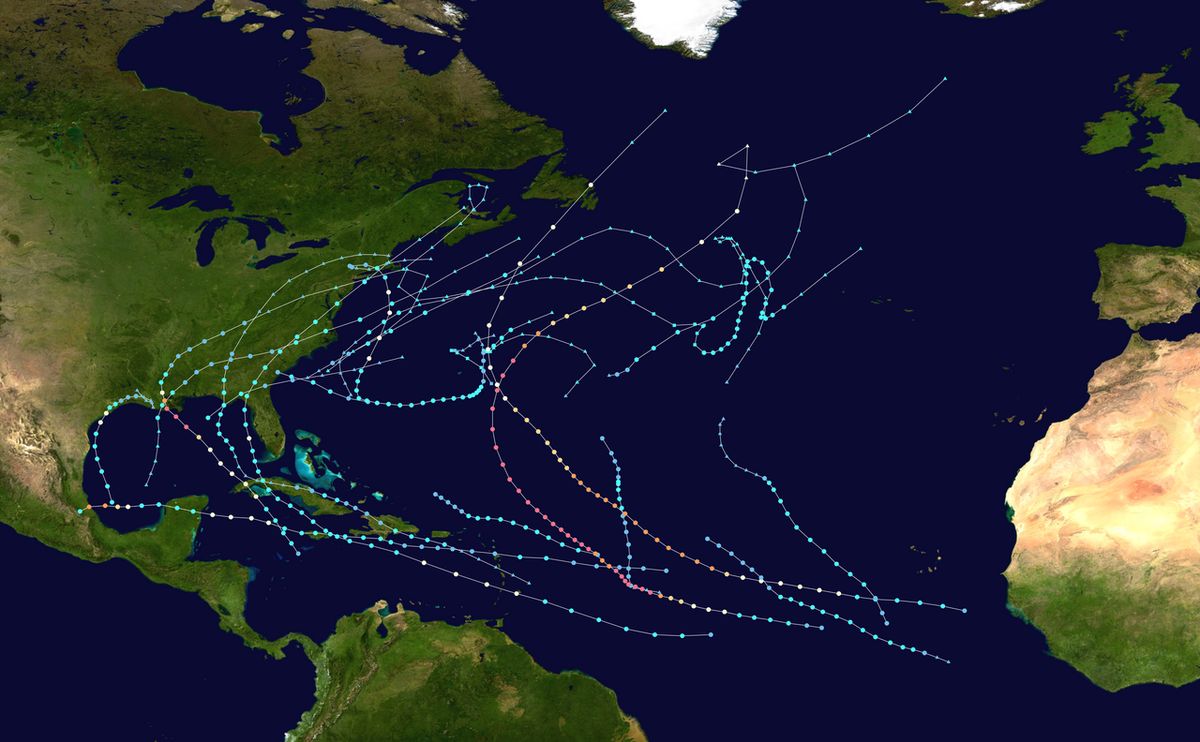
Hurricane Elsa originated from a tropical wave that moved off the west coast of Africa on June 27, 2021. The system organized into a tropical depression by 18:00 UTC on June 30, located about 1,150 miles east-southeast of Barbados. It strengthened into Tropical Storm Elsa just six hours later, setting a record as the earliest fifth-named Atlantic storm, surpassing Tropical Storm Edouard of 2020 by five days. The storm moved swiftly westward at speeds near 30 mph, steered by a strong subtropical ridge to its north. Elsa underwent rapid intensification, becoming a hurricane around 12:00 UTC on July 2 as its centre moved just south of Barbados. It reached its peak intensity six hours later with maximum sustained winds of 85 mph and a minimum central pressure of 991 mbar, making it the strongest July hurricane in the eastern Caribbean since Emily in 2005.
The hurricane weakened back to a tropical storm on July 3 as it passed south of the Dominican Republic and near Jamaica. Its forward speed decreased as it approached Cuba, where it made landfall on July 5 in Cienaga de Zapata National Park with winds of about 65 mph. Emerging into the Florida Straits on July 6, Elsa briefly regained hurricane status early on July 7 west of Tampa, Florida, before weakening again. It made its final U.S. landfall at 14:30 UTC that day in Taylor County, Florida, with winds of 65 mph. Accelerating northeastward, the storm's centre moved over the Atlantic off New Jersey on July 9. Elsa became a post-tropical cyclone at 18:00 UTC that day over southeastern New England. Its remnant low accelerated northeastward, dissipating over Atlantic Canada before 12:00 UTC on July 10.
Preparations and Warnings
Extensive preparations were undertaken across the Caribbean and the southeastern United States as Elsa approached. The National Hurricane Center designated the system as Potential Tropical Cyclone Five on June 30, triggering a series of watches and warnings. In the Lesser Antilles, tropical storm watches were issued for Barbados, Martinique, St. Lucia, and St. Vincent and the Grenadines, which were later upgraded to warnings. Barbados implemented a lockdown, postponed national exams, and opened shelters for 54 individuals. On St. Vincent, authorities warned of potential lahars from the ongoing volcanic eruption, closed the international airport, and prepared 94 shelters.
In the Greater Antilles, warnings escalated as Elsa neared. Haiti, already in crisis following the assassination of its president, issued hurricane warnings and urged coastal evacuations. Jamaica and Cuba were placed under hurricane watches and warnings. In the United States, Florida Governor Ron DeSantis declared a state of emergency for 15 counties on July 2. The approaching storm forced the suspension of search operations at the Surfside condo collapse site, and the remaining structure was demolished on July 4. President Joe Biden approved an emergency declaration, and mandatory evacuations were ordered in Monroe and Indian River counties. Georgia declared a state of emergency for 92 counties, and flash flood watches extended from the Carolinas to Maine.
- June 30: Potential Tropical Cyclone Five designated. Watches issued for Lesser Antilles.
- July 1: Tropical storm warnings issued for Barbados, Martinique, and St. Lucia.
- July 2: Hurricane warning issued for Jamaica and parts of Haiti. Florida state of emergency declared.
- July 3: Tropical storm watch issued for Florida Keys.
- July 4: Tropical storm warning extended in Florida. U.S. federal emergency approved.
- July 5: First tropical storm watches issued for Florida's Big Bend and Apalachee Bay.
Colombian authorities also issued warnings for heavy rainfall and high waves along the Caribbean coast on July 2. Across the affected regions, officials urged residents to secure property, distributed sandbags, and opened storm shelters in anticipation of Elsa's impacts. Sandbags were given out at several locations in Florida, and shelters opened in at least four counties around the Tampa Bay area on the morning of July 6. Tampa International Airport temporarily suspended operations on July 6 due to the storm, reopening the next morning.
Impact in the Caribbean
The Caribbean bore the initial brunt of Hurricane Elsa, with significant damage reported across several islands. In Barbados, sustained winds of 74 mph were recorded, prompting the operational upgrade to hurricane status. The storm caused extensive damage, with more than 1,300 homes affected, including 62 completely destroyed. The entire island lost electricity, 24 utility poles were knocked down, and 74 trees were uprooted. Rainfall totals reached up to 8 inches, causing flash flooding. Elsa was the first hurricane to impact Barbados since Hurricane Janet in 1955. One death was reported in Martinique, and two fatalities occurred in the Dominican Republic.
Elsa's passage threatened St. Vincent during the 2021 eruption of La Soufrière, raising concerns about flash floods and lahars. While specific damage totals for other islands are not fully detailed in the preliminary reports, the storm's swift movement and hurricane-force winds caused widespread disruption. In Cuba, the main impacts were flash flooding and mudslides following Elsa's landfall on July 5. The storm's trajectory through the Caribbean Sea was notably fast, a rare characteristic for a system in late June and early July. The combined effects of wind, rain, and storm surge across the region contributed to the overall death toll of 13 associated with Elsa, with nine of those fatalities occurring in the Florida Straits area. Authorities in Haiti reported that the whole country was threatened, and the Civil Protection Agency worked to send supplies to the southern region amid gang violence and displacement. The storm's impacts in the Lesser Antilles included downed trees, damaged roofs, and widespread power outages across multiple islands.
Impact in the United States
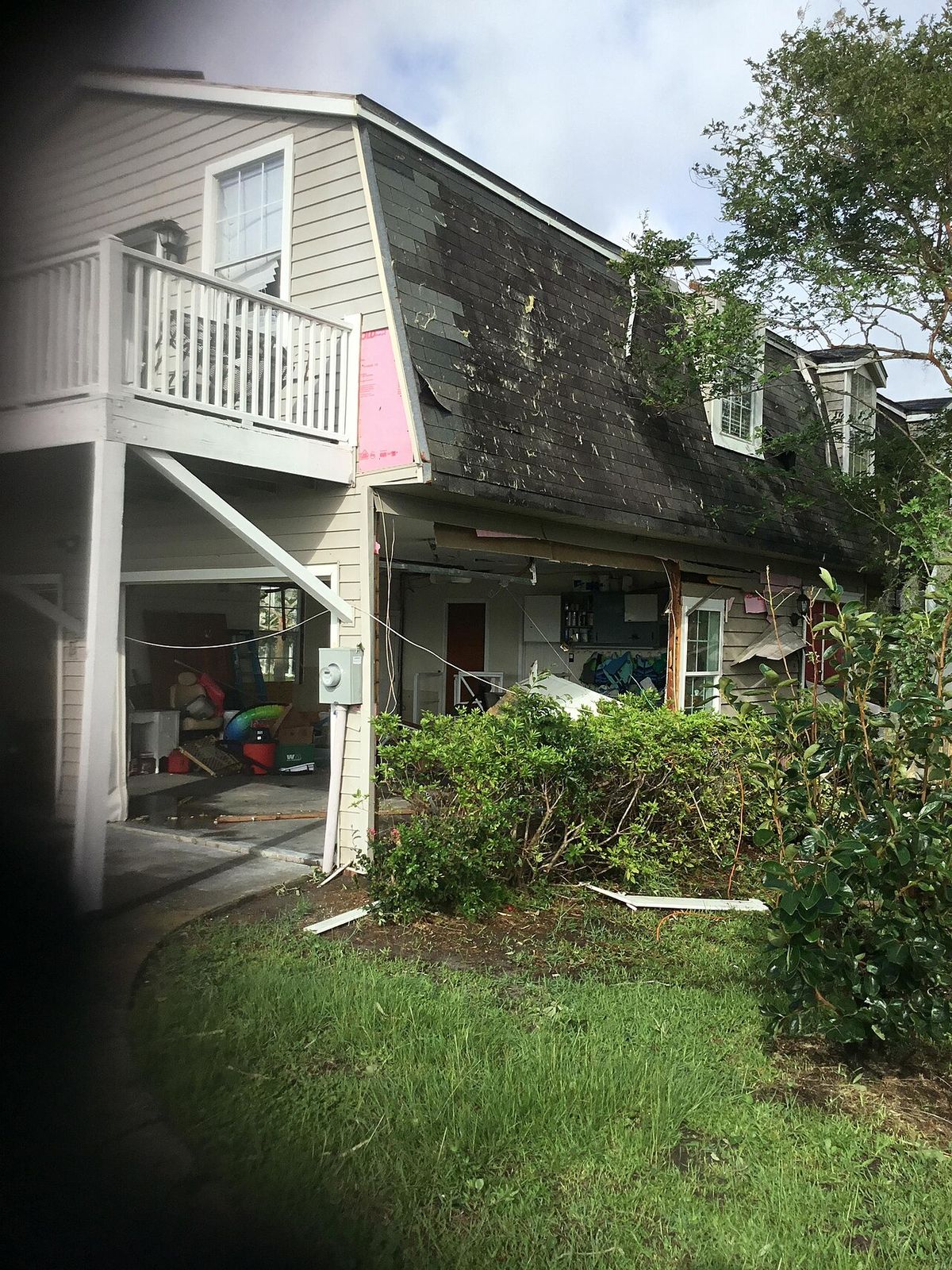
Elsa caused widespread damage across the eastern United States, with the National Hurricane Center estimating total damages at $1.2 billion. In Florida, the storm made landfall in Taylor County on July 7 with winds of about 65 mph. The most significant local impacts were storm surge and flooding rains in the Steinhatchee and Suwannee River basins. Wind gusts approached 70 mph in Key West as the storm passed nearby. The storm's bands stretched across the entire state, producing widespread rainfall of 3 to 5 inches, with localized totals up to 8 inches. The event forced the temporary closure of Tampa International Airport and disrupted recovery efforts at the Surfside building collapse.
As Elsa accelerated northeast, it brought flooding rains and strong winds to a broad swath of the Eastern Seaboard. Over 50 million people were under flash flood watches from the Carolinas to Maine, including major cities like Baltimore, Philadelphia, New York, and Boston. The storm caused considerable urban flooding in the Northeast. After becoming post-tropical, the system continued to produce impactful weather, with forecasts of 1 to 3 inches of rainfall for New England accompanied by scattered thunderstorms. The storm's ability to maintain intensity over land was partly attributed to the brown ocean effect, where saturated soils provide additional energy. Several events, government offices, and schools were cancelled or closed in advance of the storm, and the National Park Service closed the De Soto National Memorial on July 5. The NHC warned of considerable urban flooding for the Northeast as the storm moved through.
| Region | Key Impact |
|---|---|
| Florida | Landfall in Taylor County, storm surge, flooding rains |
| Florida Keys | Wind gusts near 70 mph in Key West |
| Southeastern U.S. | Widespread rainfall of 3-5 inches |
| Northeastern U.S. | Considerable urban flooding, flash flood watches |
| Eastern Seaboard | Over 50 million under flood watches |
The storm's impacts were felt from the Gulf Coast to New England, demonstrating the extensive reach of tropical systems even after they weaken. The preliminary reports highlight the variety of hazards, from wind and surge in Florida to inland flooding hundreds of miles away. Up to 1 to 3 inches of rainfall was forecast for New England starting around 1 PM EDT and continuing until sunset on July 9. The storm also affected portions of southern Georgia before racing up the eastern seaboard.
Impact in Canada
The post-tropical remnant of Hurricane Elsa moved into Atlantic Canada on July 9 and 10, 2021. Although weakened, the system delivered significant rainfall and caused numerous power outages across the region. The dissipation of the storm over Atlantic Canada marked the end of its long track from the tropical Atlantic. The event served as a reminder that the remnants of tropical cyclones can still deliver substantial weather impacts to Canadian provinces, particularly in the Maritimes, during the summer and early autumn months. Canadian meteorologists monitor such systems closely as they transition from tropical to post-tropical, as they can retain much of their moisture and wind energy.
The passage of Elsa followed a classic track for storms that affect Atlantic Canada after impacting the U.S. Northeast. While not as destructive as some fully tropical systems that have reached Canada, Elsa's visit highlighted the interconnected nature of weather systems across North America and the importance of preparedness even for storms that originate far to the south. The storm's remnants accelerated northeastward and slowly weakened as they moved through the region before fully dissipating. Atlantic Canada experienced many outages and high amounts of rainfall from the post-tropical system.
Records and Climatological Context
Hurricane Elsa set several notable meteorological records during its existence. Its formation as the earliest fifth named storm in Atlantic history broke the previous record set by Tropical Storm Edouard in 2020. Elsa was only the second tropical storm on record to form so early in the season east of 50°W, after the 1933 Trinidad hurricane. Its formation location over the central tropical Atlantic was farther east in the Main Development Region than any other June storm except for the 1933 system. Upon reaching hurricane strength on July 2, Elsa became the strongest July hurricane recorded in the eastern Caribbean Sea since Hurricane Emily in 2005.
Climatologically, Elsa was a rare storm for late June and early July. Its highly anomalous forward speed across the eastern and central Caribbean and its formation east of the Lesser Antilles in June are not typical. The 2021 season ultimately produced 21 named storms, with Elsa being the closest tropical cyclone to South Florida that year. Its early activity was reminiscent of other impactful July storms, such as Hurricane Beryl in 2024, which also formed unusually far east and intensified rapidly. These storms demonstrate that significant tropical cyclones can develop early in the season, challenging the perception that July is a consistently quiet month. The storm's behaviour and impacts have been studied as part of broader climatological patterns, including the influence of atmospheric conditions on early-season development.
- Earliest-forming fifth named Atlantic storm on record.
- Second earliest tropical storm formation east of 50°W.
- Strongest July hurricane in the eastern Caribbean since 2005.
- First hurricane to impact Barbados in 66 years.
- Exhibited rare rapid forward motion for early July.
Hurricane Elsa is a key reference point for meteorologists analyzing storm formation in the central tropical Atlantic. It was the earliest-forming fifth named storm on record in the Atlantic Ocean. Its formation over the central tropical Atlantic in June was farther east in the Main Development Region than any June storm at the time, except for the 1933 Trinidad hurricane. This illustrates the potential for early-season activity in the Atlantic basin.
Questions about Hurricane Elsa
What made Hurricane Elsa unusual or record-breaking?
Elsa was the earliest-forming fifth named storm in recorded Atlantic history. It also formed unusually far east for a June system, being only the second tropical storm on record to form east of 50°W that early in the season. Upon reaching hurricane strength, it became the strongest July hurricane in the eastern Caribbean Sea since 2005. Its rapid forward speed across the Caribbean was another atypical characteristic for the time of year.
Where did Hurricane Elsa make landfall?
Elsa made multiple landfalls. Its first landfall as a hurricane was in the Caribbean, with the centre passing just south of Barbados on July 2. It then made landfall in Cuba on July 5 as a tropical storm. In the United States, it made its final landfall on July 7 in Taylor County, Florida, also as a tropical storm, after briefly regaining hurricane status offshore.
When did Hurricane Elsa form and how long did it last?
Hurricane Elsa formed as a tropical depression on June 30, 2021, about 1,150 miles east-southeast of Barbados, and strengthened to a tropical storm on July 1. It became a hurricane on July 2 and made its final landfall in Florida on July 7. Elsa transitioned to a post-tropical cyclone at 18:00 UTC on July 9 while moving through New England. Its extratropical remnant then accelerated northeastward and dissipated over Atlantic Canada on July 10, lasting approximately 10 days from formation to dissipation.
Did Hurricane Elsa affect Canada?
Yes, Hurricane Elsa affected Canada. After becoming a post-tropical cyclone over southeastern New England on July 9, its remnant accelerated northeastward into Atlantic Canada. The region experienced many power outages and high amounts of rainfall from the system. The storm's remnant slowly weakened and ultimately dissipated over Atlantic Canada before 12:00 UTC on July 10.
What was the path of Hurricane Elsa?
Hurricane Elsa formed over the central tropical Atlantic and moved swiftly westward, passing south of Barbados on July 2. It then moved across the Caribbean, making landfall in Cuba on July 5 before emerging into the Gulf of Mexico. The storm paralleled Florida's west coast, making landfall in Taylor County, Florida, on July 7. It then accelerated northeastward across the southeastern and Mid-Atlantic United States, becoming post-tropical over New England on July 9 before its remnants dissipated over Atlantic Canada on July 10.
What were the impacts of Hurricane Elsa in Barbados?
In Barbados, Hurricane Elsa caused extensive damage including downed trees, damaged roofs, widespread power outages, and flash flooding. Sustained winds of 74 mph were recorded, prompting the upgrade to hurricane status. More than 1,300 homes were damaged, with 62 completely destroyed. The entire island lost electricity, 24 electricity poles were knocked down, and 74 trees were uprooted. Rainfall totals reached up to 8 inches in parts of the island, and it was the first hurricane to impact Barbados in 66 years.
Sources and further reading
- Hurricane Elsa (Wikipedia)
- Tropical Storm Elsa Expected To Strengthen to a Hurricane ... (guycarp.com)
- Tropical Storm Elsa - 2021 (weather.gov)
- Hurricane Season: July has produced impactful storms but ... (nbcmiami.com)
Checked by the Your Space Hamilton desk. Last updated 2026-10-25.