Great Fire of 1910
The Great Fire of 1910, also known as the Big Burn or Big Blowup, was a catastrophic wildfire that consumed over three million acres of forest across the Inland Northwest of the United States and into southeastern British Columbia in August 1910. The firestorm, fueled by hurricane-force winds, killed 87 people, destroyed several towns, and caused immense ecological and economic damage. The event highlighted the transnational nature of wildfire threats in shared border regions and influenced future forest management cooperation. The disaster shaped early 20th-century wildfire policy and established the heroic status of wildland firefighters in North American consciousness.
Climatic and Historical Background
The winter of 1909 to 1910 and the subsequent spring and summer were described as extremely dry, creating drought conditions across the Northern Rockies. This prolonged dry period resulted in forests with abundant dry fuel, a dangerous situation in a region that had previously experienced dependable autumn and winter moisture. The summer of 1910 was sufficiently hot to be noted as unusual, setting the stage for an early and severe wildfire season. By mid-August, an estimated 1,000 to 3,000 individual fires were burning across Idaho, Montana, and Washington. These fires had multiple ignition sources, including lightning storms, hot cinders flung from steam locomotives, sparks from various human activities, and the work of backfiring crews attempting to control smaller blazes. The United States Forest Service, then called the National Forest Service, was only five years old and unprepared for the possibilities of such a dry summer or a fire of the magnitude that would follow. Before the epic conflagration, there were many debates about the best way to handle forest fires, whether to let them burn because they were a part of nature and were expensive to fight, or to fight them in order to protect the forests.
Mobilization and the Arrival of Military Aid
Throughout the summer of 1910, the fledgling U.S. Forest Service urgently recruited as many men as possible to fight the hundreds of fires already burning, though many recruits had little forestry or firefighting experience. Recognizing the escalating crisis, President William Howard Taft authorized the addition of military troops to the firefighting effort in early August. A total of 4,000 troops were deployed to help fight the fires in the northern Rockies. This force included seven companies from the U.S. Army's 25th Infantry Regiment, known historically as the Buffalo Soldiers. The arrival of these African American soldiers almost doubled the black population of Idaho at the time, marking a significant demographic event linked to the disaster. This military mobilization represented one of the largest peacetime deployments of troops for domestic disaster response in the early 20th century. The Forest Service was a newly established department on the verge of cancellation, facing opposition from mining and forestry interests, and this crisis would define its future role.
The Catastrophic Blowup and Firestorm
On Saturday, August 20, 1910, hurricane-force winds swept into the interior northwest, creating the conditions for the Big Blowup. These powerful winds whipped the hundreds of existing small fires into one or two massive blazing infernos that were impossible to fight with the available men and supplies. The conflagration generated such intense heat that it created its own weather system, with flames leaping across vast distances. The expansive Western white pine forests that covered much of northern Idaho contributed to the extreme scorching heat due to their highly flammable sap. Smoke from the fire was seen as far east as Watertown, New York, and as far south as Denver, Colorado. At night, ships reported they could not use the stars for guidance five hundred miles out into the Pacific Ocean because the sky was cloudy with smoke. The firestorm raged for two full days before being finally extinguished when another cold front swept in, bringing steady rain and some early snowfall to the region. Such a conflagration was impossible to fight because there were too few men and supplies available to confront it.
Casualties and Rescue Operations
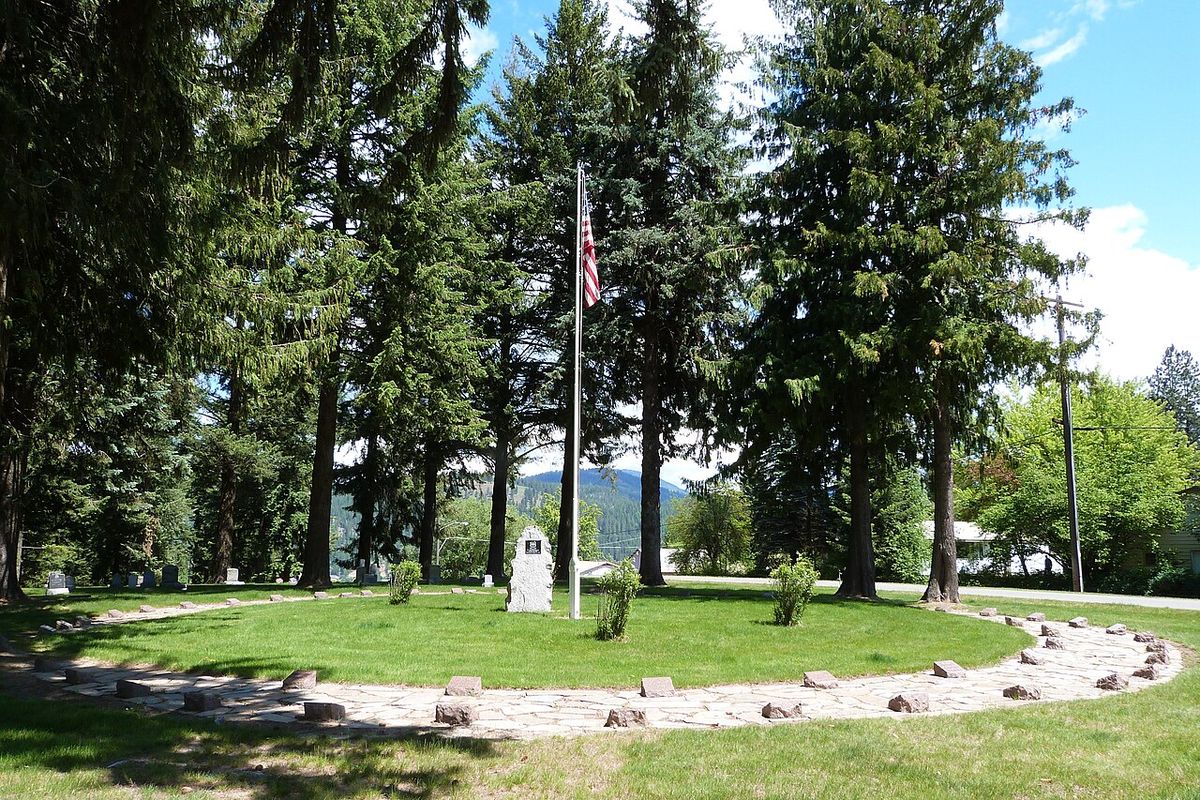
The fire killed at least 78 firefighters during active firefighting operations, not including those who died later from smoke damage to their lungs. The total death toll reached 87 people, making it the largest loss of firefighter life in a single wildfire event in U.S. history and the second deadliest incident for firefighters overall, surpassed only by the September 11 attacks. The entire 28-man "Lost Crew" was overcome by flames and perished on Setzer Creek outside of Avery, Idaho, representing one of the worst single tragedies. Rescue operations were conducted under extreme conditions, with passenger trains evacuating thousands of Wallace residents to Spokane and Missoula. Another train with 1,000 people from Avery took refuge in a tunnel after racing across a burning trestle. The most famous rescue story involves Ranger Ed Pulaski, who led about 44 men to safety in an abandoned prospect mine outside Wallace, Idaho. It is said that Pulaski fought off the flames at the mouth of the shaft until he passed out like the others. When one man announced he was leaving, Pulaski drew his pistol and threatened to shoot the first person who tried to leave, knowing they would have no chance of survival if they ran. All but five of the forty or so men survived the ordeal in what became known as the Pulaski Tunnel.
Geographic Scope and Physical Destruction
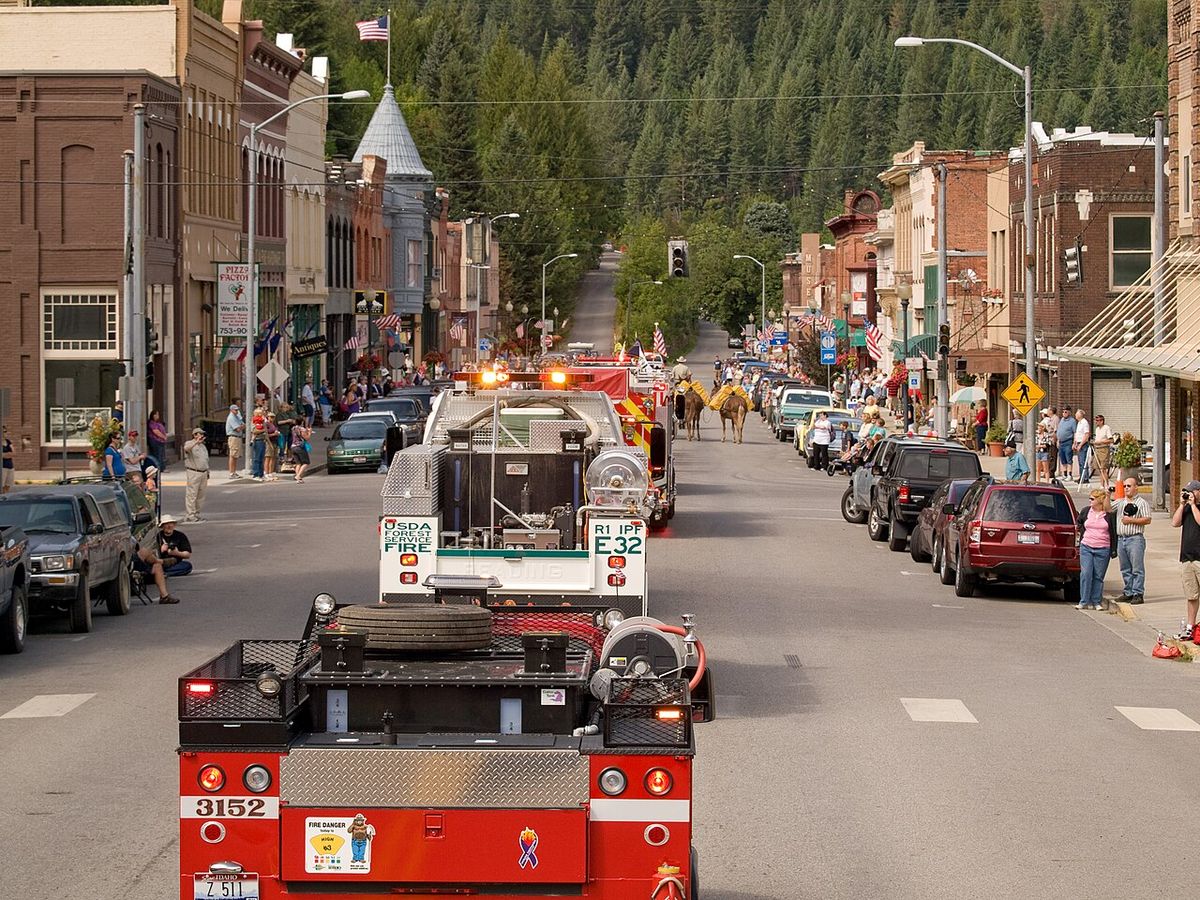
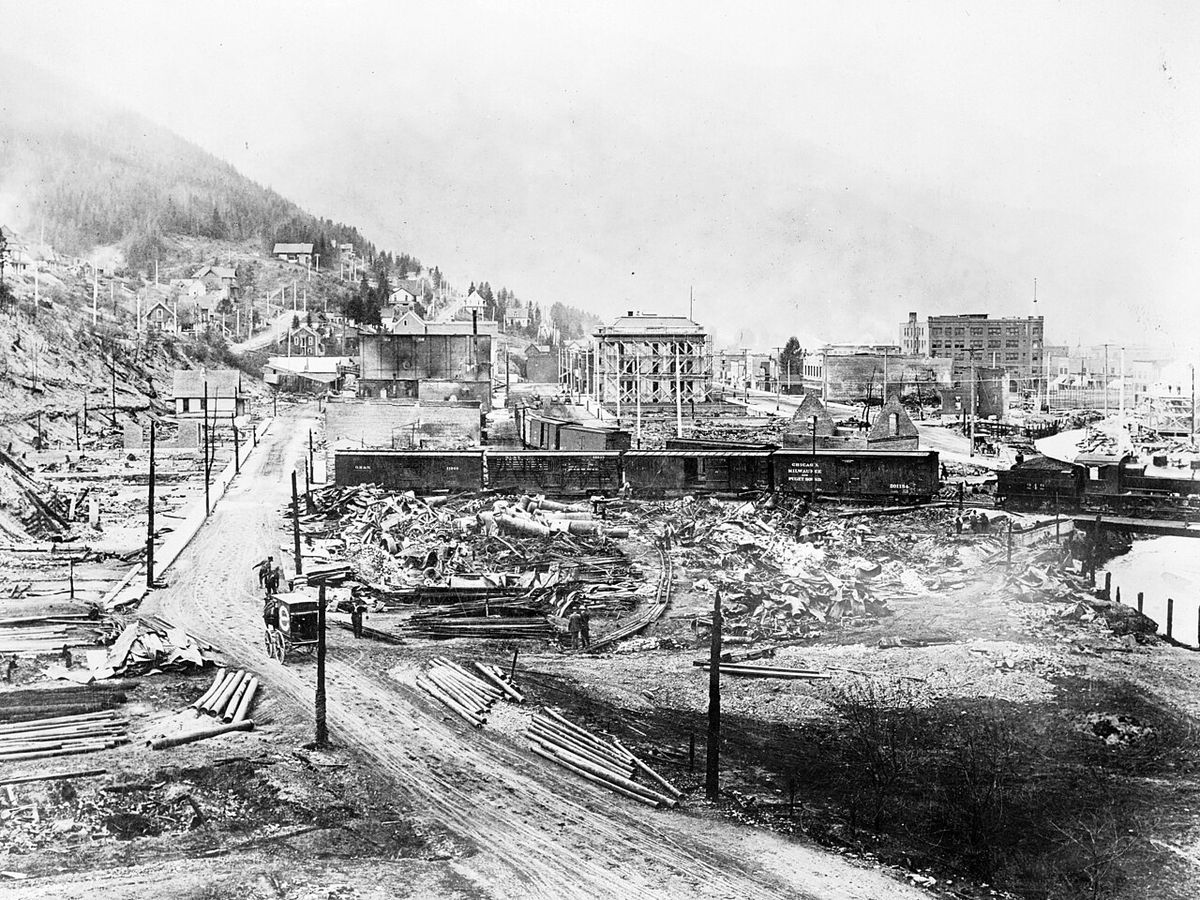
The fire burned three million acres across a vast region that included large parts of multiple national forests. The area burned encompassed the Bitterroot, Cabinet, Clearwater, Coeur d'Alene, Flathead, Kaniksu, Kootenai, Lewis and Clark, Lolo, and St. Joe national forests. The fire caused an estimated one billion dollars' worth of timber loss, a staggering economic impact for the time. In Idaho alone, one-third of the town of Wallace was burned to the ground, with an estimated $1 million in damage, equivalent to about $31,490,000 in 2023. Other towns with severe damage included Burke, Kellogg, Murray, and Osburn, all in Idaho's mining region. The towns of Avery, Saltese in Montana, and a major part of Wallace were saved only by the deliberate setting of backfires. Smoke from the fire reportedly traveled as far to the east as New York City, and as far south as Dallas. The following towns were completely destroyed by the fire:The Avery Depot, a train depot in Avery, Idaho, was used as a critical evacuation site during the crisis.
Institutional Transformation and Policy Legacy
The Great Fire of 1910 cemented and shaped the U.S. Forest Service, which at the time was a newly established department facing opposition from mining and forestry interests and was on the verge of cancellation. Before the fire, there were active debates about the best way to handle forest fires, with some advocating letting them burn as part of natural processes and others arguing for protection of forest resources. The Forest Service had instituted a policy of extinguishing all fires as quickly as possible in 1908, but the Great Fire tested this approach dramatically. After the fire, Forest Service Fire Chief Henry Graves doubled down on fire suppression, calling for a more aggressive fire prevention policy and launching a campaign to remove fire from the landscape. The Weeks Act has been credited with saving nearly 20 million acres of forestland through its framework for coordinated fire management. In the aftermath of the fire, the U.S. Forest Service received considerable recognition for its firefighting efforts, including a doubling of its budget from Congress.
Long-Term Influence on Fire Management
One of the firefighters who battled the 1910 blaze, Ferdinand Silcox, went on to become the fifth chief of the Forest Service. Deeply influenced by the devastation he witnessed, Silcox promoted the "10 a.m." policy, which established the goal of suppressing all fires by 10 a.m. of the day following their report. This policy represented a formalization of the aggressive suppression approach that would dominate U.S. forest management for most of the 20th century. The decision that the Forest Service should prevent and battle every wildfire became institutionalized, shaping training, equipment development, and budgetary allocations for decades. The firefighting tool later designed by and named for Ed Pulaski, simply called a Pulaski, became standard equipment for wildland firefighters, combining an axe and a hoe in one implement. The outcome of the fire was to highlight wildland firefighters as public heroes while raising awareness of national nature conservation, though it also established a suppression paradigm that contemporary ecology now recognizes contributed to fuel buildup in forests. The fire is often considered a significant impetus in the development of early wildfire prevention and suppression strategies.
Cultural Memory and Historical Connections
The Great Fire of 1910 occupies a significant place in North American cultural memory and historical scholarship. The event is a central theme in Denis Johnson's 2011 book Train Dreams and the 2025 movie based on it, bringing the story to new audiences. Historical organizations like the Forest History Society maintain extensive resources on the fire, including oral histories and photographs under the title "When the Mountains Roared: Stories of the 1910 Fire." Numerous scholarly and popular books have been written about the event, including Timothy Egan's The Big Burn: Teddy Roosevelt and the Fire That Saved America (2009), Stephen Pyne's Year of the Fires: The Story of the Great Fires of 1910 (2001, 2008), and Betty Goodwin Spencer's The Big Blowup (1956). The fire's extension into southeastern British Columbia serves as an early example of the cross-border nature of major wildfire events in the shared forest ecosystems of the Pacific Northwest. The event is historically connected to other major fires like the Yacolt Burn, the Baudette fire of 1910, and the Great Fire of Spokane City in 1889, all of which shaped understanding of fire weather and forest management in the region.
Questions about Great Fire of 1910
What caused the Great Fire of 1910?
The primary cause was a combination of severe drought and a series of lightning storms that ignited hundreds of small fires across the Northern Rockies. Human activities provided additional ignition sources, including hot cinders from railroad locomotives, sparks from homesteading and logging operations, and the work of backfiring crews. The winter of 1909 to 1910 and the spring and summer of 1910 were extremely dry, creating forests full of dry fuel. Hurricane-force winds on August 20-21 then merged these numerous smaller fires into a single catastrophic firestorm of unprecedented size. While the exact cause is often debated, U.S. Forest Service sources point to this combination of drought, lightning, and wind.
How many people died in the Big Burn?
The fire killed 87 people. At least 78 of these were firefighters who died during active firefighting operations, not including those who later died from smoke-related lung injuries. The death of 28 firefighters in the "Lost Crew" on Setzer Creek, Idaho, represents one of the worst single tragedies in wildland firefighting history. This event remains the second deadliest incident for firefighters in U.S. history, surpassed only by the fatalities incurred during the September 11, 2001 terrorist attacks. The fire is believed to be the largest, although not the deadliest, forest fire in U.S. history.
Which towns were destroyed by the 1910 fire?
Several towns were completely destroyed. In Idaho, the towns of Falcon and Grand Forks were levelled. In Montana, the towns of De Borgia, Haugan, Henderson, Taft, and Tuscor were wiped out. Other towns suffered severe damage, including Wallace, Idaho, where one-third of the town burned causing an estimated $1 million in damage, and Burke, Kellogg, Murray, and Osburn in Idaho. The towns of Avery and Saltese, Montana, along with a major part of Wallace, were saved only by the deliberate setting of backfires. Passenger trains evacuated thousands of Wallace residents to Spokane and Missoula during the disaster.
Who was Ed Pulaski and what did he do?
Ed Pulaski was a U.S. Forest Service ranger who became a hero during the fire. When his crew of about 44 men was about to be overtaken by flames near Wallace, Idaho, he led them to shelter in an abandoned prospect mine tunnel. He fought flames at the entrance until he passed out. When one panicked man threatened to flee into the firestorm, Pulaski drew his pistol and threatened to shoot anyone who left, knowing survival outside was impossible. All but five of the men survived the ordeal in the tunnel. Pulaski has since been widely celebrated for his actions, and the firefighting tool he later designed, the Pulaski, bears his name. The Pulaski Tunnel is now listed on the National Register of Historic Places.
How did the fire change U.S. forest fire policy?
The fire cemented the U.S. Forest Service's mandate and led to a decades-long policy of aggressive fire suppression. Ferdinand Silcox, a 1910 fire veteran who became the fifth Forest Service chief, institutionalized the "10 a.m. policy" aiming to suppress every fire by 10 a.m. the day after it was reported. This established the framework that the Forest Service should prevent and battle every wildfire, a philosophy that dominated 20th-century forest management. The Forest Service's budget was doubled by Congress following the fire.
Did the Great Fire of 1910 affect Canada?
Yes, the fire burned into southeastern British Columbia, demonstrating the transnational nature of major wildfire events in shared border regions. While the core devastation occurred in northern Idaho and western Montana, the extension into Canadian territory highlighted the cross-border risk inherent in the region's forest ecosystems. This event likely informed later developments in cross-border forest management and firefighting cooperation between Canada and the United States. The fire burned over three million acres with extensions into Eastern Washington and Southeast British Columbia.
Sources and further reading
- Great Fire of 1910 (Wikipedia)
- The 1910 Fires (foresthistory.org)
- Memorial Monday, Remembering the Great Fire of 1910 (firehero.org)
- The Wildfires of 1910: Climatology of an Extreme Early ... (journals.ametsoc.org)
- Watch The Big Burn | American Experience | Official Site (pbs.org)
Checked by the Your Space Hamilton desk. Last updated 2026-10-21.