Great Blizzard of 1888
The Great Blizzard of 1888, also known as the Great White Hurricane, was a catastrophic nor'easter that struck the eastern United States and Atlantic Canada from March 11 to 14, 1888. It ranks as one of the most severe and deadliest blizzards in American history, paralyzing the East Coast from the Chesapeake Bay to Maine and affecting Canadian provinces. The storm dumped unprecedented snowfall, with accumulations reaching 58 inches in some areas, and generated hurricane-force winds that created snowdrifts over 50 feet high. Its impacts, including the immobilization of major cities and the deaths of hundreds, spurred lasting changes to urban infrastructure and emergency preparedness.
Meteorological Development
The blizzard was preceded by unseasonably mild weather and heavy rains across the northeastern United States. Temperatures dropped precipitously on March 12, causing rain to transition to heavy snow. The National Weather Service later estimated it deposited up to 50 inches of snow in parts of Connecticut and Massachusetts, with 40 inches in areas of New Jersey and New York. Northern Vermont received significant but lesser accumulations, ranging from 20 to 30 inches.
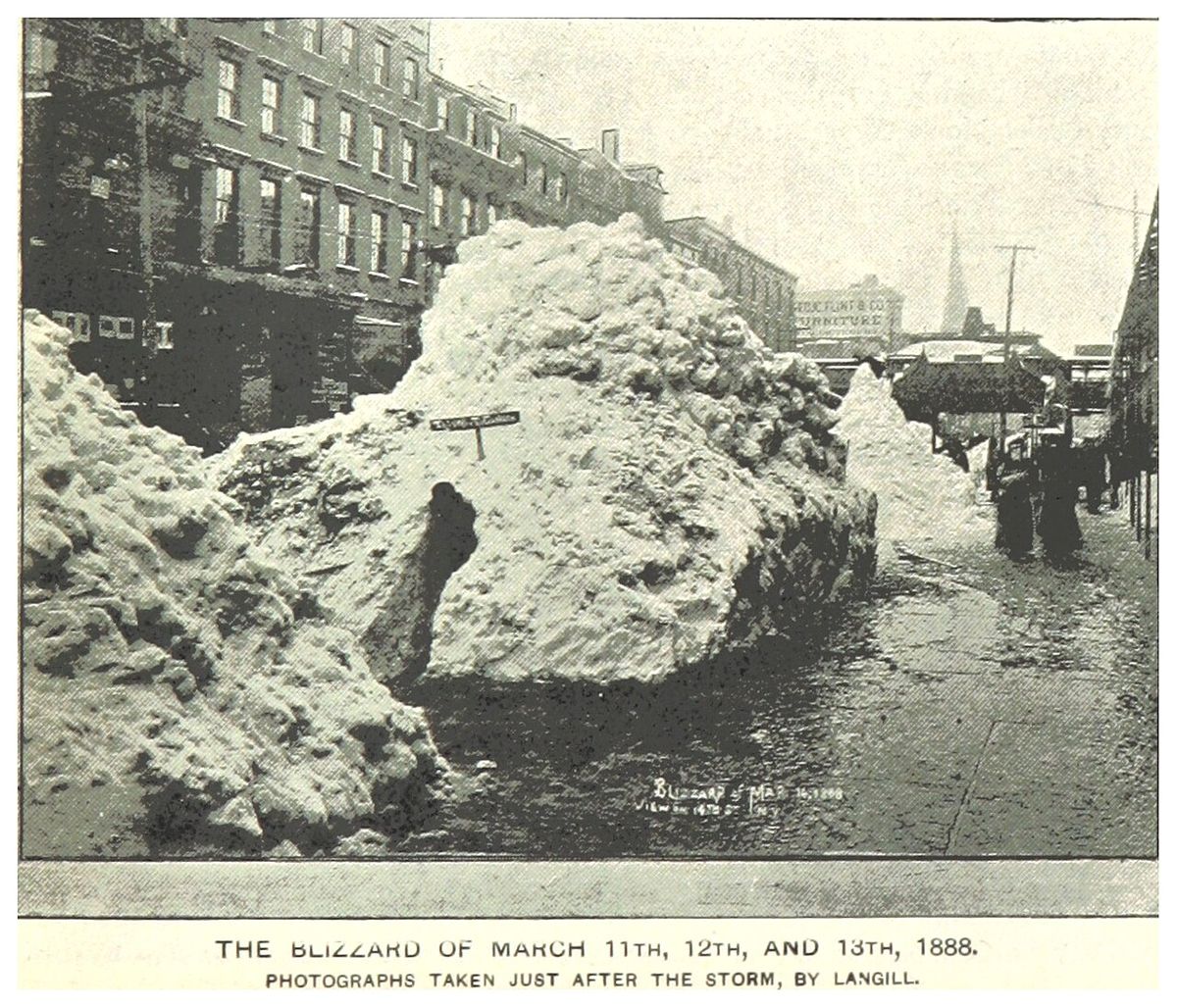
The combination of heavy snowfall and sustained high winds created monumental snowdrifts that defined the storm's destructive character. Drifts commonly reached 30 to 40 feet, completely burying houses from New York through New England. The highest officially recorded drift was 52 feet in Gravesend, Brooklyn. Specific snowfall totals included 48 inches in Albany, New York, 45 inches in New Haven, Connecticut, and 22 inches in New York City proper. Wind gusts were reported as high as 80 miles per hour, though official New York City readings were lower. The storm also brought extreme cold, with New York City recording a low of 6 °F on March 13, a record low for so late in the season.
Immediate Impacts and Paralysis
The blizzard brought all transportation and communication to a standstill for days. Railroads were completely shut down, with drifts across critical lines like the New York-New Haven route at Westport, Connecticut, taking eight days to clear. Road travel was equally impossible, confining people to their homes for up to a week. The telegraph network was disabled, severing communication and isolating major cities like Montreal, Washington, D.C., and Boston from each other. This infrastructure failure left cities in an information blackout and hampered coordination of any relief efforts. The New York Stock Exchange was forced to close for two full days, an event not repeated until Hurricane Sandy in 2012. Fire stations were immobilized by the deep snow, leading to significant property loss from fires that could not be fought. This damage was estimated at $25 million, equivalent to $900 million in 2025.
Maritime impacts were severe, with more than 200 ships either grounded or wrecked from the Chesapeake Bay through New England. At least 100 seamen lost their lives in these incidents. The storm's aftermath also included severe flooding in areas like Brooklyn as the massive snowpack rapidly melted, a problem made worse by the region's topography. Not all areas were equally affected. An article in the Cambridge Press published five days after the storm noted the snowfall in its vicinity was comparatively small, with a total depth not exceeding ten inches on a level.
Record Snowfall and Drifts
The Great Blizzard of 1888 set records for snow depth and drift height across multiple states. Snowfalls ranged from 10 to 58 inches in parts of New Jersey, New York, Massachusetts, Rhode Island, and Connecticut. Drifts averaged 30 to 40 feet over the tops of houses from New York to New England. The highest drift was recorded in Gravesend, Brooklyn at 52 feet. Specific snow totals included 58 inches in Saratoga Springs, New York, and 45 inches in New Haven, Connecticut.
- 58 inches of snow fell in Saratoga Springs, New York.
- 48 inches of snow accumulated in Albany, New York.
- 45 inches of snow was recorded in New Haven, Connecticut.
- 22 inches of snow fell in New York City.
- A 52-foot snowdrift was measured in Gravesend, Brooklyn.
- Drifts averaged 30 to 40 feet over house tops in New York and New England.
- Parts of Connecticut and Massachusetts received an estimated 50 inches of snow.
- Northern Vermont received from 20 to 30 inches of snow.
These figures illustrate the storm's exceptional intensity and its geographically varied impact. The depth of the drifts, often exceeding the height of buildings, made rescue and recovery operations exceptionally difficult. This contributed to the prolonged paralysis of the East Coast from the Chesapeake Bay to Maine. The storm also produced severe winds, with 80 miles per hour gusts reported in some locations. Sustained winds of more than 45 miles per hour produced the massive snowdrifts in excess of 50 feet.
Long-Term Consequences and Infrastructure Changes
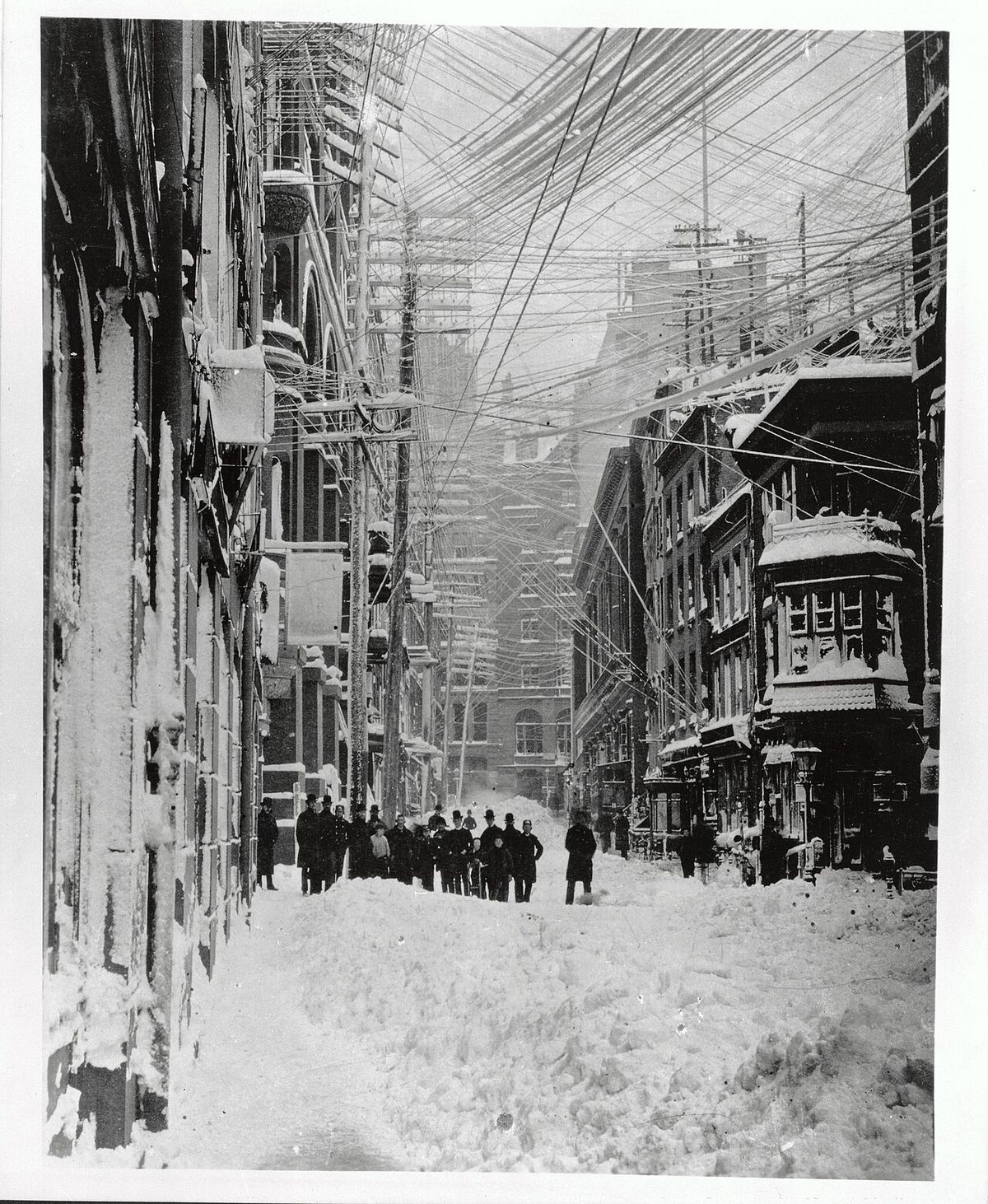
The widespread transportation gridlock caused by the blizzard provided a powerful impetus for the development of underground transit systems. Similarly, New York City began planning its first underground subway line in response to the storm. This line opened in 1904 and later expanded into the extensive New York City Subway network. The event proved that surface-level transportation was too vulnerable to extreme winter weather for growing metropolitan areas. The failure of overhead telegraph and telephone lines during the storm prompted a major shift in urban planning for utilities. Following the blizzard, New York City and other municipalities began the systematic process of placing their telegraph and telephone infrastructure underground to prevent the widespread destruction of communication networks by future ice storms, heavy snow, and high winds. This move to protect critical infrastructure became a standard practice in modern city planning.
Notable Accounts and Documentation
The blizzard was documented in several prominent contemporary accounts that captured its severity and human drama. On October 1, 1888, the very first issue of the National Geographic Society magazine featured an article about the great blizzard, written by Edward Everett Hayden. This article described the storm and included the harrowing, first-hand account of boat-keeper Robert Robinson, who detailed the courageous struggle of the crew from the pilot-boat Charles H. Marshall, No. 3. The storm also entered political lore when influential Republican politician Roscoe Conkling died a few weeks after attempting to walk home through the blizzard in New York City, an event that highlighted the storm's danger. Media coverage at the time was extensive, with publications like The New York Times providing detailed reporting, and the event has been the subject of numerous historical studies and books, such as Jim Murphy's Blizzard!: The Storm That Changed America.
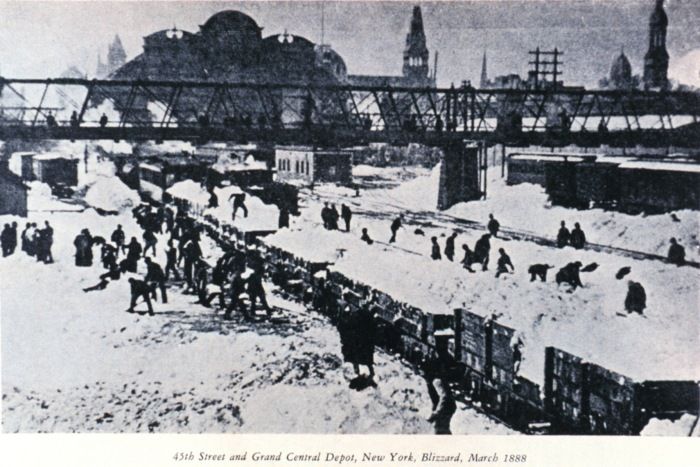
Key Statistics and Measurements
The blizzard's intensity is best understood through its record-breaking meteorological measurements and the stark statistics of its aftermath. The storm began in earnest shortly after midnight on March 12 and continued unabated for a full day and a half. On March 13, New York City recorded a low of 6 °F, the coldest so late in the season. The National Weather Service estimated this nor'easter dumped as much as 50 inches of snow in parts of Connecticut and Massachusetts. Most of northern Vermont received from 20 inches to 30 inches of snow.
| Measurement | Location | Value |
|---|---|---|
| Maximum Snowfall | Saratoga Springs, NY | 58 inches (1.5 m) |
| Highest Recorded Drift | Gravesend, Brooklyn | 52 feet (16 m) |
| New York City Snowfall | Central Park (approx.) | 22 inches (0.56 m) |
| Low Temperature | New York City | 6 °F (-14 °C) |
| Reported Wind Gust | Various (Unofficial) | 80 mph (129 km/h) |
| Estimated Fatalities at Sea | Chesapeake Bay to New England | At least 100 |
| Property Loss from Fire | Northeastern U.S. | $25 million (1888) |
| Stock Exchange Closure | New York | 2 days |
These figures demonstrate the exceptional nature of the event. The snowfall totals were far beyond typical winter storms for the region, and the resulting drifts were of a scale that buried multi-story buildings. The economic toll, from fire losses alone, was monumental for the era. The duration of the New York Stock Exchange closure shows how completely the storm halted the economic engine of the nation, and the maritime fatalities reveal the storm's danger extended far from shore.
Direct Outcomes and Lasting Effects
The storm's disruption led directly to several major infrastructure projects and policy considerations. Railroads and telegraph lines were disabled, providing the impetus to move this infrastructure underground. The transportation gridlock was partially responsible for the creation of the first underground subway system in the United States in Boston. It also spurred the opening of New York's first underground subway line in 1904. Following the storm, New York began placing its telegraph and telephone infrastructure underground to prevent destruction.
- Development of New York City's first underground subway line, opened in 1904.
- The move to place telegraph and telephone lines underground in New York City.
- Closure of the New York Stock Exchange for two days in March 1888.
- An estimated $25 million in property loss from fires that could not be fought.
- More than 200 ships were grounded or wrecked during the storm.
- The storm was featured in the first issue of National Geographic magazine in October 1888.
- Recovery efforts included attempts to push snow into the Atlantic Ocean.
These outcomes show the blizzard acted as a catalyst for modernizing urban systems. The shift to protected, underground infrastructure for transit and communications became a defining feature of 20th-century city planning. The storm demonstrated the need for coordinated emergency services, as fire stations were immobilized during the event. Property loss from fire alone was estimated at 25 million dollars. The New York Stock Exchange was closed for two days, a full two-day weather-related closure that would not occur again until Hurricane Sandy in 2012.
Cultural and Historical Legacy
The Great Blizzard of 1888 left a deep imprint on the collective memory of the northeastern United States and Canada. It is frequently cited as a benchmark for severe winter weather against which all subsequent storms are measured. The push for subways and underground utilities are its most tangible legacies, changing the physical layout of metropolitan centres. The storm also influenced public policy and planning regarding emergency preparedness for extreme weather events. Anniversaries of the blizzard are often marked by historical reflections in media, recalling the stories of survival and community response. It has been the subject of museum exhibits, photographic collections, and academic research, ensuring its details are preserved for future generations as a powerful case study in climatology and disaster management.
Questions about Great Blizzard of 1888
When did the Great Blizzard of 1888 occur?
The Great Blizzard of 1888 struck from March 11 to 14, 1888. The most intense period began shortly after midnight on March 12 and continued unabated for approximately a day and a half. During this time, heavy snow fell continuously, driven by hurricane-force winds. The storm affected a vast area from the Chesapeake Bay through New England and into Atlantic Canada.
How much snow fell during the blizzard?
Snowfall amounts varied dramatically across the affected region. The highest recorded total was 58 inches in Saratoga Springs, New York. Other significant accumulations included 48 inches in Albany, New York, 45 inches in New Haven, Connecticut, and 40 inches in parts of New Jersey. New York City itself received about 22 inches of snow. The National Weather Service later estimated some areas of Connecticut and Massachusetts received up to 50 inches.
What were the wind speeds during the storm?
The blizzard was characterized by sustained high winds and severe gusts. While the highest official wind gust reported in New York City was 54 miles per hour, other locations reported gusts as high as 80 miles per hour. Block Island reported a gust of 54 miles per hour. These sustained winds, often over 45 miles per hour, were responsible for creating the massive snowdrifts that defined the storm's destructive impact.
How many people died in the Great Blizzard of 1888?
The blizzard caused significant loss of life, particularly at sea. More than 200 ships were grounded or wrecked, resulting in the deaths of at least 100 seamen. Additional fatalities occurred on land due to exposure, accidents, and related incidents, such as the death of politician Roscoe Conkling weeks after he attempted to walk home during the storm. The total death toll is estimated to be in the hundreds.
How did the blizzard affect Canada?
The Great Blizzard of 1888 paralyzed the Atlantic provinces of Canada. The storm's impacts extended from the Chesapeake Bay in the United States up through these Canadian regions. A major consequence was the disabling of telegraph infrastructure, which isolated the city of Montreal from major northeastern American cities including Washington, D.C. and Boston for several days. This communication breakdown was part of a wider disruption that affected the entire East Coast. The storm's severity in Canada was consistent with its paralysing effect across the entire region.
What long-term changes resulted from the blizzard?
The blizzard led to significant long term infrastructure changes aimed at preventing future disruptions. The widespread transportation gridlock, which saw railways shut down for days, provided the impetus to move transit systems underground. Similarly, New York City opened its first underground subway line in 1904. The storm disabled telegraph lines, leading New York and other cities to begin placing their telegraph and telephone infrastructure underground as well.
Sources and further reading
- Great Blizzard of 1888 (Wikipedia)
- Weather Resources: 1888 Blizzard (libguides.ctstatelibrary.org)
- Recreating the Great Blizzard of 1888, A Case Study (psl.noaa.gov)
- The Blizzard of 1888: America's Greatest Snow Disaster (wunderground.com)
Checked by the Your Space Hamilton desk. Last updated 2026-10-20.