Chinchaga fire
The Chinchaga fire, also known as the Wisp fire or Chinchaga River fire, was a colossal boreal forest fire that burned across northern British Columbia and Alberta from June to October 1950. It is the single largest recorded fire in North American history, scorching an estimated 17,000 square kilometres of remote wilderness. The fire is historically significant for producing the '1950 Great Smoke Pall,' a massive atmospheric haze that darkened skies across eastern North America and Europe, causing widespread public confusion and scientific interest. The event influenced forest fire management policies in Alberta and remains a key case study in understanding extreme wildfire behaviour and its global atmospheric effects.
Origins and Ignition
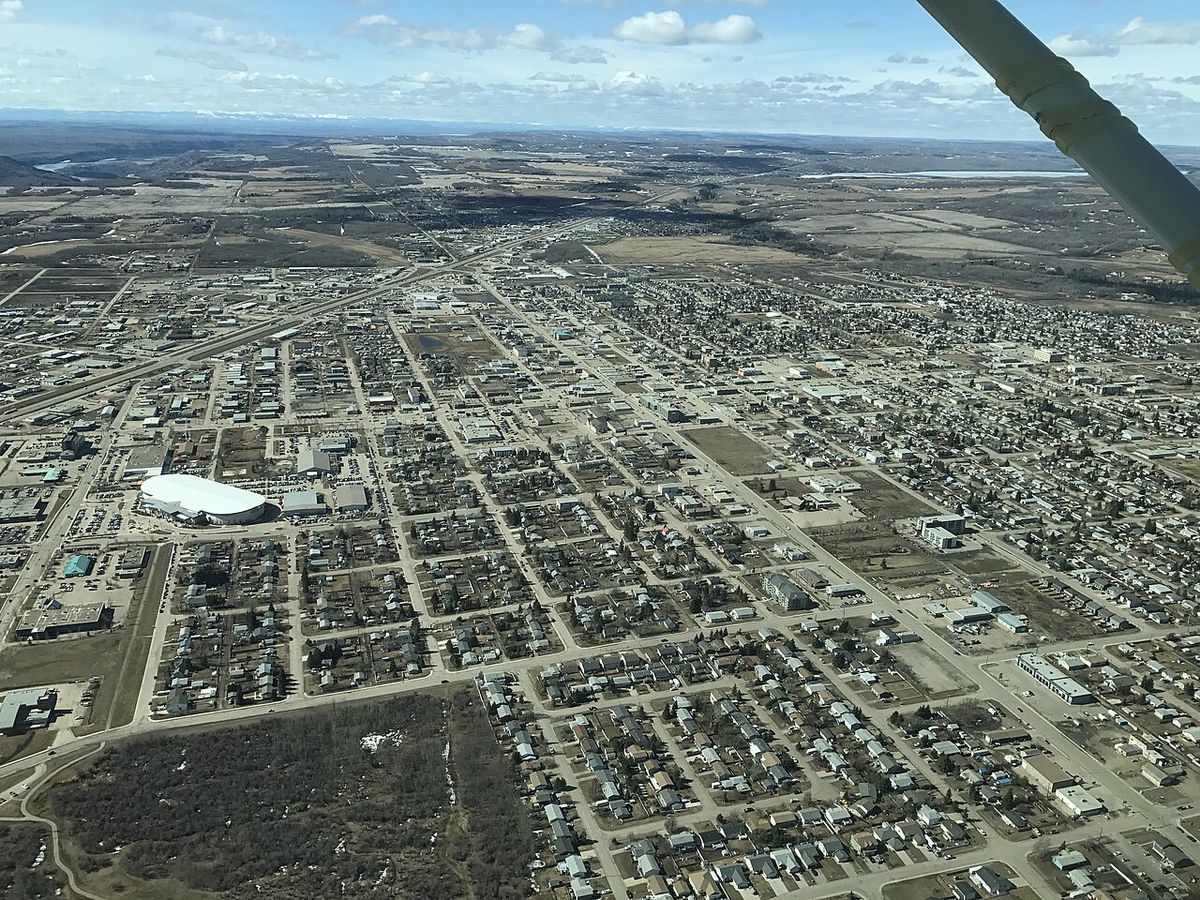
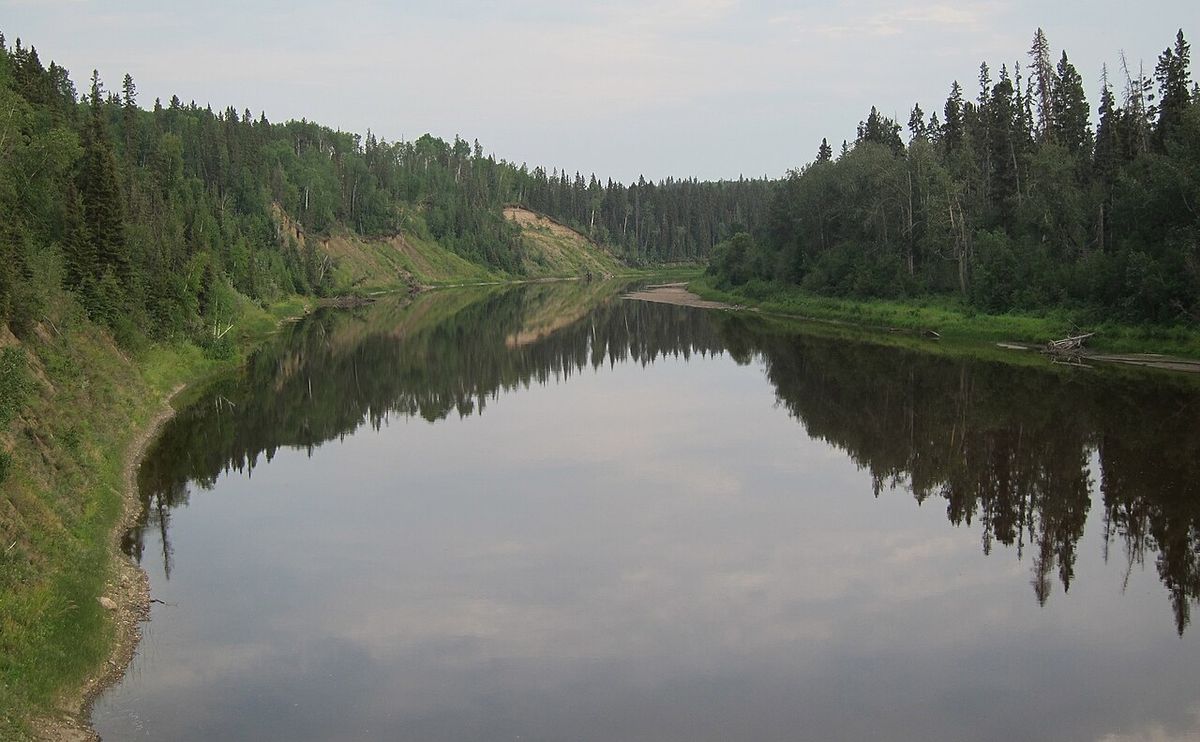
The Chinchaga fire began on 1 June 1950 in a sparsely populated region north of Fort St. John, British Columbia. The area's landscape was characterized by a mix of black spruce, lodgepole pine, and deciduous forests, with lower areas giving way to muskeg. While few people lived there, human activity was definitively the cause of the ignition, though specific accounts vary. One version suggests an Imperial Oil surveying crew started a small blaze to protect their horses from biting insects. Another posits that slash burning from agricultural clearing could have provided the initial spark. Regardless of the precise source, the fire was left to burn according to the prevailing forest management policy of the time, which did not prioritize suppression in such remote areas. The ignition point was in British Columbia, but the fire's predominant movement was northeastwards, nearly reaching Keg River, Alberta, over the following five months.
Fire Progression and Characteristics
The fire burned for nearly five months, from June until it was finally extinguished by cooler weather and autumn rains in late October as it approached the Keg River area in Alberta, specifically in the Whispering River area which contributed to the name 'Wisp fire.' It burned in a fan-shaped pattern along a southwest-northeast axis, starting in the Rose Prairie area. The fire's behaviour was not constant but alternated between intense, rapid spreads known as 'runs' and periods of lower activity. A series of high-pressure systems during the summer dried out the forest fuels, and their breakdowns produced strong southwesterly winds that drove these explosive runs. There were five major runs in total, with the final expansion in September 1950 being the most destructive, accounting for roughly one-third of the total area burned. The fire's path and intensity were directly dictated by these specific weather patterns, which allowed heat to build and fuels to dry before winds pushed the flames forward.
Measurement of the fire's ultimate size was imprecise at the time, with contemporary estimates ranging from 10,000 to 14,000 square kilometres. However, advanced airborne surveys and polarimetric analysis conducted by Natural Resources Canada and the University of Victoria researchers in 2008 and 2009 provided a more accurate and larger figure. Their work concluded the Chinchaga fire burned approximately 17,000 square kilometres, cementing its status as the largest recorded fire in North American history. While it may not have been the largest fire ever in the North American boreal forest in prehistory, the burnt area it produced is the largest ever known and documented through modern records.
Despite its enormous scale, no human deaths were directly attributed to the fire. Assessing the financial damage was difficult due to the region's remoteness and the undervaluation of its resources by authorities. The area was a productive trapping ground for First Nations and Métis communities, and its timber wealth in the Chinchaga River watershed had not been formally surveyed. The Alberta provincial government initially estimated the fire's cost at one million dollars. Cordy Tymstra, a fire historian with the Alberta forestry department, later stated this value reflected how little officials appreciated the actual wealth of the land and its resources, which were significantly impacted by the loss of trapping areas and forest cover.
Official Response and Policy Impact
No concerted fire suppression efforts were directed at the Chinchaga blaze. Firefighting crews across British Columbia, Alberta, and the Yukon were already stretched thin battling numerous other fires that season. Official policy in Alberta at the time was to respond only to wildfires within 16 kilometres of settlements and major roads. A specific request by the fire ranger stationed at Keg River to fight the Chinchaga fire with a ground crew was denied by provincial fire managers. According to historian Cordy Tymstra, the scale and challenge of the Chinchaga fire directly changed the way Alberta responded to forest fires in subsequent years, leading to a reassessment of strategies for remote wildfires. Local residents, such as Frank Jackson, husband of pioneering doctor Mary Percy Jackson, undertook what small-scale efforts they could, but the fire only stalled with the arrival of autumn precipitation which finally ended its run in late October.
The 1950 Great Smoke Pall: Effects and Public Reaction
The most far-reaching consequence of the Chinchaga fire was the creation of the '1950 Great Smoke Pall,' an immense layer of smoke that travelled across the continent and over the Atlantic Ocean. The primary smoke release occurred in late September, with the plume first recorded at Ennadai Lake in the present-day Nunavut on 24 September. The smoke initially moved northeast but hit an atmospheric trough and headed southward towards Ontario and the American eastern seaboard. This date, known as 'Black Sunday,' saw dramatic effects across eastern North America as the high-altitude smoke blotted out the sun. The smoke was mostly borne aloft to high altitudes by climatic conditions, and as many observers could not smell it, and news of the massive remote fire was sparse, affected people drew numerous other conclusions about its source. The unexplained haze sparked widespread fear and speculation among the populations of eastern North America and Europe.
In Ontario, towns like Sarnia and Guelph experienced pitch darkness for up to three-hour periods at midday, requiring streetlights and automobile headlights. In Toronto, streetlights turned on by themselves and the unusual darkness caused a 200 MWh spike in power consumption, leading to failures that triggered bank alarms and prompted police responses across the city. Aircraft were grounded, and an aerial search for a downed United States Air Force bomber in Labrador was delayed by the thick haze. Animals also felt the effects, with cows requiring milking at different times and birds seen bedding down at midday. One beneficial side effect was that the smoke blanket held off a predicted killing frost in southern Ontario, saving orchard crops from damage. The heavy haze moved on to the Atlantic seaboard of the United States, with New York, Pennsylvania, Ohio, Washington D.C., Virginia, and Florida all reporting effects, especially on 24 September.
Because the smoke resided mostly in the upper atmosphere and could not be smelled, and because news of the massive remote fire was not well-publicized, the public was left to speculate on its origin. The list of theories proposed by concerned citizens and reported in the media was extensive and varied. People drew conclusions that included nuclear armageddon, local fires, secret U.S. military experiments, an American atomic bomb blast, supernatural forces, a solar eclipse, and an alien invasion. This speculation reflected the anxiety of the era.
- Nuclear armageddon or warfare
- Large local fires in populated areas
- Secret United States military experiments
- An American atomic bomb blast
- Supernatural or divine forces at work
- A prolonged or unusual solar eclipse
- An invasion by extraterrestrial aliens
Scientific Observation and Global Reach
American meteorologist Harry Wexler followed the smoke plume closely, collecting data from a wide area of the United States. He noted that the plume split in two during the event, with one southern plume getting caught in a stagnant anticyclonic pattern that extended the hazy period over the eastern U.S. Wexler observed lower temperatures as a result of sunlight absorption by the smoke, and he estimated a 4 °C drop in the Washington, D.C., area. The northern smoke plume traveled over the Atlantic Ocean by way of Newfoundland and Greenland. On 27 September 1950, the plume was observed over Scotland, with reports over England following soon after. Countries including France, the Netherlands, Portugal, and Denmark also observed the strange haze. Reports by pilots placed the smoke layer over Europe at altitudes of 12,000 metres or more, higher than what had been observed in North America. In early October, a smoke observation was made on the Aleutian Islands, suggesting that the Chinchaga haze had possibly circled the entire globe.
The Chinchaga firestorm's smoke pall caused specific observations of blue suns and moons in the United States and Europe due to the scattering of light by smoke particles. Researchers, including Michael Fromm and colleagues in a 2005 study, have analyzed the event as a potential iteration of explosive troposphere-to-stratosphere transport (TST). They described it as a dynamic combination of an extreme boreal forest fire and convection that can inject smoke directly into the stratosphere, where it can persist and travel vast distances. This analysis positions the Chinchaga fire as a major case study for understanding how large pyro-cumulonimbus events can influence atmospheric chemistry and climate on a hemispheric scale. The fire was the biggest firestorm documented in North America at the time, and it created the world's largest smoke layer in the atmosphere observed up to that point.
Key Facts, Figures, and Legacy
The Chinchaga fire remains a benchmark event in Canadian environmental history. With a final size estimated between 14,000 and 17,000 square kilometres, it is the single largest recorded fire in North American history. It produced the 1950 Great Smoke Pall, which was observed across eastern North America and Europe. This atmospheric phenomenon and the fire's sheer scale provide critical data points for scientists and historians.
| Aspect | Detail |
|---|---|
| Duration | Approximately 5 months (1 June, late October 1950) |
| Estimated Area Burned (1950s) | 10,000-14,000 km² |
| Revised Area Burned (2009 study) | ~17,000 km² |
| Area in British Columbia | ~900 km² |
| Peak Smoke Date | 24 September 1950 ('Black Sunday') |
| Reported Temperature Drop (Washington, D.C.) | ~4 °C (estimated by H. Wexler) |
| Alberta's Initial Cost Estimate | $1 million (timber value) |
| Notable Scientific Feature | Potential troposphere-to-stratosphere transport event |
The research conducted in 2008 and 2009 using polarimetric analysis was part of a broader survey of several historic boreal forest fires by Natural Resources Canada and the University of Victoria. This research allowed for the more precise recalculation of the Chinchaga fire's true magnitude, arriving at a final estimate of 17,000 square kilometres. The event is listed among major fires in Canada and is frequently cited in studies of wildfire behaviour, smoke dispersion, and boreal forest ecology. The Chinchaga fire's legacy includes being the biggest firestorm documented in North America and creating the world's largest smoke layer in the atmosphere.
- Largest recorded fire in North American history (17,000 km²).
- Creation of the world's largest observed atmospheric smoke layer in 1950.
- First recorded instance of a smoke plume from a single fire potentially circling the globe (Aleutian observation, October 1950).
- Documented observations of blue suns and moons in the U.S. and Europe.
- Catalyst for change in Alberta's remote wildfire response policy.
- Subject of major scientific recalculation of size via polarimetric analysis (2008 to 2009).
The fire's direct impacts, while locally significant for trapping and timber, were vastly overshadowed by its indirect role in advancing scientific understanding. The area was a productive trapping area for First Nations and Métis, and the timber was undervalued. The fire demonstrated conclusively that a major boreal fire could have measurable effects on weather and light conditions thousands of kilometres away. It created the Great Smoke Pall, which caused observations of blue suns and moons, daytime darkness, and temperature drops in distant locations, facts that inform modern climate and wildfire research.
Questions about Chinchaga fire
Why is the Chinchaga fire famous?
The Chinchaga fire is famous for two primary reasons. First, it is the largest recorded wildfire in North American history, based on revised estimates from 2009. Second, and perhaps more famously, it produced the '1950 Great Smoke Pall,' a massive layer of smoke that travelled across eastern North America and over to Europe, darkening daytime skies, confusing animals, and sparking public alarm and speculation about its source. Its scale and the resulting policy review led to changes in Alberta's forest fire management strategy for remote areas.
What caused the Great Smoke Pall of 1950?
The Great Smoke Pall was caused directly by the immense smoke output from the Chinchaga fire during its most intense burning phase in late September 1950. Climatic conditions carried the smoke high into the atmosphere, where it travelled eastward. The plume split, with one part moving south over Ontario and the eastern United States, causing 'Black Sunday' on 24 September, and another part crossing the Atlantic Ocean to Europe. The smoke was first recorded at Ennadai Lake in the Arctic on 24 September before moving south.
Why wasn't the Chinchaga fire fought?
Official fire suppression efforts were not directed at the Chinchaga fire due to the forest management policies of the time and a lack of resources. Alberta's policy was to fight fires only within 16 kilometres of settlements or major roads, and this fire was in an extremely remote region with few inhabitants. Fire crews were also already occupied with many other blazes across British Columbia, Alberta, and the Yukon Territory. A specific request from the fire ranger at Keg River to attack the fire with a ground crew was denied by provincial fire managers.
Did anyone die in the Chinchaga fire?
No known human deaths occurred as a direct result of the Chinchaga fire. The blaze burned through largely uninhabited boreal forest, which minimized the risk to human life. The main impacts were ecological and economic, affecting trapping grounds for First Nations and Métis communities and timber resources. The most significant impacts were the atmospheric effects of the smoke pall that inconvenienced and concerned populations thousands of kilometres away in eastern Canada, the United States, and Europe.
How big was the Chinchaga fire compared to modern wildfires?
The Chinchaga fire is the single largest recorded fire in North American history, with a final size estimated between 14,000 and 17,000 square kilometres. Researchers using polarimetric analysis in 2008 and 2009 arrived at an estimate of 17,000 square kilometres. While most likely not the largest fire ever in North America, the burnt area it produced is the largest ever known. Its size is a product of its remote location, the official policy of non-suppression, and favourable fire weather over a long duration.
Where did the Chinchaga fire burn?
The Chinchaga fire burned across a vast, remote area of northern British Columbia and Alberta. It started north of Fort St. John, British Columbia, on 1 June 1950 and burned northeastward until it approached the Keg River area in Alberta by late October. The fire's path was influenced by weather patterns, burning in a fan shape along a southwest-northeast axis. This immense blaze is the single largest recorded fire in North American history.
Sources and further reading
- Chinchaga fire (Wikipedia)
- The Chinchaga Firestorm when the moon and sun turned ... (frames.gov)
- Lessons of a Forgotten Firestorm (thetyee.ca)
- FOREST INK: History of 1950 Chinchaga firestorm (wltribune.com)
- Fort McMurray and the New Era of Infernos (thenarwhal.ca)
Checked by the Your Space Hamilton desk. Last updated 2026-10-19.