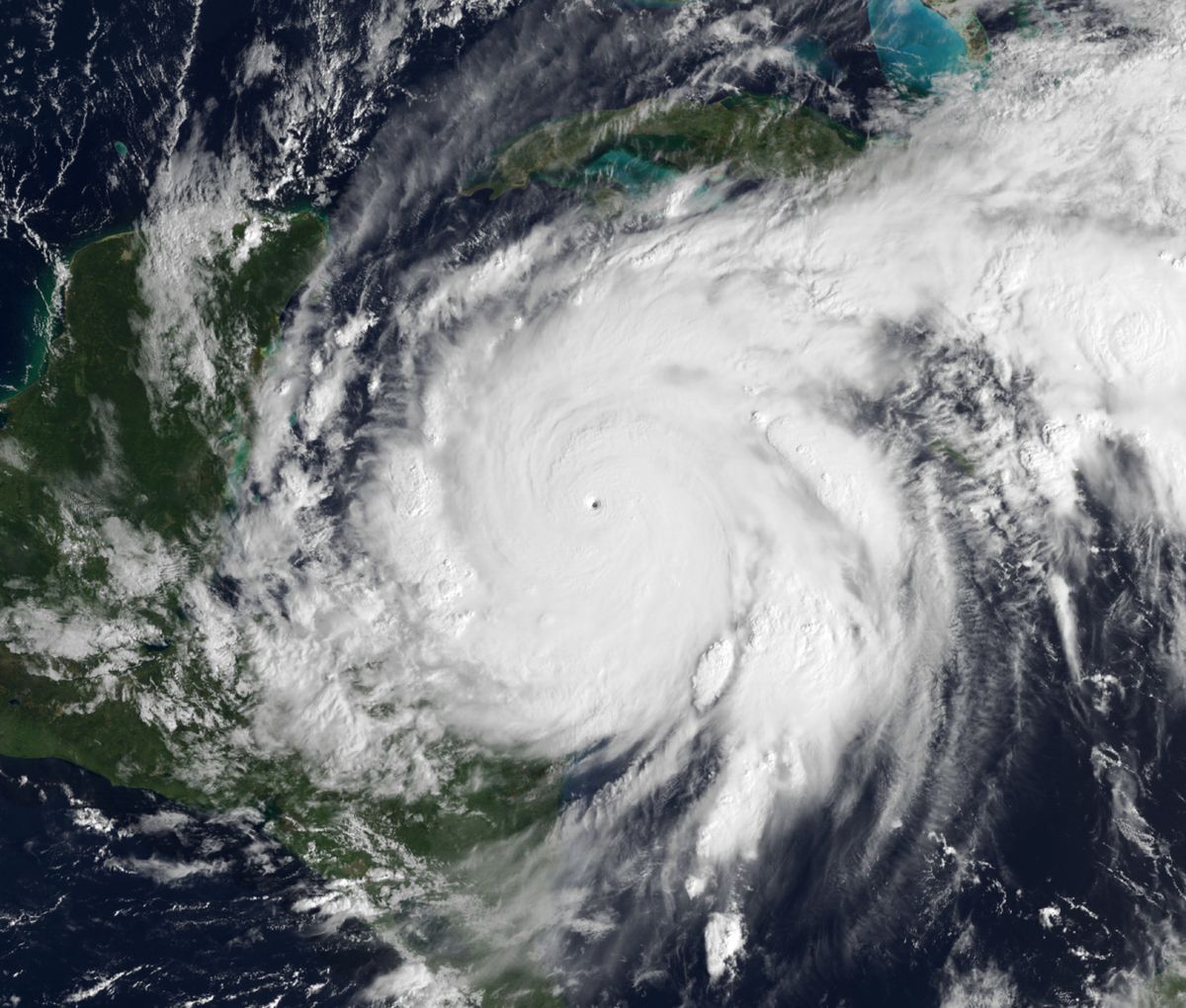
1993 Storm of the Century
The 1993 Storm of the Century, also known as the Great Blizzard of 1993 or the '93 Superstorm, was a catastrophic nor'easter that formed over the Gulf of Mexico on March 12, 1993. It was an unprecedented cyclonic event that brought hurricane-force winds, record snowfall, and a devastating storm surge to a vast area stretching from Canada to Central America. For Canadians, the storm's significance lies in its severe impact on eastern provinces, disrupting travel, closing major airports, and contributing to the storm's overall death toll of 318 people. The event caused an estimated $5.5 billion in damages and remains a benchmark for extreme winter weather forecasting and preparedness.
Meteorological development and forecasting
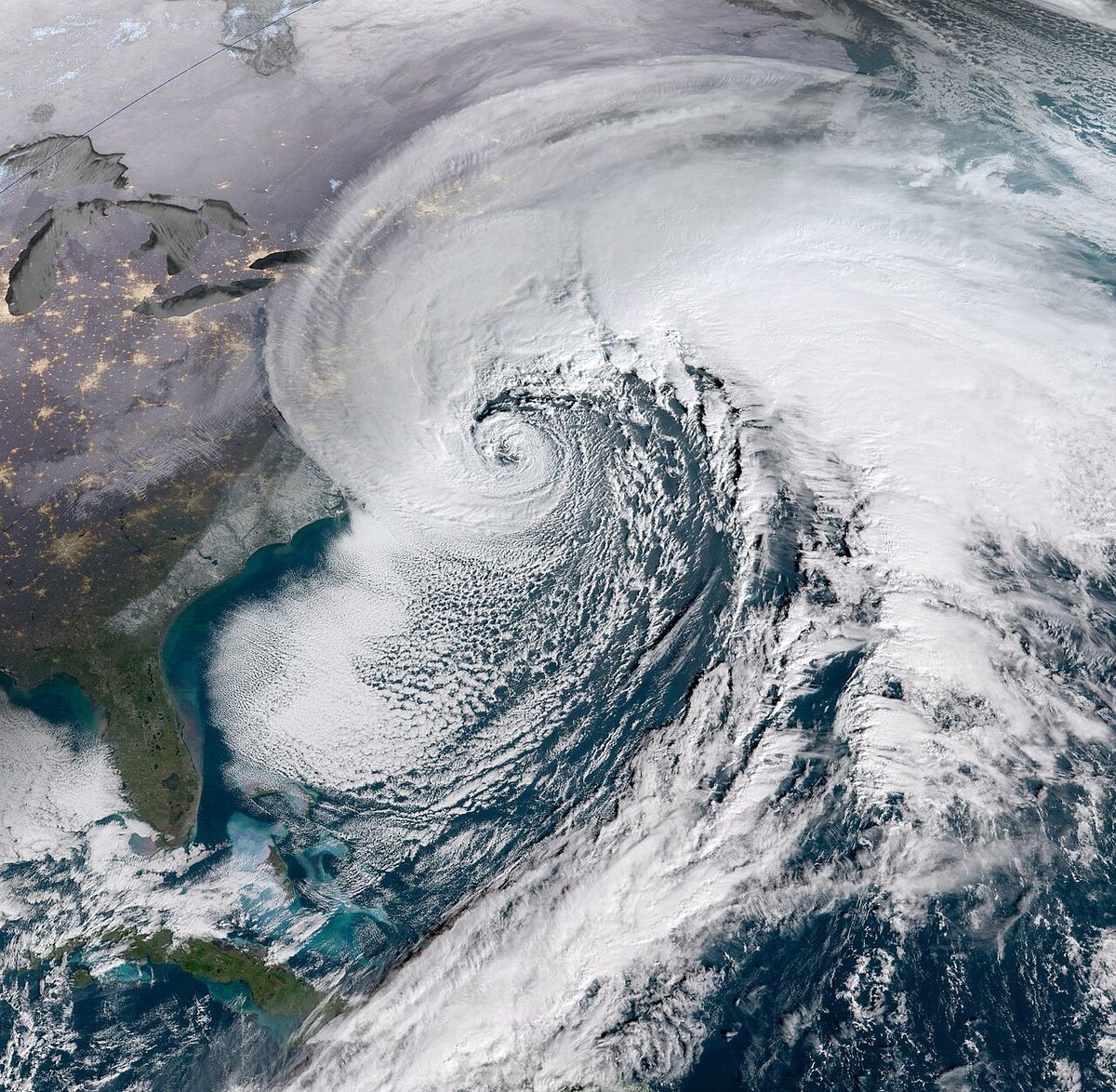
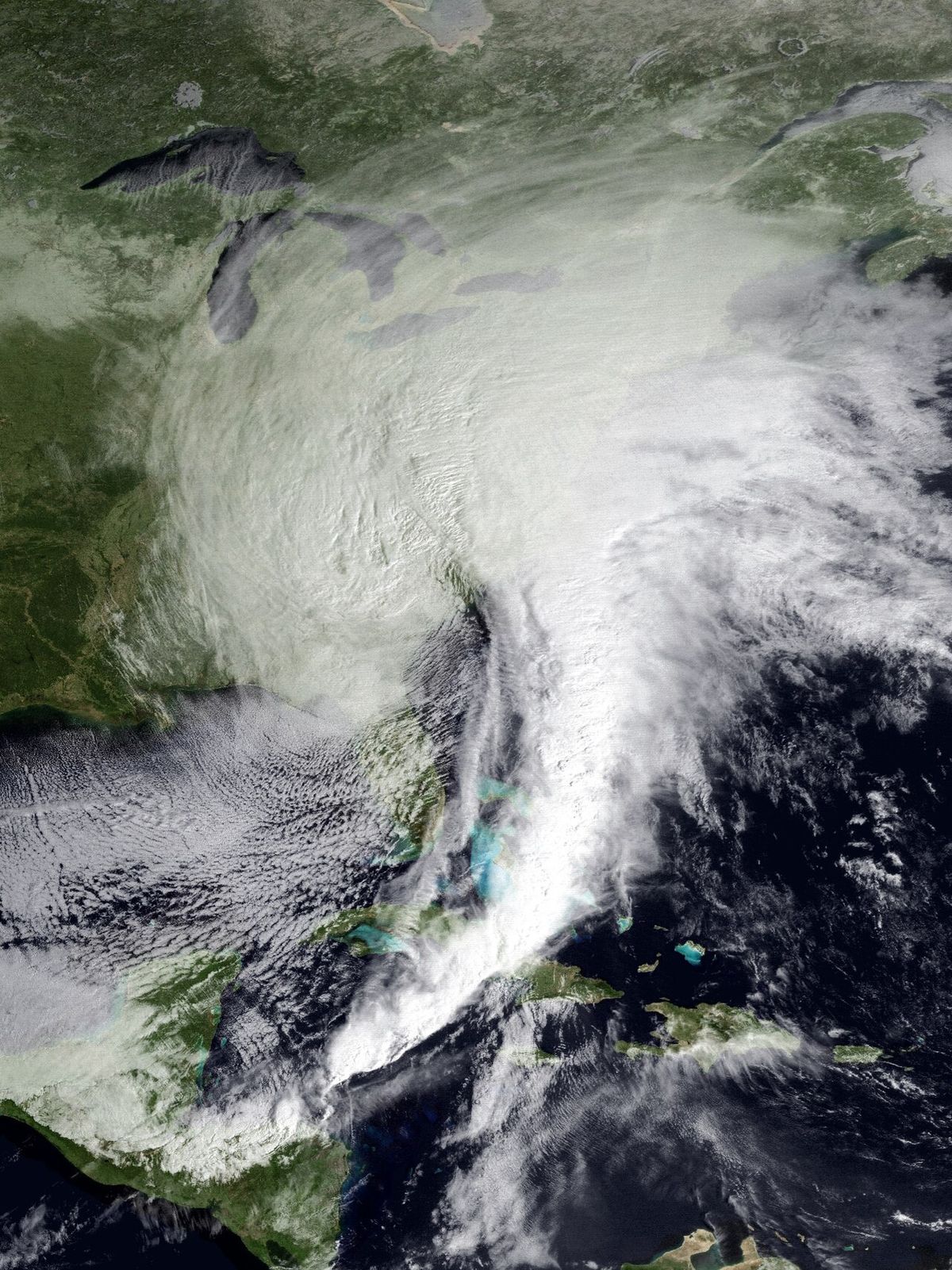
The storm originated from a complex interaction of weather systems beginning on March 11 and 12, 1993. An arctic high-pressure system over the Midwestern United States and Great Plains funneled cold air southward, while a stationary front over Mexico developed into an extratropical low-pressure area. This system rapidly intensified over the Gulf of Mexico, fueled by tropical moisture and a powerful split-polar jet stream. By the early hours of March 13, the cyclone's central pressure had dropped to 991 millibars as it moved into northwestern Florida, generating a significant storm surge. The storm then tracked up the United States East Coast, bringing heavy snow and high winds before moving into eastern Canada by March 15. In the storm's wake, unseasonably cold temperatures persisted across the southeastern United States for two days. The 1993 Storm of the Century represented a major advance in meteorological forecasting. By March 8, several numerical weather prediction models and forecasters at the United States National Weather Service had identified the potential for a major snowstorm. This marked the first time forecasters could accurately predict a storm's severity five days in advance. Official blizzard warnings were issued two days before the storm's arrival as shorter-range models confirmed the earlier predictions. This high level of confidence allowed several northeastern states to declare states of emergency proactively, before any snow began to fall, facilitating earlier preparations and likely saving lives.
Impact in the United States
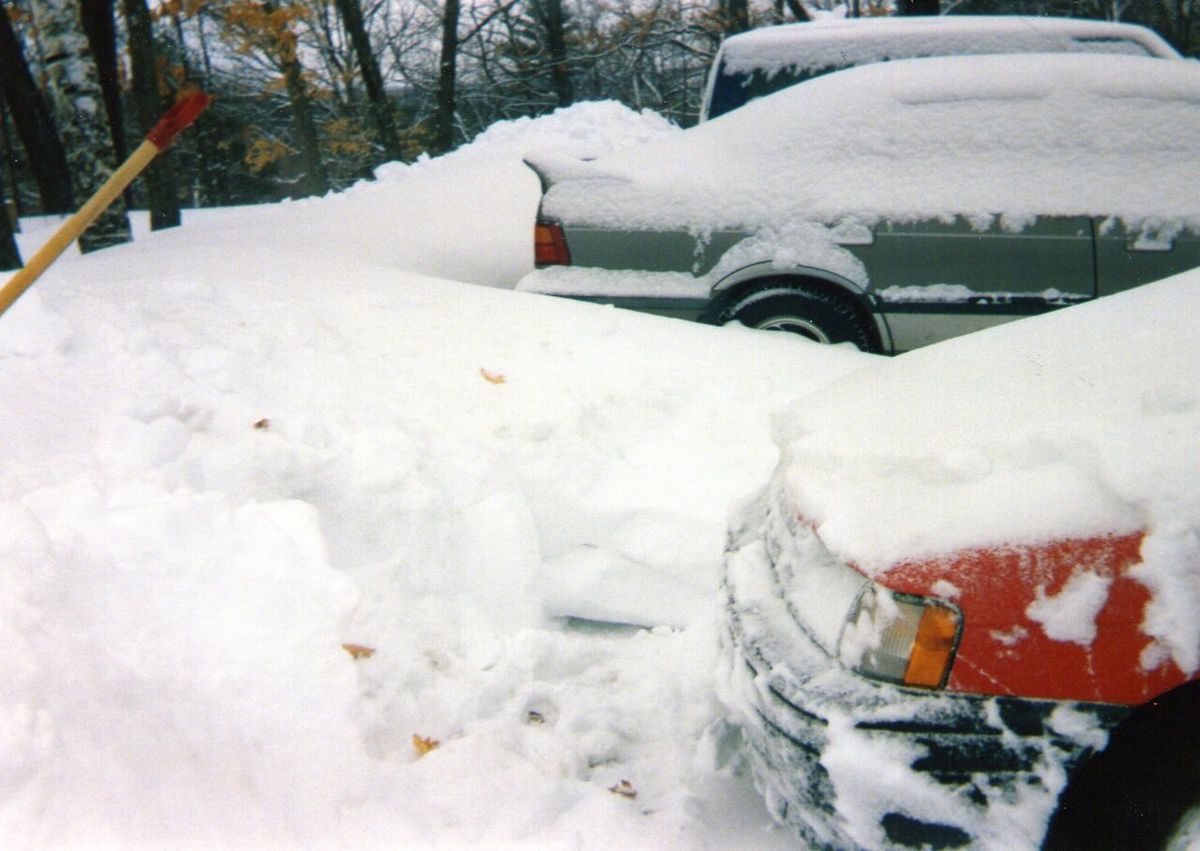
The storm's impacts were immense and widespread, affecting at least 26 U.S. states with a combination of blizzard conditions, hurricane-force winds, and thundersnow. The storm severely disrupted all forms of travel, leading to the temporary closure of every major airport along the eastern seaboard from Tampa, Florida, to Halifax, Nova Scotia. Highways across the affected region were closed or restricted, stranding thousands of motorists. In the Appalachian Mountains, some areas received up to five feet of snow, with snowdrifts reported as high as 35 feet. Hundreds of people required rescue from the Appalachian Trail and remote cabins, many caught completely off guard despite forecasts. Record-breaking snowfall collapsed roofs across the South, including a Lowe's store in Christiansburg, Virginia, and the Dedmon Center at Radford University. The LancerLot sports arena in Vinton, Virginia, also collapsed, forcing the Virginia Lancers hockey team to relocate and become the Roanoke Express. The storm caused massive power outages, with electricity not restored to some isolated rural areas for up to three weeks. An estimated 40 percent of the U.S. population experienced the storm's effects, and it was responsible for 208 fatalities within the country. The volume of total snowfall was later calculated to be 12.91 cubic miles, weighing between 5.4 and 27 billion tons. Nearly 60,000 lightning strikes were recorded as the storm swept over the country during its 72-hour duration.
Record Snowfalls and Key Impacts:- Mount Le Conte, Tennessee: 56 inches (140 cm) of snow.
- Mount Mitchell, North Carolina: 50 inches (130 cm) of snow with 14-foot (4.3 m) drifts.
- Union County, Georgia: Up to 35 inches (89 cm) of snow.
- Birmingham, Alabama: 13 inches (33 cm) of snow, a rare event.
- Boone, North Carolina: Over 30 inches (76 cm) of snow, closing Appalachian State University for the first time.
- Factory and building roof collapses occurred across multiple states.
- National Guard helicopters dropped hay for livestock in North Carolina mountain counties.
- A Philadelphia Flyers hockey game was postponed due to a broken arena window.
Devastation in Florida and the Gulf of Mexico
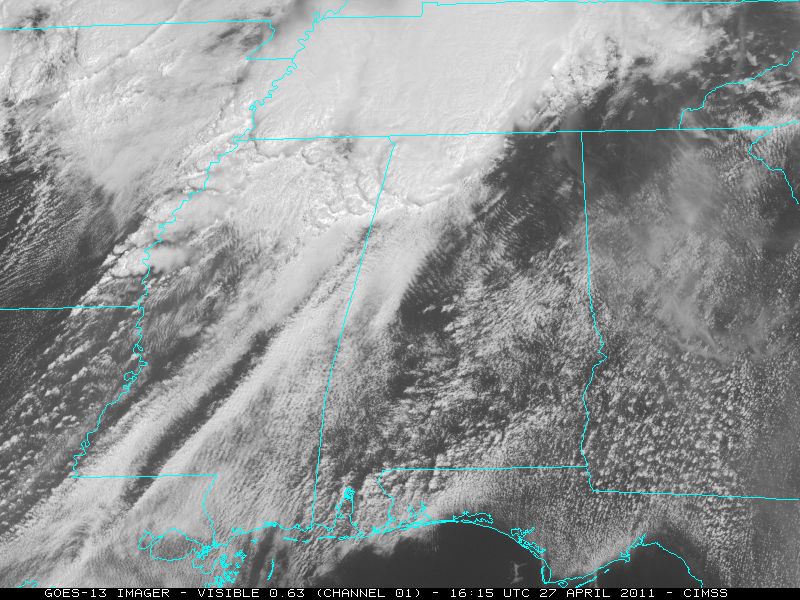
While famous for snow, the storm also generated a potent squall line ahead of its cold front that produced a serial derecho as it moved into Florida and Cuba after midnight on March 13. Straight-line winds gusted above 100 mph in many locations, causing substantial tree damage statewide. The supercells within this derecho spawned eleven tornadoes across the peninsula, ranging from F0 to F2 intensity. These tornadoes caused significant destruction, damaging or destroying hundreds of homes, downing trees and power lines, and resulting in multiple fatalities and injuries. One tornado at Jacksonville International Airport pushed a Boeing 737 about 40 feet. A catastrophic storm surge, reaching up to 12 feet in some areas, battered the Gulf Coast from Apalachee Bay to north of Tampa Bay. With little advance warning, some coastal residents were awakened by Gulf waters rushing into their homes. More people died from drowning in this storm than during Hurricanes Hugo and Andrew combined. The United States Coast Guard faced extreme conditions in the Gulf of Mexico, rescuing 235 people from over 100 boats. The freighter Fantastico sank 70 miles off Fort Myers, Florida, resulting in seven deaths after a rescue helicopter was forced to turn back. The freighter Miss Beholden also ran aground near Key West. Overall, the storm's surge, winds, and tornadoes damaged or destroyed 18,000 homes in Florida, and the state recorded 47 fatalities.
Despite the severe wind and water damage, parts of Florida also experienced unusual winter weather. The Panhandle region saw up to a foot of snow near the coast, while Tallahassee received one to two inches. Snow flurries were observed as far south as Jacksonville and Tampa Bay. The storm also brought record cold temperatures to the state, with Tallahassee dropping to 17°F (-8°C) and Orlando reaching 26°F (-3°C). Miami recorded a temperature of 39°F (4°C) on March 13, which was a near-record cold for the month. In Orlando, mixed precipitation of rain, sleet, and snow was reported.

International impacts and maritime disasters
The storm's fury extended beyond the United States, causing significant damage in Cuba and leading to maritime disasters in the Atlantic Ocean. In Cuba, the squall line produced wind gusts estimated as high as 130 mph (210 km/h) in the Havana area, making it the most damaging squall line ever recorded on the island. The event caused widespread destruction, with damage intensity comparable to an F2 tornado, and resulted in 10 deaths and an estimated US$1 billion in damage. The squall line finally moved out of Cuba near sunrise on March 13. The North Atlantic witnessed a tragic maritime loss directly linked to the storm. The cargo ship Gold Bond Conveyor, en route from Halifax, Nova Scotia, to Tampa, Florida, foundered approximately 60 nautical miles southeast of Sable Island, Nova Scotia. It is believed that water entered the ship's hold, causing its cargo of gypsum ore to shift and harden, creating fatal instability. Combined with 90 mph (140 km/h) winds and 100-foot (30 m) waves, this led to the sinking of the vessel and the loss of all 33 crew members. The Liberian-flagged ship was owned by Skaarup Shipping Corp. and chartered to National Gypsum Co. The ship had previously survived the Perfect Storm of 1991.
Tornado outbreak details
The serial derecho that swept across Florida on March 13, 1993, generated a localized but destructive tornado outbreak. The tornadoes occurred in quick succession, primarily between 04:38 and 06:10 UTC, causing a trail of damage across the central and northern parts of the state. The outbreak included tornadoes of varying intensities, which collectively resulted in multiple fatalities, dozens of injuries, and extensive property damage. The first tornado was an F2 that touched down in Chiefland at 04:38 UTC, killing three people and injuring seven. The final tornado developed in Jacksonville at 06:10 UTC, causing damage at the international airport.
Confirmed Tornadoes on March 13, 1993:| Location | Rating | Key Impacts |
|---|---|---|
| Chiefland | F2 | Damaged mobile homes, downed trees and power lines. 3 fatalities, 7 injuries. |
| Near Crystal River | F1 | Damaged 15 homes. 3 injuries. |
| Treasure Island | F0 | Waterspout moved ashore, deroofed a home, damaged boats. |
| New Port Richey | F0 | Damaged several homes. 11 injuries. |
| Southwest of Ocala | F2 | Extensive tree and building damage at Ocala International Airport. |
| Near LaCrosse | F1 | Homes destroyed, one by propane explosion. 1 fatality, 4 injuries. |
| Tampa (Davis Islands) | F0 | Waterspout tossed a sailboat 300 feet, damaged multiple boats. |
| Jacksonville | F1 | Demolished 4 dwellings, damaged 16 others. |
| Near Bartow | F0 | Snapped trees, damaged doors. |
| Jacksonville International Airport | F0 | Damaged trees, jetways, service vehicles. Pushed a Boeing 737. |
Atmospheric conditions and historical context
The formation of the 1993 Storm of the Century occurred within a unique atmospheric context that contributed to its extreme nature. A strong low-level jet over eastern Cuba and the Gulf of Mexico enhanced a cold front extending southward to the Isthmus of Tehuantepec. The subtropical jet stream was displaced unusually far south, reaching into the Pacific Ocean near Central America and extending toward Honduras and Jamaica. Intense ageostrophic flow was noted over the southern United States, with winds flowing perpendicular to isobars over Louisiana. As the low moved through the central Gulf, a shortwave trough in the northern branch of the jet stream fused with the system in the southern stream, causing rapid deepening. Barometric pressures recorded during the storm were exceptionally low, with readings of 976 mb in Tallahassee, Florida, and 960 mb observed in New England. Low pressure records for March were set in areas of twelve states along the Eastern Seaboard.
The 1993 Storm of the Century is one of the most powerful and complex extratropical cyclones in modern history. Its scale was immense, affecting a continuous area from Honduras to Canada. The event demonstrated the potential for non-tropical systems to generate hurricane-force winds, catastrophic storm surges, and tornado outbreaks, challenging conventional perceptions of winter storm hazards. The storm had a lasting impact on emergency preparedness and meteorological science. Its successful five-day forecast by the National Weather Service marked a turning point in predictive capability, building public trust in longer-range warnings. The proactive declaration of states of emergency set a precedent for future disaster response. The storm's severe impacts in typically mild regions like the southeastern U.S. highlighted the need for comprehensive winter weather preparedness across all levels of government and society.
Long-range influences and comparisons
Scientific analysis has considered the potential role of larger climatic events in the storm's formation. The stratospheric cloud from the 1991 eruption of Mount Pinatubo persisted in the atmosphere for three years, causing a volcanic winter and raising stratospheric temperatures by several degrees due to radiation absorption by aerosols. While not directly responsible, this volcanic event may have played a part in the atmospheric conditions that led to the 1993 Storm of the Century. The storm is often compared to other major historical weather events due to its cost and impact. It caused more total fatalities than the Braer Storm of 1993 and was notably more destructive than the Perfect Storm of 1991, which the Gold Bond Conveyor had survived. In the decades since, only a few North American winter storms have approached its scale, such as Hurricane Sandy in 2012, which caused similar Northeast snowfall, and the February 2021 winter storm, which became the costliest on record. The term 'Storm of the Century' entered common parlance after this event, and archive footage of the blizzard was later used in the 2004 film *The Day After Tomorrow*.
Questions about 1993 Storm of the Century
Why was the 1993 storm called the 'Storm of the Century'?
The 1993 storm earned the title 'Storm of the Century' due to its unprecedented scale, intensity, and widespread impacts. It was a colossal cyclonic storm that stretched from Canada to Honduras, affecting millions of people. It combined multiple extreme weather hazards, including record snowfall, hurricane-force wind gusts up to 145 mph, a devastating storm surge, and a tornado outbreak. The storm caused 318 fatalities and $5.5 billion in damage, and an estimated 40 percent of the U.S. population felt its effects, making it a benchmark event for its generation.
How much snow fell during the 1993 blizzard?
Snowfall totals were historically high, particularly in the Appalachian Mountains. The greatest recorded amount was 56 inches (140 cm) at Mount Le Conte in Tennessee. Mount Mitchell in North Carolina, the highest peak in eastern North America, received 50 inches (130 cm) of snow with drifts up to 15 feet (4.6 m). Widespread areas of northwestern North Carolina saw between 2 and 3 feet of snow. The storm's total snowfall volume was later calculated to be 12.91 cubic miles, a massive amount that contributed to widespread roof collapses and travel paralysis.
Did the 1993 storm affect Canada?
Yes, the storm significantly affected eastern Canada. After moving up the U.S. East Coast, the system moved into eastern Canada by the early morning of Monday, March 15. The storm caused major travel disruptions, leading to the temporary closure of airports, including Halifax in Nova Scotia. The storm also contributed to a maritime disaster in the North Atlantic, where the cargo ship Gold Bond Conveyor sank southeast of Sable Island, Nova Scotia, with the loss of all 33 crew members during the storm's peak intensity.
What made the forecasting of this storm so significant?
The forecasting of the 1993 Storm of the Century was a milestone because it was the first time United States National Weather Service meteorologists accurately predicted a storm's severity five days in advance. By March 8, numerical weather models and forecasters recognized the threat of a major snowstorm. This long lead time allowed for official blizzard warnings to be issued two days before arrival and gave several northeastern states the confidence to declare states of emergency before the snow started falling. This proactive approach to warnings and preparedness set a new standard for future extreme weather events.
How did the storm impact Florida, since it's not known for snow?
Florida experienced a devastating and complex impact from the storm, far beyond the light snow that fell in northern areas. A powerful squall line, or serial derecho, swept across the state with straight-line winds over 100 mph and spawned eleven tornadoes, causing widespread damage and fatalities. Most catastrophically, the storm generated a massive storm surge up to 12 feet high along the Gulf Coast, which flooded homes and resulted in more drowning deaths than Hurricanes Hugo and Andrew combined. Overall, 47 people died in Florida, and 18,000 homes were damaged or destroyed by the surge, winds, and tornadoes.
What was the death toll and total cost of the 1993 Storm of the Century?
The storm was responsible for a total of 318 fatalities across all affected regions. Within the United States alone, 208 deaths were attributed to the storm. The financial cost was immense, with total damages estimated at $5.5 billion (in 1993 U.S. dollars). The storm also caused over 10 million households in the U.S. to lose electric power, with some rural areas remaining without electricity for up to three weeks due to the extensive damage to infrastructure.
Sources and further reading
- 1993 Storm of the Century (Wikipedia)
- On This Day: The 1993 Storm of the Century | News (ncei.noaa.gov)
- The 1993 Storm of the Century (weather.gov)
Checked by the Your Space Hamilton desk. Last updated 2026-10-20.