New England's Dark Day
New England's Dark Day was a significant atmospheric event that occurred on May 19, 1780, when an unusual darkening of the daytime sky was observed over the New England states and parts of eastern Canada. The darkness was so complete that candles were required from noon onward, and it did not fully disperse until the middle of the following night. The event caused widespread confusion and was interpreted by many contemporaries as a religious sign. Scientific analysis conducted centuries later concluded the most likely cause was a combination of smoke from extensive forest fires, a thick fog, and cloud cover, with evidence pointing to a major fire in what is now Algonquin Provincial Park, Ontario.
Event Description and Geographical Reach
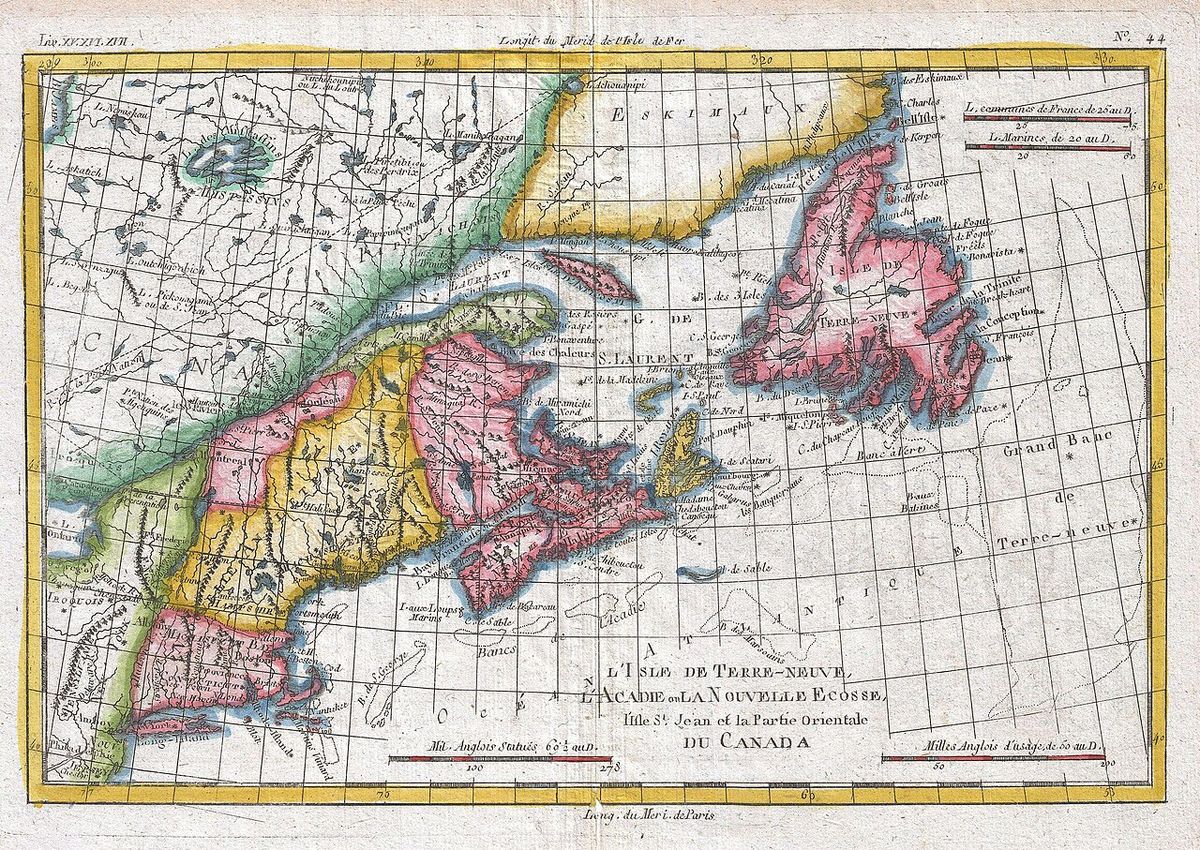
New England's Dark Day of May 19, 1780, was characterized by an unnatural darkening of the daytime sky that compelled residents across a wide area to light candles to conduct their usual business. According to research by Professor Samuel Williams of Harvard College, the phenomenon was observed from at least as far north as Portland, Maine, and extended southward through the New England states to New Jersey. The darkness was not witnessed in Pennsylvania, which helped define the regional boundaries of the atmospheric event. In New Jersey, Revolutionary War soldier Joseph Plumb Martin provided a detailed account, noting that the darkness was very dark where he was, causing fowls to go to their roosts, cocks to crow, and whip-poor-wills to sing as if it were night. People had to light candles in their houses to see, and Martin observed that the following night was as uncommonly dark as the day had been, indicating lingering atmospheric effects.
Detailed Progression and Timelines
The darkness arrived and progressed at different times across the affected region, with reports providing a detailed chronology of the event. The earliest report came from Rupert, Vermont, where the sun was already obscured at sunrise. In Cambridge, Massachusetts, Professor Samuel Williams observed that this extraordinary darkness came on between the hours of 10 and 11 a.m. and continued until the middle of the next night. Reverend Ebenezer Parkham of Westborough, Massachusetts, reported peak obscurity occurred by 12:00 p.m., but did not record the time of its first arrival. At Harvard College, more precise measurements were taken: the obscuration was reported to arrive at 10:30 a.m., it peaked at 12:45 p.m., and began to abate by 1:10 p.m., though a heavy overcast remained for the rest of the day. Further south, the obscuration was reported to have reached Barnstable, Massachusetts, by 2:00 p.m., with its peak obscurity reported to have occurred much later, at 5:30 p.m. This variance in timing suggests the smoke and cloud mass moved and evolved throughout the day.
Atmospheric Conditions and Physical Evidence
Specific atmospheric conditions and physical evidence were widely reported during and after the Dark Day, providing crucial clues to its cause. For several days before May 19, the sun as viewed from New England appeared red, and the sky appeared yellow, indicating the presence of high-altitude particulates. On the morning of the Dark Day itself, rain fell over portions of New England, confirming that cloud cover was present. During the darkness, witnesses reported that a strong sooty smell prevailed in the atmosphere and that rainwater had a light film over it composed of particles of burnt leaves and ash. In Ipswich, Massachusetts, roosters crowed, woodcocks whistled, and frogs peeped as if night had fallen at 2:00 p.m. Contemporaneous reports also indicated that ash and cinders fell on parts of New Hampshire to a depth of six inches, or 15 centimetres. When night finally arrived, observers saw the moon coloured red, another effect consistent with light scattering through a smoke-filled atmosphere.
Religious Interpretations and Historical Responses
The unusual and inexplicable nature of the Dark Day led many people to apply religious interpretations to the event, with some responses becoming historically notable. In Connecticut, a member of the Governor's council, Abraham Davenport, became famous for his pragmatic response to colleagues who feared it was the Day of Judgment and suggested adjourning the council. Davenport stated he was against adjournment, arguing that if the day of judgment was not approaching there was no cause for it, and if it was, he chose to be found doing his duty, concluding with the request, "I wish therefore that candles may be brought." His courage was later commemorated in the poem "Abraham Davenport" by John Greenleaf Whittier and also by Edwin Markham in his poem "A Judgement Hour." The event held specific significance for emerging religious groups. Shaker leader Ann Lee, then living in Niskayuna, New York, found motivation to present her religious testimony to the public. Similarly, the Public Universal Friend treated the event as a fulfillment of some prophecies from the Book of Revelation. Within Seventh-day Adventist scholarship, author Arthur S. Maxwell mentions the event in his The Bible Story series, and its interpretation as a potential fulfillment of Matthew 24:29 is still debated among Adventist scholars today.
Scientific Investigation and Conclusive Cause
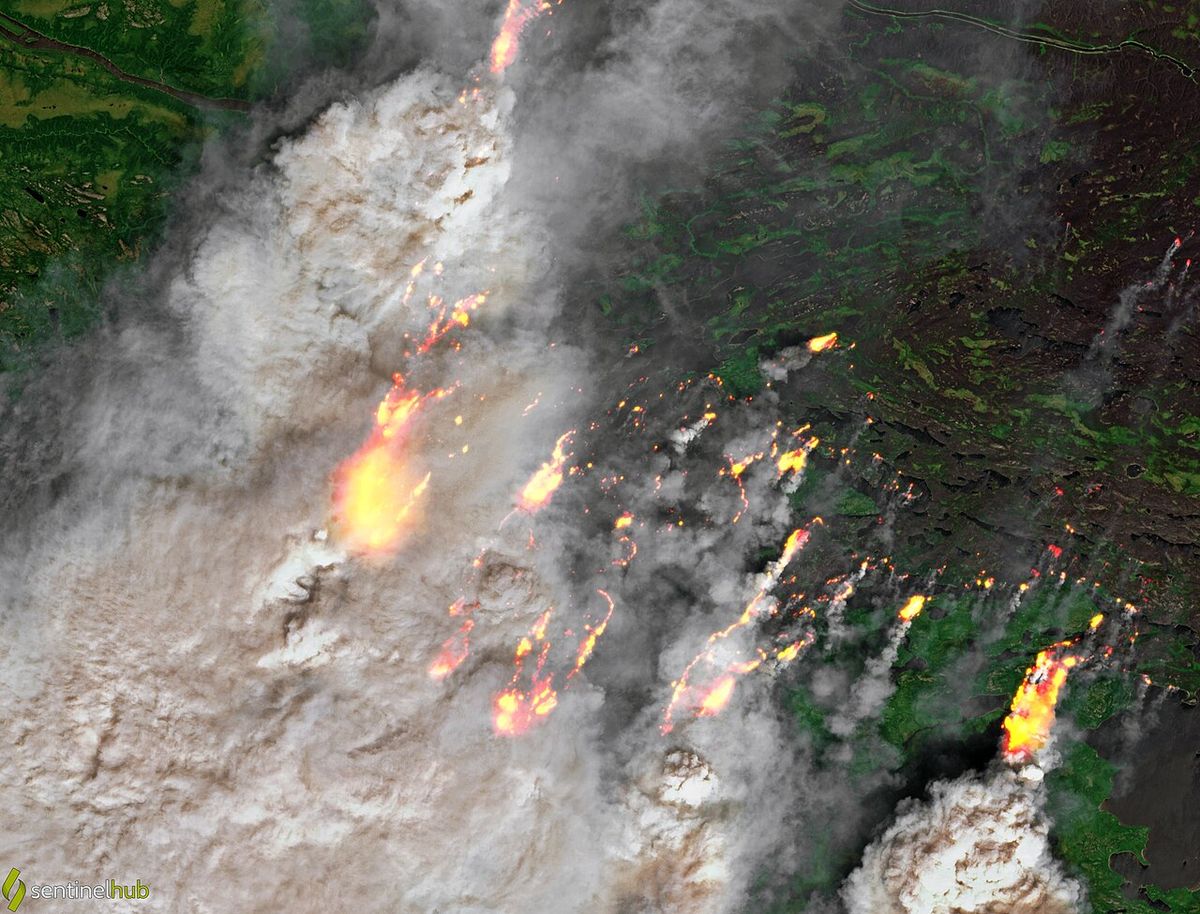
The cause of New England's Dark Day remained a mystery for more than two centuries until modern scientific methods were applied to the historical record. Researchers concluded the most likely cause was a combination of smoke from extensive forest fires, a thick fog, and cloud cover, based on the physical evidence of soot and ash. The key breakthrough came from studies of forests, specifically the examination of tree rings and fire scars. Researchers working in present-day Algonquin Provincial Park in Ontario, Canada, identified clear evidence of a major forest fire that occurred in 1780. This finding allowed scientists to attribute the atmospheric conditions of the Dark Day directly to the smoke plume generated by this large-scale fire. The smoke was carried eastward by prevailing winds across the Great Lakes region, where it interacted with existing fog and cloud layers over New England to create the unprecedented daytime darkness. This explanation coherently accounts for all the contemporaneous observations, including the red sun, falling ash, sooty smell, and the prolonged duration of the gloom.
Cultural Depictions and Comparable Historical Events
New England's Dark Day has been referenced in modern culture and is often studied alongside similar atmospheric events caused by large-scale wildfires. The 2025 film *The Proof of Ann Lee* depicts the Dark Day and its relation to Ann Lee and Shakerism, although it inaccurately depicts the darkness as being caused by a solar eclipse rather than wildfire smoke. The event is part of a historical pattern where massive fires create regional or continental optical effects. Several other notable events provide modern parallels that help explain the 1780 phenomenon. Key comparable atmospheric events caused by wildfire smoke include the Chinchaga Fire in 1950 in Canada, which produced similar darkening effects, and the 2019-20 Australian bushfire season, which turned the sky yellow over much of New Zealand. The widespread smoke from the 2023 Canadian wildfires that affected air quality and sky colour across eastern North America is another direct parallel, as are Orange Skies Day in Northern California in 2020 and the Bridge Fire in Victorville, California, in 2024. These events demonstrate the recurring meteorological impact of large forest fires, validating the scientific conclusion about the 1780 Dark Day's origins. The study of tree rings from Algonquin Park provides a direct physical link between a specific historical fire and the widespread atmospheric disturbance recorded in New England.
Historical Records and Archival Sources
The event is well-documented through a variety of historical records, including personal diaries, scientific observations, and government documents. Professor Samuel Williams of Harvard College published a formal account of the darkness and its geographical range, which remains a primary source for researchers. The diary of Joseph Plumb Martin provides a soldier's perspective from New Jersey, detailing the animal behaviour and the need for candlelight. Local histories, such as Joseph Dow's history of Hampton, contain entries describing the event and its effects on specific communities. The response of Abraham Davenport is recorded in the annals of the Connecticut colonial government, where he served on the Governor's council, later renamed the Connecticut State Senate in 1818. Further reading on the subject includes Alden Bradford's 1843 New England Chronology, which contains an entry on the "uncommonly dark day. Modern analyses, such as a May 2004 Weather Almanac entry and a 2012 BBC News Magazine article titled "What Caused the Mystery of the Dark Day?" continue to examine the event.
Questions about New England's Dark Day
How did people react to the Dark Day at the time?
Most people found the event baffling and inexplicable, leading many to apply religious interpretations. Some in government, like Abraham Davenport in Connecticut, advocated for continuing work by candlelight. Religious figures like Shaker leader Ann Lee saw it as motivation for public testimony, while others like the Public Universal Friend viewed it as a prophetic sign. The widespread need for candles and reports of nocturnal animal behaviour confirm the practical disruption it caused.
What caused New England's Dark Day?
The primary cause of New England's Dark Day is now believed to have been a combination of smoke from extensive forest fires, a thick fog, and cloud cover. This conclusion was reached more than two centuries after the event based on modern studies of tree rings and fire scars. Researchers examining forests in present day Algonquin Provincial Park in Ontario, Canada, identified a major fire in 1780 and attribute the Dark Day's atmospheric conditions to the smoke plume from that fire. Contemporaneous evidence such as a strong sooty smell, ash falling on New Hampshire, and particles in rainwater all support the forest fire smoke theory. The smoke was carried eastward over New England, combining with existing fog and cloud cover to create the deep darkness.
When did New England's Dark Day happen and how long did it last?
New England's Dark Day occurred on May 19, 1780. The darkness began at different times across the region, with the earliest report coming from Rupert, Vermont, where the sun was already obscured at sunrise. In Cambridge, Massachusetts, Professor Samuel Williams observed the extraordinary darkness come on between 10:00 and 11:00 a.m. It did not fully disperse until the middle of the following night, meaning the period of significant obscurity lasted for well over 24 hours. At Harvard College, the peak obscurity was reported at 12:45 p.m., with some abatement by 1:10 p.m., though a heavy overcast remained for the entire day and into the next night.
Where was the darkness observed and how far did it reach?
The darkness was observed over the New England states and parts of eastern Canada. According to Professor Samuel Williams of Harvard College, it was seen at least as far north as Portland, Maine, and extended southward to New Jersey. Revolutionary War soldier Joseph Plumb Martin provided a detailed account from New Jersey, noting it was very dark there, requiring candles. The event was notably not witnessed in Pennsylvania, which later helped scientists define it as a regional atmospheric phenomenon. The range of observation helped researchers rule out a total solar eclipse and pointed toward a localized cause like smoke plumes.
Is there a movie about New England's Dark Day?
Yes, the 2025 film *The Proof of Ann Lee* depicts New England's Dark Day and its relation to Ann Lee and the Shaker religious movement. However, the film takes historical license by inaccurately depicting the darkness as being caused by a solar eclipse. The established scientific cause, based on evidence from tree ring studies and contemporary reports of ash fall, is smoke from forest fires in Canada. The film uses the event as a backdrop for its story about Ann Lee, who was motivated by the Dark Day to present her religious testimony to the public.
What physical evidence was left by the Dark Day?
Substantial physical evidence was reported by witnesses across the region. A strong sooty smell prevailed in the atmosphere, and rainwater had a light film over it composed of particles of burnt leaves and ash. Most notably, ash and cinders fell on parts of New Hampshire to a depth of six inches, or 15 centimetres. This fallout, along with the red appearance of the sun in the days before and the moon coloured red during the subsequent night, provided direct clues that the event was caused by airborne particulate matter. The collected soot in rivers and the film on rainwater specifically suggested the widespread presence of smoke from large scale combustion.
Sources and further reading
- New England's Dark Day (Wikipedia)
- The Dark Day, May 19, 1780 (historicipswich.net)
Checked by the Your Space Hamilton desk. Last updated 2026-10-23.