Mount Odin
Mount Odin is the highest mountain on Baffin Island, located in the Qikiqtaaluk Region of Nunavut within Auyuittuq National Park. It is the highest peak of the Baffin Mountains and the fifth-highest mountain in the Arctic Cordillera, with a summit elevation of 2,147 metres. The mountain is a prominent landmark along the Akshayuk Pass, approximately 46 kilometres north of the community of Pangnirtung. Named after the chief god in Norse mythology, Mount Odin is a significant destination for mountaineers and a defining feature of the Canadian Arctic landscape.
Geography and Topography
Mount Odin is situated within the expansive Baffin Mountains, which form part of the Arctic Cordillera that runs along the northeastern edge of North America. The mountain's precise location is along the Akshayuk Pass, a famous glacial valley and hiking route within Auyuittuq National Park. Its summit reaches 2,147 metres above sea level, granting it the title of the highest point on Baffin Island. The mountain's topographic prominence of 2,147 metres is the greatest of any peak on Baffin Island and within the Baffin Mountains, and it ranks as the third-highest in Nunavut by this measure.
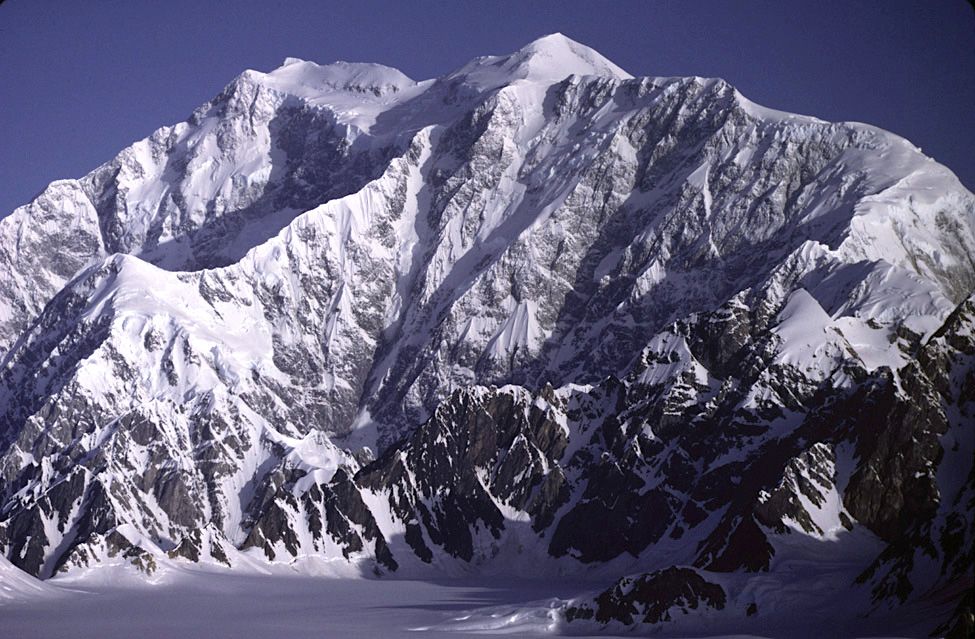
The south face of Mount Odin is a dramatic, rocky escarpment that drops steeply toward the Weasel River valley below. In contrast, the northern aspects of the mountain are heavily glaciated, featuring icefields and glaciers that are characteristic of the high Arctic environment. This combination of sheer rock faces and permanent ice contributes to the mountain's challenging and imposing appearance. The geology of the area consists primarily of Precambrian granite, shaped over millennia by glacial activity.
When compared to other major peaks in Nunavut, Mount Odin is the fifth-highest by absolute elevation. The higher summits are all located further north on Ellesmere Island and Axel Heiberg Island. Barbeau Peak on Ellesmere Island is the territory's highest point at 2,616 metres. Two unnamed peaks on Ellesmere Island reach 2,347 metres and 2,201 metres respectively, and Outlook Peak on Axel Heiberg Island stands at 2,210 metres, just 63 metres taller than Mount Odin. Despite not being the absolute highest in the territory, Odin's combination of height, dramatic local relief, and accessibility within a national park secures its status.
Location and Access
Mount Odin is located in Auyuittuq National Park on Baffin Island, approximately 46 kilometres north of the Inuit hamlet of Pangnirtung. The park itself is accessible by air from Iqaluit, with regular flights to Pangnirtung, which serves as the primary gateway for visitors. From Pangnirtung, access to the park and the Akshayuk Pass trailhead typically involves a boat transfer during the summer months or travel over sea ice in the winter, depending on the season. The journey to the base of Mount Odin is a multi-day wilderness expedition requiring careful planning and appropriate gear for Arctic conditions. There are no roads or facilities within the park beyond emergency shelters. Travel is entirely on foot or by ski, and visitors must register with Parks Canada and undergo mandatory orientation regarding safety and Leave No Trace principles. The area is remote and subject to rapidly changing weather, including high winds, whiteout conditions, and freezing temperatures even in summer. The climbing routes on Mount Odin are technical and require advanced mountaineering skills, including glacier travel and rock climbing on often loose rock.
Mountaineering and Recreation
As the highest peak on Baffin Island, Mount Odin presents a significant objective for experienced alpinists. The standard climbing routes involve travel across the glaciated terrain on the mountain's northern slopes before tackling the rocky summit ridge. Due to its remote location and the technical difficulty of the ascent, successful climbs require self-sufficiency, expertise in crevasse rescue, and the ability to handle prolonged periods of severe weather. The mountain has been climbed by various expeditions over the decades.
For the vast majority of visitors to Auyuittuq National Park, Mount Odin is a spectacular backdrop for trekking rather than a climbing target. The Akshayuk Pass provides hikers with extensive views of the mountain's south face. Popular activities in the park include backpacking, ski touring, and wildlife viewing, with chances to see Arctic foxes, hares, and occasional polar bears near the coast. The park's name, Auyuittuq, is an Inuktitut word meaning the land that never melts, a fitting description for the enduring ice and rock landscape dominated by peaks like Mount Odin.
- Primary Activity: Technical mountaineering on glaciated terrain.
- Viewing Access: The Akshayuk Pass hiking trail.
- Skill Level Required: Advanced for climbing. Moderate to strenuous for hiking in the pass.
- Season: Limited to summer months (late June to early September) for hiking. Climbing windows are narrower.
- Key Feature: The imposing south face visible from the Weasel River valley.
Naming and Cultural Significance
The mountain is named after Odin, the one-eyed chief of the gods in Norse mythology and the central figure in Norse paganism. This naming convention is part of a broader pattern in the Arctic where European explorers and cartographers assigned names from classical and Norse mythology to newly mapped geographic features. The name connects the mountain to a tradition of exploration and discovery, though it does not reflect Inuit place names or narratives for the area. The local Inuit communities have their own rich toponymy and cultural history associated with the land within Auyuittuq National Park.
The mountain's significance extends beyond its name, serving as a powerful symbol of the rugged and untouched Arctic wilderness. It represents the scale and challenge of Canada's northern landscapes. For modern Canadians, Mount Odin and Auyuittuq National Park are important protected areas that conserve a unique ecosystem and offer a wilderness experience. The park is cooperatively managed by Parks Canada and the Qikiqtani Inuit Association, ensuring Inuit perspectives and knowledge guide its stewardship.
Distinction from Other Peaks Named Mount Odin
It is important to distinguish this Mount Odin on Baffin Island from other peaks bearing the same name in Canada. A notable example is Mount Odin in the interior of British Columbia, which is the highest peak in the southern Monashee Mountains. The British Columbia peak also has significant topographic prominence, reportedly over 2,400 metres. That Mount Odin has seen increased recreational traffic, with a climber's trail established via Frigg Creek as documented in 2025 and 2026 trip reports. These ascents, which can be done in a long day or as multi-day trips, contrast sharply with the remote, expedition-style climbing required for the Arctic Mount Odin.
Other unrelated locations include Mt. Odin Park in Greensburg, Pennsylvania, which is a golf course and recreation area, and various other minor geographic features. The prevalence of the name highlights its mythological appeal but can lead to confusion. The Mount Odin in Nunavut remains pre-eminent in the Canadian context due to its status as a national park landmark and its position as the apex of Baffin Island's mountainous terrain.
Conservation and Park Management
Parks Canada manages the park with a focus on conserving its natural and cultural heritage while providing opportunities for visitors to experience this unique environment. All visitors must obtain a permit and attend a mandatory orientation session to ensure they understand the risks and regulations, such as proper waste disposal and wildlife safety protocols. The management plan for Auyuittuq emphasizes the importance of Inuit Qaujimajatuqangit (Inuit traditional knowledge) in guiding conservation and visitor management decisions. Climate change poses a significant long-term threat to the park's environment, affecting glacial retreat and permafrost stability. Monitoring these changes is a key part of the park's scientific work. For climbers and hikers, the principle of minimal impact is paramount, requiring all expeditions to be self-sufficient and to remove all waste, leaving no trace of their passage on the fragile tundra and rock.
Questions about Mount Odin
Can you hike or climb Mount Odin?
Mount Odin is a technical mountaineering objective requiring advanced skills in glacier travel, rock climbing, and Arctic survival. It is not a hike. Most visitors experience the mountain by trekking the Akshayuk Pass within Auyuittuq National Park, which offers spectacular views of its south face. Any climbing expedition requires thorough preparation and permits from Parks Canada.
Is this the only Mount Odin in Canada?
No, there are other mountains named Mount Odin in Canada. The most notable other one is located in the Monashee Mountains of British Columbia. The Nunavut Mount Odin is distinguished by being the highest on Baffin Island and being located within a national park. There is also a Mt. Odin Park golf course in Pennsylvania, USA.
Where is Mount Odin located?
Mount Odin is located in Qikiqtaaluk, Nunavut, Canada. Specifically, it is situated in Auyuittuq National Park along the Akshayuk Pass. It is found 46 km north of Pangnirtung and south of Mount Asgard on Baffin Island. This mountain is the highest peak on Baffin Island. It is also the highest mountain within the Baffin Mountains range.
How tall is Mount Odin?
Mount Odin has a topographic prominence of 2,147 m. This prominence is greater than any other mountain on Baffin Island and within the Baffin Mountains. In terms of absolute height, it is the fifth highest peak in Nunavut. The higher points in Nunavut are all located on Ellesmere Island and Axel Heiberg Island. For example, Outlook Peak on Axel Heiberg Island is 63 m higher than Mount Odin.
What is the nearest town to Mount Odin?
The nearest town to Mount Odin is Pangnirtung. Pangnirtung is located 46 km to the south of the mountain. This community serves as a gateway to Auyuittuq National Park where Mount Odin is located. The mountain itself is positioned along the Akshayuk Pass within the park boundaries.
Why is it called Mount Odin?
The mountain is named after Odin, the chief of the gods in Norse mythology and Norse paganism. This name was given by European explorers and cartographers. The practice of using names from classical and Norse mythology was common when naming Arctic features. It is listed among other places named after Odin.
Sources and further reading
- Mount Odin (Wikipedia)
- Mount Odin [BC] (stevensong.com)
- Mount Odin, August 31 2025 (tareef.tech)
Checked by the Your Space Hamilton desk. Last updated 2026-10-28.