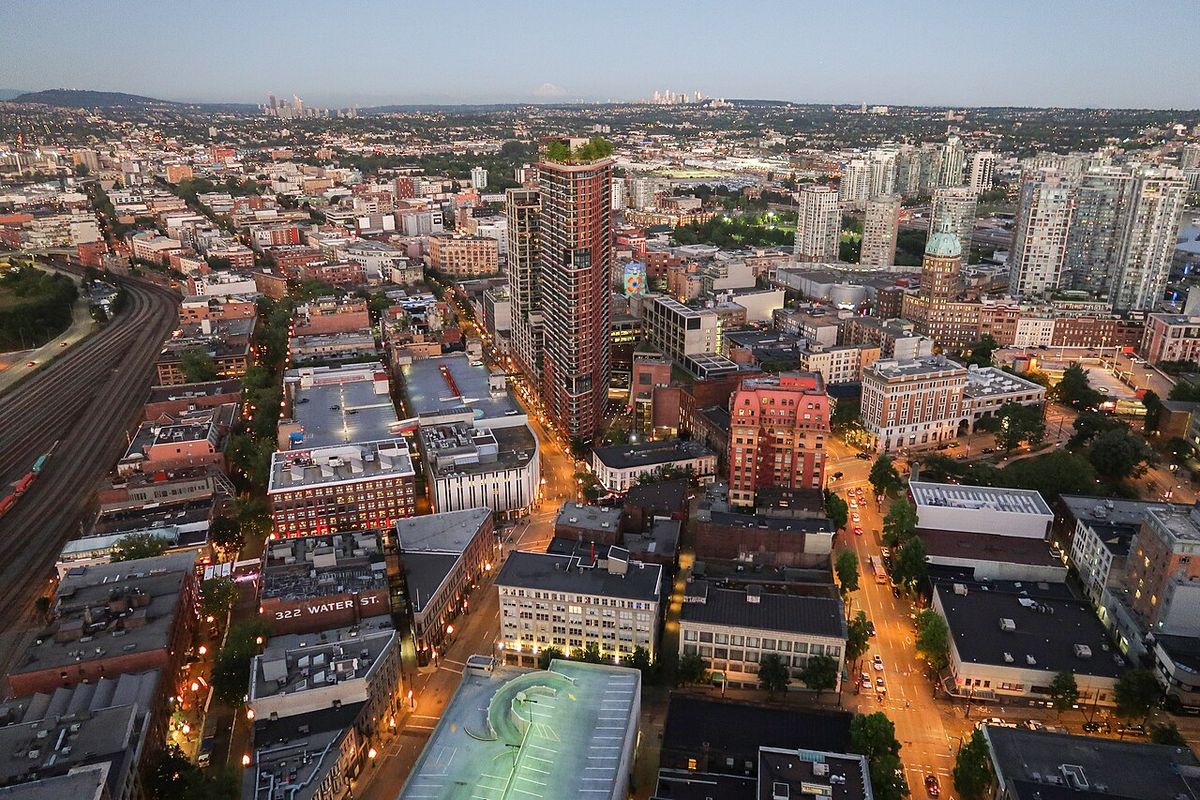
Montreal Museum of Fine Arts
The Montreal Museum of Fine Arts (MMFA) is Canada's oldest and largest art museum by gallery space, located on Sherbrooke Street West in Montreal's historic Golden Square Mile. Founded in 1860 as the Art Association of Montreal, the museum's encyclopedic permanent collection comprises approximately 44,000 works spanning from antiquity to contemporary art. Its campus consists of five interconnected pavilions offering 13,000 square metres of exhibition space, making it a leading cultural institution in North America. The MMFA is a member of the international Bizot Group and was the most visited art museum in Canada in 2020.
Founding and Early History
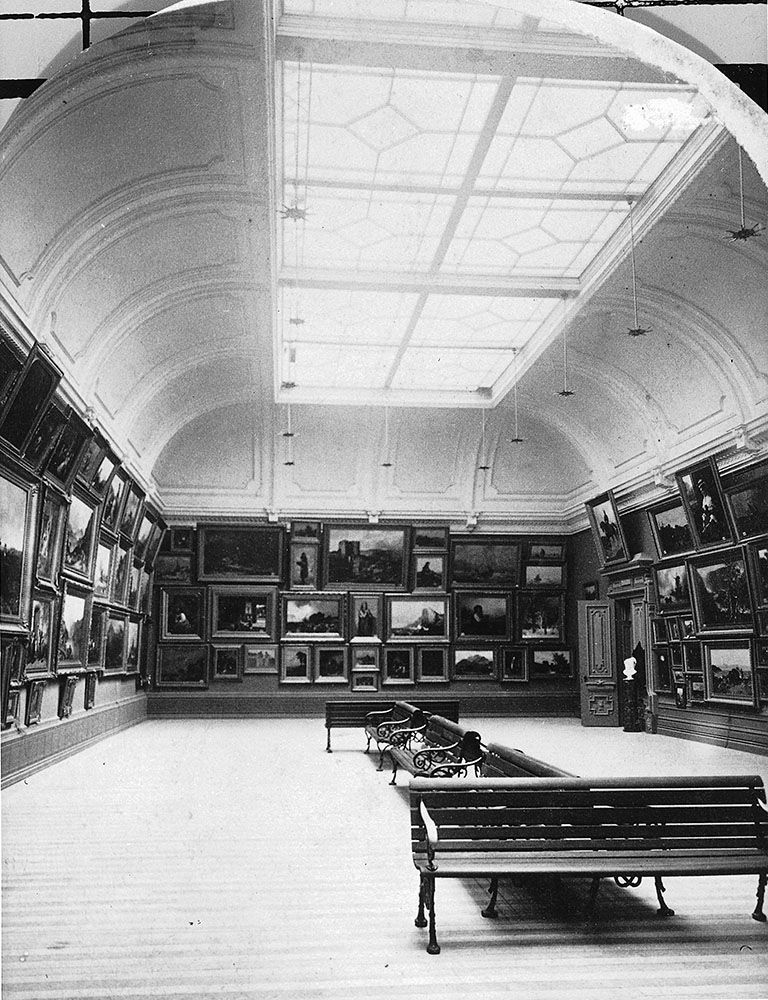
The Montreal Museum of Fine Arts originated with the founding of the Art Association of Montreal in April 1860 by Anglican Bishop Francis Fulford. The association's initial mandate was to encourage public appreciation of fine arts, but for its first two decades it operated without a permanent home, holding exhibitions in various temporary venues across the city. A gift in 1877 from Montreal businessman Benaiah Gibb, who donated 72 paintings, 4 bronzes, a building site on Phillips Square, and $8,000 on the condition a museum be built within three years, provided the necessary catalyst for a permanent building. This led to the inauguration of Canada's first purpose-built art gallery on May 26, 1879, by Governor General Sir John Douglas Sutherland Campbell. The original Phillips Square building, designed by the firm Hopkins and Wily, featured an exhibition room, a reading room for graphic works, a lecture hall, and an early art school. The museum was expanded in 1893 by architect Andrew Thomas Taylor, with decorative carving by sculptor Henry Beaumont, and the Art Association held annual exhibitions including a Spring Salon for living Canadian artists. The gift from Benaiah Gibb generated public interest and led to a multiplication of donations, establishing the core of the museum's collection.
Relocation and Expansion on Sherbrooke Street
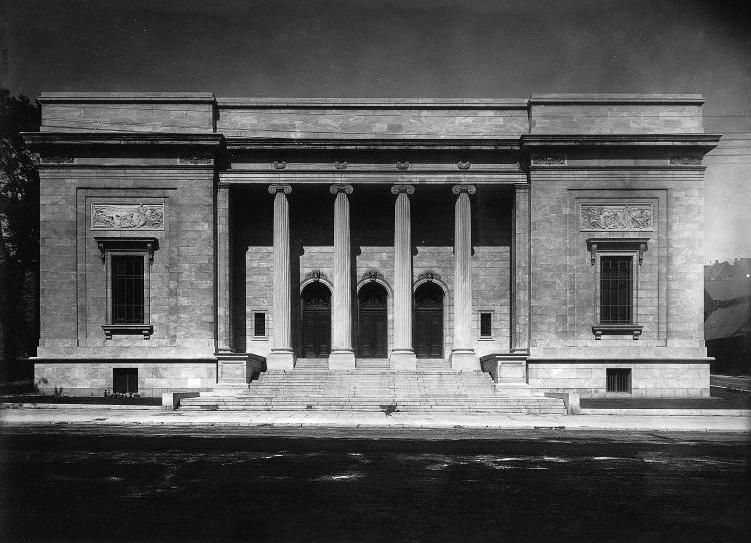
By the early 20th century, the museum had outgrown its Phillips Square location and sought to move to the prestigious Golden Square Mile neighbourhood where the city's financial elite lived. A committee led by prominent figures like James Ross, Richard B. Angus, and Vincent Meredith secured the site of the abandoned Holton House on Sherbrooke Street West from owner Senator Robert Mackay. Most committee members contributed considerable personal funds, with a large donation from businessman James Ross. A limited architectural competition selected the design by brothers Edward Maxwell and William Sutherland Maxwell, who proposed a sober, majestic Beaux-Arts building. Construction began in summer 1910 and was completed in fall 1912, with the old Phillips Square building demolished that same year. The new Museum of the Art Association of Montreal was inaugurated on December 9, 1912, by Governor General Prince Arthur, Duke of Connaught, before a crowd of 3,000 people. The institution was renamed the Montreal Museum of Fine Arts in 1949 to better reflect its public mandate and became a semi-public institution receiving government funding in 1972.
The museum underwent significant physical expansion in the latter half of the 20th century. The modernist Liliane and David M. Stewart Pavilion, designed by architect Fred Lebensold, opened in 1976 and houses a collection of decorative arts and design. The building's concrete structure along du Musée Avenue contrasted with the classical architecture of the first pavilion and was controversial despite innovations like a ceiling box for track lighting. The pavilion houses nearly 900 objects including furniture, glass, silverware, textiles, and ceramics donated by Liliane and David M. Stewart. A major expansion in 1991 added the Jean-Noël Desmarais Pavilion across Sherbrooke Street, designed by Moshe Safdie, which incorporated the facade of the former New Sherbrooke Apartments. This pavilion focuses on modern and contemporary art and was funded by government and business community contributions, notably from the Desmarais family. The museum further expanded by converting the historic Erskine and American United Church, a National Historic Site designated in 1998, into the Claire and Marc Bourgie Pavilion, which opened in 2010 and is dedicated to Quebec and Canadian art. The most recent addition is the Michal and Renata Hornstein Pavilion for Peace, which opened in 2016 and won a Governor General's Medal in Architecture in 2018.
Pavilions and Campus Layout
The museum's campus spans both sides of Sherbrooke Street West and comprises five interconnected pavilions with a total area of 53,095 square metres, of which 13,000 square metres is dedicated to exhibition space. This expansion made it the eighteenth largest art museum in North America. Each pavilion has a distinct architectural character and collection focus. The original 1912 Beaux-Arts building is now named the Michal and Renata Hornstein Pavilion and houses Early to Modern International Art. The Jean-Noël Desmarais Pavilion (1991) contains modern and contemporary art, including the Arts of One World galleries in its Stephan Crétier and Stéphany Maillery Wing, featuring over 1,200 objects from every continent from the 4th millennium BCE to today. The Liliane and David M. Stewart Pavilion (1976) is devoted to decorative arts and design. The Claire and Marc Bourgie Pavilion (2010), located in a converted 1894 Romanesque Revival church with Tiffany stained glass, is dedicated to Quebec and Canadian art and allowed the museum to double its display space for Canadian artists. The Michal and Renata Hornstein Pavilion for Peace (2016) provides expanded space for international art and new Inuit art galleries. In the summer of 2024, the museum redesigned its outdoor spaces along du Musée Avenue, Sherbrooke Street, and Bishop Street into a renewed Sculpture Garden. The museum's administration board announced the project to convert the Erskine and American United Church on February 14, 2007, and the resulting pavilion was named in recognition of the Bourgie family's considerable financial support.
The Montreal Museum of Fine Arts is partitioned into five pavilions. The Michal and Renata Hornstein Pavilion is a 1912 Beaux Arts building designed by William Sutherland Maxwell and his brother Edward Maxwell. The Jean-Noël Desmarais Pavilion, designed by Moshe Safdie and built in 1991, houses modern and contemporary art. The Liliane and David M. Stewart Pavilion is devoted to decorative arts and design. The Claire and Marc Bourgie Pavilion houses Quebec and Canadian art. The Michal and Renata Hornstein Pavilion for Peace is the home of Early to Modern International Art.
- Michal and Renata Hornstein Pavilion (1912): Early to Modern International Art.
- Jean-Noël Desmarais Pavilion (1991): Modern and contemporary art, Arts of One World collection.
- Liliane and David M. Stewart Pavilion (1976): Decorative arts and design.
- Claire and Marc Bourgie Pavilion (2010): Quebec and Canadian art.
- Michal and Renata Hornstein Pavilion for Peace (2016): International art and Inuit art galleries.
Development of the Permanent Collection
The museum's permanent collection has grown through strategic acquisitions, major bequests, and generous donations since the 19th century. An early significant bequest came in 1892 from John W. Tempest, who left sixty oil and watercolour paintings and a trust fund that became the main source for purchasing European paintings until the 1950s. Throughout the early 20th century, prominent Montreal families like the Drummonds, Anguses, and Van Hornes donated parts of their collections as large family art collections were dispersed through inheritance. In 1927, the descendants of Baron Strathcona and Mount Royal donated a collection of over 300 objects, including 150 paintings. In 1917, the museum established a decorative arts department under curator Frederick Cleveland Morgan, who voluntarily added over 7,000 objects before his death in 1962, transforming the institution from one dedicated solely to fine arts into an encyclopedic museum. The 1955 legacy of Horsley and Annie Townsend provided crucial acquisition funds for Canadian and foreign works.
Major donations in the latter half of the 20th century significantly shaped the collection. Since the 1970s, Renata and Michal Hornstein have donated numerous Old Master paintings and several of the largest collections of drawings by Swiss painter Ferdinand Hodler. In 2000, the museum received the modern design collection of Liliane and David M. Stewart, comprising over 5,000 objects valued at an estimated $15 million, which had been exhibited at the MMFA from 1997 to 2000. The museum has actively built its Indigenous arts collection since the 1950s, acquiring prints, textiles, wampum beadwork, photographs, paintings, sculptures, video and installations by Inuit artists. It allocates over 10 percent of its annual acquisition budget to Indigenous art and has been working with Inuit advisers, hiring its first curator of Indigenous arts in 2023. Other notable donations include a 1959 gift from Joseph Arthur Simard of 3,000 Japanese incense boxes once owned by French statesman Georges Clemenceau. In 1960, the museum's centennial was marked by the publication of a catalog of selected works and a museum guide.
Major Thefts, Recoveries, and Controversies
The museum has been the site of two significant art thefts. One painting, initially attributed to Jan Brueghel the Elder but later reattributed to one of his students, was returned by the thieves to open ransom negotiations, but the remaining works, including a Rembrandt landscape estimated to be worth $1 million in 2003, were never recovered and the thieves were never identified. With the insurance payout, the museum purchased a large painting believed to be by Peter Paul Rubens, titled The Leopards, which was promoted as the largest Rubens in Canada. Years later, testing revealed red pigments mixed around 1687, four decades after Rubens' death, and the painting was reattributed to Rubens' students and removed from exhibit in 2007 on the 35th anniversary of the theft.
Nearly 39 years later, on September 3, 2011, a visitor stole a 20-by-21-centimetre 1st-century CE Roman marble head from its pedestal. About eight weeks later, on a similar date, a similarly sized 5th-century-BCE Persian sandstone relief of a guard's head was stolen in the same manner. The two works were together valued at $1.3 million. In January 2014, following a tip, the Sûreté du Québec and RCMP recovered the Persian relief from the Edmonton home of Simon Metke, who was charged with possession of stolen property, proceeds of crime, and possession of a controlled substance for trafficking. Metke pleaded guilty in April 2017 to possession of stolen property, agreeing he could have done more than a Google search to ascertain its origins, and received a conditional discharge with probation and community service. The insurance company took legal ownership of the recovered relief after paying the claim, and it was offered for sale at the 2016 Frieze Art Fair as the museum declined to buy it back. The Roman head remains missing, and the thief from the 2011 incidents has not been identified.
Provenance Research and Restitution Efforts
The museum has engaged in provenance research and restitution efforts for artworks with questionable histories, particularly related to the Nazi era and other conflicts. In 1964, the Budapest Museum of Fine Arts demanded the return of a 16th-century painting by Giorgio Vasari, which the Montreal Museum had acquired in 1963 and which was listed in a 1952 catalog of war losses. After initially rejecting the request, an agreement was reached for its return. In 2005, the heirs of Dutch art dealer Jacques Goudstikker requested the return of The Deification of Aeneas, a 17th-century work by Charles Le Brun. The museum returned Gerrit van Honthorst's painting The Duet (1623-24) to the heirs of Jewish collector Bruno Spiro in 2013, after it was confirmed the work had been confiscated by the Nazis. As part of its commitment to transparency, the museum publishes an online list of artworks in its collection with incomplete provenance for the period from 1933 to 1945, allowing for further research and claims.
Governance, Leadership, and Public Role
The museum's governance and leadership have been central to its growth and revitalization. In 1982, Bernard Lamarre became president of the board of directors, and under director Alexander Gaudieri (1983 to 1988), the institution recovered from several difficult years and proposed the major expansion that led to the 1991 Desmarais Pavilion. The museum is affiliated with national organizations including the Canadian Museums Association, the Canadian Heritage Information Network, and the Virtual Museum of Canada. Internationally, it is a member of the Bizot Group (International Group of Organizers of Large-scale Exhibitions), a forum which allows leaders of large museums to exchange works and exhibitions. The museum's library, originating from the original 1879 'reading room,' is the oldest art library in Canada. Attendance figures demonstrate its public role, as it was the most visited art museum in Canada in 2020. The museum describes itself as the custodian of an Indigenous arts collection that reflects the material, conceptual and cultural diversity of Indigenous artists, and it has held exhibitions of artists from First Nations, Inuit and Métis communities in Canada, as well as from Indigenous communities elsewhere in the world, since at least the late 2000s.
Questions about Montreal Museum of Fine Arts
What are the opening hours and ticket prices for the Montreal Museum of Fine Arts?
The museum's official website provides the most current information on opening hours and admission prices. The Montreal Museum of Fine Arts is the oldest art museum in Canada, founded in 1860, and was the most visited art museum in the country in 2020. It is a major institution located on Sherbrooke Street West in the historic Golden Square Mile. The museum complex comprises five pavilions and occupies a total floor area of 53,095 square metres. As a member of the International Group of Organizers of Large scale Exhibitions, it facilitates major international exhibitions.
How do I get to the Montreal Museum of Fine Arts using public transit?
It is situated on Sherbrooke Street West in the historic Golden Square Mile, which is well served by public transit. The museum's campus is spread across this prominent street, featuring pavilions on both the north and south sides. The original 1912 Beaux Arts building on this site was inaugurated by the Governor General of Canada. The museum's significant expansion includes the Jean Noël Desmarais Pavilion built across the street in 1991, making the entire area a central cultural destination easily accessible by transit.
Does the museum have a restaurant or café on site?
The museum's website offers details on dining facilities available within its pavilions. The Montreal Museum of Fine Arts is a large institution with five interconnected pavilions, including the Michal and Renata Hornstein Pavilion for Peace. These pavilions collectively provide 13,000 square metres of exhibition space. The museum complex also features outdoor spaces like the redesigned Sculpture Garden along du Musée Avenue and Bishop Street. Visitors can explore extensive collections spanning from international art to Quebec and Canadian art within these buildings, where amenities are located.
Is the Montreal Museum of Fine Arts accessible for visitors with disabilities?
Information regarding accessibility services is available on the museum's official website. The Montreal Museum of Fine Arts is Canada's largest art museum by gallery space, encompassing several pavilions built over different eras. The campus includes buildings with varied architecture, from the classical 1912 Maxwell brothers design to the modernist 1976 Liliane and David M. Stewart Pavilion. The museum has undergone continual expansion and redesign, such as the 2024 renovation of its outdoor Sculpture Garden, to improve the visitor experience. Its status as a major public institution necessitates inclusive access for all guests.
Can I take photographs inside the museum galleries?
The museum's policy on photography is available on its website or can be confirmed at the information desk. The Montreal Museum of Fine Arts safeguards a permanent collection of approximately 44,000 works. This collection includes valuable and sensitive items, such as Old Master paintings, a vast collection of decorative arts, and Indigenous artworks. The museum has experienced significant art thefts in its history, including a major robbery in 1972. It also manages complex provenance issues, publishing a list of artworks with gaps in their history from 1933 to 1945. These factors inform its policies on gallery conduct and the protection of its collections.
Does the museum offer guided tours or audio guides?
Details on guided tours and audio guides are provided on the museum's official website. The Montreal Museum of Fine Arts, founded as the Art Association of Montreal, has a long educational mandate dating to its first building in 1879, which included a lecture hall. Today, it is an encyclopedic museum with collections ranging from 4th millennium BCE artifacts to contemporary art, housed across five thematic pavilions. Its extensive holdings, including the Stephan Crétier and Stéphany Maillery Wing dedicated to Arts of One World, provide rich material for educational programming. The museum's affiliation with organizations like the Virtual Museum of Canada further supports its educational outreach.
Sources and further reading
- Montreal Museum of Fine Arts (Wikipedia)
- Community program | MMFA (mbam.qc.ca)
- The museums of Montréal (mtl.org)
Checked by the Your Space Hamilton desk. Last updated 2026-10-23.