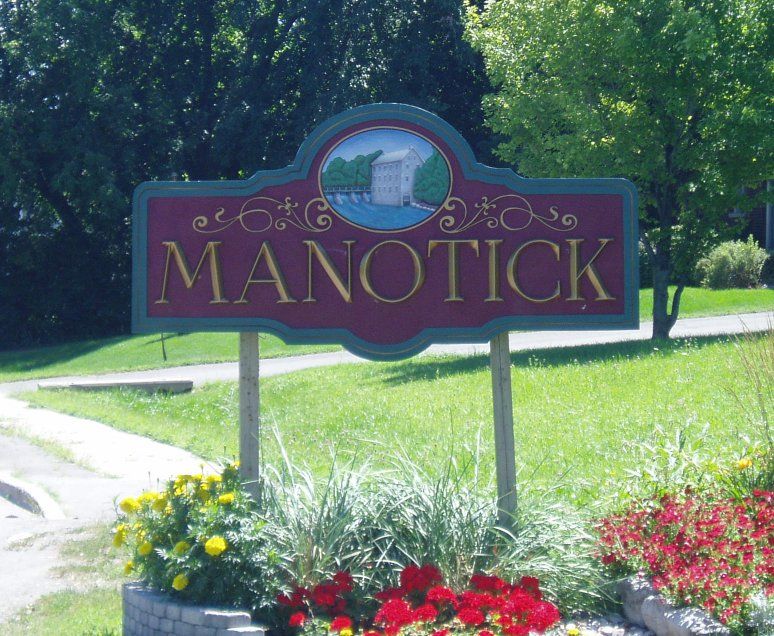
Manotick
Manotick is a historic village and community within Rideau-Jock Ward in the rural southern part of the City of Ottawa, Ontario. Founded in 1864 by entrepreneur Moss Kent Dickinson, who named it using an Algonquin word for 'island', Manotick is situated on the Rideau River approximately 25 kilometres south of downtown Ottawa. It functions primarily as a commuter community for Ottawa, while actively striving to maintain its distinct rural character and heritage. Key landmarks include the operational Watson's Mill museum and the annual Dickinson Days festival, which celebrate the village's founding and history. The community has experienced significant modern growth pressures, most notably through the contentious Mahogany subdivision development process in the late 2000s which tested its planning frameworks.
History and Settlement
The area's development began with the construction of the Long Island locks on the Rideau Canal in the 1830s, leading to a small settlement known as Long Island Locks, with a post office established there in 1854. The founding of modern Manotick is credited to Moss Kent Dickinson and his partner Joseph Merrill Currier, who obtained water rights in 1859 and constructed a substantial stone flour mill in 1860. This industrial complex, which grew to include a carding mill, sawmill, and bung factory, spurred the village's growth and was capable of grinding one hundred barrels of flour per day. By 1866, Manotick was recorded as a post village with a population of 100, featuring two general stores, a number of mechanics' shops, and churches including a building shared by Presbyterians and the English Church and another used by Wesleyan Methodists. The original St. James Anglican Church was built of wood in a Norman style in 1876 on land donated by Dickinson, with its style and original stained glass preserved when a larger church was built in 1985.
During the Second World War, Manotick hosted a significant military installation, the Royal Canadian Navy's Radio Propagation Laboratory, on the Prescott Highway. This facility evolved from Section 6 of the navy's Operational Intelligence Centre and originally occupied small huts from 1944 to 1947, housing a naval high-frequency radio station operating under the call sign CFF which communicated with Naval Service Headquarters and ships at sea. A name plate now marks the site located south of the Central Experimental Farm's Arboretum between the Rideau Canal and the Prescott Highway. In more recent commercial history, SunTech Greenhouses LTD, a hydroponic operation covering 2.3 acres, was constructed in 1999 on a ninety-acre lot, with an addition of 12,000 square feet in the spring of 2001 bringing it to 2.5 acres and a further 1.5-acre expansion in 2012 for a total of four acres of greenhouse surface.
Manotick was founded by Moss Kent Dickinson in 1864, who named it from an Algonquin word for 'island'. The Long Island Flouring Mills were established by Dickinson and Joseph Merrill Currier in 1860, becoming a key economic driver. Dickinson House, built in 1863, served as the first major building, functioning as a general store, bank, post office, and telegraph office. The original St. James Anglican Church was built in 1876 on land donated by Dickinson. The population, which had declined with the Rideau Canal's commercial traffic, rebounded as Manotick became a commuter community, joining the City of Ottawa in 2001.
- 1833: First settlement at Long Island Locks.
- 1854: Post office established at Long Island Locks.
- 1859: Moss Kent Dickinson and Joseph Merrill Currier obtain water rights.
- 1860: Long Island Flouring Mills (later Watson's Mill) begins operation.
- 1863: Dickinson House, the village's first major building, is constructed.
- 1864: Village officially founded and named Manotick.
- 1876: Original St. James Anglican Church is built.
- 1944 to 1947: Radio Propagation Laboratory operates naval station CFF.
- 2001: Manotick amalgamates into the City of Ottawa.
Watson's Mill and Historic Buildings
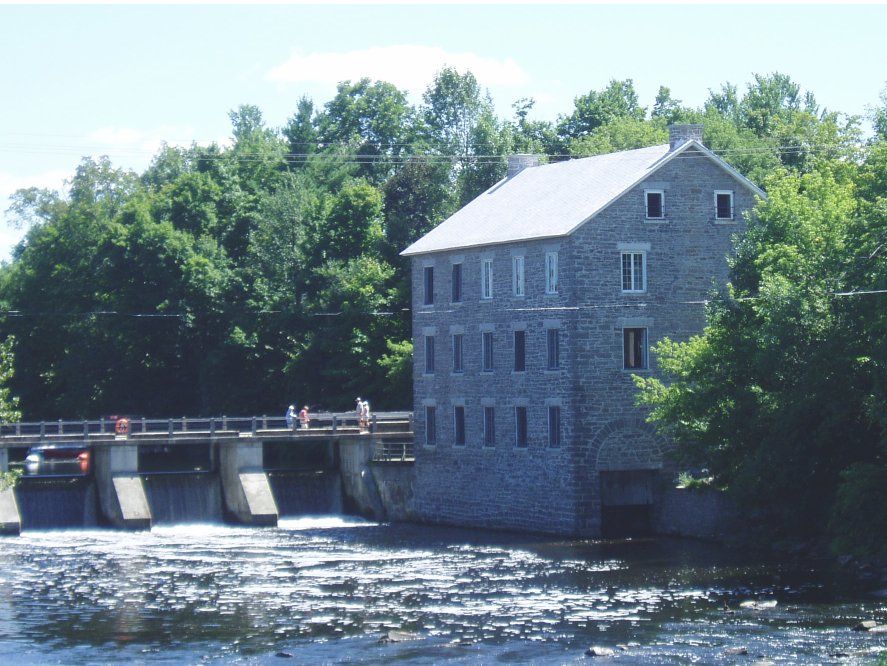
Watson's Mill is the most recognized landmark in Manotick and serves as a symbol for the village. Founded in 1860 by Moss Kent Dickinson and Joseph Merrill Currier as the Long Island Flouring Mills, it is one of very few operating industrial grist mills in North America and the only working museum of its kind in the Ottawa area. The mill still produces and sells stone-ground whole wheat flour on site, and it was one of a series of mills constructed in the area using power from the Rideau Canal. It was purchased by Harry Watson in 1946, who was the last owner to operate it at an industrial level, and it was subsequently bought by the Rideau Valley Conservation Authority in 1972 and developed into a museum. The mill is open to the public during summer months and hosts milling demonstrations every Sunday and a variety of other events, and it is also well known for its ghost story about Ann Currier, wife of Joseph Currier, who is said to haunt the mill following her death in a tragic accident there in 1861.
Another key historic building is Dickinson House, built in 1863, which was the village's first major structure and originally served as a general store, bank, post office, and telegraph office. It was used as a residence by the Dickinson, Spratt, and Watson families from 1870 to 1972, and it is currently furnished to give visitors an interpretation of what the space was like when the Dickinson family was in residence. Both Watson's Mill and Dickinson House, along with St. James Anglican Church, have been featured in the Doors Open Ottawa event, which is held for one day a year and sometimes coincides with Manotick's Dickinson Days festival. The church was included in Doors Open Ottawa on June 2 and 3, 2012, as part of a program showing architecturally interesting and historically significant buildings.
Watson's Mill, originally the Long Island Flouring Mills built in 1860, is a stone grist mill and a working museum that still produces flour. Dickinson House, built in 1863, is now furnished to interpret the Dickinson family's residence and is part of Doors Open Ottawa. The original St. James Anglican Church, built in 1876 in a Norman style, preserved its original features when a larger church was built in 1985. The site of the Royal Canadian Navy's Radio Propagation Laboratory on the Prescott Highway, operational from 1944, is marked by a name plate.
- Watson's Mill (1860): Operational grist mill and museum. Site of the Ann Currier ghost legend.
- Dickinson House (1863): Served as general store, bank, post office, and telegraph office. Family residence for over a century.
- St. James Anglican Church (1876): Original wooden Norman-style church. 1985 rebuild preserved original tower, windows, and furnishings.
- Radio Propagation Laboratory Site (1944 to 1947): Marked by a name plate on Prescott Highway. Former naval communications station.
- Long Island Locks Settlement (1830s): Precursor community to Manotick based on Rideau Canal locks.
Community Life and Institutions
Manotick is served by several educational institutions that cater to its growing population and reflect the bilingual character of the region. Manotick Public School is the sole public elementary school, offering programs from kindergarten to grade five in both English and French. The Catholic school system includes St. Leonard Catholic School, which teaches over 500 kindergarten, primary, and junior students in English and French, and St. Mark Catholic High School, which serves grades seven through twelve in both official languages. These schools form a core part of the community's infrastructure for families and contribute to the village's identity as a family-oriented community within the larger city of Ottawa.
The social and cultural calendar in Manotick is highlighted by the annual Dickinson Days festival, held on the first Friday and Saturday of June and organized by local groups like the Kiwanis Club, the Business Improvement Area, and Watson’s Mill. The event celebrates founder Moss Kent Dickinson with activities centred around Dickinson Square, typically including a parade, pancake breakfast, arts and crafts sales, wagon rides, and various music, dance, and drama performances. The celebration coincides with Pioneer Days, organized by the staff and volunteers of Watson's Mill, and it often coincides with the city-wide Doors Open Ottawa program, allowing public access to historic local buildings such as churches and government buildings for one day a year. This spring festival is a major community gathering that reinforces local history and brings together residents and visitors.
The annual Dickinson Days festival is held on the first Friday and Saturday of June around Dickinson Square, celebrating founder Moss Kent Dickinson. It is organized by local groups like the Kiwanis Club and the Business Improvement Area and features a parade and pancake breakfast. The festival coincides with Pioneer Days at Watson's Mill and often with the Doors Open Ottawa event. The West Manotick Community Association organized a town hall meeting in 2007 regarding the Mahogany subdivision, drawing over 2000 citizens.
- Kiwanis Club of Manotick: Co-organizer of Dickinson Days festival.
- Manotick Village and Community Association: Advocacy group for local interests.
- West Manotick Community Association (WMCA): Organized 2007 town hall on Mahogany development.
- Dickinson Days: First weekend in June. Features parade, breakfast, and performances.
- Doors Open Ottawa: Annual event where historic Manotick buildings open to the public.
- Pioneer Days: Event at Watson's Mill coinciding with Dickinson Days.
Growth, Development and the Mahogany Subdivision
In 2007, Minto Developments Inc. sought approval to build a community of approximately 1,800 new homes, a number later revised to 1,400 through the Development Concept Plan process with the city and numerous public meetings and consultations with residents. This proposal sparked considerable concern among residents, who felt it contravened the Manotick Secondary Plan adopted by the City of Ottawa at amalgamation in 2001, which had projected growth of only 250 houses by 2020. Residents, organized through the West Manotick Community Association, argued the development would double the population and that current services and infrastructure would be insufficient to handle the population explosion, while also eroding the village's small-town and rural character. The West Manotick Community Association organized a town hall meeting at the Manotick Arena on April 24, 2007, that drew over 2,000 citizens concerned about preserving the rural scale of Manotick and ensuring future planning accounted for the village's nature. Throughout 2007 and 2008, multiple formal and informal public meetings were held by the city, the community association, and the developer to demonstrate changes and evolutions to the proposed Development Concept Plans and to encourage public debate, with changes to the plan made by the developer through this process. In 2008, Ottawa City Council rejected Minto's plan for non-compliance with the Official and Secondary Plans and because the proposed development did not match the village's rural character. Minto appealed the decision to the Ontario Municipal Board, which held a seven-week hearing ending in late January 2009 and ultimately overruled the council in a controversial decision to approve the plans.
The City of Ottawa requested a Leave to Appeal the Ontario Municipal Board decision, with a hearing on June 25, 2009. Ultimately, extensive cooperation between Minto and the community resulted in an approved plan for the Mahogany development, and construction is now long underway. With perceived overdevelopment of housing in the south of Ottawa, Manotick strives to maintain its character and property values by carefully managing growth. The community works closely with developers to balance its role as a commuter community with the desire to preserve its rural character.
In 2007, Minto Developments Inc. sought approval to build about 1800 homes in Manotick, a number later revised to 1400. The West Manotick Community Association organized a town hall meeting in April 2007, drawing over 2000 concerned citizens. Ottawa City Council rejected the plan in 2008, stating it did not comply with the Official Plan or the village's rural character. Minto appealed to the Ontario Municipal Board, which approved the plans in a controversial 2009 decision after a seven-week hearing.
- 2007: Minto Developments Inc. first proposes ~1800-home community.
- April 24, 2007: WMCA town hall meeting draws over 2000 residents.
- Early 2008: Proposal revised down to ~1400 homes after public meetings.
- 2008: Ottawa City Council rejects Minto's development plan.
- Late January 2009: Ontario Municipal Board hearing concludes after seven weeks.
- 2009: OMB controversially overrules Council and approves plans.
- June 25, 2009: Hearing for City's Leave to Appeal the OMB decision.
- Post-2009: Approved plan leads to ongoing construction.
Demographics, Economy and Character
The population decline experienced after the Rideau Canal's commercial heyday was reversed as Manotick came to be viewed by some as a bedroom community for Ottawa, and its formal integration into the City of Ottawa in 2001 cemented this residential role. Despite this growth, a central concern for residents and local organizations has been the careful management of development to preserve the village's distinctive identity and property values, especially in light of rapid growth in neighbouring Barrhaven and other parts of southern Ottawa. The community strives to maintain its character by working closely with developers and managing growth, as seen in the detailed negotiations over the Mahogany subdivision. Manotick's historical economy was rooted in milling and agriculture, supported by the excellent water power supplied by the Rideau Canal noted in 1866, with the Long Island Flouring Mills employing twelve men and producing about two million feet of sawn lumber annually in the 1860s. In the modern era, while primarily residential, it retains agricultural and commercial enterprises like the four-acre SunTech Greenhouses LTD hydroponic operation constructed in stages between 1999 and 2012. The community's location on the Rideau River, immediately south of the Ottawa suburbs of Barrhaven and Riverside South, places it at the boundary between urban and rural landscapes within Rideau-Jock Ward. This ongoing effort to balance expansion and preservation defines much of contemporary life in Manotick, as it seeks to maintain its heritage as a historic island community while accommodating its role within the larger national capital region.
Historically, the Long Island Flouring Mills, a carding mill, sawmill, and bung factory built by Moss Kent Dickinson spurred the settlement's development. The saw mill employed twelve men and produced about two million feet of lumber annually. In modern times, Manotick functions as a commuter community for Ottawa. SunTech Greenhouses LTD, a hydroponic greenhouse covering 4 acres, was constructed and expanded between 1999 and 2012.
- Milling Industry (1860s): Long Island Flouring Mills, sawmill, carding mill, and bung factory.
- Agriculture: Surrounding farmland and modern hydroponic greenhouses like SunTech.
- Tourism and Heritage: Watson's Mill museum, Dickinson Days festival, historic sites.
- Residential Development: Commuter community driving home construction, e.g., Mahogany subdivision.
Questions about Manotick
Where is Manotick located?
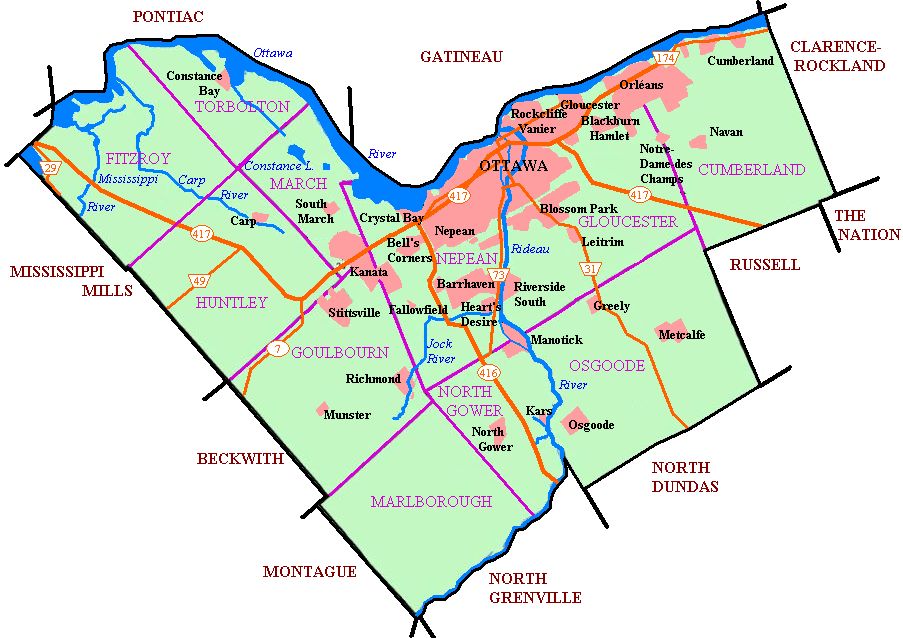
Manotick is a community within Rideau Jock Ward in the rural southern part of the City of Ottawa, Ontario. It is located on the Rideau River, immediately south of the Ottawa suburbs Barrhaven and Riverside South, and is approximately 25 kilometres from downtown Ottawa. The community became part of the City of Ottawa during the municipal amalgamation in 2001. Prior to that, it was located within Rideau Township. Historically, it was also part of Gloucester and North Gower townships, situated along the Rideau Canal.
What is Manotick known for?
Manotick is best known for Watson's Mill, a historic working grist mill museum that is the only one of its kind in the Ottawa area. The village is also recognized for its annual Dickinson Days festival celebrating founder Moss Kent Dickinson and its historic Dickinson House. It maintains a distinct identity as a commuter community striving to preserve its rural character. It was once the site of a Royal Canadian Navy experimental ionospheric laboratory, the Radio Propagation Laboratory, on the Prescott Highway.
Who founded Manotick and when?
Manotick was founded by the entrepreneur Moss Kent Dickinson in 1864. Dickinson, in partnership with Joseph Merrill Currier, obtained water rights and constructed a stone flour mill in 1859, which spurred the settlement's development. He named the village 'Manotick', which is derived from an Algonquin word meaning 'island'. Dickinson also built Dickinson House in 1863, the village's first major building, and donated land for the original St. James Anglican Church constructed in 1876.
What is Watson's Mill?
Watson's Mill is Manotick's most recognized landmark, a historic stone grist mill operating as a working museum. It was originally founded as the Long Island Flouring Mills in 1860 by Moss Kent Dickinson and Joseph Merrill Currier, using power from the Rideau Canal. The mill was purchased by Harry Watson in 1946, who gave it its current name, and was later bought by the Rideau Valley Conservation Authority in 1972 to be developed into a museum. It is one of very few operating industrial grist mills in North America and still produces and sells stone ground whole wheat flour on site. The mill is also known for a ghost story related to Ann Currier, who died there in an accident in 1861.
What was the Mahogany subdivision dispute?
The Mahogany subdivision dispute began in 2007 when Minto Developments Inc. sought to build a large housing community of approximately 1800 homes in Manotick, later revised to 1400. Local residents opposed the plan, arguing it violated the village's Secondary Plan which provided for only 250 new houses by 2021 and would overwhelm services and alter the rural character. After Ottawa City Council rejected the proposal in 2008 for non compliance with official plans, Minto appealed to the Ontario Municipal Board. In a controversial 2009 decision, the OMB overruled the council and approved the plans, leading to extensive cooperation between the developer and community and the subsequent construction of the subdivision.
When is Dickinson Days celebrated and what does it involve?
Dickinson Days is Manotick's annual festival celebrated on the first Friday and Saturday of June in the heart of the village around Dickinson Square. The festival is named after village founder Moss Kent Dickinson and is organized by local groups like the Kiwanis Club, the Business Improvement Area, and Watson's Mill. It typically includes activities such as a parade, a pancake breakfast, arts and crafts sales, wagon rides, and music and drama performances. The celebration coincides with Pioneer Days at Watson's Mill and often overlaps with the Doors Open Ottawa event, where local historic buildings are open to the public.
Sources and further reading
- Manotick (Wikipedia)
- Neighbourhood | Learn About Life in Manotick | Mahogany (minto.com)
- Manotick, Ontario Village & Lifestyle Guide (ottawarealtyman.com)
- About Manotick, Ottawa South Neighbourhood (ottawamove.com)
- Manotick Neighbourhood Guide | Living in Manotick Ottawa (ottawa-properties.ca)
Checked by the Your Space Hamilton desk. Last updated 2026-10-31.