Slot antenna
A slot antenna is a type of radio antenna consisting of a metal surface, typically a flat plate or waveguide, with one or more precisely cut holes or slots. When driven by a radio frequency current, these slots radiate electromagnetic waves in a manner analogous to a dipole antenna. This design is particularly significant in Canada due to its foundational role in wartime radar research conducted by McGill University and the National Research Council, and its subsequent widespread adoption in critical technologies. Slot antennas are primarily used at ultra-high frequency (UHF) and microwave bands, where their compact size, design simplicity, and suitability for mass production offer distinct advantages. They are integral components in systems ranging from television broadcasting and marine radar to cellular networks and spacecraft.
Operating Principle and Design
The fundamental operation of a slot antenna is explained through Babinet's principle from optics, as rigorously applied to electromagnetics by H. G. Booker in 1946. This principle establishes that a slot cut into a conducting sheet has an identical radiation pattern to a metal dipole antenna of the same shape, but with the orientations of the electric and magnetic fields swapped. Consequently, a slot acts as a magnetic dipole rather than an electric one. The magnetic field is aligned parallel to the long axis of the slot, while the electric field is perpendicular to it. This relationship allows engineers to use the well-established mathematical models for dipole antennas to accurately predict the performance of slot designs. The polarization of the radiated waves is linear and perpendicular to the slot's axis. For slots up to one wavelength in length, the radiation pattern features a single main lobe with maximum power emitted perpendicular to the metal surface. The specific radiation characteristics are dictated by the slot's dimensions and the driving frequency, enabling precise tailoring for different applications.
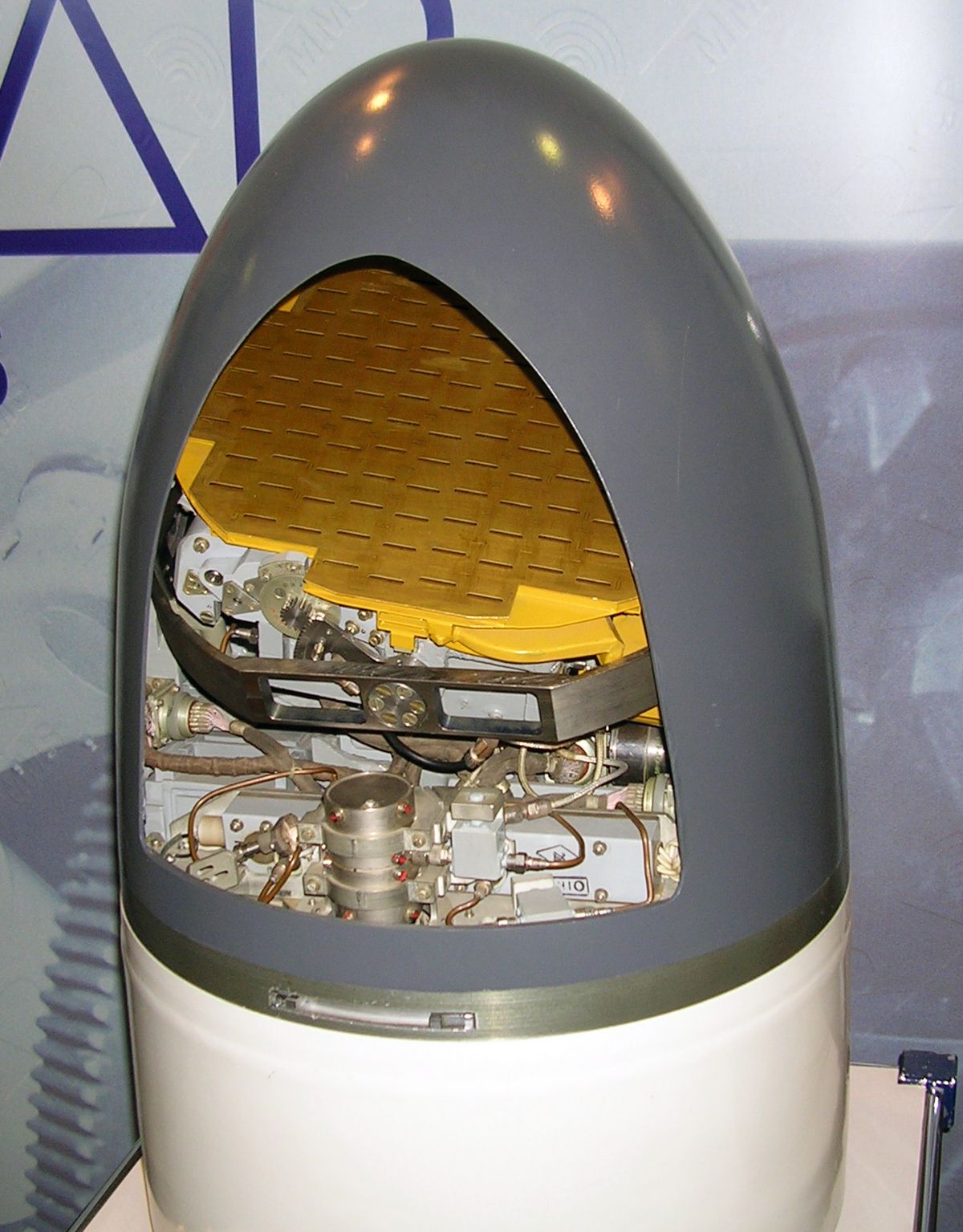
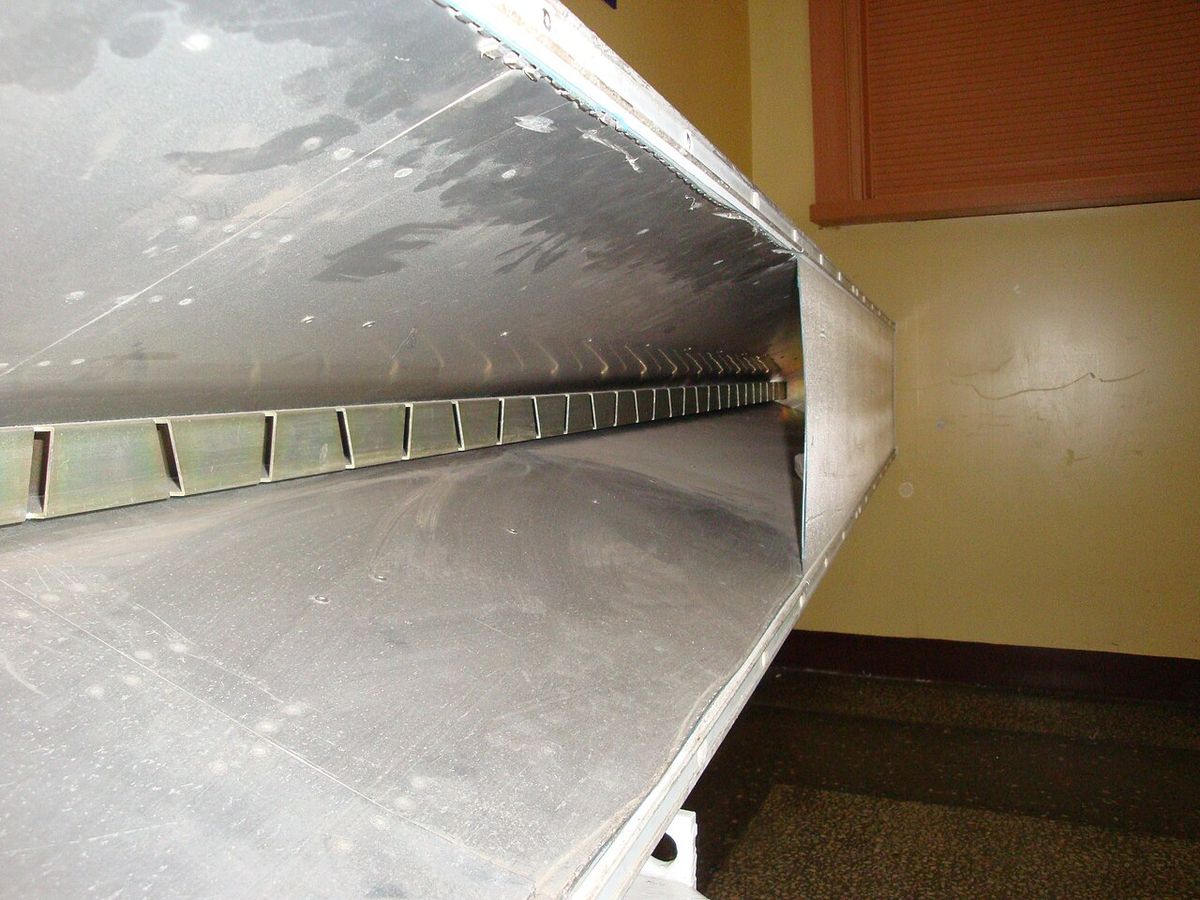
When multiple slots are incorporated into a waveguide structure, they form a highly directive array antenna. A slotted waveguide antenna can only radiate into the 180-degree space on one side of the waveguide surface, which simplifies and focuses the beam. There are two primary and widely used configurations of slotted waveguide antennas, each with distinct radiation properties and uses. The longitudinal slotted waveguide antenna features slots cut parallel to the waveguide's axis. This configuration produces a radiation pattern similar to a collinear array of dipoles and is typically mounted vertically. Its pattern is nearly omnidirectional in the horizontal plane over the 180 degrees in front of the antenna, but it is narrow in the vertical plane. The vertical gain increases by approximately 3 decibels each time the number of slots is doubled. This design, which radiates horizontally polarized waves, is commonly used for omnidirectional UHF television broadcast antennas. For full 360-degree coverage, a cylindrical waveguide with multiple columns of slots is sometimes employed.
The second major configuration is the transverse slotted waveguide antenna. In this design, the slots are cut almost perpendicular to the waveguide axis but are skewed at a slight angle, with adjacent slots skewed in opposite directions. This arrangement generates a dipole-like pattern in the plane perpendicular to the antenna and an extremely sharp, fan-shaped beam in the plane of the antenna itself. Its most prominent application is in marine radar systems. The antenna is mounted horizontally on a rotating mechanism that scans the sharp vertical beam 360 degrees around a ship with each revolution. The beam's wide vertical spread is a critical safety feature, ensuring that even when the ship rolls in heavy seas, the radar maintains contact with the water's surface out to the horizon.
Historical Development and Canadian Contribution
The slot antenna was first invented in 1938 by Alan Blumlein, an engineer at EMI in England. Blumlein developed the concept specifically to address the needs of early VHF television broadcasting, requiring an antenna with horizontal polarization, an omnidirectional horizontal pattern, and a narrow vertical beam. This invention laid the theoretical groundwork, but a major advancement occurred during the Second World War through collaborative radar research in Canada. Prior to this development, early surface-search radar systems often relied on parabolic 'cheese' antennas. The urgent demands of wartime radar technology spurred innovation at McGill University in Montreal and the National Research Council of Canada, leading directly to the invention of the practical slotted waveguide antenna.
The collaborative work at McGill and the NRC was conducted by researchers W.H. Watson and E.W. Guptill of McGill University, who were instrumental in transforming the basic slot concept into a highly effective directive antenna for microwave frequencies. Their work culminated in the granting of a United States patent in 1951 for a 'directive antenna for microwaves'. This Canadian innovation provided a more durable and manufacturable solution than previous designs, cementing the slot antenna's place in radar and communications technology. The legacy of this research highlights Canada's significant role in the development of practical microwave antenna systems during a critical period in technological history.
Common Applications and Implementations
Slot antennas are ubiquitous in modern radio frequency systems due to their efficiency and adaptability. Their use spans commercial, military, and scientific fields, often chosen where reliability, directivity, and compact form factors are paramount. One of the most visible applications is in marine radar, where the transverse slotted waveguide antenna is the standard technology. Its ability to produce a sharp, fan-shaped beam that rotates provides ships with essential surface and navigation data. In broadcasting, longitudinal slotted waveguide arrays are the core of many UHF television transmitting antennas, delivering the required omnidirectional horizontal coverage to serve metropolitan areas. The cellular telecommunications industry employs sector antennas built with slot arrays at base station sites to provide focused coverage over specific angular sectors, improving network capacity and signal quality.
Beyond these major uses, slot antennas are found in numerous other critical systems. They are integrated into the airframes of missiles and aircraft for guidance, communications, and radar functions. In satellite technology, a specialized planar form known as the radial line slot antenna, invented by Professor Naohisa Goto, is valued for high-efficiency broadcast reception. A lightweight honeycomb-structured version of this antenna was developed for space applications and was notably used as a high-gain antenna on the Japanese Hayabusa2 asteroid probe. Slot array designs are also present on scientific instruments, such as the microwave radiometer aboard NASA's Juno spacecraft and the RIMFAX ground-penetrating radar on the Mars Perseverance rover.
- Marine Radar: Provides 360-degree surface scanning for navigation and collision avoidance.
- UHF Television Broadcasting: Used in vertical, omnidirectional transmitting antennas for local broadcast stations.
- Cellular Communications: Forms the radiating element in sector antennas for base station towers.
- Aerospace and Defence: Integrated into aircraft and missile systems for various RF functions.
- Satellite Reception: Radial line slot antennas are used for direct broadcast satellite reception.
- Space Exploration: Deployed on spacecraft like Hayabusa2 for communication and scientific sensing.
- Scientific Instrumentation: Used in planetary radar and radiometry, such as on the Juno and Mars Perseverance missions.
Technical Advantages and Characteristics
The enduring popularity of the slot antenna stems from a combination of mechanical and electrical advantages that make it highly suitable for modern high-frequency applications. A primary benefit is its structural simplicity and durability. When fabricated as part of a waveguide or a printed circuit board, the antenna consists of precisely machined or etched slots in a single metal surface, with no delicate protruding elements. This makes it extremely resistant to environmental damage and easy to seal, which is crucial for outdoor and marine use. The design is inherently low-profile and can be made conformal to surfaces like aircraft skins, reducing aerodynamic drag. The manufacturing process is highly amenable to precision mass production using techniques like CNC machining for waveguides or photolithography for printed circuit boards, leading to consistent performance and lower unit costs.
Electrically, slot antennas offer excellent performance characteristics. They provide good to high gain, especially when configured in arrays, and their radiation patterns are highly predictable and controllable based on slot placement and excitation. The use of a waveguide as the feed structure results in very low loss, as the radio frequency energy is confined and guided efficiently to each radiating slot. This efficiency is a key reason for their use in high-power applications like radar and broadcasting. The slot's natural one-sided radiation pattern (180 degrees) is often an advantage, focusing energy where it is needed and reducing unwanted radiation in other directions. The polarization is inherently linear and stable, which is desirable for many communication links. These combined attributes of mechanical strength, manufacturing efficiency, and reliable electrical performance solidify the slot antenna's role as a fundamental technology in RF engineering.
Specialized and Related Uses
Beyond its primary role as a radiating element, the underlying principle of the slotted waveguide finds application in specialized sensing and positioning systems. A closely related technology is the 'leaky waveguide' used in certain advanced rapid transit or railway systems. In this application, a waveguide with a continuous or periodic slot is installed along a railway platform or guideway. The waveguide is connected to a radar transceiver on the train. As the train approaches the station, radio waves leak from the slot and reflect back, allowing the train's onboard computer to determine its position with extreme accuracy relative to the fixed waveguide. This system is employed primarily for precise stopping control, ensuring that the train doors align perfectly with platform markings or with the doors of a platform screen safety system, which enhances passenger safety, accessibility, and operational efficiency in automated train networks. Another area of specialized use is in laboratory and measurement environments. Standardized microwave signal sources used for research and testing often incorporate slotted waveguide antennas to generate clean, directional beams for experimental setups. The predictability and purity of the radiation pattern from a well-designed slot array make it an ideal source antenna for calibrating other equipment or conducting propagation studies.
Comparative Analysis of Slot Antenna Configurations
The performance and application of a slot antenna are largely defined by its specific configuration. The two main waveguide-based types are the longitudinal slotted waveguide antenna and the transverse slotted waveguide antenna. The longitudinal type has a radiation pattern almost omnidirectional in the horizontal plane and is horizontally polarized, making it suitable for UHF television transmitting antennas. The transverse type radiates a very sharp beam and is used primarily for microwave marine radar antennas. A third type is the planar radial line slot antenna, which is used for satellite broadcast reception and aerospace applications.
| Configuration | Slot Orientation | Radiation Pattern | Polarization | Primary Mounting | Typical Applications |
|---|---|---|---|---|---|
| Longitudinal Slotted Waveguide | Parallel to waveguide axis | Omnidirectional in horizontal plane (180°), narrow vertical beam | Horizontal | Vertical | UHF TV broadcast, omnidirectional base stations |
| Transverse Slotted Waveguide | Perpendicular (skewed) to waveguide axis | Sharp fan-shaped beam in antenna plane, dipole pattern perpendicular | Vertical (for horizontal mount) | Horizontal (rotating) | Marine radar, surface search radar |
| Radial Line Slot Antenna (Planar) | Arranged radially on a planar surface | Directional beam perpendicular to plane | Circular or Linear | Fixed, often on satellite | Satellite broadcast reception, spacecraft antennas |
The longitudinal slotted waveguide antenna provides broad, omnidirectional coverage for broadcasting. The transverse slotted waveguide antenna is optimized for highly directional scanning, as required by radar systems on ships. The planar radial line slot antenna is a more recent innovation used for satellite and aerospace applications. All these configurations share the core advantages of slot antenna technology like design simplicity. They are adapted to meet specific demands such as the need for a narrow vertical beam in broadcasting or a rotating fan beam for marine radar.
Questions about Slot antenna
What is the Canadian connection to the slot antenna?
Canada played a crucial role in advancing slot antenna technology during the Second World War. Researchers W.H. Watson and E.W. Guptill from McGill University in Montreal, in collaboration with the National Research Council of Canada, developed the practical slotted waveguide antenna as part of wartime radar research. Their work was foundational, leading to a U.S. patent granted in 1951 for a 'directive antenna for microwaves'. This Canadian innovation was instrumental in transitioning the concept into a durable, manufacturable component for radar and communication systems.
How does a slot antenna work?
A slot antenna operates based on Babinet's principle, which establishes an equivalence between a slot in a conductive sheet and a metal dipole of the same shape. When a radio frequency current is applied, the slot acts as a magnetic dipole, radiating electromagnetic waves. The magnetic field is oriented along the slot's long axis, and the electric field is perpendicular to it, resulting in linear polarization. The size and shape of the slot determine its resonant frequency and radiation pattern, allowing it to be designed for specific applications.
What are the main advantages of a slot antenna?
The main advantages of slot antennas are their mechanical durability, design simplicity, and suitability for mass production. Since they are essentially holes in a metal surface, they have no protruding parts, making them resistant to weather and damage. They can be easily integrated into waveguides or printed circuit boards with low loss. Their radiation patterns are highly predictable and controllable, especially when configured in arrays. These factors make them a reliable and cost-effective choice for many high-frequency commercial and military systems.
What is a slotted waveguide antenna?
A slotted waveguide antenna is the most common implementation of the slot antenna principle. It consists of a hollow metal waveguide, a pipe that guides microwave energy, with a series of precisely cut slots along its length. The slots act as radiating elements, forming a directive array. There are two primary types: the longitudinal slotted waveguide, used for broadcasting, and the transverse slotted waveguide, used for radar. This design confines the RF energy efficiently, provides high gain in a compact form, and radiates only on one side of the waveguide, simplifying the beam pattern.
Who invented the slot antenna?
The slot antenna was invented in 1938 by Alan Blumlein while working for EMI. He invented it specifically to create a practical antenna for VHF television broadcasting. His design aimed to achieve horizontal polarization, an omnidirectional horizontal radiation pattern, and a narrow vertical radiation pattern. This invention provided a foundational design for later developments. The slotted waveguide antenna variant resulted from collaborative radar research during World War II by McGill University and the National Research Council of Canada, with co-inventors W.H. Watson and E.W. Guptill later receiving a US patent in 1951.
What are slot antennas most commonly used for?
Slot antennas are most commonly used at UHF and microwave frequencies where wavelengths allow for conveniently small components. Their primary applications include marine radar antennas, particularly the transverse slotted waveguide type which scans a vertical fan shaped beam. They are also widely used for UHF television transmitting antennas, antennas on missiles and aircraft, and sector antennas for cellular base stations. Additional uses encompass standard laboratory microwave sources for research, satellite broadcast reception via planar designs like the radial line slot antenna, and specific positioning systems in rapid transit. A key advantage is their adaptability to mass production using waveguide or printed circuit board technology.
Sources and further reading
- Slot antenna (Wikipedia)
- Slot Antennas, Radartutorial (radartutorial.eu)
- An Overview of Slot Antenna: Its Type, Usage & Advantages (antennaexperts.co)
- Slot antennas (technav.ieee.org)
Checked by the Your Space Hamilton desk. Last updated 2026-11-01.