Sara Seager
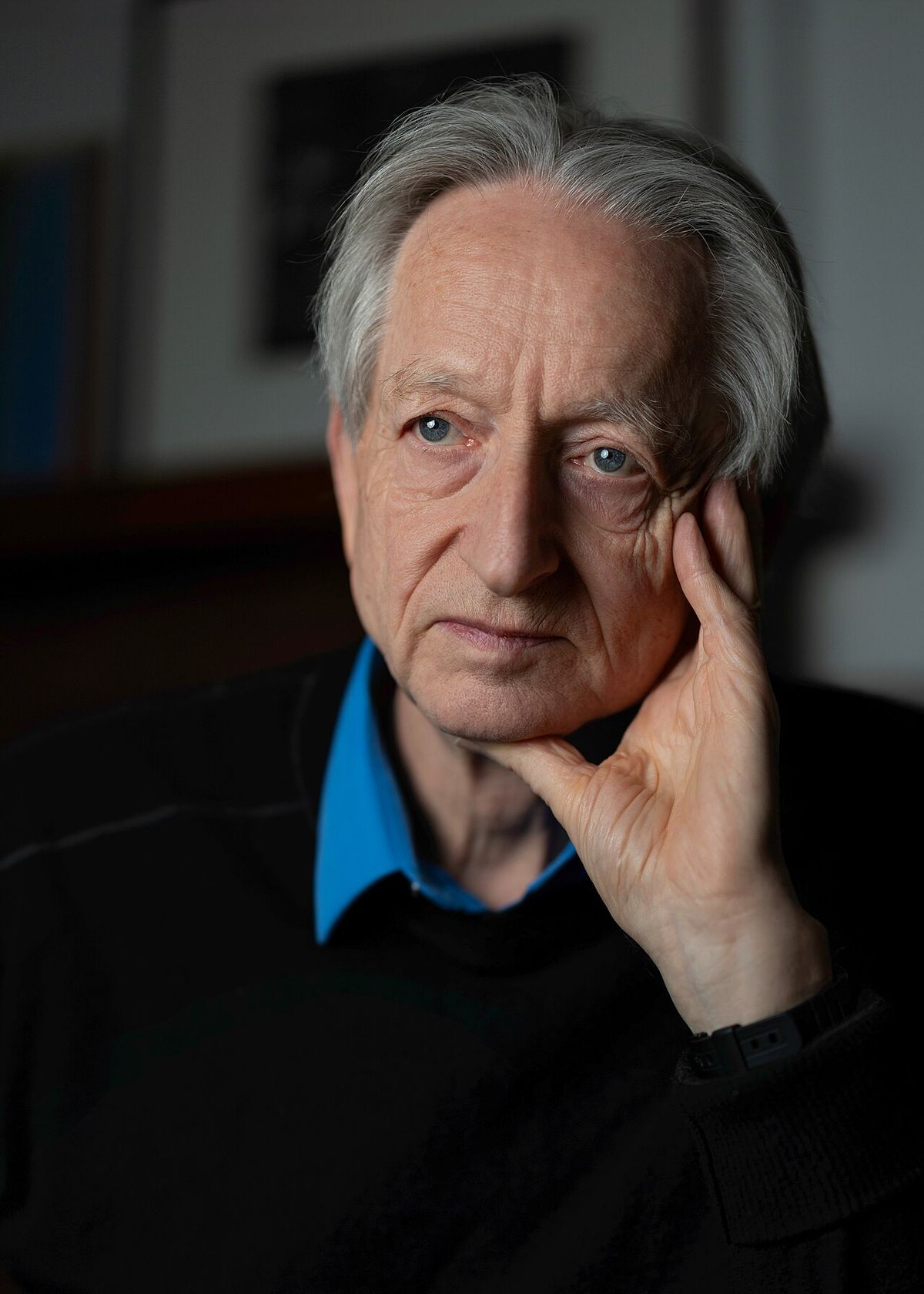
Sara Seager is a Canadian-American astronomer and planetary scientist whose pioneering research on exoplanets and their atmospheres has fundamentally shaped the modern search for life beyond Earth. Born in Toronto, she is a professor at the Massachusetts Institute of Technology and will return to her alma mater, the University of Toronto, in September 2026 as the North Star Distinguished Professor at the Canadian Institute for Theoretical Astrophysics. Her career is distinguished by the development of key theoretical models for detecting alien worlds, leadership of innovative space missions, and a bold shift to investigate the possibility of life in the clouds of Venus. Seager's work has earned her some of the highest honours in science, including a MacArthur Fellowship, the Kavli Prize in Astrophysics, and appointment as an Officer of the Order of Canada.
Early Life and Academic Foundation
Sara Seager was born on July 21, 1971, in Toronto, Ontario, Canada. Her father, David Seager, was a noted pioneer in hair transplantation and founded the Seager Hair Transplant Centre in Toronto. Seager pursued her undergraduate education at the University of Toronto, where she earned a Bachelor of Science degree in mathematics and physics in 1994, supported by an NSERC University Undergraduate Student Research Award. She then moved to Harvard University for her doctoral studies, completing her PhD in astronomy in 1999 under the supervision of Dimitar Sasselov. Her doctoral thesis was foundational, developing the first theoretical models for the atmospheres of extrasolar planets, a field still in its infancy at the time. This early work, which included the 2000 paper "Theoretical Transmission Spectra during Extrasolar Giant Planet Transits," laid the groundwork for the entire field of exoplanet atmospheric characterization. Following her PhD, Seager held a prestigious postdoctoral fellowship at the Institute for Advanced Study in Princeton from 1999 to 2002, followed by a position as a senior research staff member at the Carnegie Institution of Washington until 2006.
Academic Career and Leadership
Seager joined the faculty of the Massachusetts Institute of Technology in January 2007 as an associate professor in both physics and planetary science. She was granted tenure just six months later, in July 2007, and was promoted to full professor in July 2010. In 2012, she was appointed to the Class of 1941 Professor chair. Her academic appointments expanded in 2017 to include professor of aeronautics and astronautics. In a significant career move announced in November 2025, Seager will return to Canada to join the University of Toronto, effective September 1, 2026. At U of T, she will hold the title of North Star Distinguished Professor at the Canadian Institute for Theoretical Astrophysics, with cross-appointments in the departments of Astronomy and Astrophysics, Chemistry, and Physics. She will also hold the Eddie Goldenberg Distinguished Research Chair in Planetary and Molecular Sensing Technologies. Concurrently, she will become a professor emerita at MIT, concluding a nearly two-decade tenure where she helped train a generation of planetary scientists and led major research initiatives.
Pioneering Research on Exoplanets
Seager's research has revolutionized the study of planets orbiting other stars. Her early theoretical work created the framework for analyzing the chemical signatures in exoplanet atmospheres, a technique known as transit transmission spectroscopy. This method analyzes the starlight filtering through a planet's atmosphere during a transit to identify its composition. She also co-developed a critical method for uniquely determining planet and star parameters from transit light curve data, published in a seminal 2003 paper. Seager introduced the term "gas dwarf" to describe a class of planets that are more massive than Earth but have thick hydrogen and helium atmospheres, a concept she illustrated in models of the exoplanet Gliese 581c. Together with colleague Marc Kuchner, she also predicted the existence of carbon-rich planets. Her work provided essential theoretical backing for major discovery missions like NASA's Kepler space telescope, on which she was a co-investigator and co-author of key papers in 2010 and 2011, helping to confirm the abundance of exoplanets in our galaxy. NASA has likened her quest for Earth-like worlds to that of an "astronomical Indiana Jones."
To quantify the search for life, Seager developed a parallel to the famous Drake equation. Her version, known as the Seager equation, estimates the number of planets with detectable signs of life by focusing on biosignature gases. The equation is N = N* FQ FHZ FO FL FS, where the variables represent the number of stars observed and the fractions that are quiet, have rocky planets in the habitable zone, have observable planets, host life, and have life that produces detectable atmospheric gases. This refined approach shifts the focus from searching for intelligent radio signals to a broader hunt for any atmospheric evidence of biological activity, guiding the science goals of next-generation space telescopes. The equation formalizes the modern strategy of using remote sensing to find chemical evidence of life on distant worlds, making the search for extraterrestrial life a more tangible and data-driven astronomical pursuit.
Innovative Space Missions and Projects
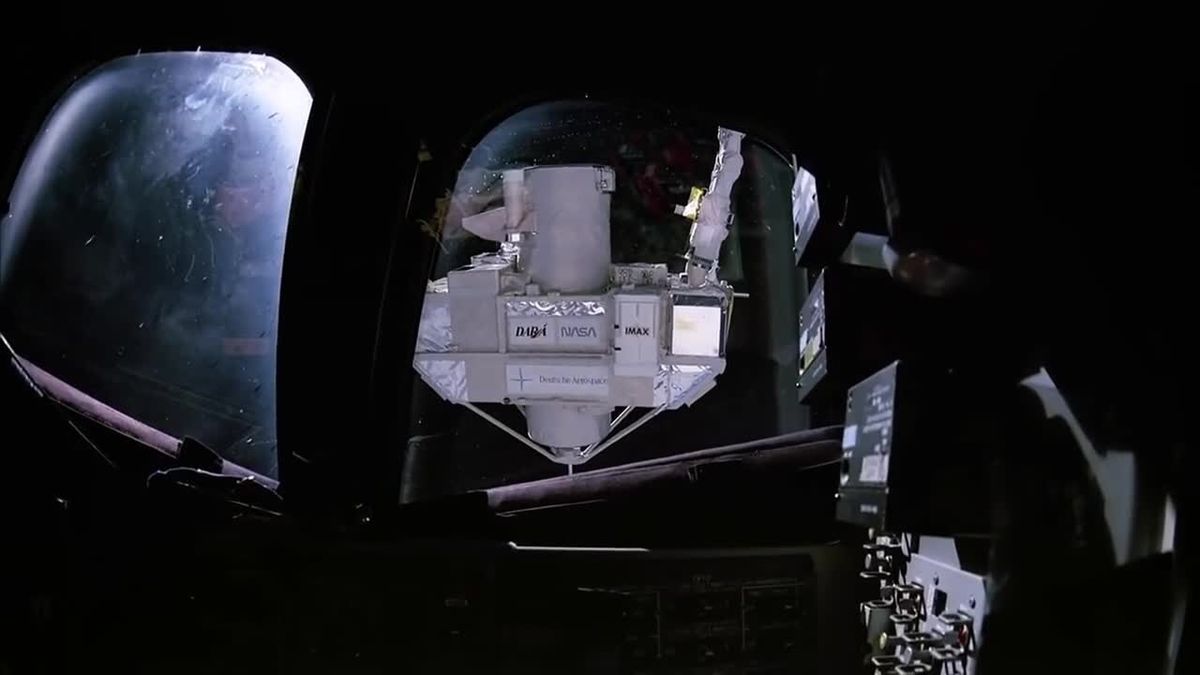
Seager has translated her theoretical insights into practical space exploration, leading and contributing to several groundbreaking missions. She served as the deputy science director for NASA's Transiting Exoplanet Survey Satellite (TESS) mission, which launched in 2018 to discover exoplanets around the brightest stars near the Sun. She was the principal investigator for the ASTERIA spacecraft, a miniature satellite the size of a briefcase launched to the International Space Station in 2017. This CubeSat demonstrated that small, low-cost platforms could perform the precise photometry needed to detect exoplanets, operating successfully from November 20, 2017, until its orbital decay on April 24, 2020. Seager also chaired the science and technology definition team for the proposed Starshade Rendezvous Mission. This ambitious concept involves a free-flying spacecraft that would unfurl a large, flower-shaped shade to block starlight, allowing a space telescope to directly image Earth-like planets in the habitable zones of sun-like stars.
- Transiting Exoplanet Survey Satellite (TESS): Served as deputy science director for this NASA mission launched in 2018 to find exoplanets around bright, nearby stars.
- ASTERIA CubeSat: Principal investigator for this MIT-JPL 6-U cubesat, launched in 2017, which proved the viability of small satellites for exoplanet photometry.
- Starshade Rendezvous Mission: Chaired the NASA Science and Technology Definition Team for this concept to enable direct imaging of Earth analogs.
- Venus Life Finder: Leads this privately funded mission, with a target launch in summer 2026 on a Rocket Lab Electron rocket to probe Venus's clouds.
- Morning Star Missions to Venus: Leads a series of proposed missions, including a Venus Habitability Mission with a target launch date of May 2031 and an Atmospheric Cloud Sample Return Mission.
In recent years, Seager has spearheaded a dramatic new direction by focusing on Venus. Following the controversial 2020 report of phosphine gas, a potential biosignature, in Venus's upper atmosphere, she has become a leading advocate for exploring the planet's temperate cloud decks. She leads the privately funded Venus Life Finder mission, set to launch in summer 2026, which will send a small probe to analyze the cloud chemistry. This is part of the broader Morning Star Missions to Venus, a multi-stage plan that includes an atmospheric sample return mission, with the goal of directly searching for signs of life or life itself in an environment long considered inhospitable. Her team's research has shown that complex organic molecules like peptides can maintain stable folded structures in concentrated sulfuric acid, challenging long-held assumptions about the limits of life and providing a concrete chemical rationale for the search in Venus's clouds.
Major Honours and Recognition
Sara Seager's contributions have been recognized with some of the highest accolades in science and academia. In 2013, she was awarded a MacArthur Fellowship, often called the "genius grant," for her theoretical work on exoplanet atmospheres and development of low-cost space observatories. She was elected a Legacy Fellow of the American Astronomical Society in 2020 and to the American Philosophical Society in 2018. In 2020, she was appointed an Officer of the Order of Canada. Her memoir, The Smallest Lights in the Universe, won the Los Angeles Times Prize for Science and Technology that same year. In 2024, she received the prestigious Kavli Prize in Astrophysics, shared with David Charbonneau and James Webb Space Telescope senior project scientist John Mather, for her pioneering work in exoplanet science. She is also a member of the U.S. National Academy of Sciences and an honorary member of the Royal Astronomical Society of Canada. She was an honorary graduand at the University of Toronto's Spring 2023 Convocation, and she is a Fellow of the Royal Canadian Geographical Society.
| Award | Year | Recognizing Body | Notable For |
|---|---|---|---|
| Harvard Book Prize in Astronomy | 2004 | Harvard University | Early career achievement in astronomy. |
| Helen B. Warner Prize | 2007 | American Astronomical Society | Developing techniques for analyzing exoplanet atmospheres. |
| Sackler Prize | 2012 | Raymond and Beverly Sackler Foundation | Analysis of exoplanet atmospheres and internal compositions. |
| MacArthur Fellowship | 2013 | MacArthur Foundation | Theoretical work on detecting chemical signatures on exoplanets. |
| Officer of the Order of Canada | 2020 | Government of Canada | Contributions to astrophysics and the search for exoplanets. |
| Los Angeles Times Book Prize | 2020 | Los Angeles Times | For her memoir The Smallest Lights in the Universe. |
| Kavli Prize in Astrophysics | 2024 | Kavli Foundation | Pioneering work in the field of exoplanet science. |
Sara Seager was appointed as a fellow to the American Association for the Advancement of Science in 2012. She served as the Elizabeth R. Laird Lecturer at Memorial University of Newfoundland in 2018. In 2025, she was named a NOMIS Awardee for her project "From Lab to Cosmos: Rethinking Habitability and the Search for Life Beyond Earth." An asteroid, 9729 Seager, is named in her honour.
Publications and Public Engagement
Seager is a prolific author of both technical scientific works and literature for a general audience. She has authored or co-authored two foundational textbooks in her field: Exoplanet Atmospheres: Physical Processes (Princeton University Press, 2010) and Exoplanets (University of Arizona Press, 2010). These volumes are standard references for researchers and students. She also co-edited the ASP Conference Proceedings volume Scientific Frontiers in Research on Extrasolar Planets in 2003. Her scientific bibliography includes over a hundred papers, with key early works on transmission spectra (2000) and transit light curve analysis (2003), as well as co-authorship on landmark Kepler mission papers in 2010 and 2011 that announced the mission's first results and planetary candidates. In 2020, she published a critically acclaimed memoir, The Smallest Lights in the Universe (Crown Publishing), which intertwines her personal journey through grief following the death of her first husband with her professional quest to find other worlds. The book won the Los Angeles Times Prize for Science and Technology. Seager is also a sought-after public speaker and communicator. She has given a TED talk, appeared on podcasts like the Lex Fridman Podcast (#116) in August 2020, and delivered keynote addresses, including the 2026 Yunker Lecture and the Northwestern University Center for Interdisciplinary Exploration and Research in Astrophysics Annual Public Lecture. Her ability to convey the wonder and technical challenges of the search for life has made her a prominent figure in popular science.
Return to Canada and Future Directions
Seager's planned return to the University of Toronto in 2026 marks a full-circle moment in her career and a significant gain for Canadian science. As the North Star Distinguished Professor, she will be based at the Canadian Institute for Theoretical Astrophysics, bringing her extensive research programs and international collaborations to Toronto. Her role includes the Eddie Goldenberg Distinguished Research Chair in Planetary and Molecular Sensing Technologies, indicating a focus on developing the next generation of instruments for detecting life signs. Her research agenda, encapsulated in her NOMIS project "From Lab to Cosmos," seeks to fundamentally rethink the conditions for habitability, bridging laboratory experiments on biomolecule stability in extreme acids with telescopic observations of exoplanet atmospheres. This work positions Canada at the forefront of one of science's most compelling questions, whether life exists elsewhere in the universe, by combining theoretical astrophysics, chemistry, and cutting-edge mission design.
Personal Life
Sara Seager is married to Charles Darrow. She was previously married to Michael Wevrick, who died of cancer in 2011. She has two sons from her first marriage. Her personal and professional narratives converged in her 2020 memoir, which details her experience as a widowed mother working in the demanding field of astrophysics. This human dimension of her story has resonated with a broad audience, offering insight into the determination required at the frontiers of science while managing personal loss. Her father, David Seager, was a medical pioneer in Toronto, and her family's support was instrumental during her early education and career development, providing a stable foundation for her ambitious scientific pursuits.
Questions about Sara Seager
What is Sara Seager most famous for?
Sara Seager is famous for her work on extrasolar planets and their atmospheres. She developed theoretical models for detecting chemical signatures on exoplanet atmospheres. She created a version of the Drake equation, known as the Seager equation, to estimate the number of planets with detectable signs of life. She has been recognized with a MacArthur Fellowship and the Kavli Prize in Astrophysics.
What is the Seager equation?
The Seager equation is a formula developed by Sara Seager to estimate the number of planets with detectable signs of life in our galaxy. Unlike the Drake equation, which focuses on intelligent civilizations capable of radio communication, the Seager equation focuses on the detection of biosignature gases in planetary atmospheres. Its variables account for the number of stars observed and the fractions that are quiet, have rocky planets in the habitable zone, have observable planets, host life, and have life that produces detectable atmospheric gases. It guides the science of modern exoplanet atmosphere studies.
Is Sara Seager involved in missions to Venus?
Yes, Sara Seager is involved in missions to Venus. She led a team proposing the Venus Life Finder mission, a privately funded spacecraft to investigate the possibility of life in the atmosphere of Venus. This mission has a target launch date in summer 2026. She is also part of the Morning Star Missions to Venus team, which has planned further missions including the Venus Habitability Mission with a target launch date of May 2031.
What awards has Sara Seager won?
Sara Seager has won numerous prestigious awards. These include the Helen B. Warner Prize (2007), the Sackler Prize (2012), a MacArthur Fellowship (2013), and appointment as an Officer of the Order of Canada (2020). In 2024, she was awarded the Kavli Prize in Astrophysics, one of the highest honours in the field. She is also a member of the U.S. National Academy of Sciences, a fellow of the American Astronomical Society, and a 2025 NOMIS Awardee. Asteroid 9729 Seager is named for her.
What did Sara Seager contribute to the TESS mission?
Sara Seager served as the deputy science director for NASA's Transiting Exoplanet Survey Satellite (TESS) mission. Launched in 2018, TESS's goal is to discover thousands of exoplanets orbiting the brightest stars near the Sun. In this leadership role, Seager helped guide the mission's scientific strategy, leveraging her expertise in exoplanet detection and characterization to maximize the mission's potential for finding promising worlds for atmospheric study. Her theoretical frameworks for analyzing transit data were directly applicable to the mission's core science objectives of identifying exoplanet candidates for further investigation.
Where is Sara Seager from?
Sara Seager is from Toronto, Ontario, Canada. She was born there on July 21, 1971. She completed her undergraduate education at the University of Toronto, earning a BSc in mathematics and physics in 1994. After a long career in the United States, she will return to her alma mater in 2026 to join the Canadian Institute for Theoretical Astrophysics as the North Star Distinguished Professor.
Sources and further reading
- Sara Seager (Wikipedia)
- Searching for life beyond Earth with Sara Seager (canadiangeographic.ca)
- NOMIS Awardee Sara Seager (nomisfoundation.ch)
- The Search for Signs of Life Beyond Earth With Sara Seager (astrobiology.com)
Checked by the Your Space Hamilton desk. Last updated 2026-10-24.