Memorial University of Newfoundland
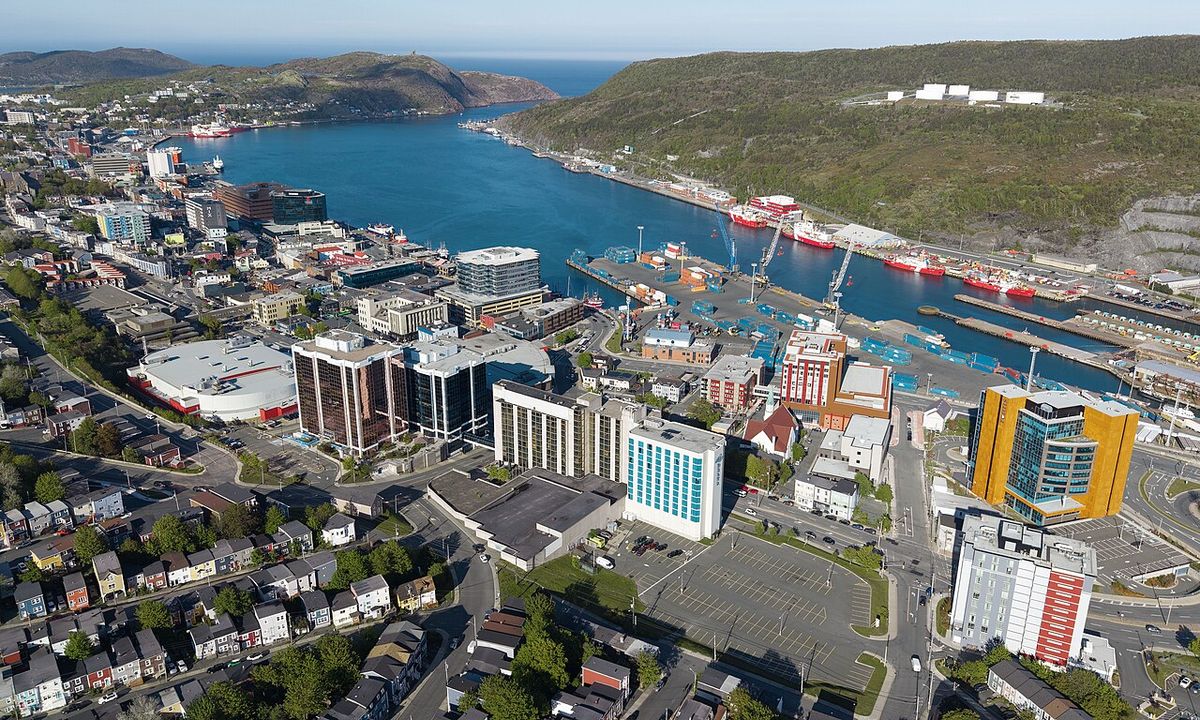
Memorial University of Newfoundland (MUN) is a public research university and the largest university in Atlantic Canada. Founded in 1925 as a memorial to Newfoundlanders and Labradorians who died in the First World War, it is the province's only university, with its main campus in St. John's and satellite campuses in Corner Brook, Happy Valley-Goose Bay, and Harlow, England. The university offers a comprehensive range of certificate, diploma, undergraduate, graduate, and post-graduate programs across numerous disciplines. It provides higher education to nearly 18,000 students and conducts significant research, particularly in ocean-related fields.
History and founding
Memorial University of Newfoundland traces its origins to the opening of Memorial University College (MUC) in September 1925 on Parade Street in St. John's. The institution was founded to honour Newfoundlanders and Labradorians who died in the First World War, to train teachers for local religious schools, and to provide local access to higher education, as students previously had to travel to Canada, the United Kingdom, or the United States. Its establishment was aided by a grant from the Carnegie Corporation of New York. The college's first president was John Lewis Paton, and it opened with an initial enrolment of 57 students, offering the first two years of university studies. The college was later rededicated to also encompass those who died in the Second World War. In 1933, it merged with the adjacent Normal School and assumed responsibility for teacher training, with enrolment peaking at over 400 students in the 1940s.
Following Newfoundland's confederation with Canada in 1949, the provincial government changed the college's status to that of a full university in August of that year, renaming it Memorial University of Newfoundland under the Memorial University Act. Enrolment in its first year as a university was 307 students. The university expanded significantly in the following decades, moving from its original Parade Street location to its present main campus on Elizabeth Avenue in St. John's in 1961. A significant development came in 1965 when the provincial government announced free tuition for first-year students at the St. John's campus. The Faculty of Medicine was established in 1967, admitting its first students in 1969. The university also established an international presence, opening its Harlow Campus in England in 1969 and the Institut Frecker (now Program Frecker) for French immersion in St. Pierre in 1973.
The university continued to grow with the establishment of a campus in Corner Brook in 1975, later renamed Grenfell Campus. In 1992, the Institute of Fisheries and Marine Technology became affiliated as the Marine Institute. More recent developments include the 2020 establishment of the School of Arctic and Sub-Arctic Studies and plans for a degree-granting campus in Happy Valley-Goose Bay. In May 2021, the Board of Regents recommended changing the institution's legal name to Memorial University of Newfoundland and Labrador, a change that would require an act of the provincial House of Assembly to take effect. The period from 1925 to 1949 reflected Newfoundland's shifting political situation, from dominion status to Commission of Government rule and finally to becoming a Canadian province.
Academic structure and programs
Memorial University is organized into seven faculties and seven schools, offering a wide array of undergraduate and graduate degree programs. The faculties are Business Administration, Education, Engineering, Humanities and Social Sciences, Medicine, Nursing, and Science. The schools include Arctic and Subarctic Studies, Fine Arts, Graduate Studies, Music, Pharmacy, Human Kinetics and Recreation, and Social Work. The Faculty of Business Administration offers programs such as the Bachelor of Commerce, Master of Business Administration, and PhD programs. Engineering students can specialize in disciplines including Civil, Computer, Electrical, Mechanical, and Ocean and Naval Architectural Engineering.
The Faculty of Medicine, co-located with the Newfoundland Health Science Centre General Hospital in St. John's, is one of only four medical schools in Atlantic Canada. It admits approximately 80 students into its Doctor of Medicine program each year and also offers MSc and PhD programs. Other notable programs include a dietetic program accredited by Dietitians of Canada through the Department of Biochemistry and theology programs offered through the affiliated Queen's College, which has 166 students and is an associate member of the Association of Theological Schools. The Marine Institute operates as a marine polytechnic, offering degrees, diplomas, and industry training for the maritime sector, featuring facilities like a full ship's bridge simulator and the world's largest flume tank.
Memorial provides diverse educational pathways across its campuses. Grenfell Campus in Corner Brook serves approximately 1300 students and offers full degree programs in Arts, Fine Arts, Business, Science, and Nursing. The Harlow Campus in England accommodates around 60 students and offers credit courses, work terms, and internships. The university also maintains specialized facilities like the Bonne Bay Marine Station in Gros Morne National Park and the Ocean Sciences Centre for hands-on learning and research. Students can also pursue studies at the Labrador Institute and through the Program Frecker in St. Pierre.
Research and innovation
Research at Memorial University spans its faculties, schools, and institutes, covering basic, interdisciplinary, and applied topics. A distinctive feature is its strong focus on ocean-related research, which constitutes over 40 percent of its total research activity, rising to 68 percent within the Faculty of Science alone. The university is a founding member of the collaborative Ocean Frontier Institute alongside Dalhousie University and the University of Prince Edward Island. It is also a member of the University of the Arctic, an international network focused on northern education and research. For the 2016-17 fiscal year, the university's total research funding exceeded 100 million dollars, and it is the seat of 20 active Canada Research Chairs and 13 sponsored research chairs.
The university manages over 30 research centres and institutes, many with a marine or regional focus. These units operate under faculty mandates or as pan-university consortia. In 2009, Memorial launched Yaffle, an online portal managed by the Leslie Harris Centre of Regional Policy and Development to connect researchers with community partners. The university's research infrastructure supports work in areas from offshore safety and aquaculture to folklore and health policy, including centres in marine learning that study ocean technology, sustainable fishery, and offshore safety.
- Aging Research Centre, Newfoundland and Labrador
- Bonne Bay Marine Station
- Centre for Aquaculture and Seafood Development (Marine Institute)
- Centre for Fisheries Ecosystems Research (Marine Institute)
- Folklore and Language Archive (MUNFLA)
- Institute of Social and Economic Research
- Maritime History Archive
- Ocean Sciences Centre
- Offshore Safety and Survival Centre (Marine Institute)
- The J.R. Smallwood Foundation for Newfoundland and Labrador Studies
Research Infosource ranked Memorial University the 20th most research-intensive out of 50 universities in Canada for the 2016 fiscal year. The university had a sponsored research income of 91.178 million dollars that year. This income averaged 93,500 dollars per faculty member. Times Higher Education ranked Memorial University 17th among Canadian universities for subject-normalised total citations. According to the university's own President's Report for 2017, total research funding for the 2016-17 fiscal year was over 100 million dollars.
Campuses and facilities
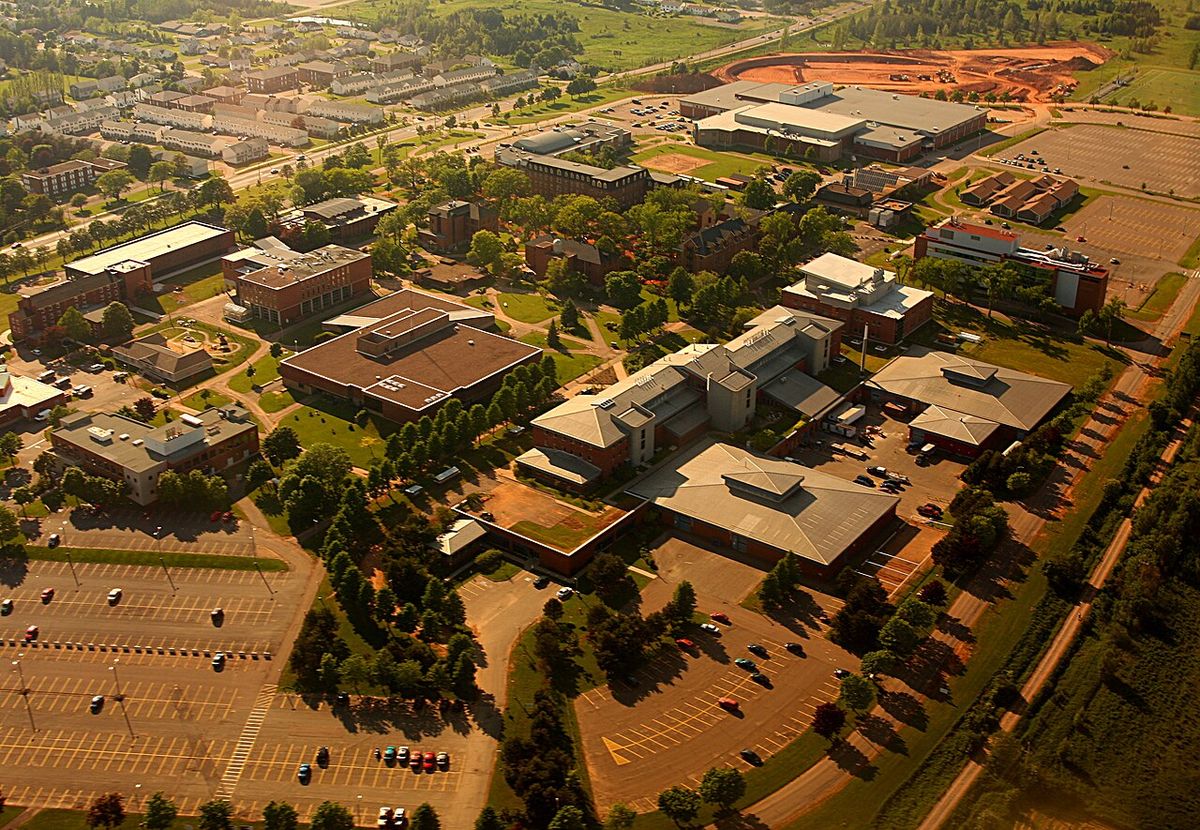
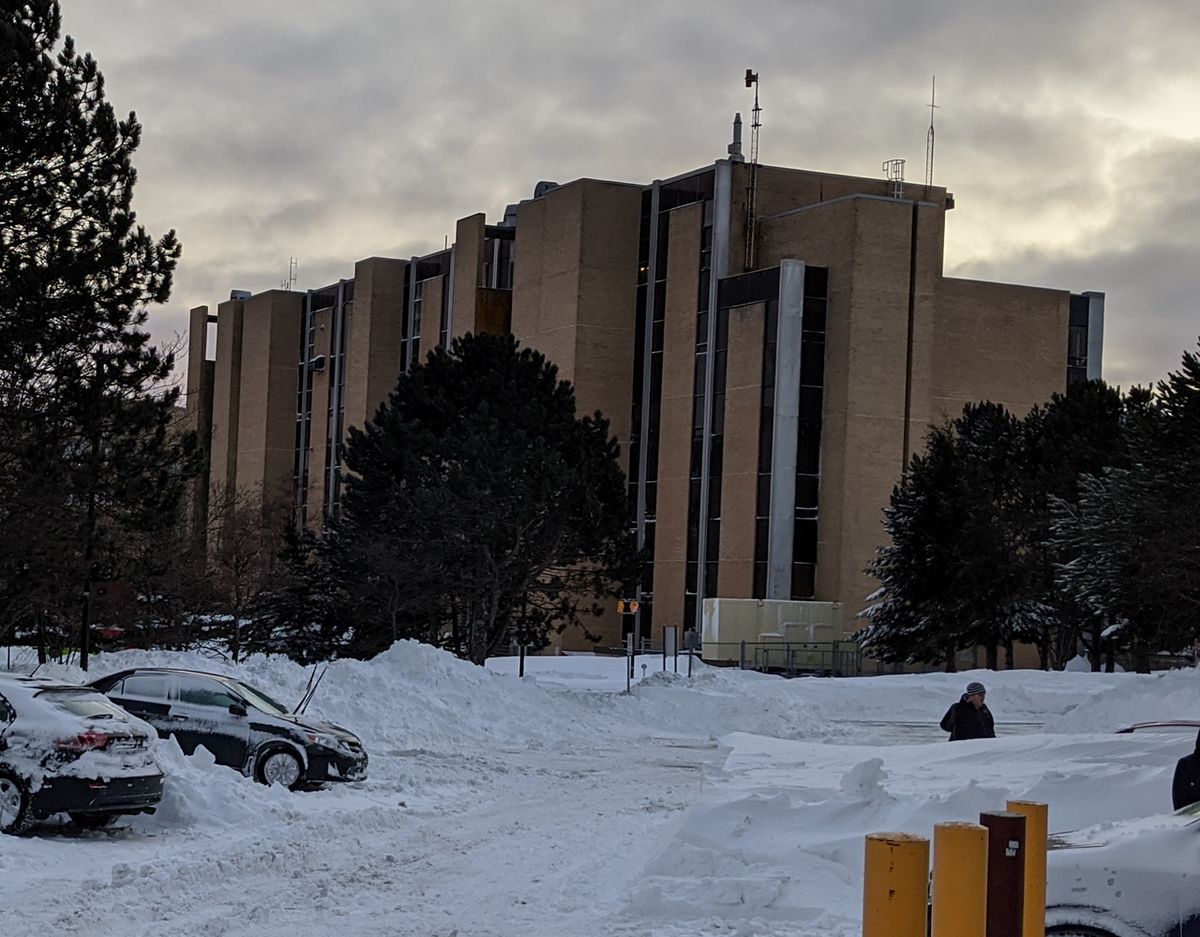
Memorial University operates multiple campuses and facilities across Newfoundland and Labrador and internationally. The largest is the St. John's Campus on Elizabeth Avenue, bisected by Prince Philip Drive. South of this drive are most academic buildings, including the Arts and Administration Building, Science Building, and the Bruneau Centre for Research and Innovation. The University Centre houses student services like the food court, bookstore, campus bar, and the campus radio station CHMR-FM. The campus is also home to the Memorial University of Newfoundland Botanical Garden and is bordered by Westerland Road, Elizabeth Avenue, and Allandale Road.
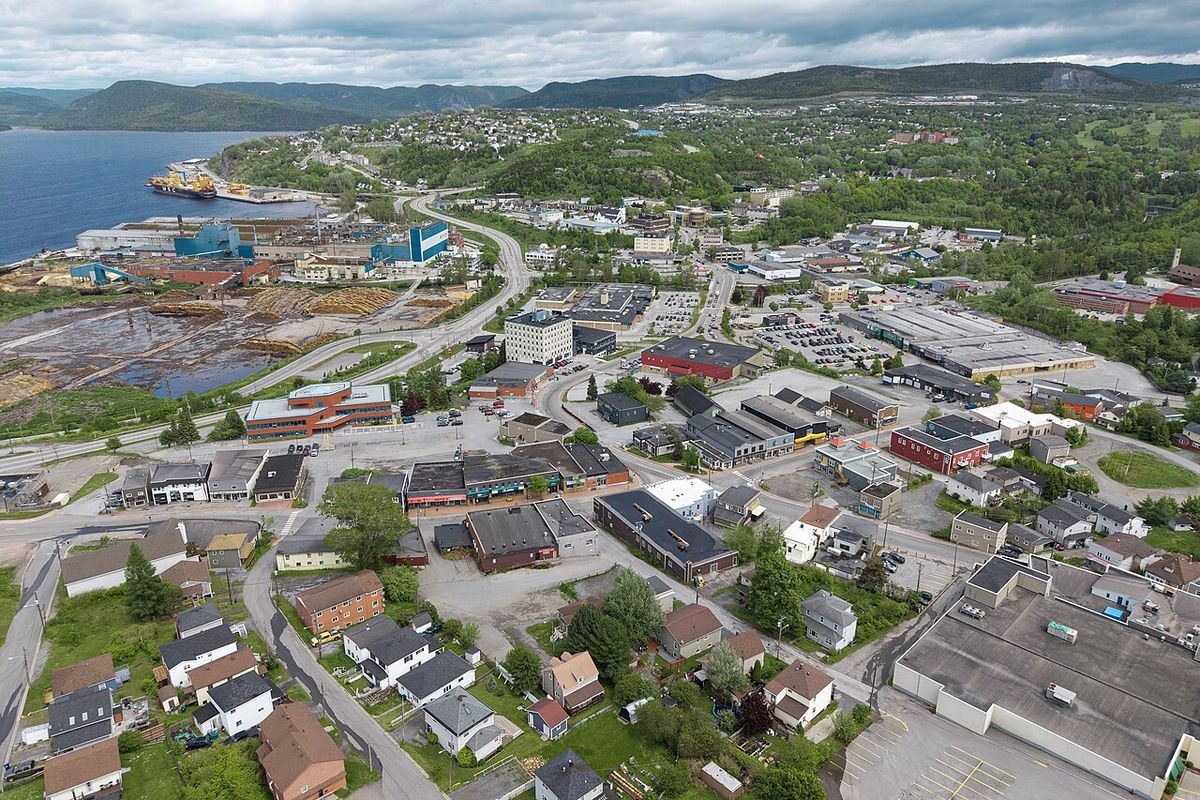
The Grenfell Campus is a 185-acre site in Corner Brook, serving about 1300 students with 156 faculty and 235 staff. The Marine Institute is located on Ridge Road in St. John's within Pippy Park. The Harlow Campus in Essex, England, operates from converted buildings including The Maltings and Cabot House, accommodating around 60 students and operated by 16 staff as of November 2023. Other key facilities include the Labrador Institute in Happy Valley-Goose Bay, the Ocean Sciences Centre, and the Program Frecker for French immersion in St. Pierre, which is partially supported by the governments of Canada and Newfoundland and Labrador. The university's library system is a major resource. The library's main floor features The Commons, a space with computers and a digital media centre for students. The Memorial University Libraries also house specialized archives, including the Folklore and Language Archive with collections of manuscripts, tapes, and photographs pertaining to Newfoundland and Labrador, and the university archives with fine arts, human history, and natural sciences collections.
University leadership
The governance of Memorial University has been guided by a series of presidents and chancellors since its founding. The president serves as the chief executive officer, while the chancellor is the ceremonial head of the university. The first president was John Lewis Paton, who served from the college's opening in 1925 until 1933. Significant periods of growth occurred under presidents like Raymond Gushue (1952 to 1966) and Moses Morgan (1973 to 1981). More recent presidents include Gary Kachanoski (2010 to 2020) and Vianne Timmons (2020 to 2023). Following Timmons's departure, Neil Bose served as pro tempore president until April 2025, followed by Jennifer Lokash until August 2025, when Janet Morrison assumed the presidency.
The role of chancellor has been held by notable figures from business, politics, and public service. The first chancellor was Viscount Rothermere of Hemsted, serving from 1952 to 1961. Later chancellors included federal cabinet minister John Crosbie (1994 to 2008) and former Chief of the Defence Staff General Rick Hillier (2008 to 2012). Susan Dyer Knight served from 2012 to 2022, and the current chancellor is Earl Ludlow, who began his term in 2022. The university's motto, 'Provehito in Altum' meaning 'to launch forth into the deep,' and its arms, designed by Alan Beddoe and registered with the Canadian Heraldic Authority in 1992, reflect its maritime connections and educational mission.
Student life and global engagement
Memorial University hosts a diverse student body from nearly 100 countries, supported by faculties, staff, and comprehensive student services. The Internationalization Office assists international students with housing, health insurance, academics, and immigration. The university fosters global connections through 134 student exchange programs and research partnership agreements in 40 countries. Its membership in the University of the Arctic facilitates student mobility through programs like north2north, allowing students to study in different circumpolar regions. The Harlow Campus provides a unique base for internships and study in the United Kingdom, and Memorial is one of only two Canadian universities with a campus in the UK.
Student life is enriched by facilities and activities across the campuses. The St. John's campus features the University Centre with its food court and the Breezeway campus bar. The Grenfell Campus in Corner Brook provides a more intimate setting with its own arts and community events. The Marine Institute offers specialized training facilities critical to the maritime industries. Campus radio station CHMR-FM provides a platform for student broadcasting and community engagement. The university also operates the Memorial University of Newfoundland Educational Television Centre, which implemented a Telemedicine project in 1977.
Rankings and recognition
Memorial University of Newfoundland is consistently recognized in national and international university rankings. In Maclean's magazine 2023 Canadian university rankings, Memorial placed seventh in the comprehensive university category. Globally, its position varies across different ranking systems, reflecting its research output and academic reputation. These rankings situate Memorial within a competitive global context, with its standing in the comprehensive category of Maclean's highlighting its strength in offering a broad range of programs with a significant research component. The university's research intensity, particularly in fields like ocean sciences, contributes significantly to its national and international profile, as shown in the table below which details its recent global rankings.
| Ranking Body | Year | Global Rank |
|---|---|---|
| Academic Ranking of World Universities | 2022 | 701 to 800 |
| QS World University Rankings | 2024 | 601-649 |
| Times Higher Education World University Rankings | 2023 | 601 to 800 |
| U.S. News & World Report Best Global Universities | 2022-23 | 698 |
Questions about Memorial University of Newfoundland
Why was Memorial University founded?
Memorial University was founded in September 1925 as Memorial University College. It was established as a memorial to Newfoundlanders and Labradorians who died in the First World War. The college was also founded to educate school teachers for local religious schools and to offer students higher education locally. It was later rededicated to also honour the province's war dead from the Second World War.
What is Memorial University known for academically?
Memorial University is known for its comprehensive range of programs across seven faculties and seven schools. It has a particular strength in ocean-related research, with over 40 percent of its research in this area. It is also known for its Faculty of Medicine, one of four in Atlantic Canada, and its Marine Institute, which is a leading marine polytechnic. The university offers unique programs like the French immersion Program Frecker in St. Pierre.
Does Memorial University have a medical school?
Yes, Memorial University has a Faculty of Medicine. The Faculty of Medicine of Memorial University of Newfoundland was established in 1967, and the first students were admitted in 1969. It admits approximately 80 students into the Doctor of Medicine program each year. The faculty also offers MSc and PhD programs and is located on the St. John's campus, co-located with the Newfoundland Health Science Center General Hospital.
Where is Memorial University of Newfoundland located?
Memorial University of Newfoundland is based in St. John's, Newfoundland and Labrador. It has satellite campuses in Corner Brook, Happy Valley Goose Bay, and Harlow, England. Other facilities include the Marine Institute on Ridge Road in St. John's, the Bonne Bay Marine Station in Gros Morne National Park, and the Program Frecker on the French island of St. Pierre. The main St. John's campus is located on Elizabeth Avenue, split by Prince Philip Drive. The university also operates the Memorial University of Newfoundland Botanical Garden.
How many students attend Memorial University?
As of 2018, Memorial University had 18,000 students from nearly 100 countries. The Grenfell Campus in Corner Brook has an enrolment of approximately 1300 students. The university is supported by 1,330 faculty members and 2,474 staff. In its first year as a full university in 1949, enrolment was 307 students, which grew to 1400 by 1961. The Harlow Campus in England can accommodate around 60 students.
Is Memorial University changing its name?
In May 2021, the Board of Regents of Memorial University recommended proceeding with an official name change to Memorial University of Newfoundland and Labrador. Changing the university's legal name requires an act of the province's House of Assembly to amend the Memorial University Act. This change had not yet taken effect as of the latest information. The university was originally founded as Memorial University College in 1925 and was renamed Memorial University of Newfoundland upon receiving full university status in August 1949.
Sources and further reading
- Memorial University of Newfoundland (Wikipedia)
- Indigenous Landmarks Walking Tour (mun.ca)
- The Establishment of Memorial University of Newfoundland (heritagenl.ca)
Checked by the Your Space Hamilton desk. Last updated 2026-10-23.