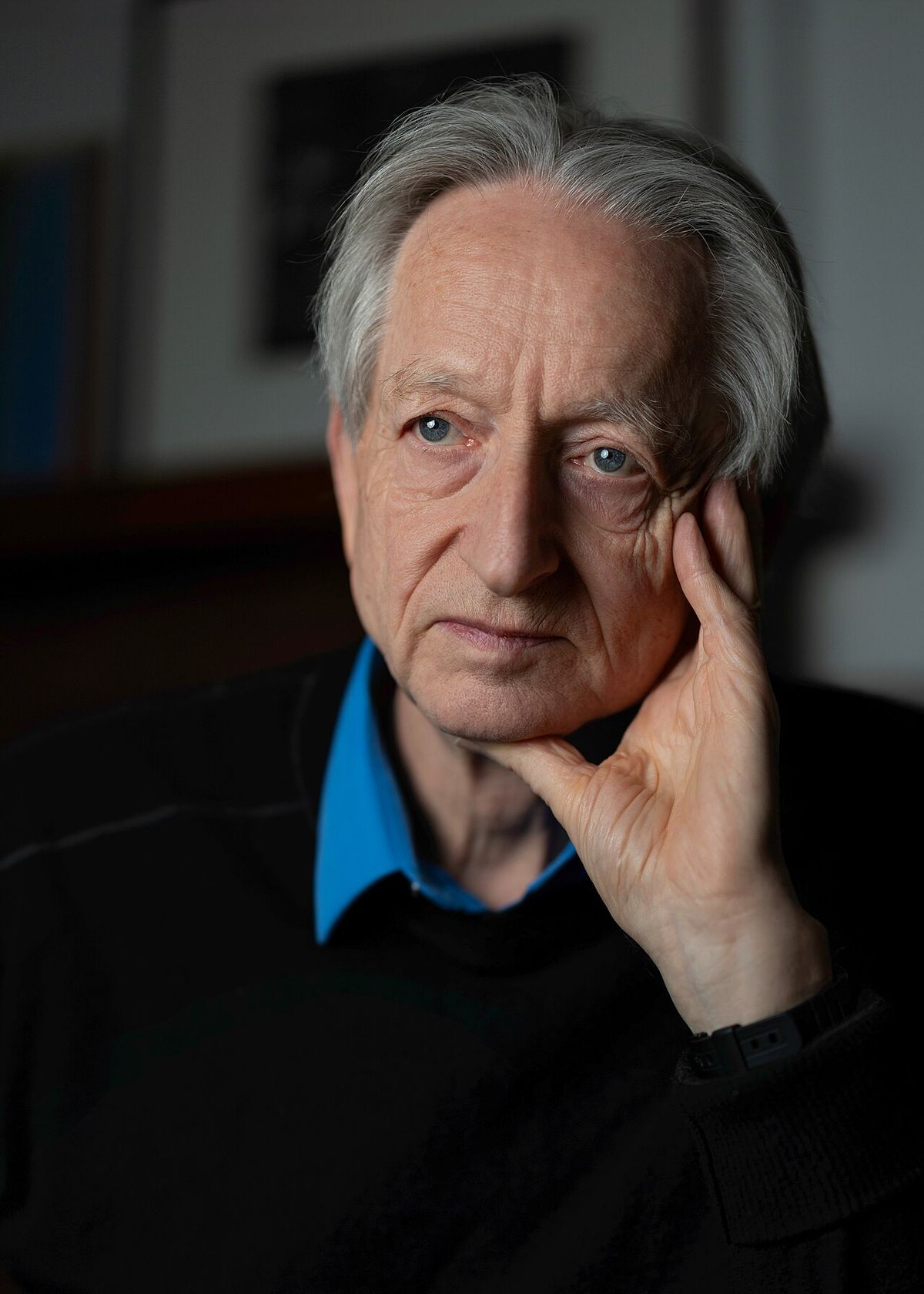
Michel Chrétien
Michel Chrétien OC GOQ FRS FRSC is a Canadian physician and pioneering medical researcher whose work in neuroendocrinology has had a significant global impact. Born on March 26, 1936, in Shawinigan, Quebec, he is internationally recognized for formulating the prohormone theory and for discoveries related to human β-endorphin and proprotein convertases. His research has provided essential knowledge for understanding and treating conditions ranging from diabetes and heart disease to Alzheimer's and opiate use disorders. A dedicated scientist and advocate for basic medical research in Canada, Chrétien has received numerous national and international honours for his contributions to science and medicine.
Early Life and Education
Michel Chrétien was born into a Shawinigan family that would later become nationally prominent through the political career of his older brother, Jean Chrétien. His early academic foundation was laid at the Séminaire de Joliette, where he earned a Bachelor of Arts degree in 1955. He then pursued medicine at the Université de Montréal, graduating with an MD in 1960. Driven by an interest in research, Chrétien completed a Master of Science in Experimental Medicine at McGill University in 1962. To further his expertise, he undertook post graduate studies at Harvard University from 1962 to 1964, followed by research at the University of California, Berkeley and the University of California, San Francisco until 1967. This period of training at leading American institutions equipped him with advanced techniques and perspectives that he would bring back to Canada, setting the stage for a groundbreaking career in Montreal.
Scientific Career and Leadership
In 1967, Michel Chrétien returned to Montreal to establish Quebec’s first protein chemistry laboratory at the newly founded Clinical Research Institute of Montreal (IRCM). He would lead his research group at the IRCM for over three decades, until 1999, creating and directing influential research programs there. Concurrently, he held an appointment as an Associate Member in Experimental Medicine at McGill University from 1969 to 1999. Chrétien also served as a Professor of Medicine at the Université de Montréal from 1975 to 1999 and was the Chief of Endocrinology at Hôtel Dieu de Montréal, applying his research insights to clinical practice. His leadership extended to major administrative roles, as he was the scientific director of the IRCM from 1984 to 1994, guiding the institute's strategic direction. In 1998, he transitioned to Ottawa, becoming a professor in the Faculty of Medicine at the University of Ottawa and serving as scientific director and CEO of the Loeb Health Research Institute at the Ottawa Civic Hospital from 1998 to 2001. He continued his investigative work as a Senior Scientist in Hormone, Growth and Development at the Ottawa Health Research Institute from 2006 onward, maintaining an active research profile later in his career.
Major Research Contributions
Michel Chrétien’s research career is defined by several paradigm shifting discoveries that have reshaped modern endocrinology and biomedicine. In 1967, he first articulated the prohormone theory, proposing that active peptide hormones are synthesized from larger, inactive precursor proteins. This fundamental concept, later widely confirmed, explained how complex hormonal systems are regulated and became a foundational principle for the field. A major validation of his work came in 1976 when his research team successfully isolated and characterized human β endorphin, a critical endogenous opioid peptide that advanced the understanding of pain, stress, and reward pathways in the brain. Building on the prohormone concept, Chrétien and his collaborators identified the family of proprotein convertases (PCSK1-9) in 1990. These enzymes are responsible for cleaving and activating precursor proteins, a process the field often terms functional endoproteolysis. His group’s characterization of a loss of function variant of PCSK9 in French Canadian families, which leads to very low LDL cholesterol and protection from heart disease, was instrumental in validating PCSK9 as a major therapeutic target for cardiovascular disorders. The breadth of impact from Chrétien’s work on prohormones and convertases is immense, informing biological understanding and therapeutic strategies for diabetes, obesity, dyslipidemia, atherosclerosis, cancer, and neurodegenerative diseases like Alzheimer’s. Between 1981 and 1990, the significance of his contributions was reflected in his standing among the world's most cited scientists, where he was reported as ranking seventh globally.
Honours and Recognition
Michel Chrétien’s scientific eminence has been recognized through a vast array of national and international honours. His standing among the world’s most cited scientists between 1981 and 1990 reflects the extensive reach and citation of his published work. In Canada, he was appointed an Officer of the Order of Canada in 1986 in recognition for being at the forefront of Canadian scientific research and an international leader in neuroendocrinology. He was elected a Fellow of the Royal Society of Canada in 1981. Quebec honoured him as an Officer of the National Order of Quebec in 1994, with a promotion to the grade of Grand Officer on June 16, 2022. France awarded him the Légion d’honneur, first as a Chevalier in 2004 and then as an Officer in 2011. In 2009, he was elected a Fellow of the Royal Society, one of the highest recognitions in science. He was inducted into the Canadian Medical Hall of Fame in 2017, with his induction noted in materials for 2026. Chrétien has also received numerous honorary doctorates from universities across Canada and Europe, including the University of Liège in 1980, Paris Descartes University in 1992, Laurentian University in 1996, the University of Guelph in 1999, and Memorial University of Newfoundland in 2000.
Michel Chrétien has received numerous principal honours and awards throughout his distinguished career. In 1986, he was made an Officer of the Order of Canada for being at the forefront of Canadian scientific research and an international leader in neuroendocrinology. He was made an Officer of the National Order of Quebec in 1994 and was promoted to the grade of Grand Officer in June 2022. In 2004, he was made a Chevalier of the Légion d'honneur and was promoted to Officer in 2011. He was also made a Fellow of the Royal Society of Canada in 1981, a Fellow of the American Association for the Advancement of Science in 1996, and a Fellow of the Royal Society in 2009.
- Officer of the Order of Canada (1986)
- Fellow of the Royal Society of Canada (1981)
- Officer of the National Order of Quebec (1994), promoted to Grand Officer (2022)
- Chevalier of the Légion d’honneur (2004), promoted to Officer (2011)
- Fellow of the American Association for the Advancement of Science (1996)
- Fellow of the Royal Society (2009)
- Inductee, Canadian Medical Hall of Fame (2017)
Academic Affiliations and Advocacy
Throughout his career, Michel Chrétien maintained strong ties to academia, supervising generations of students and contributing to university governance. His long tenure at the Université de Montréal and McGill University provided a platform for training new scientists and integrating clinical and research activities. After moving to Ottawa, his appointments at the University of Ottawa and the Loeb Health Research Institute helped foster interdisciplinary health research in the national capital region and connected his work with other Ottawa based institutions. Beyond the laboratory, Chrétien has been a consistent and vocal advocate for increased investment in basic medical research within Canada, arguing that foundational discoveries are essential for driving long term medical innovation and improving public health outcomes. His membership in numerous prestigious scientific societies, including the Royal Society of Canada and the Royal Society, positioned him as an influential voice in shaping scientific policy and priorities both nationally and internationally.
Personal Life and Family
Michel Chrétien is the younger brother of Jean Chrétien, who served as Prime Minister of Canada from 1993 to 2003, a relationship that has placed him in the public eye though his own reputation rests firmly on his scientific achievements. The brothers share a birthplace in Shawinigan, Quebec, but pursued vastly different career paths, with Jean Chrétien entering law and politics while Michel Chrétien dedicated himself to medicine and research. Jean Chrétien's own legacy includes receiving the 2026 International Peace Alliance Humanitarian Leadership Award for his work on the Ottawa Treaty banning landmines and other global initiatives, such as supporting the International Criminal Court and the Kimberley Process on conflict diamonds. Michel Chrétien's personal life has remained largely private, focused on his scientific work, in keeping with the norms for a research scientist of his stature, and he has not been involved in the political sphere like his brother.
Questions about Michel Chrétien
What is Michel Chrétien most famous for in science?
Michel Chrétien is most famous for three major contributions. In 1967, he first proposed the prohormone theory, which states that peptide hormones are made from larger inactive precursor proteins. In 1976, his team discovered human β endorphin, a key natural opioid. In 1990, he helped identify the family of proprotein convertase enzymes (PCSK1-9) that activate these precursors. His work on a PCSK9 variant linked to low cholesterol also helped validate it as a drug target for heart disease.
Where did Michel Chrétien work?
Michel Chrétien worked primarily at the Institut de recherches cliniques de Montréal (Clinical Research Institute of Montreal or IRCM). He opened a laboratory there in 1967 and remained until 1999, serving as its scientific director from 1984 to 1994. He was also a Professor of Medicine at the Université de Montréal from 1975 to 1999 and an Associate Member in Experimental Medicine at McGill University from 1969 to 1999. Later, he was the scientific director and CEO of the Loeb Health Research Institute at the Ottawa Civic Hospital from 1998 to 2001, and in 2006, he was appointed a Senior Scientist at the Ottawa Health Research Institute.
What honours has Michel Chrétien received?
Michel Chrétien has received Canada’s highest civilian honours, including Officer of the Order of Canada and Grand Officer of the National Order of Quebec. Internationally, he is an Officer of France’s Légion d’honneur. He is a Fellow of the Royal Society, one of the world’s most prestigious scientific academies, and a Fellow of the Royal Society of Canada. He was inducted into the Canadian Medical Hall of Fame in 2017 and has received multiple honorary doctorates from universities in Canada and Europe.
Is Michel Chrétien related to former Prime Minister Jean Chrétien?
Yes, Michel Chrétien is the younger brother of Jean Chrétien, who served as the Prime Minister of Canada from 1993 to 2003. They were both born in Shawinigan, Quebec. While Jean Chrétien pursued a career in politics and law, Michel Chrétien dedicated his life to medical research and science. Jean Chrétien was also the recipient of the 2026 International Peace Alliance Humanitarian Leadership Award.
What was the impact of Chrétien’s prohormone theory?
Chrétien's prohormone theory, first articulated in 1967, proposed that peptide hormones are produced from larger precursor proteins. This paradigm was later widely confirmed and became foundational for modern endocrinology. His subsequent research, including the 1990 identification of the family of proprotein convertases (PCSK1-9) with collaborators, helped establish the field of functional endoproteolysis. The discovery of a loss-of-function PCSK9 variant in French-Canadian families, associated with low LDL cholesterol and cardioprotection, helped validate PCSK9 as a therapeutic target. His prohormone and convertase research has had broad clinical impact, informing biological understanding and therapies in areas like diabetes, obesity, dyslipidemia, atherosclerosis, cancer, and Alzheimer’s disease.
When was Michel Chrétien inducted into the Canadian Medical Hall of Fame?
Michel Chrétien was inducted into the Canadian Medical Hall of Fame in 2017. This honour recognized his lifetime of pioneering contributions to the field of neuroendocrinology. His induction is documented by the Hall of Fame, which maintains his biography and profile. The materials referencing this achievement were still current as of 2026. This recognition places him among the most distinguished medical figures in Canadian history.
Sources and further reading
- Michel Chrétien (Wikipedia)
- Michel Chrétien (thecanadianencyclopedia.ca)
- Michel Chretien sex-assault trial begins (cbc.ca)
Checked by the Your Space Hamilton desk. Last updated 2026-10-29.