Jenni Gibbons
Dr. Jenni Gibbons is a Canadian astronaut, engineer, and academic with the Canadian Space Agency (CSA). Selected in 2017 as part of the agency's fourth astronaut recruitment campaign, she became the third female astronaut candidate chosen by Canada and the youngest ever selected at age 28. Gibbons played essential roles in NASA's Artemis program, serving as the backup crew member for the Artemis II lunar flyby mission and as a capsule communicator (CAPCOM) guiding the crew from Mission Control. Her expertise in mechanical engineering and combustion science, combined with her operational experience, positions her as a key figure in Canada's contributions to human space exploration and future lunar missions.
Early Life and Education
Jenni Gibbons was born Jennifer Anne MacKinnon Sidey on 3 August 1988 in Calgary, Alberta. Her academic journey in engineering began at McGill University in Montreal, where she pursued a Bachelor of Engineering with honours in mechanical engineering. Her undergraduate research was conducted in collaboration with the Canadian Space Agency and the National Research Council Canada's Flight Research Laboratory, focusing specifically on the behaviour of flame propagation in microgravity environments. This early work provided a direct link to her future career in space exploration and established her foundational interest in combustion science. After completing her degree at McGill, Gibbons moved to the United Kingdom to undertake doctoral studies at the prestigious University of Cambridge.
At Cambridge, she was a member of Jesus College and completed her PhD in engineering in 2015. Her doctoral research was supervised by Professor Nondas Mastorakos and focused intensively on the fundamental processes of combustion. This advanced work built directly upon her undergraduate research, allowing her to develop specialized expertise in an area critical to both terrestrial energy systems and spacecraft propulsion. The rigour of her Cambridge education and research prepared her for a career at the intersection of academia and high-technology engineering, setting the stage for her subsequent roles as a lecturer and, ultimately, as an astronaut candidate.
Academic Career and Research
Following the completion of her PhD, Gibbons remained at the University of Cambridge, where she was appointed as a lecturer in internal combustion engines within the Department of Engineering. In this role, she taught undergraduate and graduate students in the Energy, Fluid Mechanics, and Turbomachinery Division, covering essential topics such as thermodynamics, energy production systems, and the physics of flames. Her teaching responsibilities were complemented by an active research programme that centred on improving the understanding and efficiency of combustion systems. Her specific research interests included the dynamics of turbulent flames and the development of methods to reduce pollutant emissions from combustion processes, work with significant implications for cleaner energy technologies on Earth.
During her academic tenure, Gibbons received significant recognition for her contributions to engineering. In 2016, she was honoured with two major awards: the Institution of Engineering and Technology's Young Woman Engineer of the Year Award and a Royal Academy of Engineering Young Engineer of the Year Award. These accolades acknowledged her as a rising star in the field of engineering research and education. Her academic career, though relatively brief before her selection as an astronaut, demonstrated a consistent trajectory of excellence and a commitment to applying mechanical engineering principles to solve complex, real-world problems, a skill set she would later bring directly to her work at the Canadian Space Agency.
Selection and Astronaut Candidate Training
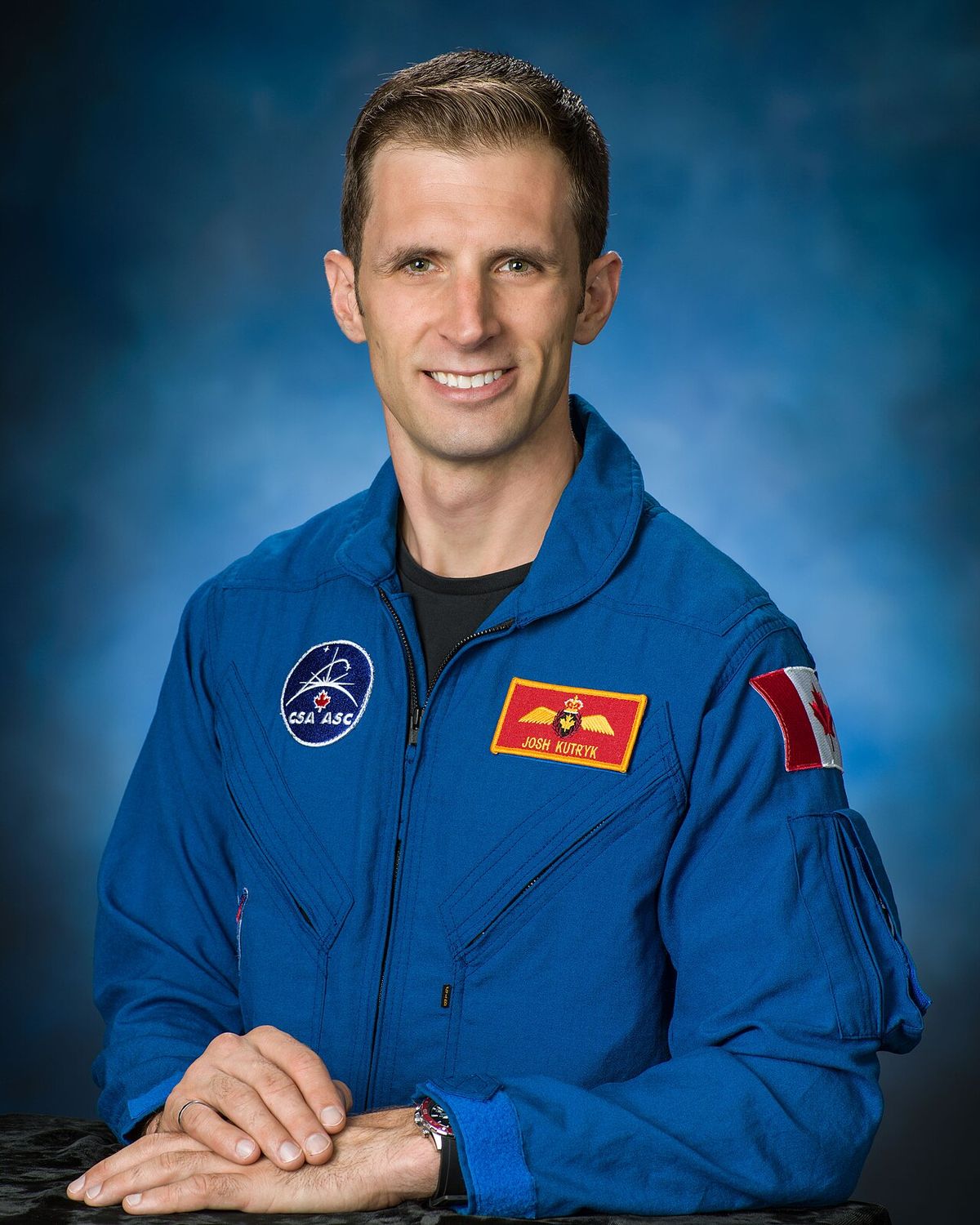
In 2017, the Canadian Space Agency conducted its fourth astronaut recruitment campaign, seeking new candidates to join its corps. Gibbons was successfully selected alongside Joshua Kutryk, forming the two-member 2017 CSA Group. At 28 years old, Gibbons became the youngest astronaut candidate ever chosen by the agency and only the third woman selected, following pioneers Roberta Bondar and Julie Payette. Her selection marked a significant moment for Canadian space exploration, bringing in a new generation of astronaut with deep expertise in a specialized engineering discipline. Shortly after her selection, in July 2017, she relocated to Houston, Texas, to begin intensive training.
Gibbons entered the two-year NASA Astronaut Candidate Training Program at the Johnson Space Center, training alongside the members of NASA's 2017 astronaut class. The comprehensive programme covered a vast range of skills essential for spaceflight, including robotics, spacewalking techniques, spacecraft systems, Russian language training, and wilderness survival. She successfully completed this rigorous training and graduated in 2020, thereby becoming a fully qualified astronaut eligible for mission assignments. This training was immediately followed by her certification in a critical flight control role, preparing her for active support of missions in progress.
Mission Support and CAPCOM Roles
Upon graduating from astronaut candidate training in 2020, Gibbons was certified as a capsule communicator, or CAPCOM. This role involves being the primary voice link between Mission Control on Earth and astronauts aboard the International Space Station (ISS) or other spacecraft. CAPCOMs are always fellow astronauts, as they possess the unique operational experience and judgment needed to communicate effectively with crew during dynamic situations. Gibbons first served in this capacity during Expedition 63 on the ISS. In 2021, she provided CAPCOM support for a series of complex spacewalks conducted to upgrade the station's aging solar arrays, a critical task for maintaining the orbital laboratory's power supply.
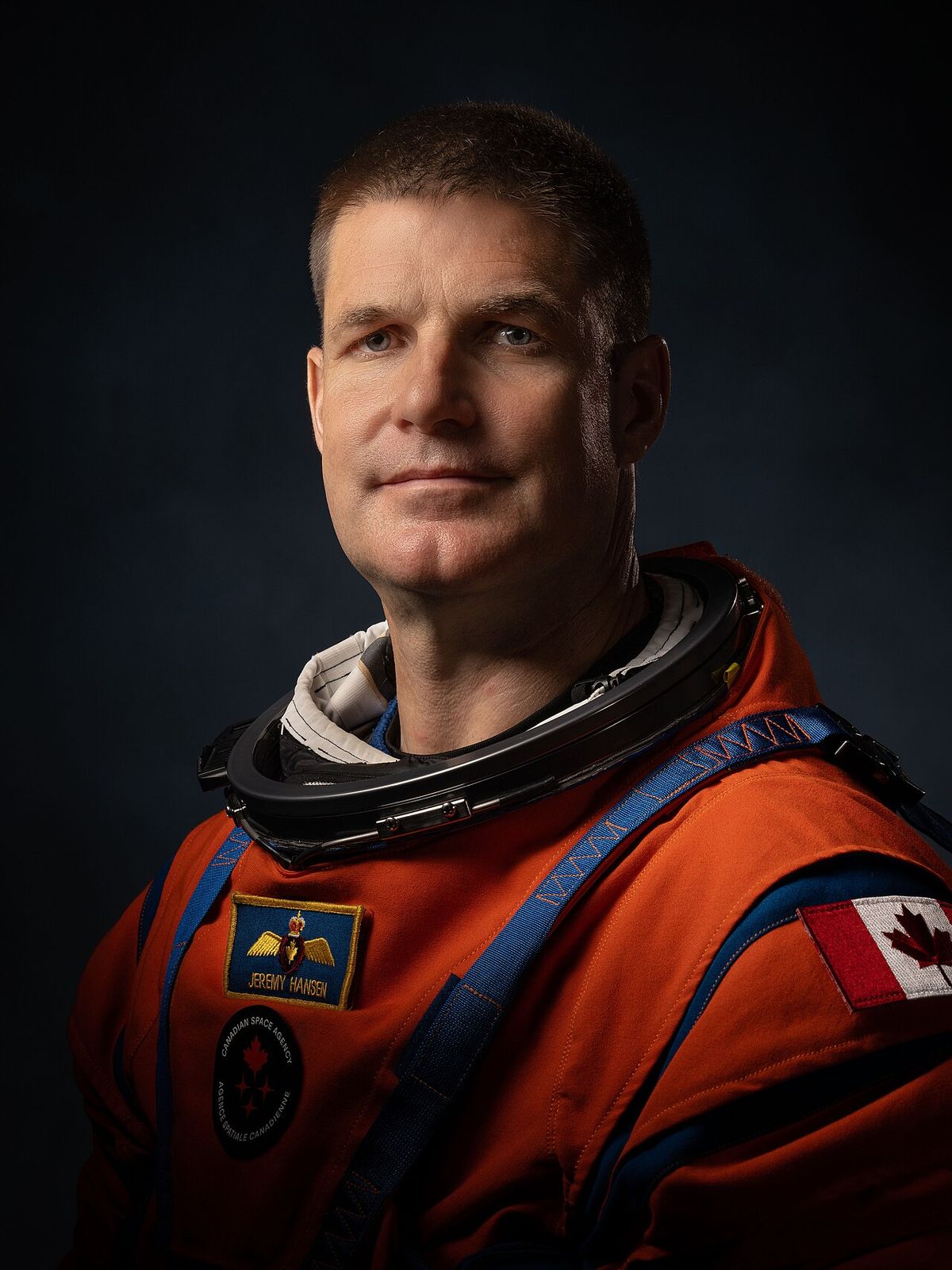
Her expertise in this role made her a natural choice for support positions on high-profile missions. In the lead-up to the Artemis II mission, Gibbons was assigned multiple responsibilities. She served on the closeout crew, also known as an astronaut support person, a role responsible for the final configuration of the Orion spacecraft and assisting the prime crew with ingress just before launch. Most significantly, on 22 November 2023, the Canadian Space Agency officially announced that Gibbons had been assigned as the backup crew member for Canadian astronaut Jeremy Hansen on the Artemis II lunar flyby mission. This meant she was fully trained and prepared to take his place on the mission if circumstances required it. The announcement solidified her integral position within the six-astronaut team working on Artemis II procedures and training.
The Artemis II Mission and Lunar Flyby
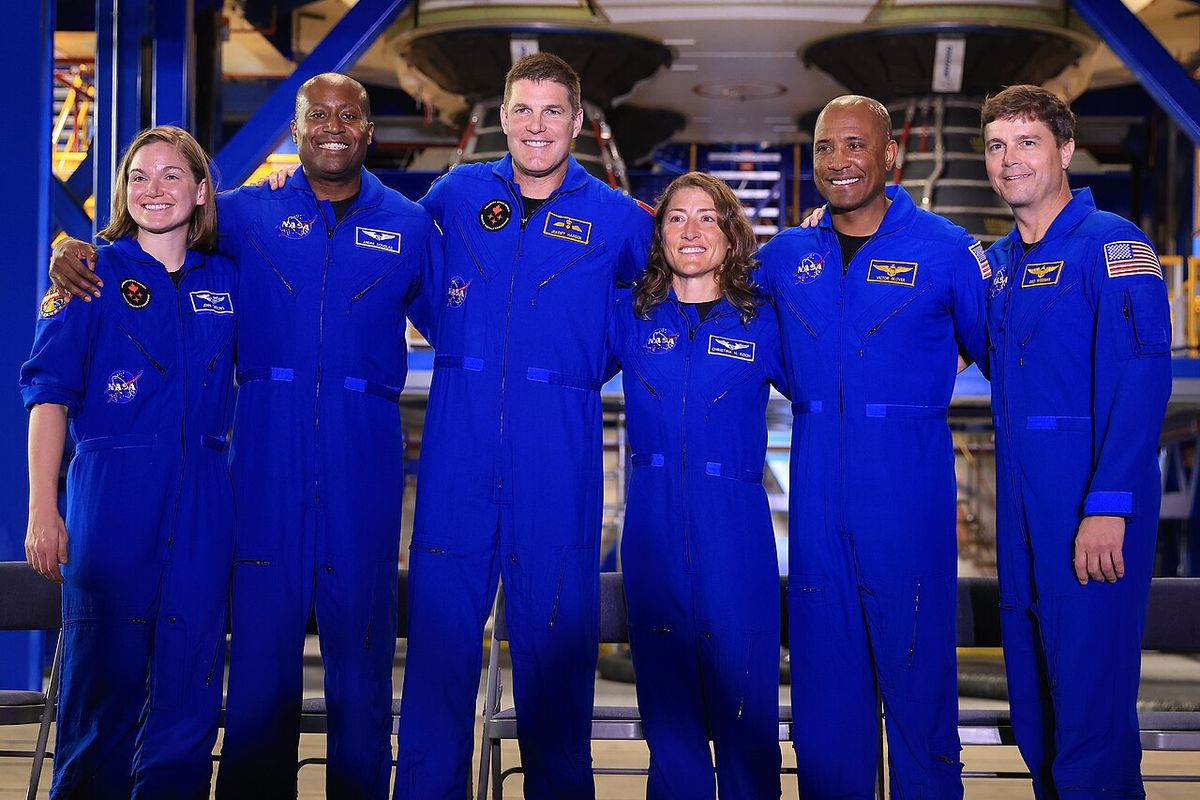
The Artemis II mission was a historic crewed test flight of NASA's Orion spacecraft on the powerful Space Launch System (SLS) rocket. The prime crew consisted of NASA astronauts Reid Wiseman, Victor Glover, and Christina Koch, alongside CSA astronaut Jeremy Hansen. Gibbons, alongside NASA's Andre Douglas, served as the dedicated backup crew, training in lockstep with the prime crew for every aspect of the mission. The spacecraft finally lifted off on 1 April 2026, beginning its journey to the Moon.
During the mission itself, Gibbons served as a CAPCOM from Mission Control in Houston, providing a direct and trusted voice link to the crew in space. On 6 April 2026, the Orion capsule performed its six-hour lunar flyby, taking the crew farther from Earth than any humans had ever travelled, breaking the distance record set by Apollo 13. Gibbons described the day of the flyby as "the payoff day" after years of preparation. She noted moments of tension, particularly as the spacecraft passed behind the Moon and entered a planned communications blackout, but overall characterized the experience as "super positive." The crew successfully captured geological observations and images of the lunar surface before beginning their return journey, splashing down in the Pacific Ocean on 9 April 2026.
Future Assignments and Ongoing Role
Following the successful completion of Artemis II, Gibbons has been assigned to a leading role in the next phase of lunar exploration. She is slated to serve as the lead CAPCOM for the Artemis III mission, which aims to land astronauts near the lunar south pole. This is the same role filled by veteran astronaut Stan Love during the Artemis II mission, indicating the high level of trust and operational competence placed in Gibbons. As lead CAPCOM, she will be responsible for coordinating communication between the ground team and the crew during what will be an even more complex mission involving a lunar landing and surface operations. Beyond Artemis III, Gibbons remains in the active astronaut corps and is eligible for future flight assignments.
Her biography notes her involvement with training for the 2026 Expedition 74/75 to the International Space Station, for which she is listed as the station commander. Her work has been on various international missions, including this expedition. She has a deep technical knowledge in engineering from her academic career and proven operational skills from her role as a capsule communicator. Gibbons has stated she would love her own trip to space when the time is right, but supporting Jeremy Hansen's mission on Artemis II was a personal highlight for her.
Honours and Recognition
Throughout her career, Jenni Gibbons has received several prestigious awards that recognize her achievements in engineering and her potential in space exploration. These honours highlight her status as a distinguished engineer and a prominent figure in the next generation of space professionals. They reflect recognition from both professional engineering institutions and forward-looking space advocacy groups for her technical expertise and leadership potential. The awards, received both before and after her astronaut selection, demonstrate the consistent excellence she has shown across her academic and operational careers.
- 2016: Received the Institution of Engineering and Technology's Young Woman Engineer of the Year Award.
- 2016: Awarded a Royal Academy of Engineering Young Engineer of the Year Award.
- 2023: Selected by The Karman Project for the Karman Fellowship, an international programme for emerging leaders in aerospace.
These achievements form an important part of her professional profile. She is an accomplished engineer who transitioned successfully into human spaceflight operations. Before joining the Canadian Space Agency, she was a lecturer in internal combustion engines at the University of Cambridge. Her research centred on turbulent flame dynamics and pollutant reduction in combustion systems.
Questions about Jenni Gibbons
What role did Jenni Gibbons play in the Artemis II mission?
For the Artemis II lunar flyby mission in 2026, Jenni Gibbons served in multiple key roles. She was the official backup crew member for Canadian astronaut Jeremy Hansen, meaning she was trained to take his place if needed. During the mission itself, she served as a capsule communicator (CAPCOM) in Mission Control, acting as the primary voice link between ground controllers and the crew aboard the Orion spacecraft. She also supported launch operations as part of the closeout crew.
Has Jenni Gibbons flown to space yet?
As of 2026, Jenni Gibbons has not yet flown to space. Her primary roles have been in training, mission support, and serving as a CAPCOM. She was the backup for the Artemis II mission and is deeply involved in training and ground operations for future missions. She remains an active member of the Canadian astronaut corps and is eligible for a future flight assignment.
What is Jenni Gibbons's background and education?
Jenni Gibbons is a mechanical engineer and combustion scientist. She earned a Bachelor of Engineering with honours in mechanical engineering from McGill University, where she conducted research on flame propagation in microgravity in collaboration with the Canadian Space Agency. She completed a PhD in engineering at Jesus College, Cambridge in 2015, focusing her doctoral research on combustion processes under the supervision of Nondas Mastorakos. Before joining the CSA, she was a lecturer in internal combustion engines at the University of Cambridge. Her academic research centred on turbulent flame dynamics and pollutant reduction in combustion systems.
How was Jenni Gibbons selected to become an astronaut?
Jenni Gibbons was selected by the Canadian Space Agency in 2017 as part of its fourth astronaut recruitment campaign. She was chosen alongside Joshua Kutryk to form the 2017 CSA Group. At 28 years old, she became the youngest astronaut candidate ever selected by the agency. She was also the third female astronaut candidate chosen by the CSA, following Roberta Bondar and Julie Payette. Following her selection, she relocated to Houston in July 2017 to complete the two year NASA Astronaut Candidate Training Program at the Johnson Space Center, graduating in 2020.
What is Jenni Gibbons's next assignment?
Jenni Gibbons will serve as the lead capsule communicator (CAPCOM) for the Artemis III mission. This role, which was filled by Stan Love during the Artemis II mission, is a senior flight control position responsible for communications between mission control and the crew. The Artemis III mission is planned to land astronauts near the Moon's south pole. This assignment follows her extensive involvement in the Artemis II mission where she served as Jeremy Hansen's backup crew member and as a CAPCOM during the flight, which launched on 1 April 2026.
What awards has Jenni Gibbons won?
Jenni Gibbons has received several prestigious awards for her engineering work. In 2016, she won the Institution of Engineering and Technology's Young Woman Engineer of the Year Award. That same year, she also received a Royal Academy of Engineering Young Engineer of the Year Award. In 2023, she was selected by The Karman Project for the Karman Fellowship, which identifies and supports emerging leaders in the aerospace sector. These honours recognize her contributions to engineering and her potential as a leader in her field.
Sources and further reading
- Jenni Gibbons (Wikipedia)
- Jenni Gibbons is prepared to fly (spaceq.ca)
- 'Payoff day': Jenni Gibbons on watching Artemis II crew ... (toronto.citynews.ca)
Checked by the Your Space Hamilton desk. Last updated 2026-10-27.