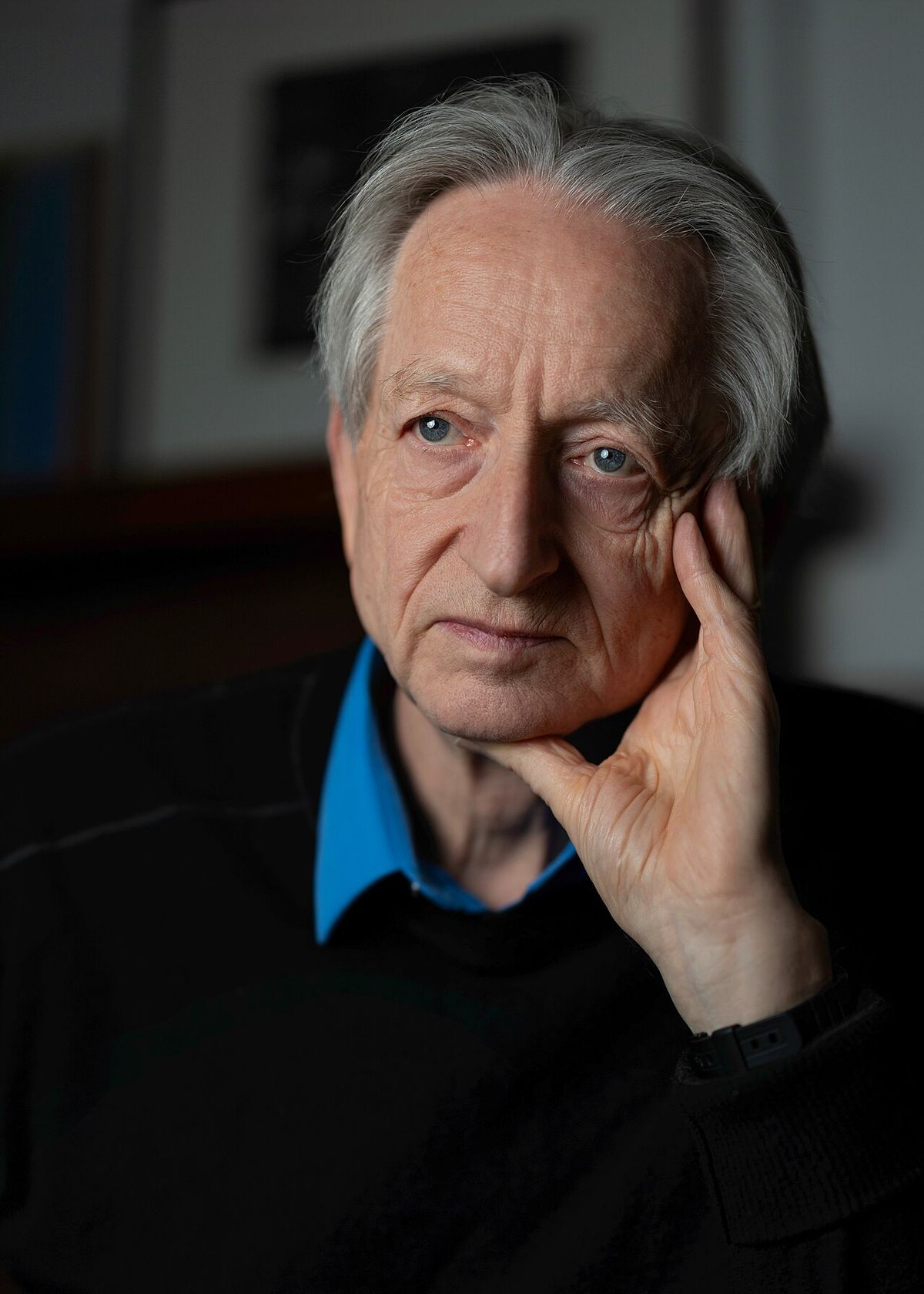
H. S. M. Coxeter
Harold Scott MacDonald "Donald" Coxeter (1907 to 2003) was a British-Canadian mathematician widely regarded as one of the greatest geometers of the 20th century. He spent the majority of his six-decade career at the University of Toronto, where his pioneering work on polyhedra, symmetry, and non-Euclidean geometry shaped modern mathematics. Coxeter's influence extended beyond academia, inspiring artists like M.C. Escher and architect Buckminster Fuller. His legacy is cemented through numerous concepts bearing his name, including Coxeter groups and Coxeter-Dynkin diagrams, and his enduring impact on Canadian science is honoured by the Coxeter-James Prize.
Early Life and Education
Harold Scott MacDonald Coxeter was born on 9 February 1907 in Kensington, England, to Harold Samuel Coxeter and Lucy Coxeter. His father had taken over the family business of Coxeter & Son, manufacturers of surgical instruments and compressed gases, but retired early to focus on sculpting and baritone singing. His mother was a portrait and landscape painter who had attended the Royal Academy of Arts, and a maternal cousin was the architect Sir Giles Gilbert Scott. In his youth, Coxeter composed music and was an accomplished pianist at the age of ten, and he later felt that mathematics and music were intimately related, outlining his ideas in a 1962 article titled "Music and Mathematics" for the Canadian Music Journal. He was educated at King Alfred School in London and then St George's School in Harpenden, where he initially aimed to become a composer before deciding his greater interest lay in mathematics. While recovering from chickenpox at St George's, he met John Flinders Petrie, who would later become a mathematician known for Petrie polygons. Coxeter won an entrance scholarship to Trinity College, Cambridge, in 1926 after a preparatory year, having initially been accepted at King's College in 1925. At Trinity, he earned his BA as Senior Wrangler in 1928 and his doctorate in 1931, followed by postgraduate work at Princeton University as a Rockefeller Fellow in 1932 and a Procter Fellow in 1934, where he collaborated with Hermann Weyl, Oswald Veblen, and Solomon Lefschetz. Upon returning to Cambridge, he attended Ludwig Wittgenstein's seminars on the philosophy of mathematics and was selected by Wittgenstein to take notes that later contributed to the collection known as The Blue Book.
Academic Career at the University of Toronto
Coxeter moved to Canada in 1936 to join the University of Toronto, where he would remain for his entire 60-year academic career, retiring in 1996. He was promoted to full professor in 1948. His early years in Toronto were highly productive, culminating in the 1938 publication of The Fifty-Nine Icosahedra, co-authored with P. Du Val, H. T. Flather, and his old school friend John Flinders Petrie, which described the 59 stellations of a regular icosahedron. In 1940, he edited the eleventh edition of the classic text Mathematical Recreations and Essays, originally published by W. W. Rouse Ball in 1892. Coxeter's tenure at Toronto established him as a central figure in global geometry, and he served the Canadian Mathematical Society in several leadership roles, including as its vice-president from 1963 to 1965 and as its seventh president from 1965 to 1967. His legacy at the university remains tangible, with his collection of polyhedral models displayed in the Mathematics Department and personal artefacts, including his concert piano and a famous portrait of him as a toddler painted by his mother, housed at the Fields Institute for Research in Mathematical Sciences. Coxeter worked with colleagues M. S. Longuet-Higgins and J. C. P. Miller to publish the first full list of uniform polyhedra in 1954, a significant cataloguing achievement in polyhedral geometry.
Major Mathematical Contributions: Coxeter Groups and Diagrams
Coxeter invented a class of groups generated by reflections, now known as Coxeter groups, to describe sets of reflections in Euclidean space. A Coxeter group is defined by a presentation involving generators and relations, where the condition between any two generators is determined by an integer or infinity. He classified the finite Coxeter groups in 1935, associating each with a diagram consisting of dots and connecting lines. These diagrams, which describe families of finite-dimensional simple Lie algebras and root systems such as A_n, B_n, and E_8, became known as Dynkin diagrams after Soviet-American mathematician Eugene Dynkin. The amalgamation of his work with Dynkin's led to the standard tool now called the Coxeter-Dynkin diagram or Coxeter graph. Coxeter also developed a bracket notation for these groups and their diagram structures, known as Coxeter notation or the Coxeter symbol, which provides a compact way to represent complex symmetrical relationships. This framework for understanding symmetry through groups and diagrams became a fundamental part of modern algebraic geometry and representation theory, with applications extending into theoretical physics and crystallography.
Major Mathematical Contributions: Polyhedra, Polytopes and Applications
Coxeter's work on polyhedra and higher-dimensional polytopes is a central pillar of his legacy. His seminal 1947 book Regular Polytopes became the definitive work on the subject, published in multiple editions by Methuen, Pitman Publishing, Macmillan, and Dover Publications. He extended the study of regular figures to include skew polyhedra, where vertices are not coplanar, discovering a third regular skew polyhedron constructed of multiple truncated tetrahedra which was later named the mutetrahedron by John Conway. The mathematical principles behind geodesic domes, popularized by Buckminster Fuller, are based on the Goldberg-Coxeter construction of polyhedra, which generates almost spherical shapes with triangular faces. This construction was later applied by Donald Caspar and Aaron Klug in their 1962 article on the geometry of viral capsids, making the name "Goldberg-Coxeter construction" an instance of Stigler's law of eponymy, where a discovery is named after someone other than its first publisher. Coxeter's collaborative 1938 work The Fifty-Nine Icosahedra remains a classic study of stellation, and his investigations helped bridge pure geometry with fields like architecture and virology.
Contributions to Graph Theory, Spirals and Collaborations
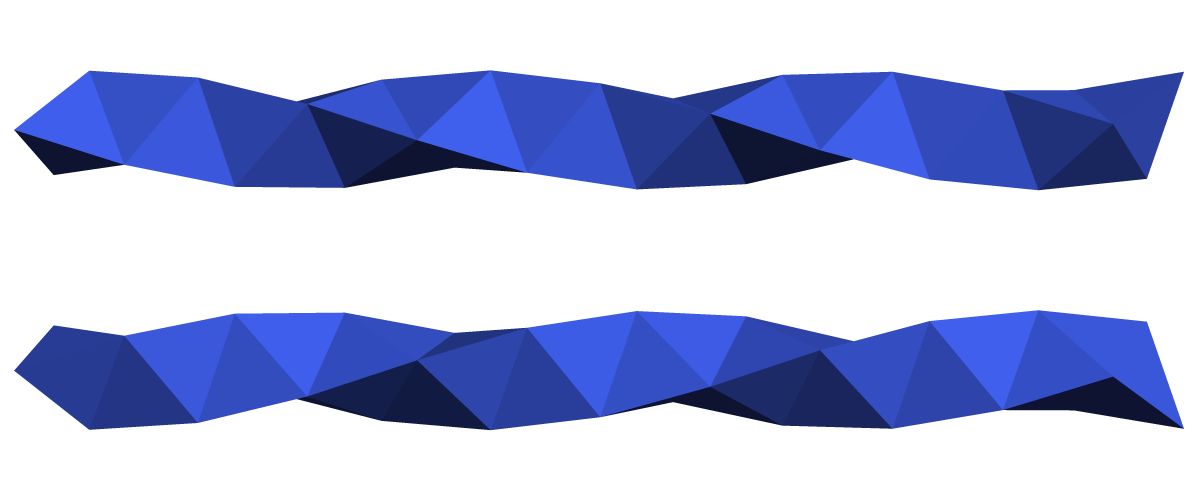
In graph theory, Coxeter described a 3-regular graph with 28 vertices and 42 edges in his 1983 paper "My Graph." Together with William Tutte, he studied the properties of another symmetric graph with 30 vertices and 45 edges, now known as the Tutte-Coxeter graph. Coxeter also contributed to notation for representing graphs, extending the LCF notation devised by Joshua Lederberg for cubic graphs containing a Hamiltonian cycle in collaboration with Robert Frucht. His geometric investigations included the study of loxodromic sequences of tangent circles and spheres, where any four consecutive elements in the sequence are pairwise mutually tangent, a concept he later generalized to higher-dimensional space. In three dimensions, he and Arie Hendrick Boerdijk analysed a structure formed by stacking regular tetrahedra so their edges form three helices, now called the Boerdijk-Coxeter helix. These diverse contributions demonstrate Coxeter's ability to identify and formalize elegant patterns across different mathematical disciplines.
Published Works and Interdisciplinary Influence
H.S.M. Coxeter was a prolific author, publishing twelve books and more than 200 scholarly articles. His writings ranged from advanced research monographs to accessible texts that aimed to revitalize interest in classical geometry. His books are celebrated for their clarity and enduring relevance, with several becoming standard references. His book Geometry Revisited, co-authored with Samuel Greitzer, was particularly influential in mathematical education, designed to combat the marginalization of geometry in curricula and provide olympiad-level problem-solving techniques. The book found an international audience, including a Russian translation that inspired a generation of students, and its authors stated in the preface that geometry is essential for scientists and practical mathematicians. Coxeter's work transcended mathematics to influence art and architecture significantly. His friendship with Dutch graphic artist M.C. Escher, which began in 1954, was mathematically fruitful, as Coxeter's writings on hyperbolic tessellations directly inspired Escher's later Circle Limit series of woodcuts. Similarly, his geometrical research provided key theoretical underpinnings for the geodesic dome designs of Buckminster Fuller, connecting abstract symmetry to tangible architectural forms.
- The Fifty-Nine Icosahedra (1938, with Du Val, Flather, and Petrie)
- Regular Polytopes (1st ed. 1947, 2nd ed. 1963, 3rd ed. 1973)
- Geometry Revisited (1967, with S. L. Greitzer)
- Kaleidoscopes: Selected Writings of H.S.M. Coxeter (edited collection)
- Mathematical Recreations and Essays (11th edition editor, 1940)
Honours, Awards and Named Tributes
Coxeter received numerous prestigious awards and honours throughout his lifetime, reflecting his stature in the scientific community. His election to learned societies began with the Royal Society of Canada in 1948, followed by the Royal Society of London in 1950. In 1997, the Royal Society awarded him the Sylvester Medal for his outstanding contributions to mathematics, and that same year he was appointed a Companion of the Order of Canada, one of the country's highest civilian honours. He was elected a Foreign Member of the American Academy of Arts and Sciences in 1990. Within Canada, the Canadian Mathematical Society established the Coxeter-James Prize in 1978 to honour young mathematicians for outstanding contributions to mathematical research. Coxeter himself received the society's Jeffery-Williams Prize in 1973. The enduring impact of his work has been celebrated in dedicated scholarly volumes, including the 1982 festschrift The Geometric Vein, containing 41 essays based on a 1979 Toronto symposium, and the 2006 retrospective The Coxeter Legacy, based on a symposium held in 2004. These honours and named awards collectively demonstrate the high regard in which his peers held his work and his role as a defining figure in 20th-century mathematics.
Personal Life, Routines and Lasting Legacy
Coxeter was known for a disciplined and idiosyncratic personal regimen, which he credited for his longevity. He was a lifelong vegetarian and maintained a strict exercise routine that included fifty press-ups and standing on his head for fifteen minutes each morning. He also enjoyed a nightly cocktail made from Kahlúa, peach schnapps, and soy milk. He married Rien, and they had a daughter, Susan. His wife died in 1999, after which Coxeter travelled frequently with his daughter. He died in Toronto on 31 March 2003 at the age of ninety-six. Coxeter's legacy is evident in several domains. As a scientist, he reshaped modern geometry, and terms like Coxeter group, Coxeter diagram, and Todd-Coxeter algorithm are part of the standard mathematical lexicon. As a teacher and author, he inspired countless students and helped preserve classical geometry as a vital field of study. His interdisciplinary influence on art and architecture remains a powerful example of the cultural reach of pure mathematics. At the University of Toronto and within the Canadian mathematical community, he is remembered not only for his intellect but also for his dedication, his British sense of humour, and his lifelong mission to reveal the beauty and centrality of geometry, a legacy that continues to be encountered in university departments and scholarly work worldwide.
Questions about H. S. M. Coxeter
What is H.S.M. Coxeter most famous for?
H.S.M. Coxeter is most famous for his fundamental contributions to geometry. He is renowned for his work on the theory of polyhedra and polytopes, as detailed in his classic book Regular Polytopes. He invented Coxeter groups, which are central to the study of symmetry. His research on non-Euclidean geometry, tessellations, and reflection patterns is also highly celebrated, with many concepts like Coxeter-Dynkin diagrams bearing his name.
Where did H.S.M. Coxeter work in Canada?
Coxeter worked at the University of Toronto for 60 years, from 1936 until his retirement in 1996. He joined the university as a lecturer and was promoted to full professor in 1948. His entire major academic career was based in Canada, making him a central figure in the country's mathematical landscape. His legacy is deeply embedded at the University of Toronto, where his polyhedron collections and personal effects are preserved in the Mathematics Department and the Fields Institute.
How did Coxeter influence the artist M.C. Escher?
Coxeter met the artist M.C. Escher in 1954, and the two became lifelong friends. Coxeter's mathematical work on geometric figures and hyperbolic tessellations directly helped inspire some of Escher's later works. Specifically, Coxeter's studies provided the foundation for Escher's Circle Limit series of woodcuts, which are based on hyperbolic tessellations. This friendship represents a famous intersection of mathematics and art.
What awards did Coxeter receive?
Coxeter received many high honours. He was elected a Fellow of the Royal Society in 1950 and awarded its Sylvester Medal in 1997. He became a Companion of the Order of Canada in 1997 and was a Fellow of the Royal Society of Canada. He also received the Jeffery-Williams Prize from the Canadian Mathematical Society in 1973, was a Foreign Member of the American Academy of Arts and Sciences, and had the Coxeter-James Prize named in his honour.
What is the Coxeter-James Prize?
The Coxeter-James Prize is an award established by the Canadian Mathematical Society in 1978. It is named in honour of H.S.M. Coxeter and another Canadian mathematician, Ralph Duncan James. The prize is awarded to recognize young mathematicians for outstanding contributions to mathematical research. It serves to honour Coxeter's immense influence and his dedication to fostering mathematical excellence in Canada.
Was Coxeter involved in mathematical education?
Yes, Coxeter was committed to mathematical education. He co-authored the influential book Geometry Revisited with S. L. Greitzer, aimed at revitalizing interest in classical geometry among students and providing tools for mathematical olympiads. He also served as president and vice-president of the Canadian Mathematical Society, roles through which he helped shape the national mathematical community. His accessible writing and teaching aimed to demonstrate that geometry was essential, not peripheral, to mathematics.
Sources and further reading
- H. S. M. Coxeter (Wikipedia)
- My Coxeter, CMS Notes (notes.math.ca)
Checked by the Your Space Hamilton desk. Last updated 2026-10-29.