Bin bag
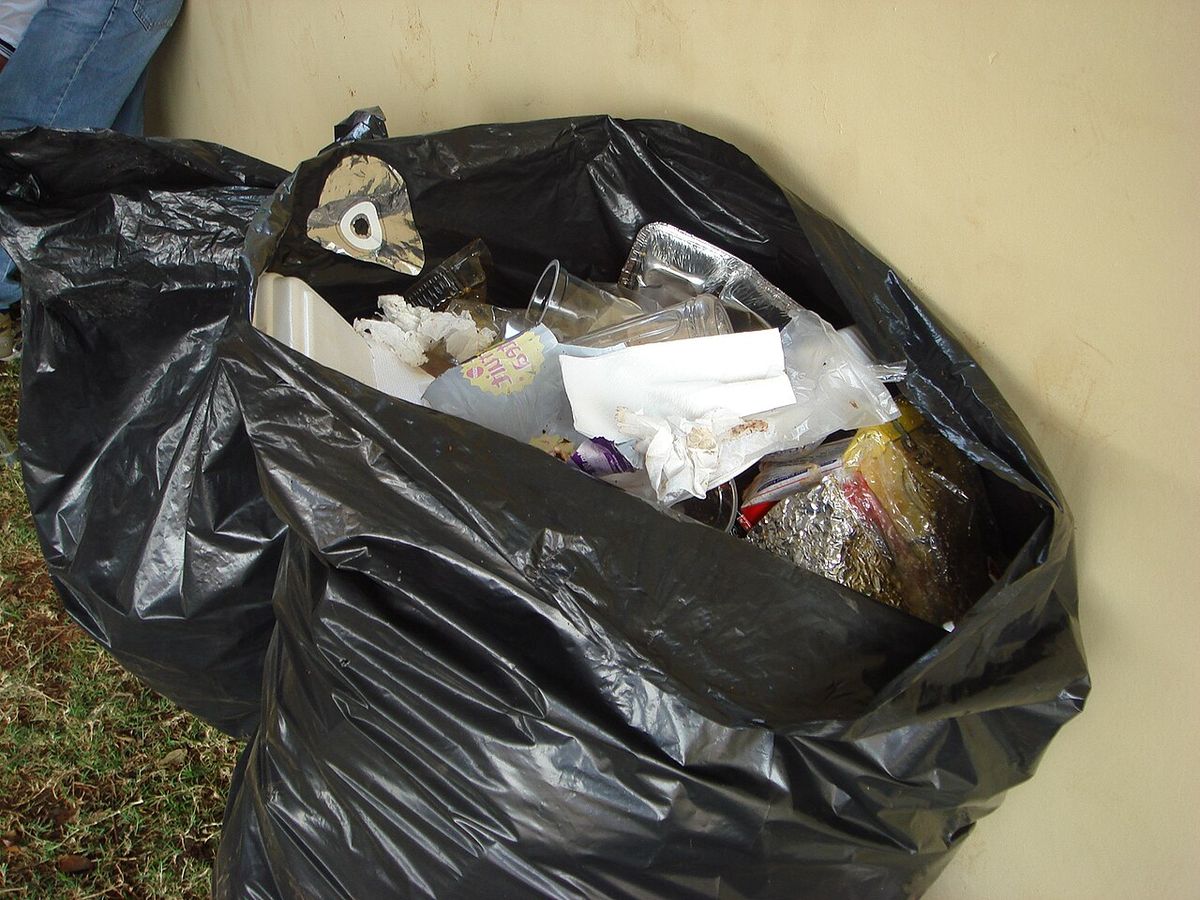
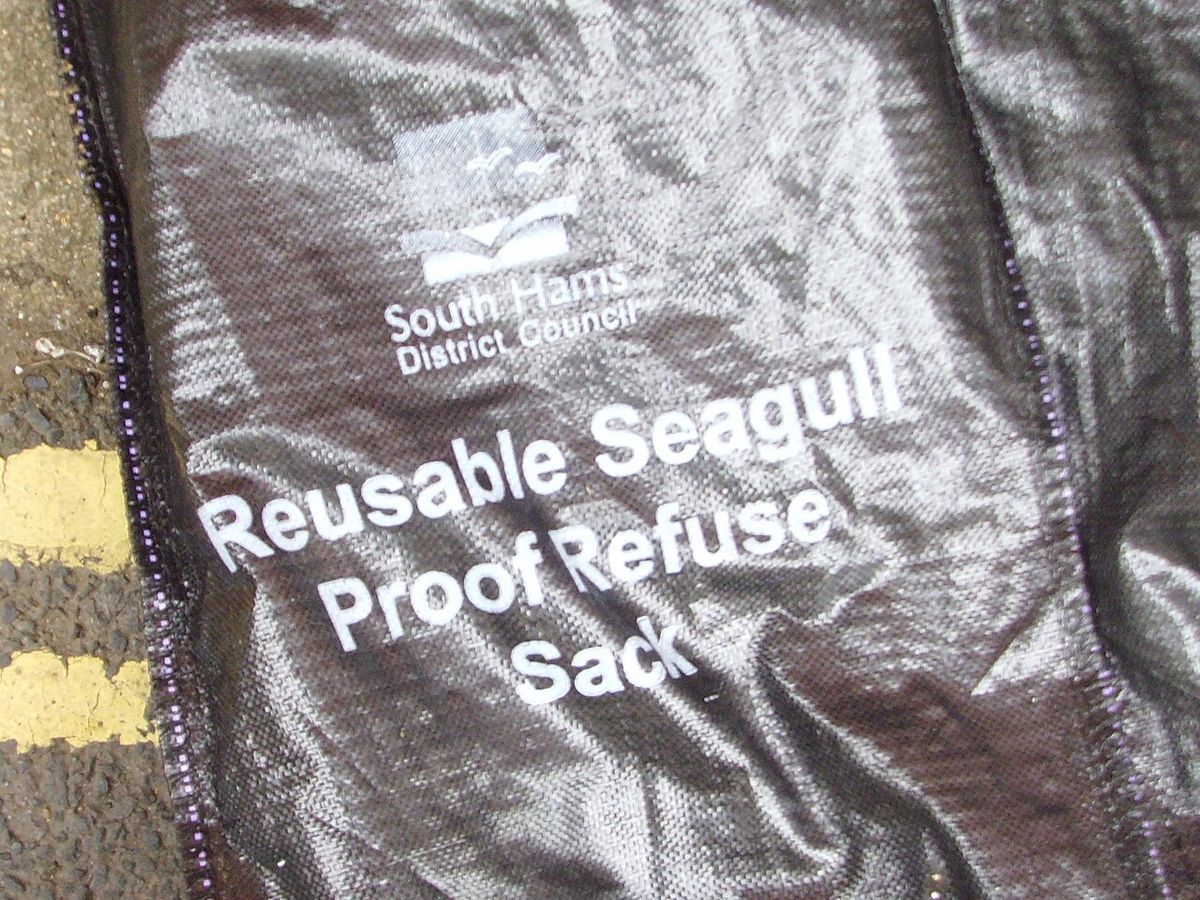
A bin bag, also known as a garbage bag, trash bag, or refuse sack, is a disposable plastic receptacle designed for the containment and sanitary handling of solid waste. Invented in Canada in 1950, the plastic garbage bag is a ubiquitous household and commercial item that lines waste containers to simplify disposal and maintain cleanliness. Its development represents a significant Canadian contribution to domestic sanitation and waste management practices. The product has evolved considerably from its initial design, with modern variations including drawstring closures, flexible materials, and biodegradable options to meet contemporary environmental and user needs.
Invention and Early Development
The plastic garbage bag was invented in 1950 by Canadians Harry Wasylyk, Larry Hansen, and Frank Plomp. The first bags produced in Canada were green, establishing a colour that remains common today. These initial bags utilized a star-sealed construction method. In the United States, early bags were also green and black, differing from the white and clear bags that later became widespread. The invention provided a convenient and sanitary method for handling waste, particularly messy or wet refuse like food scraps, by lining containers and allowing for easy removal with minimal contact. The bags quickly demonstrated their utility in both household and institutional settings. A later CBC Television special on Canadian innovations ranked the green garbage bag as the 36th greatest Canadian invention.
Subsequent years saw significant refinements to the original design. Flat-sealed bags, an alternative to the star-sealed style, first appeared on the market in 1959. The 1960s introduced white bin bags, expanding the colour palette available to consumers. To meet demands for greater strength, manufacturers developed two-ply, or heavy-duty, bags in 1974, with even stronger three-ply bags following in 1980. These innovations allowed garbage bags to be used for heavier applications, such as construction waste, and to withstand compaction in waste processing systems. The basic principle of using a plastic liner to keep a waste container clean has remained constant throughout these material improvements.
Design, Materials, and Varieties
Modern bin bags are sold in a wide array of sizes, thicknesses, and pack quantities, commonly found in rolls or packets containing several dozen bags. The plastic most frequently used is low-density polyethylene (LDPE), chosen for its softness and flexibility. For applications requiring greater strength, manufacturers may use linear low-density polyethylene (LLDPE) or high-density polyethylene (HDPE). Consumers can select from various thicknesses, often marketed as standard, heavy-duty, or contractor grade, to match the intended use, whether for lightweight household kitchen waste or heavier, sharper debris. Many bags include supplementary features like integrated twist ties or are sold with separate wire ties to facilitate closing the bag once it is full.
A major usability innovation was the introduction of the drawstring garbage bag in 1984. This design featured an integrated cord that could be pulled to cinch the bag closed. Major brands like GLAD and Hefty later adopted and refined this feature. In August 2001, Hefty launched bags with a drawstring specifically engineered to stretch around a garbage can's rim to keep the bag securely in place. Another significant development was the introduction of flexible plastic garbage bags, such as GLAD's ForceFlex in July 2004 and Hefty's Ultra Flex brand in September of the same year. These bags are designed to stretch and accommodate irregularly shaped items without tearing.
- Standard Bags: Typically made of LDPE for general household use.
- Heavy-Duty Bags: Constructed from 2-ply or 3-ply plastic for tougher waste.
- Drawstring Bags: Feature integrated pull cords for easy closure (introduced 1984).
- Flexible Bags: Made with engineered plastics to stretch without breaking (e.g., ForceFlex, 2004).
- Biodegradable Bags: Designed to break down under specific environmental conditions.
- Colour Varieties: Commonly available in black, white, and green.
Biodegradable and Environmental Considerations
In response to environmental concerns, oxo-biodegradable plastic bags have been developed. These bags possess strength comparable to conventional plastic bags but are engineered to degrade and then biodegrade if they enter the open environment. They are designed not to degrade rapidly in deep landfill conditions, thereby avoiding the generation of methane, a potent greenhouse gas. Importantly, these bags can be recycled if collected during their useful life within existing plastic recycling streams. They are identified by resin identification code 7, which is applicable to various biodegradable plastics. The degradation process for oxo-biodegradable plastic involves both photo-oxidation and thermo-oxidation, allowing breakdown to occur even in darkness.
The end-of-life management of plastic garbage bags involves several pathways. They can be incinerated with their contents in waste-to-energy facilities, where the heat generated is converted into electricity. In modern sanitary landfills, conventional plastic bags are considered stable and benign, as they do not readily leach harmful chemicals. The expansion of recycling programs also affects bag use, as seen in Ontario's Blue Box program changes effective in 2026, which will include the recycling of plastic bags themselves. Also, some municipalities have implemented clear bag garbage programs, requiring residents to use transparent bags so collectors can identify and reject loads containing significant amounts of recyclable or organic material, which improves waste diversion rates.
Municipal Use and Collection Policies in Canada
Garbage bag usage is heavily governed by municipal waste collection bylaws across Canada, which specify acceptable bag types, colours, and tagging requirements. Many municipalities, such as the City of Hamilton, employ a bag tag system for excess garbage. For the period from March 30, 2026, to March 27, 2027, Hamilton will use pink trash tags, while blue tags expire in March 2026. Other regions, like the Rural Municipality of Taché in Manitoba, sell bag tags for $2.00 each for residents whose waste exceeds cart capacity, mandating that extra bags be solid-coloured, such as green or black. Clear bag programs are enforced in municipalities like Markham, Ontario, where only transparent bags are collected to facilitate inspection and ensure waste separation, with garbage processed for energy recovery instead of landfill disposal.
Collection schedules and contractor agreements are subject to change. For instance, the RM of Taché switched its solid waste contractor for the Landmark and Lorette local urban districts to G&R Garbage Disposal effective January 1, 2025, with schedules set for 2026. Ontario is undergoing a major shift in recycling responsibility through the provincial Blue Box Regulation, transitioning to an Extended Producer Responsibility (EPR) model. Starting in 2026, organizations like Circular Materials will manage residential recycling collection in municipalities such as Richmond Hill and Barrie, while cities retain responsibility for garbage and organics collection. This change aims to make producers financially responsible for the recycling of their packaging and printed paper.
Operational Guidelines and Safety Rules
Municipalities establish strict operational rules for garbage collection to ensure efficiency and safety. Collection typically starts early in the morning, often at 7:00 a.m., and residents are required to have their waste at the curb by this time. Items prohibited from regular garbage collection include hazardous materials like paint and used oil, construction or demolition debris, large metal objects, and yard waste such as grass clippings and tree branches, which must be taken to designated waste facilities. Safety for collection workers is a paramount concern. Broken glass must be sealed and labelled, and clear bag programs are partly implemented to prevent collectors from handling hidden sharp or dangerous objects. Municipalities also enforce rules against bringing garbage from outside a designated collection area.
Seasonal considerations also affect garbage disposal practices. During winter, residents are instructed to place bags at the end of their driveways, not on top of or behind snow banks, to ensure safe and accessible pickup for collection vehicles. Some regions implement fire restrictions that define approved receptacles for outdoor burning, which explicitly do not include garbage bags or their contents. The financial and legal responsibility for improper disposal is often placed on the resident. For example, anyone whose leaked waste oil contaminates a worker or roadway may be liable for cleanup costs and fines. These comprehensive guidelines are designed to maintain an orderly, safe, and environmentally sound waste management system.
Evolution of Related Waste Management Systems
The humble bin bag exists within a complex and evolving waste management infrastructure. The aforementioned shift in Ontario's Blue Box program, effective in 2026, represents a systemic change where producers assume full operational and financial responsibility for recycling. This transition means residents in cities like Barrie and Richmond Hill now contact third-party contractors like Miller Waste or Emterra Environmental for missed recycling collections or to obtain new blue boxes, not their municipal government. The change is intended to incentivize producers to design less wasteful packaging and improve recycling systems province-wide. For municipalities, the savings from no longer managing recycling are often redirected to improve other waste diversion services or offset rising operational costs.
Business waste collection is treated separately from residential services in many jurisdictions. In Richmond Hill, for example, downtown core businesses will be subject to an annual waste management fee of $365 starting in 2026 to continue receiving municipal collection. In Barrie, businesses and institutions that register for curbside service receive weekly recycling collection, with those in the downtown Business Improvement Area receiving twice-weekly pickup. The materials accepted in recycling programs continue to expand. The 2026 Ontario Blue Box changes will add new items like plastic bags, foam packaging, black plastic containers, and takeout cups and lids. This continuous adaptation reflects an ongoing effort to increase diversion rates and manage the lifecycle of materials, with the common garbage bag playing a foundational role in the initial containment and sorting process.
Questions about Bin bag
Who invented the plastic garbage bag?
The plastic garbage bag was invented in 1950 by three Canadians: Harry Wasylyk, Larry Hansen, and Frank Plomp. The first bags produced in Canada were green in colour. This invention was later ranked 36th among the top 50 Canadian inventions in a CBC Television special. The bags provided a new, sanitary method for lining waste containers and handling refuse.
What are the different types of garbage bags available?
Garbage bags come in several types based on material and design. Standard bags are often made from soft low-density polyethylene (LDPE). Heavy-duty bags use stronger plastics like LLDPE or HDPE and come in 2-ply or 3-ply constructions. Drawstring bags, introduced in 1984, feature integrated pull cords for closure. Flexible bags, such as those launched in 2004, are engineered to stretch. Biodegradable options are also available, designed to break down under specific conditions.
What colours are garbage bags typically available in?
The most common colours for garbage bags are black, white, and green. The very first bin bags in Canada were green. Black plastic bags were also part of the initial 1950 product offering as star-sealed bags. White bin bags were introduced later, in the 1960s. Municipal regulations sometimes dictate bag colour, with some areas requiring clear bags for garbage and others specifying solid colours like green or black for extra bags.
What are the rules for garbage bag use in Canadian municipalities?
Rules vary by municipality but often include requirements for bag type, colour, and tagging. Some cities, like Markham, enforce clear bag garbage programs. Others, like Hamilton and the RM of Taché, use a bag tag system where residents must purchase tags (e.g., $2.00 each in Taché) for any garbage exceeding a cart's capacity. Bags must usually be placed at the curb by an early morning collection time, and prohibited items include hazardous waste, construction debris, and yard waste.
What is changing with recycling collection in Ontario in 2026?
Starting in 2026, Ontario's Blue Box program fully transitions to an Extended Producer Responsibility model. Producers of recyclable materials become responsible for the collection and recycling process through an organization called Circular Materials. Municipalities like Richmond Hill and Barrie will no longer manage residential recycling. Instead, contracted waste companies like Miller Waste or Emterra Environmental will provide the service. Residents will contact these contractors for service issues, while municipalities continue to collect garbage and organics.
Can plastic garbage bags be recycled?
Traditional plastic garbage bags are not typically accepted in curbside recycling programs as they can jam sorting machinery. However, oxo-biodegradable plastic bags are designed to be recyclable if collected during their useful life. As part of Ontario's expanded Blue Box program starting in 2026, plastic bags themselves will be added to the list of accepted recyclable materials collected from households, representing a significant change in their end-of-life processing. This change is part of a new provincial Extended Producer Responsibility model where producers manage recycling. Plastic bags can also be incinerated in waste-to-energy facilities or are stable in landfills. Some specialized bags are designed to degrade under specific conditions.
Sources and further reading
- Bin bag (Wikipedia)
- Clear Bag Garbage (markham.ca)
- Recycling Collection (barrie.ca)
Checked by the Your Space Hamilton desk. Last updated 2026-10-28.