Richmond Hill, Ontario
Richmond Hill is a city in the south-central portion of Ontario's Regional Municipality of York, forming an integral part of the Greater Toronto Area. With a 2021 population of 202,022, it ranks as the twelfth most populous municipality in Ontario and the twenty-seventh most populous in Canada. The city, which officially gained its city status in 2019, is historically known as the 'Rose Capital' of Canada and is home to the David Dunlap Observatory, which houses the largest optical telescope in the country. Richmond Hill is a diverse and rapidly growing community, characterized by significant immigration, a strong high-tech economy, and a commitment to preserving green space and cultural heritage.
History and Development
The area that is now Richmond Hill was first incorporated as a village by a by-law of the York County Council on June 18, 1872, coming into effect on January 1, 1873. It was granted town status by the Ontario Municipal Board in September 1956, with the change taking effect on January 1, 1957. A major transformation occurred in 1971 when the creation of the Regional Municipality of York dramatically expanded Richmond Hill's borders, annexing large rural sections from neighbouring townships. This act increased the town's area from 1,700 acres to 27,000 acres and its population from just over 19,000 to approximately 34,000, incorporating communities like Oak Ridges, Gormley, and Langstaff. The 1970s were a period of rapid growth and modernization, marked by the expansion of Yonge Street to four lanes in 1971 and the extension of GO Transit train service to the community in 1978.
Throughout the latter half of the 20th century, Richmond Hill evolved from a rose-growing and rural centre into a major suburban municipality. The town celebrated its centennial in 1973 with events including a parade and the founding of the Richmond Hill Historical Society. The last of the original rose-growing greenhouses, a defining industry that earned the town its 'Rose Capital' nickname, closed in 1982. The 1980s saw the town develop its first official plan to guide future growth, which was approved in 1982 after an initial rejection by the Ontario Municipal Board. Population growth surged again in the 1990s, fuelled significantly by immigration, leading Statistics Canada to name Richmond Hill Canada's fastest-growing community in the early part of that decade. This sustained growth culminated in the town council passing a motion on March 25, 2019, to change Richmond Hill's designation from a town to a city.
Geography and Communities
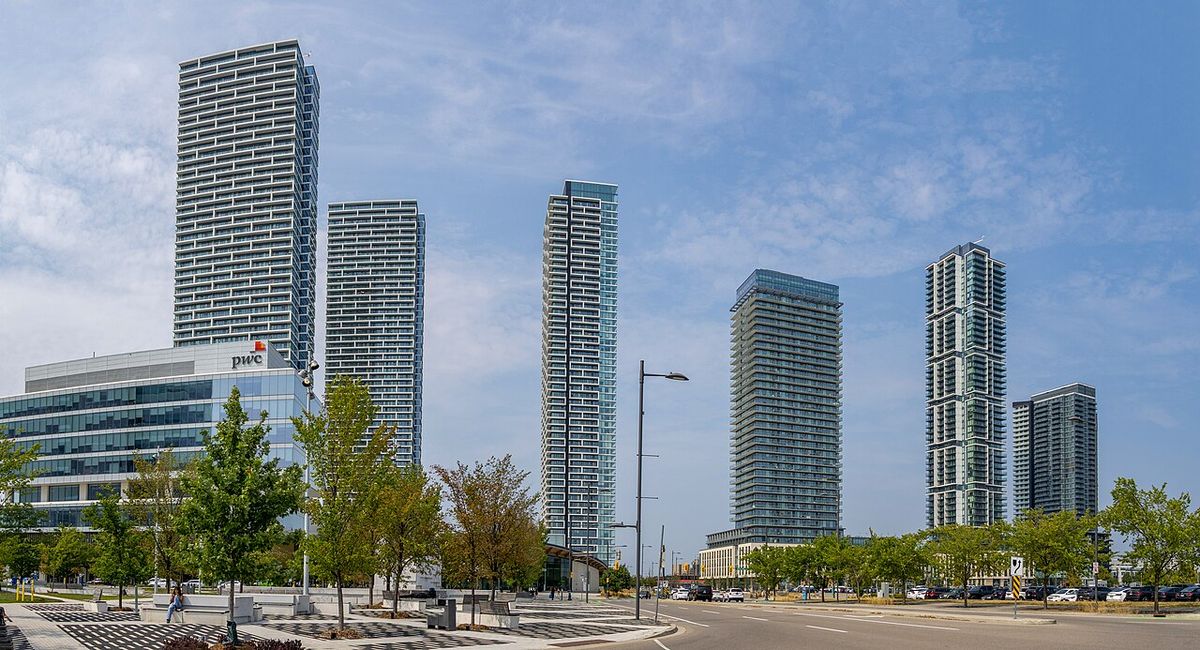
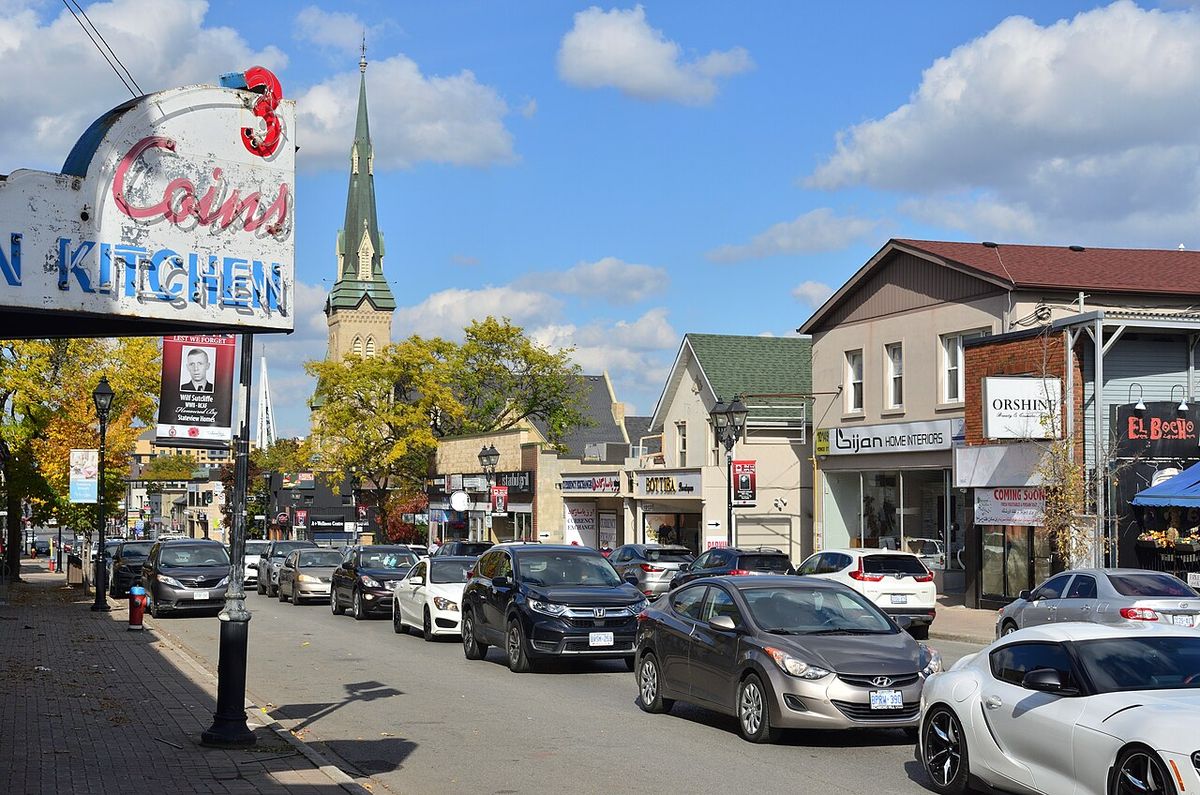
Richmond Hill is situated in the Greater Toronto Area, positioned between the cities of Markham to the east and Vaughan to the west, north of Thornhill and south of Aurora. The city encompasses a diverse mix of established neighbourhoods, newer subdivisions, and significant natural features like the Oak Ridges Moraine and Lake Wilcox. The city's expansion in 1971 brought numerous historic communities under its jurisdiction, many of which retain their distinct identities today. The city is composed of several established communities and neighbourhoods that were annexed or developed over time.
- Carrville: A community annexed in 1971.
- Dollar: A historic hamlet.
- Gormley: Located in the northern part of the city.
- Richvale: Another community annexed in 1971.
- Lake Wilcox: A community centred around the largest lake in the area.
- Langstaff: A historic area, once the site of the Langstaff Jail Farm.
- Temperanceville: A historic community.
Oak Ridges, annexed in 1971, is a large unincorporated community north of Richmond Hill's downtown core. It is primarily residential, with commercial development along Yonge Street, and has experienced significant growth since the 1990s. The Oak Ridges Community Centre opened in June 2012 to serve the expanding population. Other notable neighbourhoods include Bayview North, a residential area along Bayview Avenue. Doncrest, a small area east of Yonge Street near Highway 7 known for its Chinese businesses. And Elgin Mills, a residential and business park area around Yonge Street and Elgin Mills Road.
Governance and Politics
Richmond Hill operates under a Mayor-Council system within the Regional Municipality of York. The Richmond Hill City Council consists of the Mayor, two Regional Councillors, and six Ward Councillors, all elected to four-year terms. The mayor and regional councillors also serve on the York Regional Council. The city derives its authority from the Ontario Municipal Act and is responsible for a wide range of local services, including roads, parks, recreation, waste management, and economic development. The city is also tasked with maintaining an official plan to guide development and growth. Richmond Hill is notable for being the only municipality in Canada with light pollution bylaws, a measure enacted to protect the research capabilities of the David Dunlap Observatory.
Municipal elections are held every four years in Ontario, with the next scheduled for 2026. The 2026 election will feature online voting from October 20 to October 26. Elected positions include the mayor, regional and local councillors, ward councillors for six wards, and school board trustees for the public, Catholic, and French-language school boards. The city's governance reflects its commitment to community engagement, with initiatives like the annual 'Mayor for a Day' contest for students in grades 5 through 8, scheduled for May 25, 2026. The city's budget process is a key political function, with the 2026 Operating Budget set at $257.9 million, resulting in a 3.46% property tax rate increase for city services.
Demographics and Diversity
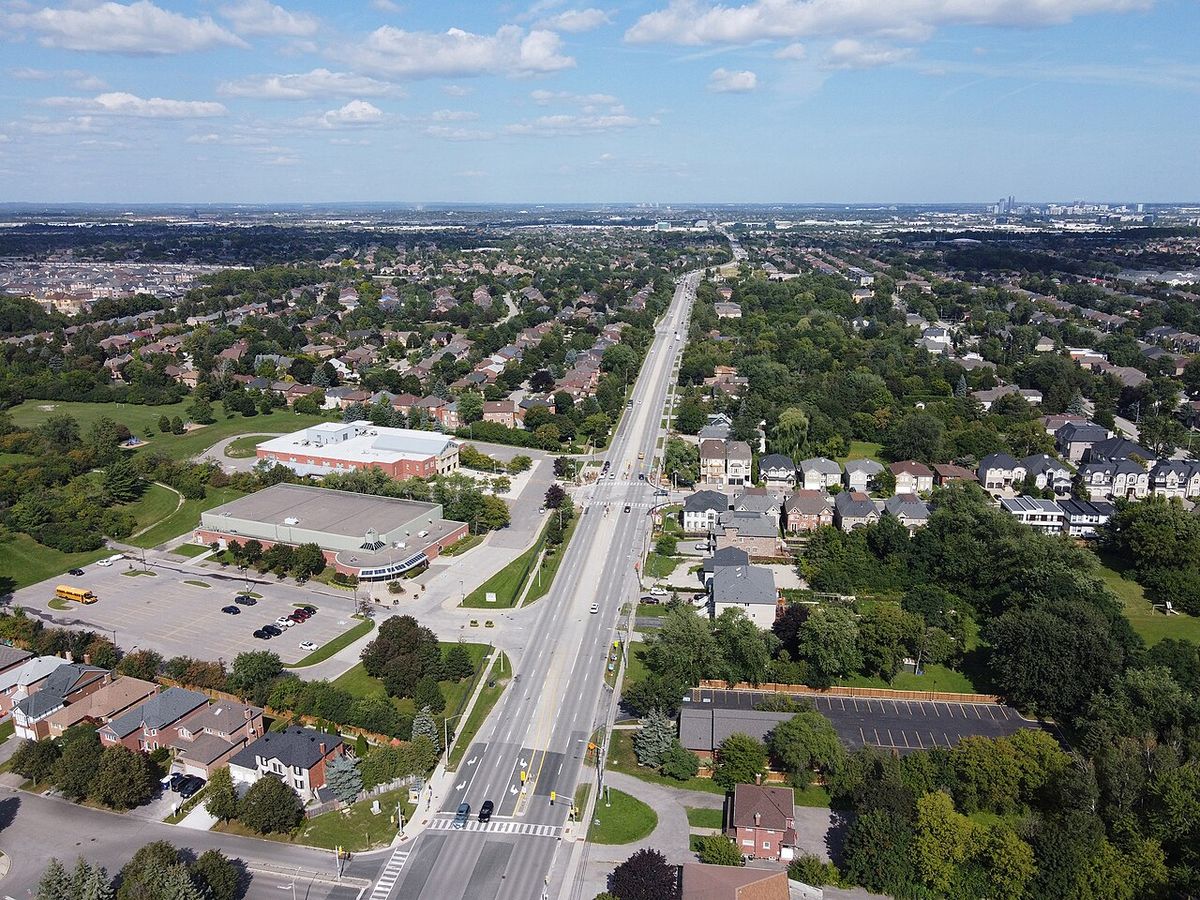
Richmond Hill is one of Canada's most diverse and dynamic municipalities. According to the 2021 Census, the city had a population of 202,022, representing a 3.6% increase from 2016. The population density was 2,004.4 people per square kilometre. The city has a notably young and diverse population, with a median age of 43.6, slightly above the provincial median of 41.6. Visible minorities constitute 66.4% of the population, reflecting decades of significant immigration. The city is home to large Chinese and Iranian communities, among many others, which have shaped its cultural and commercial landscape.
Linguistic diversity is a defining feature of Richmond Hill. As of 2021, only 33.8% of residents reported English as their mother tongue. The most common non-official mother tongues were Mandarin (12.8%), Persian (11.6%), Cantonese (11.3%), Russian (4.3%), Italian (2.6%), and Korean (2.3%). This linguistic variety is mirrored in the city's religious composition. Christianity is the most reported religion at 40.0%, with Catholics making up 18.8% of the population. This is followed by Islam (13.0%), Judaism (4.3%), Hinduism (2.5%), Buddhism (2.2%), and Sikhism (0.3%). A significant 37.3% of the population reported no religious affiliation. The city's demographic profile confirms its role as a primary destination for newcomers to the Greater Toronto Area.
Economy and Employment
Richmond Hill has a strong and diversified economy with a historically low unemployment rate. The 2006 Census recorded an unemployment rate of 3.77%, well below the national average at the time. The most prevalent occupations are in the business, finance, administration, and management sectors. The 1990s and 2000s were periods of particularly strong economic growth, with industrial, commercial, and institutional development valued at $88.9 million in 1999. The border area between Richmond Hill and Markham along Highway 7 emerged as a major hub for information technology and high-tech industry, hosting over 1,000 such businesses by the year 2000.
Most businesses in Richmond Hill are small businesses, with more than half of all employers in the city having four workers or less. The city is also home to the corporate headquarters of several major companies. These include Acklands Grainger Inc., Compugen Inc., Compuware, DMC Mining Services, Lexmark, Rogers Communications, BMW Canada, Science & Medicine Canada, Mister Transmission and Staples. The employment rate of the city is 66.36% with the most prevalent occupations being in the business, finance and administration and management sectors.
- Acklands Grainger Inc. (industrial supply)
- Compugen Inc. (technology solutions)
- BMW Canada (automotive)
- Rogers Communications (telecommunications)
- Lexmark (printing solutions)
- Staples (office supplies)
- Mister Transmission (automotive services)
- Science & Medicine Canada
Richmond Hill has seen significant population growth since the 1990s. In the 2021 Census of Population, Richmond Hill had a population of 202,022, a change of 3.6% from its 2016 population. The 1990s and 2000s were periods of strong economic growth for Richmond Hill. The border between Richmond Hill and Markham is a rapidly growing area for information technology and high-tech industry with over 1,000 such businesses located along their border in 2000.
Culture, Recreation, and Education
Richmond Hill offers a wide array of cultural and recreational amenities for its residents. The Richmond Hill Centre for the Performing Arts is a major cultural venue, featuring a 631-seat auditorium that hosts theatre, concerts, and comedy shows. The Richmond Hill Philharmonic Orchestra, founded in 2008, performs regularly at the centre. The city's heritage is preserved at the Richmond Hill Heritage Centre, located in a restored 1840s cottage, and celebrated through events like the annual city-wide heritage, arts, and culture festival held each May. The city was awarded the National Communities in Bloom award in 2003, with special mention given to its floral displays. Alias Grace Park, opened in 2009, honours author Margaret Atwood's depiction of the area in her novel.
Recreational opportunities are abundant across the city's 167 parks and 689 hectares of natural areas. The largest park is the Richmond Green Sports Centre and Park, which includes baseball diamonds, ice rinks, an amphitheatre, and a skateboard park. The city operates six public swimming pools, including an indoor wave pool, and hosts summer concert series in Mill Pond Park and Richmond Green Park. Sports clubs are active in the community, including the Richmond Hill Curling Club and the Richmond Hill Soccer Club. The city is also home to several golf courses, including the Richmond Hill Country Club and Summit Golf and Country Club.
Education in Richmond Hill is served by multiple school boards. The York Region District School Board operates 27 public elementary schools in Richmond Hill, as well as 5 secondary schools. These secondary schools are Alexander Mackenzie High School, Bayview Secondary School, Langstaff Secondary School, Richmond Green Secondary School and Richmond Hill High School. The York Catholic District School Board operates 13 Catholic elementary schools and two Catholic secondary schools in the city. There are also many private schools located in Richmond Hill.
- Alexander Mackenzie High School
- Bayview Secondary School
- Langstaff Secondary School
- Richmond Green Secondary School
- Richmond Hill High School
Student performance on provincial assessments in these schools has consistently been above the provincial average. The York Catholic District School Board operates 13 elementary schools and two secondary schools: St. Theresa of Lisieux Catholic High School and Our Lady Queen of the World Catholic Academy. The city also hosts numerous private schools, such as Holy Trinity School and Richmond Hill Montessori & Private Elementary School. Michaëlle Jean Public School, named for the former Governor General, opened in 2008 with the guest of honour in attendance.
City Finances and Infrastructure
The City of Richmond Hill manages its finances through an annual budget process that balances day-to-day operational needs with long-term infrastructure investments. The 2026 budget, adopted under Mayor David West, sets a clear financial direction for the growing city. The total 2026 Operating Budget is $257.9 million, which funds essential services like waste collection, recreation programs, and road maintenance. This budget results in a 3.46% property tax rate increase for the city's portion of the tax bill, which translates to an additional $6.29 per month for the average single-detached home. Over 37% of the operating budget is funded from non-tax sources such as user fees and grants.
The 2026 Capital Budget is set at $121.1 million, a significant increase from $89 million in 2025, and will fund over 152 projects. This budget is separate from the operating budget and does not directly affect the property tax rate. It focuses on both growth-related projects, like expanding parks for a population expected to grow by 25,000 by 2031, and state-of-good-repair projects to maintain existing assets like roads and buildings. A key component is the Capital Asset Sustainability Levy, a 1.5% portion of the tax increase dedicated as a long-term investment in the community's infrastructure foundation. The city's water and wastewater services are funded through separate water billing and do not impact the property tax rate. Richmond Hill ended the 2025 fiscal year with a balanced budget, despite higher-than-expected costs for emergency road repairs and snow and fire services.
Population Growth and Housing
Richmond Hill has experienced consistent and significant population growth since the 1990s, transforming it from a suburban town into a major urban city. The 2021 Census recorded a population of 202,022, and the city is projected to welcome an additional 25,000 residents by 2031. This growth is driven by both natural increase and sustained immigration, which has made the city one of the most ethnically and linguistically diverse in Canada. The city's official plan and annual capital budgets are designed to accommodate this expansion while maintaining service levels and community character.
The demand for housing remains high, and the city has actively worked to meet provincial housing targets. In 2025, Richmond Hill broke ground on 2,228 new housing units, achieving 83 percent of its assigned target for that year. This construction activity spans a variety of housing types, from single-detached homes to higher-density condominiums and townhouses, particularly in designated growth areas like the Yonge Street corridor and around major transit hubs. The city's commitment to managed growth is reflected in its integrated capital planning, which uses an enterprise asset management system to prioritize infrastructure projects that support both new developments and existing neighbourhoods.
Questions about Richmond Hill, Ontario
When did Richmond Hill become a city?
Richmond Hill became a city in 2019. Its council passed a motion to change the title of Richmond Hill from 'town' to 'city' on March 25, 2019. It had been a town since January 1, 1957. Before that, the village of Richmond Hill was incorporated on June 18, 1872, coming into effect on January 1, 1873.
What is Richmond Hill's population?
According to the 2021 Census of Population conducted by Statistics Canada, Richmond Hill had a population of 202,022. This represents a 3.6% increase from its 2016 population of 195,022. The city has a land area of 100.79 square kilometres, resulting in a population density of 2,004.4 people per square kilometre. The city is projected to grow by another 25,000 residents by 2031.
What are the main languages spoken in Richmond Hill?
Richmond Hill is highly multilingual. According to 2021 Census data, English is the mother tongue for 33.8% of residents. The most common non-official mother tongues are Mandarin (12.8%), Persian (11.6%), and Cantonese (11.3%). Other significant languages include Russian (4.3%), Italian (2.6%), and Korean (2.3%). This linguistic diversity reflects the city's large immigrant population.
Who is the mayor of Richmond Hill?
As of 2026, the mayor of Richmond Hill is David West. The mayor presides over the Richmond Hill City Council, which also includes two Regional Councillors and six Ward Councillors. Mayor West's 2026 budget was adopted on December 10, 2025, setting the city's operating budget at $257.9 million. Municipal elections, including for the office of mayor, are held every four years, with the next election scheduled for October 2026.
How is property tax calculated in Richmond Hill?
Property tax in Richmond Hill funds both city services and the regional and education portions. The city's 2026 Operating Budget of $257.9 million resulted in a 3.46% increase in the city's portion of the property tax rate. This is composed of a 1.96% increase for day-to-day operations and a 1.5% Capital Asset Sustainability Levy for long-term infrastructure. For the average single-detached home assessed at $1,146,000, this increase equals an additional $6.29 per month on the city's portion of the tax bill.
What is the David Dunlap Observatory?
The David Dunlap Observatory houses the largest telescope in Canada. This major astronomical facility is located in Richmond Hill, Ontario. Due to the observatory's presence, Richmond Hill is the only municipal Canadian government to have enacted light pollution laws. These bylaws are designed to protect the darkness of the night sky, which is essential for the observatory's research and operations. The telescope represents a significant scientific landmark for both the city and the country.
Sources and further reading
- Richmond Hill, Ontario (Wikipedia)
- Richmond Hill Sets 2026 Budget, City of ... (richmondhill.ca)
- City of Richmond Hill Finances, Councillor Carol Davidson (caroldavidsonoakridges.ca)
Checked by the Your Space Hamilton desk. Last updated 2026-10-29.