Nelson, British Columbia
Nelson is a city in the Selkirk Mountains of southeastern British Columbia, situated on the West Arm of Kootenay Lake. As the seat of the Regional District of Central Kootenay, it serves as a key administrative, commercial, and cultural hub for the West Kootenay region, alongside Castlegar and Trail. Founded during a regional silver rush and incorporated in 1897, Nelson is recognized for its exceptionally well-preserved heritage downtown, featuring over 350 restored buildings from the late 19th and early 20th centuries. The city combines this historic character with a significant contemporary arts scene, a diverse range of restaurants, and year-round outdoor recreation, making it a distinctive destination and community within the Canadian Rockies.
History and Development
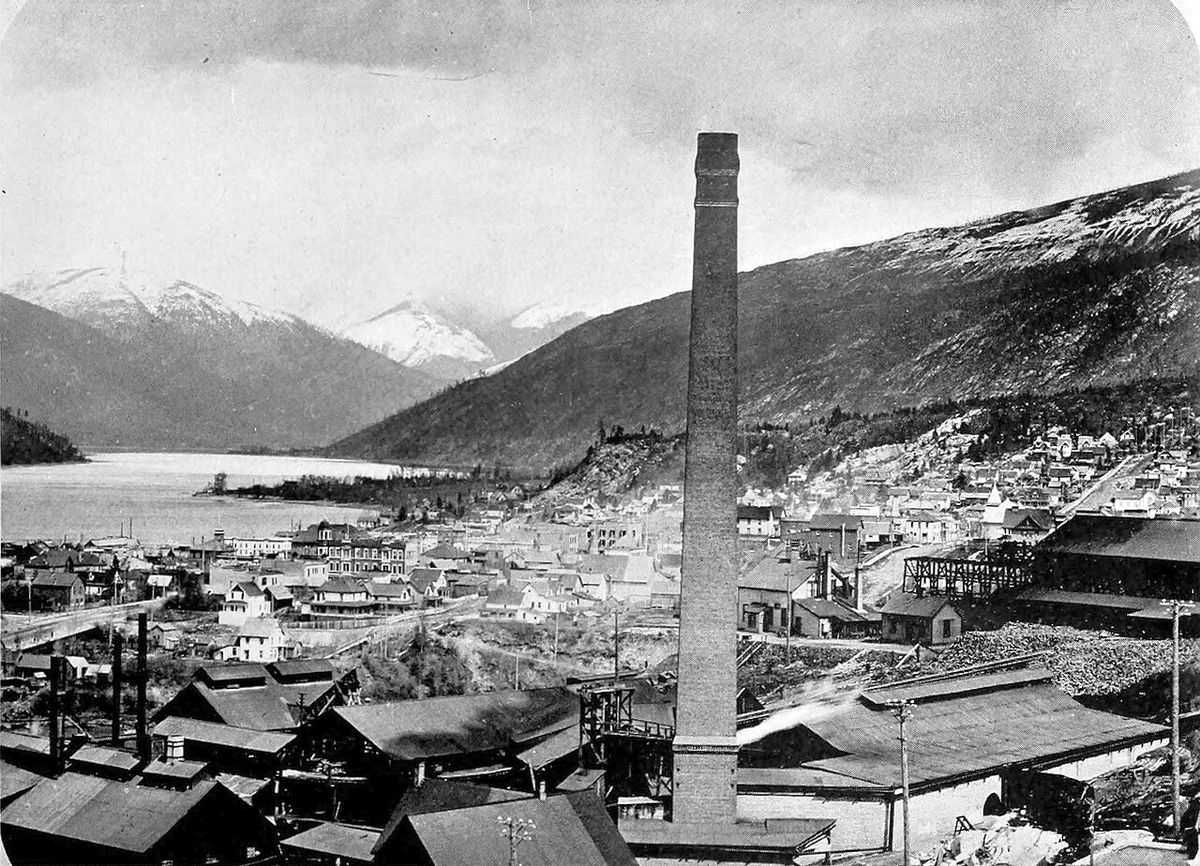
The origins of Nelson are tied directly to mineral discoveries in the surrounding mountains. Gold and silver deposits were first noted in 1867, but a major silver strike at Toad Mountain in 1886 triggered a rush that led to the town's founding in 1889 and its incorporation as a city in 1897. The community was named for Hugh Nelson, the Lieutenant-Governor of British Columbia at the time. To support the growing mining operations, Nelson quickly developed as a transportation and distribution hub, with a steamboat dock built in 1892 and two railways constructed through the town. A significant early infrastructure achievement was the hydroelectric plant at Cottonwood Falls, which began generating power for the city in 1896, marking the first such plant in British Columbia. Early civic buildings, including a granite courthouse, were designed by noted architect Francis Rattenbury, and by the 1900s the town had several hotels, a Hudson's Bay Company store, and an electric streetcar system.
Throughout the early 20th century, the local economy was sustained by mining, forestry, and agriculture, with English immigrants establishing lakeside orchards and Doukhobors from Russia farming the surrounding benchlands. From 1917 to 1919, Nelson employed a single transferable vote system to elect its councillors in one at-large district using ranked ballots, an early experiment in proportional representation. The city's mountainous geography confined most growth to the narrow valley bottom, preserving its compact downtown core. In a unique historical episode during the Vietnam War, Nelson became a destination for American draft evaders, earning the nickname "Resisterville" and leading to the establishment of several intentional communities such as Harmony's Gate, The Reds and the Blues, and New Family. A successor commune, the Middle Road Community, was founded in Nelson in 1996.
By the 1960s and 1970s, many downtown building facades were covered in aluminum siding, a common trend of the era. An economic downturn in the early 1980s, spurred by the closure of the Kootenay Forest Products sawmill and competition from the new Chahko Mika Mall on the waterfront, prompted a major revitalization effort. Inspired by restoration projects in larger cities like Victoria and Vancouver, Nelson merchants began removing the siding and meticulously restoring their buildings' original heritage character, a transformation guided in part by American designer and immigrant Robert Inwood. This effort solidified the city's identity and laid the foundation for its modern appeal as a heritage tourism destination with a carefully restored downtown shopping area.
Geography and Climate
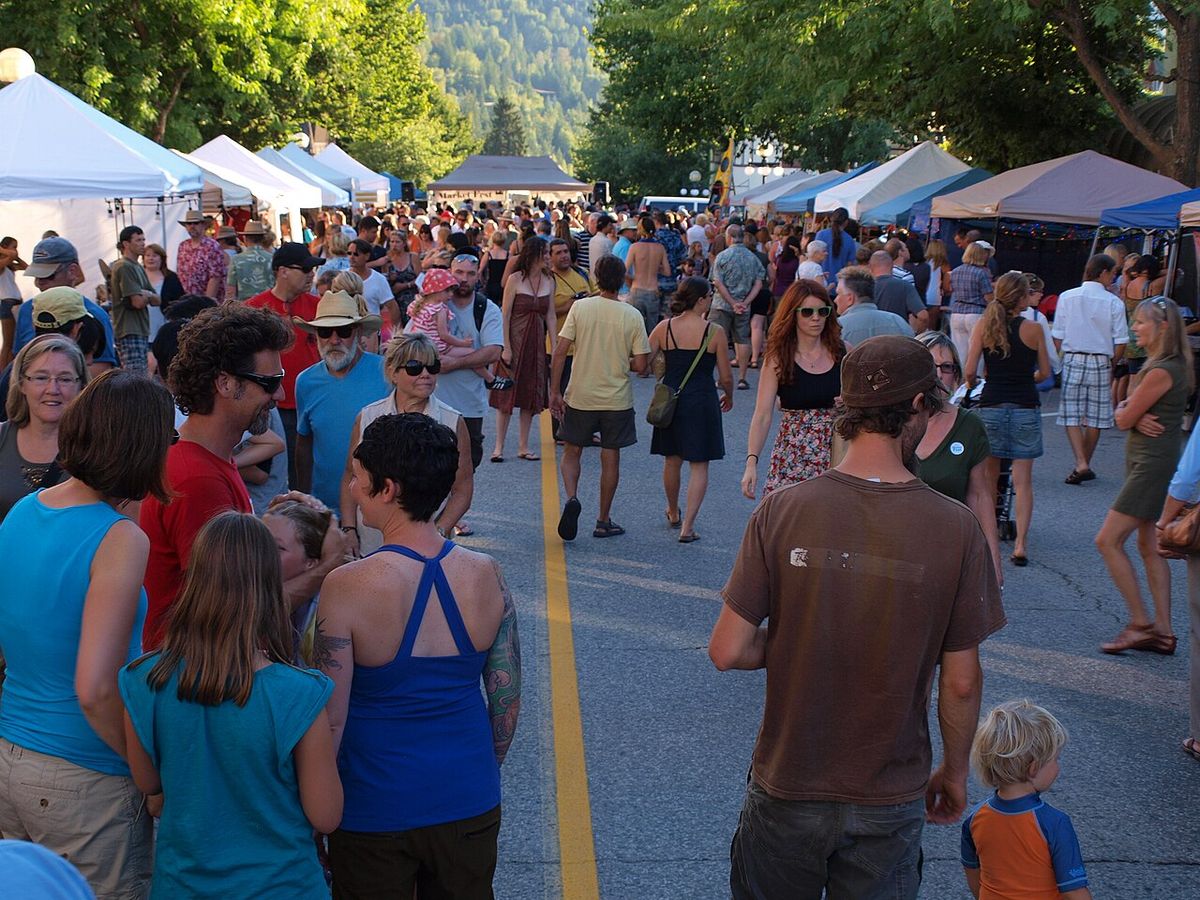
Nelson is located in the narrow valley of the West Arm of Kootenay Lake, surrounded by the Selkirk Mountains. This dramatic setting limits urban expansion primarily to the valley floor, with some development on hillsides for structures like the local high school and the former Notre Dame University College campus. The city experiences a humid continental climate characterized by four distinct seasons. Winters are cold and snowy, providing ideal conditions for nearby ski resorts, while summers are warm and drier with notably cool nights, perfect for outdoor activities. The combination of significant mountain snowfall and warm, dry summers supports the city's reputation as a year-round recreational hub for both winter and summer sports enthusiasts.
Demographics and Society
According to the 2021 Census of Population, Nelson had a population of 11,198 living in 4,948 occupied private dwellings, representing a 5.1% increase from the 2016 count of 10,572. The population density is high for a small city, at 938.6 people per square kilometre. Independent estimates for 2026 suggest the population has continued to grow, reaching approximately 12,269. The city's poverty rate has been reported as nearly double the provincial and national averages, reflecting economic challenges amidst growth. In terms of religious affiliation, the 2021 census indicated a largely secular community, with 69.1% of residents professing no religion. Christianity was the largest reported faith at 24.9%, followed by smaller communities of Buddhists (1.4%), Jews (1.1%), Sikhs (0.7%), Hindus (0.6%), Muslims (0.2%), and those practicing Indigenous Spirituality (0.1%). The City of Nelson acknowledges that it resides and operates within the unceded traditional territories of the Sinixt, the Syilx, and the Ktunaxa peoples.
Economy and Local Business
Nelson's economy has evolved from a foundation in resource extraction to a more diversified base. While forestry and mining remain part of the local economic fabric, their role has diminished. The city functions as an important administrative centre for the Kootenays, hosting regional offices for provincial and federal governments. Tourism has grown into a major economic driver, supported by heritage appeal, arts, culture, and outdoor recreation. The local retail scene is distinctive, featuring numerous specialty stores and a strong focus on natural and organic foods through the Kootenay Co-op, Canada's oldest food cooperative, which operates a year-round market and grocery store, and other grocers like Save-On-Foods with an expanded organic selection.
Local manufacturing includes the Nelson Brewing Company, a microbrewery, and the city is home to three craft breweries with over 100 beers on tap downtown. In the late 20th and early 21st centuries, the region was reported as a centre for illegal marijuana cultivation, an activity that some reports, including a 2010 article in The Guardian, linked to a local economic shift toward arts, culture, and outdoor recreation. The downtown core, particularly Baker Street, Victoria Street, and Herridge Lane, is a active commercial district with a high concentration of restaurants and cafes, reportedly more per capita than San Francisco or Manhattan. The trading area for Greater Nelson is estimated to be near 70,000 people.
- Key Economic Sectors: Tourism, public administration, retail, arts and culture, education.
- Notable Retailers: Kootenay Co-op (natural foods), Save-On-Foods, numerous antique, boutique and outdoor gear stores.
- Local Manufacturing: Nelson Brewing Company (microbrewery).
- Restaurant Scene: Over 50 restaurants and cafes downtown, including Cantina del Centro and Yum Son.
- Historic Economic Base: Silver mining, forestry, transportation, orchards, Doukhobor farming.
Arts, Culture and Education
Nelson has cultivated a strong reputation as an arts and culture centre, a legacy supported by a long history of art education. Art instruction has been part of the local secondary school curriculum for decades, and independent art schools have played a central role. The Nelson School of Fine Art, founded in 1960 by Yugoslavian immigrant Zeljko Kujundzic, evolved into the Kootenay School of Art (KSA). After various affiliations and moves, including a period on the Notre Dame University campus where it offered studio training from 1969, the school was steered into a merger with Selkirk College. Once fully merged, it began offering graduate internships and affiliated with Eastern Washington University. After Notre Dame University closed in 1977, the KSA also closed, but was succeeded by the David Thompson University Centre in 1979. An independent Kootenay School of the Arts emphasizing fine crafts was founded in 1991, later securing a stone heritage building in the city's central area.
In 2006, the school was absorbed by Selkirk College as a department, remaining in its own building but renamed Kootenay Studio Arts. In 2025, Selkirk College decided to terminate the KSA programs by the end of June 2026. However, in April 2026, the Nelson City Council announced that the school's Victoria Street building would have a new leaseholder: the Nelson Community Land Trust, working in collaboration with key partners including the newly formed Kootenay School of the Arts Society, a non-profit established to carry forward KSA’s educational programming. Selkirk College operates its Tenth Street and Silver King campuses in Nelson and has offered its School of Music & Media programs in the former Notre Dame buildings since the 1990s. Other institutions include Kootenay Columbia College of Integrative Health Sciences with three Baker Street campuses.
The city's cultural institutions are active. The Nelson Museum, Archives & Gallery, located in the former post office at 502 Vernon Street, hosts travelling exhibitions and presents works by regional artists. The annual ArtWalk event, organized by the Nelson & District Arts Council, promotes visual and performing arts in downtown venues for ten weeks each summer from July to September. The independent Oxygen Art Centre, opened in 2005 by the Nelson Fine Art Centre Society founded by former KSA faculty, offers classes, exhibitions, and artist residencies. Nelson's heritage downtown itself is a cultural attraction, with two self-guided heritage tours available including a Heritage Walking or Biking Tour and a Mural Tour. The city has also served as a filming location for feature films, including Roxanne (1986), which used the local fire hall, and Housekeeping (1986) starring Christine Lahti.
- Key Institutions: Nelson Museum, Archives & Gallery. Oxygen Art Centre. Craft Connection co-op (works from 150+ creators).
- Major Annual Event: ArtWalk (ten weeks, July to September).
- Post-Secondary Education: Selkirk College (Tenth Street and Silver King campuses, Kootenay Studio Arts), Kootenay Columbia College of Integrative Health Sciences.
- School Districts: School District 8 Kootenay Lake (public, operates Nelson Christian Community School and others), Conseil scolaire francophone (French-language école des Sentiers-alpins), St. Joseph's Catholic School.
- Historic Film Locations: Roxanne (1986), Housekeeping (1986).
Infrastructure and Transportation
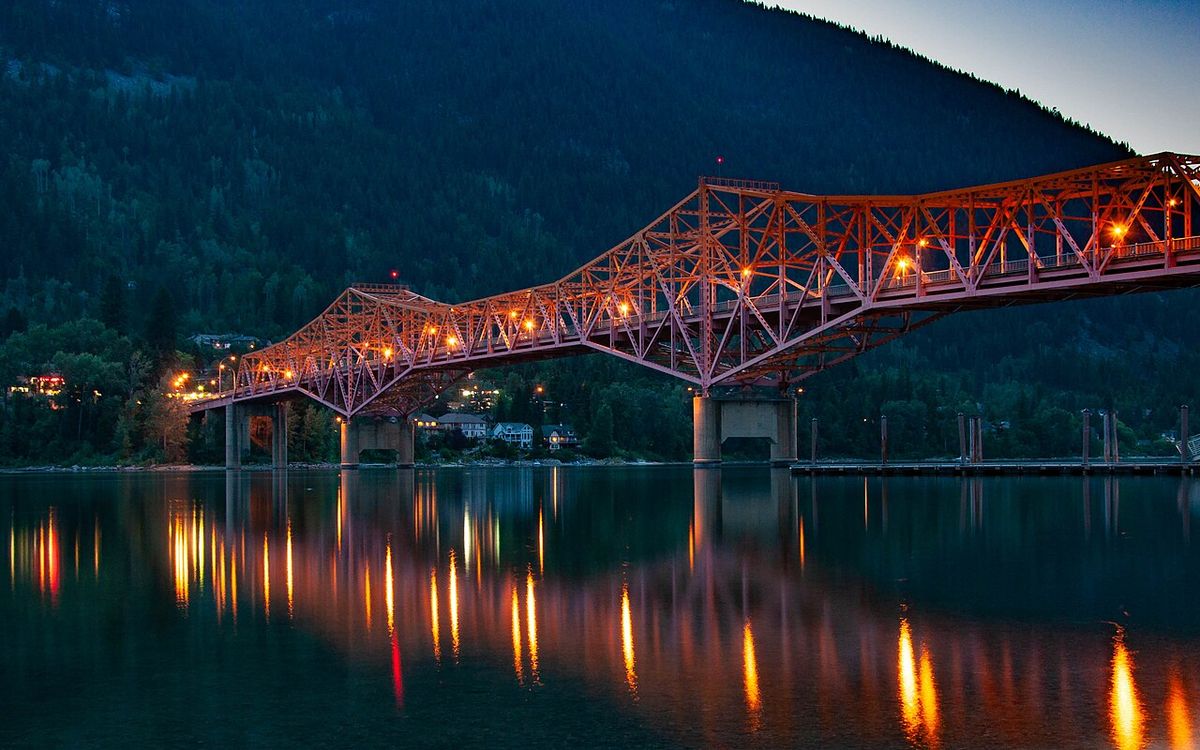
Nelson's transportation network reflects its role as a regional hub. The city is bisected by Highways 3A and 6, providing road connections throughout the Kootenays and beyond. Scheduled commercial air service is available at the West Kootenay Regional Airport in Castlegar, about 43 kilometres southwest, and at the Trail Airport. Nelson Airport itself, located just blocks from downtown, does not offer scheduled passenger service. Public transit within the city and to neighbouring communities is provided by the West Kootenay Transit System, which operates several routes. The city supports sustainable transportation options, with both Level 2 and Level 3 DC fast-charging electric vehicle charging stations installed and a carsharing service operated by the Kootenay Carshare Co-operative.
Freight rail service is maintained by the Kootenay Valley Railway, an internal business unit of the Canadian Pacific Railway (CPR). Nelson holds historical significance as the former headquarters of the CPR Kootenay Division, where the CPR Boundary subdivision running towards Castlegar and the CPR Nelson subdivision running towards Cranbrook meet. On the waterfront, Nelson Pier, designed by Matthew Stanley, symbolizes the connection between the city and Kootenay Lake. Recent developments have enhanced public access to the shoreline, including the redesign of the Hall Street Pier in 2024 into a public space with a modern wood and steel pedestrian canopy and a swimming dock. The world's longest free ferry ride operates from nearby Balfour, providing a 35-minute scenic crossing to Kootenay Lake's East Shore, and the Harrop Cable Ferry provides a five-minute crossing to the communities of Harrop and Procter.
Local Government and Media
Nelson is governed by a mayor and six councillors, elected every four years. The 2026 local government election was held on October 17, 2026, with voting from 8:00 am to 8:00 pm at the Prestige Lakeside Resort & Convention Centre, and advance voting opportunities were held at City Hall on October 7 and October 14, 2026. Prior to that election, Janice Morrison served as mayor, with councillors including Rik Logtenberg, Keith Page, and Leslie Payne. The City of Nelson acknowledges that it resides within the unceded traditional territories of the Sinixt, the Syilx, and the Ktunaxa peoples. Local media includes several radio stations serving the community, such as CJLY-FM 93.5 (Kootenay Co-op Radio), CBYN-FM 98.7 (CBC Radio One repeating CBTK-FM Kelowna), CHNV-FM 103.5 ("The Bridge"), and CKKC-FM 106.9 ("EZ Rock"). In print, the long-running Nelson Daily News began publishing in 1902 but ceased publication in 2010 after being acquired by Black Press from Glacier Media Inc. Its successor, the Nelson Star, is now the primary newspaper, published twice weekly on Wednesdays and Fridays and circulating to over 9,000 recipients. The city also has a history of unique local governance experiments, having used a single transferable vote system to elect its councillors from 1917 to 1919.
Recreation and Tourism
Nelson's natural setting makes it a premier destination for outdoor recreation year-round. In winter, the city is celebrated as a top ski town in North America, with easy access to multiple ski areas renowned for deep powder snow. Summer activities are equally diverse, centred on Kootenay Lake and the extensive trail networks in the surrounding mountains. The area is recognized as a mountain biking paradise, with an extensive network of trails for all skill levels maintained by passionate local advocates like the Nelson Cycling Club, with trails spanning through forests and offering panoramic mountain vistas. Hiking, kayaking, boating, and golf are also popular. The nearby Ainsworth Hot Springs Resort, now stewarded by the Lower Kootenay Band, offers natural cave tunnels for soaking, and the region hosts major events like the Shambhala Music Festival in nearby Salmo each July, a four-day electronic dance music festival.
Tourism is deeply connected with the city's heritage character. The meticulously restored downtown, with its concentration of over 350 heritage buildings including decorative High Victorian-style stone buildings with round turrets, invites exploration through self-guided walking tours. The combination of historic architecture, a significant arts scene, a wide range of restaurants, and immediate access to wilderness creates a distinct visitor experience. Accommodation options range from historic downtown hotels like the Hume Hotel and Spa with its ornate Library Lounge to waterfront properties, bed and breakfasts, and motels. The city's modern community recreation complex offers pools, a sauna, steam room, and fitness centre, complementing the many private spas, yoga studios, and wellness practitioners in the area. The city also functions as a gateway to surrounding lake communities like Balfour, Ainsworth, Harrop, and Procter, which offer golf, hiking, beachfront getaways, and were traditional grounds of the Ktunaxa First Nations.
Questions about Nelson, British Columbia
What is Nelson, British Columbia known for?
Nelson is recognized for its exceptionally well-preserved heritage downtown, featuring over 350 restored buildings from the late 1800s, earning it a reputation as one of Canada's finest heritage cities. It is also known as a significant centre for arts and culture, with numerous galleries, a strong history of art education, and a active restaurant scene with a high number of restaurants per capita. Its location in the Selkirk Mountains on Kootenay Lake makes it a premier destination for year-round outdoor recreation, including skiing, mountain biking, hiking, and water sports. The city also has a historical connection to American Vietnam War draft evaders, who settled there in the 1960s and 1970s.
What is the population of Nelson, BC?
According to the 2021 Census of Population conducted by Statistics Canada, Nelson had a population of 11,198. This represented an increase of 5.1% from the 2016 population of 10,572. Independent estimates for 2026 suggest the population has continued to grow, with one projection placing it at approximately 12,269. The city has a high population density for its size, at 938.6 people per square kilometre, due to its confined valley location. The wider trading area for Greater Nelson is estimated to be near 70,000 people.
What are the main industries in Nelson?
Nelson's economy has diversified from its historical base in mining and forestry. Today, key industries include tourism, driven by heritage, arts, and outdoor recreation. Public administration, as the city is the seat of the Regional District of Central Kootenay and hosts government offices. And a active retail and service sector featuring specialty foods, craft breweries, and numerous restaurants. Education, through Selkirk College and other institutions, and the arts and culture scene also contribute significantly to the local economy. In the past, the region was also reported as a centre for illegal marijuana production, which some observers linked to economic shifts.
What is the history of the Kootenay School of the Arts in Nelson?
The Kootenay School of the Arts (KSA) has a long and evolving history in Nelson. It originated from the independent Nelson School of Fine Art founded in 1960 by Zeljko Kujundzic. After expanding to offer a diploma and being renamed, it relocated to the Notre Dame University campus in 1969. Following the end of direct provincial support in 1972, it merged with Selkirk College. After the university closed in 1977, the KSA closed but was succeeded by the David Thompson University Centre in 1979. An independent Kootenay School of the Arts was founded in 1991, later absorbed by Selkirk College in 2006 and renamed Kootenay Studio Arts. In April 2026, after Selkirk's decision to end the programs, the Nelson City Council announced the school's building would be leased to the Nelson Community Land Trust to work with a new Kootenay School of the Arts Society to continue programming.
What outdoor activities are available in Nelson?
Nelson offers a vast array of outdoor activities in all seasons. In winter, it is a gateway to world-class skiing and snowboarding at several nearby resorts known for abundant powder. Summer activities dominate around Kootenay Lake and the mountains, including kayaking, boating, fishing, and using the free ferry from Balfour. The region is a mountain biking destination with an extensive trail network for all levels through lush forests. Hiking, golf, pickleball, and visiting nearby hot springs like Ainsworth are also popular. The city's parks, the redesigned Hall Street Pier with a swimming dock, and converted rail trails provide ample opportunities for walking, cycling, and swimming close to town. Whitewater rafting and a zipline are also available in the region.
How do I get to Nelson, BC?
Nelson is accessible by road via Highways 3A and 6. The nearest airports with scheduled commercial service are the West Kootenay Regional Airport in Castlegar (about a 30-minute drive southwest) and the Trail Airport. Nelson Airport itself does not offer scheduled passenger service. Within the city, public transit is provided by the West Kootenay Transit System, and a carsharing service is available through the Kootenay Carshare Co-operative. The world's longest free ferry from Balfour provides a scenic 35-minute connection to Kootenay Lake's East Shore, and the Harrop Cable Ferry connects to nearby communities.
Sources and further reading
- Nelson, British Columbia (Wikipedia)
- 2026 Local Government Election | Nelson, BC (nelsonpolice.ca)
- What You Need to Know About a Trip to Nelson, BC (seattlemet.com)
- Nelson, British Columbia, Nelson Kootenay Lake Tourism (nelsonkootenaylake.com)
- Nelson BC, Discover Nelson (discovernelson.com)
Checked by the Your Space Hamilton desk. Last updated 2026-10-30.