Canmore, Alberta
Canmore is a town in Alberta, Canada, located in the Bow Valley within the Rocky Mountains, approximately 81 kilometres west of Calgary and adjacent to Banff National Park. Incorporated in 1965, its economy transformed from coal mining to a tourism and recreation hub following its role as host for Nordic events during the 1988 Winter Olympics. With a population of 17,036 in 2023, it is Alberta's fifth-largest town, renowned for its dramatic mountain scenery, extensive trail networks, and active arts and festival scene. The town serves as a major gateway for outdoor enthusiasts and a popular alternative destination to the nearby national park.
History and Indigenous Heritage
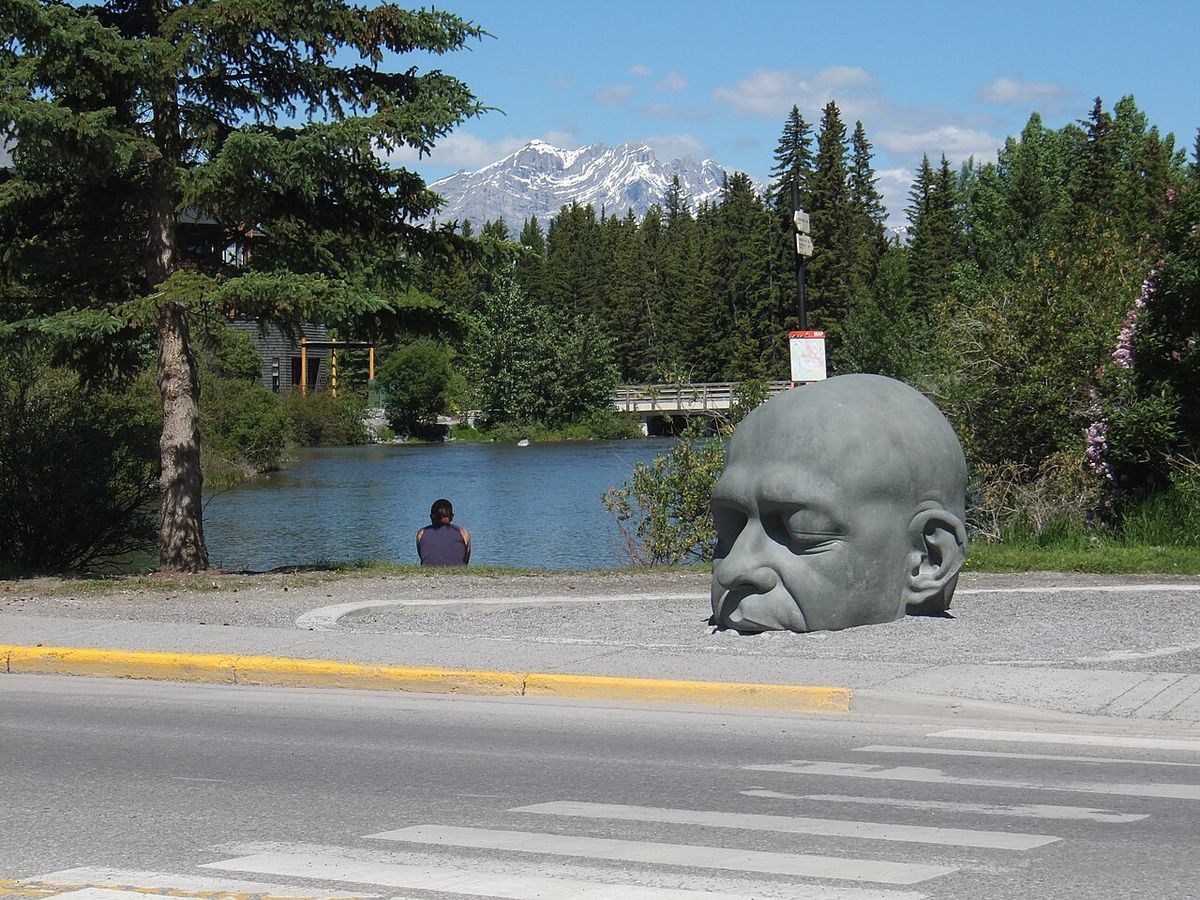
The area now known as Canmore has been home to Indigenous Peoples for thousands of years, with the Nakoda people referring to it as Chuwapchipchiyan Kude Bi, meaning "shooting at the willows." The town was officially named in 1884 by Canadian Pacific Railway director Donald A. Smith, later Lord Strathcona, after King Malcolm III of Scotland, whose Gaelic nickname Ceann Mór translates to "Big Head." Coal mining defined the town's early economy after Queen Victoria granted a charter in 1886, with the No. 1 mine opening in 1887. The industry thrived for decades, supporting a population that reached 2,000 by the time of incorporation in 1965, with a North-West Mounted Police barrack established on Main Street in the 1890s which was vacated in 1927 and later restored in 1989. The closure of Canmore Mines Ltd. in 1979 marked the end of the coal era, and safety and reclamation policies led to the demolition of most mining structures the following year, leaving only the lamp house and a few mine entrances. Economic uncertainty followed until the town was selected to host Nordic events for the 1988 Calgary Winter Olympics, a development that spurred the town's evolution into a recreational tourist destination. Historic structures like the 1890 Canmore Hotel, which celebrated its 120th anniversary in 2010 and received a heritage designation in 2015, and the restored police barrack, now under the care of the Canmore Museum and Geoscience Centre, remain as physical links to its past.
Geography, Development and Climate
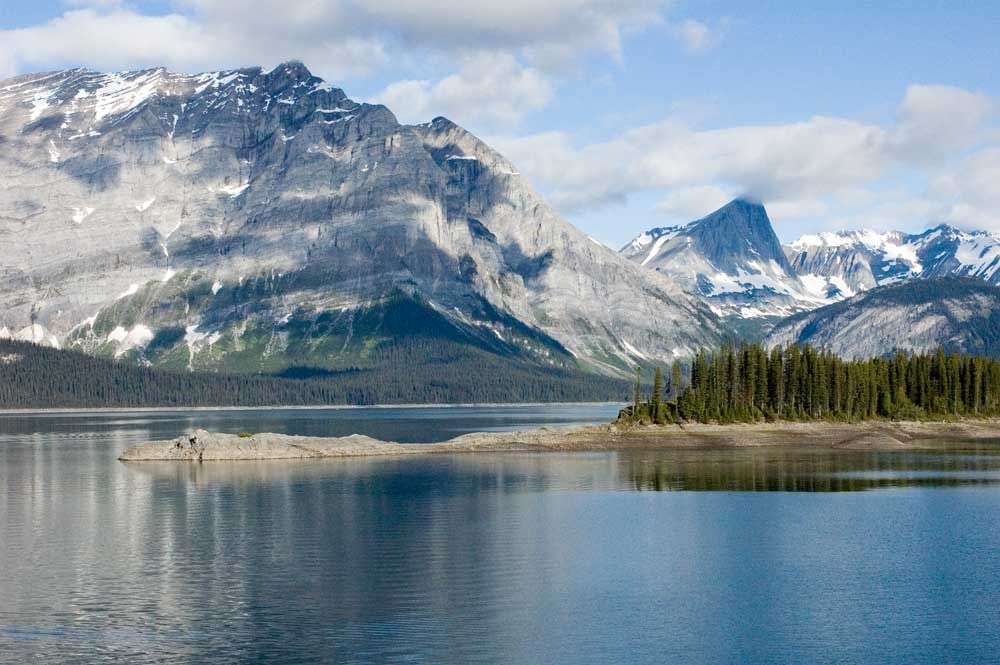
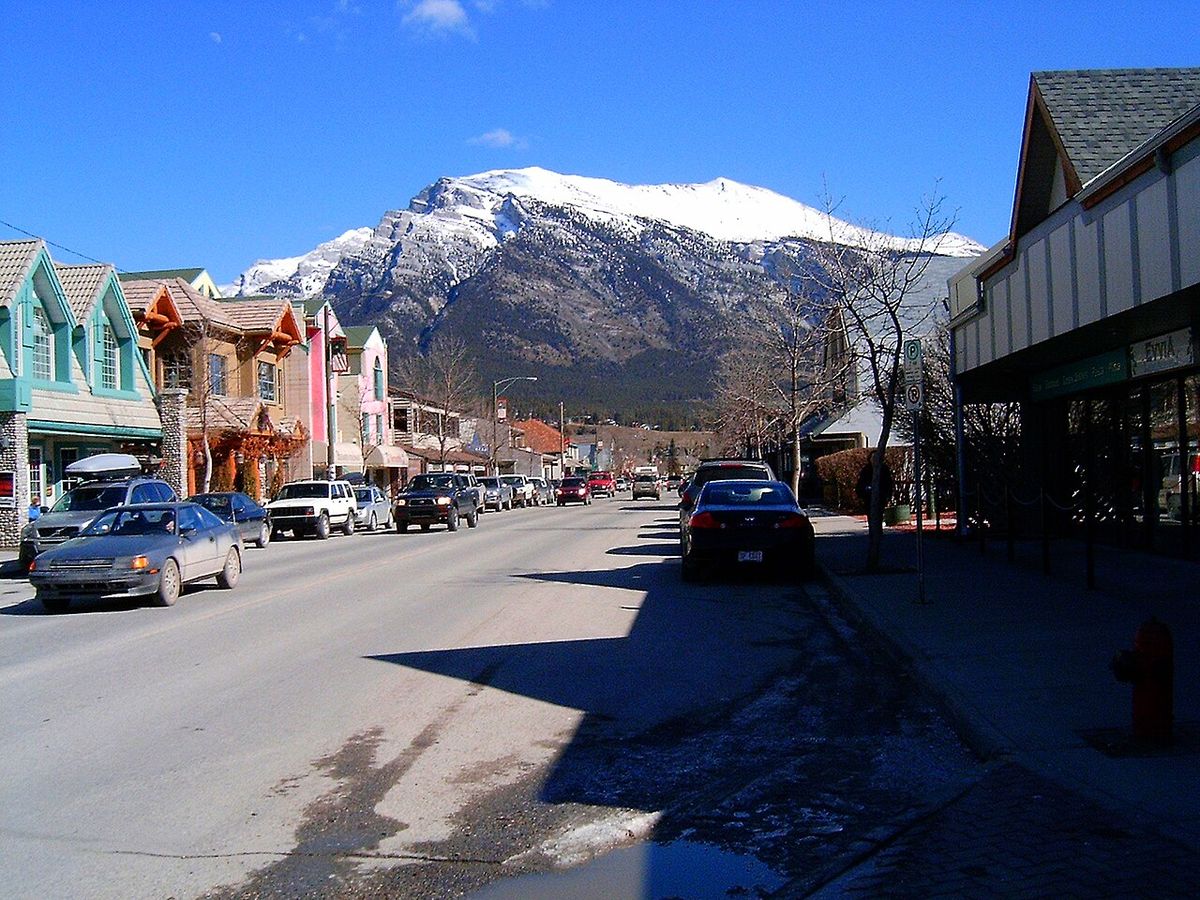
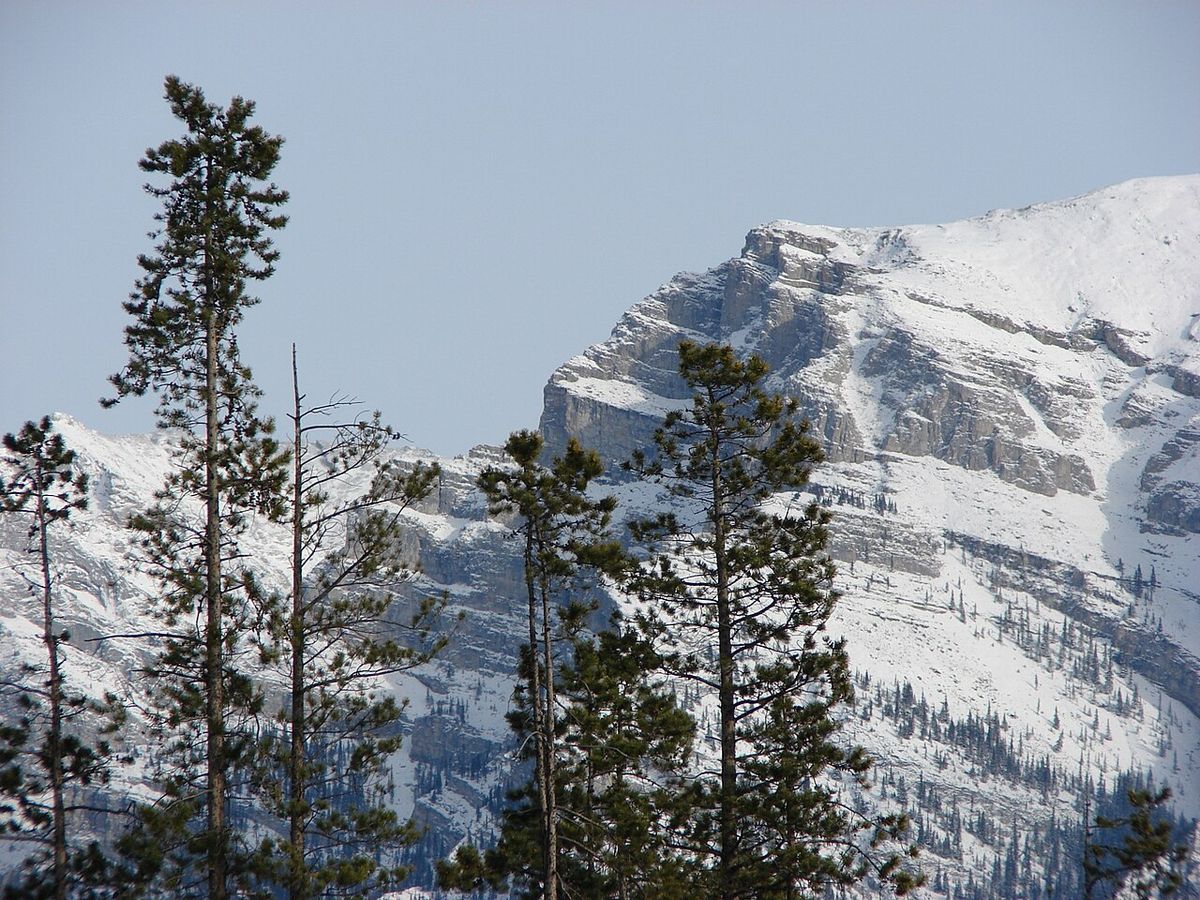
Canmore is situated in the Bow Valley, sharing borders with Kananaskis Country to the west and south and the Municipal District of Bighorn No. 8 to the north and east. The Trans-Canada Highway and the Canadian Pacific Kansas City railway bisect the town, while the Bow River flows through it, creating a landscape segmented by transportation routes and natural features which has historically influenced its tourism-based economy and mining industry. This geography has led to a sprawling community that takes over ninety minutes to traverse on foot, with significant wildlife corridors designated to allow safe passage for bears, cougars, wolves, and elk between habitat patches where they can find food and establish territories. Concerns over urban growth next to provincial and national parkland have led to many efforts to place limits on future development, with expectations that the town would reach maximum build-out after the completion of Silvertip Resort and Three Sisters Mountain Village by 2020. In 2021, developers of the Three Sisters project sued the town for $161 million over a decision that blocked construction, and in May 2022 the Land and Property Rights Tribunal of Alberta overruled town officials and ordered that development for the two projects could proceed to completion. The town's climate is relatively mild for Alberta, with Banff, the nearest weather station, recording average January highs of -3.1 °C with relatively low humidity, and summers that are short with daytime temperatures typically ranging from 18 to 22 °C. The town is framed by several prominent peaks visible from the townsite, which are major attractions for hikers and climbers and form part of the community's well-known skyline.
- Mount Rundle (2,949 m / 9,675 ft)
- Ha Ling Peak (2,407 m / 7,897 ft)
- The Three Sisters (2,936 m, 2,769 m, 2,694 m / 9,633 ft, 9,084 ft, 8,839 ft)
- Grotto Mountain (2,706 m / 8,878 ft)
- Mount Lawrence Grassi (2,685 m / 8,809 ft)
- Mount Lady Macdonald (2,606 m / 8,550 ft)
- East End of Rundle
Demographics and Population Trends
Canmore has experienced consistent and rapid population growth, driven by its appeal as a recreational and bedroom community for Calgary. According to the 2021 census, the population was 15,990 living in 6,804 of its 9,173 total private dwellings, a 14.3 percent increase from the 13,992 recorded in 2016. The town's estimated population for 2026 is 17,683, which would represent growth of 342 people from the previous year according to demographic models. With a land area of 68.47 square kilometres, the 2021 population density was 233.5 people per square kilometre, a significant increase from the 201.5 people per square kilometre recorded in the 2016 census which used a slightly larger land area of 69.43 square kilometres. The 2016 census indicated that about 81 percent of residents identified English as their first language, with French at 5 percent and German at 2 percent, reflecting the town's linguistic diversity. This growth has intensified discussions around urban development limits and housing affordability, with the town advocating for proposed amendments to the Municipal Government Act to provide clarity and a path forward to help build more affordable homes.
| Year | Population | Change | Source/Notes |
|---|---|---|---|
| 2001 | 11,067 | , | , |
| 2011 (Federal) | 12,288 | , | Base for 2016 calculation |
| 2011 (Municipal) | 12,317 | , | Town census figure |
| 2014 (Municipal) | 13,077 | +6% from 2011 municipal | Town census |
| 2016 (Federal) | 13,992 | +13.9% from 2011 federal | Living in 5,738 of 7,963 dwellings |
| 2021 (Federal) | 15,990 | +14.3% from 2016 | Living in 6,804 of 9,173 dwellings |
| 2023 (Estimate) | 17,036 | , | Town estimate, fifth-largest in Alberta |
The town of Canmore was expected to reach its maximum build out by 2020 following the completion of developments like Silvertip Resort and Three Sisters Mountain Village. Developers have continued to push for permits to construct additional housing, leading to legal disputes over development limits. Concerns exist over urban growth adjacent to provincial and national parkland. The town's development is segmented by wildlife corridors, highways, the railway, and the Bow River.
Economy and Sustainable Development
Canmore's economy transitioned from a foundation in coal mining to one centred on tourism, construction, and recreation following the 1988 Olympics, which revived the local economy and established the grounds for a high-end bedroom and getaway community. The town is a destination for visitors and a residential community for Calgary commuters, with a significant portion of economic activity related to visitor services, real estate, and outdoor guiding. Sustainable development has been a focus, with the Three Sisters Mountain Village project receiving an international award in 2006 for being the best sustainable development in North America, though its future lands went into receivership in the spring of 2009 following the world economic crisis, a situation that did not affect ongoing developments within the project. The town's operating and capital budget for 2026 highlights specific projects including the implementation of a new finance system, ongoing flood mitigation work, deep utility replacements, and street and pathway rehabilitation across the municipality. A key fiscal initiative moving forward for the 2026 tax year is the Livability Tax Program, designed to support community amenities and infrastructure following years of planning and consultation with residents. The pedestrian-friendly downtown core, focused on 8th Street or "Main Street," was originally a residential road with some of the town's oldest architecture but is now lined with small shops, restaurants, and galleries, supported by a Downtown Business Improvement Area which was seeking an Executive Director in 2026 to lead advocacy and placemaking initiatives.
Arts, Culture and Annual Festivals
Canmore has an active arts community with a large number of writers, painters, and photographers, and its dramatic scenery has made it a popular filming location for numerous movies and television series. Productions shot in the area include Brokeback Mountain, The Assassination of Jesse James by the Coward Robert Ford, Open Range, The Edge, Legends of the Fall, Shanghai Noon, Mystery Alaska, Snow Dogs, the pilot episode of Everwood, The Last of Us, and Last of the Dogmen. The town was also popularized by the late John Morgan of the Royal Canadian Air Farce with his monosyllabic character "Mike from Canmore." The Canmore Museum and Geoscience Centre, located in the Canmore Civic Centre along 7th Avenue and 9th Street, operates under a fee-for-service agreement with the town signed in 2006 to act as the custodian of the town's heritage, maintaining and preserving its artifacts and archives. The town's festival calendar is packed with annual events that draw locals and visitors alike, contributing significantly to the cultural life and tourism economy throughout all four seasons.
- Canmore Folk Music Festival: Held annually on the Heritage Day long weekend in August at Centennial Park on the Stan Rogers Stage, it is the longest running music festival in Alberta and celebrated its 30th year in 2007, having hosted artists like Ry Cooder, Stan Rogers, Arlo Guthrie, The Arrogant Worms, The Paperboys, The Rankin Family, and Moxy Früvous.
- Canmore Highland Games: Presented annually by the Three Sisters Scottish Society on the September long weekend, in their 17th year as of the notes, hosting a ceilidh, heavy lifting competitions, piping and drumming, and highland dance events.
- Canmore Winter Carnival: A celebration of the season and a popular community tradition for more than 20 years with events including ice carving, snow sculpting, dog sled racing, and the Bonhomme Carnival.
- Canmore Uncorked: An award-winning food festival hosted every April for 13 days of special set-price menus from local restaurants, culinary events, cooking courses, and a long table dinner.
- Festival of Eagles: An annual celebration of the golden eagle autumn migration over Canmore and the Bow Valley, in its 13th year, including guided hikes, bird walks, interpretive displays, theatrical performances and guest speakers with spotting scopes set up at Canmore Collegiate High School.
- Vic Lewis International Band Festival: Held every November starting in 1996, hosting up to thirty-two concert bands, wind ensembles and jazz bands from across Alberta who play for well-known band directors like Tim Salzman, Paul Read, Gillian Mackay, and Tommy Banks, with over 800 students participating.
- Canmore Miners' Day Reunion: Takes place each year on the dates closest to July 13 commemorating the closing of the Canmore coal mines in 1979, marked with an evening reunion, a parade, a free public lunch, and a special picnic for ex-miners and their families.
- 24 Hours of Adrenalin: A mountain bike race series with an annual stop in Canmore, where hundreds of solo or team riders compete to ride as many laps as possible within 24 hours on a challenging 16 km circuit at the Canmore Nordic Centre.
The Rock and Fossil Clinic is co-presented by the Canmore Museum and Geoscience Centre and APEGGA, where people can have rocks or fossils evaluated by a professional geologist. Mozart on the Mountain is an outdoor concert presented annually by the Calgary Philharmonic Orchestra. The Rocky Mountain Ski Challenge is an annual ski marathon hosted by the Canmore Nordic Ski Club. The Canmore Children's Festival is a two-day event with entertainment like acrobats and music. The Canmore ArtsPeak Arts Festival gives participants the chance to discover local venues and the work of local artists and cinematographers.
Attractions and Recreational Infrastructure
Outdoor recreation is central to life in Canmore, with a series of hiking, mountain biking, equestrian, and paved trails traversing the area, many located within Bow Valley Wildland Provincial Park and Kananaskis Country. The Canmore Nordic Centre, a legacy of the 1988 Olympics where cross-country skiing, biathlon, Nordic combined, and blind cross-country skiing events were held, is a provincial park offering 60 kilometres of world-class groomed trails for skiing and biathlon in winter, which convert to mountain bike trails in summer. It features an 18-hole disc golf course, a 6.5-kilometre track illuminated for night skiing, and a Day Lodge with a cafeteria, meeting rooms, rentals, and showers. The centre was re-developed for the 2005 Cross-country World Cup and has hosted World Cup events in 2005, 2008, 2009, 2012, and 2016. The Grassi Lakes, a set of spring-fed Upper and Lower lakes at an elevation of about 1,525 metres overlooking the town, are a popular hiking destination within the southern Canadian Rockies. Elevation Place, opened in April 2013 after construction began in 2012, is the town's modern recreation facility featuring an 8-lane 25-metre lap pool, a world class climbing wall developed by Walltopia, two cardio rooms, a strength room, a host of fitness programs, and also houses the community's library and a local art gallery. Canmore is the closest major town to Banff National Park, with the park gates located just northwest of town limits, and a scenic 26-kilometre paved bike path connects the two communities, with bicycle rentals available at shops like Chateau Mountain Sports, and the path is known for being more strenuous going to Banff due to elevation gain and frequent headwinds.
Sports are deeply embedded in the community, with the town serving as the official home to Canada's national cross-country skiing and biathlon teams, and athletes like Chandra Crawford, who won the gold medal in the women's 1.1-kilometre sprint at the 2006 Winter Olympics, and Beckie Scott, a 2002 gold medalist, making their home in Canmore. The Alberta Junior Hockey League's Canmore Eagles are the local hockey team, which has produced NHL players like Dan Blackburn who was drafted by the New York Rangers in 2001, and two-time Stanley Cup-winner Brayden Point, and the hockey movie Mystery, Alaska was filmed in Canmore. The area is a renowned destination for traditional, sport, and multi-pitch rock climbing throughout the Bow Valley, and is also a destination for ice climbing during the winter months. The town also supports soccer through Canmore United, which participates in the summer Bow Valley Soccer League and tournaments in British Columbia, Saskatchewan and Alberta, and built a youth skate park in the summer of 2009. Major trail systems are located on the Benchlands of Mount Lady Macdonald, at the Canmore Nordic Centre, and along the north slope of Mount Lawrence Grassi, with trails like the Montaine Traverse and Highline improved by the town, Alberta, the MD of Bighorn, and stakeholder groups to balance recreation with environmental sustainability.
Media, Housing and Community Services
Local media in Canmore includes the primary newspapers the Rocky Mountain Outlook and the Bow Valley Crag and Canyon, which took over the Canmore Leader and the Banff Crag & Canyon in 2013. The only radio station operating out of Canmore is CHMN-FM, an adult contemporary station run by Rogers Media, which formerly employed former MuchMusic VJ Bradford How when it was known as Mountain FM broadcasting at 106.5 FM before he won the VJ Search competition in 2000. Community engagement is fostered through various town initiatives, such as the draft Open Space and Trails Plan for which an online survey became available on November 2, 2026, and a free direct-to-text and email emergency alert service for residents to stay informed during emergencies which is anonymous and easy to use. The town promotes active transportation with specific rules for bikes, scooters, and other small vehicles including where they can ride and key safety requirements, as outlined in municipal bylaws. Housing in Canmore includes many new developments, fractional projects, and vacation suites built with sustainable development in mind, though affordability remains a challenge, with real estate pricing beginning to recover in early 2010 after the downturn and several projects showing signs of life at that time. The town government actively works on infrastructure projects like the construction on the South Boundary of the Bow Valley Community Fireguard which started on September 14, and advocates for legislative changes to support affordable housing through proposed amendments to the Municipal Government Act. The downtown Business Improvement Area actively markets the core's unique shops and culinary scene, which has reached new heights with many restaurants receiving top accolades, and provides an online Downtown Canmore Map to help visitors find restaurants and one-of-a-kind boutiques. The town's portal, CanmoreAlberta.com, serves as a business directory and local guide to restaurants, events, lodging, and adventures, highlighting featured businesses and a community calendar, with the goal of providing an informative guide useful to both travellers and locals.
Questions about Canmore, Alberta
Where is Canmore located?
Canmore is a town in Alberta, Canada, situated in the Bow Valley within the Rocky Mountains. It is located approximately 81 kilometres west of Calgary, adjacent to the southeast boundary of Banff National Park. The town shares borders with Kananaskis Country to the west and south and the Municipal District of Bighorn No. 8 to the north and east. Major transportation routes including the Trans-Canada Highway, the Canadian Pacific Kansas City railway, and the Bow River run through the community, influencing its historical development.
What is there to do in Canmore?
Canmore has a series of hiking, mountain biking, equestrian, and paved trails. Major trail systems are located on the Benchlands of Mount Lady Macdonald, at the Canmore Nordic Centre, and along the north slope of Mount Lawrence Grassi. The pedestrian-friendly town centre surrounds 8th Street, or Main Street, which is lined with small shops, restaurants, and galleries. The town hosts many festivals and annual events, such as the Canmore Folk Music Festival, the Canmore Highland Games, and the Canmore Winter Carnival. Canmore is also a 22-kilometre drive from Banff National Park.
How did Canmore get its name?
The town was officially named in 1884 by Canadian Pacific Railway director Donald A. Smith, later the 1st Baron Strathcona and Mount Royal. He named it after King Malcolm III of Scotland, whose Gaelic nickname was Ceann Mór, meaning "Big Head. In the Stoney Nakoda language, the area is known as Chuwapchipchiyan Kude Bi, which translates to "shooting at the willows. Applications to make this Indigenous name an official name for the town have thus far been unsuccessful.
What is the population of Canmore?
Canmore's population was 15,990 according to the 2021 federal census, living in 6,804 of its 9,173 total private dwellings. A town estimate placed the population at 17,036 in 2023, making it the fifth-largest town in Alberta. Population projections estimate the town will reach 17,683 residents by 2026. The community has experienced consistent growth, with a 14.3 percent increase between the 2016 and 2021 censuses and a 13.9 percent change from its 2011 population of 12,288.
What is the Canmore Nordic Centre?
The Canmore Nordic Centre was originally constructed for the 1988 Winter Olympic Games, where cross-country skiing, biathlon, Nordic combined, and blind cross-country skiing events were held. It provides world-class trails for cross-country skiers, mountain bikers, trail runners, and hikers. It has approximately 60 kilometres of trails designed to meet international Nordic competitive standards and includes an illuminated loop for night skiing. The centre has a Day Lodge offering rentals and services, hosts national training camps for Canadian teams, and operates an 18-hole disc golf course in summer.
How far is Canmore from Banff and what is the connection?
Canmore is the closest major town to Banff National Park, with the park's main gates located just northwest of the town limits. The drive to the town of Banff within the park is approximately 22 kilometres, or about a 20-minute drive. A popular paved bicycle path, spanning 26 kilometres, connects Canmore to Banff, primarily following the highway and offering a scenic but gradual uphill ride from Canmore to Banff, with a frequent light wind from Banff towards Canmore making the return trip easier. The town is often marketed as the ultimate travel alternative and mountain home base for visitors to the park.
Sources and further reading
- Canmore, Alberta (Wikipedia)
- Town of Canmore: Home (canmore.ca)
- Canmore Alberta | Your Guide to Stay, Eat & Explore the ... (canmorealberta.com)
- About Canmore (explorecanmore.ca)
- Downtown Canmore (visitdowntowncanmore.com)
Checked by the Your Space Hamilton desk. Last updated 2026-10-29.