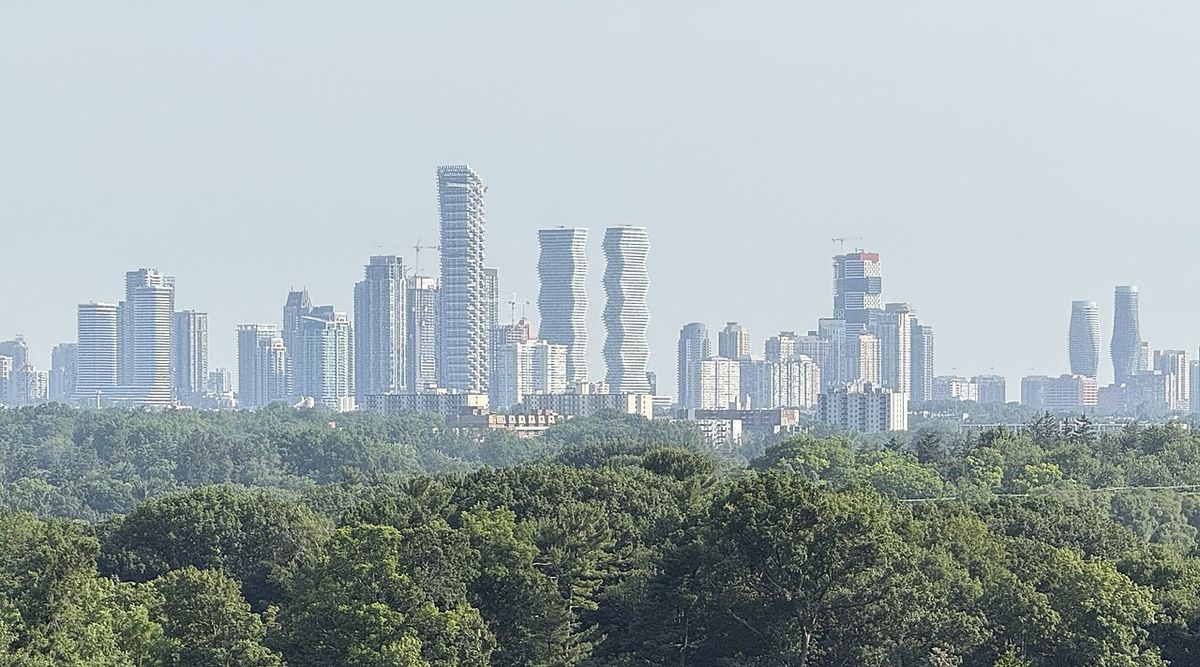
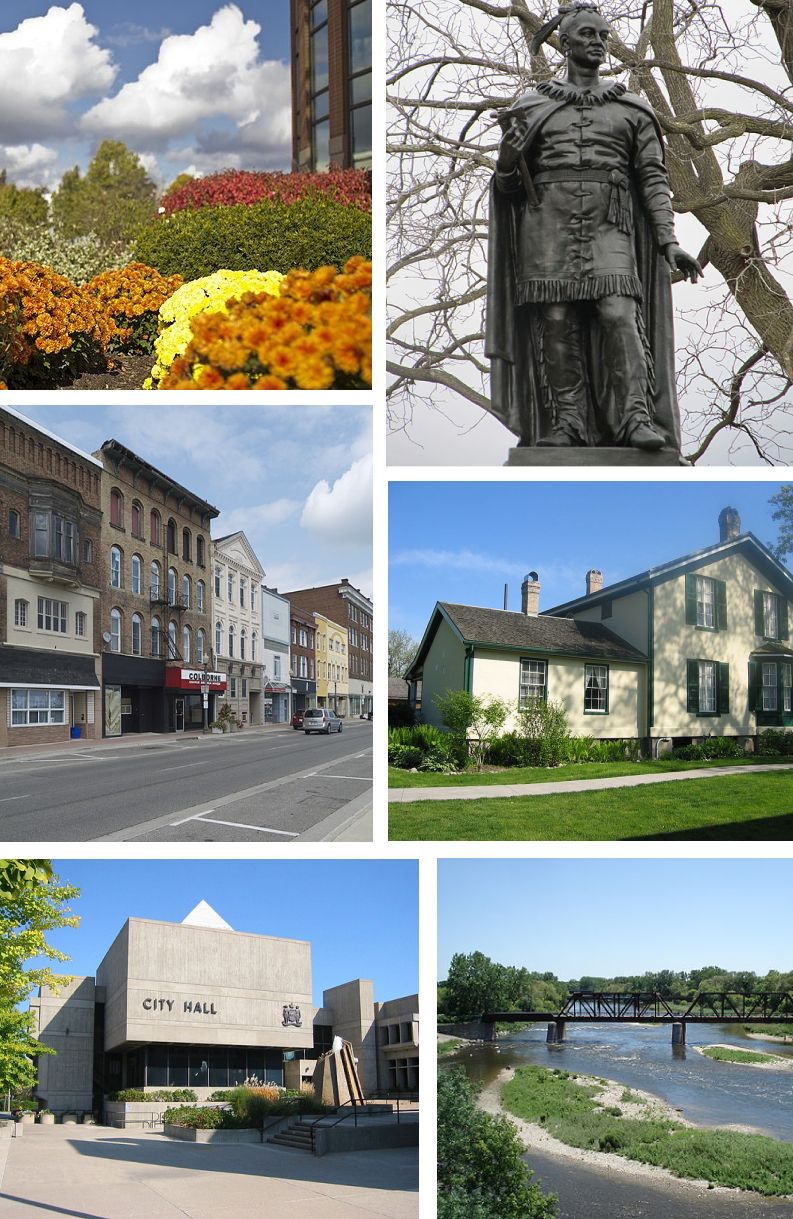
Cambridge, Ontario
Cambridge is a city in the Regional Municipality of Waterloo, Ontario, located at the confluence of the Grand and Speed rivers. With a population of 138,479 as of the 2021 census, it is the second largest community in Waterloo Region and one of its three core cities alongside Kitchener and Waterloo. The modern city was formed in 1973 through the amalgamation of the formerly independent industrial towns of Galt, Preston, Hespeler, and the village of Blair. Cambridge is known for its rich industrial heritage, preserved historic districts, and ongoing role as a centre for manufacturing and community life in southwestern Ontario.
History of Amalgamation and Early Settlement
The area now known as Cambridge has a long history of human habitation, with archaeological evidence of an Iroquoian longhouse village dating from 1280 to 1360 CE discovered near Myers Road in 1989. The inhabitants may have been the Chonnonton people, who practiced slash and burn agriculture cultivating corn, beans, and squash. By the late 17th century, the Algonkian speaking Anishinaabe and Mississauga peoples moved into the territory of Southern Ontario. European settlement began in earnest in the early 19th century following land purchases from the Six Nations. In 1816, Scottish developer William Dickson bought 90,000 acres along the Grand River, founding the community he later named Galt after Canada Company author John Galt. The settlement of Preston originated on land purchased earlier by Mennonites from Pennsylvania through the German Company Tract, with John Erb building the area's first sawmill in 1806 and a gristmill in 1807 on his 7,500 acre purchase. Hespeler began with Abraham Clemens's 1809 land purchase of 515 acres from Richard Beasley, later being industrialized by Jacob Hespeler after 1845. The village of Blair was settled in 1800 by Mennonite Samuel D. Betzner on land also purchased from Beasley. These four distinct communities operated independently for over a century before being amalgamated into the single-tier City of Cambridge by the Government of Ontario in 1973.
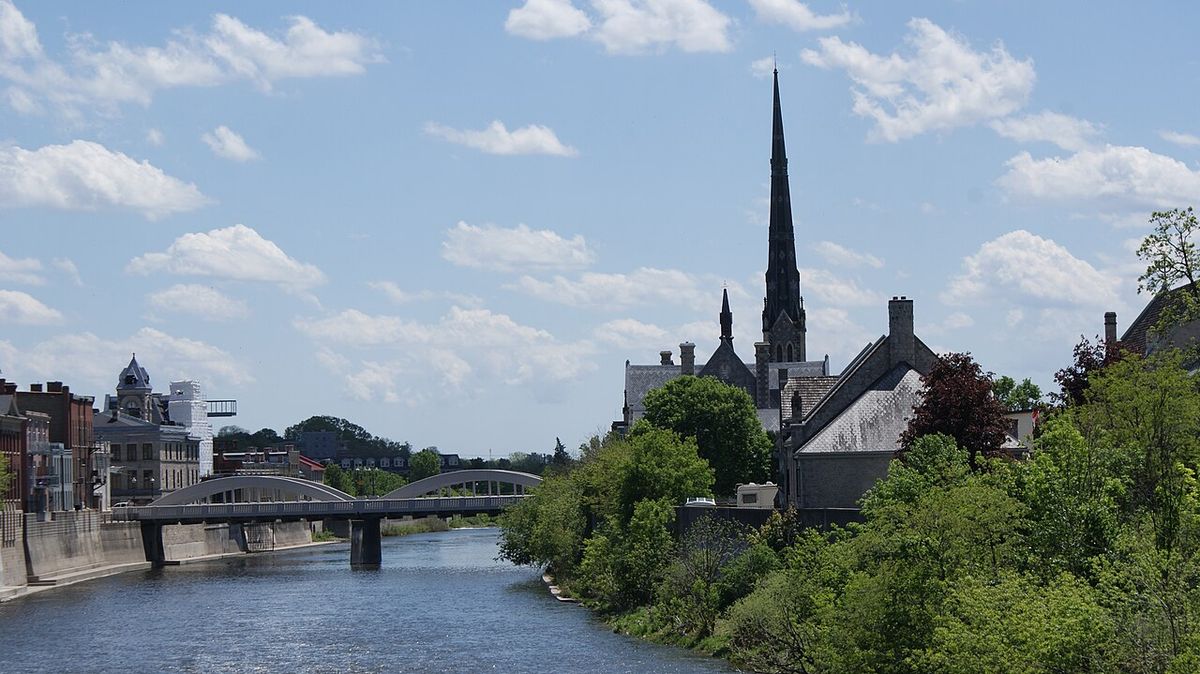
Industrial Heritage of the Founding Towns
Each of Cambridge's founding towns developed a significant industrial base powered by the Grand and Speed rivers. Galt, dubbed the "Manchester of Canada," became the largest town in the Grand River area by the early 1900s. Its extensive industry included the Dickson Mills opened in 1843, an axe factory forge, two furniture factories, the Dumfries iron and brass foundry, three large woolen factories, and two steam-powered tanneries. The arrival of the railway in 1879, initially the Credit Valley Railway which built freight and passenger buildings in 1873 and later the Canadian Pacific which built a brick passenger station, further boosted its manufacturing and export capabilities. Preston grew around flour milling, with the Cherry Flour Mills established in 1879 later becoming the still-operating Dover Flour Mills. The town also produced agricultural implements, furniture, stoves, shoes and textiles, aided by its position on the Great Road between Dundas and Berlin. Hespeler's economy was dominated by textile and woollen mills established by Jacob Hespeler, who built an industrial complex on a 145 acre tract after his arrival in 1845. By 1864, Hespeler also had a large flour mill, cloth and wool manufacturing plants, a sawmill, a distillery, and a large furniture factory, all built of cut stone. The early industrial achievements in Blair centred on the Bowman Mill, a large flour mill opened in 1846 and powered by a unique 15-horsepower hydroelectric system known as the Sheave Tower, constructed around 1876 by Allan Bowman using a series of shafts and gears.
Key industrial landmarks and firsts from the towns include the Dickson Mills which opened in Galt in 1843. The Cherry Flour Mills started in Preston in 1879 and later became the Dover Flour Mills. In Hespeler, Jacob Hespeler built an industrial complex in 1845 that began the town's focus on woollen and textile mills. The Sheave Tower, a 15-horsepower hydroelectric system, was built on Bowman Creek in Blair around 1876 to help power the local flour mill.
- Dickson Mills in Galt, one of the earliest major industries, opened in 1843.
- Galt Grammar School opened in 1852, gaining widespread recognition under headmaster William Tassie and becoming a Collegiate Institute by 1872.
- First hospital in Waterloo County, Galt General Hospital (now Cambridge Memorial Hospital), opened in 1890, adding an X-ray room and a 27-room nurses' residence by 1918.
- Preston Springs Hotel (originally Del Monte Hotel) began operating by 1888, with demolition beginning in December 2020 for public safety reasons.
- Galt, Preston and Hespeler electric street railway began service in 1894, connecting Preston and Galt, reaching Hespeler, Berlin and Waterloo by 1911, and extending to Brantford and Port Dover by 1916 before ending passenger service in April 1955.
- The first school in Waterloo County opened in 1802 near Blair, then known as Shinglebridge, with a teacher named Mr. Rittenhaus.
- The first cemetery in Waterloo County was founded in Blair in 1804, with the first recorded burial being the infant son of John Bricker on March 10 of that year.
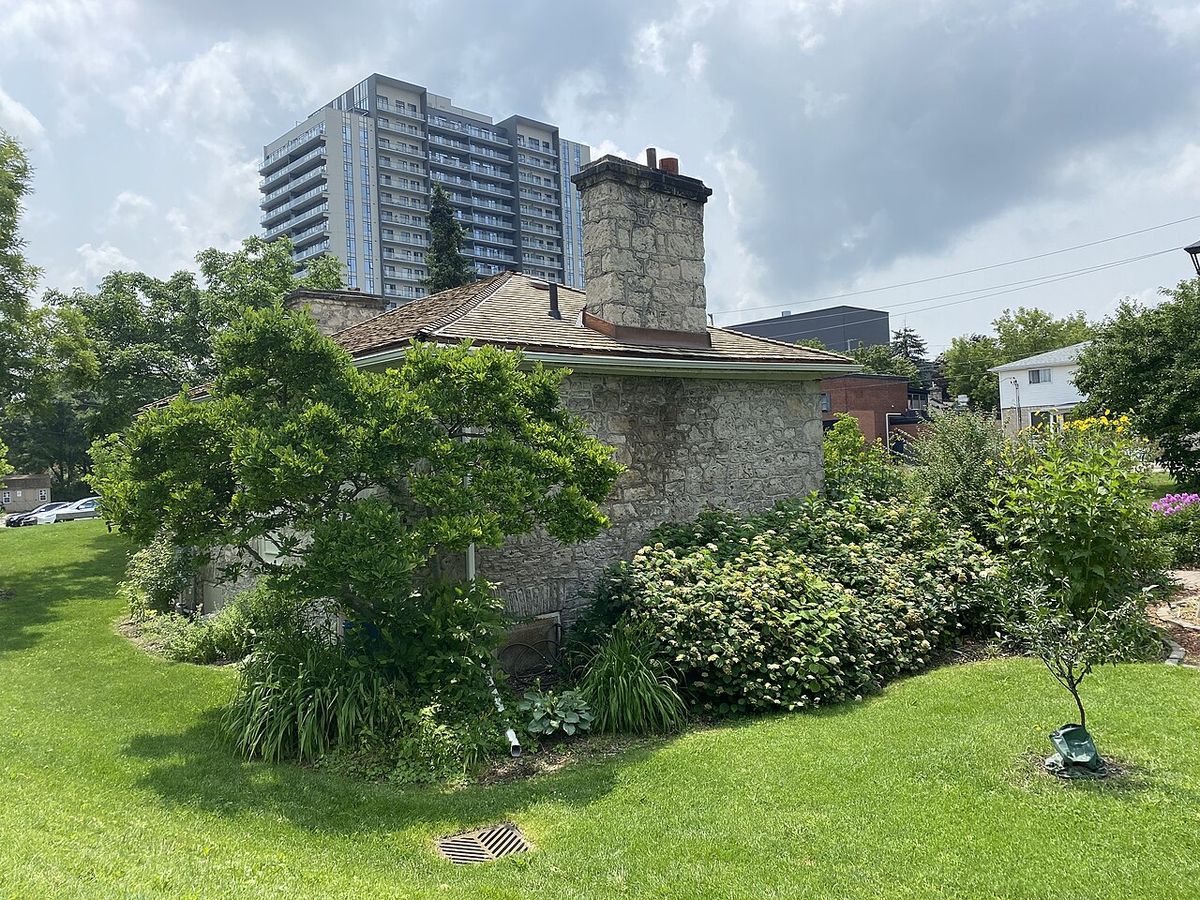
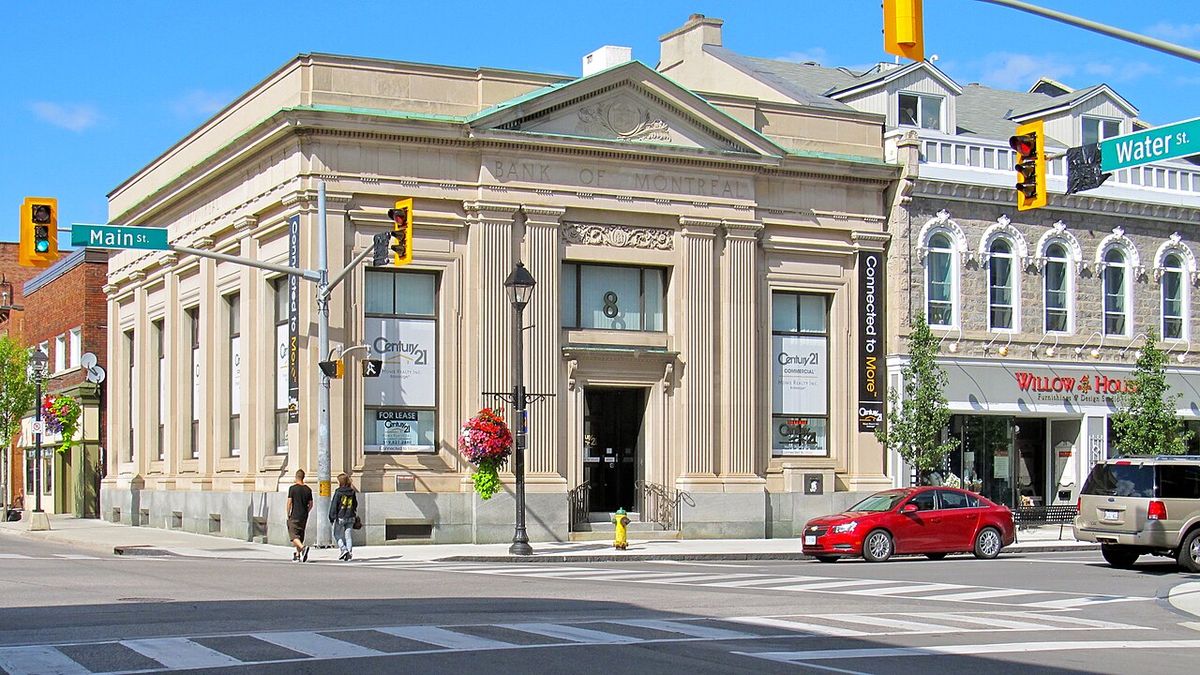
This industrial legacy shaped the built environment, leading to the preservation of historic districts like the Dickson Hill Heritage Conservation District in West Galt. That district features stately homes from the late 19th and early 20th centuries. Many historic buildings also remain in Blair, including some from the early 1820s. These preserved structures include the Sheave Tower, which was restored in 1999, and the John Bechtel residence.
Municipal Government and Representation
The City of Cambridge operates under a mayor-council system. The first mayor following amalgamation in 1973 was Claudette Millar. The mayor as of 2026 is Jan Liggett, who was elected in the 2022 municipal election. Cambridge City Council consists of the mayor and eight councillors, each representing a ward. In a 2018 referendum, municipal electors approved a change to a ranked voting system for municipal elections. The city's 2026 budget was developed under Ontario's Strong Mayor legislation, which sets specific timelines for public and council input. The budget passed with a 2.4 per cent property tax increase and incorporated more than a dozen amendments from councillors, including the deferral of the Soper Park Outdoor Recreation Complex project to the 2027 budget and deferring the creation of an outdoor festival space on Savage Drive. Mayor Liggett stated she chose not to veto council's amendments to continue working collaboratively after councillors expressed frustration in November over how the strong mayor legislation worked during amendment debates.
Cambridge is represented at multiple levels of government. The current city councillors by ward are Helen Shwery (Ward 1), Mike Devine (Ward 2), Corey Kimpson (Ward 3), Ross Earnshaw (Ward 4), Sheri Roberts (Ward 5), Adam Cooper (Ward 6), Scott Hamilton (Ward 7), and Nicholas Ermeta (Ward 8). Councillor Scott Hamilton was elected in a 2020 by-election for Ward 7 to replace Councillor Frank Monteiro who passed away while serving. At the regional level, Cambridge is part of the Waterloo Regional Council, which consists of the regional chair, the mayors of the seven cities and townships, and eight additional councillors. Cambridge is represented on this council by Mayor Jan Liggett and Regional Councillors Doug Craig and Pam Wolf. Federally, the riding of Cambridge is represented by Conservative MP Connie Cody, who defeated Liberal incumbent Bryan May in the April 2025 federal election. The city is also part of the federal riding of Kitchener South, Hespeler, represented by Conservative MP Matt Strauss. Provincially, the riding of Cambridge is represented by Progressive Conservative MPP Brian Riddell, who defeated New Blue Party co-founder Belinda Karahalios in the 2022 provincial election, and the riding of Kitchener South, Hespeler is represented by PC MPP Jess Dixon.
Services, Infrastructure and Recent Developments
The City of Cambridge provides core services including Community Services, Economic Development, Transportation and Public Works, Corporate Services, Fire, and Planning. Many other services are delivered through the upper-tier Regional Municipality of Waterloo, which encompasses Cambridge, Kitchener, Waterloo, and the townships of Woolwich, Wilmot, Wellesley, and North Dumfries. Regional responsibilities include Social Services, Community Health, Grand River Transit, and policing via the Waterloo Regional Police Service. A key civic institution is Cambridge Memorial Hospital, which opened in 1890 as the first hospital in Waterloo County. As of 2026, the hospital operates 217 beds and includes an emergency department, intensive care unit, and operating rooms.
Recent and upcoming civic developments reflect the city's growth. A new Cambridge Recreation Complex was scheduled to open soon in late 2026, with fall programs running from September to December and winter programs from January to March. The city co-hosted the 2026 Ontario Summer Games with Kitchener and Waterloo from July 30 to August 2, 2026. The 2026 municipal budget emphasized renewing critical road and bridge infrastructure, preserving cultural heritage assets, and supporting fire services through an infrastructure renewal levy. The city also maintains numerous natural areas and green spaces for public recreation, and Service Cambridge assists residents with bill payments, licenses, and improvement requests. One of the city's oldest continuous institutions is the Cambridge Farmers' Market, which has been operating since 1830 and offers fresh local food and homemade crafts. The city also organizes events and programs for seasons like Halloween to help residents celebrate in style.
Demographic and Cultural History
The demographic makeup of the founding towns was shaped by distinct waves of immigration. Galt's early population was predominantly Scottish, with 1,000 residents recorded in 1846 who enjoyed amenities like a curling club, library, weekly newspaper, school, bank, and fire company. By 1911, its religious composition was overwhelmingly Protestant, with 4,240 Presbyterians, 2,122 Methodists, and 1,930 Anglicans, and very few Roman Catholics. Preston, in contrast, was settled largely by German-speaking Mennonites from Pennsylvania, and later by immigrants from Germany. By 1855, about 70 per cent of its population of 1,600 was of German origin, and the area had eight hotels and taverns. In 1911, Preston had a more mixed religious profile, including 844 Roman Catholics, 862 Lutherans, 707 Methodists, 704 Anglicans, and 525 Presbyterians. Hespeler also attracted German settlers and industrialized around textile production, though by 1846 it had only 100 inhabitants with a grist mill, saw mill, tannery, tavern, store, pail factory, and various tradesmen. Blair was founded by Pennsylvania Mennonites, with the German Company formed to secure clear land title after discovering a lien on their original purchase from Richard Beasley. The amalgamated City of Cambridge had a population of 138,479 according to the 2021 census, making it the second largest community in Waterloo Region. The city's vision and economic opportunities continue to attract new residents, contributing to its growth and the need for expanded services and infrastructure.
Climate, Geography and Significant Events
Cambridge is situated in the central part of the Ontario Peninsula at the confluence of the Grand and Speed rivers. This location was historically vital for water-powered industry and milling, with records from 1846 noting Galt had very valuable water-power for manufacturing. The city's climate is classified as a humid continental climate under the Köppen system, with the designation Dfb. Winters are typically moderate with occasional deep freezes, while summers often see temperatures in the high twenties Celsius, sometimes accompanied by stretches of high humidity common to southern Ontario. The city's geography includes the river valleys and the Carolinian forest zone, part of which is preserved in the Blair area. The Grand River has also posed flood risks, most notably in May 1974 when severe flooding inundated downtown streets with water up to 5.3 metres deep, causing an estimated $5 million in damage and affecting approximately 75 businesses, virtually none of which were covered by relevant insurance.
The history of transportation in the area was significantly shaped by the Galt, Preston and Hespeler Street Railway, later the Grand River Railway Company. It began operation in 1894, initially connecting Preston and Galt. The line reached Hespeler, Berlin, and Waterloo by 1911, and was extended to Brantford and Port Dover by 1916, making travel and goods transport between communities very convenient before passenger services ended in April 1955. Railway service also arrived in Blair in 1873 when the Grand Trunk Railway, having acquired the defunct Preston and Berlin Railway, rerouted a line through the village on its way to Galt, bypassing Preston. The community names themselves have evolved, with Preston originally known as Cambridge Mills before being renamed by surveyor William Scollick in 1834, and Hespeler being called Bergeytown in honour of Joseph Oberholtzer's brother-in-law and later New Hope before its 1858 incorporation. The name Blair was chosen for its post office in 1858 to honour Judge Adam Johnston Fergusson Blair, as the name Carlisle was already used in Halton County.
Population Growth and Census Data
Cambridge has experienced steady growth since its amalgamation, driven by its strong economy and position within the broader Waterloo Region tech and manufacturing corridor. The 2021 census recorded a population of 138,479, solidifying its status as the second largest municipality in the region. The city's vision and economic opportunities continue to attract new residents. Historical population figures for the individual towns show a pattern of growth leading up to amalgamation, with Preston incorporating as a town in 1899 with a population just under 11,000 and Hespeler reaching 6,000 residents by 1969. The following table shows the population of the core area that became Cambridge based on historical census data for the amalgamated towns and key milestones.
| Historical Community | Notable Population Milestone | Year | Additional Context |
|---|---|---|---|
| Galt | Population of 1,000 | 1846 | Most residents originally from Scotland. Stone buildings erected downtown. |
| Preston | Population of about 250 | 1836 | Many inhabitants from Pennsylvania. |
| Preston | Population of about 1,600 | 1855 | Approximately 70% originally from Germany. |
| Preston | Incorporated as a town (pop. ~11,000) | 1899 | Growth aided by the Great Road and railroad connections. |
| Hespeler | Population of 100 | 1846 | Had a grist mill, saw mill, tannery, tavern, store, and tradesmen. |
| Hespeler | Population of 6,000 | 1969 | Textile industry had declined but other industries boomed. |
| Blair | Population of 200 | 1864 | Had a large school, Mennonite meeting house, brick church, and daily mail. |
| Cambridge (amalgamated) | Population of 138,479 | 2021 | Second largest community in Waterloo Region. |
Questions about Cambridge, Ontario
What towns were amalgamated to form Cambridge, Ontario?
The City of Cambridge was created in 1973 through the amalgamation of three independent towns and one village: Galt, Preston, Hespeler, and the village of Blair. Galt forms the southern half of the city, Preston and Blair are on the western side, and Hespeler is in the northeastern section. Each community had its own distinct industrial history and cultural character before unification. Historical records and archives for each of these former entities are well documented in the Cambridge City Archives.
What is Cambridge, Ontario known for?
Cambridge is known for its significant industrial heritage, with its founding towns historically major centres for milling, textiles, furniture, and manufacturing, earning Galt the nickname "Manchester of Canada. The city is also recognized for its well-preserved historic districts, such as Dickson Hill, and its natural setting at the confluence of the Grand and Speed rivers. Modern Cambridge is a growing community with a strong economy and hosts institutions like the Cambridge Farmers' Market, one of the oldest in Canada operating since 1830. The city also co-hosted the 2026 Ontario Summer Games.
Who is the current mayor of Cambridge?
As of 2026, the mayor of Cambridge is Jan Liggett. She leads a council consisting of eight ward councillors. The city's 2026 budget was developed under the provincial Strong Mayor legislation, and Mayor Liggett chose not to veto council's amendments to it in an effort to maintain collaborative governance. The first mayor of the amalgamated city in 1973 was Claudette Millar, and the mayor preceding Liggett was Doug Craig, who was succeeded by Kathryn McGarry in 2018.
What is there to do in Cambridge, Ontario?
Cambridge offers a range of recreational and cultural activities. Residents and visitors can explore numerous parks and natural areas along the river systems, participate in city-run recreational programs, and visit historic sites like the Dickson Hill district or the Sheave Tower in Blair. The city co-hosted the 2026 Ontario Summer Games and a new Cambridge Recreation Complex was scheduled to open in late 2026. The Cambridge Farmers' Market, operating since 1830, is a major weekly attraction for local food and crafts. The city also hosts seasonal events like Halloween programs and activities.
Which provincial and federal ridings represent Cambridge?
At the federal level, most of Cambridge is within the Cambridge electoral district. Part of the city also falls within the Kitchener South, Hespeler riding. Provincially, the Cambridge riding is represented by Progressive Conservative MPP Brian Riddell. The Kitchener South, Hespeler riding is represented by PC MPP Jess Dixon.
What was the property tax increase in Cambridge's 2026 budget?
The City of Cambridge adopted a 2026 budget with a property tax increase of 2.4 per cent. The budget process occurred under Ontario's Strong Mayor legislation, which was the city's second such budget. It maintained core services while investing in infrastructure renewal on roads and bridges, the opening of a new multi-purpose recreation complex, and preserving cultural and heritage assets. Council passed the budget with 13 amendments, including delaying the Soper Park Outdoor Recreation Complex project to the 2027 budget and deferring the creation of an outdoor festival space on Savage Drive.
Sources and further reading
- Cambridge, Ontario (Wikipedia)
- City of Cambridge adopts 2026 budget with councillor ... (cbc.ca)
Checked by the Your Space Hamilton desk. Last updated 2026-10-30.