2013 New Brunswick python attack
The 2013 New Brunswick python attack was a tragic incident in which two young brothers were killed by an escaped African rock python in Campbellton, New Brunswick, on August 5, 2013. Noah Barthe, aged 4, and Connor Barthe, aged 6, died of asphyxiation after the large snake, which was being kept in an apartment above a pet store, escaped its enclosure and fell into the room where they were sleeping. The event shocked the nation, prompted widespread scrutiny of exotic pet regulations, and led to a high-profile criminal negligence trial. The python's owner, Jean-Claude Savoie, was ultimately found not guilty by a jury in November 2016.
The Incident and Immediate Aftermath
On the night of August 4, 2013, brothers Noah and Connor Barthe were having a sleepover at the apartment of their friend, the son of pet store owner Jean-Claude Savoie. The apartment was located directly above Savoie's store, Reptile Ocean, in Campbellton. The boys were sleeping on a floor mattress in the living room, approximately 2.4 metres from the python's enclosure. Unbeknownst to them, an African rock python was housed in a specially built cage within the same apartment. The snake, measuring approximately 4.3 metres long and weighing 45 kilograms, escaped its enclosure through a hole in the ceiling where a ventilation fan had been removed for maintenance, giving it direct access to the air duct system. The ceiling tile above the living room subsequently collapsed under the snake's weight, dropping the python onto the sleeping boys.
The Royal Canadian Mounted Police (RCMP) were called to the scene the following morning. Officers found Savoie outside the store with blood on his hands, wearing shorts, and pacing. He informed them the snake was still unaccounted for. The python was later recaptured by Savoie, who placed it back in its enclosure, where it coiled around his arm during the process. A pathologist's report concluded the boys died from asphyxiation by neck strangulation, with the snake having coiled itself around both brothers. The autopsy also revealed the boys suffered multiple wounds from repeated bites, and notably, the snake did not attempt to consume the bodies after the attack. In the days following the tragedy, authorities took several actions.
- The African rock python was euthanized.
- A total of 23 reptiles were seized from the premises.
- Four American alligators kept at the location were also euthanized.
- A coroner's preliminary autopsy report was released on August 7, 2013, confirming asphyxiation as the cause of death.
- The RCMP initiated a criminal investigation, though initially stated no charges had been laid.
The boys' mother, Mandy Trecartin, posted pictures on Facebook showing her sons cleaning a large glass enclosure that originally belonged to a green anaconda. The community of Campbellton and the nation were shocked by the unprecedented event. This shock was compounded by graphic details of the snake's aggressive behaviour after being captured. According to a police officer, the recaptured python hissed, lunged, and hit its enclosure window after the attack. The snake also appeared to try to reach the vent opening again, as if wanting to return to the room with the boys.
The Python, Its Owner, and Prior Escapes
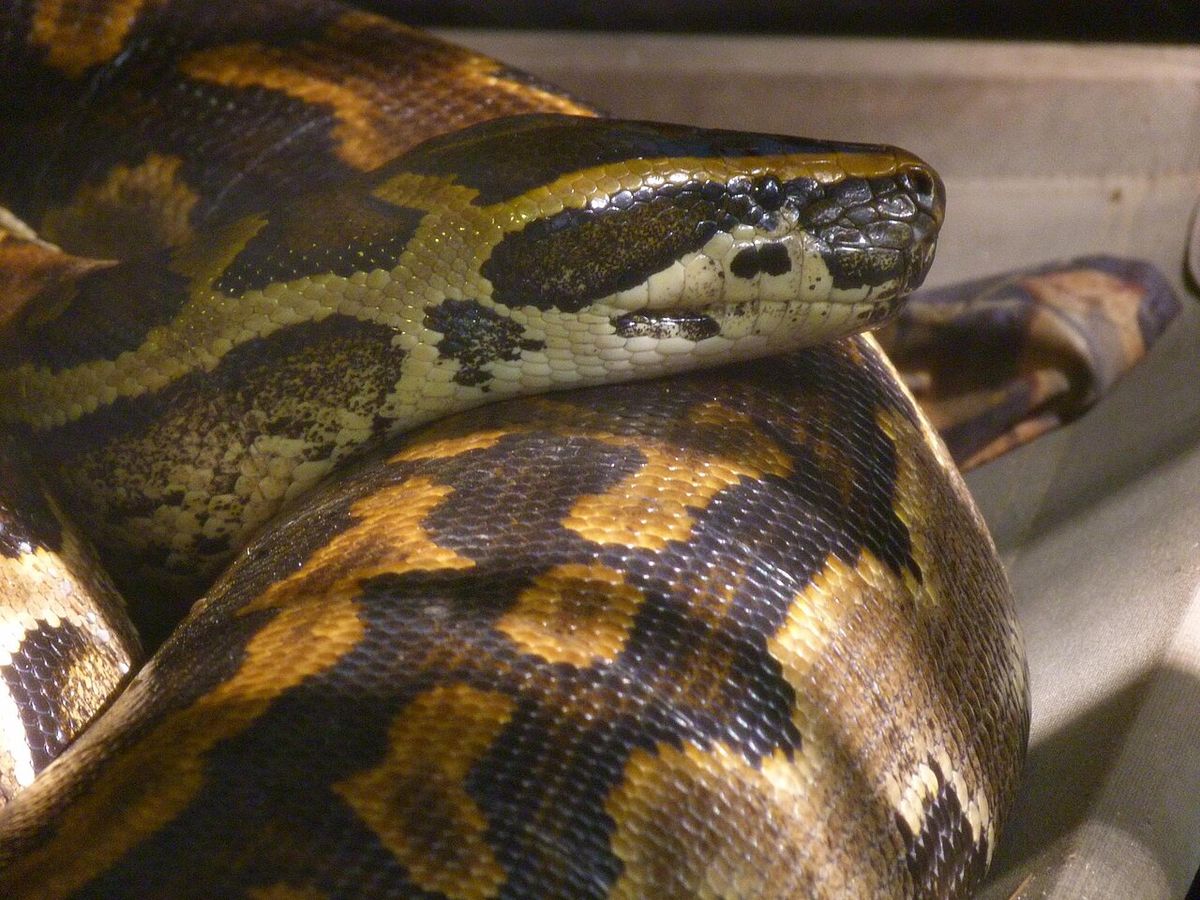
The animal involved was an African rock python, one of the five largest snake species in the world alongside the green anaconda, reticulated python, Burmese python, and amethystine python. Under New Brunswick's Exotic Wildlife Regulation at the time, African rock pythons were a prohibited species, and pythons over 3 metres in length were not permitted. Jean-Claude Savoie's pet store was registered as a reptile zoo, but police indicated he likely did not have the proper permits or authorization to keep such a large, prohibited snake. Savoie was a friend of the boys' family, and the children were frequent playmates who often had sleepovers. On the day before the attack, the boys had spent time at a farm owned by Savoie's father, where they interacted with various animals including horses, llamas, goats, cats, and dogs, a detail some experts later cited as a potential trigger for the snake.
Court testimony during Savoie's 2016 trial revealed the python had a history of escaping its enclosure. A volunteer at the store, Ocean Eagles, testified that the snake had escaped about two and a half weeks before the fatal incident through the same ventilation duct. She stated she placed a cover over the duct but warned Savoie it needed to be screwed on securely. Eagles, who often cared for and fed the snake rabbits, described it as 'dangerous' and stated, 'I knew what the snake was capable of. It can overtake any man.' However, under cross-examination, she said the snake appeared about 2 inches larger in diameter than the duct and she never thought it could physically fit through it. This prior escape attempt was a key element in the subsequent criminal negligence case against Savoie, as it demonstrated a known risk that was not adequately mitigated.
Expert Reaction, Controversy, and Investigative Theories
The attack baffled many reptile experts due to its unusual and violent nature. While African rock pythons are capable of killing humans, such events are extremely rare. Experts expressed skepticism about a single snake killing two children in one incident without consuming them and without waking other occupants of the apartment. Lee Parker, facilities manager at Reptilia zoo in Ontario, stated the behaviour was inconsistent with the species, noting, 'They don't go on killing sprees. It doesn't make sense to me.' Jeff Reynolds, manager at the Reptile Store in Hamilton, echoed the sentiment, calling the event 'very bizarre.' The RCMP, however, definitively ruled out the possibility of homicide, confirming the deaths resulted from an animal attack after a thorough investigation.
Other herpetologists offered theories to explain the event's mechanics. Jim Harrison of the Kentucky Reptile Zoo and Professor Neil Ford of the University of Texas stated it was theoretically possible for a large python to constrict around two small children simultaneously. Harrison also suggested that since the boys had handled farm animals earlier that day, they may have smelled like food to the snake, potentially triggering a predatory response. Court testimony from RCMP Constable Eric Maillet described the python's aggressive behaviour after being recaptured, noting it hissed, made 'growling noises,' lunged, and hit its enclosure window, seemingly trying to get back to the vent opening and the living room. Maillet expressed surprise at the snake's speed and its ability to stand almost upright, stating, 'I didn't expect such a large reptile to be able to do that.' The combination of expert theories and police observations helped build a plausible, though tragic, sequence of events.
- Lee Parker (Reptilia): Expressed skepticism, stating pythons do not go on 'killing sprees.'
- Jim Harrison (Kentucky Reptile Zoo): Supported the theory of simultaneous constriction and suggested smell from farm animals as a trigger.
- Neil Ford (University of Texas): Supported the theory of a large python constricting two children at once.
- Jeff Reynolds (The Reptile Store, Hamilton): Found the attack 'very bizarre,' noting the species is not overly aggressive.
- RCMP Constable Eric Maillet: Reported the snake's aggressive post-attack behaviour and surprising physical capabilities.
The snake was a prohibited species in New Brunswick, where pythons over three metres are not allowed. A volunteer testified the python had escaped its enclosure through a ventilation duct weeks before the fatal incident. Several reptile experts expressed public skepticism, stating such behaviour was extremely unusual for this type of snake. These factors, along with the violent details of the attack, fuelled intense public debate and media scrutiny about exotic pet safety and regulation across Canada for years.
Legal Proceedings and Trial
The criminal trial of Jean-Claude Savoie began in Campbellton. The prosecution argued he was criminally negligent in failing to secure the dangerous animal, especially given its prior escape through the ventilation system. The defence highlighted the unexpected nature of the attack, with the store volunteer testifying she never believed the snake could fit through the duct given its size. Emotional testimony was heard from the boys' mother, Mandy Trecartin, who stated she dropped her sons off for the sleepover certain they were safe, saying, 'I felt they would be as safe with him as they would be with me.' She described learning of their deaths the next morning when Savoie pounded on her door saying, 'Oh my God, your two kids are dead.' Her boyfriend went to the apartment and returned to confirm the horrific news.
The attack occurred on August 5, 2013, in Campbellton, New Brunswick. The python's owner, Jean-Claude Savoie, was arrested on February 5, 2015. He was formally charged with criminal negligence on March 31, 2015. A jury trial was held, and in November 2016, Savoie was found not guilty of criminal negligence causing death.
- August 5, 2013: The python attack occurs, killing Noah and Connor Barthe.
- February 5, 2015: Savoie is arrested in Montreal by the RCMP.
- March 31, 2015: Savoie is formally charged with criminal negligence causing death.
- November 2016: The jury trial takes place in Campbellton, featuring testimony from experts, police, and family.
- November 2016: The jury finds Jean-Claude Savoie not guilty of criminal negligence causing death.
Following the not-guilty verdict in November 2016, the criminal case was formally closed. The tragedy continued to resonate in political and regulatory circles. In April 2014, a Member of the Legislative Assembly expressed frustration that a review of New Brunswick's Fish and Wildlife Act was delayed until the RCMP investigation was complete. The outcome left many questions unanswered about accountability and prevention regarding prohibited exotic animals.
Regulatory Context and National Safety Concerns
The attack highlighted the patchwork and often inconsistent regulations governing exotic pets across Canada. Laws vary significantly between provinces and individual municipalities. Steven Benteau, a spokesman for New Brunswick's Department of Natural Resources, confirmed after the attack that African rock pythons were not permitted under the province's Exotic Wildlife Regulation. Experts used the tragedy to warn against keeping large constrictor snakes as pets, citing their strength, the difficulty of providing truly secure enclosures, and the potential threat they pose, particularly to children. Lee Parker advised that a large python over three metres long can quickly surprise its handler and cause unconsciousness by squeezing the head or neck, cutting off air and blood flow, a risk that is even greater for children.
The incident also raised concerns about the ecological threat of released or escaped exotic pets becoming invasive species, a noted problem with pythons in the Florida Everglades where the African rock python has established itself. Parker and other professionals urged potential owners to thoroughly research an animal's adult size, strength, and care requirements, and cautioned against buying snakes for trivial reasons. He recounted turning away customers, including parents who just wanted 'to buy a snake to shut their kid up,' emphasizing the long-term responsibility. The main safety recommendations from experts following the attack included several critical points for anyone considering or already owning a large constrictor.
- Never feed or handle a large python alone, as a second person is needed for safety.
- Children should never be left alone with a large constrictor snake under any circumstances.
- Proper, escape-proof enclosures are crucial, as snakes are strong and can exploit small openings.
- Research the animal's full adult size, strength, and care needs before acquisition.
- Be aware of and comply with municipal and provincial regulations, which can differ greatly.
- Understand that a simple plastic container or box is not sufficient for housing a powerful snake.
The event served as a stark reminder of the dangers posed by powerful exotic animals kept in private homes. It highlighted the need for coherent and enforceable safety standards. Reptile store managers like Lee Parker advised against keeping large snakes as pets due to potential threats. Parker stated he would turn away unprepared customers, such as parents buying a snake just to quiet a child, and emphasized the importance of understanding an animal's capabilities.
Historical Context of Fatal Python Attacks
Fatal attacks on humans by large constrictor snakes, while rare, have occurred in various parts of the world prior to the New Brunswick incident. These cases provide context for understanding the potential danger of such animals. The African rock python specifically has been involved in a handful of deadly encounters. In 1999, a three-year-old boy was strangled by an African rock python in Centralia, Illinois, after it escaped its enclosure. In 2002, a ten-year-old boy was reportedly killed and swallowed by an African rock python in Durban, South Africa. In Canada, a closely related species was involved in a fatal incident in 1992, when a Burmese python reportedly strangled a 28-year-old man in Brampton, Ontario. These events show that fatal constrictions, though statistically uncommon, are a documented risk associated with large captive pythons.
There were documented fatal python attacks on humans before 2013. In 2002, an African rock python reportedly killed and swallowed a ten-year-old boy in South Africa. In 1999, an African rock python reportedly strangled a three-year-old boy in Centralia, Illinois, United States. In a 1992 Canadian incident, a closely related Burmese python reportedly strangled a 28-year-old man in Brampton. These attacks, while rare, provide a comparative frame of reference for the Campbellton tragedy.
| Year | Location | Victim | Snake Species | Notes |
|---|---|---|---|---|
| 1992 | Brampton, Ontario, Canada | 28-year-old man | Burmese python | Reportedly strangled |
| 1999 | Centralia, Illinois, USA | 3-year-old boy | African rock python | Snake escaped its enclosure |
| 2002 | Durban, South Africa | 10-year-old boy | African rock python | Reportedly killed and swallowed |
These prior incidents demonstrate that attacks by large captive pythons, while statistically uncommon, can and do happen. They contribute to the ongoing debate about the private ownership of powerful exotic animals. The expert reaction to the 2013 New Brunswick tragedy was informed by these rare but documented cases. The New Brunswick case is unique because it involved two victims simultaneously and the snake escaped through a building's ventilation system.
Political Response and Calls for Legislative Review
The tragedy sparked immediate calls for a review of New Brunswick's wildlife legislation from both the public and elected officials. Member of the Legislative Assembly Donald Arseneault expressed frustration in April 2014 that the provincial government would not review the Fish and Wildlife Act until the RCMP's criminal investigation was fully completed. He argued for prompt action to prevent future incidents and address regulatory gaps. The Minister of Natural Resources at the time, Paul Robichaud, defended the delay, stating that the findings from the completed RCMP investigation would help inform a thorough and effective review of the current law. This bureaucratic pause meant that immediate regulatory changes were not implemented in the direct wake of the boys' deaths, a point of contention for critics.
The incident amplified a national conversation about the need for more uniform and stringent exotic pet laws across Canada. The patchwork of regulations, where rules change from one community to the next, was criticized as inadequate for managing the risks associated with large, dangerous animals. For example, Guelph, Ontario, allowed non-venomous snakes up to three metres long, while nearby Richmond Hill prohibited any pythons or boa constrictors entirely. The New Brunswick case, with its clear violation of existing provincial prohibitions, became a focal point for advocates of stronger enforcement and clearer, more consistent laws nationwide regarding the ownership of exotic wildlife. The debate continues regarding whether ownership should be banned or more strictly licensed and monitored.
Questions about 2013 New Brunswick python attack
What happened in the 2013 New Brunswick python attack?
On August 5, 2013, two young brothers, Noah Barthe (4) and Connor Barthe (6), were killed by an African rock python while sleeping in an apartment above the Reptile Ocean pet store in Campbellton, New Brunswick. The snake, approximately 4.3 metres long, escaped its enclosure via a ventilation duct, fell through the ceiling, and strangled the boys. The cause of death was ruled asphyxiation by neck strangulation, and the snake also inflicted multiple bite wounds. The python did not consume the boys after killing them.
Who owned the python and what were the legal consequences?
The python was owned by Jean-Claude Savoie, who operated the Reptile Ocean pet store below the apartment. He was charged with criminal negligence causing death. After a trial in November 2016, a jury found him not guilty. Testimony revealed the snake had escaped once before through the same ventilation system weeks prior to the fatal incident, and Savoie had been warned the duct cover needed to be screwed on securely. The defence successfully argued the attack was an unforeseeable tragedy.
Why was the attack considered unusual by experts?
Reptile experts found the attack unusual for several reasons. African rock pythons rarely kill humans, and it is extremely uncommon for one snake to kill two people in a single event. The snake did not consume the boys after strangling them, which is atypical predator behaviour. The fact that other adults in the apartment were reportedly not awakened by the disturbance also prompted questions. Experts like Lee Parker stated pythons do not go on 'killing sprees', making the incident seem baffling. However, the RCMP definitively ruled out foul play, confirming it was an animal attack.
Was it legal to own such a python in New Brunswick?
No, it was not legal. At the time, New Brunswick's Exotic Wildlife Regulation prohibited African rock pythons entirely and banned pythons over 3 metres in length. Authorities stated Savoie's store was registered as a reptile zoo but he likely did not have the proper permits or authorization to keep the 4.3-metre prohibited snake under his care. The province's laws were clear on the prohibition, making the snake's presence a violation.
What happened to the snake and other animals after the attack?
The African rock python was euthanized by authorities following the incident. In total, 23 reptiles were seized from the premises. Four American alligators that were also kept at the location were euthanized as part of the response. The remaining seized animals were presumably placed under the care of other authorities or facilities. The euthanasia decisions were made due to the dangerous nature of the animals and the circumstances of the case.
Did the tragedy lead to changes in exotic pet laws?
The attack prompted immediate calls for a review of New Brunswick's Fish and Wildlife Act. However, a provincial review was delayed until the RCMP's criminal investigation was complete, a decision defended by the Minister of Natural Resources. The incident fuelled a national conversation about the inconsistent and often insufficient regulations governing the ownership of large, dangerous exotic pets across Canada, though immediate legislative change in New Brunswick was not swift. The case remains a reference point in debates over exotic animal ownership.
Sources and further reading
- 2013 New Brunswick python attack (Wikipedia)
- Python killing of 2 New Brunswick boys baffles experts (cbc.ca)
- Mother of N.B. boys killed by python: 'I thought they would ... (globalnews.ca)
Checked by the Your Space Hamilton desk. Last updated 2026-10-30.