Canadian home prices rose for first time in over a year, BIS data shows
Prices climbed 0.78% in the second quarter but are down nearly 20% from the record high, according to international banking data.
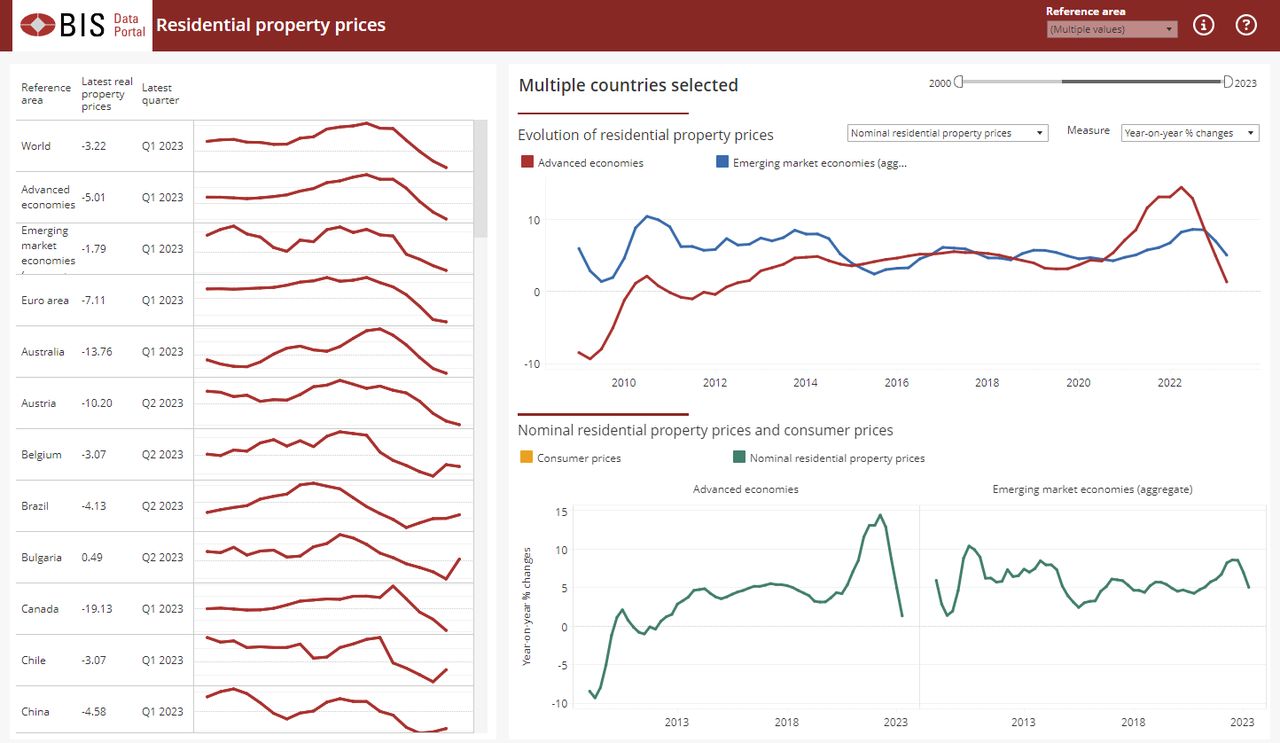
Canadian home prices rose for the first time in over a year in the second quarter, according to data from the Bank for International Settlements.
Prices climbed 0.78 percent in the quarter, but remain 3.97 percent lower than a year earlier and 19.50 percent below the record high.
A quarter of growth may be a positive sign, but it doesn't change that prices have tumbled all the way back to 2021 levels in nominal terms.
READ MORE: Mississauga home prices rose in September but remain below last year
READ MORE: Canada's home prices more than doubled since 2005, outpacing all peer nations
After adjusting for inflation, however, prices fell 0.87 percent in the second quarter, marking a fifth consecutive quarterly decline.
Real prices are 6.72 percent lower than a year earlier and have plunged 29.93 percent from the peak when adjusted for purchasing power.
That puts them roughly where they were in 2016 in real terms, marking the largest inflation-adjusted peak-to-trough drop in over half a century.
It's a tough pill to swallow. Few would consider the market as affordable as it was in 2016.
Sales remain slow, with few people scrambling to buy at nearly a decade's low for real home prices.
Part of the explanation lies in the difference between purchasing power and affordability.
A recent Bank of Canada paper found the bottom 60 percent of households by disposable income did not see their income rise enough to offset the surge in living expenses.
The researcher found that the headline improvement concealed mounting budget pressure across much of the income distribution.
The problem is amplified among younger households, with RBC recently warning that parents are helping their adult children buy groceries.
If the group that's supposed to be buying a starter home still needs help with groceries into their late 30s, they're probably not in the market for a home.
Policy has also leaned on expanding borrowing capacity to address affordability.
Since the early 1980s, the gross debt service ratio ceiling climbed from 32 percent to 39 percent of gross household income, allowing more income to be committed to qualifying housing costs.
The insured mortgage price cap also rose 50 percent to $1.5 million, a change pitched as helping first-time buyers.
Yet buying near that ceiling with a minimum down payment and a 30-year amortization requires roughly $300,000 in annual household income at current fixed rates.
Expanding access to larger mortgages that require some of the highest incomes in the country does little to help buyers still struggling with grocery bills.
Even if real home prices are back to where they were almost a decade ago, and inflation is low and stable.
With files from Better Dwelling