Wildfire smoke cools lakes across North America, scientists find
Researchers have found smoke from increasingly intense wildfires can drift hundreds of miles and lower lake temperatures.
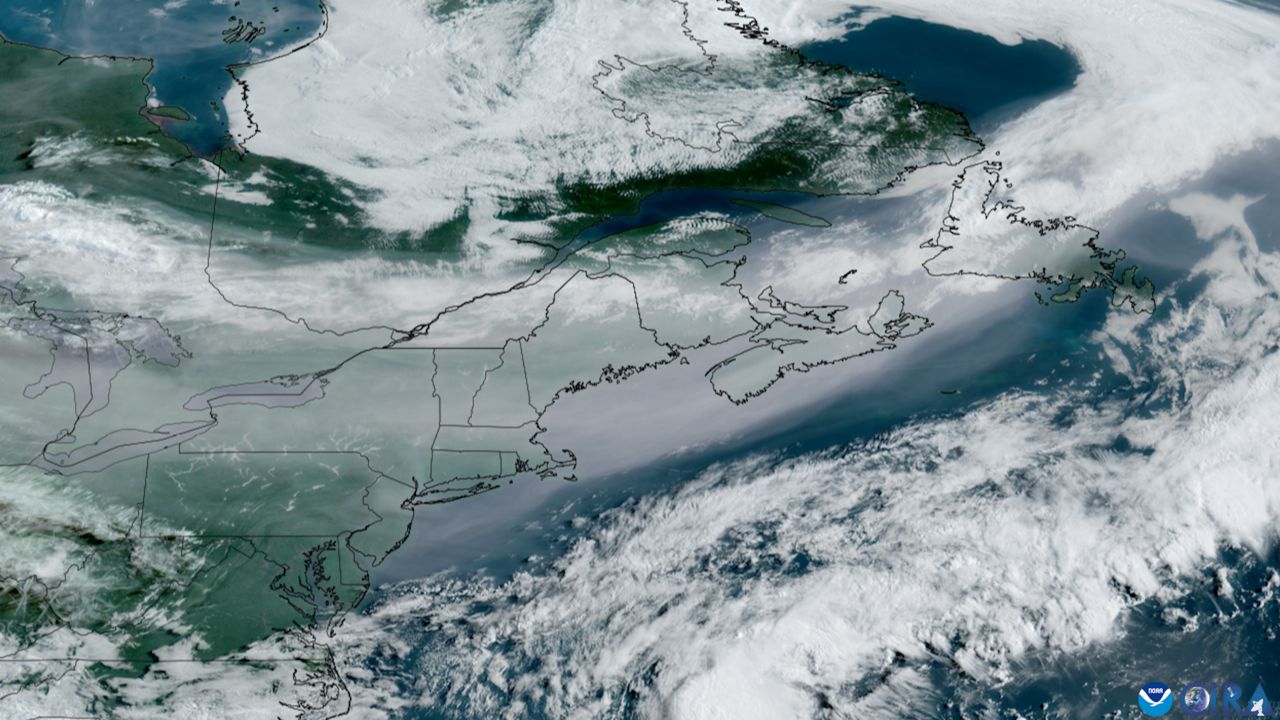
Wildfire smoke drifting across the continent is lowering the temperature of lakes and altering their ecosystems, new research shows. Aquatic scientists say the phenomenon is widespread as fire seasons grow longer and more intense. Canada, home to two million lakes, has endured three of its worst wildfire seasons on record, burning millions of hectares of forest. The research is critical for understanding how these vast freshwater systems are being transformed.
"We found a pretty shocking response ... that almost all lakes in North America experience some number of smoke exposure days," said Steven Sadro, an associate professor at the University of California, Davis. He added that many lakes experience a full month or more of smoke over the course of a year. Sadro co-authored the research with Mary Jade (MJ) Farruggia, a postdoctoral researcher at the University of Colorado Boulder. Farruggia began studying the impact of wildfires on lakes by accident while researching in California in 2020, when fires swept through her study area. "Wildfires are becoming more intense and more frequent, and so it just became a phenomenon that was getting harder and harder to ignore," Farruggia said. "As lake scientists, we started wondering, 'what's the impact of this on the systems that we study?'"
The researchers coined the term "lake-smoke day" as a metric for the number of days a lake is exposed to smoke in a fire season. They found wildfire smoke can drift hundreds of miles from its source. "Smoke in the atmosphere can reduce the amount of sunlight that can reach the lake, and that can impact water temperature," said Terri-Lee Reid, a freshwater conservation researcher at the Canadian Wildlife Federation. "It can impact the growth of algae and aquatic plants, and then that can have further consequences."
READ MORE: Study finds climate change coverage surged in 2023 wildfire reporting
READ MORE: Los Angeles wildfires show growing health threat of wildfire smoke
The science suggests smoke blocks sunlight, lowering lake temperatures and reducing photosynthesis and respiration in the water. However, the full impact on any given lake depends on a host of variables. "The number of wildfires, their intensity, their location, the health of the ecosystem before the fire and even how much rain falls following a fire" all play a role, Reid said. A lake's depth, clarity, size and nutrient levels also influence its response.
"The jury is really out on the magnitude of the impact. I'm not trying to say that millions of lakes in North America are having very large impacts from wildfire smoke. Some of them certainly may be," Sadro said. "We don't know what those numbers are yet." Scott Higgins, a senior research scientist with the International Institute for Sustainable Development Experimental Lakes Area in Kenora, Ont., said the science is still in its infancy. "It's tough to do experiments on actual wildfires," Higgins said, noting it is often difficult for researchers to access areas quickly after a fire or to have pre-fire data for comparison.
His team, based in a lake-intensive part of the boreal forest northwest of Thunder Bay, plans to use long-term data from their site to build a better understanding. "When the boreal forest burns, undoubtedly lakes are directly impacted," Higgins said. Direct impacts for lakes near fires include increased flood risk as stabilizing plants burn, and ash depositing contaminants and excess nutrients into the water. Amy Cardinal Christianson, director of fire stewardship for the Indigenous Leadership Initiative, says Indigenous Knowledge has long recognized the interconnection between fire, water and land. She pointed to historical examples on the west coast where Indigenous communities used cultural burns to create a layer of smoke over waterways to cool them for salmon spawning. "People often think of a lake as its own ecosystem, which it is, but it's really tied into everything that's around it," Cardinal Christianson said. "When the land's not healthy, the lakes aren't healthy either."
Farruggia is part of a working group of 30 American and Canadian scientists looking for more answers. As fire seasons intensify, researchers say understanding these widespread impacts is urgent. "If it's affecting your own health, how is it also affecting your ecosystems and the nature around you and the systems that you rely on?" Farruggia asked. "Is your favourite lake going to be similarly impacted by smoke?"
With files from Kenora Miner & News