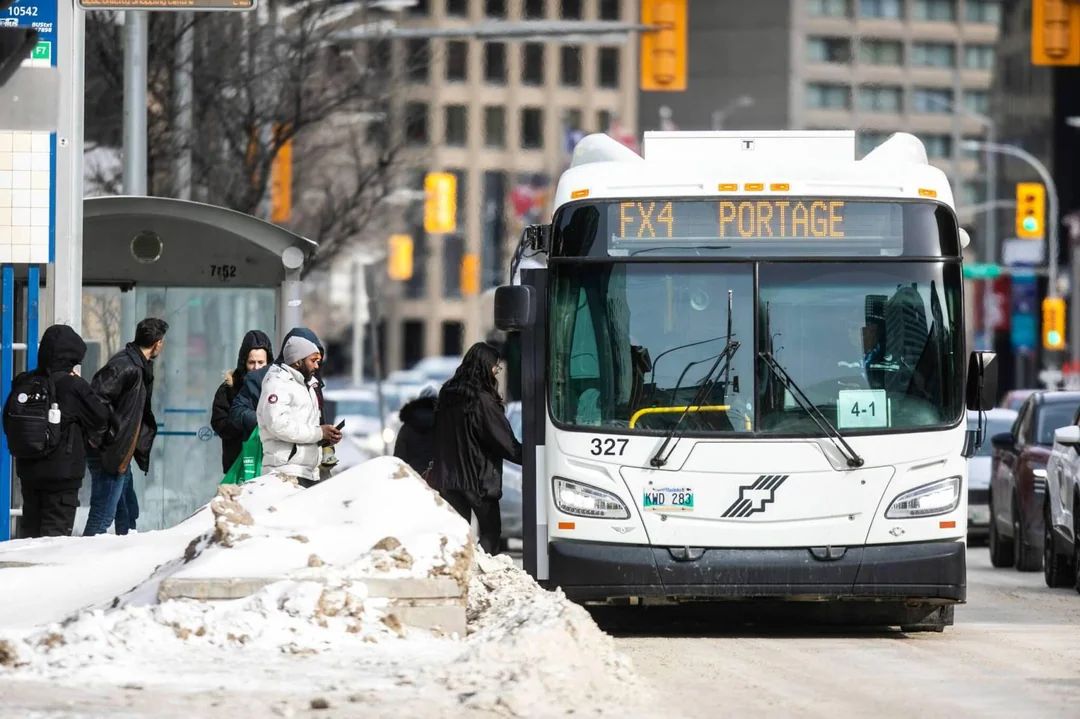
Winnipeg launches transportation survey amid criticism over focus on cars
The city is surveying residents about their transportation needs, but critics say it prioritizes drivers over transit and active transportation.
WINNIPEG — Winnipeg has launched a survey to determine if residents' transportation needs are being met, drawing criticism from some who say it focuses too much on cars.
The survey was announced the same week as a mayoral debate on public transit, which Mayor Scott Gillingham did not attend.
"Their interest appears to be focused on things such as congested intersections and whether or not the Chief Peguis extension should take precedence over the replacement of the Arlington Bridge," wrote Winnipeg writer Erna Buffie in a recent opinion piece.
READ MORE: Fort St. John approves free transit for 2026 provincial election day
READ MORE: Winnipeg mayoral candidates propose policing, housing plans ahead of vote
Buffie argued the survey should instead assess the city's success in getting people out of cars and onto buses, bikes or walking, to help meet goals in the city's Transit Master Plan and Pedestrian and Cycling Strategy.
She said the survey will quiz Winnipeggers on how many cars they have, what routes they drive and what complaints they have about rush-hour traffic jams caused by thousands of cars that are mostly empty, save for the person in the drivers' seat.
This comes as unlawful incidents on buses and at transit stops have increased by 280 per cent compared to levels recorded around 2016.
The recent mayoral debate, organized by the bus drivers' union, focused primarily on safety rather than the efficiency of the system.
Buffie expressed frustration that the city council is moving ahead with projects like the widening of Kenaston Boulevard and the Chief Peguis Trail extension despite the evidence and significant public opposition.
She also criticized the rollout of a new, more flexible bus system that she said was done too quickly, without a sufficient number of buses and drivers to ensure efficiency or the designated bus lanes needed to guarantee a speedy ride.
The city has also failed to restore the 50-50 cost share deal with the province that would help put more buses on the road, then denigrates a citizens' coalition that is actually trying to help them improve the system by doing some evidence-based research.
A local Transportation and Land Use Coalition has teams of people riding public transit to assess what works, what doesn't and how it can be improved.
Buffie questioned whether city council will engage with that coalition, or even better, consider collaborating with it, to accrue the evidence needed to improve public transit and active transportation.
She also highlighted concerns of cyclists, who in some areas contend with a haphazard network of bike paths squeezed onto the furthest edges of three- to five-lane roads designed for automobiles going 50 to 60 km/h.
"Bike paths which sometimes abruptly end only to reappear half a block down (in my neck of the woods, anyway) because, heaven forbid the city actually takes up more road space for bikes and pedestrians and a little less for traffic," Buffie wrote.
With files from Winnipeg Free Press