Space sector sees Arctic leadership opportunity, urges faster procurement
The industry group's members want more authority for program managers and a national conversation about space investment.
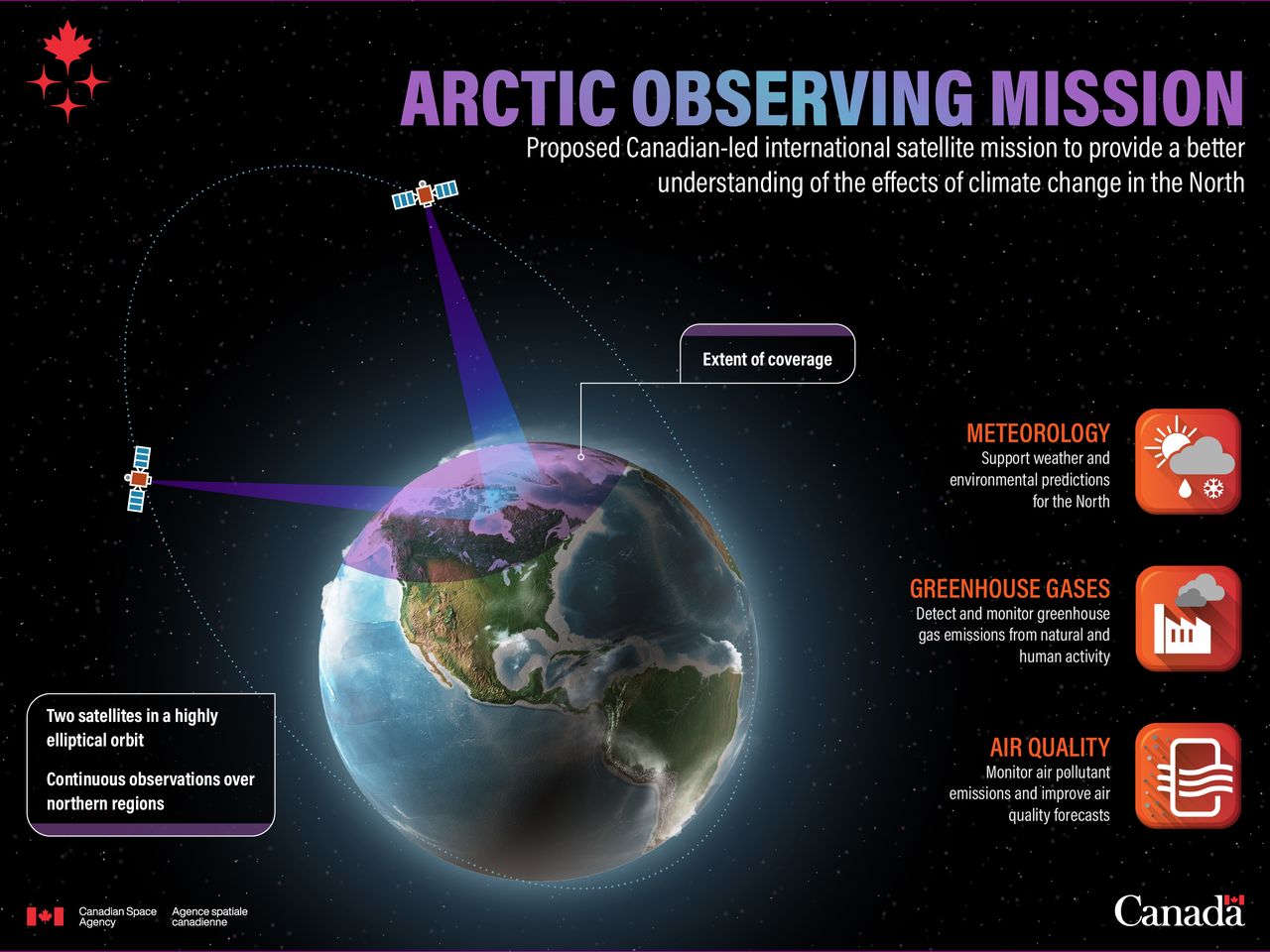
GATINEAU · Canada's space industry sees a major opportunity to lead in building space-based infrastructure for the Arctic as defence spending rises, but members are calling on the federal government to speed up its procurement process and give more authority to program managers. Former NASA chief economist Alex MacDonald delivered that message on behalf of industry group Space Canada at its SpaceBound conference in Gatineau, Que., on Tuesday. MacDonald met with about 40 Space Canada members a day earlier and shared their key discussion points, which also included a desire for greater engagement with provinces and universities. "There is a legitimate opportunity for Canada to lead the world in space-based Arctic northern infrastructure," MacDonald said, describing defence as the members' top discussion point. To better seize that opportunity, he said members are calling for "empowering program managers and delegating down authority." MacDonald spoke as defence spending climbs, the federal budget approaches and Canada works to diversify its trading relationships.
MacDonald outlined long-standing challenges identified by companies. They want a consistent demand signal from government to help build out programs, and they say procurement should move faster. There is also concern that the government remains somewhat risk-averse toward new technology, which in some cases leads to "micromanagement." A "stepwise approach to funding" extending beyond early-stage programs would help, he added.
He urged a broader national conversation about space. "There was an understanding amongst the membership that there needs to be a nationwide effort to help Canadians understand why we're investing so much in space, why this is critical to our economy and to our national defence, and also why it's going to increase the well-being of patients," MacDonald said. MacDonald praised the "integrated knowledge" coming from university members within Space Canada, adding that representatives from that sector would like to see more of their expertise used alongside government departments such as Innovation, Science and Economic Development Canada, the Department of National Defence and the Canadian Space Agency. Members also want to engage provinces and territories more. MacDonald said Nova Scotia and Newfoundland and Labrador are obvious priorities because of their spaceports. He noted that U.S. states such as Texas "regularly give out over $100 million of state level grants to companies," with the Texas Space Commission committing its first $150 million US grant fund across 24 projects since 2025.
MacDonald highlighted the strength of Canada's satellite sector, with dozens of Canadian satellites launching since last year's SpaceBound conference. "I think we really don't necessarily appreciate how developed the Canadian satellite ecosystem is compared to other countries around the world," he said. On Tuesday, the federal government announced $15 million for a new Montreal hub for Xona Space Systems, a California company developing a sovereign positioning, navigation and timing system. He said Canada's partnership with the United States remains "really critical" on projects including defence and the International Space Station, where Canadian Space Agency astronaut Josh Kutryk arrived Oct. 1 for a half-year mission. MacDonald acknowledged tensions between the two countries but said work can continue on a "transactional" basis because each has capabilities to offer the other. He also lauded Canada's partnership with the European Space Agency and suggested Canada consider the "very capable space communities" in India and Japan for other opportunities.
With files from SpaceQ