Key moments from Quebec's first 2026 election debate reveal clashes over economy, sovereignty
Quebec's five major party leaders faced off in a televised debate marked by attacks on the CAQ's record, divisions over childcare funding, and renewed sovereignty discussions. The two-hour event showcased policy differences and surprising alignments between traditional rivals.
The 2026 Quebec provincial election campaign entered a critical phase as the leaders of the province's five main political parties gathered for their first televised debate on Tuesday, September 15. Broadcast on TVA and moderated by Paul Larocque, the Face-à-Face event brought together Coalition Avenir Québec leader Christine Fréchette, Parti Québécois leader Paul St-Pierre Plamondon, Conservative Party leader Éric Duhaime, Liberal leader Charles Milliard and Québec Solidaire co-spokesperson Ruba Ghazal for a two-hour exchange that revealed both sharp divisions and unexpected areas of agreement.
Incumbent CAQ faces sustained attacks
As the leader of the governing party, Christine Fréchette found herself defending the CAQ's eight-year record under former premier François Legault while also justifying her own five-month tenure at the helm. The debate revealed particular vulnerability around economic management, with opposition leaders seizing on several high-profile projects that have faced criticism. Parti Québécois leader Paul St-Pierre Plamondon launched one of the most direct attacks, accusing the CAQ government of what he called "shameless waste" of public funds that could have helped Quebecers struggling with rising costs. Fréchette's dismissive response that her opponent "doesn't understand how government works" suggested a defensive posture that may signal challenges ahead for the incumbent party.
Liberal leader Charles Milliard provided a detailed critique of specific CAQ initiatives, including investments in the battery sector and Swedish company Northvolt, the Nemaska lithium battery plant in Bécancour, and a controversial health IT project reportedly nearing $1 billion in costs. These examples formed part of a broader opposition narrative painting the CAQ as poor managers of public resources. Fréchette's counterattack referencing Liberal-era cannabis industry development in Bécancour highlighted how both major parties now carry governance records that opponents can exploit.
Childcare policy emerges as key battleground
The debate's most heated exchange occurred during discussions of economic policy and cost of living challenges. Fréchette launched a forceful critique of Conservative proposals to reduce government spending, framing them as radical measures that would dismantle key social programs. Her characterization of Conservative policies as "literally a dismantling of the state" and her play on the party's slogan ("It's not really daring, it's really destroying") represented one of the night's most memorable rhetorical moments.
The discussion took on deeper significance when focusing on childcare policy, where Fréchette connected Conservative opposition to expanding subsidized daycare spaces to broader questions about women's economic participation. Her argument that $7/day daycare enabled 70,000 Quebec women to enter the workforce framed the issue as one of gender equity as much as economic policy. The CAQ leader's personal anecdote about lacking access to affordable childcare as a young mother added emotional weight to her position. Conservative leader Éric Duhaime's response emphasizing direct financial support to parents rather than institutional solutions highlighted a fundamental philosophical divide that will likely continue resonating throughout the campaign.
Surprising alignment between PQ and Liberals
One of the debate's most noteworthy developments came in several moments of unexpected agreement between Parti Québécois leader Paul St-Pierre Plamondon and Liberal leader Charles Milliard. On issues ranging from rent control in private seniors' residences to health prevention strategies, the two leaders demonstrated convergence that broke from traditional partisan patterns. Their shared emphasis on physical activity promotion as a health strategy was particularly striking given that both parties had released similar policy proposals just days before the debate.
This alignment extended to discussions of federal-provincial relations, where St-Pierre Plamondon surprised observers by expressing willingness to collaborate with Ottawa under certain conditions. His assertion that cooperation would occur "when it respects Quebec's interests" and his specific mention of working with federal Finance Minister Mark Carney suggested a pragmatic approach that differs from more confrontational sovereigntist postures of the past. Milliard's quick interjection ("That's new") and the ensuing exchange revealed both the novelty of this position and how it might reshape traditional political alliances in the province.
Sovereignty debate persists despite voter fatigue
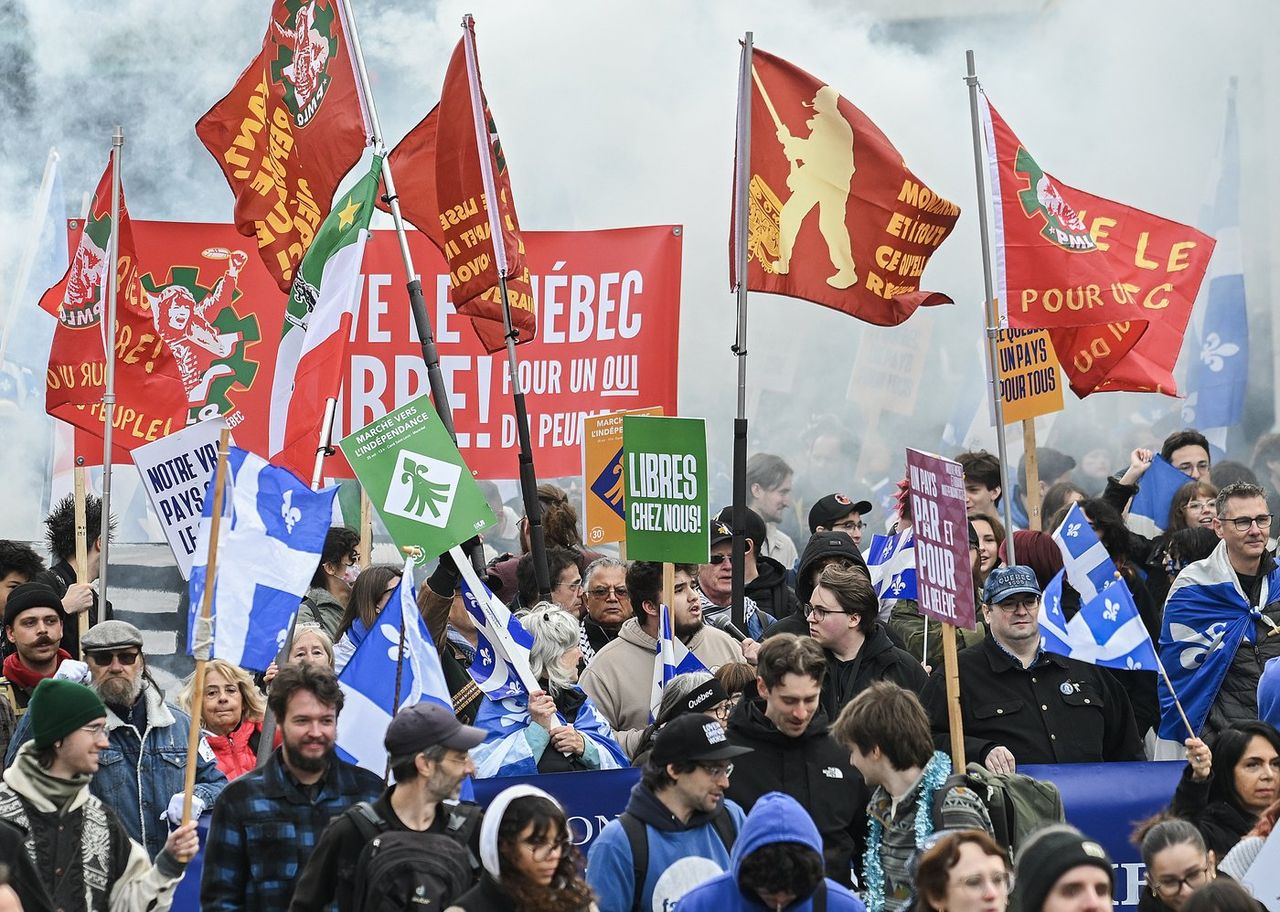
The debate's final segment turned to Quebec's political future, inevitably reviving discussions about sovereignty that have shaped provincial politics for decades. While Québec Solidaire and the Parti Québécois maintained their traditional pro-independence positions, the exchange revealed how constitutional questions continue to complicate party positioning. Liberal leader Milliard's pointed questioning of Fréchette about her 1995 referendum vote (she supported sovereignty but avoided clarifying her current stance) demonstrated how past constitutional positions remain politically potent decades later.
Conservative leader Éric Duhaime provided the clearest rejection of renewed sovereignty discussions, using vivid transportation metaphors to argue Quebecers have moved on from the debate. His comment about not wanting "the buses leaving the garage" suggested a strategic calculation that constitutional fatigue could work to his party's advantage, particularly among voters who prioritize economic concerns over identity politics.
New leaders handle debut debate
The event marked the first electoral debate for three of the participants, Fréchette, Ghazal and Milliard, creating additional pressure as they introduced themselves to voters in this high-stakes format. While all three newcomers avoided major missteps, Fréchette faced particular challenges as the incumbent defending a mixed governance record. Her performance suggested a leader still adjusting to the spotlight after inheriting the CAQ leadership from the more experienced François Legault.
Ruba Ghazal's presence as Québec Solidaire's co-spokesperson represented another significant debut, marking the first time the left-wing party has been represented in a leaders' debate by someone other than its longtime figurehead Gabriel Nadeau-Dubois. Her ability to hold her own against more experienced opponents while advancing the party's signature issues will be crucial as Québec Solidaire seeks to maintain its position as Quebec's third political force.
Campaign implications and next steps
As the first major confrontation of the campaign, this debate established several dynamics that could shape the remaining weeks before Quebec's October 5 election. The CAQ's struggle to defend its record against united opposition criticism suggests potential vulnerability for a governing party seeking a third consecutive mandate. The childcare funding debate highlighted one of several policy areas where parties offer starkly different visions for Quebec's social and economic future.
The surprising alignment between PQ and Liberal leaders on certain issues could signal shifting political alliances in a province where traditional federalist-sovereigntist divisions have long structured party competition. With two more debates scheduled, including one the following night on Noovo and Crave, and a final encounter on Radio-Canada on September 23, the leaders will have additional opportunities to refine their messages before voters render judgment at the polls.
The debate's overall civil tone and lack of dramatic breakout moments may disappoint those hoping for campaign-altering fireworks, but it provided Quebecers with substantive policy contrasts and early indications of how party leaders perform under pressure. As the campaign progresses, these initial impressions will be tested against further debates, policy announcements, and the unpredictable events that often shape election outcomes.