Hurricane Dorian
Hurricane Dorian was an extremely powerful and catastrophic tropical cyclone that became the most intense Atlantic hurricane on record to strike the Bahamas. It made landfall in September 2019 as a Category 5 storm with maximum sustained winds of 185 mph (295 km/h), causing unprecedented destruction across the Abaco Islands and Grand Bahama. The hurricane's slow movement and prolonged intensity over the islands resulted in the worst natural disaster in Bahamian history, leaving thousands homeless and causing billions in damage. After devastating the Bahamas, Dorian tracked along the southeastern United States before transitioning into a powerful extratropical storm that struck Atlantic Canada, bringing hurricane-force winds to Nova Scotia and Newfoundland.
Meteorological history and intensification
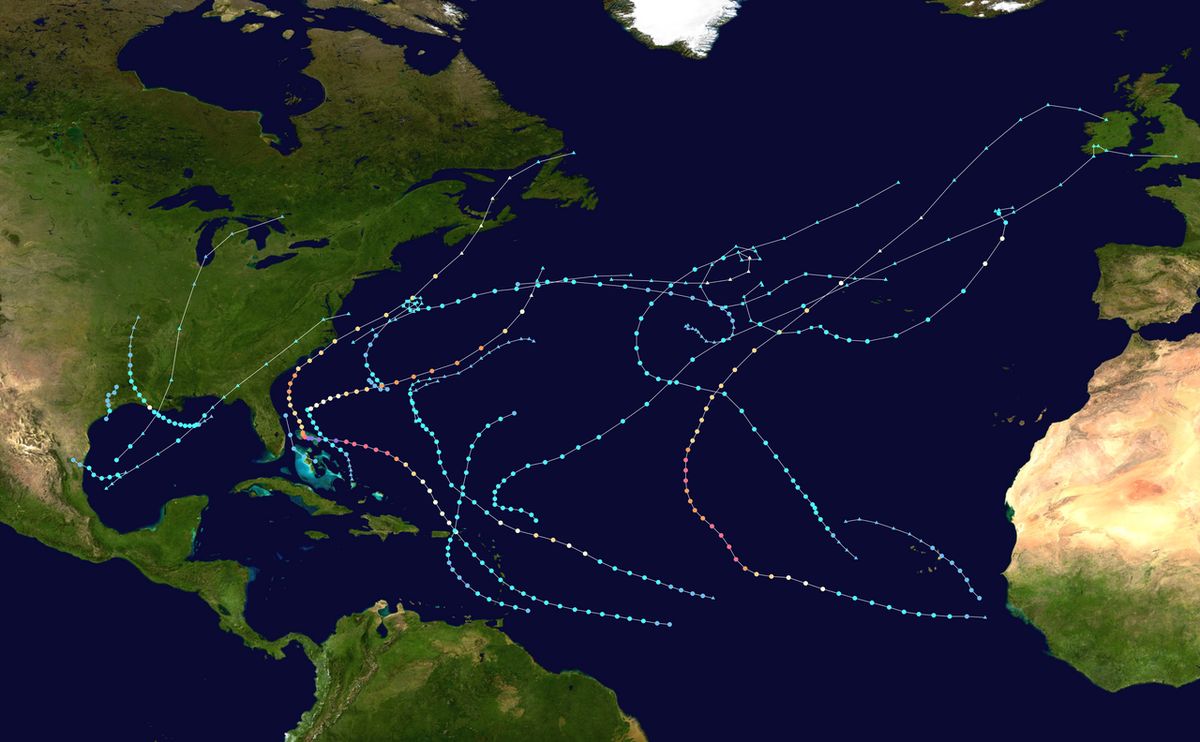
The origins of Hurricane Dorian can be traced to a tropical wave that emerged off the west coast of Africa in mid-August 2019. The system organized into Tropical Depression Five on August 24, located roughly 805 miles east-southeast of Barbados, and it strengthened into Tropical Storm Dorian later that day as it moved westward toward the Lesser Antilles. The storm made landfall in Barbados and Saint Lucia on August 27 as a tropical storm, bringing heavy rain and disruptive winds before taking a more northerly track than initially forecast. Dorian passed east of Puerto Rico, sparing the island the worst of its winds, and then intensified into a Category 1 hurricane on August 28, making landfall on Saint Croix and Saint Thomas in the U.S. Virgin Islands with its compact size limiting broader impacts but marking the beginning of a period of explosive strengthening.
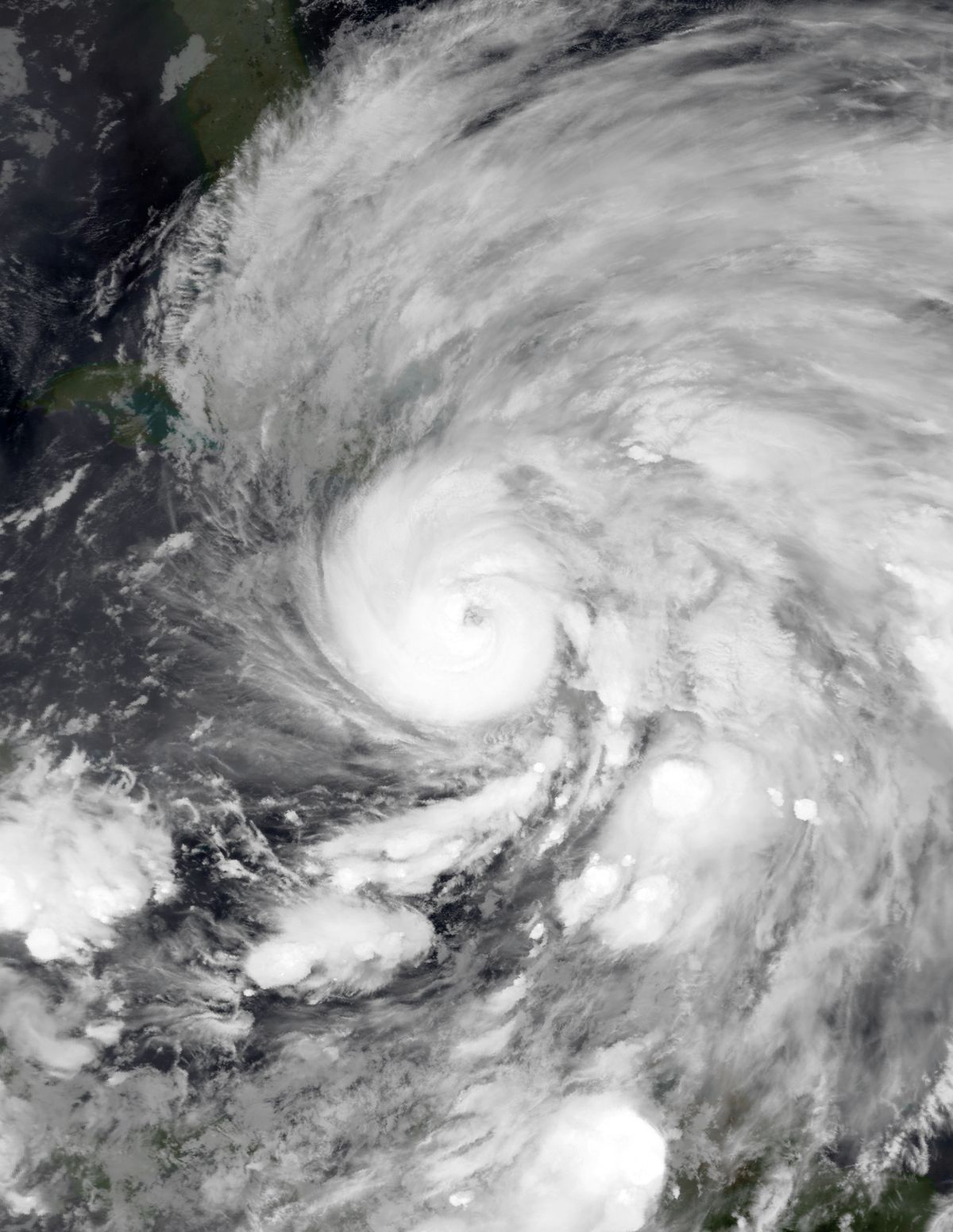
Moving into a highly favourable environment with warm waters and low wind shear, Dorian began a period of rapid intensification on August 29. It became a Category 2 hurricane early on August 30 and reached major hurricane status later that same day, with the intensification trend continuing as it reached Category 4 status on August 31. On September 1, Dorian achieved Category 5 intensity, the highest rating on the Saffir-Simpson scale, and that morning a NOAA aircraft measured a surface wind gust of 203 mph (326 km/h). The National Hurricane Center noted Dorian was the strongest hurricane in modern records to affect the northwestern Bahamas, with one-minute sustained winds of 180 mph (285 km/h) and a minimum pressure of 913 mbar just before its catastrophic landfalls.
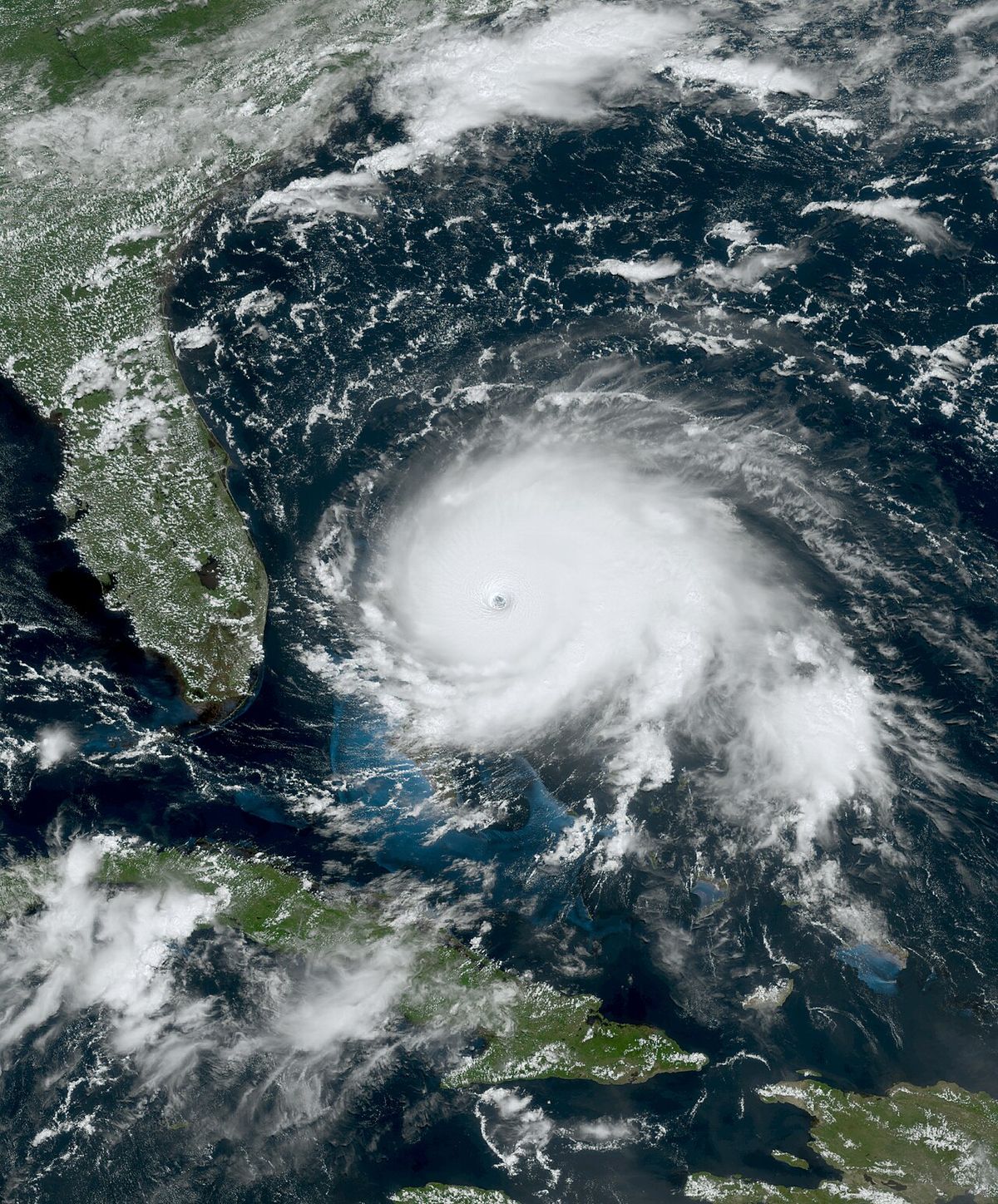
At its peak intensity, Dorian made its first catastrophic landfall on Great Abaco Island in the Bahamas at 16:40 UTC on September 1. It struck with one minute sustained winds of 185 mph, wind gusts over 220 mph, and a central pressure of 910 millibars. Several hours later, at 02:00 UTC on September 2, Dorian made a second landfall on Grand Bahama at a similar intensity. The hurricane stalled just north of Grand Bahama for about a day due to the collapse of steering currents. During this stall, its eyewall pounded the islands with Category 5 winds for about 22 hours. The combination of the stall, an eyewall replacement cycle, and upwelling of cold water caused Dorian to weaken to a Category 4 storm on September 2 and a Category 2 storm by September 3 before it began moving northwestward.
Path through the United States and transition
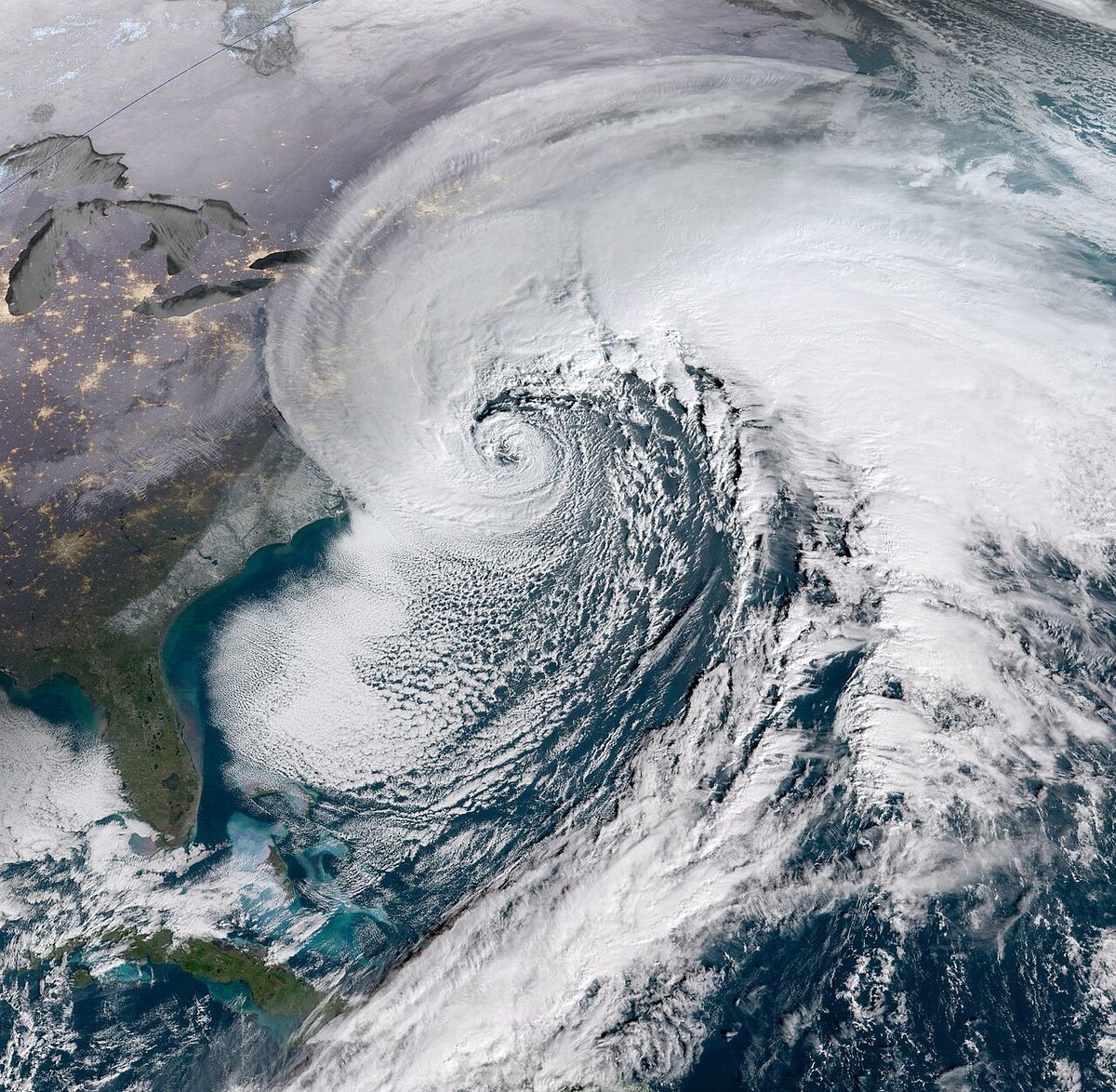
After its prolonged stall, Dorian began moving northwestward on September 3, parallel to the east coast of Florida with an expanding wind field, though its core remained offshore and spared Florida a direct hit. The hurricane moved over the warm Gulf Stream on September 5, which allowed it to complete its eyewall replacement cycle and briefly reintensify into a Category 3 hurricane off the coast of South Carolina before increasing wind shear caused it to weaken again. On September 6, Dorian made its third major landfall at 12:35 UTC on Cape Hatteras, North Carolina, as a Category 2 hurricane with sustained winds of 100 mph and a central pressure of 956 mb, bringing significant storm surge and wind damage to the Outer Banks. The storm then began a rapid transition into an extratropical cyclone, completing this process on September 7 and accelerating northeastward toward Atlantic Canada while maintaining intensity equivalent to a Category 2 hurricane through baroclinic processes. At 7:05 p.m. AST on September 7, the post-tropical cyclone made landfall at Sambro Creek, Nova Scotia, with hurricane-force winds equivalent to a Category 1 storm, and several hours later it made a fourth and final landfall on the northern part of Newfoundland. By the evening of September 8, the storm had moved into the Labrador Sea, 375 miles off the coast, with tropical storm-strength winds, prompting the National Hurricane Center to issue its final advisory as Dorian no longer posed a threat to land.
Impact in the Bahamas
The impact of Hurricane Dorian on the Bahamas was catastrophic and historic due to the combination of peak Category 5 winds, a storm surge estimated to be 18 to 23 feet above normal tide levels, and the storm's near-stationary position for over a day. Most structures in the hardest-hit communities on Great Abaco Island and Grand Bahama were flattened or swept out to sea, and critical infrastructure including airports, hospitals, and water systems was severely damaged or rendered inoperable. The official direct death toll in the Bahamas was 74, with hundreds more injured, and as of August 2020, 245 people were still listed as missing, indicating the true human cost may never be fully known. An estimated 70,000 people were left homeless, requiring massive humanitarian aid, and the financial cost was staggering with damage in the Bahamas alone estimated at $3.4 billion, making it the costliest disaster in the nation's history.
Hurricane Dorian set several notable records for the Bahamas and the Atlantic basin. With sustained winds of 185 mph, it is the strongest hurricane on record to strike the Bahamas. It is tied with the 1935 Labor Day hurricane and Hurricane Melissa for the highest sustained winds at landfall in an Atlantic hurricane. Dorian impacted a single land area as a Category 5 hurricane for the longest duration recorded in the Atlantic basin, at about 22 hours. The storm also tracked the least distance in a 24 hour period for an Atlantic major hurricane since Hurricane Betsy in 1965.
- Dorian is the strongest hurricane on record to strike the Bahamas since records began in 1851.
- It is tied with the 1935 Labor Day hurricane and Hurricane Melissa in 2025 for the highest sustained winds (185 mph) at landfall for an Atlantic hurricane.
- It was the only Category 5 hurricane on record to impact Grand Bahama.
- Dorian impacted a single land area as a Category 5 hurricane for the longest duration recorded in the Atlantic basin, approximately 22 hours.
- It tracked the least distance in a 24-hour period for an Atlantic major hurricane since Hurricane Betsy in 1965.
- With Dorian, 2019 became the fourth consecutive year to produce at least one Category 5 hurricane in the North Atlantic.
The damage in The Bahamas was catastrophic due to the prolonged and intense storm conditions. Most structures were flattened or swept to sea, and at least 70,000 people were left homeless. The storm caused at least 77 direct deaths, with 74 of those occurring in The Bahamas. Dorian is the costliest disaster in Bahamian history, with an estimated $3.4 billion in damage in that country. The true death toll is unknown, with 245 people still missing as of August 2020.
Preparations and impact in the Caribbean and United States
Prior to Dorian's arrival in the Lesser Antilles in late August, governments across the islands issued warnings and watches, with islands still recovering from the devastating 2017 hurricanes, Irma and Maria, taking extensive precautions. With the territory's power grid still fragile, hundreds of utility workers were deployed, and across the threatened region, 360 shelters opened in Puerto Rico with a capacity for 48,500 people as curfews were enacted in both the U.S. and British Virgin Islands. While Dorian brought tropical storm conditions to parts of the Lesser Antilles and hurricane-force winds to the U.S. Virgin Islands, the impacts were relatively minor compared to later events, with one death reported in Puerto Rico during the preparation phase. In the United States, extensive preparations were undertaken along the southeast coast, with Florida Governor Ron DeSantis declaring a state of emergency for 26 counties on August 28 and expanding it to the entire state the next day. Mandatory evacuation orders were issued for coastal counties from Florida to North Carolina, shelters opened, and residents stocked up on supplies, leading to significant disruptions to public life and events across the region. Numerous universities, including the University of Central Florida and the University of Miami, cancelled classes, and the Florida State League and Gulf Coast League of Minor League Baseball cancelled the remainder of their seasons. The Florida State vs. Boise State college football game was moved from Jacksonville to Tallahassee and to an earlier time to avoid the storm, while Walt Disney World and Legoland Florida closed parts of their operations as the storm approached.
After ravaging The Bahamas, Dorian proceeded along the coasts of the Southeastern United States. In preparation, the states of Florida, Georgia, South Carolina, North Carolina and Virginia all declared a state of emergency. Dorian made landfall on Cape Hatteras, North Carolina at Category 2 intensity on September 6. It had one minute sustained winds of 100 mph and a minimum central pressure of 956 mb. The storm caused considerable damage and economic losses in these regions.
Impact on Atlantic Canada
As a powerful post-tropical cyclone, Dorian struck Atlantic Canada on September 7 and 8, 2019, with significant force, making landfall at Sambro Creek, Nova Scotia, with hurricane-force winds equivalent to a Category 1 hurricane before moving over the northern part of Newfoundland. The system brought a combination of damaging winds, heavy rainfall, and storm surge to the region, causing widespread power outages that affected hundreds of thousands of customers across Nova Scotia, Prince Edward Island, and New Brunswick. The storm surge, combined with high waves, led to coastal flooding and erosion, particularly in vulnerable areas of Nova Scotia and Prince Edward Island, and while the damage in Canada was not on the scale of the Bahamas, it was substantial and contributed to the storm's total economic loss, highlighting the vulnerability of Atlantic Canada to hurricanes that transition into intense extratropical systems. Hurricane Dorian transitioned into an extratropical cyclone on September 7. It then struck Nova Scotia and Newfoundland with hurricane force winds on September 8. The storm made landfall at Sambro Creek, Nova Scotia as a Category 1 equivalent extratropical storm. It made its fourth and final landfall on the northern part of Newfoundland several hours later. Dorian caused considerable damage and economic losses in Atlantic Canada. Dorian's extratropical remnant dissipated off the coast of southern Greenland on September 10. Due to the damage and loss of life, the name Dorian was later retired from the Atlantic rotating naming lists by the World Meteorological Organization. The storm caused a total of $5.08 billion in damage overall.
Aftermath and retirement of the name
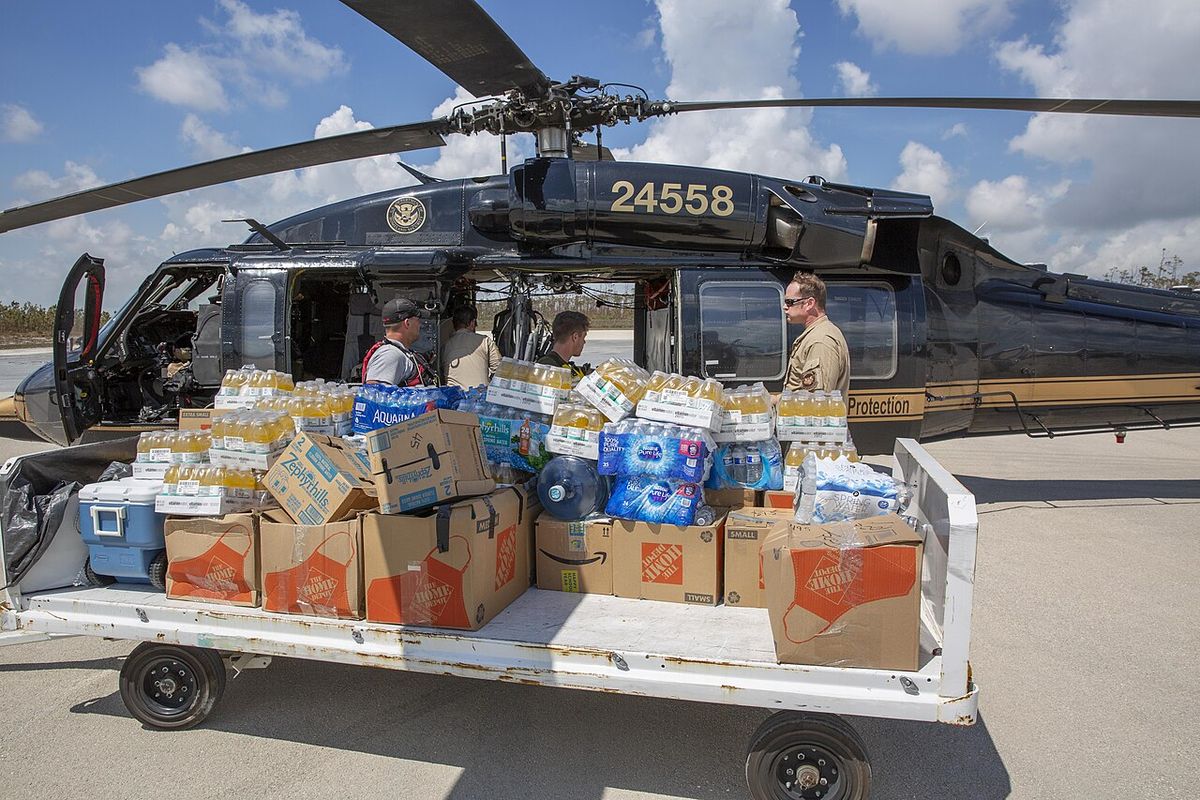
The aftermath of Hurricane Dorian involved one of the largest international humanitarian relief efforts in the history of the Bahamas, with the United States, the United Kingdom, Canada, and numerous non-governmental organizations deploying personnel, supplies, and financial aid. The U.S. Coast Guard and Royal Bahamas Defence Force conducted extensive search and rescue operations in the days immediately following the storm, and the long-term recovery has focused on rebuilding homes and critical infrastructure, managing debris estimated in the millions of tons, and supporting displaced populations. The psychological impact on survivors, many of whom lost everything, has been a major concern for health officials, and economically, the tourism and fishing industries, vital to the Bahamian economy, suffered devastating blows that required years of support. The total damage across all affected regions was estimated at $5.08 billion, with the Bahamas accounting for the majority at $3.4 billion, and due to the catastrophic damage and loss of life, the World Meteorological Organization retired the name Dorian from the rotating list of Atlantic hurricane names in the spring of 2020. It will be replaced with Dexter for the 2025 season, ensuring the name Dorian will forever be associated with one of the most destructive hurricanes in Atlantic history.
Questions about Hurricane Dorian
How strong was Hurricane Dorian when it hit the Bahamas?
Hurricane Dorian made landfall in The Bahamas as a Category 5 hurricane with one minute sustained winds of 185 mph. This tied it with the 1935 Labor Day hurricane and Hurricane Melissa for the strongest landfall in the Atlantic basin by maximum sustained winds. Its central pressure was 910 millibars. Dorian is regarded as the worst natural disaster in the Bahamas' recorded history.
Did Hurricane Dorian hit Canada?
Yes. Dorian transitioned into an extratropical cyclone on September 7. It then struck first Nova Scotia and then Newfoundland with hurricane force winds on September 8. It made landfall at Sambro Creek, Nova Scotia as a Category 1 equivalent extratropical storm.
How many people died in Hurricane Dorian?
There were at least 77 direct deaths recorded from Hurricane Dorian. Of these, 74 occurred in The Bahamas. The true death toll is unknown, with 245 people still missing as of August 2020. One death occurred in Puerto Rico during preparations.
What records did Hurricane Dorian set?
Dorian is the strongest hurricane on record to strike The Bahamas. It tied the record for highest sustained winds at Atlantic hurricane landfall. Dorian impacted a single land area as a Category 5 hurricane for the longest duration recorded in the Atlantic basin, about 22 hours. It also tracked the least distance in 24 hours for an Atlantic major hurricane since 1965.
Why was Hurricane Dorian so destructive?
Hurricane Dorian was so destructive primarily due to its extreme intensity as a Category 5 hurricane and its prolonged stall over the northern Bahamas. With peak sustained winds of 185 mph (295 km/h), it was one of the most powerful Atlantic hurricanes on record. It struck the Abaco Islands on September 1 and then Grand Bahama at similar intensity, stalling just north of the territory with unrelenting winds for at least 24 hours. This unprecedented duration of Category 5 conditions subjected the islands to catastrophic damage from heavy rainfall, high winds, and storm surge. The resultant damage was the worst natural disaster in Bahamian recorded history, flattening or sweeping most structures out to sea and leaving at least 70,000 people homeless.
Will the name 'Dorian' be used again for a hurricane?
No, the name 'Dorian' will not be used again for an Atlantic hurricane. Due to the extensive damage and significant loss of life it caused, the name was officially retired from the World Meteorological Organization's Atlantic rotating naming lists. Dorian is the costliest disaster in Bahamian history, with an estimated $3.4 billion in damage in The Bahamas alone and a total of $5.08 billion overall. The storm caused at least 77 direct deaths, 74 of which occurred in The Bahamas, with hundreds more people reported missing. This retirement is a standard practice for storms that are particularly devastating to prevent future confusion and respect for the victims.
Sources and further reading
- Hurricane Dorian (Wikipedia)
- Hurricane Dorian, September 6, 2019 (weather.gov)
- Hurricane Dorian in the Bahamas (shelterboxcanada.org)
- Remembering Dorian: How the 2019 storm left a trail of ... (cbc.ca)
- Global heating made Hurricane Dorian bigger, wetter (theguardian.com)
Checked by the Your Space Hamilton desk. Last updated 2026-10-19.