Edmonton tornado
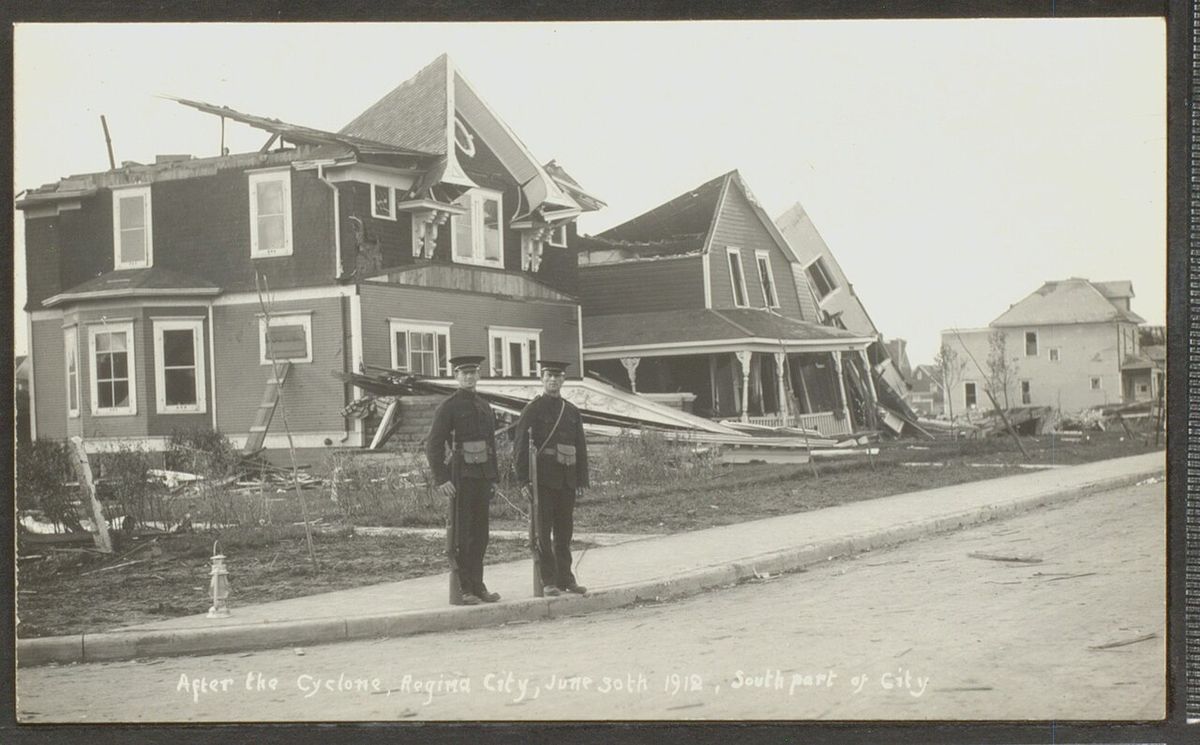
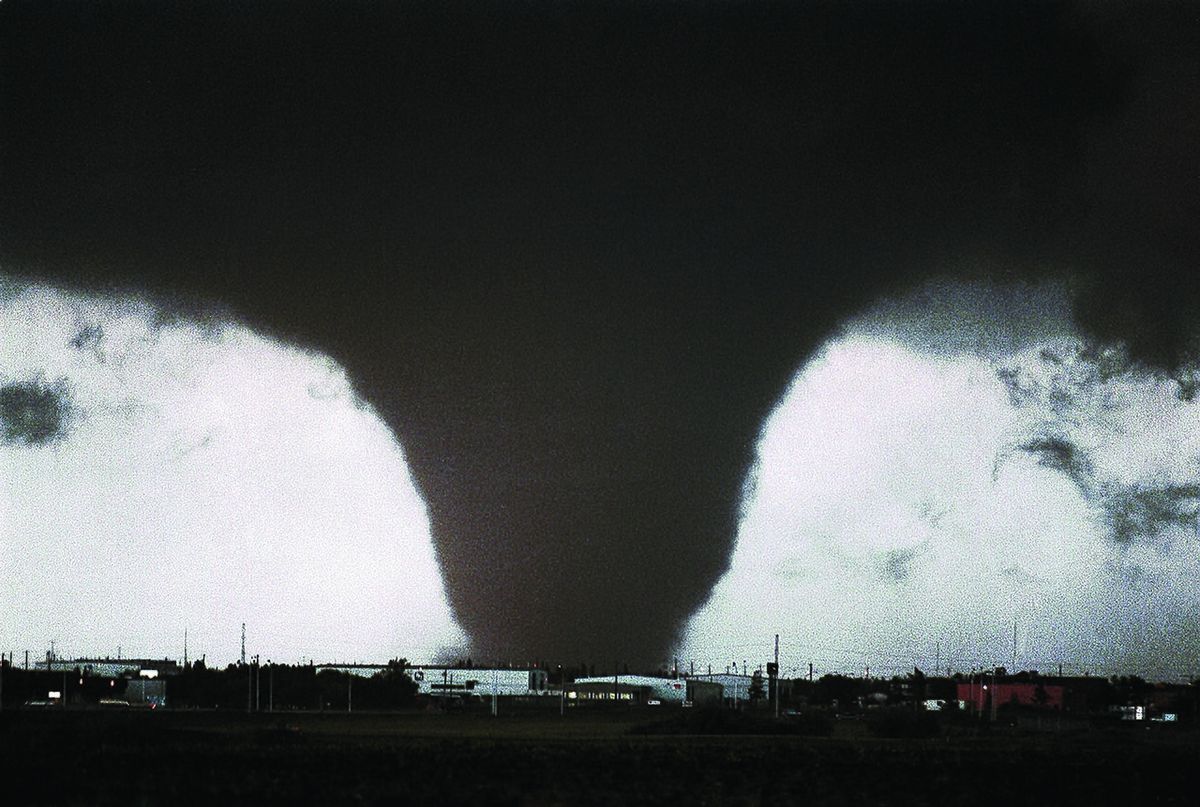
The Edmonton tornado, colloquially known as Black Friday, was a catastrophic F4 tornado that struck the eastern suburbs of Edmonton, Alberta, and adjacent Strathcona County on the afternoon of Friday, July 31, 1987. It was one of seven tornadoes that occurred in central Alberta that same day. This event is the deadliest tornado in Alberta's history and the second deadliest in Canadian history, after the 1912 Regina Cyclone. The tornado killed 27 people, injured over 300, and destroyed more than 300 homes, causing over $332.27 million in property damage. The disaster prompted significant changes to public warning systems and weather radar technology in Canada, marking a key moment in the nation's meteorological and emergency management history.
Meteorological Conditions
A persistent low-pressure system over southwestern British Columbia in the week leading up to July 31, 1987, pumped warm, humid air into central Alberta. This moisture combined with daytime heating and near-record dew points to fuel a series of strong thunderstorms throughout the week. On the fateful day, a cold front developed over western Alberta and collided with the entrenched warm, moist airmass, creating an environment highly conducive to severe weather. Environment Canada forecasters recognized the high risk early, with Weatheradio broadcasts and media interviews warning of "vicious thunderstorms" and "extremely strong and violent thunderstorms" for the Edmonton region. The atmospheric setup was classic for supercell thunderstorm development, which can produce long-track, violent tornadoes. Forecasts issued during the morning and early afternoon of July 31 specifically noted a high potential for unusually severe thunderstorms in the Edmonton area, a warning that proved tragically accurate.
Path and Destruction
The tornado first touched down briefly east of Leduc at 2:58 p.m., reported by weather spotter Tom Taylor. It dissipated but quickly re-formed near Beaumont shortly after 3:00 p.m., growing in size and strength as it tossed granaries and farm equipment. A tornado warning was issued for Edmonton at 3:04 p.m. upon the first report of a touchdown in adjacent Leduc County. The tornado then moved into the city's southeast as a multiple-vortex tornado, tracking north along the eastern portions of Mill Woods with F2 to F3 intensity damage. It crossed the Sherwood Park Freeway and struck the Refinery Row industrial area at its peak F4 intensity. There, it tossed several large oil tanks, levelled industrial buildings, and scattered trailers from the Laidlaw and Byers Transport yards. Grass scouring and windrowing of debris occurred, and damage in that area may have been borderline F5, but was never officially ranked as such. The tornado weakened slightly as it passed over an open area between Baseline Road and the North Saskatchewan River. It maintained F2 to F3 intensity as it tore through eastern Clareview neighbourhoods like Kernohan, Bannerman, and Fraser, and devastated the Evergreen mobile home park just before 4:00 p.m., severing critical phone and power lines before finally dissipating.
The tornado's destructive swath was remarkably long and wide for a Canadian tornado. Its path length was 30.8 kilometres, and in some places, its width reached 1.3 kilometres. The damage was concentrated at several key disaster sites along its track through Leduc County, the City of Edmonton, and surrounding Strathcona County. Accompanying the tornado were severe hailstorms, with hail reported and confirmed to be 10 centimetres in diameter, comparable to the size of softballs, which caused significant additional damage to property and vehicles across the affected area. The storm's intensity and duration made it a uniquely destructive event for an urban Canadian area, and its impact was felt across multiple municipalities and communities.
Casualties and Damage
The human toll of the Edmonton tornado was severe, with 27 fatalities and more than 300 people injured. A significant portion of the fatalities, 15, occurred at the Evergreen mobile home park in Clareview, where the tornado's impact was particularly devastating to the less sturdy structures. The physical destruction was immense, with more than 300 homes completely destroyed and countless others severely damaged. Preliminary damage estimates immediately after the disaster exceeded $200 million, but the final calculated cost of property damage reached $332.27 million in 1987 Canadian dollars. When adjusted for inflation, this equates to approximately $796 million in 2025 dollars, showing the event's massive economic impact. The combination of loss of life, injuries, and property destruction makes this tornado the worst natural disaster in Alberta's recent history. The damage was mainly focused at four primary disaster sites along the tornado's track through Leduc County, Edmonton, and Strathcona County, which together accounted for the majority of the financial losses.
Other Tornadoes on July 31, 1987
While the F4 tornado was the most destructive, it was part of a larger outbreak of severe weather in central Alberta that day. Six other tornadoes occurred in central Alberta the same day. In total, seven other tornadoes were reported. Not including the F4 tornado, seven other tornadoes were reported. These tornadoes varied in strength and location, including an F2 tornado near Beaumont and an F1 tornado in Southeast Edmonton. This demonstrates the widespread nature of the unstable atmospheric conditions that produced the Black Friday storm.
- An F2 tornado touched down near Beaumont, south of Edmonton, and travelled through countryside east of the city.
- Three F0 tornadoes were reported in the Edmonton area to the north, northwest, and southwest, too far away to be seen from the city.
- An F2 tornado touched down in farmland between Millet and Vegreville, remaining on the ground for 52 kilometres and causing $40,000 in damages.
This broader outbreak included six other tornadoes in central Alberta on the same day. The storm system was capable of producing multiple significant tornadoes across a wide geographic area. For example, an F2 tornado touched down in farmland between Millet and Vegreville and remained on the ground for 52 kilometres. This highlights the extensive severe weather threat that existed beyond the immediate path of the main F4 tornado.
Response and Recovery
The immediate aftermath saw a massive emergency response from local, provincial, and federal agencies, alongside community volunteers. By August 5, the International Red Cross and Red Crescent Movement had raised over $100,000 to aid victims, providing crucial financial support for those who had lost their homes and belongings. The long-term recovery process was extensive, involving rebuilding neighbourhoods and providing support to displaced families and businesses across the affected suburbs and counties. The disaster also spurred critical evaluations of emergency preparedness and public communication, revealing gaps that needed to be addressed to prevent such a high loss of life in future events. Environment Canada had responded swiftly to the first tornado report, issuing successive warnings and closely monitoring the event as it unfolded, but the scale of the disaster overwhelmed existing systems and protocols in place at the time.
Lasting Legacy and Systemic Changes
The Edmonton tornado directly led to two major advancements in Canada's public safety infrastructure. First, it resulted in the development of the Emergency Public Warning System, which was later replaced by the Alberta Emergency Alert system. This system allows authorities to break into private and public radio, television, and cable broadcasts to alert the public to imminent disasters like tornadoes, and it is also used for issuing Amber Alerts. Second, the disaster resulted in the first implementation of the Doppler weather radar concept in Canada in the early 1990s. Edmonton's Carvel radar became one of only three Doppler units in the country at the time, and this technology later formed the backbone of the national Canadian weather radar network, which was fully Dopplerized starting in 1998. A physical memorial, the "Pillar of Love" bronze sculpture by artist Barbara Eichner-Shaw, was erected in Hermitage Park to honour the victims and survivors of the tornado, providing a permanent place for remembrance and reflection on the tragedy.
Key Disaster Statistics
The scale of the Edmonton tornado is captured in its stark statistics. The tornado peaked at F4 on the Fujita scale and remained on the ground for approximately an hour. It cut a swath of destruction 30.8 kilometres long and up to 1.3 kilometres wide in some places. These figures detail the path, impact, and cost of the event. They help quantify the disaster's place in Canadian meteorological history and provide a clear measure of its severity compared to other tornadoes.
- Fatalities: 27 people killed.
- Injuries: More than 300 people injured.
- Homes Destroyed: More than 300 homes destroyed.
- Path Length: 30.8 kilometres (19.1 miles) on the ground.
- Maximum Path Width: 1.3 kilometres (0.81 miles) wide.
- Duration: Approximately 1 hour on the ground.
- Peak Intensity: F4 on the Fujita scale.
- Property Damage: $332.27 million (1987 CAD), equivalent to $796 million in 2025.
The Edmonton tornado killed 27 people and injured more than 300. It destroyed more than 300 homes and caused more than $332.27 million in property damage. These numbers confirm the event as the second deadliest tornado in Canadian history, only behind the Regina Cyclone of 1912. They also confirm it was the costliest natural disaster for Alberta at the time, with a destructive power that had not been seen in a Canadian urban centre for decades.
In Popular Culture
The event left a deep cultural imprint on the community and Canadian art. Most notably, the indie rock band The Rural Alberta Advantage recorded the song "Tornado '87" for their 2011 album Departing. The song was inspired by lead singer Nils Edenloff's personal childhood experience of surviving the tornado, capturing the fear and lasting memory of the event for a generation of Edmontonians. The tornado's impact continues to be remembered in local history and serves as a reference point for severe weather preparedness in the region, with the date July 31, 1987, forever marked in the city's collective memory as Black Friday. The disaster has been documented in numerous news archives, including CBC and CTV broadcasts, which have preserved footage and firsthand accounts of the storm's devastating passage through the city.
Questions about Edmonton tornado
How many people died in the 1987 Edmonton tornado?
The Edmonton tornado killed 27 people. This makes it the deadliest tornado in Alberta's history and the second deadliest in Canadian history, after the Regina Cyclone of 1912. The majority of the fatalities occurred in residential areas, with 15 lives lost at the Evergreen mobile home park in Clareview alone. Over 300 people were also injured during the storm, many requiring hospitalization for their wounds.
What was the strength of the Edmonton tornado?
The tornado peaked at F4 intensity on the Fujita scale, which classifies it as a devastating tornado. Some of the damage observed in the Refinery Row industrial area, where large oil tanks were tossed and heavy industrial buildings were levelled, was considered by experts to be borderline F5 intensity. However, it was never officially rated higher than F4. The tornado maintained significant strength for most of its long track, causing F2 to F3 damage through residential neighbourhoods before and after its peak.
What damage did the Edmonton tornado cause?
The tornado caused catastrophic damage, destroying more than 300 homes and severely damaging countless others. It caused extensive destruction to industrial facilities in the Refinery Row area, tossing oil tanks and levelling buildings. The total property damage was calculated at $332.27 million in 1987 Canadian dollars, which is equivalent to approximately $796 million in 2025. Accompanying hail storms with stones up to 10 centimetres in diameter caused additional widespread damage to vehicles, roofs, and crops across the region.
How long was the Edmonton tornado on the ground?
The Edmonton tornado remained on the ground for approximately one hour on the afternoon of Friday, July 31, 1987. During this time, it carved a destructive path 30.8 kilometres long through Leduc County, the City of Edmonton, and Strathcona County. The damage swath reached up to 1.3 kilometres wide in some places. The tornado tracked north from Mill Woods, crossed the Sherwood Park Freeway, and devastated the Refinery Row area before moving through Clareview neighbourhoods and the Evergreen mobile home park, where it caused numerous fatalities before finally dissipating.
What warning systems were created because of the Edmonton tornado?
The Edmonton tornado disaster directly resulted in the development of the Emergency Public Warning System, which was later replaced by Alberta Emergency Alert. This system is designed to break into private and public radio, television, and cable broadcasts to alert the public to imminent disaster hazards. The event prompted the first implementation of Doppler weather radar technology in Canada in the early 1990s. Edmonton's Carvel radar was one of the first three such units in the country and later became part of the national Dopplerized weather radar network.
Is there a memorial for the victims of the tornado?
Yes, a memorial for the victims exists in the form of a bronze sculpture called the "Pillar of Love," located in Hermitage Park in Edmonton. The statue was created by artist Barbara Eichner-Shaw to commemorate the event and honour those affected. The tornado, which killed 27 people and injured over 300, remains the worst natural disaster in Alberta's recent history. It is also remembered in media, such as in the song "Tornado '87" by The Rural Alberta Advantage on their 2011 album Departing.
Sources and further reading
- Edmonton tornado (Wikipedia)
- Edmonton Tornado (1987) (thecanadianencyclopedia.ca)
- Several structures damaged after tornado passes through part of ... (cbc.ca)
- Tornadoes and extreme winds (alberta.ca)
- TORNADO, A Report, Canadian Red Cross (redcross.ca)
Checked by the Your Space Hamilton desk. Last updated 2026-10-22.