2026 North American heat wave
The 2026 North American heat wave was a prolonged and severe weather event that affected much of the continent from late June through September 2026. It was characterized by multiple intense heat domes that shattered temperature records across Canada and the United States, leading to widespread power outages, infrastructure strain, and significant loss of life. The event coincided with major summer holidays and the FIFA World Cup, disrupting celebrations and public events. In Canada, the extreme heat triggered destructive thunderstorms and flooding on Canada Day, causing extensive damage and highlighting the growing impacts of climate change on public safety and essential services.
Background and Climatic Drivers
The heat wave occurred within a broader climatic context of a developing El Niño pattern, which was identified by the United States National Weather Service on June 11, 2026. Climate scientists predicted that the 2026 to 2027 El Niño conditions would contribute to higher temperatures and an increased likelihood of severe heat waves across North America. This natural climate phenomenon was compounded by human-caused climate change, which experts stated amplifies the frequency and intensity of such extreme weather events. The convergence of these factors set the stage for one of the most intense and widespread heat events in recorded history for the continent. The initial meteorological setup involved a large, stagnant area of high pressure, known as a heat dome, which trapped hot air over regions for extended periods. CNN reported that both El Niño and human-caused climate change were contributors to the increased severity of heat waves like this one, a point emphasized by climate scientists monitoring the developing Super El Niño conditions.
Impact on Eastern Canada
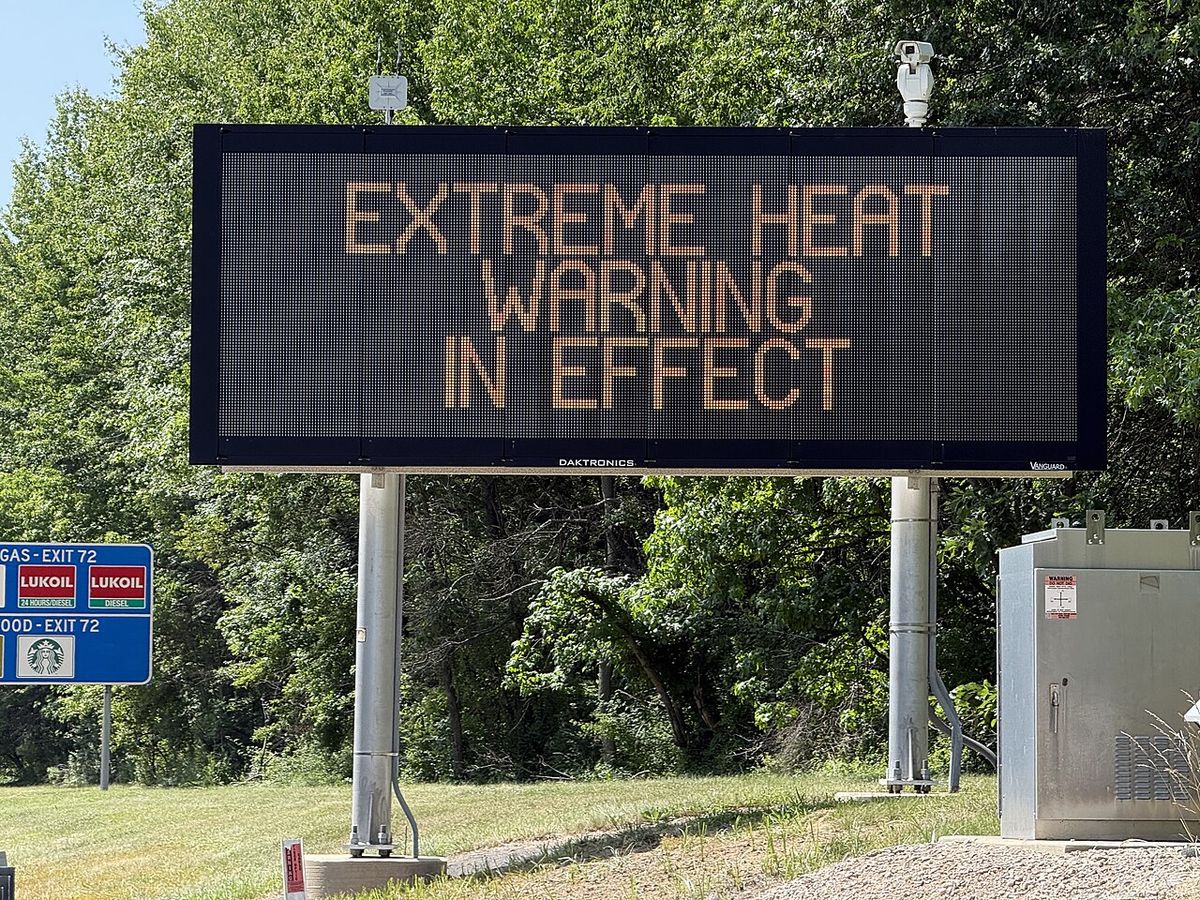
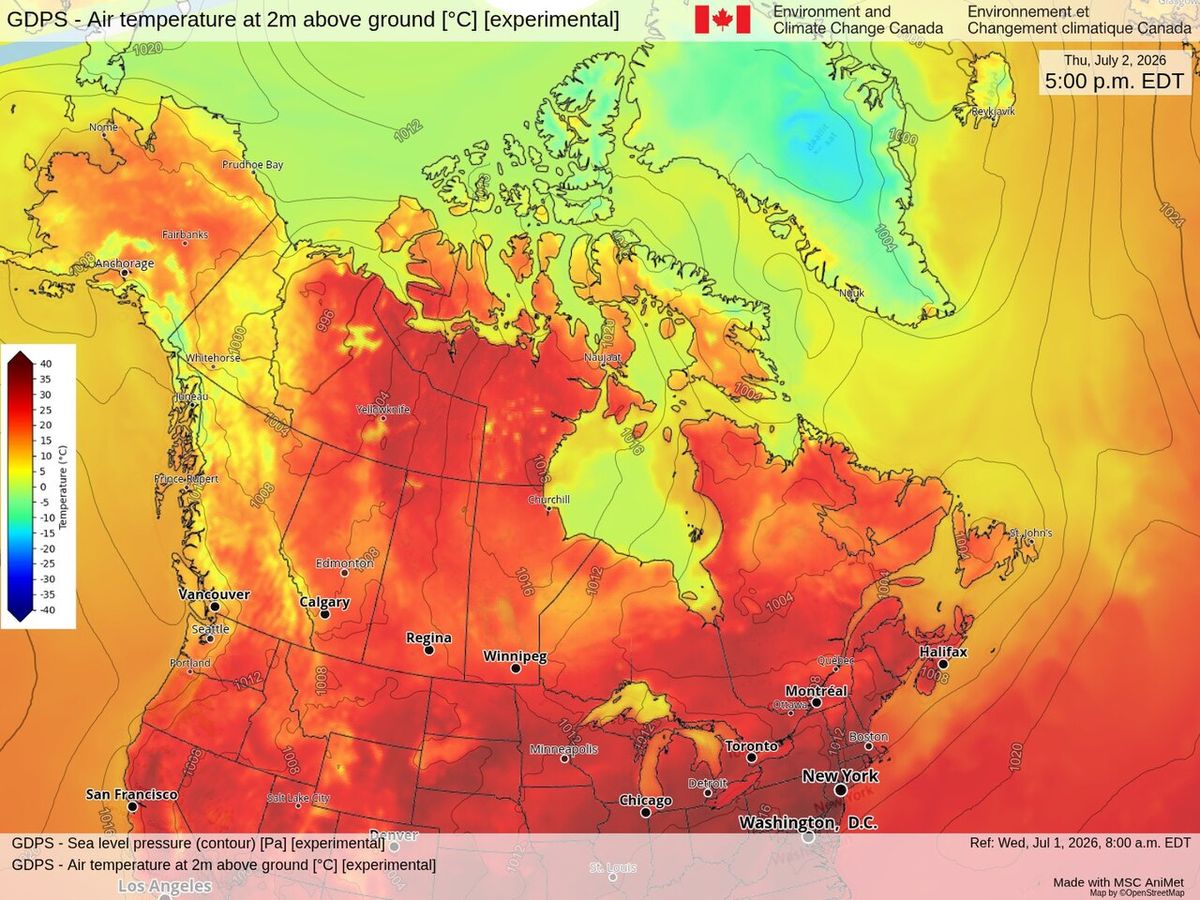
Eastern Canada, particularly Ontario and Quebec, bore the brunt of the initial heat dome starting in late June. Environment Canada issued widespread orange and yellow heat warnings, with temperatures forecast to reach upwards of 37 °C (99 °F) and humidex values making it feel much hotter. On July 1, Canada Day, Ottawa recorded a humidex of 46 °C (115 °F), contributing to extreme conditions that culminated in large, destructive thunderstorms. These storms dumped a record 118 mm of rain on Ottawa, causing widespread flooding and storm damage that led to the cancellation of many Canada Day celebrations in the National Capital Region. The subsequent power outages were massive, with Hydro-Québec reporting 100,000 homes without power on July 2, and 50,000 still offline the following morning. In Atlantic Canada, Halifax experienced a loss of power to roughly 44,000 customers during peak heat of 30 °C with a humidex of 36 °C on July 3. The heat also reached Newfoundland, where the Winterland area set a daily high record of 25.7 °C on July 4. The heat persisted, with Ontario recording its highest temperature since the 1936 heat wave on July 13, when Armstrong hit 40.7 °C (105.3 °F), and Toronto experienced its hottest day since 2011 on July 14 before a cold front finally provided relief later that day.
Impact on Western and Northern Canada
As the eastern heat dome dissipated, a second one formed over western North America, bringing record-breaking temperatures to the Prairies and British Columbia. In Manitoba on July 12, seven communities set new daily temperature records and four others tied records, with McCreary reaching a new high of 36.5 °C (97.7 °F). British Columbia saw twelve communities break daily heat records on July 22, most notably Lytton, which recorded a scorching 41.2 °C (106.2 °F). The heat extended into the Arctic, with Nunavut setting daily temperature records on July 4. Cambridge Bay broke a record dating back to 1930 by reaching 22.1 °C (71.8 °F), while Kugaaruk set a new record of 27.5 °C (81.5 °F). These unusually high temperatures in the North illustrated the far-reaching geographic scope of the heat wave and its ability to affect typically cooler regions during a significant climatic event.
Impact on the Eastern United States
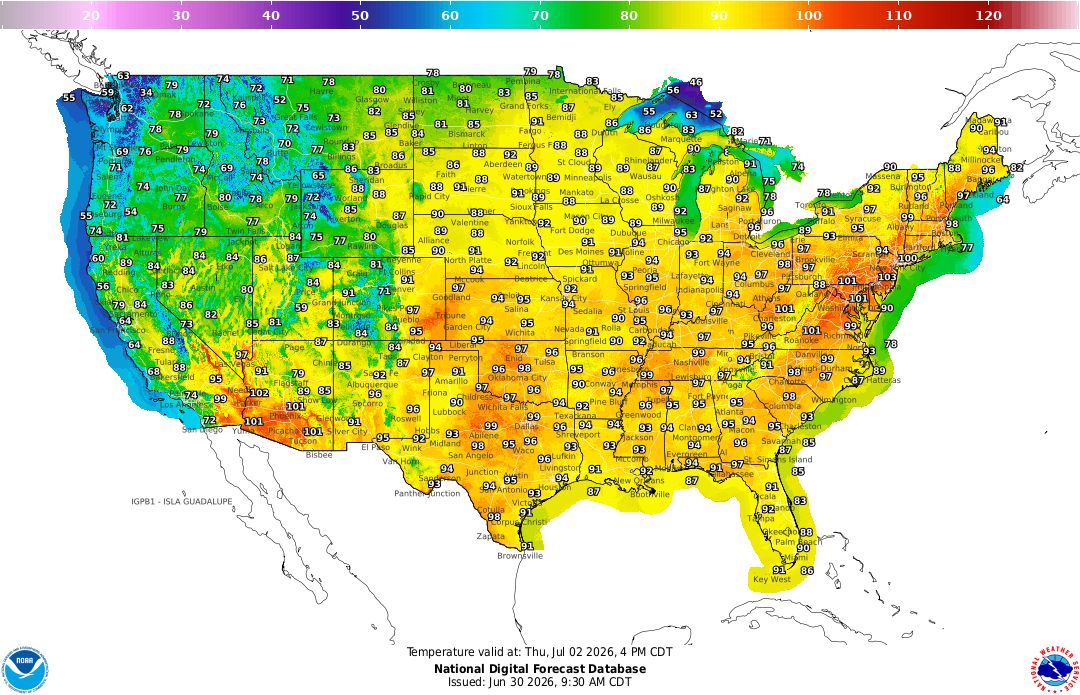
The heat wave’s impact on the eastern United States was severe and deadly, affecting nearly half the country's population. Starting June 28, approximately 180 million people were under a major or extreme heat risk as temperatures were expected to reach between 100 to 110 °F (38-43 °C). On June 29, the heat index measured at O'Hare International Airport in Chicago was 101 °F (38 °C), and the next night La Crosse, Wisconsin, tied an all-time record warm low temperature of 81 °F (27 °C). Key records and events during this period included the first time New York City exceeded 100 °F since 2012 on July 2, the same day Boston reached 100 °F for the 29th time in its history and set a new daily record. The strain on infrastructure was significant. Amtrak reduced speeds and cancelled trains in the Northeast Corridor, while transit agencies like SEPTA and NJ Transit faced major delays and suspensions, problems amplified by severe thunderstorms on July 3 that caused 250,000 power outages in New Jersey. The electrical grid was pushed to its limits, with the PJM Interconnection grid nearing or surpassing its 2006 peak demand record of 165 gigawatts, a surge driven by air conditioning use and data centre loads, prompting the US Department of Energy to order all generators to run at full capacity for the second time that summer. Severe thunderstorms that helped break the initial heat dome from July 4-6 caused over 1.3 million power outages and four fatalities, and possibly produced the largest hailstone in Connecticut state history. The human toll was heavy, with at least 44 heat-related fatalities reported from July 1-4 across several states, including 29 in New Jersey, 7 in Pennsylvania, 4 in Illinois, 3 in New York, and one in Mississippi, with an additional death in Mississippi on June 27. The heat also forced the cancellation of many Independence Day celebrations and parades in cities like Washington, DC, and Philadelphia. Record heat returned briefly on July 15 before being limited by smoke from Canadian wildfires the next day, and extreme humidity surged back into the Northeast on August 7.
Impact on the Western United States
The western United States endured successive and intense heat domes throughout July and August. The second dome, forming around July 6, brought extreme temperatures to the Southwest and Intermountain West. Phoenix, Arizona, experienced highs of 113 °F (45 °C) for three consecutive days from July 6 to 8. On July 12, Salt Lake City, Utah, set a new all-time high of 109 °F (43 °C), while Deseret, Utah, hit 111 °F (44 °C). That same day, Billings, Montana, recorded 111 °F (44 °C), which was considered an all-time record by the National Weather Service and ABC News, despite a historical 112 °F reading in 1901. A third major heat dome in late July affected the Southwest, with heat indexes exceeding 100 °F (38 °C) in southern California and Nevada and temperatures reaching 118 to 120 °F (48-49 °C). The table below highlights some of the most significant temperature records set in the western US during the event.
| Location | Record Temperature | Date | Note |
|---|---|---|---|
| Rapid City, SD | 112 °F (44 °C) | July 26 | All-time record high |
| Miles City, MT | 115 °F (46 °C) | July 12 | Local all-time record |
| Sheridan, WY | 109 °F (43 °C) | July 12 | Local all-time record |
| Southern Nevada | 118 to 120 °F (48-49 °C) | Late July | Peak of third heat dome |
The widespread heat led to public health emergencies, including 72 hospitalizations in Colorado in early August. Southern Nevada opened emergency daytime cooling stations from August 6 to 11 to protect vulnerable populations. Across the West on August 1 alone, 65 daily temperature records were either tied or broken. The event also created a rare dual warning in Louisiana, where southern parts of the state were under both a tropical storm warning and an extreme heat warning during Tropical Storm Bertha, a situation not seen since 2005, with Lake Charles recording a heat index of 121 °F (49 °C).
Records and Historical Context
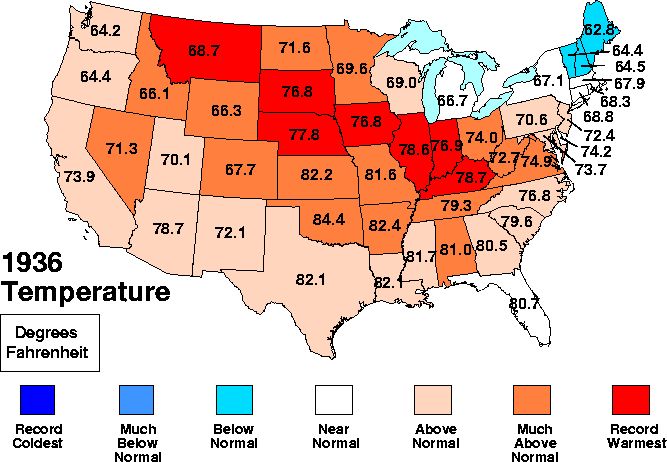
The 2026 heat wave set numerous historical benchmarks across the continent. In the United States, July 2026 finished as the hottest month in American history, with an average temperature of 76.89 °F (24.94 °C), and the entire summer became the hottest on record for the country. The event tied or broke all-time records in communities from the Arctic to the desert Southwest. In Canada, the heat rivaled historic events like the 1936 North American heat wave, with Armstrong, Ontario's 40.7 °C reading being a key example. The concurrence of the heat wave with the FIFA World Cup, US Independence Day, and Canada Day created unique challenges, forcing event organizers to implement extreme heat protocols like frequent hydration breaks and seeking shade. The storms that finally broke the initial eastern heat dome were themselves historic, potentially dropping the largest hailstone in Connecticut's history. The National Weather Service's declaration of the 111 °F reading in Billings as an all-time record, despite a 1901 measurement, shows how modern verification processes contextualize historical data during such extreme events.
Response and Consequences
Government and utility responses to the crisis were widespread but strained by the scale of the event. In Canada, the massive Canada Day thunderstorms revealed vulnerabilities in power infrastructure, particularly in Quebec and Ontario, where recovery took days. In the United States, the order for all electrical generators to operate at full capacity was a rare emergency measure used for the second time that summer. Public transit systems from Amtrak to local city services were forced to scale back operations due to heat-related safety concerns for both infrastructure and passengers. The heat wave's deadly consequences were stark, with 70 fatalities attributed to it as of August 5, 2026. The event also demonstrated the complex interplay of multiple weather hazards, as seen when southern Louisiana was simultaneously under a tropical storm warning and an extreme heat warning during Tropical Storm Bertha, a situation not seen since 2005. The widespread disruptions illustrated the increasing pressure that climate-amplified extreme weather places on public health, emergency services, and critical infrastructure across North America.
Notable Temperature Records and Statistics
The heat wave produced a cascade of broken temperature records across North America. In Canada, Armstrong, Ontario, set a new all-time high of 40.7 °C on July 13, which was the province's highest temperature since the 1936 heat wave. Lytton, British Columbia, recorded 41.2 °C on July 22. In the United States, Salt Lake City, Utah, recorded a new all-time high of 109 °F on July 12, and Deseret, Utah, reached an all-time high of 111 °F. Billings, Montana, recorded 111 °F on July 12, which was considered an all-time heat record. Countless daily records were also set in communities from Manitoba to British Columbia and from the eastern United States to the western United States.
- July 4, Atlantic City, NJ: Peak temperature of 106 °F (41 °C) recorded.
- July 4, Cambridge Bay, NU: Broke 1930 record with 22.1 °C (71.8 °F).
- July 12, McCreary, MB: Set new record of 36.5 °C (97.7 °F).
- July 12, Miles City, MT: Local all-time record of 115 °F (46 °C).
- July 22, Lytton, BC: Recorded 41.2 °C (106.2 °F).
- July 26, Rapid City, SD: All-time record high of 112 °F (44 °C).
- August 1, Western US: 65 daily records tied or broken in a single day.
These records occurred within a framework of broader statistical extremes. The PJM Interconnection grid's demand neared the 165-gigawatt mark, a level previously seen only in 2006. The storms from July 4 to 6 resulted in over 1.3 million customer power outages across the United States. In Canada, the 118 mm of rain in Ottawa on July 1 was a record for the city, directly linking the heat to catastrophic flooding. The heat wave resulted in a fatality in Bethel Township, Pennsylvania, and over 17,000 customers lost electricity in New York City during the event.
Questions about 2026 North American heat wave
What were the highest temperatures recorded in Canada during the 2026 heat wave?
The highest confirmed temperature in Canada was 40.7 °C in Armstrong, Ontario, on July 13. In British Columbia, Lytton recorded 41.2 °C on July 22. In the Arctic, Cambridge Bay, Nunavut, reached 22.1 °C on July 4, breaking a record from 1930. Kugaaruk, Nunavut, also set a record of 27.5 °C on July 4.
How many people lost power in Canada due to the heat wave?
Power outages were extensive and multi-provincial. In Quebec, 100,000 Hydro-Québec customers lost power on July 2, with 50,000 still without power the next morning. In Nova Scotia, roughly 44,000 customers in Halifax lost power during peak heat on July 3. The outages were primarily caused by the severe thunderstorms that accompanied the extreme heat, which also caused damage in Ontario.
What was the death toll from the 2026 North American heat wave?
As of August 5, 2026, there had been 70 deaths attributed to this heatwave. In the eastern United States from July 1 to 4, at least 44 heat-related fatalities were reported. These included 29 in New Jersey, 7 in Pennsylvania, 4 in Illinois, 3 in New York, and one in Mississippi. An additional heat-related death occurred in Mississippi on June 27.
How did the heat wave impact the US power grid?
The strain on the US electrical grid was unprecedented. PJM Interconnection, which serves 67 million people, neared or surpassed its all-time peak demand record of 165 gigawatts, originally set in 2006. This surge was driven by extreme air conditioning use and increased load from data centres. The US Department of Energy took the rare step of ordering all electrical generators, including backup units, to run at full capacity for the second time that summer.
How did the heat wave affect Canada Day celebrations in 2026?
Many Canada Day celebrations in the National Capital Region had to be cancelled. This was due to the extreme heat on July 1 which led to large thunderstorms, causing widespread flooding and storm damage across Ontario and Quebec. A record 118 mm of rain fell in Ottawa, contributing to the cancellations. The severe weather also resulted in significant power outages, with 100,000 Hydro-Québec customers losing power on July 2. These conditions made it unsafe to hold public festivities.
Did the heat wave break any monthly or seasonal records?
Yes, the heat wave broke significant records. July 2026 was the hottest month in American history with an average temperature of 76.89 °F. The entire summer of 2026 finished as the hottest on record for the United States. The severity of this heat wave was influenced by concurrent El Niño conditions and human-caused climate change. Numerous daily and all-time temperature records were also tied or broken in cities across both the United States and Canada throughout the season.
Sources and further reading
- 2026 North American heat wave (Wikipedia)
- Record-breaking heat and extreme weather continue (wmo.int)
- The 2026 Southwest U.S. heat wave was one of the six ... (yaleclimateconnections.org)
- Record-breaking heat dome growing to cover nearly the ... (cbc.ca)
Checked by the Your Space Hamilton desk. Last updated 2026-10-19.