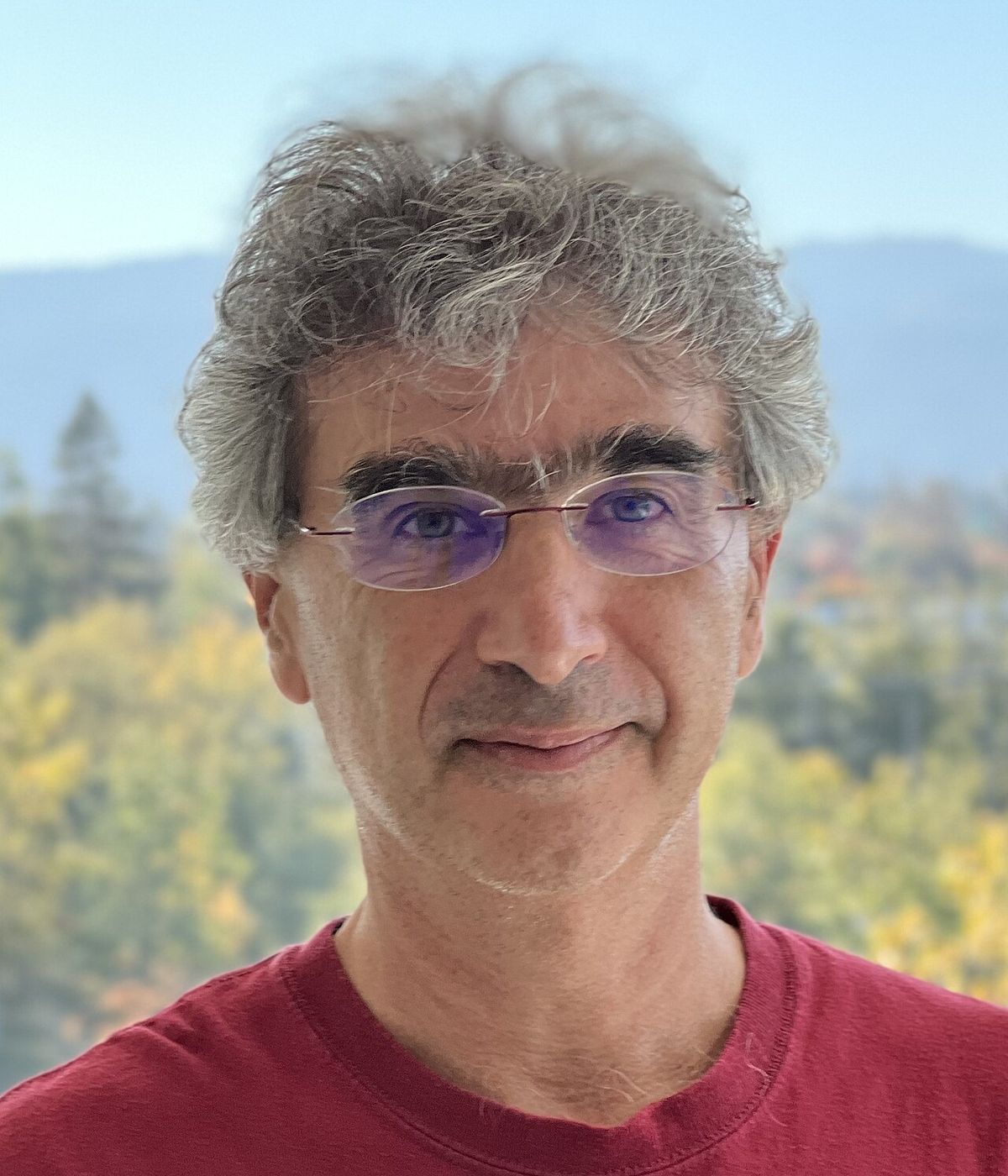
Yoshua Bengio
Yoshua Bengio is a pioneering Canadian computer scientist and a leading figure in the field of artificial intelligence, particularly in deep learning and neural networks. A professor at the Université de Montréal and co-president of the nonprofit LawZero, Bengio is a foundational architect of the modern AI landscape whose work has shaped global technology and policy. He is one of three recipients of the 2018 ACM A.M. Turing Award, often called the 'Nobel Prize of Computing', and is recognized as one of the world's most cited scientists. Bengio's leadership in establishing Montreal as a global AI hub and his ongoing advocacy for AI safety have made him a central figure in Canada's scientific and technological identity.
Early Life and Education
Yoshua Bengio was born on March 5, 1964, in France to a Jewish family that had emigrated from Morocco. His family later relocated to Canada, where Bengio would pursue his higher education and build his career. He is the brother of Samy Bengio, another influential computer scientist specializing in neural networks who serves as senior director of AI and ML research at Apple. The brothers spent a year in Morocco during their father Carlo Bengio's military service, an experience that connected them to their family's North African heritage.
His father, Carlo Bengio, was a pharmacist and playwright who ran a Sephardic theatre company in Montreal that performed works in Judeo-Arabic. His mother, Célia Moreno, was an actress in the 1970s Moroccan theatre scene led by Tayeb Seddiki. After studying economics in Paris, she co-founded the multimedia theatre troupe l’Écran humain in Montreal in 1980 with artist Paul St-Jean. Bengio completed all his formal degrees at McGill University in Montreal, earning a Bachelor of Engineering in computer engineering, followed by a Master of Science and a Doctor of Philosophy in computer science.
Academic Career and Foundational Research
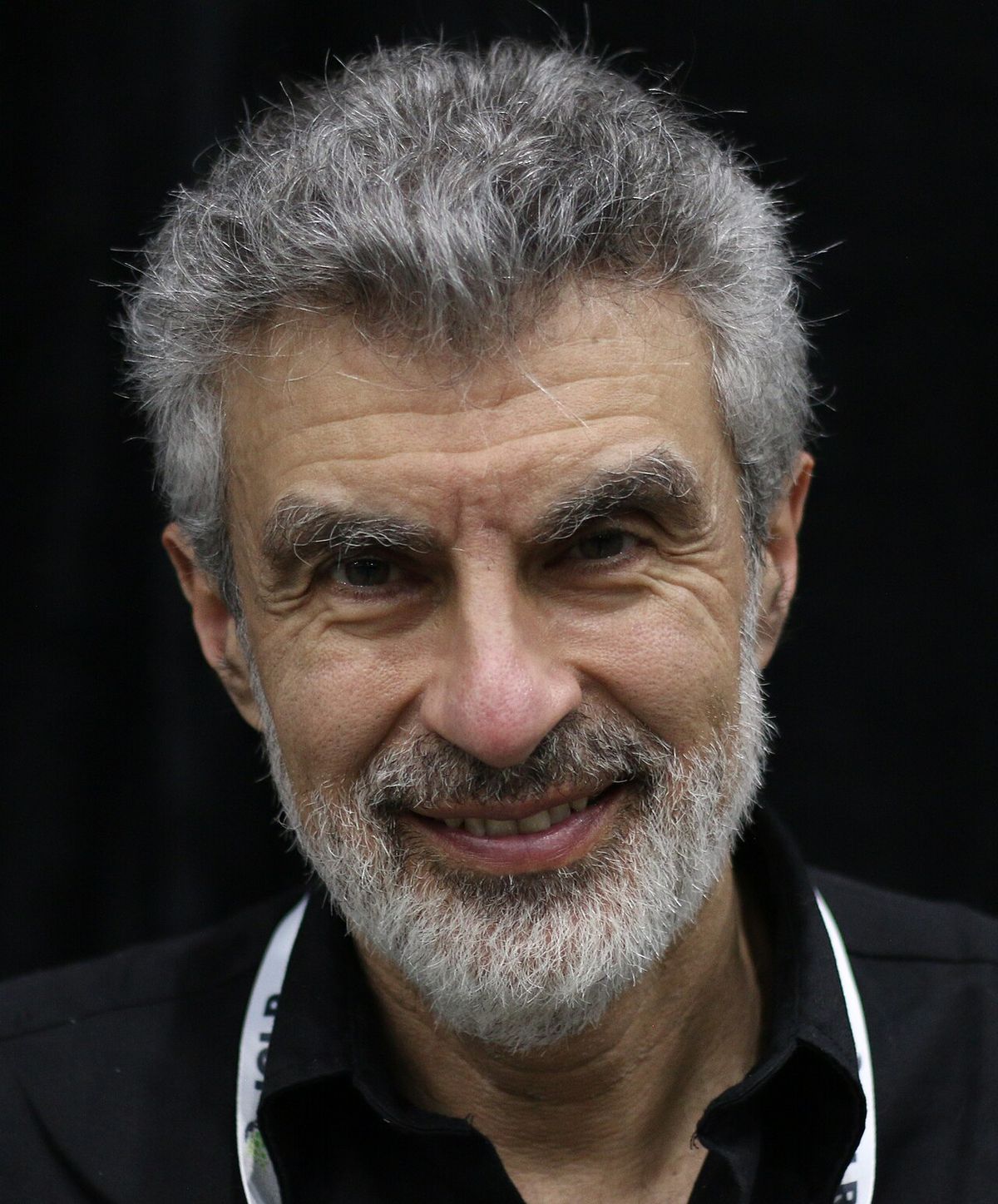
After completing his PhD, Bengio undertook postdoctoral work at the Massachusetts Institute of Technology under the supervision of Michael I. Jordan and at AT&T Bell Labs. In 1993, he joined the faculty of the Université de Montréal, where he has remained a professor. Bengio, alongside Geoffrey Hinton and Yann LeCun, is considered one of the three key figures responsible for the advancement of deep learning during the 1990s and 2000s, a group often referred to as the 'Godfathers of AI'. His early research helped overcome significant hurdles in machine learning, particularly the 'curse of dimensionality' in natural language processing.
Bengio and his collaborators introduced the neural probabilistic language model, which learned distributed representations known as word embeddings for words. This breakthrough provided a foundation for many modern natural language processing applications. He heads the Montreal Institute for Learning Algorithms (Mila), a world-renowned AI research institute he founded, and served as its scientific director until 2025. Bengio also co-directs the Learning in Machines & Brains program at the Canadian Institute for Advanced Research (CIFAR). His publication record is extraordinarily influential, making him the most-cited computer scientist globally by both total citations and h-index, and the most-cited living scientist across all fields by total citations as of 2024.
In November 2025, Yoshua Bengio became the first AI researcher with more than a million Google Scholar citations. He has trained other notable AI researchers throughout his career, including Ian Goodfellow, Hugo Larochelle, and David Krueger. Bengio co-authored the textbook Deep Learning, which was published by MIT Press in 2016. This book is part of the Adaptive Computation and Machine Learning series.
Entrepreneurship and Institutional Leadership
Beyond academia, Bengio has played a crucial role in translating AI research into commercial and societal applications. In October 2016, he co-founded Element AI, a Montreal-based artificial intelligence incubator designed to help businesses implement AI solutions. The company was acquired by ServiceNow in November 2020, after which Bengio served as an advisor to the company. He also holds advisory roles as a scientific and technical advisor for Recursion Pharmaceuticals and as a scientific advisor for Valence Discovery. His most significant institutional legacy is the founding of Mila, the Quebec Artificial Intelligence Institute, which has cemented Montreal's status as a global epicentre for AI research and talent.
In June 2025, Bengio launched a new nonprofit organization called LawZero, where he serves as co-president and scientific director. LawZero is focused on building 'honest' AI systems capable of detecting and blocking harmful behaviour by autonomous agents. The organization is developing a system named Scientist AI intended to act as a guardrail by predicting potentially harmful actions. Initial funders for LawZero include the Future of Life Institute, Schmidt Sciences, the Gates Foundation, and the Canadian government. Bengio has stated the project's first goal is to demonstrate the methodology before scaling it up with broader support.
AI Safety Advocacy and Policy Work
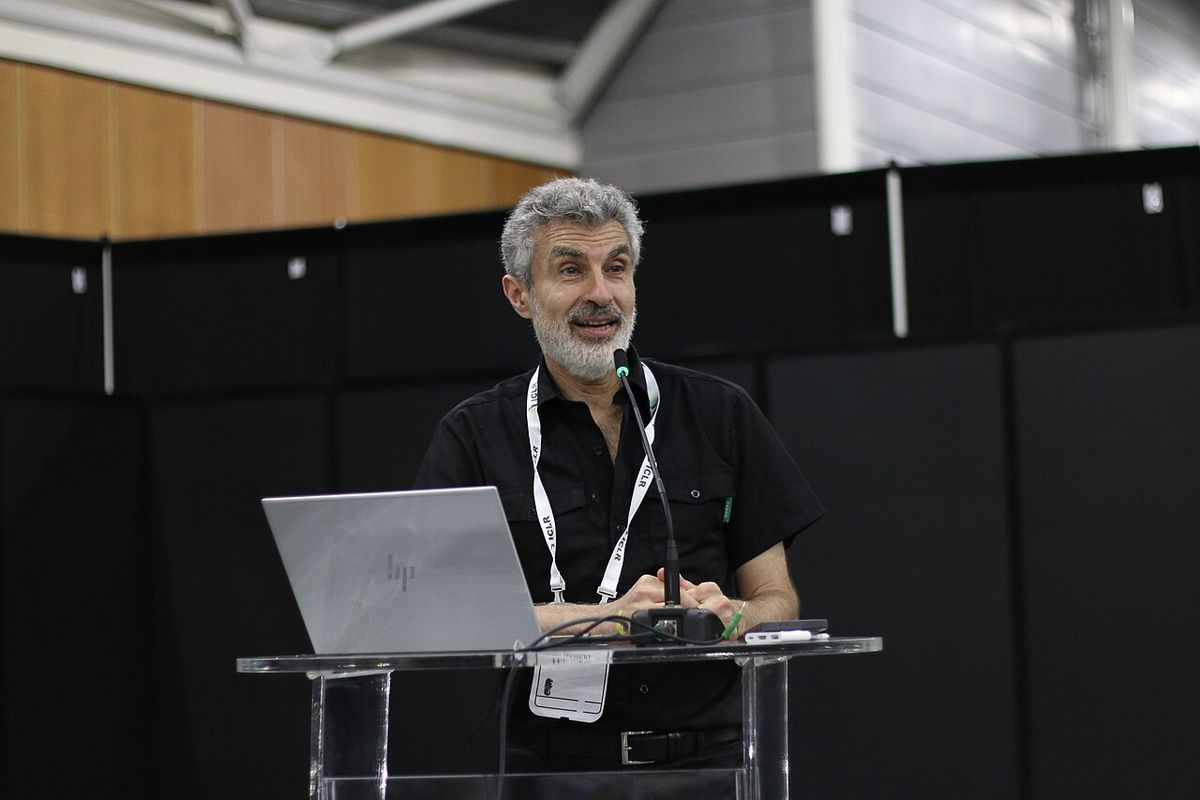
In recent years, Bengio has become one of the world's most prominent voices on the risks and governance of advanced artificial intelligence. In March 2023, he signed the Future of Life Institute's open letter calling for a minimum six-month pause on training AI systems more powerful than GPT-4, a letter that garnered over 30,000 signatures. He has repeatedly expressed concern about 'bad actors' obtaining powerful AI and the potential for catastrophic outcomes, including loss of control scenarios, cyber attacks, and the misuse of autonomous systems. In a May 2023 interview with the BBC, Bengio stated he felt 'lost' over his life's work due to these potential dangers, emphasizing the urgent need for effective regulation.
His advocacy extends to direct policy engagement. He co-authored a letter with Geoffrey Hinton supporting California's AI safety bill, SB 1047, which would require risk assessments for expensive AI models, calling it the 'bare minimum for effective regulation'. At the first AI Safety Summit in November 2023, British Prime Minister Rishi Sunak announced Bengio would lead an international scientific report on advanced AI safety. An interim report was delivered at the AI Seoul Summit in May 2024, and the full International AI Safety Report was published in January 2025, with Bengio continuing as its Chair. In February 2026, Bengio was appointed to the United Nations' Independent International Scientific Panel on AI, a 40-expert group tasked with preparing a comprehensive report on the opportunities, impacts, and risks of AI to inform global policymakers.
He was later appointed Co-Chair of the panel alongside Nobel laureate Maria Ressa. Through his work with LawZero in early 2026, Bengio expressed growing optimism about the technical feasibility of designing guardrails for AI systems but continues to argue for a combination of technical, policy, and legislative measures. In December 2025, he firmly stated that granting rights to AI systems would be a 'huge mistake', asserting that the ability to shut them down remains essential for safety. In September 2026, he compared the state of AI safety to the onset of the COVID-19 pandemic, arguing governments must act quickly to protect the public.
Major Awards and Honours
Yoshua Bengio's contributions have been recognized with many of the world's highest scientific and civic honours. In 2017, he was named an Officer of the Order of Canada and a Fellow of the Royal Society of Canada, and he received the Prix Marie-Victorin from Quebec. The pinnacle of recognition in computing came in 2018 when he, Geoffrey Hinton, and Yann LeCun were jointly awarded the ACM A.M. Turing Award for their foundational work on deep learning. In 2020, he was elected a Fellow of the Royal Society (FRS). Subsequent honours include the Princess of Asturias Award for Scientific Research in 2022, shared with LeCun, Hinton, and Demis Hassabis.
In 2023, France appointed him a Knight of the Legion of Honour, the country's highest order of merit, and he was also recognized as an ACM Fellow. Time magazine included him in its list of the 100 most influential people in the world in 2024. That same year, he shared the VinFuture Prize's grand prize with Hinton, LeCun, Jen-Hsun Huang, and Fei-Fei Li for pioneering work in neural networks. In 2025, he received multiple further accolades, including the Queen Elizabeth Prize for Engineering jointly with several other pioneers, an honorary doctorate from his alma mater McGill University, and being made an Officer of the National Order of Quebec. His appointment to a UN scientific advisory council on technological advances in August 2023 and his leadership of the UN's AI panel in 2026 demonstrate his global stature in science policy.
- Officer of the Order of Canada (2017)
- ACM A.M. Turing Award (2018)
- Fellow of the Royal Society (FRS) (2020)
- Princess of Asturias Award for Scientific Research (2022)
- Knight of the Legion of Honour, France (2023)
- Time 100 Most Influential People (2024)
- VinFuture Prize Grand Prize (2024)
- Queen Elizabeth Prize for Engineering (2025)
- Officer of the National Order of Quebec (2025)
Selected Publications and Influence
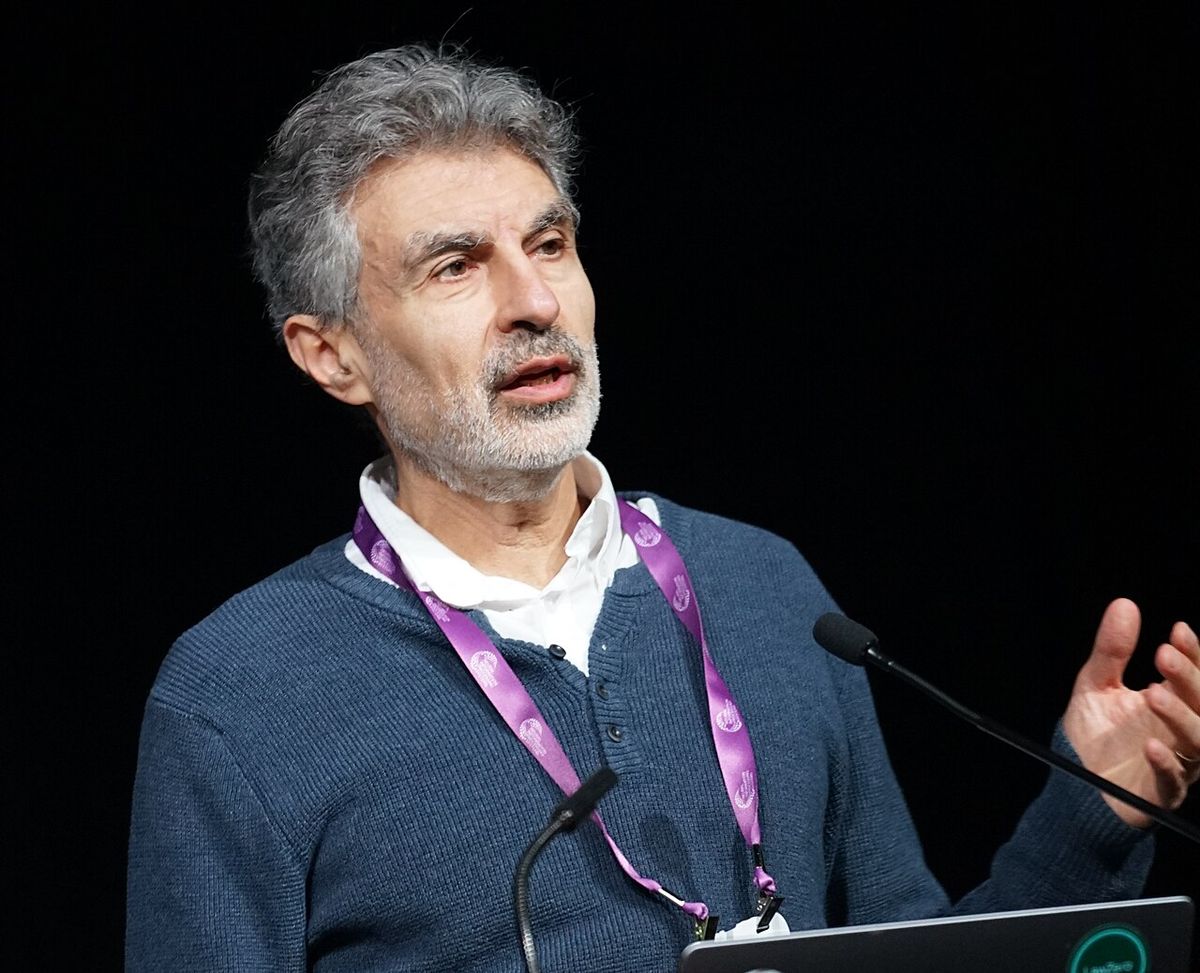
Bengio's scholarly output has been massively influential in shaping the field of artificial intelligence. His 2016 textbook 'Deep Learning', co-authored with Ian Goodfellow and Aaron Courville, is a fundamental resource for students and researchers worldwide. His earlier work on neural probabilistic language models laid the groundwork for modern word embeddings and natural language processing. A highly cited 2014 paper, 'Neural Machine Translation by Jointly Learning to Align and Translate', introduced the attention mechanism, a critical component in today's transformer models.
His research has consistently explored the intersection of machine learning and neuroscience, as seen in works like 'Towards Biologically Plausible Deep Learning' from 2016. Bengio has also contributed to practical applications, such as his 1998 work on the high-quality document image compression system DjVu. He has served in editorial roles for major conferences, including editing the proceedings for the Advances in Neural Information Processing Systems (NeurIPS) conference in 2009. Bengio contributed a chapter to the 2018 book 'Architects of Intelligence' by futurist Martin Ford, and his Erdős number is 3 thanks to a 2019 article on a novel RNN architecture.
Questions about Yoshua Bengio
What is Yoshua Bengio famous for?
Yoshua Bengio is a Canadian computer scientist and a pioneer of artificial neural networks and deep learning. He received the 2018 ACM A.M. Turing Award with Geoffrey Hinton and Yann LeCun for their foundational work on deep learning. He is the most cited computer scientist globally and founded Mila, the Quebec Artificial Intelligence Institute. In 2024, Time magazine included him in its list of the world's 100 most influential people.
Where does Yoshua Bengio work?
Yoshua Bengio is a professor at the Université de Montréal, a position he has held since 1993. He founded and was the scientific director of the Montreal Institute for Learning Algorithms (Mila) until 2025. In 2025, he co-founded and became the co-president and scientific director of the nonprofit organization LawZero, which focuses on AI safety. He also holds advisory roles with companies like Recursion Pharmaceuticals and Valence Discovery.
What are Yoshua Bengio's views on AI safety?
Bengio is a leading advocate for AI safety and regulation. He has expressed serious concerns about existential risks from advanced AI, including misuse by bad actors, loss of control scenarios, and deceptive behaviours in AI systems. He signed a 2023 open letter calling for a pause on training powerful AI models and supports strong government regulation, international collaboration, and technical guardrails. Through LawZero, he is working on systems to detect and block harmful AI actions.
What awards has Yoshua Bengio won?
Yoshua Bengio has won numerous prestigious awards. His most notable honour is the 2018 ACM A.M. Turing Award, shared with Hinton and LeCun. He is an Officer of the Order of Canada (2017), a Fellow of the Royal Society (2020), a Knight of the Legion of Honour in France (2023), and a recipient of the Princess of Asturias Award (2022). In 2025, he won the Queen Elizabeth Prize for Engineering and was made an Officer of the National Order of Quebec.
What is Mila and what is Bengio's connection to it?
Mila is the Quebec Artificial Intelligence Institute. Yoshua Bengio founded Mila and was its scientific director until 2025. He heads the MILA (Montreal Institute for Learning Algorithms) as a faculty member at the Université de Montréal. The institute is a major research centre in deep learning and machine learning.
What is Yoshua Bengio's role in global AI policy?
Bengio plays a significant role in shaping global AI policy. In 2023, he was tasked by the UK government to lead the International AI Safety Report, published in 2025. In February 2026, he was appointed Co-Chair of the United Nations' Independent International Scientific Panel on AI, which prepares evidence-based reports for global policymakers. He frequently advises governments and has testified in support of AI safety legislation, such as California's SB 1047, advocating for risk assessments and strong regulatory frameworks.
Sources and further reading
- Yoshua Bengio (Wikipedia)
- Yoshua Bengio: Home (yoshuabengio.org)
- Yoshua Bengio (mila.quebec)
- IVADO's scientific director, Yoshua Bengio, receives the ... (ivado.ca)
- Yoshua Bengio (cifar.ca)
Checked by the Your Space Hamilton desk. Last updated 2026-10-19.