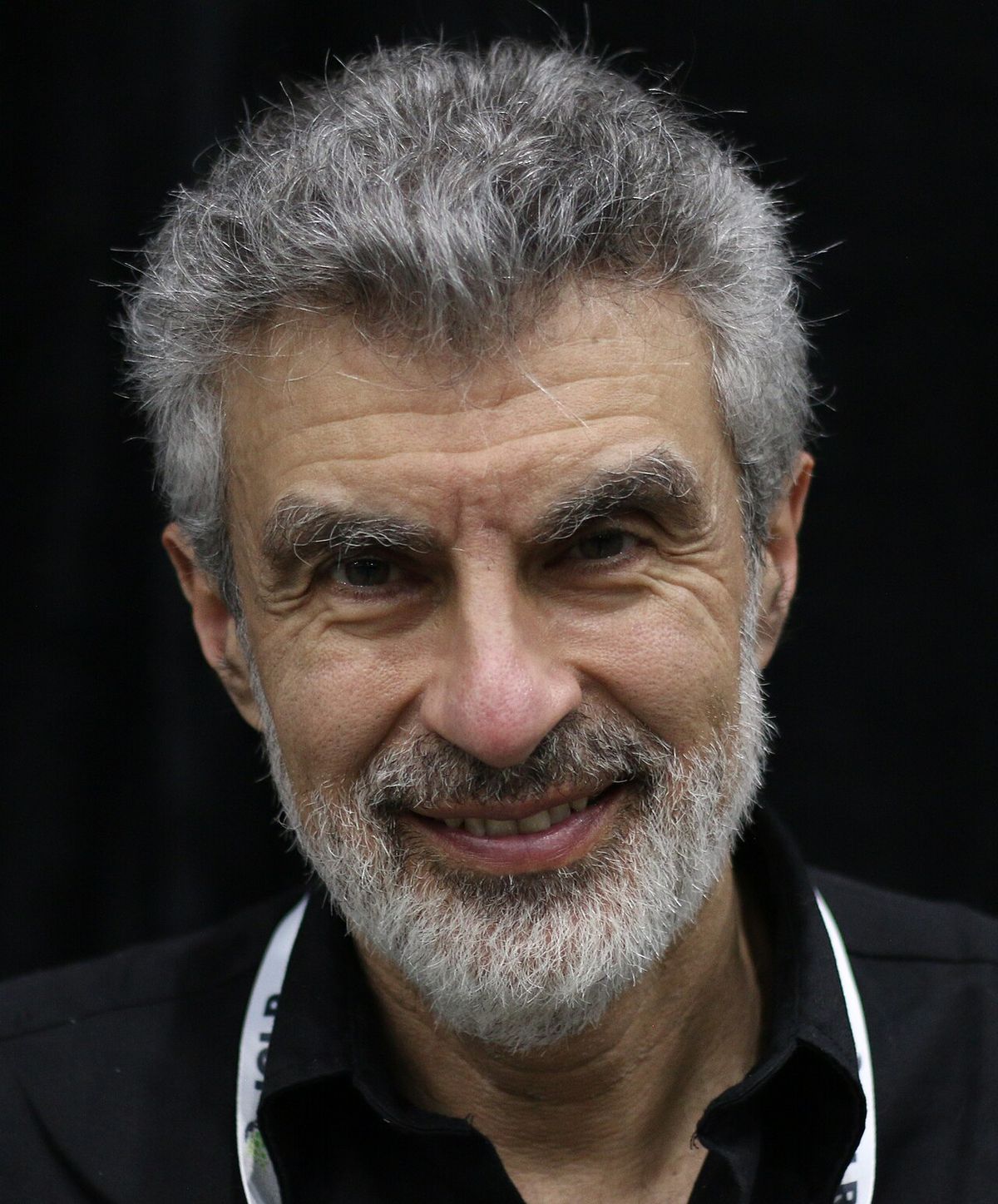
Samy Bengio
Samy Bengio is a prominent Canadian computer scientist and a leading figure in the global artificial intelligence research community. He serves as the senior director of Artificial Intelligence and Machine Learning Research at Apple and holds an adjunct professorship at the École Polytechnique Fédérale de Lausanne (EPFL) in Switzerland. His career, spanning academia and industry, has been marked by foundational contributions to neural networks, deep learning, and machine learning safety, positioning him as a key voice in Canada's influential AI sector. In 2026, his expertise was recognized with an appointment to a United Nations scientific panel on AI, showing his role in shaping international discourse on the technology's future.
Early Life and Education
Samy Bengio was born in 1965 to parents who were Moroccan Jews who had emigrated to France and Canada. His family background is deeply rooted in the arts, with his father, Carlo Bengio, being a pharmacist who also wrote theatre pieces and ran a Sephardic theatrical troupe in Montreal that performed Judeo-Arabic works. His mother, Célia Moreno, was an actress who performed in one of the major theatre scenes in Morocco during the 1970s. Samy and his younger brother, the future Turing Award winner Yoshua Bengio, spent a year living in Morocco during their father's military service there. Bengio pursued his higher education entirely at the Université de Montréal, earning a Bachelor of Science in Computer Science in 1986. He continued at the same institution for his Master of Science, completing it in 1989 with a thesis on the integration of traditional and intelligent tutoring systems. He obtained his Ph.D. in Computer Science in 1993, with a dissertation titled Optimization of a Parametric Learning Rule for Neural Networks, which foreshadowed his lifelong focus on the field.
Academic and Research Career
Following his doctorate, Samy Bengio established himself as a researcher in Europe before moving into major industry roles. From 1999 to 2007, he worked at the IDIAP Research Institute in Switzerland and was affiliated with the École Polytechnique Fédérale de Lausanne. His research during this period and beyond contributed significantly to the foundations of modern machine learning. In 2024, his academic ties to EPFL were formalized when he was appointed an adjunct professor in Computer and Communication Sciences at the university. Bengio's scholarly output is substantial, with approximately 250 scientific papers to his name on topics including neural networks, deep learning, computer vision, and natural language processing. His work is highly cited, with several publications recognized as seminal to the deep learning revolution of the 2010s. Key contributions from his early research include pioneering methods for exploring the learned representations in deep neural networks, which helped unlock their potential. He was also involved in some of the first successful deep learning approaches to automated image captioning, bridging computer vision and language understanding.
Pioneering Contributions to Machine Learning
Samy Bengio's research has tackled both the capabilities and the vulnerabilities of AI systems, making his work central to the field's development. He produced some of the earliest investigations into why deep learning models work so effectively, a line of inquiry that spurred extensive follow-up research. In the area of AI security, his work provided the first concrete evidence that adversarial examples, subtle, malicious alterations to input data that fool machine learning systems, could exist in the physical world, not just in digital simulations. This finding highlighted critical safety concerns for real-world AI deployments. He also contributed to foundational work on zero-shot recognition, a technique that allows AI models to correctly identify objects or concepts they were never explicitly trained on, pushing the boundaries of generalization. Beyond specific algorithms, Bengio played a key role in building the tools that enable AI research. He is a co-author of Torch, an open-source machine learning library that served as the direct predecessor to PyTorch, one of the two most widely used frameworks in the world today. This contribution has had an immeasurable impact on the pace and accessibility of AI research globally. His research portfolio includes several landmark papers that have defined subfields of machine learning. These works demonstrate a consistent thread of investigating both the power and the limits of artificial intelligence systems. His early doctoral work on neural network optimization laid a technical foundation for later advances in training complex models.
- Early work on optimizing parametric learning rules for neural networks (1993).
- Pioneering research on exploring learned representations in deep networks (2010s).
- Co-author of one of the first deep learning models for automatic image captioning.
- First evidence of physically realizable adversarial examples in machine learning.
- Foundational contributions to the concept and practice of zero-shot learning.
Industry Leadership and Professional Service
Samy Bengio's industry career includes a long tenure as a senior research scientist at Google, where he led a large team focused on machine learning, including work in adversarial settings. His departure from Google in late 2020 followed the company's controversial firing of researcher Timnit Gebru, an event about which Bengio stated he was stunned, as he had not been notified beforehand. He subsequently joined Apple, where he now holds the position of senior director of Artificial Intelligence and Machine Learning Research, guiding the company's core AI R&D efforts. Bengio has also been deeply engaged in service to the global research community. He served as the program chair for the International Conference on Learning Representations (ICLR) from 2015 to 2016 and has been a member of its board. For the premier Conference on Neural Information Processing Systems (NeurIPS), he was program chair in 2017 and general chair in 2018, and he continues to serve on its board. He contributes as an editor for the Journal of Machine Learning Research, helping to steer the publication of cutting-edge work in the field.
His leadership and service within the machine learning community are evident through a series of high-profile roles. These positions reflect the trust and respect he commands among his peers in both corporate and academic research settings. His work on the NeurIPS board and his editorial duties keep him involved in shaping the direction of academic publishing and major conferences. His move from Google to Apple marked a significant shift in his industry trajectory, placing him at the helm of AI research for one of the world's most valuable technology companies.
- Senior Director of AI and Machine Learning Research at Apple (current).
- Senior Scientist at Google, leading a machine learning research team (until 2020).
- General Chair of the NeurIPS conference in 2018.
- Program Chair of the NeurIPS conference in 2017.
- Program Chair of the ICLR conference (2015 to 2016).
- Editor of the Journal of Machine Learning Research.
- Board member for both the NeurIPS and ICLR conferences.
Recent Initiatives and International Policy Role
In recent years, Samy Bengio has increasingly engaged with the societal and safety implications of advanced AI. In 2026, he was appointed to the United Nations' Independent International Scientific Panel on AI, a body tasked with providing scientific guidance on global AI governance. This appointment reflects his standing as an authority whose insights are sought by international policymakers. He has also been involved in workshops exploring the frontier of AI research, such as the LM4Plan workshop at the International Conference on Machine Learning (ICML) in Seoul, South Korea, in July 2026. This workshop, focused on the intersection of language models and automated planning, featured Bengio as an invited speaker. His presentation, among others, examined the challenges and opportunities of using large language models for reasoning and planning tasks, a key area for developing more capable AI systems. These activities demonstrate his ongoing commitment to both advancing the technical frontier and critically assessing its limitations and risks. The LM4Plan workshop was the third edition of a series that began at AAAI 2025, indicating his involvement in a sustained research dialogue on this topic.
The Bengio Family and Canadian AI Leadership
The Bengio name is synonymous with Canadian excellence in artificial intelligence, largely due to the parallel and interconnected careers of Samy and his brother Yoshua. Yoshua Bengio, a professor at the Université de Montréal and scientific director of Mila, Quebec AI Institute, is a recipient of the A.M. Turing Award, often described as the Nobel Prize of computing, for his foundational work in deep learning. This familial connection places Samy Bengio within a central narrative of Canada's rise as a global AI powerhouse. Both brothers are frequently featured as headline speakers at major Canadian technology events, such as the ALL IN conference in Montreal, which is promoted as Canada's largest AI and technology gathering. In September 2026, Yoshua Bengio was a featured speaker at ALL IN, discussing engineering honesty and reliability for safer AI. The brothers' combined influence extends through their research, their training of the next generation of scientists, and their advocacy for responsible AI development, solidifying Montreal and Canada as critical nodes in the international AI ecosystem. Their shared background, including their year living in Morocco, forms a unique personal history behind their professional achievements.
Honours, Appointments, and Leadership Roles
Samy Bengio's expertise is recognized through significant appointments and leadership positions in both academic and international spheres. His roles often place him at the confluence of research, industry application, and policy guidance. He currently holds the senior director position for AI and Machine Learning Research at the technology giant Apple. He maintains an adjunct professorship at the École Polytechnique Fédérale de Lausanne (EPFL), a role he has held since 2024. In 2026, he received a notable appointment to the United Nations' Independent International Scientific Panel on AI. His service to the machine learning community includes being the general chair for the NeurIPS conference in 2018 and serving as its program chair the previous year. He also served as program chair for the International Conference on Learning Representations (ICLR) from 2015 to 2016. He contributes as an editor for the Journal of Machine Learning Research. His career milestones are marked by these formal recognitions of his standing in the field.
A summary of his major honours and appointments includes the following key items. These appointments chart a path from deep technical contribution to high-level international scientific advisement. His role as a co-author of Torch represents a different form of honour, one rooted in engineering impact rather than a formal title. His ongoing position at Apple represents a pinnacle of industry leadership in one of the most competitive sectors of technology.
- Appointed Adjunct Professor at EPFL, Switzerland (2024).
- Appointed to the UN Independent International Scientific Panel on AI (2026).
- Senior Director of AI and Machine Learning Research at Apple (current).
- General Chair of the NeurIPS conference (2018).
- Program Chair of the NeurIPS conference (2017).
- Program Chair of the ICLR conference (2015 to 2016).
- Co-author of the Torch machine learning library.
Questions about Samy Bengio
What is Samy Bengio's current job?
Samy Bengio is the senior director of Artificial Intelligence and Machine Learning Research at Apple. In this role, he leads a team focused on advancing the company's core research and development in AI. Concurrently, he holds an academic position as an adjunct professor at the École Polytechnique Fédérale de Lausanne (EPFL) in Switzerland. This dual role keeps him at the forefront of both industrial innovation and academic exploration in machine learning.
What did Samy Bengio contribute to AI research?
Samy Bengio has made several foundational contributions to artificial intelligence. He co-authored the Torch machine learning library, which evolved into the widely used PyTorch framework. His research includes early work on understanding deep learning representations, pioneering image captioning models, and providing the first evidence of real-world adversarial examples that can fool AI systems. He has also published influential work on zero-shot learning, where models recognize objects they were never trained on, and has authored approximately 250 scientific papers across machine learning, computer vision, and natural language processing.
Why did Samy Bengio leave Google?
Samy Bengio left Google shortly after the company dismissed AI ethics researcher Timnit Gebru in December 2020. At the time, Bengio was a senior scientist managing a research team at Google. He publicly stated that he was stunned by the way Gebru's termination was handled, particularly because he was not notified about the decision beforehand. His departure was seen by many in the AI community as a significant moment, highlighting tensions between ethical research and corporate interests within major tech companies.
How is Samy Bengio related to Yoshua Bengio?
Samy Bengio is the brother of Yoshua Bengio. They are both sons of Moroccan Jewish parents, Carlo Bengio and Célia Moreno, who emigrated to France and Canada. The brothers lived in Morocco for a year during their father's military service. Yoshua Bengio is a Turing Award winner, while Samy Bengio is a prominent computer scientist in his own right, having authored around 250 scientific papers and contributed to foundational machine learning frameworks like Torch.
Where did Samy Bengio go to university?
Samy Bengio completed all his university education at the Université de Montréal in Canada. He earned a B.Sc. in Computer Science in 1986. He then obtained an M.Sc. in Computer Science in 1989 with a thesis on the integration of traditional and intelligent tutoring systems. Finally, he received his Ph.D. in Computer Science in 1993, defending a thesis titled 'Optimization of a Parametric Learning Rule for Neural Networks.'
Sources: Wikipedia and current public reporting, checked by the Your Space Hamilton desk. Last updated 2026-10-24.